

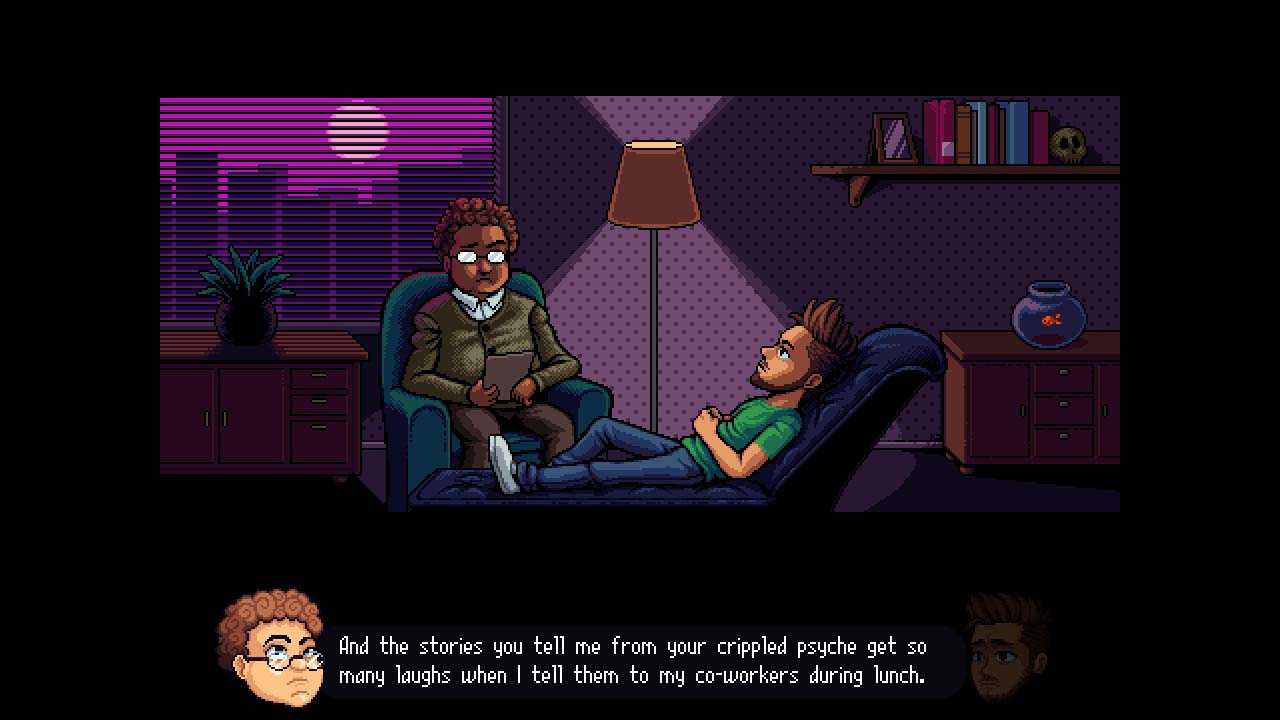
The mind, as they say, is a terrible thing to waste. Even more so if you’re the creative type. And that’s the problem facing Fletcher, a burned-out game developer who needs to reignite that creative spark. When a hypnotherapy session goes wrong, Fletcher’s world goes full meta as he finds himself trapped within the labyrinth of his own mind and his current creation. The only way out is to spelunk through the job that has bled into his subconscious and defeat the demons within holding him prisoner.
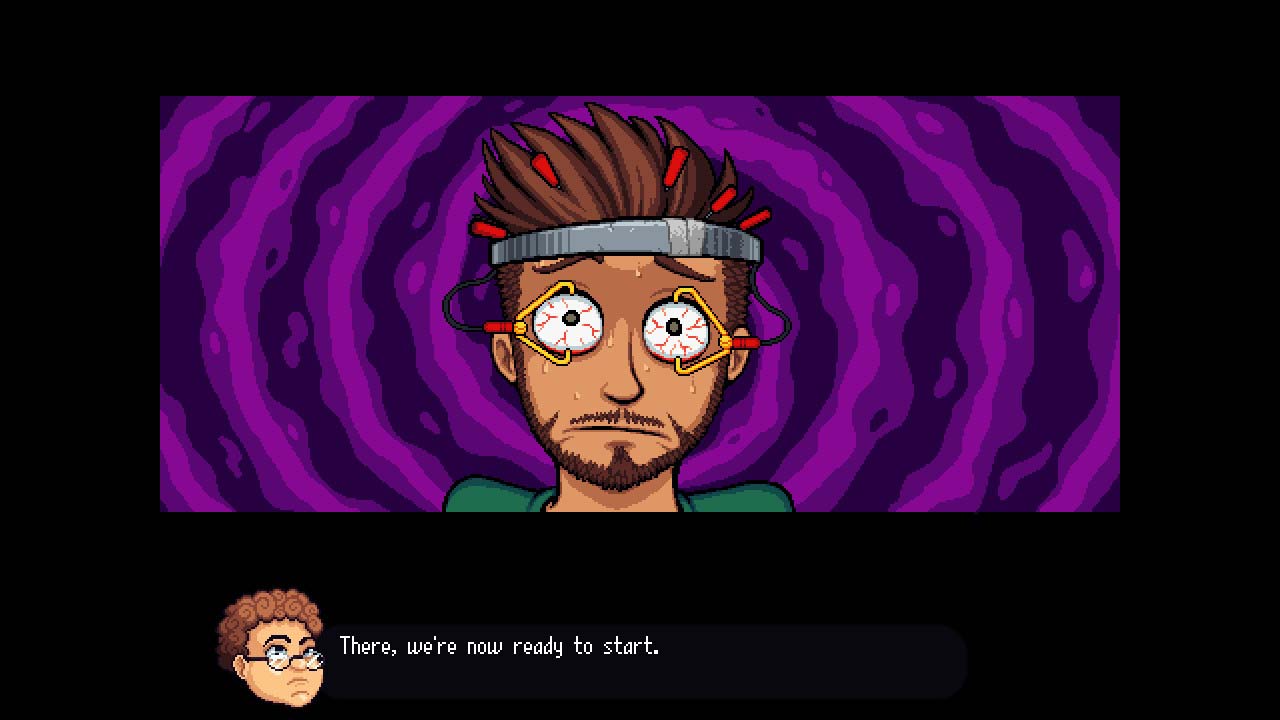
As such, Fletcher’s quest puts you in the shoes of a game developer who has to reckon with his own profession by living through what he’s designed. And in this case, it’s a 2D platforming title with vague hints of Metroidvania-ness at its core. As is developer Elden Pixels go-to through the course of their career, The Prisoning: Fletcher’s Quest is a retro-inspired platformer that could have easily stepped out of the past with its, initially, challenging design.
Fletcher’s story is full of bizarre, fourth-wall breaking humour that intends to poke fun at the game design process. Quirks, bugs, poor design, it’s all fodder for the developers to use to elicit a smile through this surreal adventure. Not all of the humour lands, but when it does, it’s a nice slice of grin-worthy meta-commentary. But the humour is even better when those poor design choices are thrown at you as obstacles to be overcome. Be warned though, there’s some serious adult language and jokes on display here, from pixellated nudity to Samuel L. Jackson level of profanity bombs. If you’re thinking of handing this one over to the kids, you may want to reign that horse in for a bit.
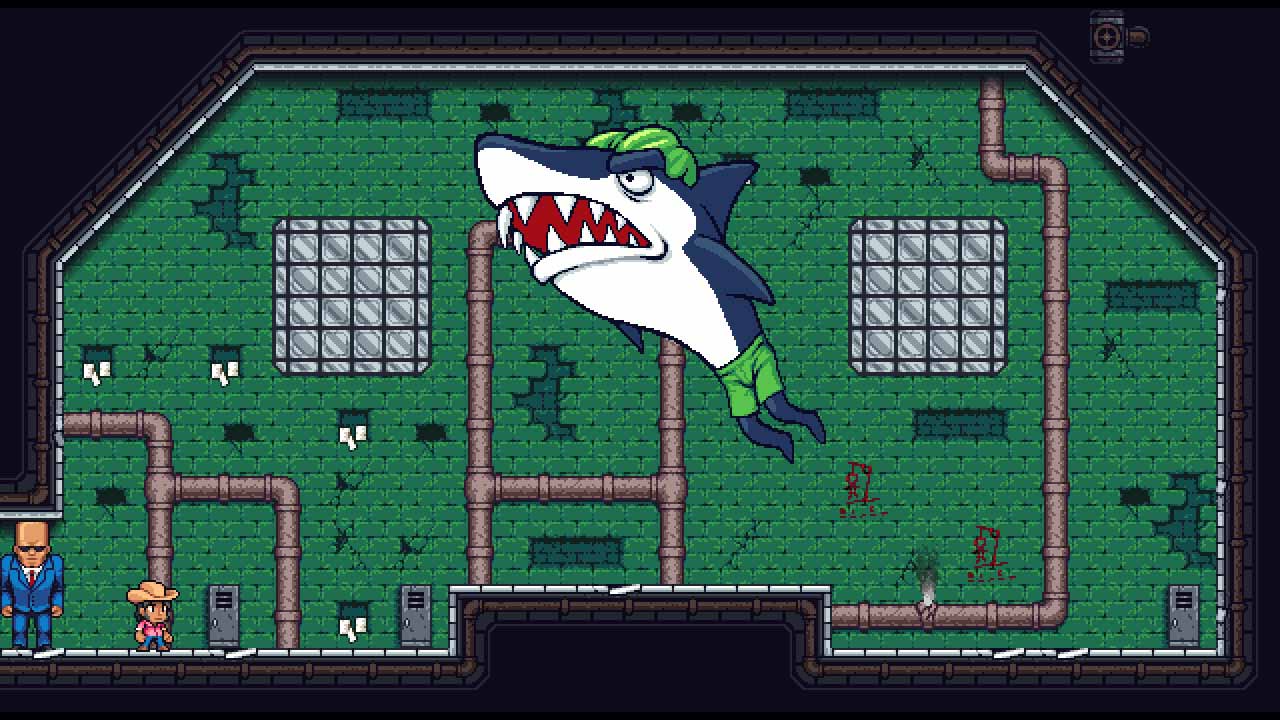
Visually, The Prisoning: Fletcher’s Quest is a bright and almost cheerfully colourful game, despite the adult subject matter. The game uses a lovely looking pixel art style that is both charming and wonderfully animated from the characters to the backgrounds. Between the character and enemy designs and the stage design, it very much resembles bright, colourful, children’s cartoons from the days of yore. There are wonderful little details scattered across the place, from the squinty eyes that peak out of boxes until you get close to them, to the lovely boss designs such as a giant surfboarding shark with colour changing trunks.
The games audio is no slouch either. Sound effects are great, but it’s the games soundtrack that comes in kicking with a pop cowboy/Western themed tune that will worm its way into your ear long after you’ve stopped playing. The boss music is really great though and represent the best tunes in the game.
The gameplay is where The Prisoning: Fletcher’s Quest will, most likely, polarise many gamers. It is, initially, quite tough and a bit on the unbalanced side.
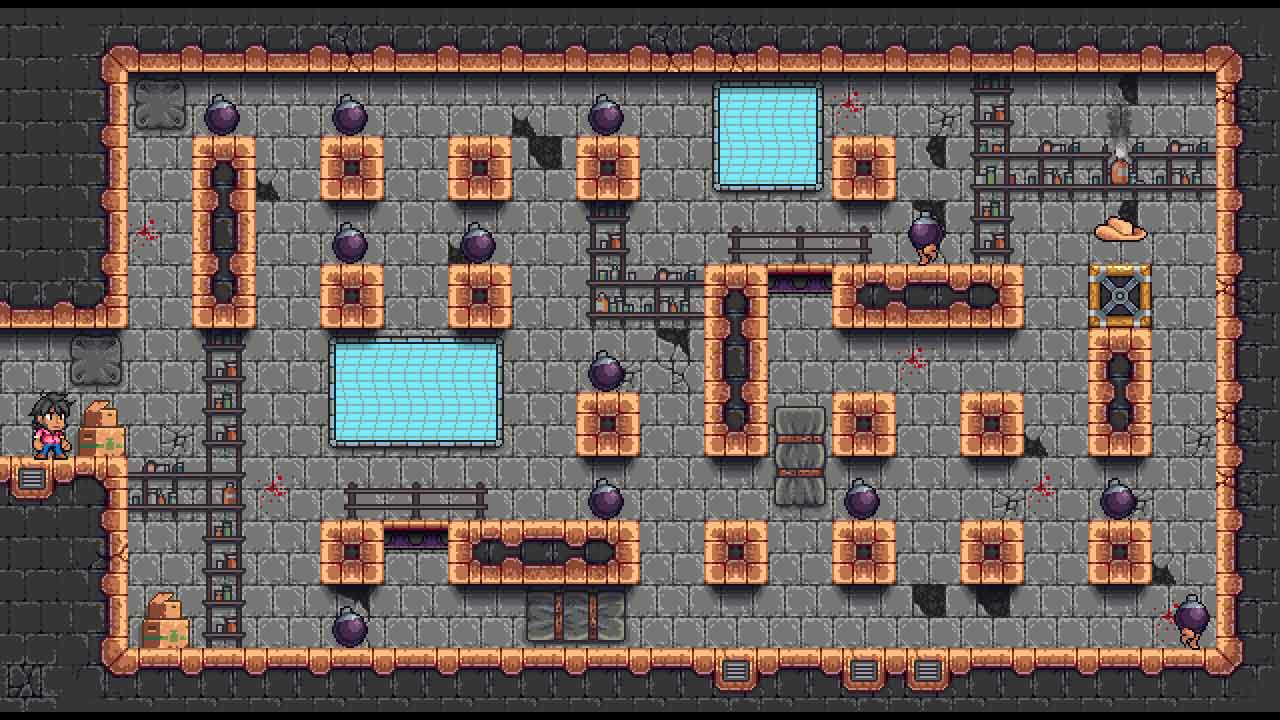
Progression through the game uses some Metroidvania design, with a world map and layout that’s evocative of so many games in the genre and areas blocked off until you gain new abilities by beating a boss. But that’s as far as the Metroidvania impact goes as the game is broken up into small, self-contained challenge rooms that are a mixture of platforming, combat and timing to get through. Each room is like a little mini-puzzle in survival that requires fast reflexes along with the patience required to work out the patterns in enemy movement and attacks while making sure you don’t get skewered by the many sharp environmental objects, like tacks, that are littering the world.
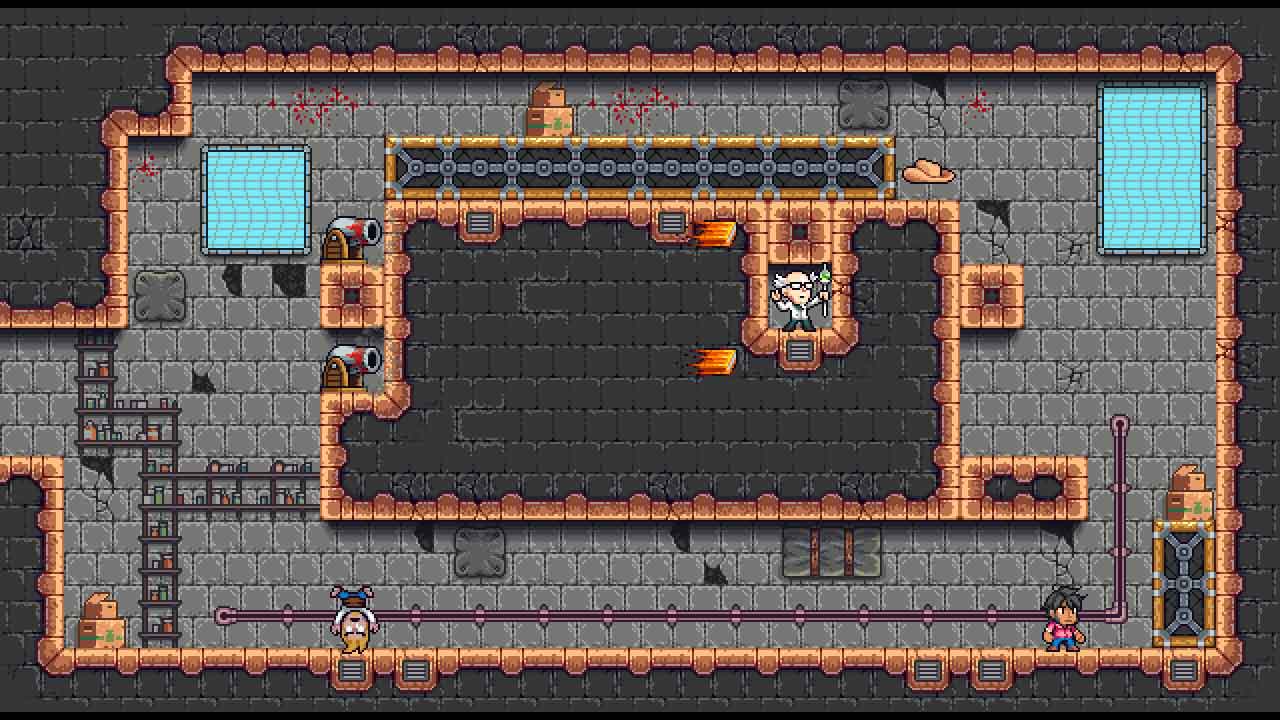
Adding onto the game’s difficulty is the use of light procedural generation. Now while the overall map shape remains the same and certain specific rooms and gauntlets remain in place, the bulk of the room layouts will differ both between new runs and, even, reloads. While procedural generation is supposed to give you the feel of a new run each time, it’s not long before you’ll see rooms repeating, even if they’re not in the same place you originally encountered them.
It’s that procedural generation though that really throws the games difficulty all over the place. The randomisation means that you’re just as likely to run through one, long series of frustrating rooms to reach the next save point as much as a whole bunch of easy ones. Worse yet, are the areas where you’re hitting a weird combination of hard and easy rooms that completely destroys any sense of finely-tuned difficulty progression. Stepping out from a save room could land you in a really hard room, followed up by two easy rooms and then three hard or so. I’m sure you get the point by now. Now while this keeps you on your toes, and you have to be because you can only take two hits before dying, it does the game no favours early on and set me up with a sense of increasing frustration by the time I hit the first boss.
Here’s the thing though. There’s a point, right after that first boss actually, that The Prisoning: Fletcher’s Quest just clicked for me. Perhaps it was earning the double jump which made navigating the rooms faster and with a little more finesse that did it. Or getting a second bullet so you could fire two shots at once instead of just one and waiting till you’re bullet either hit something or disappeared off-screen before you could fire another. Either way, this is when the game really came alive for me and, dare I say it, became a whole lot more fun.
Sure, the procedural generation and its difficulty skewing dynamic sticks around. And yeah, the multi-phase boss fights can be a bit much, but somehow, this is when it just starts feeling right. There’s a sense of finding your groove once you understand the mechanics at play that makes even the umpteenth death just another learning experience. And believe me, I died quite a bit.
If it’s all still a bit much, there is an assist mode available. There’s no description in-game on what this does, but it appears to me that with it enabled, when you die, instead of respawning at the last save point, you respawn at the entrance of the room you died in. Super useful for sure, even though save rooms are liberally placed across the map and you can warp from one save room to another. This just streamlines moving forward and not having to hassle with reaching where you died when the last place you saved at was five rooms ago.
If you can overlook the procedural generation and its issues and get on board with a truly ancient slice of game design, The Prisoning: Fletcher’s Quest is a lovely looking and fun old-school, arcade platformer with a humourous narrative that just needed a little bit more fine-tuning to reach greatness.
Pros:
- Nice, colourful pixel art style
- Good soundtrack
- Fun gameplay once you get used to the mechanics
- Memorable bosses
Cons:
- Procedural generation messes with the difficulty curve
- Very frustrating initially
Score: 7/10
The Prisoning: Fletcher’s Quest was reviewed on Nintendo Switch 1/2 using a code provided by the publisher. It is also available on PC.
 gameblur-v2.0