Tag: Xbox

  • Editorial: Dread Delusion offers console players a weird and wonderful mini-RPG with Morrowind vibes.

    Editorial: Dread Delusion offers console players a weird and wonderful mini-RPG with Morrowind vibes.

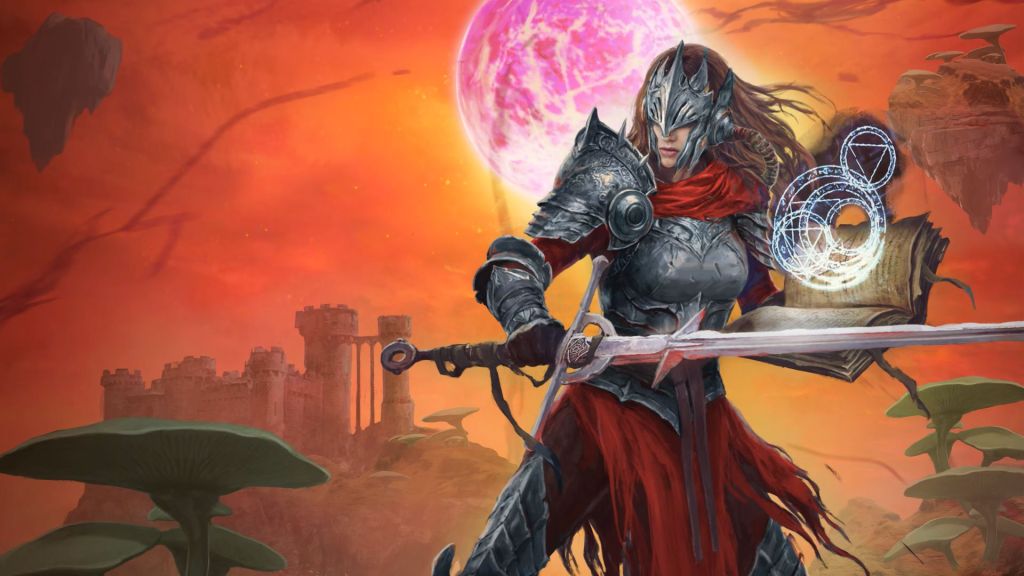
    Dread Delusion is both a compact nostalgia-trip for time-constrained older gamers, and a means for younger gamers to get a taste of early, first-person, fully-3D RPGs like The Elder Scrolls III: Morrowind.

    Despite its obvious retro inspirations, it’s smartly designed and “fun enough” by modern standards but what is does best is evoke classic vibes and encourage exploration. Like Morrowind, Dread Delusion’s best attribute is not the gameplay but the distinctly otherworldly setting, the intriguing lore, and the striking aesthetics. It has a unique atmosphere that elevates the experience, even if the storytelling is simple and the gameplay loop straddles the line between charmingly dated and perfunctory.
    Not high praise for those who exclusively play “AAA” games and value cinematic storytelling or ultra-polished gameplay, but Dread Delusion knows what it wants to be and does so with confidence. It has a compact structure, varied but streamlined mechanics, and frugal dialogue trees that ensure it avoids making the mistake so many modern games do – wasting the player’s time and dragging out the experience to the point even the best qualities are rendered repetitive and tiresome.

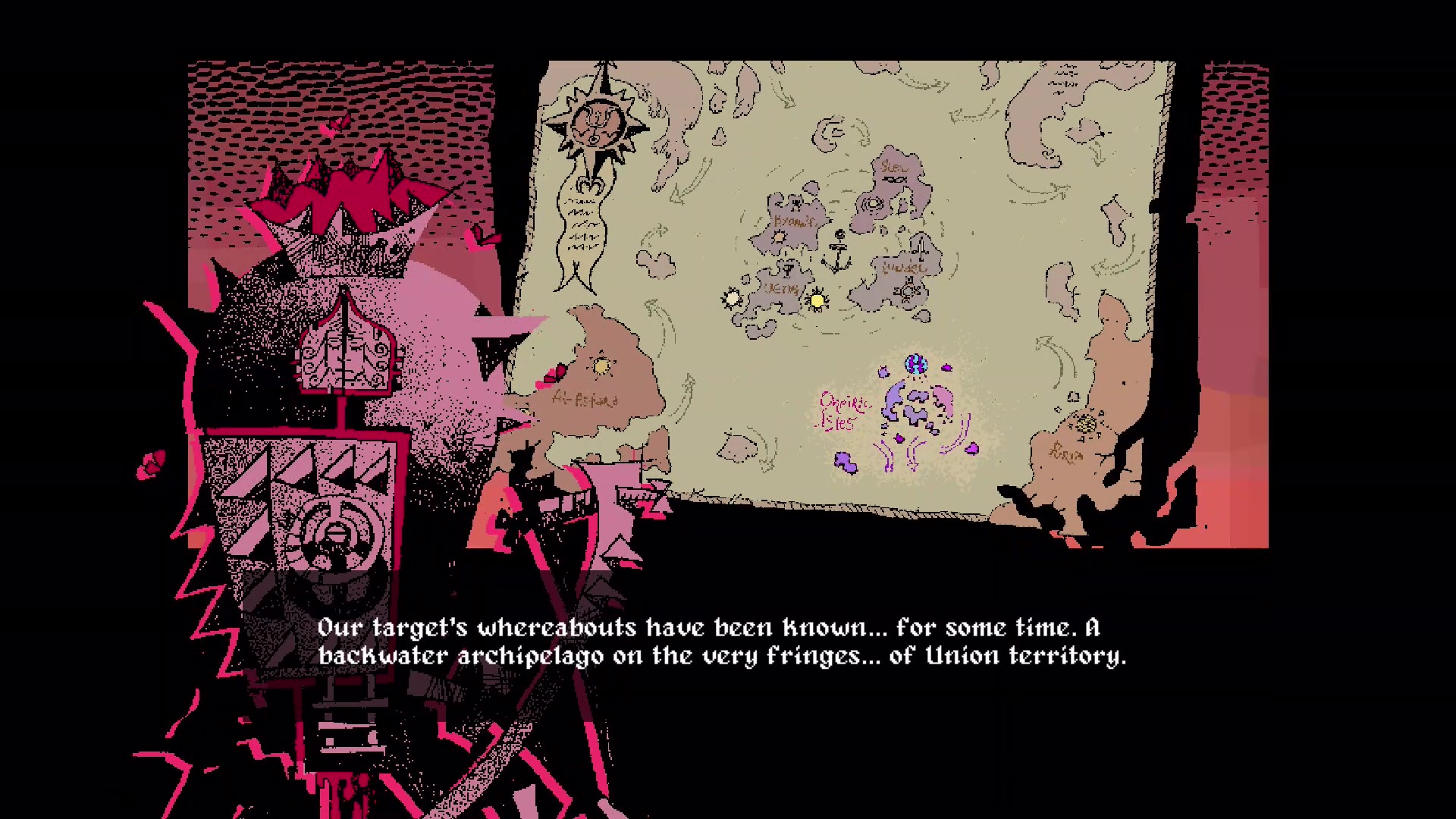
    Dread Delusion doesn’t offer huge depth in the moment-to-moment gameplay, so you only spend only a minute customising your prisoner-protagonist before being introduced to the primary quest by way of an Inquisitor agent, trapped within an iron maiden-style cage, bleeding between raspy breaths. You’re then tossed out onto the floating Oneiric Isles to begin your adventure with minimal fanfare. It feels brisk, a little messy, but the opening sequence is devoid of exposition dumps or the overlong cutscenes so common these days I’ve had to change my TVs power-saving settings.
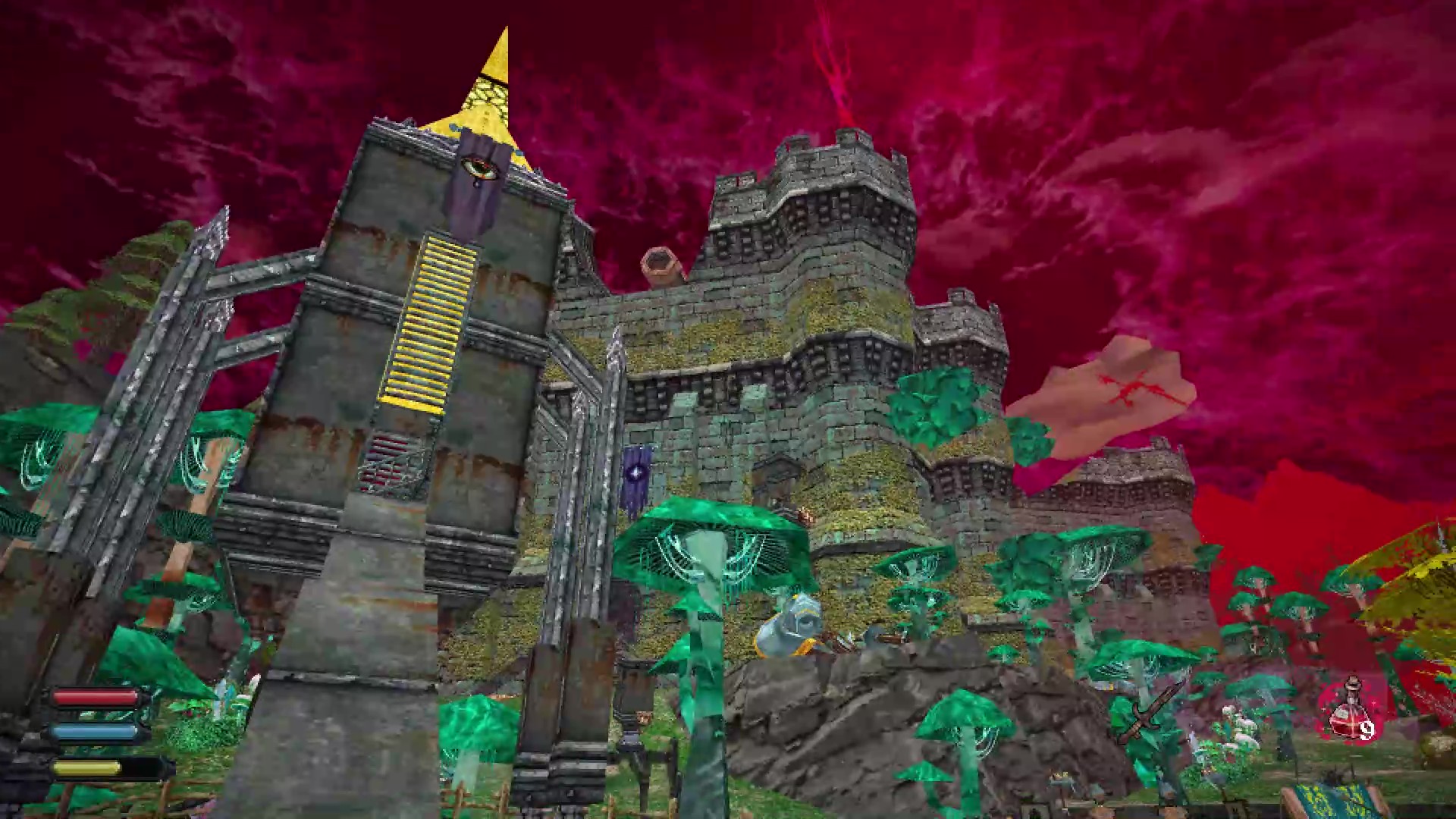
    A massive fort looms above of you. Inquisition machines clank and groan around you. Jagged islands of rock, strung together by precarious bridges, float above a ruined and charred planet below. Tree-sized mushrooms and bizarre fungal shrubs – typically in shades of vibrant green, blue, and pink – stand in stark contrast against the reddish-purple sky with its pulsing “neuron star” connected to others by glowing threads of energy. The excellent music kicks in and it all felt incredibly weird and wondrous in a way I’ve not experienced in a big budget sci-fi or fantasy games for ages.

    When you factor in the lack screen-filling tutorials and condescending secondary character to sprout advice, the opening sequence also places the onus firmly on the player to push forward, explore, and experiment if they want to know more.
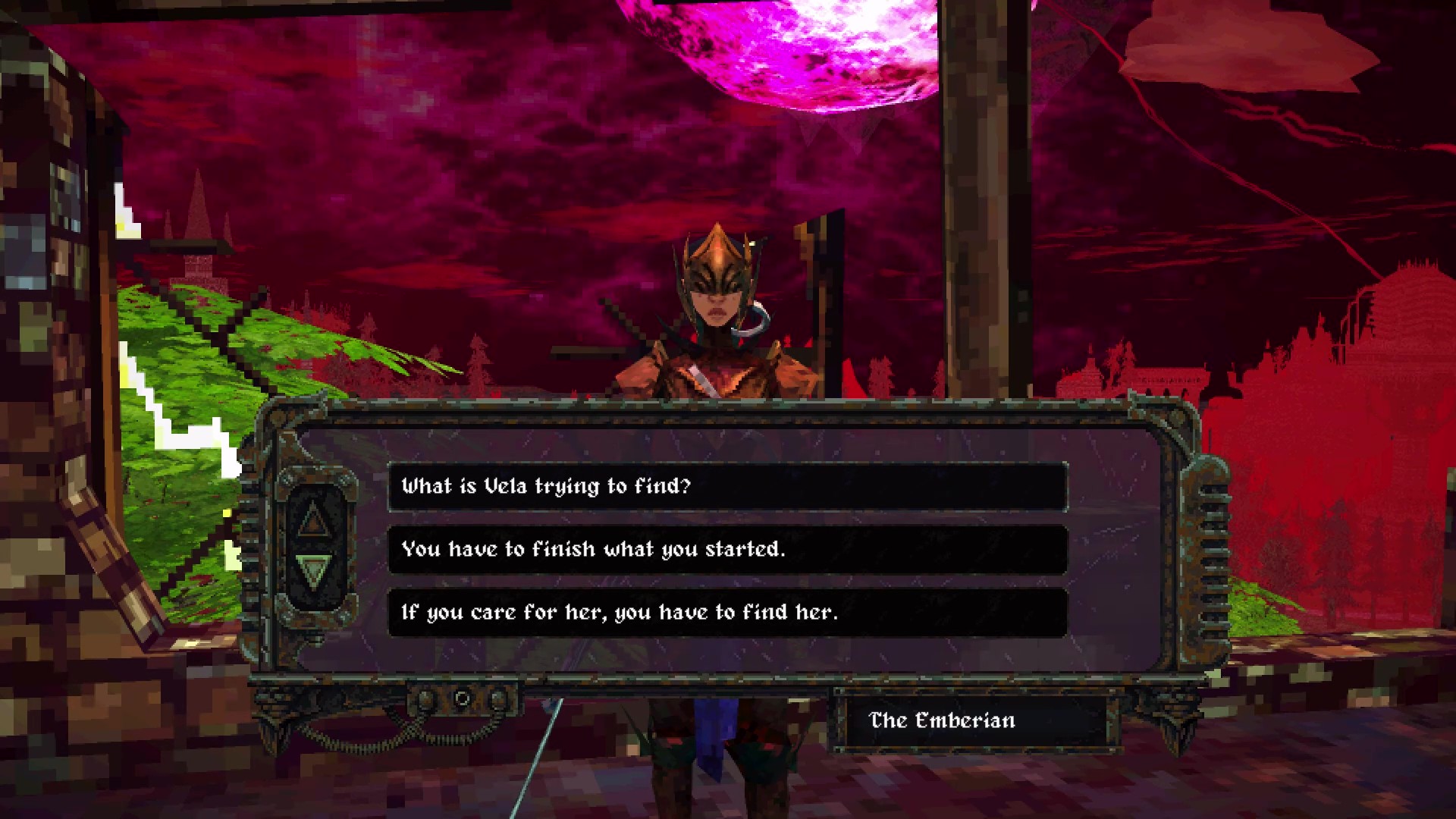
    Of course, Dread Delusion offers up a lengthy quest involving the hunt for a Navy-captain-turned-sky-pirate Vela Callose that will take you across the Isles and to the ruined world below. You’ll learn about the “God Wars” and the rise of Apostolic Union, the ancient Emberian civilisation and the devastating “World Rend” event, and you’ll meet the factions contesting the Oneiric Isles – but there’s so much more depth for those who explore, talk to every NPC, and read the stylish book extracts scattered around.

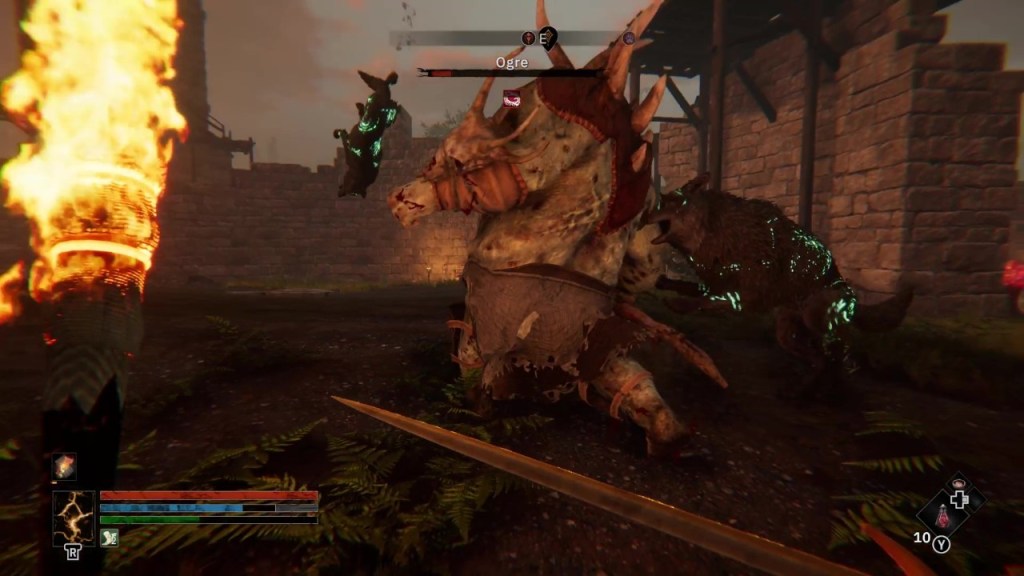
    The gameplay that ties everything together is fun, familiar, and streamlined – like a “best of” rewatch your favourite series where you have to foresight to skip the inessential episodes. You have light and heavy attacks paired with block and parries, all governed by stamina and strength. Offensive and defensive cypher spells require mana and high lore. You can charm NPCs in dialogue, pick locks and disarm traps, or manipulate magical objects to open alternate paths and secrets. There’s even a stealth system with bonus damage for thief-types that enjoy spending half their playtime crouching with a bow.
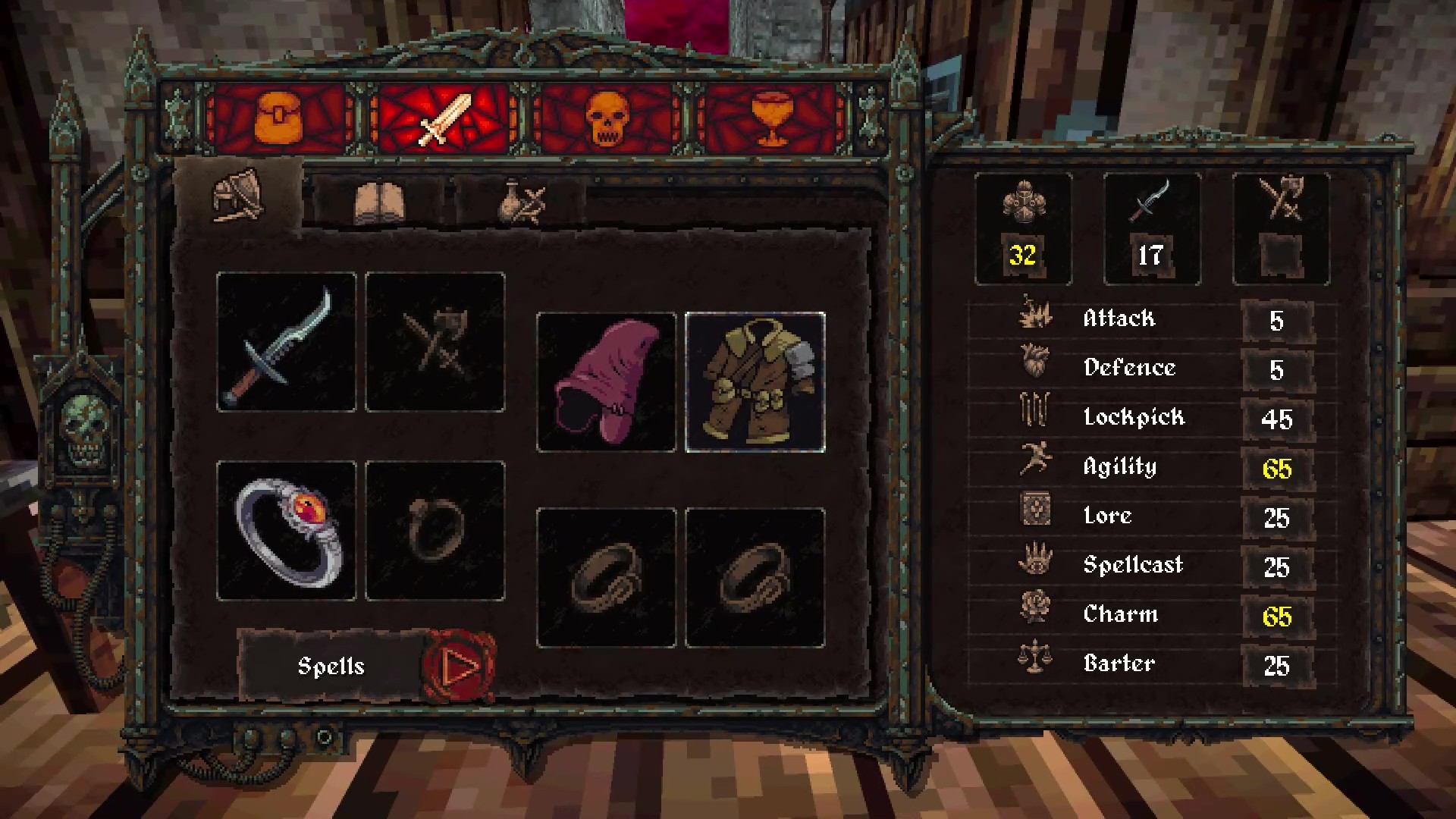
    Armour, clothing, and weapon variants are limited but offer impactful upgrades that consume increasingly rare materials. Rings and accessories are unique and buff specific attributes or skills. Alchemy allows you to brew useful and situational potions. You can purchase and upgrade housing in each island kingdom, unlocking temporary skill boosts, crafting stations, and gardens with alchemical ingredients. You eventually unlock an airship of your own to access new areas.

    Dread Delusion offers a little bit of every RPG staple for you to dabble in as you explore, just never with enough depth to derail your momentum and the narrative pacing.

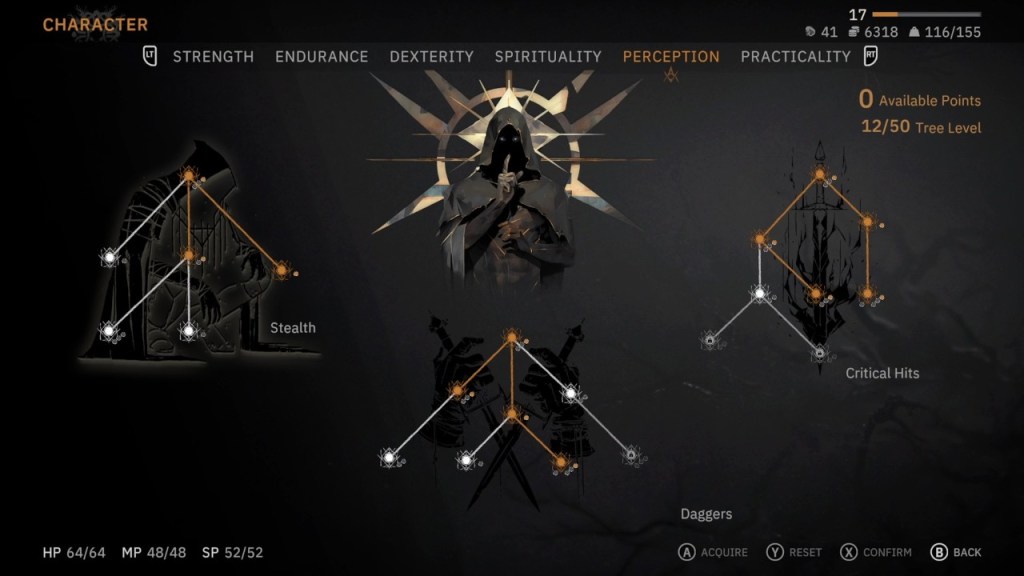
    Despite these streamlined mechanics, Dread Delusion still prioritises role-playing and provides quest solutions that can shift your standing with different factions and affect the outcome of regions. Your dialogue choices have the most impact, but you can also avoid harming faction relations by simply sneaking through an area or unlocking alternate paths to bypass combat. The levelling system – in which you “embrace delusions” to increase attributes – consumes “glimmers of delusions” that are awarded on quest completion or found in secret areas. There’s rarely a good reason to choose a violent outcome if you don’t want to.
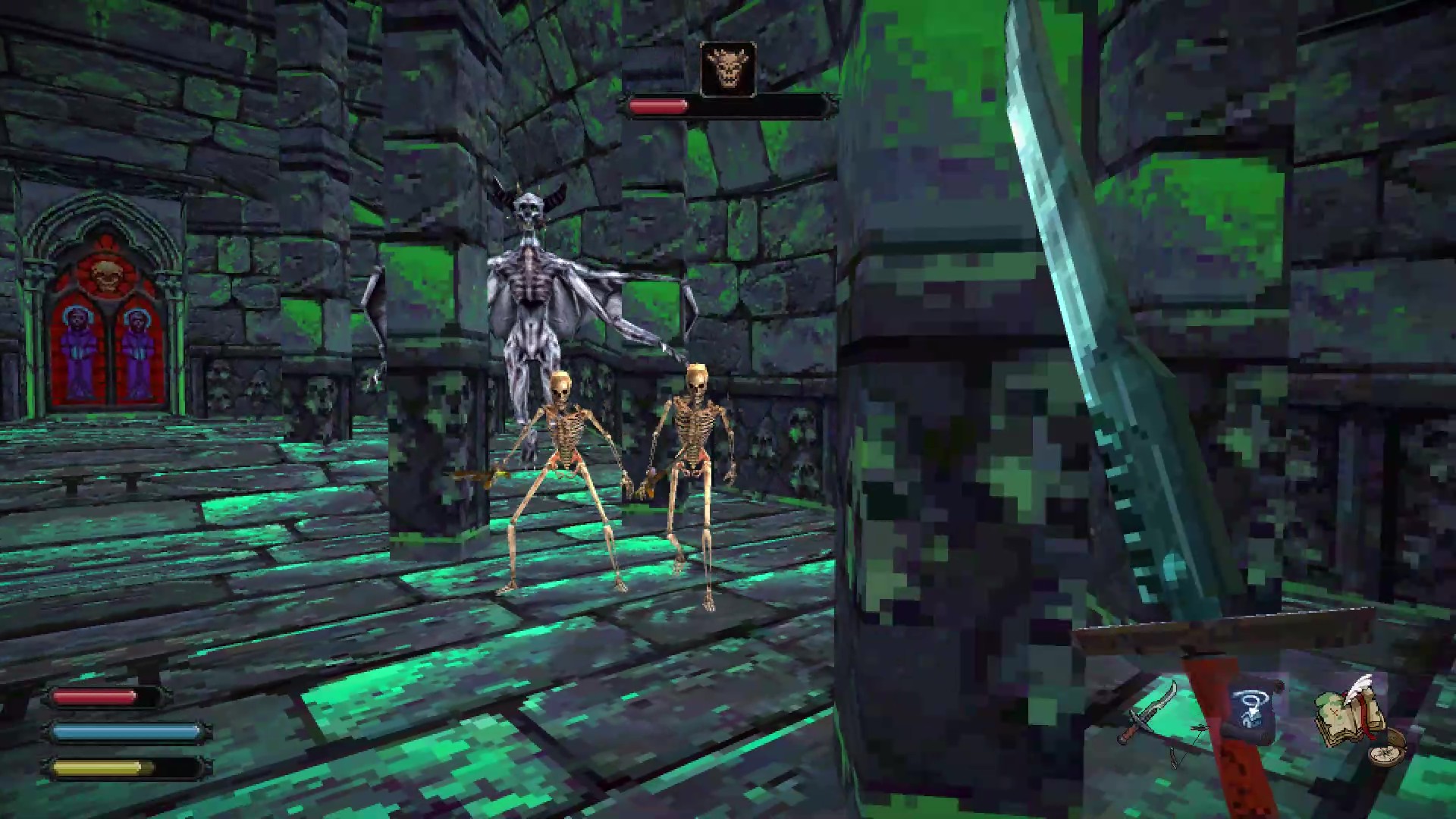
    There’s a fair argument that the minute-to-minute gameplay feels a little underdeveloped, but the impact on the experience is limited by Dread Delusion’s relative brevity for an RPG – maybe 20 or so hours to explore everywhere and do everything on your first playthrough. The focus remains on constant forward momentum and exploration while you resolve quests the way you want to. Dread Delusion never feels like it’s wasting your time getting bogged down by grindy gameplay systems or cinematic aspirations that impact the pacing.

    Going back to the Morrowind comparison, the Oneiric Isles are simply a joy to explore as every new region means new sights to see, new biomes and creatures, new people and quests, and more lore to discover. For console players, it offers a rare mini-RPG with incredible vibes and, as a bonus, runs well on every platform including the Nintendo Switch 2.

    Dread Delusion was played on a Nintendo Switch 2 using a code provided by the publisher. It is also available on PC, Xbox Series S|X, and PS5.
  • Review: The Prisoning: Fletcher’s Quest (Nintendo Switch)

    Review: The Prisoning: Fletcher’s Quest (Nintendo Switch)

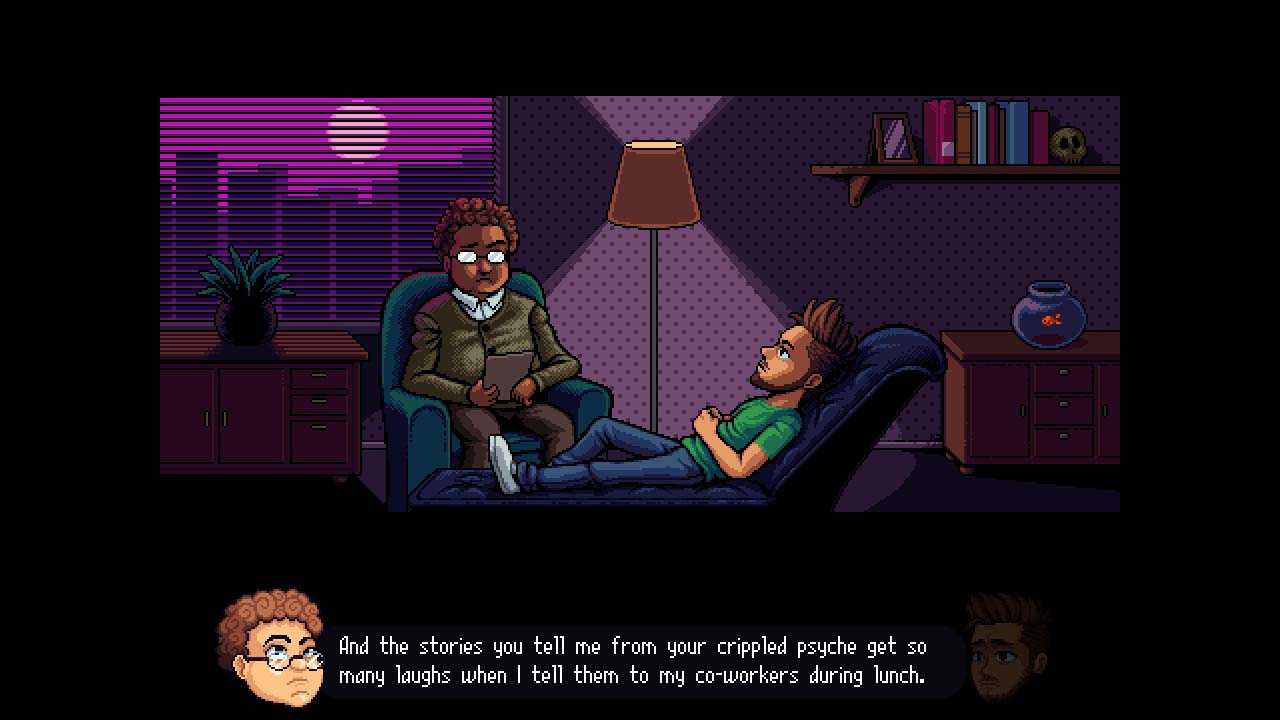
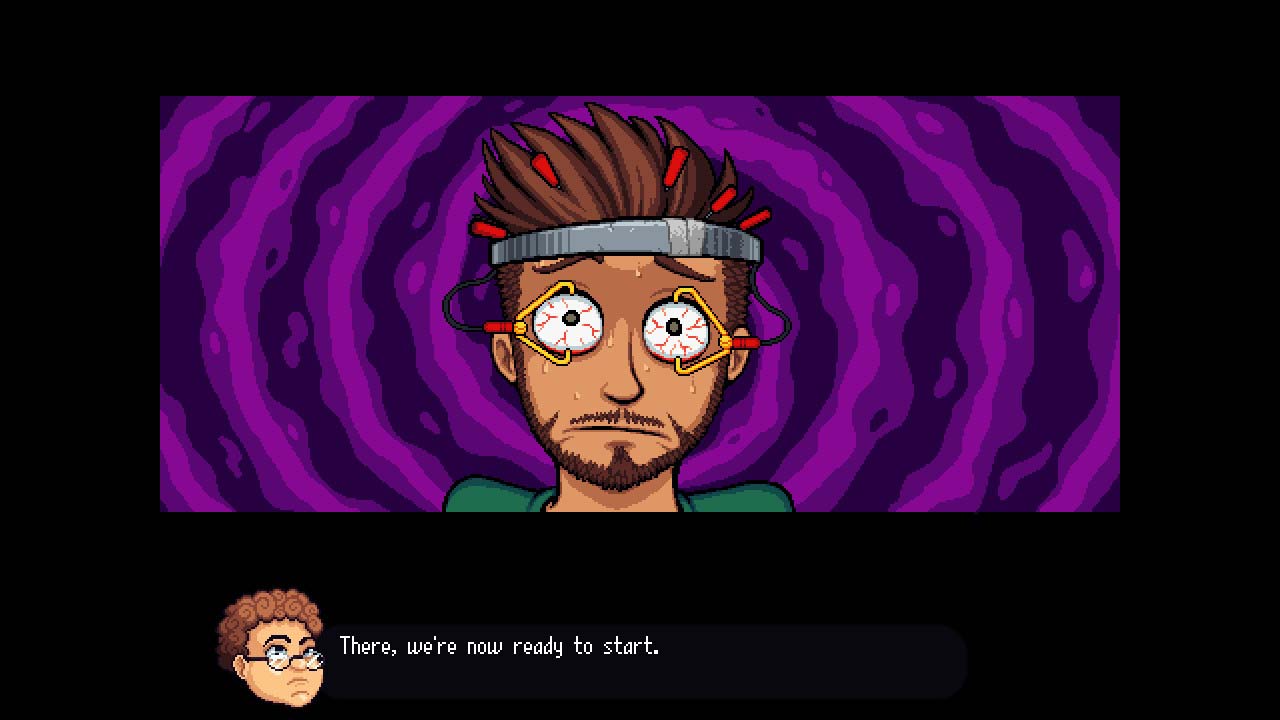
    The mind, as they say, is a terrible thing to waste. Even more so if you’re the creative type. And that’s the problem facing Fletcher, a burned-out game developer who needs to reignite that creative spark. When a hypnotherapy session goes wrong, Fletcher’s world goes full meta as he finds himself trapped within the labyrinth of his own mind and his current creation. The only way out is to spelunk through the job that has bled into his subconscious and defeat the demons within holding him prisoner.

    As such, Fletcher’s quest puts you in the shoes of a game developer who has to reckon with his own profession by living through what he’s designed. And in this case, it’s a 2D platforming title with vague hints of Metroidvania-ness at its core. As is developer Elden Pixels go-to through the course of their career, The Prisoning: Fletcher’s Quest is a retro-inspired platformer that could have easily stepped out of the past with its, initially, challenging design.

    Fletcher’s story is full of bizarre, fourth-wall breaking humour that intends to poke fun at the game design process. Quirks, bugs, poor design, it’s all fodder for the developers to use to elicit a smile through this surreal adventure. Not all of the humour lands, but when it does, it’s a nice slice of grin-worthy meta-commentary. But the humour is even better when those poor design choices are thrown at you as obstacles to be overcome. Be warned though, there’s some serious adult language and jokes on display here, from pixellated nudity to Samuel L. Jackson level of profanity bombs. If you’re thinking of handing this one over to the kids, you may want to reign that horse in for a bit.

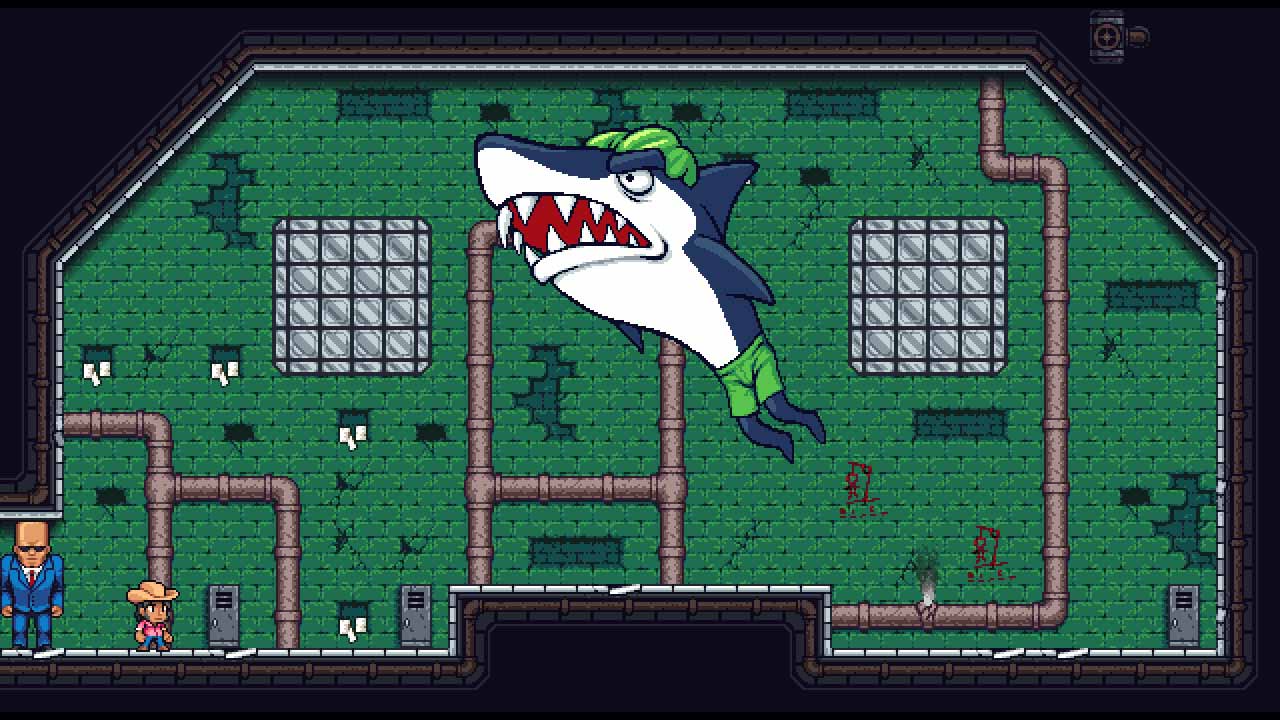
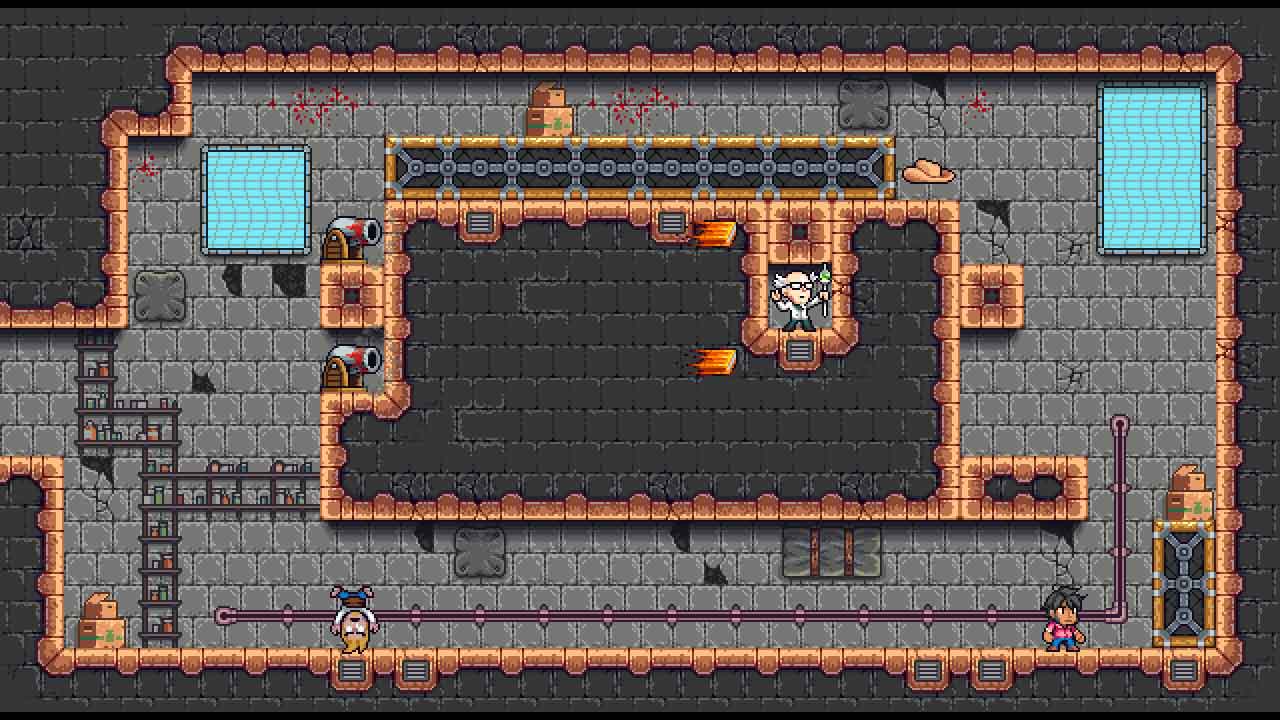
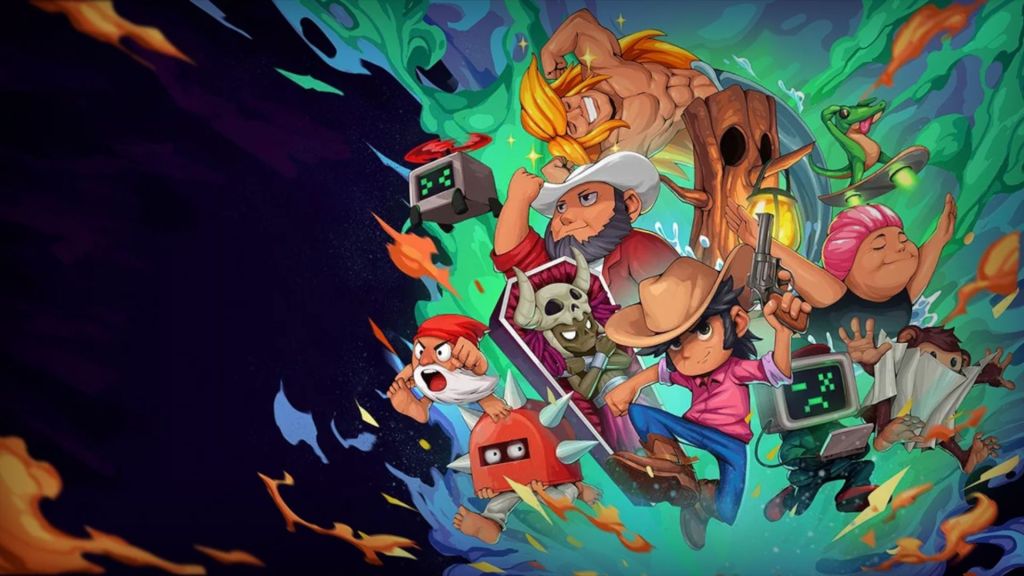
    Visually, The Prisoning: Fletcher’s Quest is a bright and almost cheerfully colourful game, despite the adult subject matter. The game uses a lovely looking pixel art style that is both charming and wonderfully animated from the characters to the backgrounds. Between the character and enemy designs and the stage design, it very much resembles bright, colourful, children’s cartoons from the days of yore. There are wonderful little details scattered across the place, from the squinty eyes that peak out of boxes until you get close to them, to the lovely boss designs such as a giant surfboarding shark with colour changing trunks.

    The games audio is no slouch either. Sound effects are great, but it’s the games soundtrack that comes in kicking with a pop cowboy/Western themed tune that will worm its way into your ear long after you’ve stopped playing. The boss music is really great though and represent the best tunes in the game.

    The gameplay is where The Prisoning: Fletcher’s Quest will, most likely, polarise many gamers. It is, initially, quite tough and a bit on the unbalanced side.

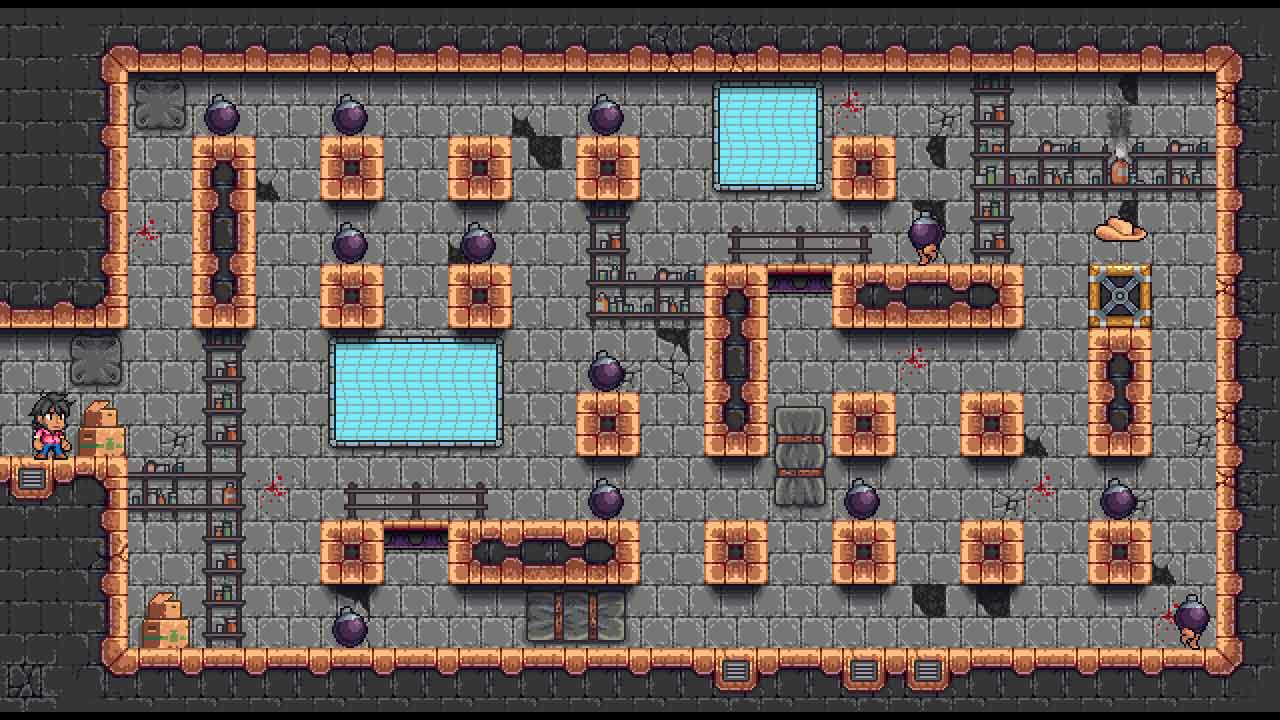
    Progression through the game uses some Metroidvania design, with a world map and layout that’s evocative of so many games in the genre and areas blocked off until you gain new abilities by beating a boss. But that’s as far as the Metroidvania impact goes as the game is broken up into small, self-contained challenge rooms that are a mixture of platforming, combat and timing to get through. Each room is like a little mini-puzzle in survival that requires fast reflexes along with the patience required to work out the patterns in enemy movement and attacks while making sure you don’t get skewered by the many sharp environmental objects, like tacks, that are littering the world.

    Adding onto the game’s difficulty is the use of light procedural generation. Now while the overall map shape remains the same and certain specific rooms and gauntlets remain in place, the bulk of the room layouts will differ both between new runs and, even, reloads. While procedural generation is supposed to give you the feel of a new run each time, it’s not long before you’ll see rooms repeating, even if they’re not in the same place you originally encountered them.

    It’s that procedural generation though that really throws the games difficulty all over the place. The randomisation means that you’re just as likely to run through one, long series of frustrating rooms to reach the next save point as much as a whole bunch of easy ones. Worse yet, are the areas where you’re hitting a weird combination of hard and easy rooms that completely destroys any sense of finely-tuned difficulty progression. Stepping out from a save room could land you in a really hard room, followed up by two easy rooms and then three hard or so. I’m sure you get the point by now. Now while this keeps you on your toes, and you have to be because you can only take two hits before dying, it does the game no favours early on and set me up with a sense of increasing frustration by the time I hit the first boss.

    Here’s the thing though. There’s a point, right after that first boss actually, that The Prisoning: Fletcher’s Quest just clicked for me. Perhaps it was earning the double jump which made navigating the rooms faster and with a little more finesse that did it. Or getting a second bullet so you could fire two shots at once instead of just one and waiting till you’re bullet either hit something or disappeared off-screen before you could fire another. Either way, this is when the game really came alive for me and, dare I say it, became a whole lot more fun.

    Sure, the procedural generation and its difficulty skewing dynamic sticks around. And yeah, the multi-phase boss fights can be a bit much, but somehow, this is when it just starts feeling right. There’s a sense of finding your groove once you understand the mechanics at play that makes even the umpteenth death just another learning experience. And believe me, I died quite a bit.

    If it’s all still a bit much, there is an assist mode available. There’s no description in-game on what this does, but it appears to me that with it enabled, when you die, instead of respawning at the last save point, you respawn at the entrance of the room you died in. Super useful for sure, even though save rooms are liberally placed across the map and you can warp from one save room to another. This just streamlines moving forward and not having to hassle with reaching where you died when the last place you saved at was five rooms ago.

    If you can overlook the procedural generation and its issues and get on board with a truly ancient slice of game design, The Prisoning: Fletcher’s Quest is a lovely looking and fun old-school, arcade platformer with a humourous narrative that just needed a little bit more fine-tuning to reach greatness.

    Pros:

    • Nice, colourful pixel art style
    • Good soundtrack
    • Fun gameplay once you get used to the mechanics
    • Memorable bosses

    Cons:

    • Procedural generation messes with the difficulty curve
    • Very frustrating initially

    Score: 7/10

    The Prisoning: Fletcher’s Quest was reviewed on Nintendo Switch 1/2 using a code provided by the publisher. It is also available on PC.

  • Editorial: Yooka-Re-Playlee is solid remastering effort that can’t mask old flaws.

    Editorial: Yooka-Re-Playlee is solid remastering effort that can’t mask old flaws.

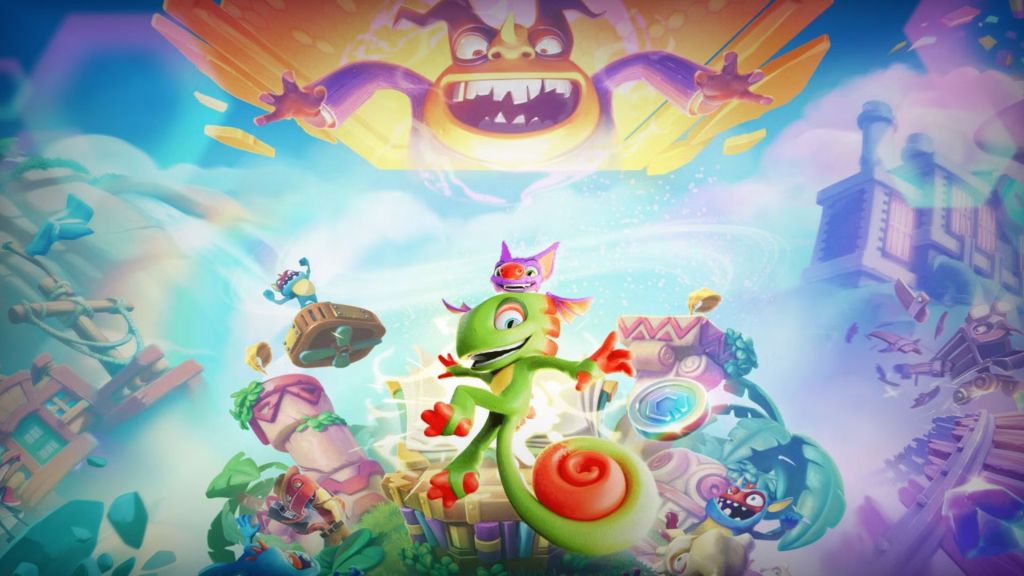
    It has been a while since I’ve seen a remaster with a title quite as awful as Yooka-Re-Playlee, but it feels appropriate for a game that was developed as a shameless nostalgia-driven mash-up of classic 3D platformers. This remastered edition offers a spruced up and definitive version of the 2017 original; a genre I’ve found myself returning to more often in a post-Astro Bot world.

    The biggest problem with Yooka-Laylee however, in both its original and remastered form, is that making fun of classic designs without ever subverting them can only take you so far. That is not to say Yooka-Re-Playlee is a bad game – it simply struggles to stand out in a crowded genre. An even bigger problem when so many of classics that inspired it are still accessible through remasters, backwards-compatibility, or emulation.

    With a handful of quality-of-life additions and an admittedly impressive visual overhaul, Yooka-Re-Playlee offers up a competent but predictable 3D platformer. It intersperses brief storytelling scenes – which are still unvoiced – with extensive collectible hunts within small but dense game worlds.

    In classic fashion, once you collect enough MacGuffins (PAGIES!), you unlock another game world to explore from within an evolving hub (and you might receive a snippet of storytelling for your efforts). You repeat the process through five worlds before tackling an end boss to roll the credits. It is a formula that goes back to Super Mario 64 and can offer methodical fun if the pacing is good.

    At first, Yooka-Re-Playlee nails the pacing by ensuring the hub and each world you explore feel visually distinct and are packed with diverse platforming challenges and dozens of mini-games. The variety is essential as despite the remaster granting you the full move-set from the start, the combat is mostly one-note and rarely asks more of you than spamming a spin-attack and jumping to avoid damage.

    You have classic 3D platforming that can shift into 2D-gauntlets or isometric sections that will test your depth perception and timing. Bosses are all about pattern recognition and skilful movement as you bide your time until they’re vulnerable to damage. With an updated camera and controls, the basics feel slick, responsive, and satisfying if you’re after a traditional experience.

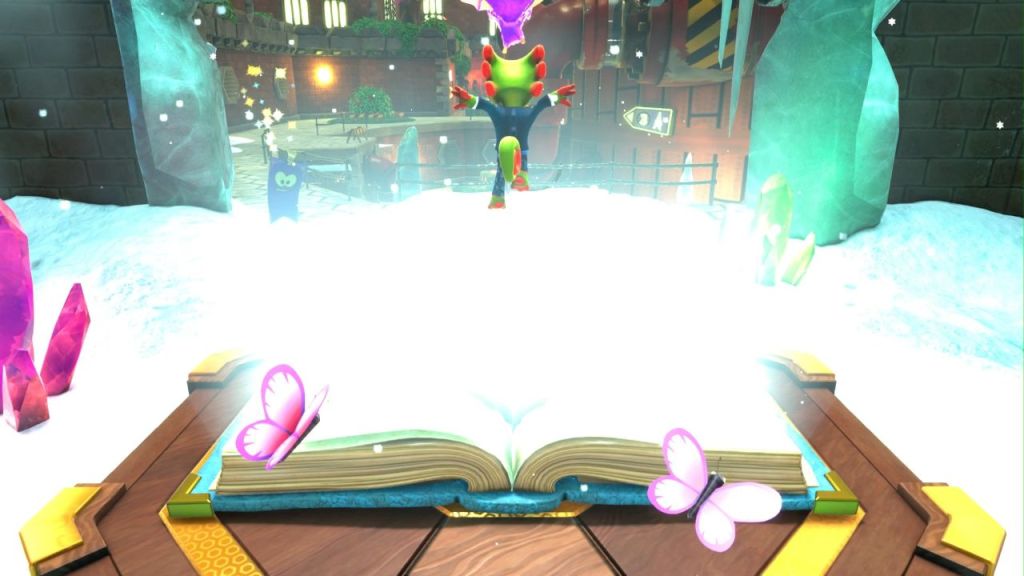
    The problem is that progression boils down to collecting “pagies” (PAGIES!) that are scattered from a magical book during the introduction. Rather than just a handful of essential pagies (PAGIES!) to find in each world, the developers have included hundreds of them. Far more than you need to reach the final boss and sometimes split into fragments or alternate forms for good measure.

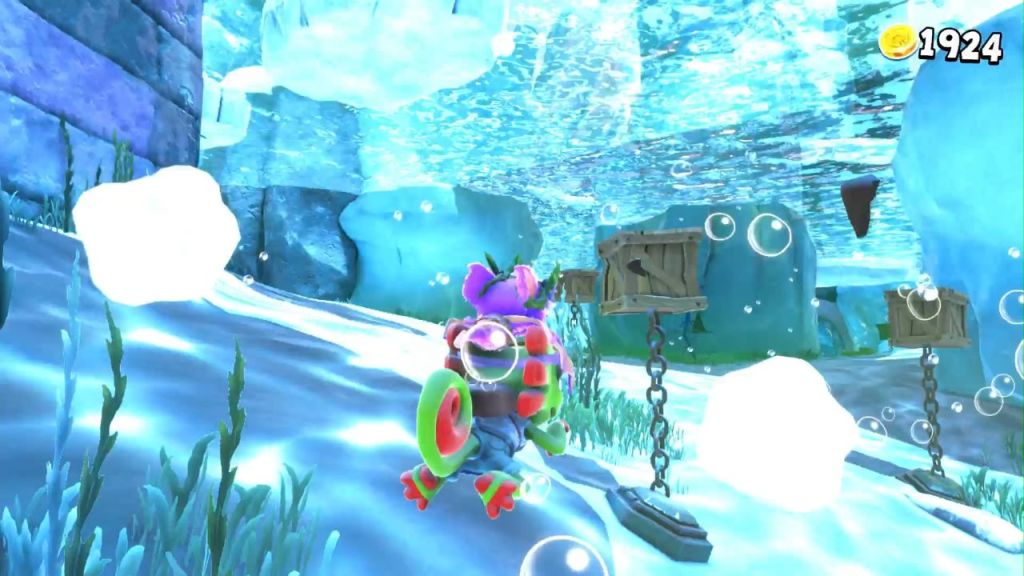
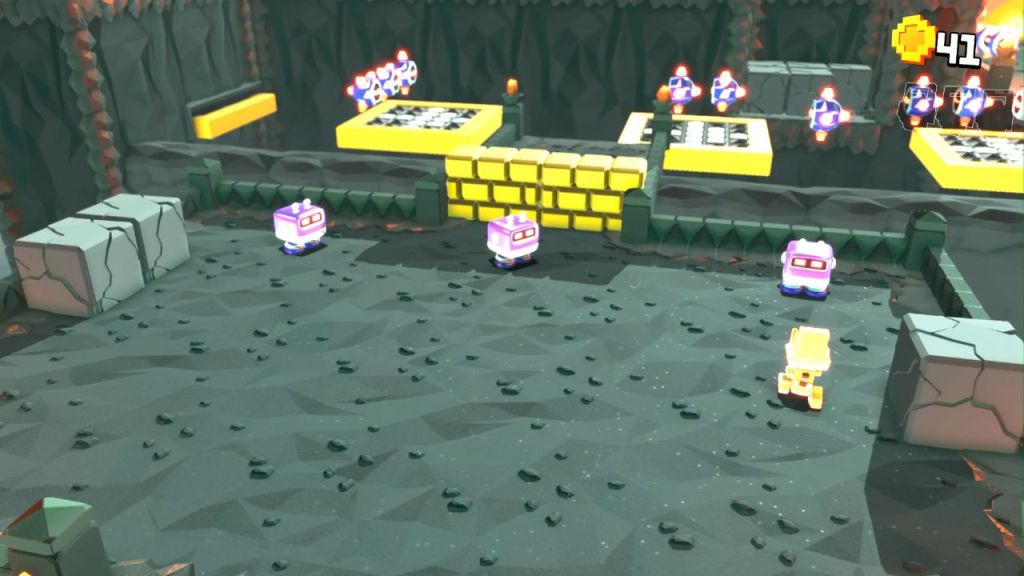
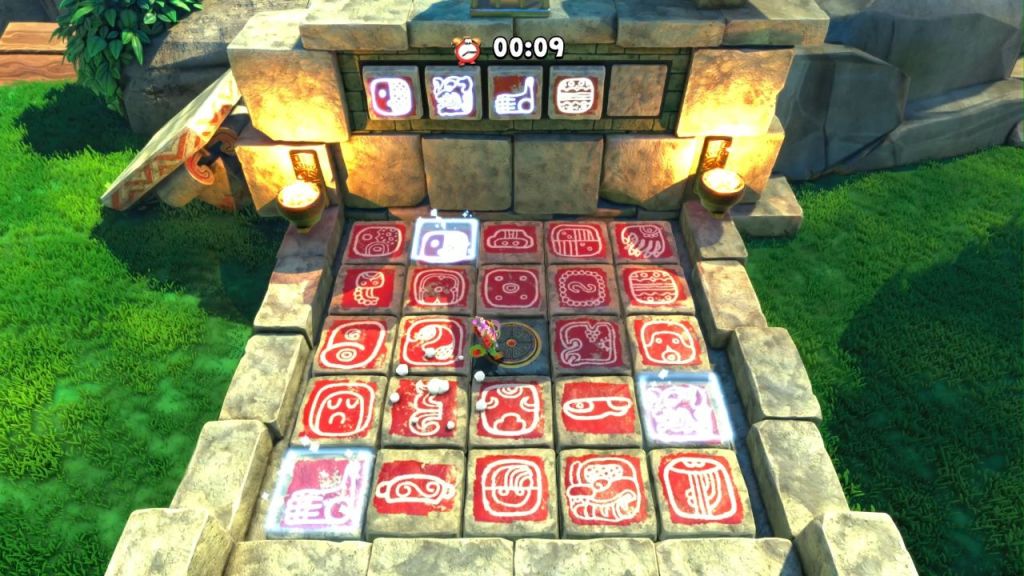
    Starting with the good, they clearly realised variety would be essential between the platforming challenges, so there are dozens of mini-game variants. There are time-trials and races – on foot, underwater, or in the air; puzzles based on elements, patterns, and symbol-recognition; minecart rides; arena battles; target practice; a transformation gimmick in each world with associated mini-games; and even an entire series of arcade games you can tackle within the game.

    That is not even an exhaustive list though it is worth noting many of these challenges have been tweaked for the remaster to ensure they control better.

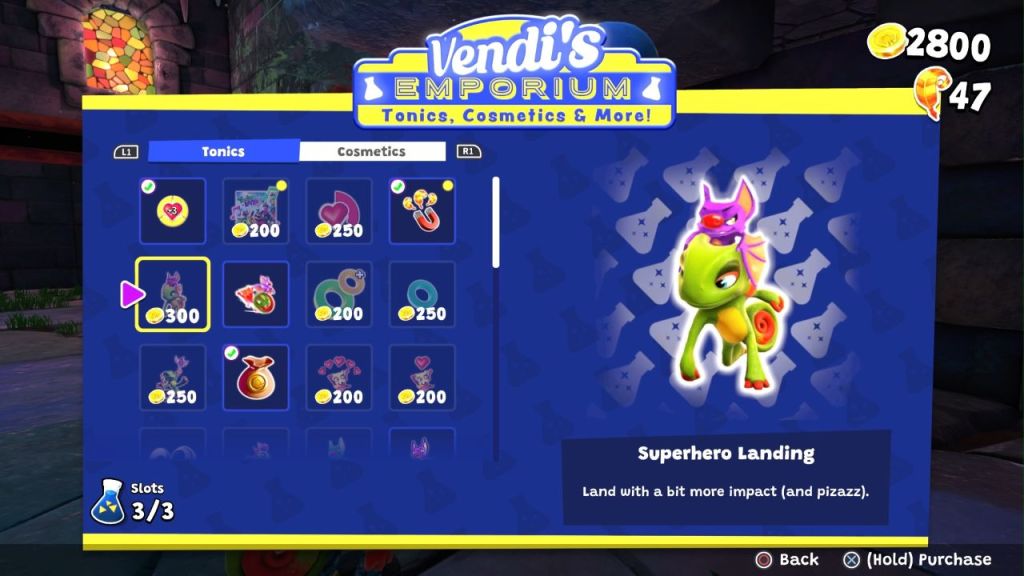
    In addition to the endless stream of pagies they provide – as often as every 30 seconds if you’re on a roll – you have two currencies: one for passive upgrades and another for cosmetics and tonics. The tonics are the most worthwhile addition, as you can equip them to make the game easier, harder, or just weirder. It all sounds great but there are problems.

    I’ll start with the plot, which is threadbare, and the characters that are an acquired taste. Yooka the chameleon and Laylee the bat form a great duo where gameplay is concerned, but their clashing personalities feel forced in dialogue. The video game-centric jokes and “quirky” NPCs (with some official cameos) are neither funny nor particularly smart, outside of a handful of interactions that made me chuckle. The lack of voice work is a big issue as button-mashing throughs lines of text mean there is no control over the delivery or timing of lines.

    The bigger problem is that each new world you unlock shares the same assortment of mini-games. That diversity is great during the opening hour or two, but even with changes to streamline the experience, you’ll be going through the same motions for another 6-7 hours. Despite plenty of quips about video game tropes and greedy corporations, Yooka-Re-Playlee never plays off those observations in a meaningful way.

    It’s a game that wears its N64-era inspirations on its sleeves – with shared mechanics and in-game references to Super Mario 64, Donkey Kong, and, of course, the buddy-duo Banjo-Kazooie – coupled with plenty of modern cameos or references. If you’re a fan of those classics, or even if you’ve played any other recent 3D platformers (indie or AAA), little will surprise you.

    All that said, the new tonic upgrades and low level of challenge could make Yooka-Re-Playlee a decent introduction to the 3D platformer genre for new or younger players. The improved visuals, camera, and controls are significant updates, while features like the unlocked move-set, detailed map, and fast-travel points make the endless hunt for Pagies (PAGIES!) more bearable. However, it’s harder to recommend Yooka-Re-Playlee to all but the most die-hard 3D platformer fans when better options are available.

    This article originally appeared on nexushub.

    Yooka-Re -Playlee was reviewed on PS5 using a code provided by the publisher. It is also available on PC, Xbox Series S|X, and Nintendo Switch 1/2.

  • Console Review: Frostpunk 2 (Xbox Series)

    Console Review: Frostpunk 2 (Xbox Series)

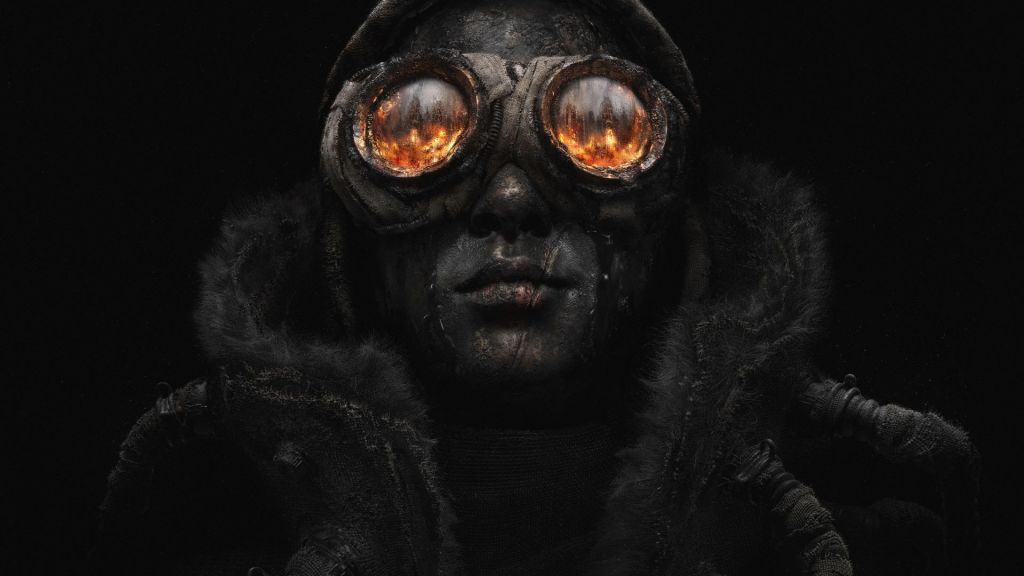
    Although I enjoyed my first experience with the Frostpunk IP on console, I had a feeling the port of Frostpunk 2 would prove more challenging. Despite sharing many core mechanics, Frostpunk 2 is far more menu-driven, with a focus on tweaking supply lines and juggling resource allocation across multiple Frostland sites, rather than restrictive city-building in one location. The result is an engrossing sequel with far greater scope and complexity, but it doesn’t always gel with a controller.

    That said, Frostpunk 2 is still a great sequel so long as you’re not after more of the same. The campaign and sandbox-style missions begin with the familiar task of building up a settlement around a generator and exploiting local resources, but it takes less time to establish a logistics hub and dispatch Frostland teams to explore a sprawling over-world map. There are technology paths that focus on fortifying and sustaining a single mega-city by tapping into unlimited resource deposits, but the branching campaign chapters will still force you to explore the Frostlands to either settle or loot distant locations.

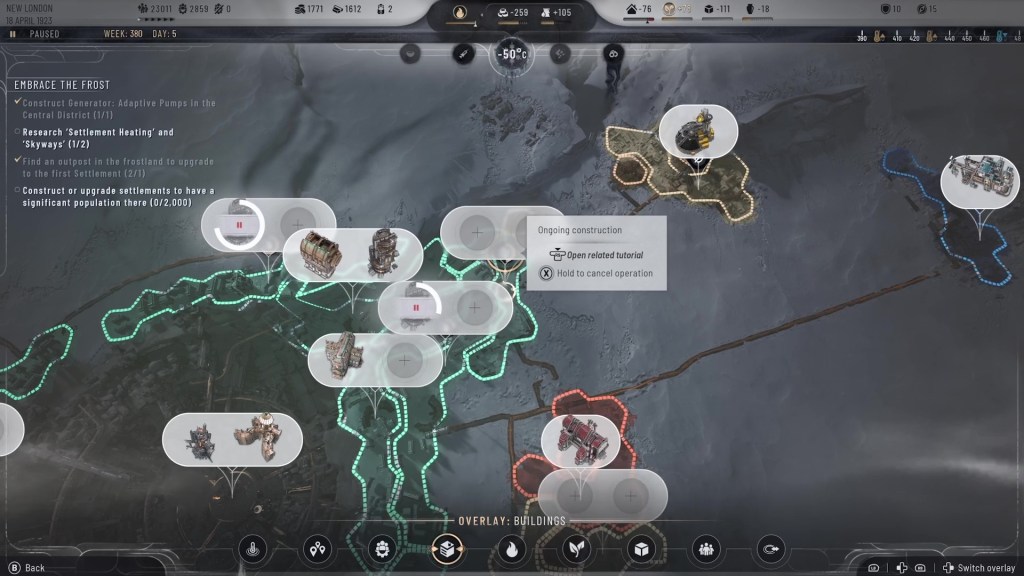
    Frostpunk 2 feels considerably more epic in scope thanks to new mechanics and an accelerated timeframe. The in-game clock hurtles forward through days and weeks, so it plays out over years and decades, rather than the days and months of the original. The city-building elements – which now involve sprawling districts, hubs, and key buildings – feels less exacting. In contrast, menu-driven systems that control the flow of heat and workers across your city are vital, and so too are Frostland supply lines let you balance the flow of colonists, food, fuel, and goods between settlements and outposts.

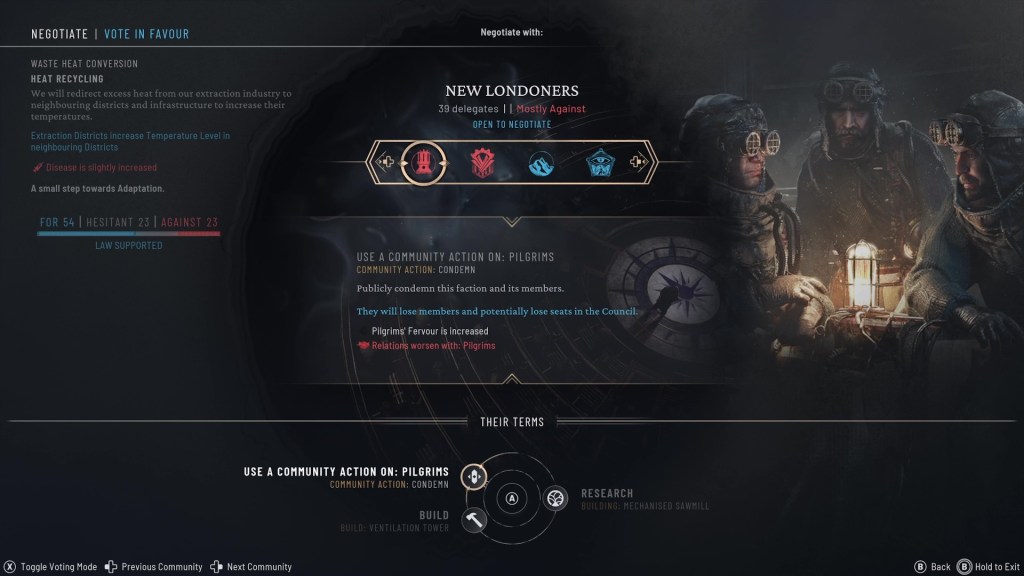
    Some may find the reduced focus on city-building disappointing, but there are new and expanded mechanics to keep you engaged. The most obvious is the new council and enhanced interplay of factions within your city. It starts with a simple vote to keep your player on as a steward (which can trigger an early game-over screen) but you’ll soon find yourself using these council sessions to vote on introducing new laws. These govern everything from education and social support, to policing and healthcare – all of which come with pros, cons, and faction preferences. If you play your cards right, there is even a path to entrench yourself as an autocratic leader who rules by edict.

    Factions can organically support your decisions, negotiate over future policy and research goals, or force you into a vote if you’ve ignored their requests for too long. If a faction gains dominance, they can start claiming housing districts, offer more support if you’re aligned with them, develop potentially problematic rituals, and even rebel against you – damaging structures and your economy. There is plenty of leniency on the lower difficulties, but a combination of social unrest, fanatics, sabotage, and the elements can conspire to destroy your settlement if problems are left to fester.

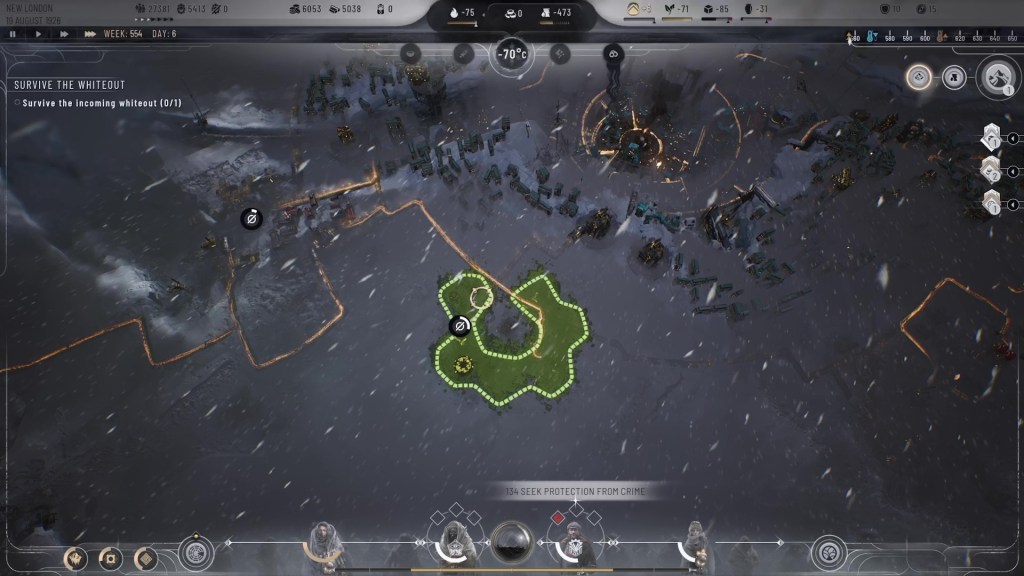
    It is a complex and sometimes overwhelming interplay of systems, but it is incredibly satisfying to keep your city thriving on the edge of disaster – especially when you are reaping the rewards of an earlier narrative decision or newly researched technology. Gameplay can feel dry as you simply define development zones, flip between information overlays, and shift sliders, but the audiovisual elements are immersive. The city announcer, citizen comments, and short narrative vignettes convey the impact of your choices. Machines clear the ice, basic foundations grow into bustling districts, and well-lit paths and heat pipes connect them. Better still, you can zoom right out into the Frostlands view, zoom back into secondary settlements, or pan across the over-world map to track approaching Whiteout storms that still threaten your settlements from time to time and cut off distant outposts.

    Unfortunately, all that complexity means playing Frostpunk 2 on console (or on PC using a gamepad) will have you fighting the controls just often enough to be frustrating. Selecting the wrong structure in a radial menu or placing a district in the wrong spot is annoying but manageable. Struggling to navigate the screen overlay icons or struggling to shift sliders in sensible increments is far more impactful as the game goes on. When you throw in other annoyances – like repeatedly zooming into a settlement while trying to connect Frostland supply lines, or tutorial pop-ups that won’t close – Frostpunk 2 can begin to grate. I just hope 11 bit Studios is still working on refining the control scheme as the rest of the package is an excellent choice for fans of the city-builders and management games with a survival twist.

    Pros:

    • It’s easier to establish interconnected cities and settlements
    • Managing political factions is almost as stressful as managing resources and the elements
    • The choice-driven campaign changes up how later chapters play out
    • Generator cities, settlements, and the Frostlands all look and sound more beautiful than ever

    Cons:

    • The gamepad control scheme feels smartly designed but is awkward and sometimes frustrating in practice
    • It can feel like a pure management game at times as you navigate menus, overlays, and maps

    Score: 7/10

    Frostpunk 2 was reviewed on Xbox Series S|X using a code provided to gameblur by the publisher. It is also available on PC and PS5.
  • Review: Final Fantasy XVI Complete Edition (Xbox Series)

    Review: Final Fantasy XVI Complete Edition (Xbox Series)

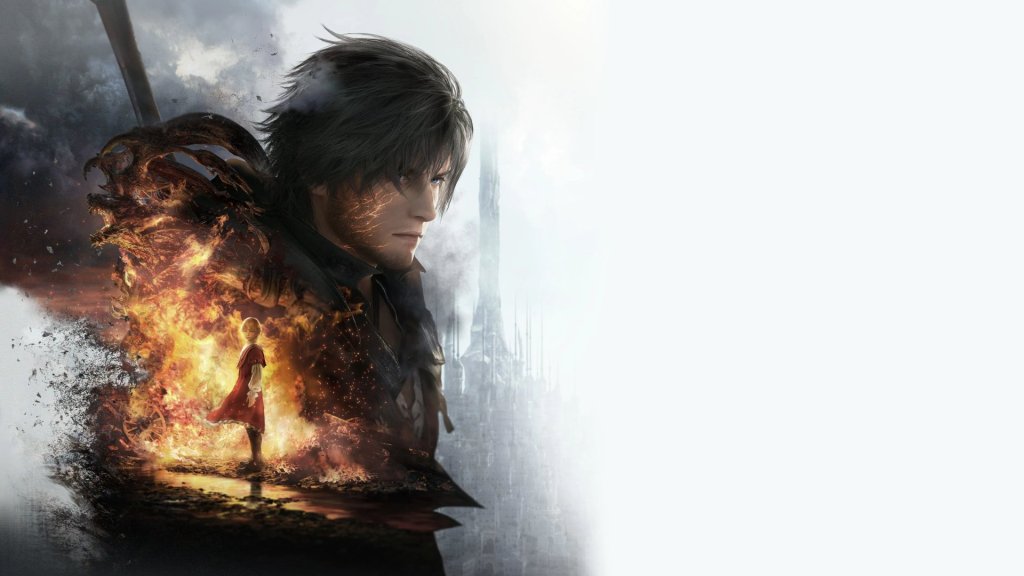
    With Final Fantasy XVI, Square Enix has continued to experiment with and dramatically depart from their flagship IP’s traditional roots. At the same time, it is a game that feels closer to those classic roots than the series has been for some time. That experimentation, over the course of many mainline games and spin-offs, has had variable degrees of success that seems to have finally culminated with the splashiest Final Fantasy to date.

    To say that Final Fantasy XVI feels like the offspring between Final Fantasy and Devil May Cry will give you a clear indication as to what Square Enix has cooked up with this one. Now, two years after its initial PS5 launch, Xbox Series owners can join in on the fray.

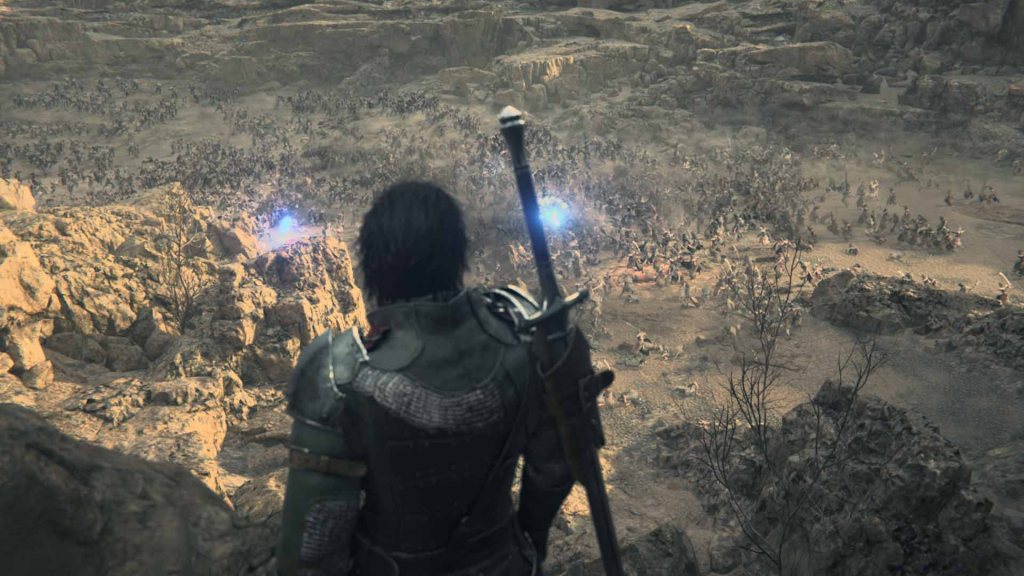
    Final Fantasy XVI takes place on the continent of Valisthea, a world on the brink of an environmental disaster that pushes the world’s nations into resource-driven conflicts. Players are dropped into the shoes of Clive Rosfield, a young lord whose empire is destroyed overnight and his younger brother murdered. Clive embarks on a journey of vengeance to find his brothers killer, a journey that will reveal mysteries about himself, while plunging the world deeper into political conflict.

    Final Fantasy XVI is the very definition of an action-RPG. This is a big, bold, and splashy visual extravaganza, much like a summer blockbuster movie, that straddles the line between hack-and-slash and JRPG. Those expecting a return to traditional mechanics will be disappointed as the RPG elements are stripped back even further when compared to previous entries in the series.

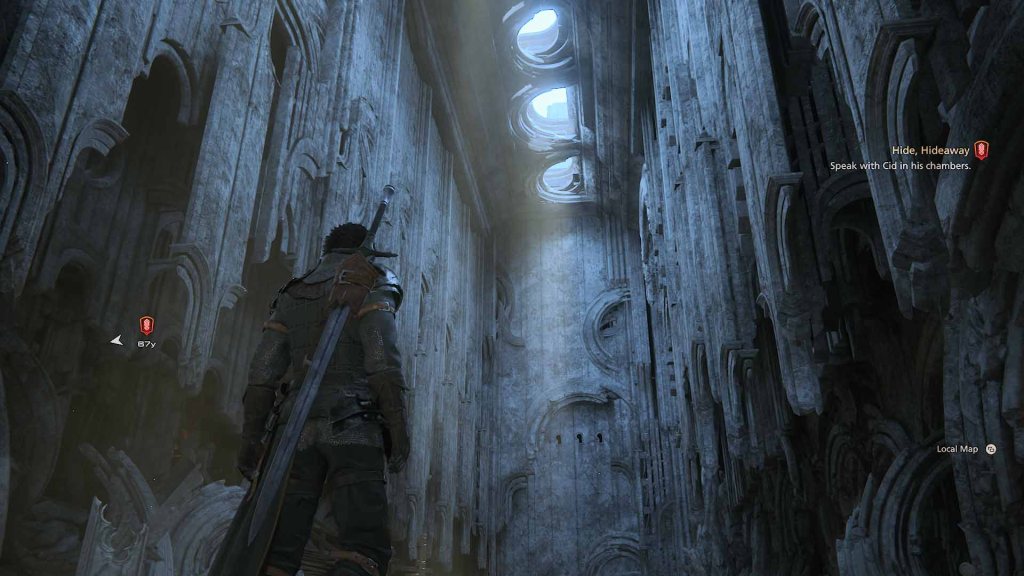
    The main essence of an RPG still remains, with plenty of locations to explore and angsty moral dilemmas to chew on. There are enough NPCs to speak to that flesh out the world, and there’s a lengthy, complicated story that veers from vengeance to world saving. The story is certainly one of the games strongest aspects and benefits from some stellar voice acting that raises the bar for the series.

    The story and setting are where the game does hark back to its roots. The ubiquitous crystals are here, along with a medieval fantasy setting reminiscent of the original hexalogy, and a story that veers between personal and political.

    Gone, though, are tons of items to manage in your inventory, replaced by a moderate amount of consumables that are hot-linked for combat. Instead, copious amounts of crafting materials take the space normally reserved for endless inventory glut. The amount of gear you can equip has also been scaled back, limiting you to a weapon and some accessories that change up your effectiveness in combat significantly. Gone too is an overworld to run around in, replaced by a world map that lets you fast travel between locations. The locations themselves are large enough to allow for exploration on the back of a Chocobo, but can’t hide the games overall linearity.

    In its place are systems more at home in action games. There are skill trees to purchase and upgrade new abilities, while combat loadouts play a significant role towards the end-game. Clive’s combat abilities allow for the use of fast sword strikes that can be charged up for heavy blows; the use of magical abilities based on the elements; a dodge that can allow you to counterattack if done quickly enough; and a quick dash that’s close to a classic teleport move.

    Party members help out in combat as well, which allows you to chain combos with them or use your trusty hound, Torgal, to launch enemies into the air for some punishing aerial combos. Instead of learning traditional FF spells, Clive can harness Eikon abilities. Eikons in Final Fantasy XVI are the classic summon spells, only this time Bahamut and its ilk play much larger roles in the game. Literally.

    Clive can use the abilities of Ifrit, Phoenix, or whichever Eikon you’ve beaten to spice up combat significantly, flowing between hectic sword strikes into Eikon specific abilities: such as launching walls of flame across the ground or multiple wind-based slashing attacks that look and feel stupendous when used in an air juggle.

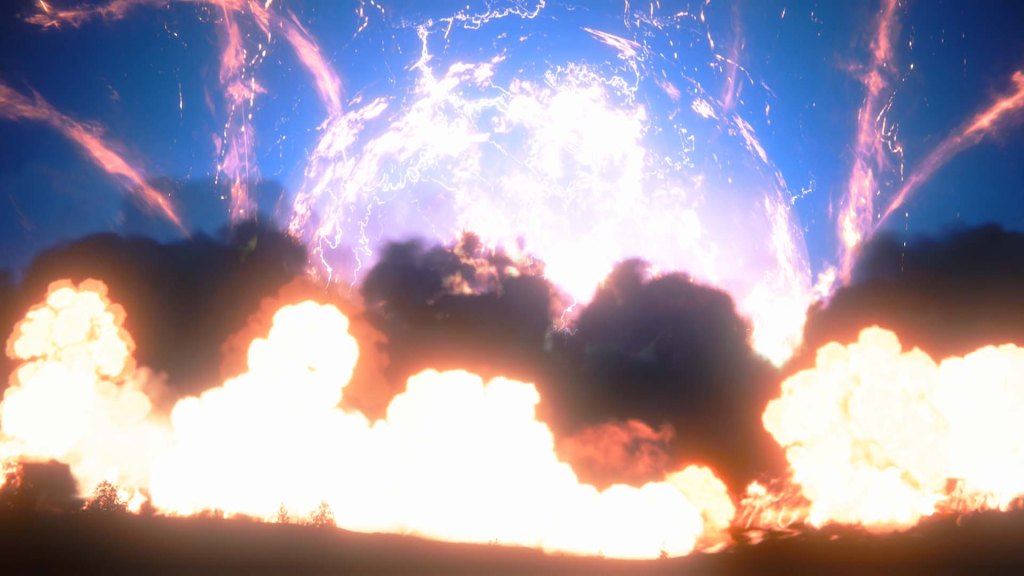
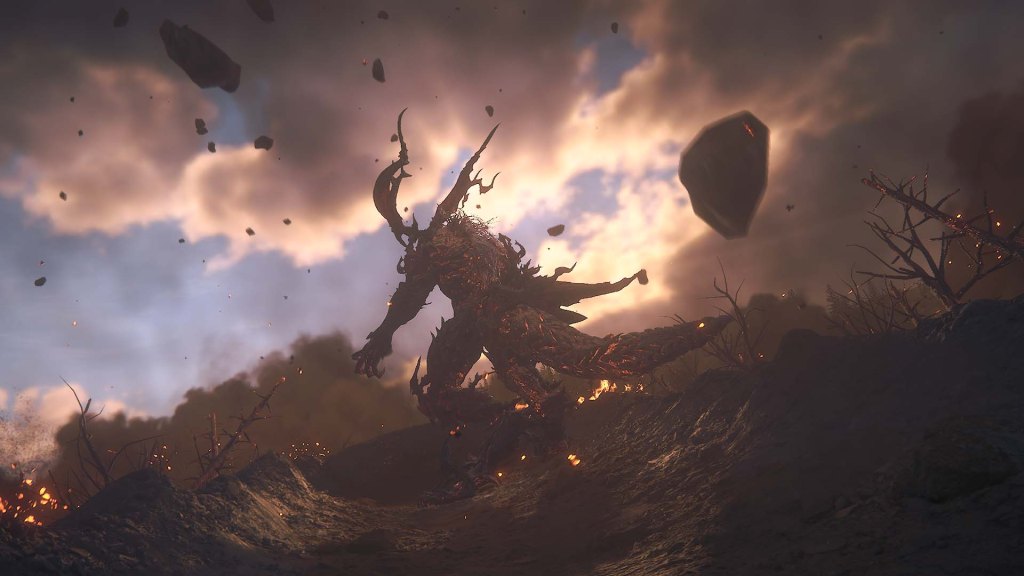
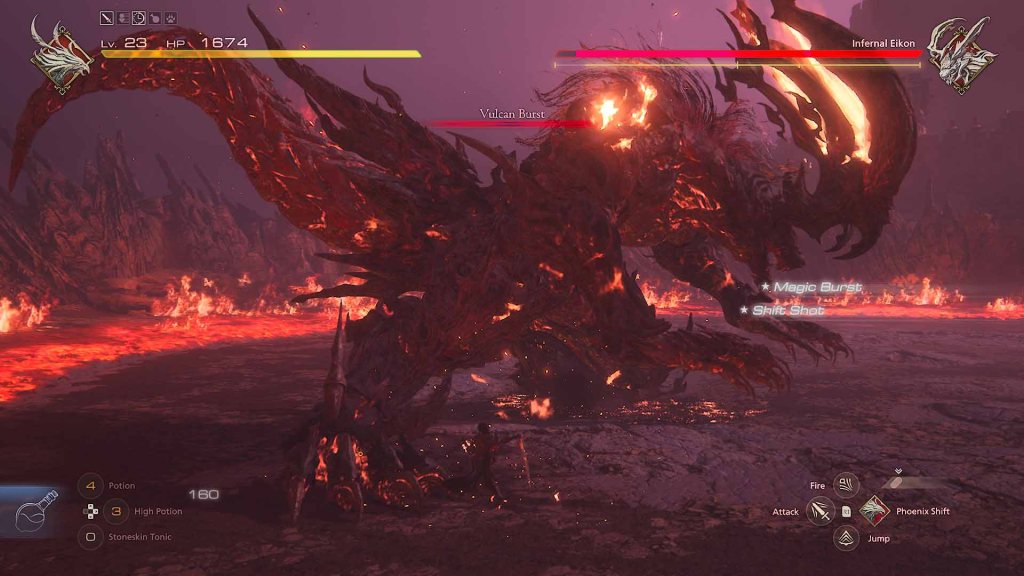
    The big selling point for Final Fantasy XVI are the Eikon fights, in which you either transform into one yourself, or take on one of them in a blistering duel of pyrotechnic spectacle that’s right up there with any modern high octane Kaiju fight. As good looking as Final Fantasy XVI is, it’s these moments that are truly a sight to behold and the games showcase. Make no mistake, normal combat is blisteringly fast and flashy, with enough special effects and fireballs thrown around to trigger an epileptic fit, but it pales in comparison to the Eikon battles that are on par with any modern Hollywood blockbuster.

    From Crisis Core to Final Fantasy VII Remake, it’s a testament to how much Square Enix have learned over the years that I can call Final Fantasy XVI’s combat thrilling.

    That said, Final Fantasy XVI isn’t a perfect game. The pacing can be inconsistent in terms of how much is doled out for you to tackle.

    The bulk of the game favours a linear thrust to keep the story flowing, with the occasional side-quest doled out to offer a break and help with the world-building. However, towards the games climax, you’re suddenly inundated with a list of people to help out. I’m all for more content, but these optional quests could have been better sprinkled throughout the games runtime to break up the corridor feeling that the main story evokes.

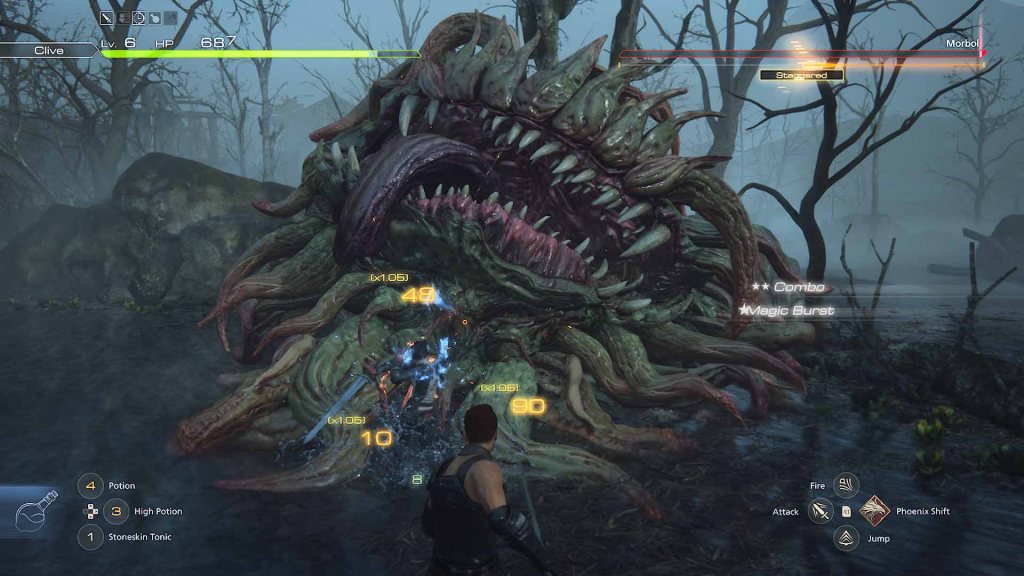
    Combat-wise, the game also favours bullet-sponge enemies and bosses, which makes many fights last far longer than they should. There’s a stagger mechanic at play that lets you stun an enemy for a short duration once you’ve broken its stagger bar. The further into the game you get, the more reliant you become on exploiting this mechanic to deal significant amounts of damage. Towards the endgame, it’s essential to set up your character to quickly break stagger bars and keep the enemies in a stun-lock state. This overrides a lot of the thrill of the games heavily DMC-inspired combat, as it becomes less about skilfully chaining attacks and more about triggering staggers to shave those massive health bars down.

    As with the PS5 version of the game, the Xbox Series X version comes with two graphic modes: Quality and performance. Quality favours visual fidelity with a 30fps frame rate, while Performance favours a 60fps frame rate at the expense of visuals. Both modes on Series X ran well and I never noticed performance issues regardless of which mode I played with.

    Performance mode feels silky smooth, but that does come at a noticeable visual cost. It runs at a much lower resolution that makes the visuals seem a little blurry and less defined. And with a game so built on visual spectacle as this one, a lower resolution really isn’t the way you should have to experience it.

    Quality mode still has visual issues if you look closely enough, such as shimmering when the characters move, but the performance is still rock solid and fast enough that I never felt as though the 30fps cap was limiting me in anyway.

    Final Fantasy XVI Complete Edition Eikon Battles Xbox

    The last thing to touch on that the Complete Edition of Final Fantasy XVI obviously comes with the two expansions: Echoes of The Fallen and The Rising Tide. Both add even more goodness to an already stacked game and, with the Complete Edition installed, you’ll be able to access them at key points during the main campaign.

    Elevated by an intensely fun battle system and stunning voice acting, Final Fantasy XVI is easily one of the best mainline games in the series in recent years. It manages to capture the spirit of the original games with a strong story and great characters, while the spectacular boss battles and pyrotechnic visuals are the icing on a particularly wonderful action-RPG cake.

    Pros:

    • Excellent hack-and-slash combat
    • Boss battles are an intense visual highlight
    • The story and setting hark back to the classic games
    • Stellar voice acting
    • Both Quality and Performance modes run well

    Cons:

    • Bullet-sponge enemies drag out battles
    • Poorly paced distribution of sidequests
    • The resolution drop in Performance mode is noticeable

    Score: 8/10

  • Review: The System Shock 2: 25th Anniversary Remaster is a respectful update that had me yearning for a proper remake (Xbox Series)

    Review: The System Shock 2: 25th Anniversary Remaster is a respectful update that had me yearning for a proper remake (Xbox Series)

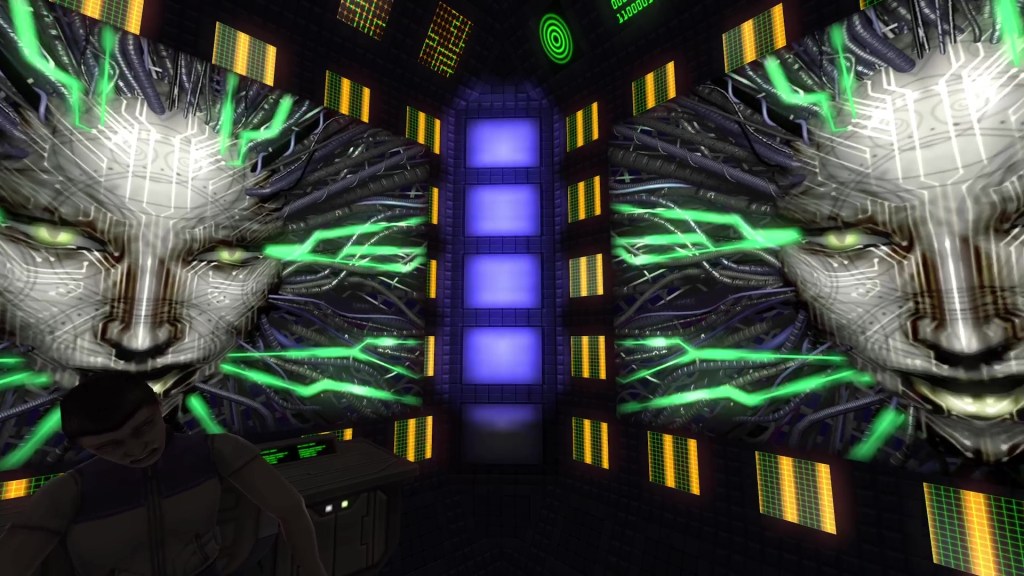
    Nightdive Studios’ System Shock 2: 25th Anniversary Remaster gives modern gamers, across all current- and last-gen hardware, a chance to play or replay one of the progenitors of the immersive-sim genre now running on their flexible KEX Engine. What you take away from the experience, however, might depend on your expectations going in and your interest in video game history.

    It is important to note up front that this 25th Anniversary Remaster still provides much the same gameplay and visual experience as 1999’s System Shock 2 Classic that’s still available on PC storefronts. There are subtle quality-of-life and visual enhancements you might assume were always there; accessibility is improved with competent gamepad support (for PC too); and the PC version retains modding support. Although it’s not how I would recommend experiencing System Shock 2 for the first time, the co-operative mode returns with cross-platform play. It’s a respectful remaster, though PC players with modding experience might find it unambitious.

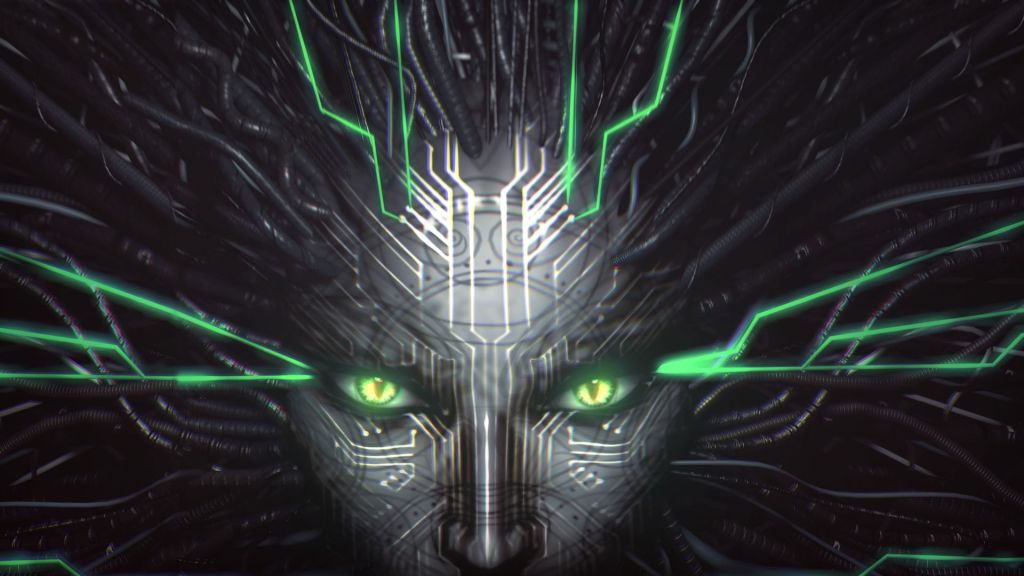
    First-time players coming from the System Shock (2023) remake might struggle with the gameplay and visual regressions in this tale of yet another cybernetically-enhanced, amnesiac protagonist going up against a resurgent SHODAN and her former creations. Nevertheless, I would argue System Shock 2 stands alongside games like 1998’s Half-life as timeless, having established the foundations of a genre. The biggest issue is that unlike the games it inspired – think 2017’s Prey, 2012’s Dishonored, or even its spiritual successor, 2007’s Bioshock – the combat feels incredibly dated.

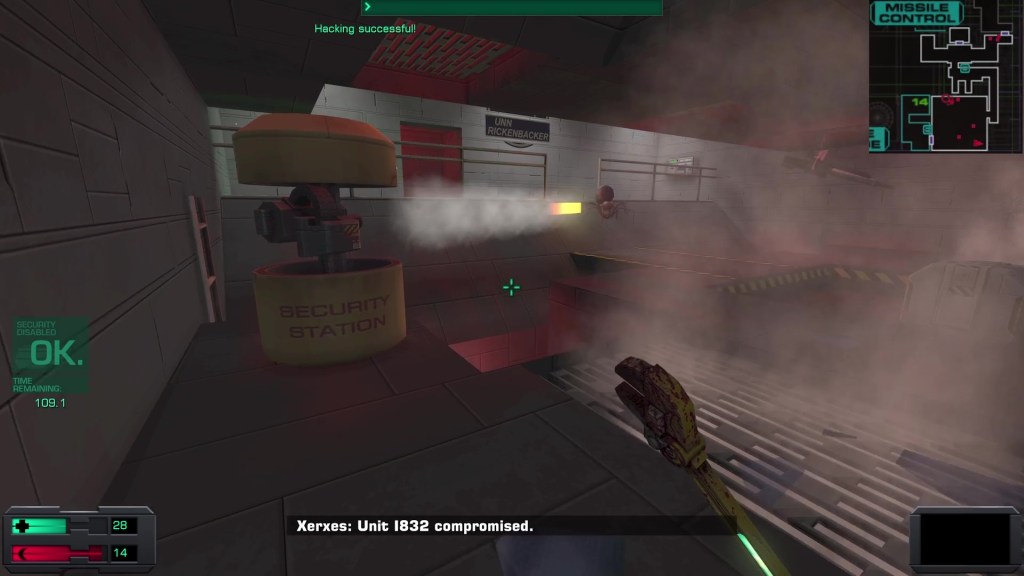
    There is mechanical complexity, with different weapon types, specialised ammunition, and Psi powers best suited to organic, robotic, or hybrid enemies, but the audiovisual feedback is minimal and unsatisfying. It’s more RPG than shooter, with tangible progress measured by how big a chunk of a health-bar each attack removes before triggering a canned death animation. Experienced players could exploit the limited AI and level geometry for easier kills, but new players will find survival a function of their player build, loadout, and resources, not their mobility and aim.

    Regardless of whether you’re swinging a melee weapon that clips through enemies, firing an energy weapon with muted sound effects, or casting a Psi power with underwhelming particle effects, a degree of auto-aim and visible enemy health-bars are needed to offset simple hitboxes, inconsistent hit reactions, and the lack of visceral impact. This weakness would be fatal for a dedicated FPS, but to System Shock 2’s credit, it becomes less significant when you consider the number of other systems and modifiers at play during any given encounter.

    Starting at the beginning, a gamified class-creation tutorial guides you through the basics and introduces three military paths. The Navy career (my preferred choice) offers hacking, repair, and maintenance buffs – all handled through a simple mini-game – that make using conventional weapons, specialised ammunition, and hacked security systems optimal. For those wanting a more direct approach to combat, the Marine career boosts strength, endurance, and weapon skills, which make melee brawls and using heavy or exotic weapons with splash damage feasible – just don’t expect many opportunities to bypass threats.

    If you’re looking for a less conventional experience, the OSA career offers over 30 psionic powers across five tiers. There are mundane alternatives to resistances, weapon repairs, and healing, but you’ll also find creative and potentially game-breaking options like remote hacking, invisibility, organic mind-control, and teleportation. Even the simple direct damage powers offer a unique mechanic that allows you to overcharge them during casting – albeit with the risk of damaging yourself if your timing is off.

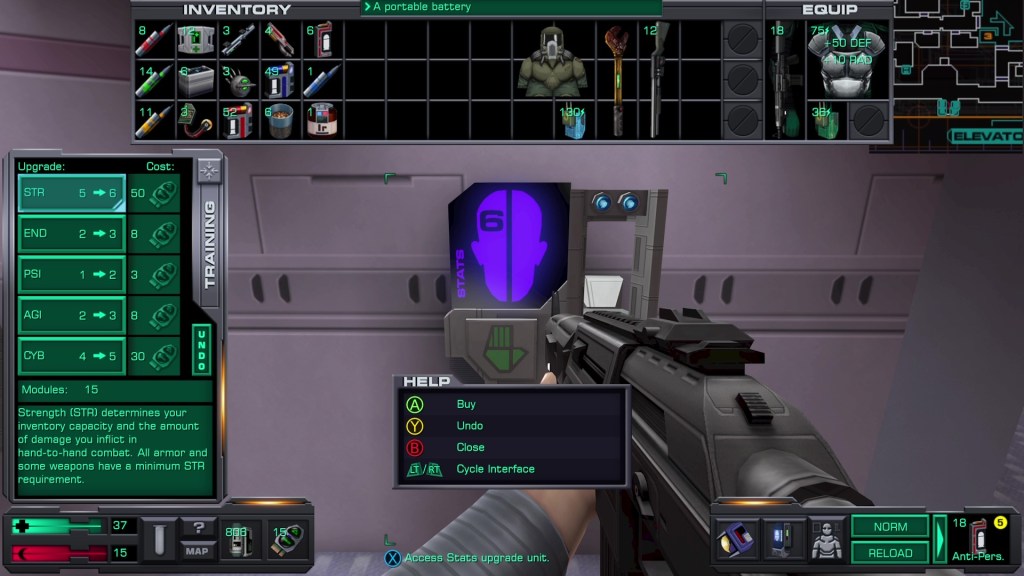
    Regardless of your early choices, every career can invest cyber modules (typically granted as a reward for completing objectives) to boost primary attributes, weapon skills, tech skills, or psi powers. Depending on the chosen difficulty – which modifies health, psi-points, and the cost of upgrades – it makes sense to prioritise a few to stay ahead of the escalating difficulty curve, but multi-classing is viable if you thoroughly explore for additional cyber module stashes.

    You can tailor your build even further with four OS upgrades for powerful passives; energy-draining armour and implants; and there is no shortage of consumables to keep you alive during protracted fights or when navigating hazardous areas. There are also organic and robotic components to research for new weapons and damage buffs against enemy types – though a dedicated research skill and backtracking to chemical storerooms for research material still feels like poorly-implemented padding.

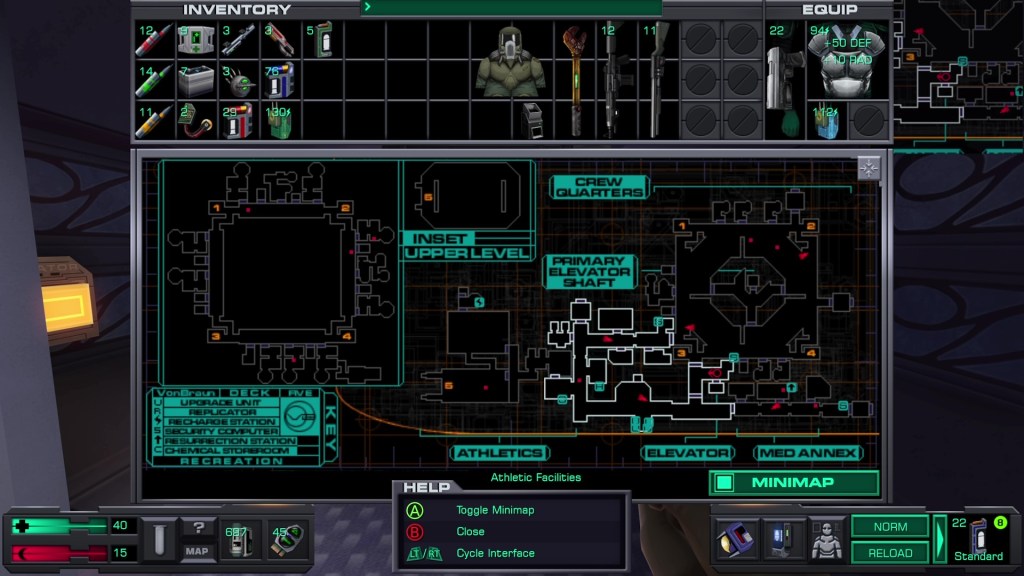
    Exploration is still a key element of gameplay, even if the level design and quest structure lack the degree of flexibility seen in modern immersive sims. The menu interface tracks overarching objectives and even the steps taken towards completing them, but clues on how to progress are still found in scattered audio-logs that are often easy to miss. Keycards, keypads, and environmental hazards gently guide the player, but even with a detailed map, System Shock 2 is a game in which you need to take note of text logs and environmental signposting to avoid frustration.

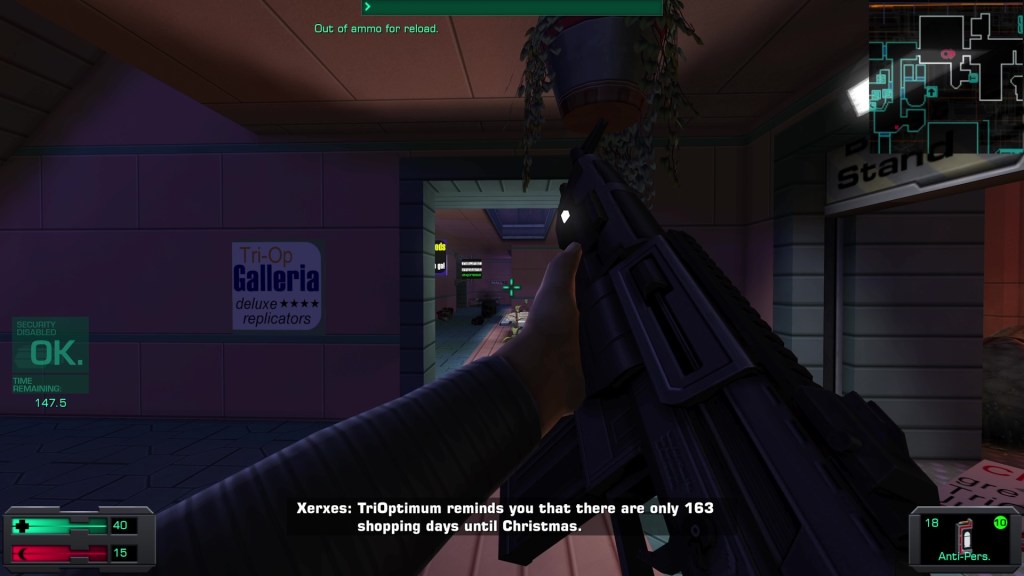
    That said, methodical exploration is how you come to appreciate what all good immersive sims excel at: rewarding or punishing player agency based on how cautious or reckless they are. The decks of TriOptimum’s Von Braun starship and the UNN Rickenbacker are not as large or maze-like as Citadel Station, but the first two-thirds of the game will take you through them more than once and it becomes difficult to avoid combat. You will often open new paths between the interconnected map segments, and there’s incentive to return with improved skills to access new gear or cyber module stashes.

    You slowly come to recognise which routes bypass patrolling enemies; which rooms near central elevators are best used for item storage; and which upgrade terminal, recharge station, surgical bed, or vending machine is the safest to return to when you need to restock. The narrative moves forward as you complete objectives, but the more you explore, the more audio-logs you find that expand on secondary story arcs. These delve into the discovery of the parasite known as The Many, the corruption of the Xerxes AI, the internal strife and downfall of the crew, and the return of SHODAN.

    As with the original System Shock and its remake, fear of the unknown gives way to empowering familiarity – but that is not to say System Shock 2 is forgiving of reckless play. Aside from robust melee weapons that serve as a last resort for late-game enemy variants, weapons degrade with use and ammunition, psi-hypos, and the nanite currency – used for hacking and vending machines – are effectively finite.

    A lack of resources coupled with a few dubious and unaltered quests never impedes progress, but it can kill the pacing. Looping around the recreation deck looking for codes hidden in artwork was as tedious as ever; consuming my last nanites to hack a vending machine that then forced me to buy a quest-essential item was infuriating; and hunting eggs in convoluted engine deck of The Rickenbacker was only marginally less tedious than the aforementioned artwork code hunt.

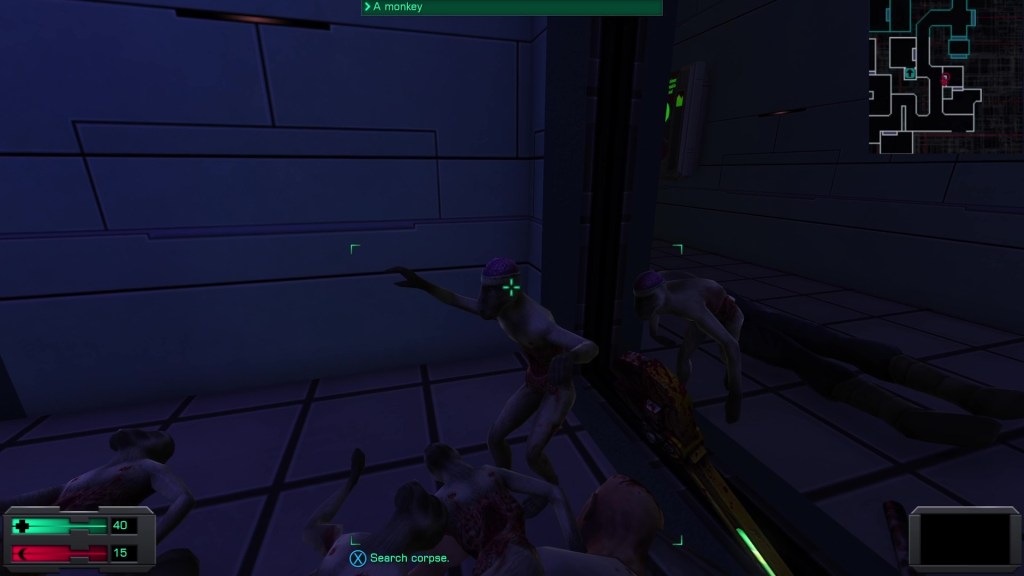
    As such, the System Shock 2: 25th Anniversary Remaster offers both anachronistic fun and frustration – to the point I was enjoying it but simultaneously thinking how much better a full-blown remake like System Shock (2023) would be. The visual enhancements, like improved textures, ambient occlusion, and more intricate weapon models make a significant difference when compared side by side, but it ultimately looks and plays like the early 3D FPS-RPG hybrid it is.

    As fan of the genre and the original, it feels like a smartly remastered and well-priced excuse to replay it, but I have doubts new fans of the IP coming from the System Shock (2023) remake will find it that playable. On the other hand, those with a gaming history going back a decade or two could treat it as a playable history lesson, showcasing the origins of many mechanics, scenarios, and storytelling methods you’ll have seen in later games.

    Pros:

    • A smart and respectful remaster that preserves System Shock 2’s timeless qualities and a few flaws
    • The updated textures, ambient lighting, and new weapon models don’t gel with the original designs
    • Competent gamepad controls and a multi-plat release improves accessibility
    • There’s only one cyberspace section at the end (which I guess some might consider a negative)

    Cons:

    • It ultimately looks and plays just like the late ‘90s early 3D FPS-RPG hybrid it is
    • Some laborious objectives remain unaltered and can drag down the pacing

    Score: 8/10

    System Shock 2: 25th Anniversary Remaster was reviewed on Xbox Series S|X using a code provided to gameblur by the publisher. It is also available on PC, Xbox One, PS4/5, and Nintendo Switch 1/2.

  • Review: S.T.A.L.K.E.R.: Legends of The Zone Trilogy Enhanced Editions (Xbox Series)

    Review: S.T.A.L.K.E.R.: Legends of The Zone Trilogy Enhanced Editions (Xbox Series)

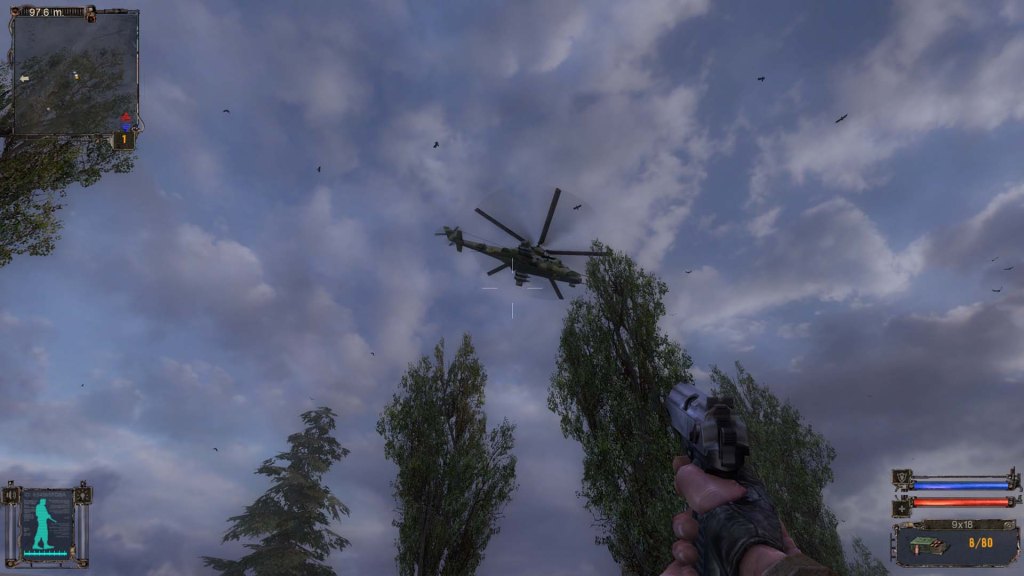
    My experience with the original S.T.A.L.K.E.R.: Shadow of Chornobyl, released way back in 2007, was a brief affair of unrealised possibility. An experience quickly neutered by the numerous bugs and awful performance. It was a game I always meant to get back to but never did. The game spawned two expansions in the following years; Clear Skies and Call of Prypiat and, in 2024, a Legends of The Zone Trilogy that bundled all three games arrived as a refined package for last-gen consoles – with backward-compatible performance modes for current-gen consoles.

    This release was a timely affair, coinciding with the long-awaited and highly-anticipated sequel, S.T.A.L.K.E.R. 2: Heart of Chornobyl. A little over a year later, the “enhanced” Legends of The Zone Trilogy has arrived as an alternative to the PC originals, and offers a few embelishments for modern consoles. The question is, does this update make it worth braving the radioactive and mutant-infested wilds of The Zone again?

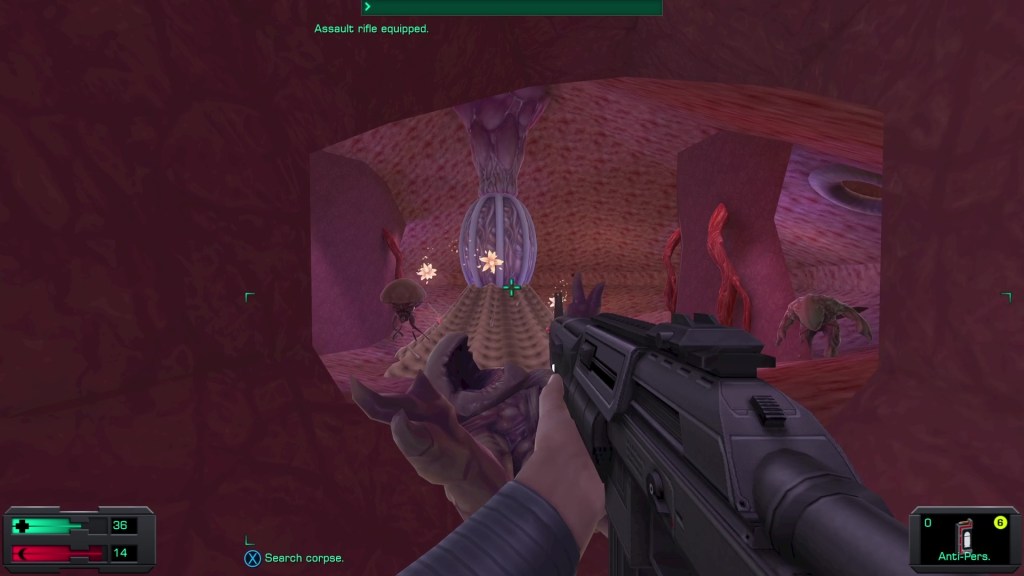
    Before we get to that, S.T.A.L.K.E.R. is, if you have never played it, an FPS survival-action hybrid that dips its toes into the scientific-horror genre. As the name implies, it’s set after the Chernobyl nuclear meltdown that, in this universe, has given birth to The Zone, a large expanse of land now haunted by radiation pockets, deadly anomalies, and all manner of nightmarish, mutated creatures. Into this inimical landscape have come the titular stalkers; soldiers, mercenaries, and all manner of folks for whom the draw of The Zone is too much to ignore.

    In the original, you play as an amnesiac stalker, on a journey to find and eliminate another stalker named Strelok, who once made it to the mythical centre of The Zone. What has he done to deserve this fate, and how does it tie into the ongoing expansion of The Zone? All these questions, and many more, may be answered in your journey.

    The prequel, Clear Skies, and direct sequel, Call of Prypiat, throw you into the boots of different stalkers, fleshing out events that led into Shadow of Chornobyl, and setting the scene for the sequel, S.T.A.L.K.E.R. 2: Heart of Chornobyl.

    Despite new mechanics and quality-of-life improvements in the subsequent games, the one thing that remains consistent is the unforgiving, hardcore, role-playing experience. The life of an unprepared and reckless mercenary is short, and life in The Zone is shorter still.

    While most FPS at the time were content to continue as blistering fragathons, the S.T.A.L.K.E.R. games chose a more RPG-like and survival-focused approach. Supplies were in short, well, supply. Armour would deteriorate. Weapons would jam. Pockets of radiation and anomalies littered the landscape, so you had to keep an eye on your Geiger counter and detector while simply exploring.

    Gunfights against mutants and other stalkers were tense affairs that could result in a lot of autosave or quick-save reloads. Even if you found exoskeleton armour and a decent shotgun, you were no Duke Nukem, and running around in the open was certain death.

    Finally, there was the quest and reputation system to keep you pushing deeper into The Zone. All three games are full of primary quests and no shortage of secondary tasks to earn money and move the story along. All of which results in a lot of back and forth across the relatively large and dynamic world. Add in a quest failure system and NPC’s that could be killed, and you have a game that requires careful thought to how you approached its world and tasks.

    Now while I use the term “roleplaying”, it’s not in the traditional videogame sense. There are no skill trees to upgrade or new abilities to learn. Improved weapons and armour can be picked up or crafted in the later games. Instead, roleplaying is about how you approach the game, its many combat scenarios, and a few mission choices. It’s about immersing yourself in the experience and taking responsibility for acquiring gear and stockpiling sufficient ammunition and consumables before heading out.

    By today’s standards, what S.T.A.L.K.E.R. was attempting with its gameplay may seem commonplace but, at the time, it felt groundbreaking and its influence can be seen in the Metro IP and no shortage of other first-person survival games since then.

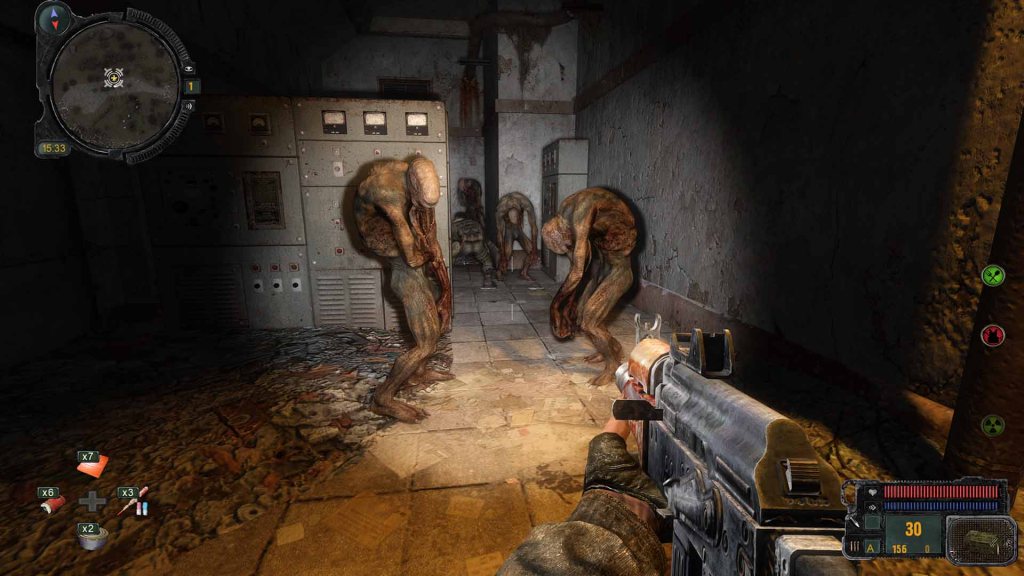
    The “Enhanced” editions boast a number of changes, from bug fixes to an enhanced UI, gamepad support, and other quality of life changes. Beyond resolution and framerate optimisations for current-gen consoles, there are a myriad of visual tweaks.

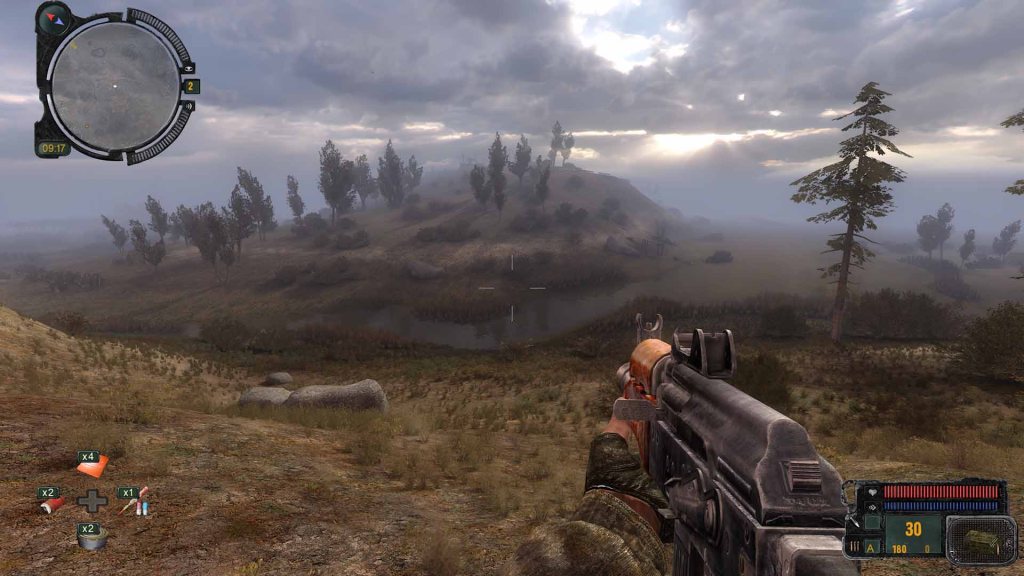
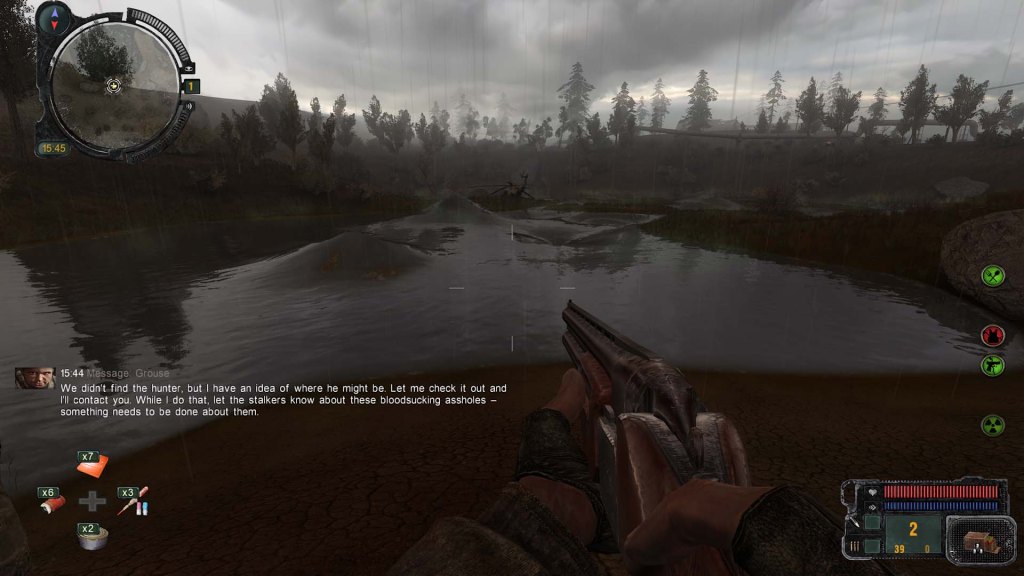
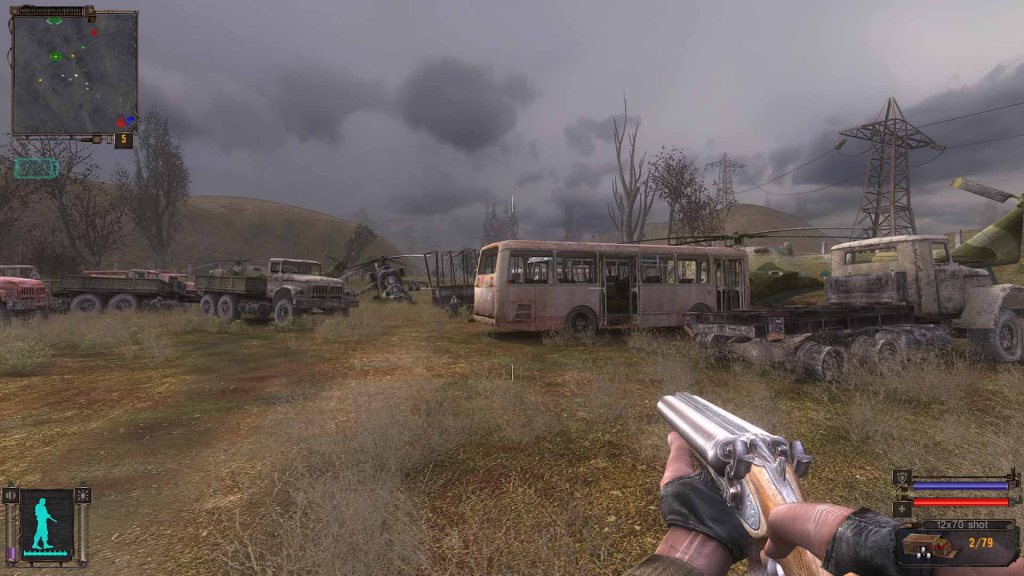
    Water quality and surface shaders result in a more realistic appearance for fluids, with wetness shaders to make the world look that much more muddy. Skyboxes and atmospheric effects have been enhanced too and look fantastic, with a more painterly look to the clouds that better match the various weather settings and locales.

    Legends of The Zone Enhanced Lighting Upgrades
    The field of view has been expanded if you want it, and textures for characters, clothing, weapons, and the environment have also received an overhaul, featuring more noticeable details such as creases on cloth and the wrinkles on character faces. Perhaps the most significant change was to the lighting system, which includes new effects and global illumination. Rounding out the visual enhancements are screen space reflections that look great on water surfaces in a few maps.

    There is a big caveat though. If we’re comparing the Legends of The Zone Trilogy – even before this latest update – to the original PC S.T.A.L.K.E.R. release, the difference is night and day. But if we’re comparing it to last years console release, it gets a little muddier. In short, this release is going to feel most impactful to PC players who have only experienced the vanilla games, are looking for official gamepad support, and aren’t interested in modding the game.

    Unless you’re starting off with Clear Skies or Call of Prypiat, both of which give you a nice view of the new water effects and reflections in their swampy starting areas, the bulk of the additions will be barely noticeable to returning console players.

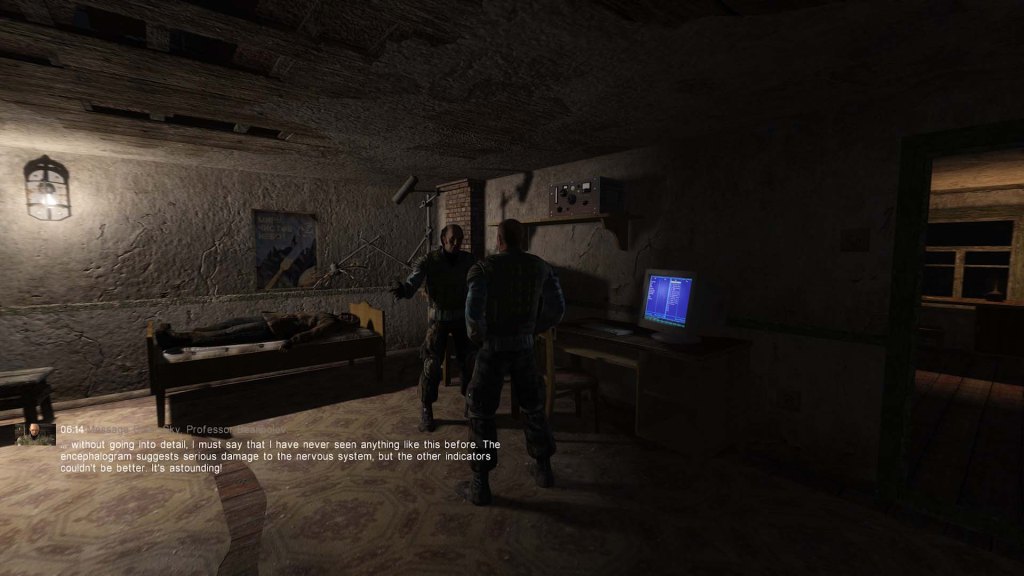
    Nowhere is this more true than in Shadow of Chornobyl. While the updated character textures are noticeable in direct comparisons, aspects like the changes to the lighting system either don’t stand out much, or don’t interact with environments and NPC’s in the way you’d want them to. As an example, in the opening scene that has you chatting with the merchant Sidorovich, you’ll immediately notice how the lighting emphasises the polygonal nature of his face but does not illuminate it correctly as it moves.

    As later and more refined releases, Clear Skies and Call of Prypiat interact better with the new visual features, while Shadow of Chornobyl probably needs a more substantial overhaul of assets. These are 18-year-old games after all, and it would take a full remastering to bring them up to modern visual standards.

    One the upside, these enhanced Legends of The Zone versions of the game are a free upgrade to all owners of the PC originals (on Steam and GOG) and for consoles bar the original Nintendo Switch at the moment – something I expect may change with the arrival of the Nintendo Switch 2.

    While the enhancements may not be as visually enthralling or noticeable as one would hope on console, they’re still nice additions to a classic collection of games whose PC originals are looking a bit long in the tooth – particularly for those who don’t want to navigate the trial and tribulations of modding (and just because you’ve been doing it all your life, that doesn’t make it easy for others).

    GSC Game World also deserves credit for simply ensuring these iconic and influential games remain accessible on as many platforms as possible. Regardless of your feelings on the visual “enhancements”, S.T.A.L.K.E.R.: Legends of The Zone Trilogy Enhanced provides some much-needed fixes while keeping the spirit of the original games intact.

    S.T.A.L.K.E.R.: Legends of The Zone Trilogy Enhanced was reviewed on Xbox Series S|X using a code provided to gameblur by the publisher. It is also available on PC and PS5.
    Pros:

    • It’s a solid choice for PC players who want gamepad support and dislike modding
    • The spirit and atmosphere of the original games is untouched
    • New water shaders and screen space reflections look great in a few areas
    • The new skyboxes are wonderful and better match weather conditions

    Cons:

    • Console players will find most enhancements difficult to spot compared to the 2024 release
    • Shadow of Chornobyl doesn’t always work well with the updated lighting

    Score: 7/10

  • Impressions: Tainted Grail: The Fall of Avalon Console Port (Xbox Series S|X)

    Impressions: Tainted Grail: The Fall of Avalon Console Port (Xbox Series S|X)

    I’m always excited for ambitious indie or “AA” RPGs, especially those that might offer serious mechanical or narrative depth – even if it is often found under a veneer of jank like much of Piranha Bytes’ output. In recent years, I’ve sunk more time into both classic and new budget RPGs, like Gothic, Two Worlds, ATOM RPG, and Chernobylite, than I have into AAA RPGs that usually offer incredible production values at the expense of gameplay freedom or branching narratives. Tainted Grail: The Fall of Avalon in one such mid-tier RPG, with a console port arriving after a year in PC early access. Unfortunately, without serious optimisation patches, the result is a mix of admirable ambition and infuriating instability that is much tougher to recommend than its highly praised PC counterpart.

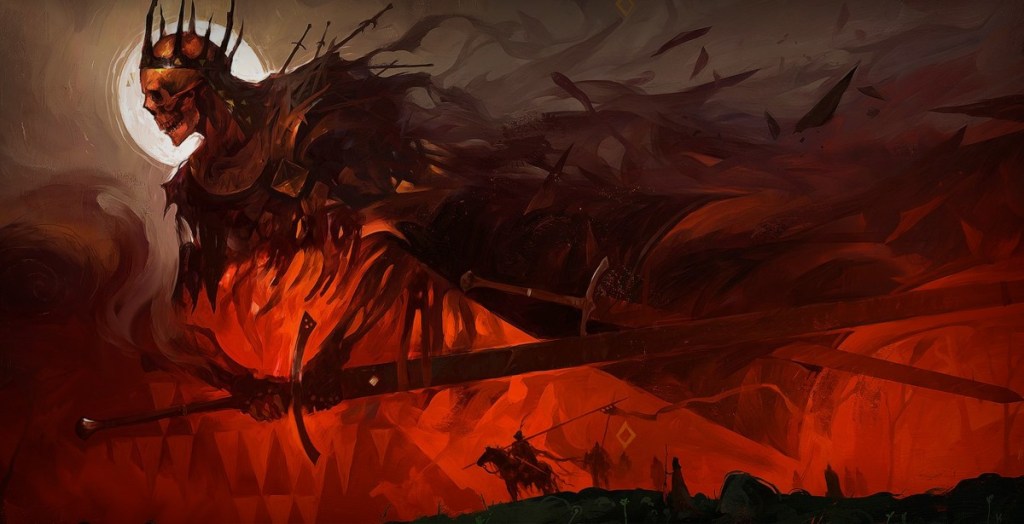
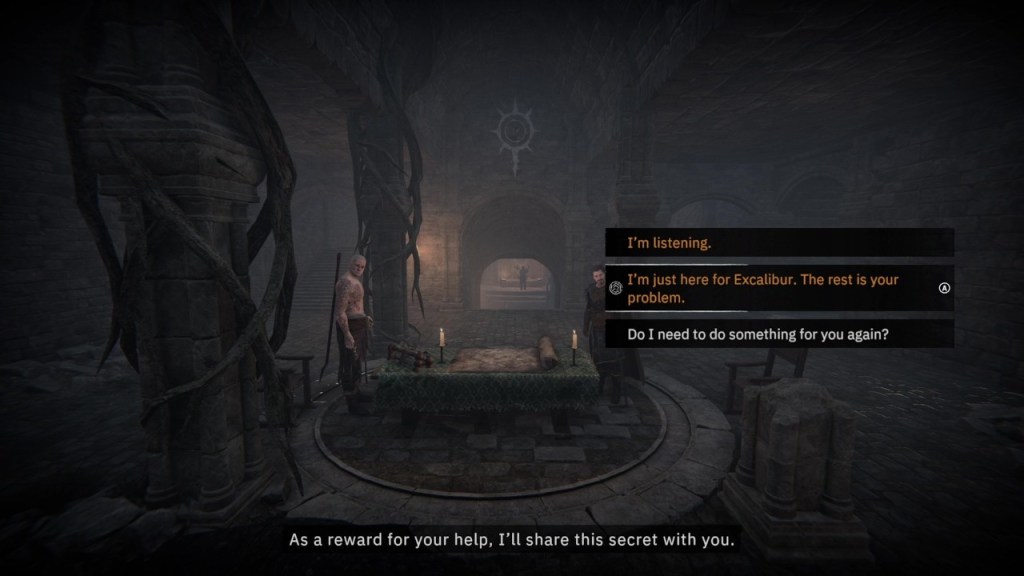
    Starting with the good, Tainted Grail: The Fall of Avalon’s grimdark reimagining of Arthurian legend provides a strong narrative hook. Centuries before the game takes place, a relentless plague – the “Red Death” – swept over Arthur Pendragon’s homeland, forcing him to lead survivors to colonise the mythical island of Avalon and drive back the presence of “Wryd” magic using ancient menhirs activated by Merlin. Your protagonist finds themselves imprisoned on Asylum Island just off the coast, tortured by “Red Priests” that have turned to increasingly desperate and brutal methods to treat the resurgent plague. During this prologue, your hero is bound to a fragment of King Arthur’s soul – now a spectre seemingly oblivious of recent events, who wants to be reborn to restore his kingdom. Unexpectedly, a Knight of the Round Table that aids your escape seems intent on destroying the soul fragments and preventing his rebirth.

    Shipwrecked on the misty southern shores of Avalon, you soon discover that Arthur has been revived multiple times over the centuries to restore the Kingdom of Man, but those efforts have been in vain. The Wyrdness continues to reclaim more of the island, corrupting humans, animals, and mythical beasts. Society has become increasingly brutal, with those taking up the mantle of a Knight of the Round Table no less savage than the bandits that raid caravans and villages. Conflict is brewing between Kamelot and the local human tribes, while a schism in Kamelot’s Court might result in civil war. It’s a dark and blood-soaked setting for a suitably dark and blood-soaked game, but the overarching goal is made clear from the start: regardless of the factions you aid or hinder along the way, you’re going to collect the fragments of Arthur’s soul to revive him or destroy him.

    The basic gameplay loop has been compared to The Elder Scrolls V: Skyrim, which is not an unfair observation, but at least faction and ending choices feel more involved than Skyrim’s singular and half-baked “Civil War” questline. Combined, these regions may not match the scale of an Elder Scrolls map, but they are dense and diverse, packed with quest givers, marked locations, and hundreds of unmarked secrets for those who explore every corner. You assign armour and accessories to equipment slots; you assign weapons, shields, and spells to your left and right hand; you wield blades, hammers, bows, explosives, elemental magic, and summons against both human and monstrous enemies; you craft, brew, and cook hundreds of items to aid you in battle; and you fetch or kill an improbable number things to gain experience towards a flexible levelling system.

    There is an overworld with hub settlements and significant locations. There’s no shortage of interior locations like caves, crypts, ruins, and temples that conveniently loop around on themselves and have a treasure chest at the end. Named enemies serve as boss encounters and often guard the aforementioned treasure chests. Respawning overworld enemies allow you to farm experience and crafting materials and they become tougher during the night when afflicted by Wyrd magic. There’s also a ridiculous amount of gear, consumables, and crafting materials to loot from containers, locked chests, or corpses after every battle. At this point, you’d be right to think Tainted Grail: The Fall of Avalon offers few surprises for fans of the genre and, if anything, the size of many locations, the enemy respawn rate, and the sheer number of optional systems and item tiers can start to feel like unnecessary padding at times.

    Thankfully, Tainted Grail: The Fall of Avalon benefits from its setting and build flexibility. You gain proficiency levels and bonus XP by repeatedly using specific gear and skills like in Skyrim, but for each level you gain and attribute point and skill point to invest wherever you so choose. You can just scrape by as a generalist on medium difficulty, but you can also focus on two or three skill tress with complementary perks, supplement those skills with armour and accessory buffs, and become overpowered – so long as you’re not forced into an encounter outside of your comfort zone. Dialogue and quest solutions are more focussed, with the main quest often forcing you to pick a faction in each region, with player choice and attribute-checks slightly altering events or changing the outcome of standalone side quests. All familiar systems but they’re elevated by the Celtic setting, diverse and enthusiastic voice work, and a soundtrack that shifts from serene exploration tunes to metal combat tracks.

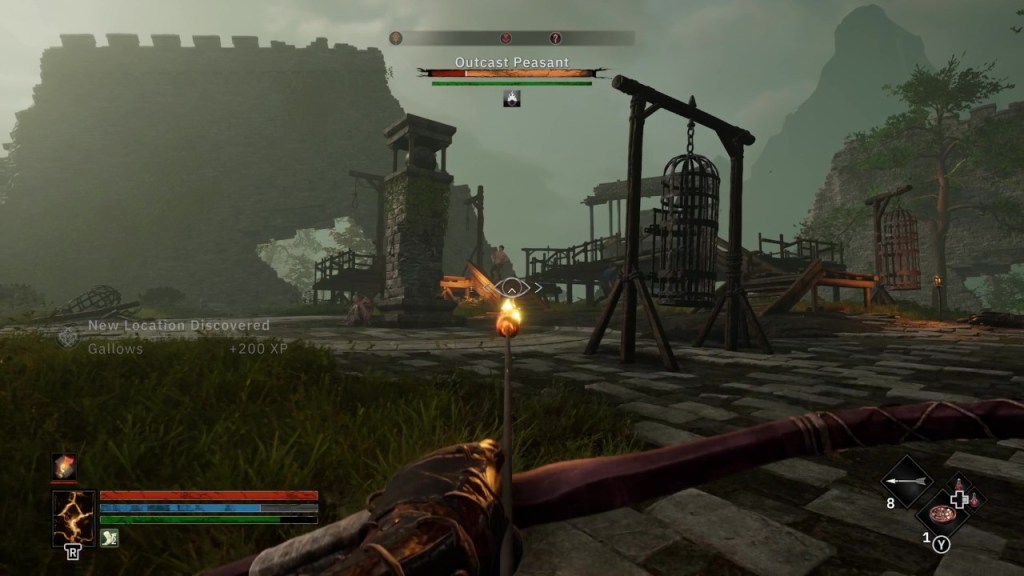
    The problem – as of this impressions piece going up – is that the console release of Tainted Grail: The Fall of Avalon intersperses familiar and satisfying gameplay with a mix of exploitable jank, performance issues, and both random and repeatable crashes. As a mid-tier game with mid-tier pricing, I don’t mind that it often looks and feels last-gen, and I always appreciate games that let me survive tough encounters by clipping through geometry, spamming summons, exploiting OP skills, or dubious AI pathfinding. I don’t even have an issue with the residual PC-like menu that lets you freely toggle resolutions, framerate caps, v-sync, and vegetation quality. What I don’t appreciate is how little those settings influence the wildly variable performance on an Xbox Series X; how console-level VRR doesn’t work if you disable v-sync; or how simply running between certain areas or spawning multiple summons can tank the framerate and crash the game.

    To Tainted Grail: The Fall of Avalon’s credit, you can manually save, quick-save, and even maintain a half-dozen autosaves as often as every minute. This limits lost progress, sure, but random crashes can still ruin tough combat encounters in which saving is disabled, and some areas of the Keeper fortress hub became a stuttering mess and even inaccessible at times – notably the blacksmith and path towards the outlying village. I often had to take lengthy detours around the hub or fast-travel back and forth – presumably loading and de-loading map data – before I could finally engage with essential NPCs and merchants. For a game with dozens of multi-part quests that involve backtracking, this grew more annoying the longer I played and always left me on edge, incessantly saving just in case an autosave triggered in an area that would crash the game again after reloading.

    It’s all the more frustrating as I’ve been enjoying Tainted Grail: The Fall of Avalon despite those issues and desperately want to push forward into Act 2. However, given the current state of the console port during the first act – the act I assume benefitted the most from the early access period – I’m reluctant endure more performance hitches and the ever-present threat of crashes. For fans of the genre who don’t have the option of playing this on PC, I’d suggest you keep Tainted Grail: The Fall of Avalon on your radar while it receives more patches as there’s a solid and satisfying, 7/10-style budget RPG just waiting to emerge from a mire of technical issues.

    Tainted Grail: The Fall of Avalon was played on Xbox Series S|X using a code provided to gameblur by the publisher. It is also available on PC and PS5.
  • Editorial: Kvark offers a taste of Half-Life that’s increasingly hard to find on console

    Editorial: Kvark offers a taste of Half-Life that’s increasingly hard to find on console

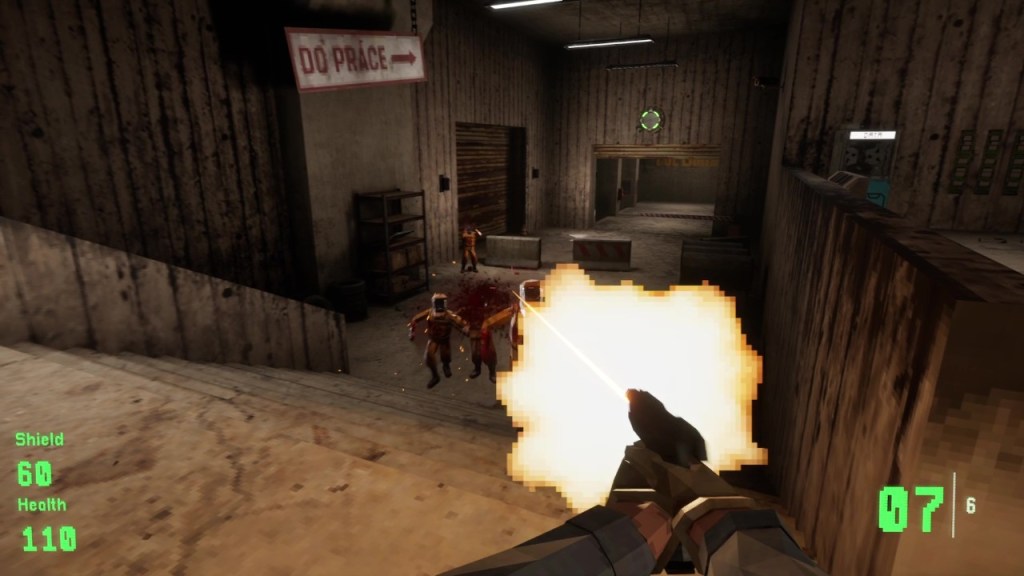
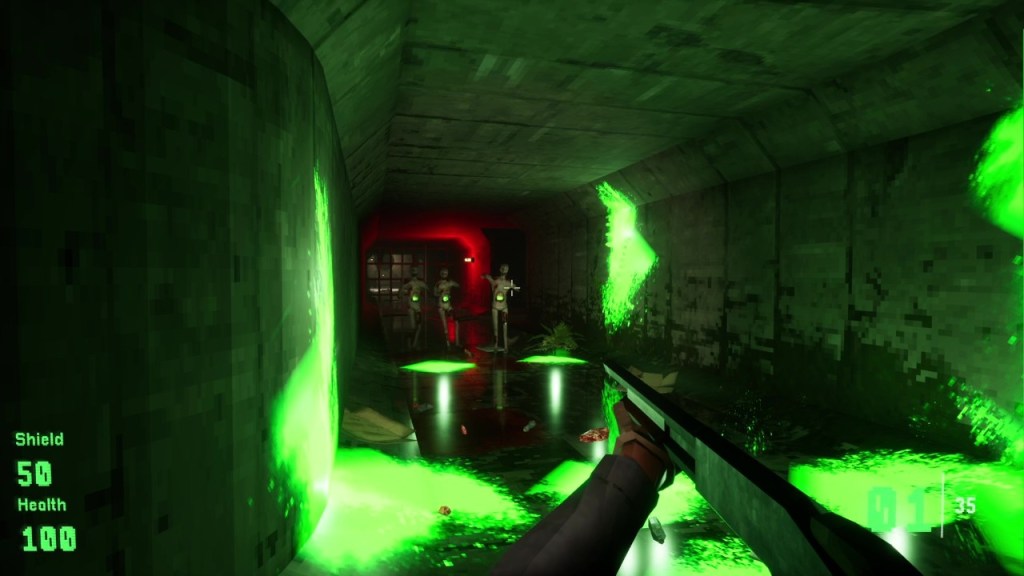
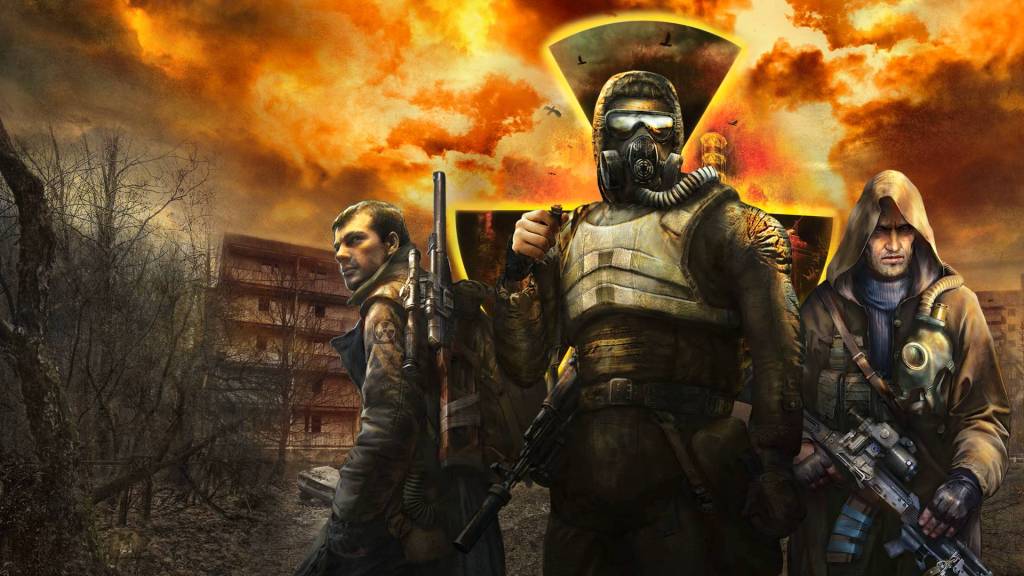
    Looking at Kvark’s retro-styled visuals, industrial complex setting, and science-gone-wrong premise, it is easy enough to make Half-Life comparisons – but those features could apply to hundreds of games released since 1998. The Half-Life characteristic that Kvark emulates best is that satisfying, cyclic rhythm between exploration, environmental puzzles, and brief, brutal firefights. Kvark released on PC near the end of last year, but I wanted to replay the console port as there are few games that capture the essence of Half-Life on console, and Valve seems disinterested in preserving access to their Xbox 360- and PS3-era ports like The Orange Box collection and the Left 4 Dead games.
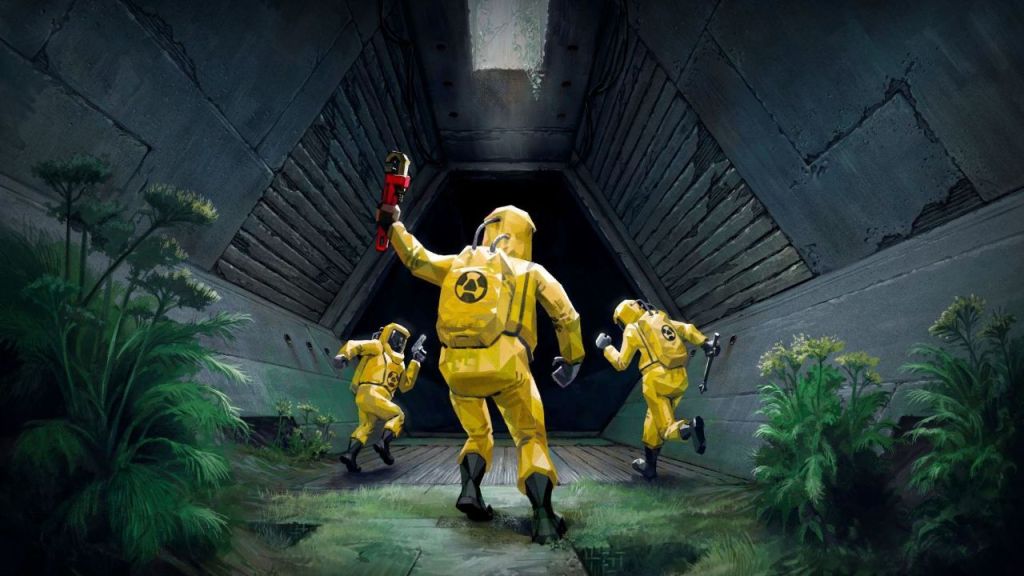
    Unlike Half-Life‘s unexpectedly strong narrative thread, Kvark sticks to the classic retro-FPS approach of providing some light context and leaving the rest up to the player. It takes place in an alternate-history Czech Republic, under Soviet-style rule during the Cold War period. The titular “Kvark” corporation has moved on from nuclear power, to nuclear weapons, and finally a dubious injectable substance – “anethium” – to create super-workers and super-soldiers. It’s a videogame setup we’ve seen a hundred times before, so it should come as no surprise your prisoner protagonist wakes up in a cell to discover both human clean-up teams and grotesque mutants are out to kill them.

    There are entertaining propaganda videos that reveal what the corporation has been up to and hint at the threats you’ll face in the upcoming chapter, but the bulk of the storytelling is handled by scattered notes or hidden drawings that reveal the ineptitude of the government and staff, or provide the odd code or hint to access secret areas. Survival is your primary goal, and as the Kvark complex was relocated far underground to avoid the gaze of Western imperialist spies, that means an 8–10-hour gauntlet through prisons, sewers, manufacturing facilities, mines, laboratories, and quarantine zones. The overall tone is one of dark, cynical humour, but it can feel suitably oppressive and tense, with open skies only appearing in the final third of the game.

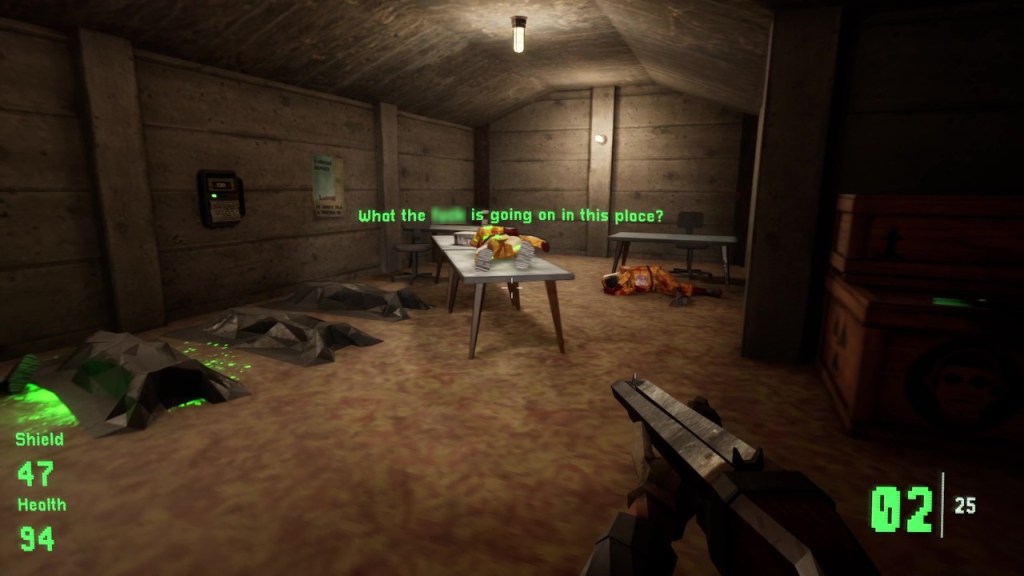
    Gameplaywise, Kvark focusses on what all good first-person shooters should: responsive movement; weapons that look, sound, and feel good to use; and hand-crafted combat encounters against a variety of enemy types that force you to use your full arsenal. There’s nothing inherently novel about the shooting or the traditional weapon categories – ranging from a mostly ceremonial wrench through a pistol, shotguns, rifles, a crossbow, an energy weapon, a grenade, and a minigun – but they all have a situational use and limited ammunition reserves that prevent you from just sticking to an allrounder. Even the perfunctory skill tree, which encourages you to hunt for anethium injectables, offers mostly incremental buffs and one risk-reward perk that reduces total health and healing efficiency in exchange for health gain through kills.

    With solid but familiar foundations, it’s that aforementioned rhythm of exploration and environmental puzzling, interspersed with bouts of violent combat, that channel Half-Life vibes. Aside from a few short-lived platforming sections in the second chapter, both the level design and variety feel good given its length, with many looping back, over, or under themselves to give an impressive sense of scale. Within the ruined corridors, rooms, and vents of the facility you’ll scrounge for weapons, ammunition, and secrets; you’ll flip switches, connect cables, ride carts, and activate machinery to open the way forward; and you’ll deal with clean-up squads and hordes of mutants by staying mobile, kiting melee enemies, prioritising those with ranged attacks, and making use of explosives (or explosive hazards) – all before shifting back to exploring for more resources in preparation for the next combat encounter.

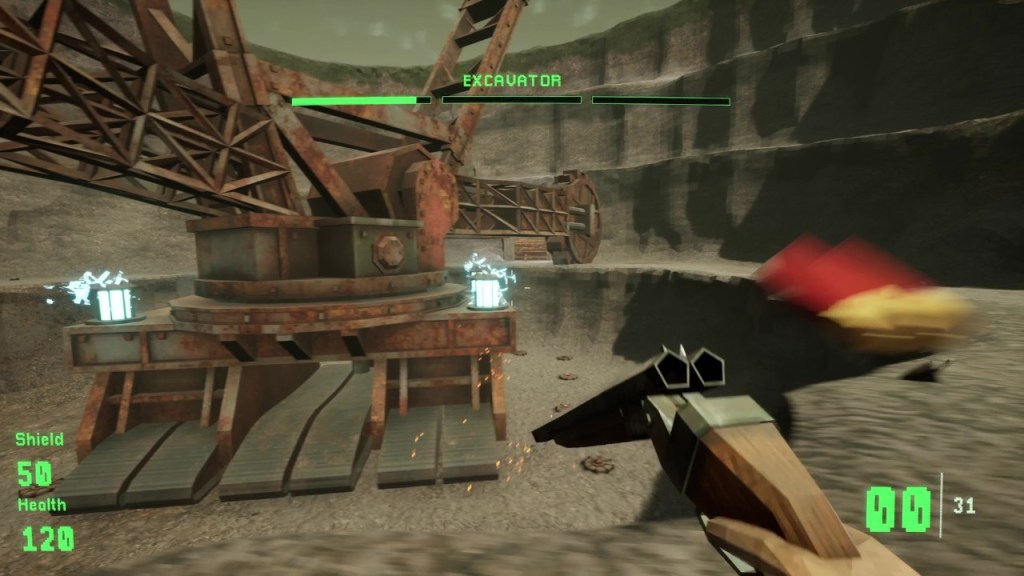
    Kvark feels more forgiving than it did during early access period, but the checkpoints and resource stashes still feel balanced around surviving a handful of significant encounters each level – encouraging a more methodical and tactical approach to firefights on all but the easiest difficulty. As the game progresses, you’ll encounter larger mobs in bigger and more hazardous arenas that’ll test your shooting skills or your ability to scavenge resources mid-battle. Mutated rats, spiders, and zombies rush you or spew glowing goo and webbing that make fighting in tight spaces a pain. Clean-up squads force you to use cover as they evolve from baton- and pistol-wielding goons supported by flying drones, into armoured squads with shotguns, flamethrowers, miniguns, and robot support. With the action confined to an arena, it was only the three boss encounters that felt more annoying than challenging, with the focus on dealing with mobs while avoiding AoE attacks and hitting weak-points.

    When it comes to the presentation, Kvark will likely be divisive. I enjoy the clean, retro-styled visuals imitating early fully-3D environments and the ability to interact with so many objects, but there is a lot of asset reuse to build out the more sprawling levels. Every other element feels near-perfect, from the blocky character models, crude weapon animations, and chunky gore effects, to the ambient audio, roar of gunfire, and a mostly subdued electronic soundtrack that ramps up during combat. It also ran smoothly on an Xbox Series X – performance that’ll likely hold true for current-gen consoles – with a helpful touch of auto-aim and some decent rumble feedback for gunfire and footsteps. The only notable issues I found (as of this review going up) were several crashes during the second level of the first chapter, and the placement of some checkpoints at the entrance of restock rooms instead of at the exit, so you have to collect everything again after reloading.

    Taken as a whole, Kvark doesn’t offer much novelty when it comes to the premise, mechanics, or visual style, but it has something so many modern games lack – rhythm and pacing. You could go back and call Half-Life dated based on the visuals, limited set-pieces, and no progression mechanics, but I’d challenge anyone to play it and claim it’s not fun. Kvark is not as timeless, sure, but it finds a similar groove by ensuring you’re constantly cycling between exploration, light puzzling, and brutal firefights, all before hitting the next checkpoint and starting the cycle anew. As such, Kvark is easy to recommend – especially at an indie price-point – to fans of the genre that play on console and want a taste of that classic Half-Life formula.

    Kvark was played on Xbox Series S|X using a code provided to gameblur by the publisher. It is also available on PC, Xbox One, PS4/5, and Nintendo Switch.

  • Retrospective: Ryse: Son of Rome (2013)

    Retrospective: Ryse: Son of Rome (2013)

    I only picked up an Xbox One three years into the last generation, and Ryse: Son of Rome didn’t even enter my mind when I was looking for what few exclusives I’d missed. I eventually added it to my library when it was heavily discounted and promptly ignored it for another 5 years according to my transaction history. Having finally played through the campaign mode in 2024, two thoughts stood out: one, the negative sentiment towards Xbox after the botched Xbox One launch must’ve been severe if both this game and IP were swiftly forgotten; and two, I really miss big-budget games that could be completed in a dozen or less hours, and had actual endings that let me walk away with a sense of completion.

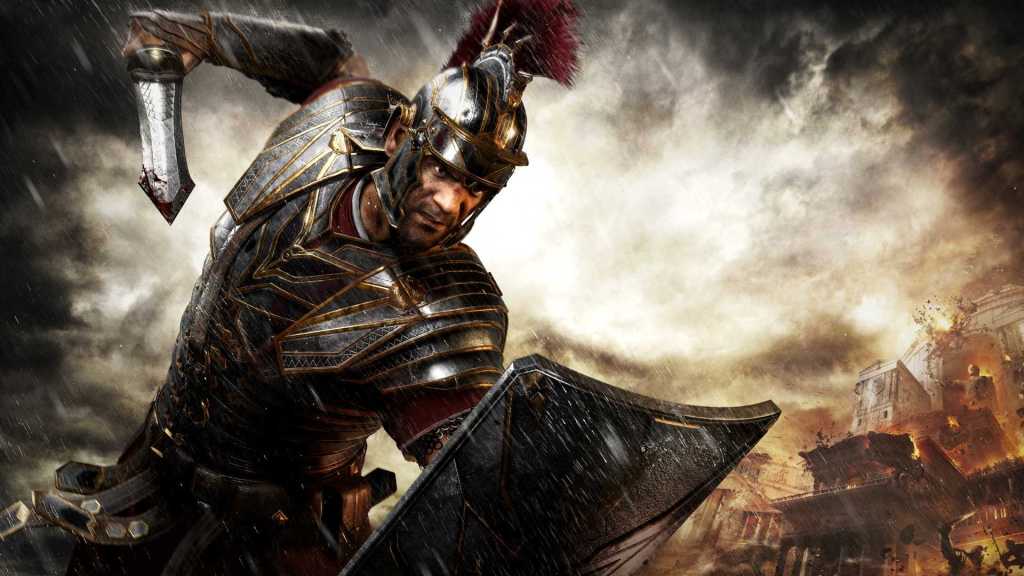
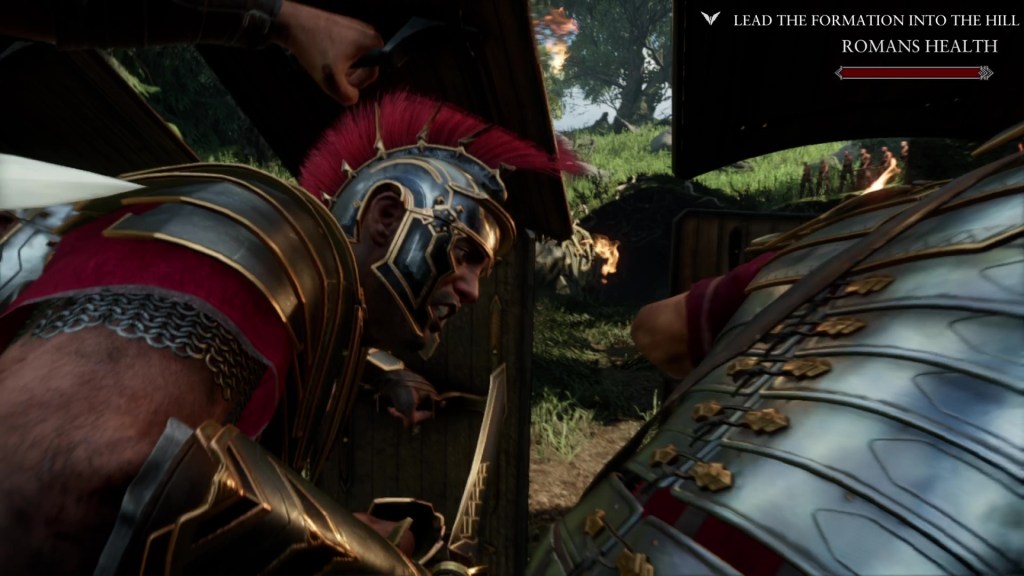
    Which is not to imply Ryse: Son of Rome is some underappreciated masterpiece. By 2013 standards, it would have felt distinctly average aside from the technical highlights. By 2024 standards, I found some of its flaws now feel like positives – so long as you go in with your expectations in check. It functions as a compact version of the formulaic action-adventure that now dominates blockbuster games: a third-person perspective with lavish character models and animations; a strong focus on the presentation with lengthy cutscenes for storytelling; and a cinematic flair to the action, with tons of canned animations and the sensation the game is sometimes playing itself for fear you interrupt the transitions into cutscenes. The only thing it’s missing is an open-world structure – which I now consider that a good thing.

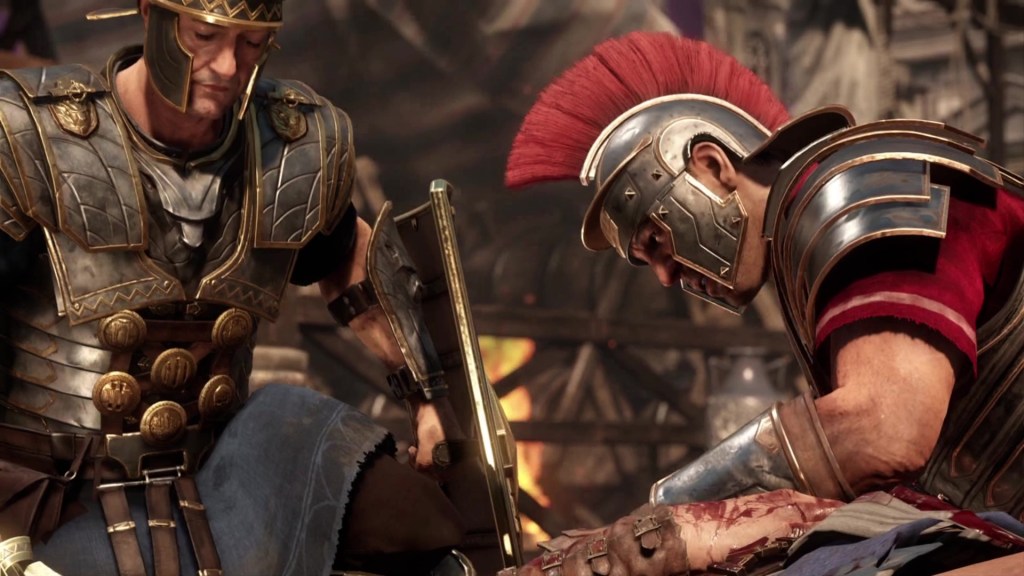
    What made it most enjoyable to me in 2024 was the pacing of its brief campaign; brevity that serves the gameplay loop well, as it probably wouldn’t hold up past the 8-hour mark, no matter how much audiovisual spectacle is thrown at you. You control Roman soldier Marius Titus, in an alternate history Rome, during the time of Emperor Nero (and yes, he has much the same physique as Demetrian Titus in Warhammer 40,000: Space Marine if that came to mind!). Political change is in the air and the vast expanse of the Empire is making it difficult to govern. After a chaotic prologue sets the stakes, Marius recounts his story to the emperor leading up to that point, beginning with a visit to his Senator father and family in Rome after completing his training. The reunion is interrupted when a barbarian war party raids the city; his mother and sister are on screen just long enough to die and provide motivation for another hyper-masculine, vengeance-driven campaign; and his father only lasts a little longer before telling him to save Rome in his dying breath.

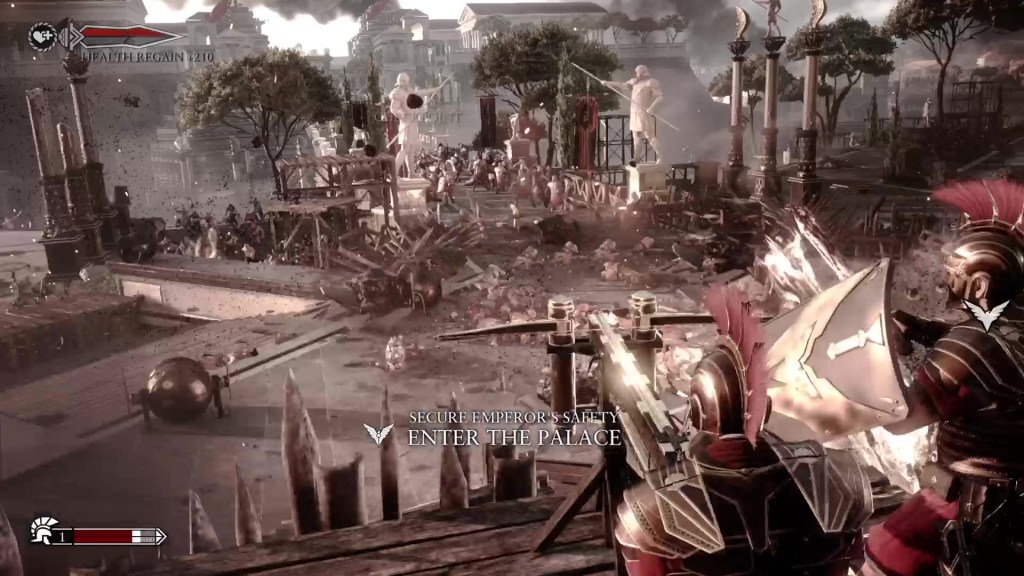
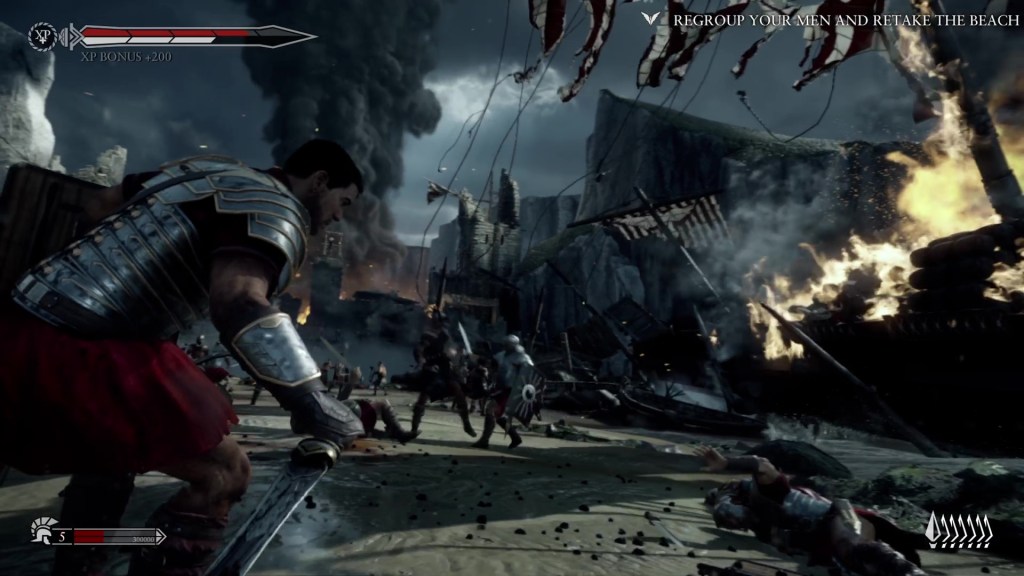
    What follows is a visually diverse and often spectacular campaign that’ll see you invade Britannia in the Roman equivalent of the D-Day Landings, battle southern rebels and wild Northmen in the fog-swathed Highlands, evacuate a fortress city under siege, and finally return to a collapsing Rome after Marius realises a cowardly emperor and his psychopathic sons might be the real problem as “barbarian” hordes rise up as a result of Roman oppression. Naturally, you’ll meet and kill several historical figures from legend in the process. On the sidelines, there’s another battle being waged by Roman gods trying manipulate mankind through prophecy and direct intervention, with Marius taking up the mantle of Damocles to enact revenge. I found the storytelling still holds up thanks to the impressive visuals and sense of scale (well, for the time), the lengthy but well-directed cutscenes, and some excellent voice work throughout.

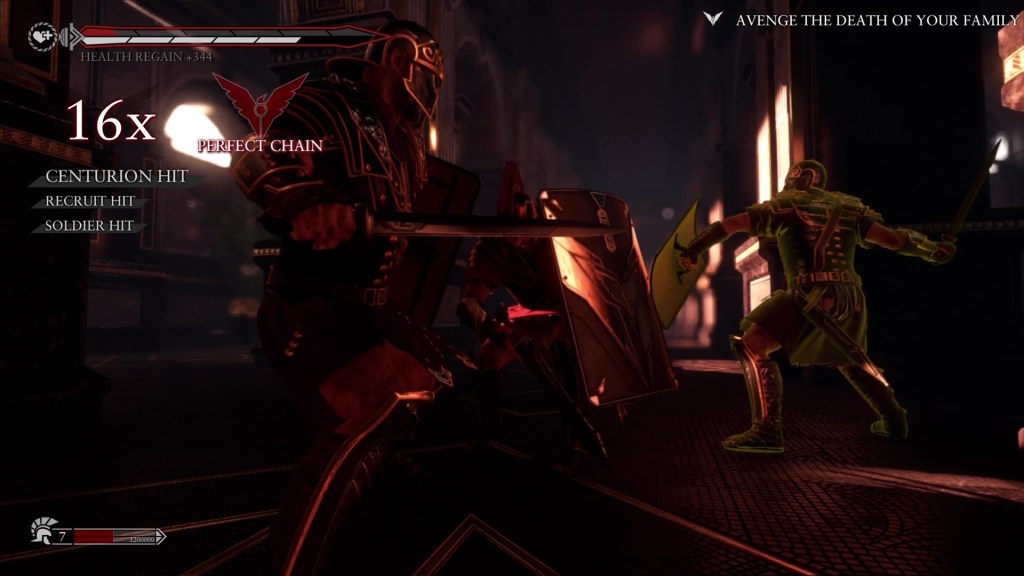
    Now I’ve got this far without discussing gameplay, as while tutorials make it sound complex, the mechanics are simple, satisfying, but increasingly repetitive by the end. Ryse: Son of Rome uses the classic attack, dodge, block, and counter rhythm that Batman: Arkham Asylum pioneered in 2009 – just with a sword-and-shield focus, less “gadgets”, and gory takedowns. You build up combos with basic strikes; you block or parry with your shield; dodge glowing attacks; kick or use charged attacks to break an enemy’s guard; use a focus ability to slow time for free hits, and trigger QTE-driven executions on a single or pair of targets. These executions never fail once started, but if you match the prompts, you get bonus points towards health and focus restoration, a temporary damage boost, or XP that goes into a perfunctory skill tree that boosts basic attributes and execution bonuses. It’s an intuitive enough system that looks and feels great when you hold off a surrounding horde and execute them all in gory fashion.

    The problem with Ryse: Son of Rome is that it barely evolves over what was a 7-ish hour campaign for me – possibly less if you just ignore the underwhelming collectibles. For the bulk of your playtime, you move down glorified corridors with beautiful and sometimes chaotic backdrops full of battling soldiers, frequently getting locked into combat arenas – sometimes literally – until you defeat all the enemies. If you’re lucky, there might be two paths you can take, or a dead-end with a collectible. To spice things up, you’ll sometimes fight alongside fellow soldiers, triggering sequences where you march in a shielded formation and fling spears at archers, defend a point by assigning shield-bearers and archers to cover paths, and even engage in turret sequences using implausibly rapid-fire crossbows. Each act also features a boss fight or two, but these are often simplistic one-vs-one battles that only ask you observe attack patterns in each phase, then trigger the right counter to chip away at their health bar. Even on higher difficulties, they’re underwhelming compared to common late-game battles that throw numerous enemy variants at you simultaneously.

    Now despite wrapping up on a negative note, most of my gameplay concerns only came to mind after I had finished the campaign and had time to mull over the experience. When you consider Sony released The Last of Us in the same year, pushing the technical limits of the PlayStation 3 and their storytelling ambitions, it’s easy to see why Ryse: Son of Rome failed to stand out. However, when you consider 2020’s The Last of Us: Part II now demands 25+ hours of trudging through misery interspersed with despair to see the end, I think there’s still good reason to return to older and shorter big-budget titles – even if they were considered unremarkable at the time. If you missed it at launch, Ryse: Son of Rome still offers a single satisfying playthough for those short on time but after a “AAA” experience.

    Ryse: Son of Rome was played on an Xbox Series S|X. It is also available on Xbox One and PC.