Tag: Xbox

  • Review: Crow Country (Xbox Series)

    Review: Crow Country (Xbox Series)

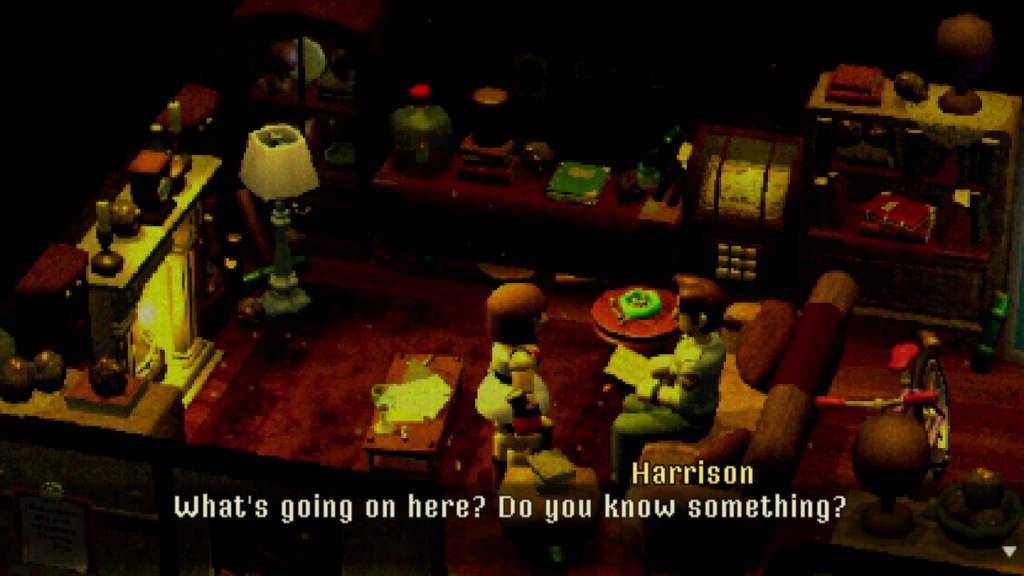
    Crow Country is an accessible retro-inspired survival-horror game that does an impressive job capturing the look and feel of early 3D isometric games that came out on the PS1 or SEGA Saturn during the late-‘90s. The structure and gameplay feel like Resident Evil with a hint of Parasite Eve II, while the environments feel like a mix of Silent Hill and any number of chunky JRPGs from that period. It’s a distinctly cute but creepy vibe. Viewed as a love letter to those classic games, it’s brilliant, but being dependent on those associations is also a mixed blessing. It’s smartly made and polished – but without that nostalgic hook, I’m not sure it has a unique identity like Lone Survivor or Signalis had.

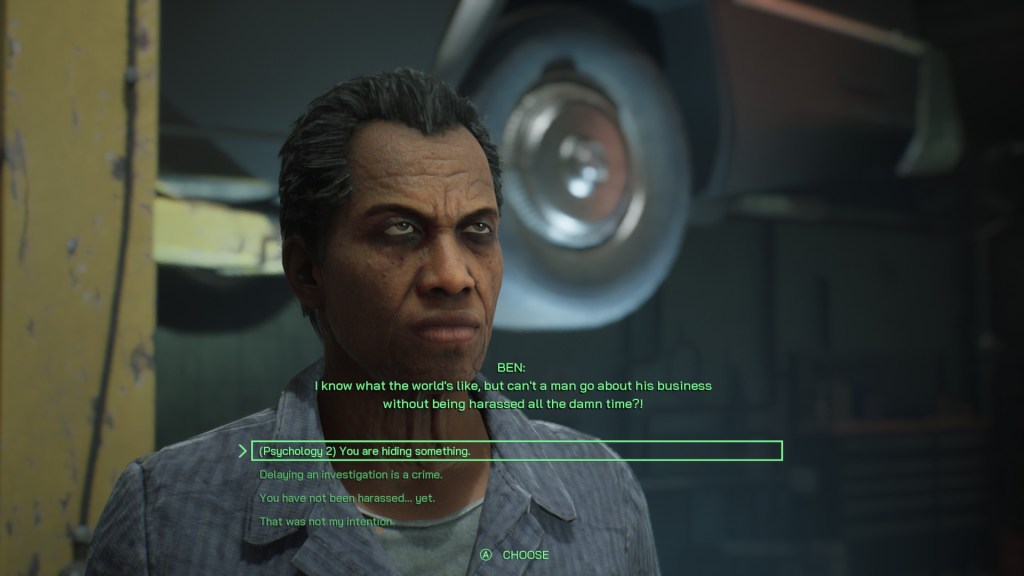
    That said, Crow Country hits all the right notes as the opening leaves the player feeling vulnerable, unsettled, and confused. Mara – special agent Mara Forest apparently – is a capable but unreadable protagonist who is clearly keeping secrets from the player and the supporting cast. Arriving at the abandoned Crow Country amusement park, 2-years after an incident shut it down, she’s quick to shoot her way in through a padlocked gate; shrug off horrific encounters; wield a myriad of weapons; and solve convoluted puzzles that leave the other survivors stumped. Her connection to the park is unclear, and neither is the reason behind her pursuit of the missing owner, Edward Crow. She’s evasive in dialogue and even her comments on environmental details give only the slightest inkling of her personality and past.

    It’s not just Mara though, as many of cast were former staff and clearly complicit in the unfolding events. As a result, simply unravelling the mystery was a strong motivator to keep playing. What was the nature of the incident that shut down the park and drew the attention of a photojournalist and lawyer? Why have Edward Crow’s daughter, former colleagues, and a detective all arrived on this specific evening? What does an American amusement park have to do with a Brazilian gold mine? What are these bizarre creatures that the former staff refer to as “guests”? And who is Mara really? It’s a solid setup with some predictable and some unexpected twists. The environment changes over the course of the night, hinting more and more as to the nature of the threat – though the ending sequence is a bit of an exposition dump that expects you to read a note, midway through the final encounter, if you want all the details.
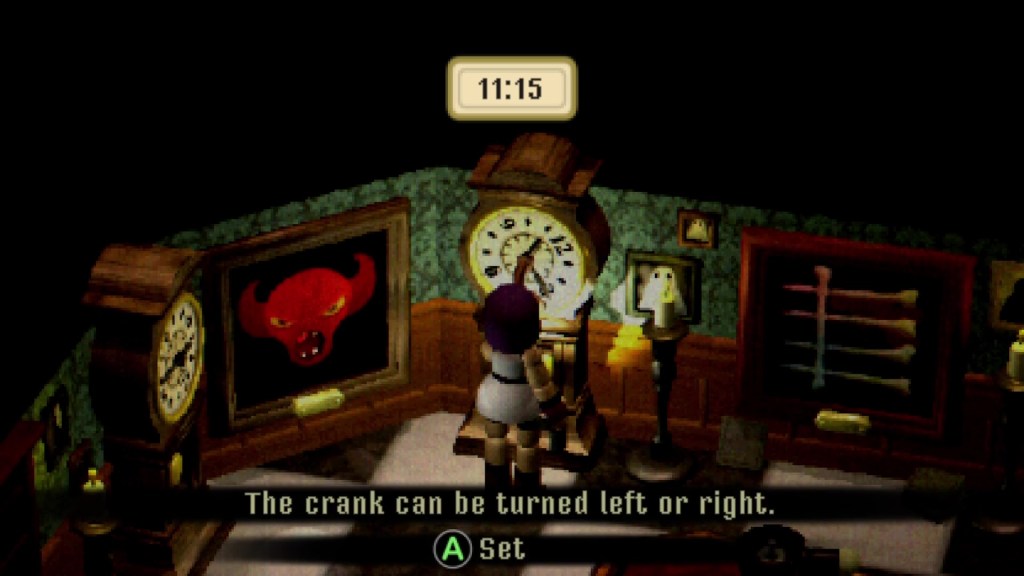
    After the narrative, it was the mandatory puzzles and over a dozen hidden secrets that hooked me. The amusement park setting, and an increasingly paranoid Edward Crow provide narrative context for the Resident Evil-style structure. As with that game, Crow Country gets a lot of mileage out of a small but dense location, so you’ll often know exactly where you’re trying to go – though you’ll only get there several hours later after jumping through an inordinate number of hoops. Thankfully, Crow Country has some great interconnected puzzles, rather than just hiding keys and data discs behind boss fights. They are present, I guess, but you can run away from everything (outside of the final encounter) and still make progress.

    In authentically classic fashion, you’ll be scouring the environment for key items, clues, and notes – with a handy map that marks the location of unsolved puzzles or points-of-interest to guide you. There are keypads and locks that just require the right code or key; there are logic puzzles that require entering the right sequence of events or the correct values; and there are arcade mini-games and plenty of weird use-item-on-object puzzles befitting the setting. The rest of the cast also have a role to play beyond storytelling as they sometimes provide you with clues or assist in a puzzle – though even if you completely ignore the few you aren’t forced to talk to, the ending variations are negligible.
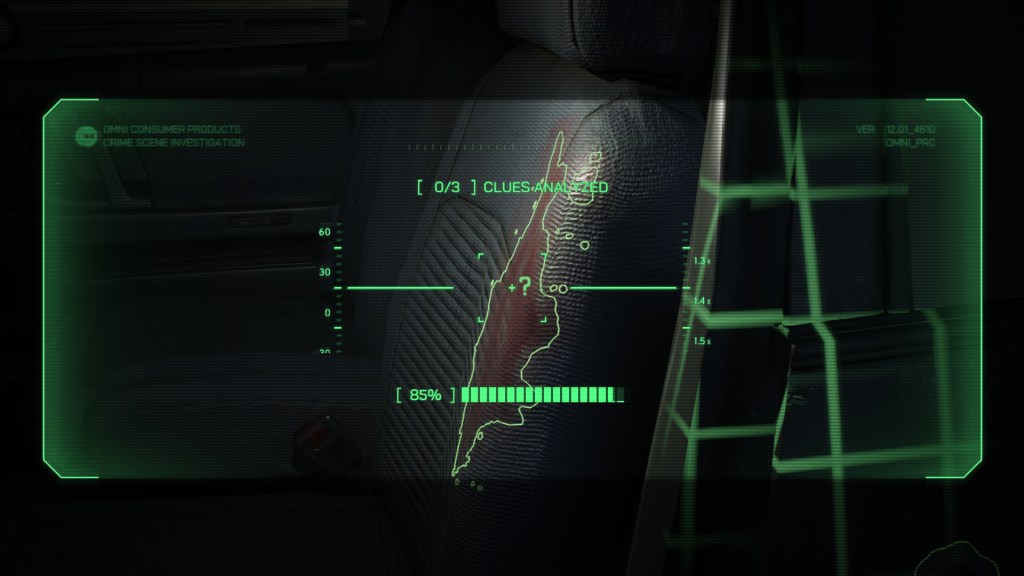
    Of course, this is a survival-horror game and Mara is packing heat, so shooting your way through the park is a viable strategy if you’re methodical, tactical, and cautious. Sadly, while I love classic resource management, the combat is my least favourite element and goes hand-in-hand with the camera issues. The close isometric viewpoint is appropriately claustrophobic, but you’ve got to combine stand-and-aim shooting mechanics that use the left thumbstick, with camera rotation on the right thumbstick to track enemies. The system allows for precision targeting of item crates, weak-points, and environmental hazards well enough, but it snaps the camera in the direction Mara is facing, which is a real pain in the arse when you’re trying to clear some distance before turning around to shoot again. An option for classic tank controls provides a more reliable option for Mara’s movement, but my brain struggled to coordinate orienting by d-pad while simultaneously rotating the camera.

    Thankfully, Crow Country is not a particularly hard game, even if more monsters, traps, and even fake pick-ups appear as the night progresses – almost Parasite Eve II-style. There’s an “Exploration Mode” that keeps enemies passive, but even the ranked “Survival Horror” mode features an abundance of resources, easy to avoid enemies, and very few high-damage or insta-kill encounters. There are all the basics you would expect from the genre – useful shortcuts and smartly distributed safe rooms with soothing music and sources of fire that serve as manual save points – but you can also get hints from a fortune teller machine, refill pistol bullets from Mara’s car, rummage through dustbins and vending machines for supplies when you’re running low, and several secrets include overpowered weapons and upgrades. Playtime and the number of saves you make don’t affect the ranking score, so you can be super cautious and use the rewards from lower ranks to make subsequent runs much easier if you’re chasing an S+ rank or speed-running the game.
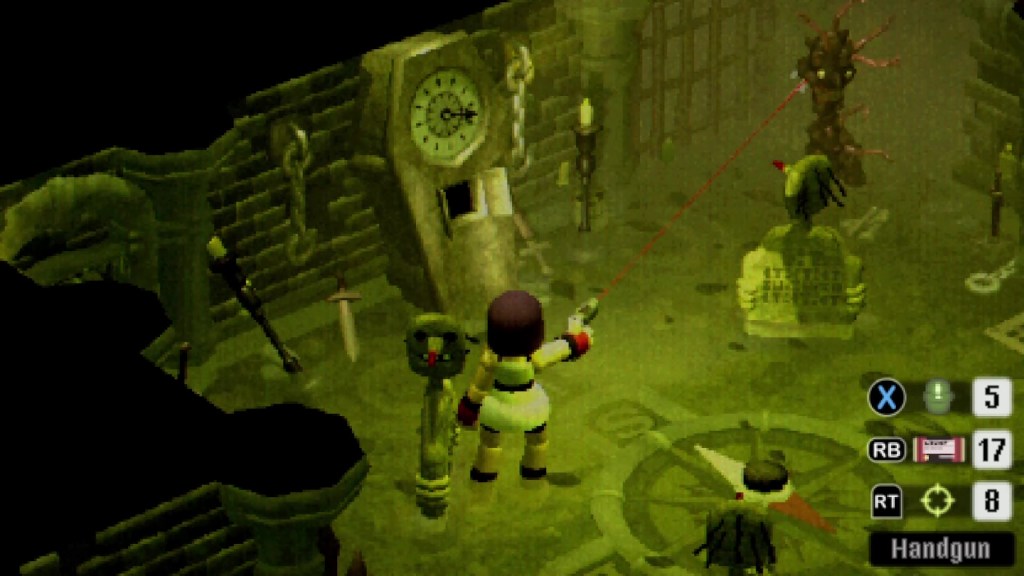
    Looping back to the start, Crow Country does a phenomenal job of emulating late-’90s survival-horror games, nailing the look, sound, and claustrophobic terror that those early 3D environments excelled at. It’s got an intriguing narrative and fantastic puzzles to keep you engaged during a brisk 5–6-hour initial run, though the wonky gunplay and camera control are more likely to frustrate than generate tension. As Crow Country can feel like a greatest hits collection of classic IP, it’ll most likely resonate with retro-gaming fans or those who grew up playing early survival-horror games – but given it’s so accessible, it might also be a good choice for those wanting just a taste of how classic survival-horror games played.

    Pros:

    • It does an great job capturing the look and feel of early 3D isometric games from the PS1 and Saturn era
    • The unravelling plot is intriguing and well-paced
    • The puzzles and secrets are smartly designed
    • It gets a lot of mileage out of a small but dense environment

    Cons:

    • The gunplay and camera are more likely to frustrate than generate tension
    • It can feel more like a homage to the classics than its own thing

    Score: 8/10

    Crow Country was played on Xbox Series S|X using a code provided to gameblur by the publisher. It is also available on PC and PS5.
  • Review: Robocop: Rogue City (Xbox Series)

    Review: Robocop: Rogue City (Xbox Series)

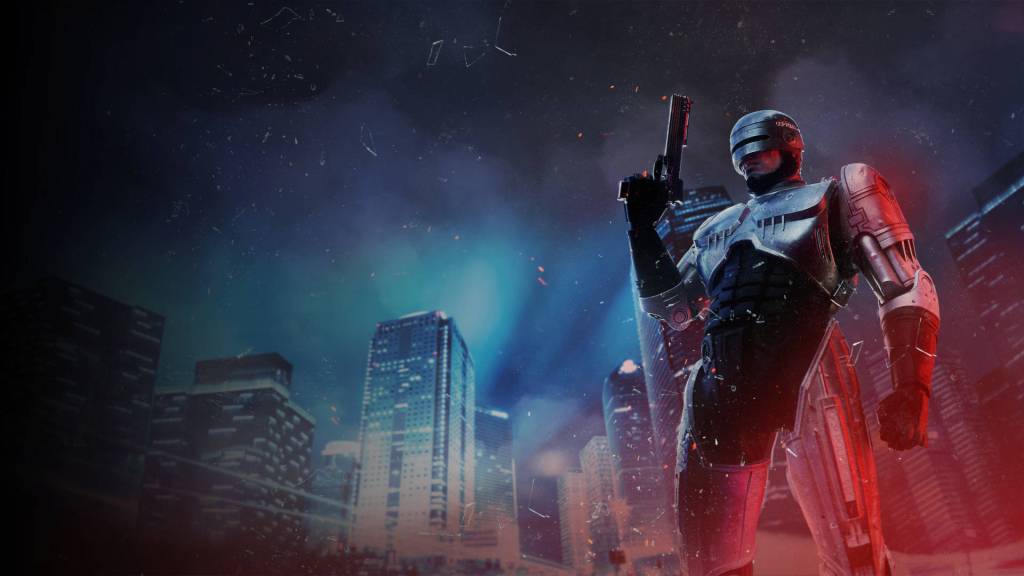
    Robocop: Rogue City is quality 7-out-of-10 fare – one of those games that lack the production values of an “objectively” higher-scoring “AAA” title but are often way more fun to play. As such, how much you enjoy it will depend on what you’re willing to forgive to finally play a good game based on an underutilised IP. It shares many of the same highs and lows as Terminator: Resistance, demonstrating a lot of passion and an obvious love of the IP. However, some great character interactions, solid shooting, an authentic sense of style, and a flashy new engine can’t obscure the disjointed campaign flow, limited mechanical depth, dated character models, and awful cutscenes.

    If you’ve watched the 1987 film recently, it’s easy to argue Robocop: Rogue City retreads too many themes. What makes us human and who gets to decide? Is the rigid application of laws truly just? Is there no end to corporate greed and the collateral damage it causes? Repetition, sure, but these themes make for some of the best interactions between Robocop and the supporting cast and they tie into a narrative role-playing mechanic that influences the fate of several characters and Old Detroit. That said, it’s no subversive masterpiece. Robocop guns down hundreds of gang members with no consideration for the socio-economic manipulation that pushed them into that life, and there’s no shortage of real-world examples that demonstrate trying to resolve violence with violence begets more violence.

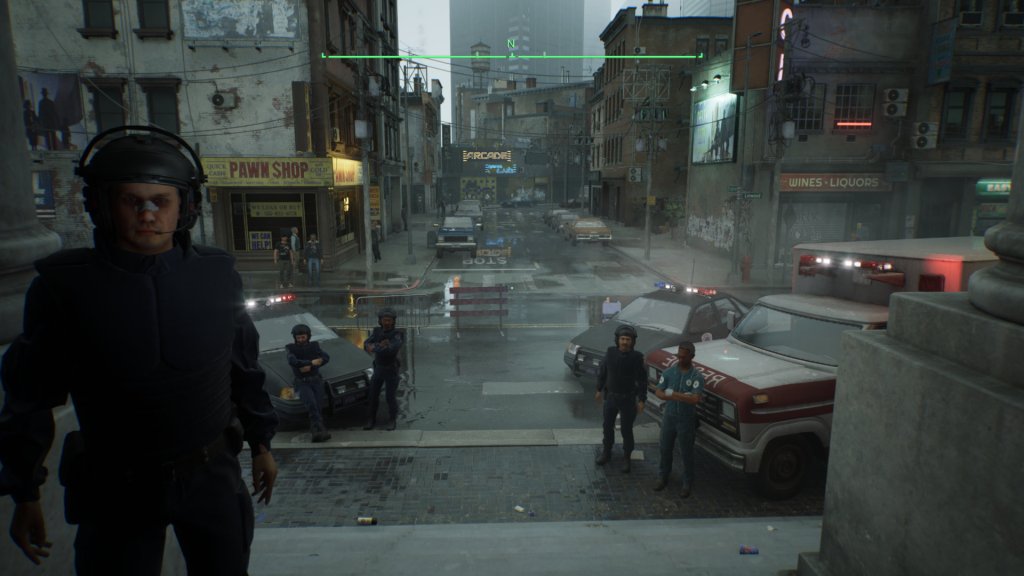
    The events of Robocop: Rogue City take place after the second film, with resurgent gangs, an ongoing Nuke drug problem, and the OCP still looking for any excuse to replace the police force with robots and level Old Detroit to make way for their Delta City project. Robocop experiences more glitches during an attack on the Channel 9 building, so OCP inserts a chip to monitor his performance (tying into the progression mechanics) and assigns him mandatory therapy sessions (used to define, question, and reinforce your role-playing choices). He’s then let off the leash to investigate “the new guy in town”, a mysterious villain whom several gangs and mercenaries are vying to work for.

    This kicks off an interesting but poorly paced story that revolves around Robocop in more ways than one. A good chunk of the opening half is spent shooting through several gangs to interrogate their leaders; destroying more dysfunctional ED-209s; dealing with OCP’s ongoing efforts to undermine the existing police force; avoiding or engaging with mayoral election campaigns intent on using him for political goals; and uncovering an even deeper conspiracy within OCP that leads into a drawn out finale and a bizarre final boss that, I guess, is was somewhat foreshadowed. I know this is both a video game and Robocop is satirical sci-fi, but the plot is still full of contrivances, inconsistent logic, and sudden deviations that make it feel as though the script was written on the fly.

    That said, if you focus instead on optional missions and smaller moments between Robocop and Lewis, his fellow officers, the citizens of Old Detroit, and even the antagonists, you’ll find much better writing, unexpectedly touching moments, and get the chance to explore lovingly recreated spaces like the Metro West Police Station. Peter Weller’s voice and delivery add instant authenticity and, with the notable exception of OCP’s CEO “the Old Man”, the rest of the voice cast give it their all – even if most performances aren’t going to win any awards. During many of these moments, you choose Robocop’s response or actions, which don’t drastically alter the events you experience, but they do change how he perceives himself and how the cast interacts with him down the line.

    The problem is no matter how good Robocop: Rogue City looks – with incredibly detailed environments, destruction physics, realistic lighting, and exaggerated gore – the vast majority of character models look dated and stiffly animated, lip-syncing is all over the place, and the cutscene direction feels crude: think simplistic framing, awkward cuts, poor dialogue delivery, and shifting sound levels. Robocop’s model looks great, Weller’s delivery is perfect, and the soundtrack variations of the original theme are brilliant – but all that can’t stop many cutscenes robbing the game of the emotional impact the writers clearly intended.

    Now I’ve got this far without discussing the gameplay in-depth, and I’d argue that’s because there’s not a lot of depth – well, at least not enough when tackling all the primary and secondary missions takes almost 20 hours, alternating between corridor shooting galleries and repeat visits to a hub-like Old Detroit that evolves over time. Mechanically, Robocop: Rogue City is another RPG-shooter hybrid like Terminator: Resistance – albeit with less looting, crafting, and upgrading gear and a greater focus on satisfying gunplay based around Robocop’s iconic Auto-9 and his incredible resilience. There are simple dialogue and scanning-based investigations, but while some larger chapters and the Old Detroit hub often reminded me of Eidos Montreal’s Deus Ex games, Robocop is no Adam Jenson. Even if a mission starts off peaceful, it’s guaranteed to end in a gunfight.

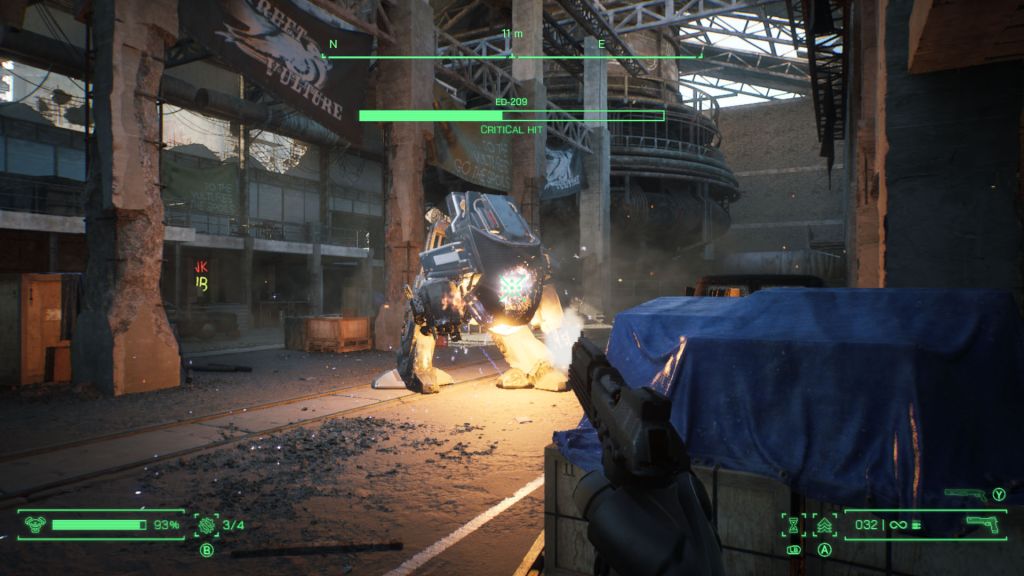
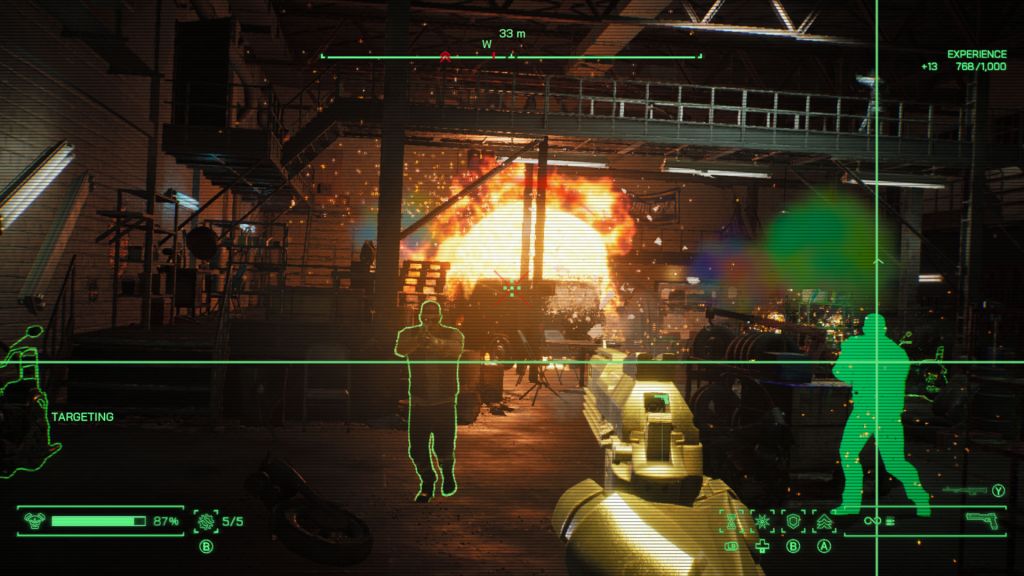
    Thankfully, the shooting is solid, and Robocop: Rogue City nails the sensation of being half-man and half-machine, with the durability and manoeuvrability of a tank. I’d always laugh when yet another gang member or mercenary threatened Robocop and pulled out a handgun or rifle, as only high calibre rounds and explosives pose a significant threat. From the moment Robocop thuds into the Channel 9 building, draws his iconic Auto-9, and the classic theme kicks in, you’ll spend most of your time shooting enemies in the head, in the groin if they’re armoured, or in weak points if they’re robotic. Although you can carry another weapon in reserve, the customisable Auto-9 with unlimited ammo is your workhorse tool and clearly received the most attention.

    Firefights are dynamic and evolve to a degree, just not enough to sustain a campaign twice the length of the classic FPS that inspired it. Enemies with more armour, bigger guns, or special abilities are slowly introduced; environments are full of hazards you can throw at enemies, or throw enemies into; most secondary weapons are useful in specific situations; there are offensive and defensive skills you can put points into for incremental buffs and perks; and you can upgrade the Auto-9 using “PCB” omni boards and chips that feels like a less-intuitive variation of what we got in Terminator: Resistance.

    The problem is it takes hours to get impactful perks if you don’t take a min-max approach – think deadly ricochet shots, bullet-deflecting armour, and bursts of slow-motion actually long enough to be useful – while there’s a steady increase in the number of tank-ish enemies that offset their impact and drag out firefights. As I was blasting through an end-game gauntlet, about 18 hours in, I realised I was just going through the same motions on autopilot: pull the left trigger, smile as the CRT effect and targeting outlines appeared, pull the right trigger, watch heads or groins explode. Considered in isolation, most scripted firefights are entertaining, but there are a lot of them, and they all blur together over time.

    Now despite ending on a low note, Teyon still deserves plenty of praise for creating the best Robocop video game available, just as they did for the Terminator IP, and that makes this a must-play for fans of Terminator: Resistance. For those not part of that crowd, Robocop: Rogue City can still be a lot of fun if you’re heavily invested in the IP and can look past inconsistent production values or underdeveloped systems. It somewhat outstays its welcome but provides a unique opportunity to role-play a conflicted Robocop, violently prosecuting justice through a CRT filter, to a fantastic soundtrack. If nothing else, it might also convince you the IP could work in a dedicated narrative-adventure game.

    Pros:

    • Great interactions between Robocop and the secondary cast that revisit themes from the 1987 film
    • Recreated locations from the films and classic Robocop lines delivered by Peter Weller himself
    • A customisable and immensely satisfying Auto-9 that explodes heads, hands, and groins alike
    • A progression system that (eventually) unlocks some overpowered perks

    Cons:

    • Weird campaign pacing and contrivances
    • The emotional impact of many encounters is undermined by crude cutscenes and character models
    • Not enough mechanical depth to sustain a 15-20 hour campaign
    • No permanent CRT filter option and no New Game Plus

    Score: 7/10

    Robocop: Rogue City was reviewed on Xbox Series S|X using a code provided to gameblur by the publisher. It is also available on PC and PS5.
  • Retrospective: Terminator: Resistance

    Retrospective: Terminator: Resistance

    Initial reviews for Terminator: Resistance from traditional media were broadly negative but, within a few hours of launch, positive user reviews emerged. It didn’t take long before comment sections, Reddit threads, and several YouTube channels were full of positive sentiment – ranging from outright praise to cautious recommendations. As someone with a fondness for janky, mid-tier games that would never score higher than a seven, this piqued my interest.

    Perhaps as a testament to its underdog popularity, it took a long time for Terminator: Resistance to hit a price point I deemed suitable for a low-risk purchase. I eventually picked up the Xbox One version to play on an Xbox Series S – the release day experience, I guess? – and while I don’t begrudge my purchase, I found it a staggeringly middling experience elevated by one standout element.

    The storytelling is dated but it adheres to the canon

    Although the storytelling feels last, last-gen, one of Terminator: Resistance’s unexpected strengths is its strict adherence to the canon of the original timeline from the first two Terminator films. The date Skynet acquired sentience; Judgement Day; the formation of the human resistance; the emergence of Terminator Infiltrator models; the Time Displacement Equipment; the endless cycle of diverging futures – all these plot threads are accounted for a worked into its narrative.

    I had assumed Terminator: Resistance was going to avoid messing with canon by telling a stand-alone story set during the Future War but, by the midpoint of a 13-hour casual playthrough, it became clear Teyon developed it as a prologue to the films. John Conner makes an appearance (and Kyle Reese in the Annihilation Line expansion), there are references to other important figures in dialogue, and the protagonist – Jacob Rivers – participates in significant events that lead into the opening of both 1984’s The Terminator and 1991’s Terminator 2: Judgement Day.

    The story itself is fine, with a few highlights whenever the game ditches the open-zone approach for more linear set-piece-style sequences, but the entire middle portion drags – especially if you’re tackling side missions. The tightly controlled opening sees Rivers saved from a Skynet ambush by a suspiciously knowledgeable stranger, who guides him towards a ragtag group of survivors that – after a few hours of hunting for clues – finally put him in contact with the local resistance. If you can tolerate the assortment of clichéd character archetypes, the opening provides several tense set pieces and some rapid relationship-building.

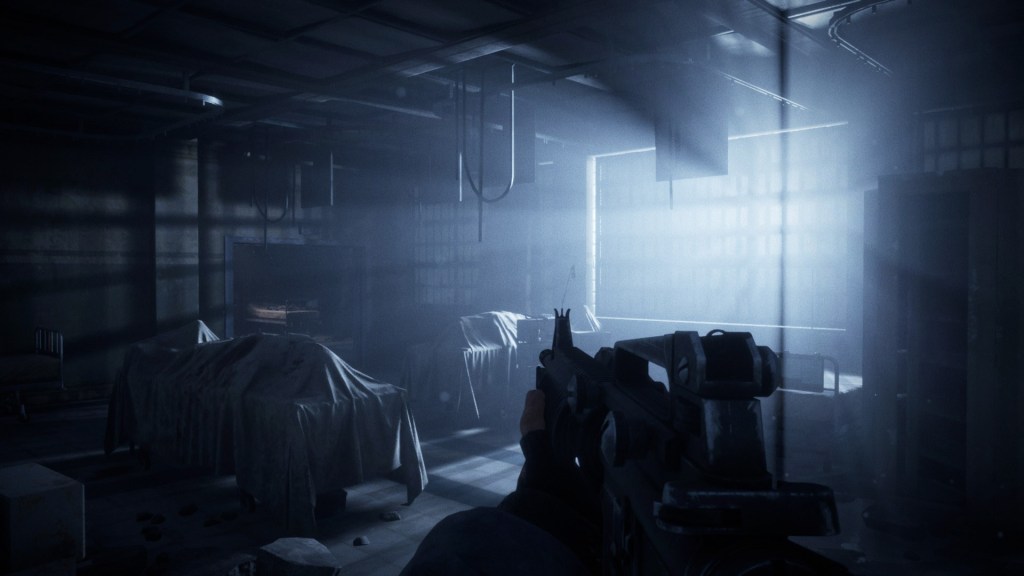
    The primary missions see you search through abandoned resistance outposts, sneak through a Skynet-controlled hospital to free some captured resistance soldiers, come face to face with the Terminator Infiltrator that has been tracking Rivers, take down an HK-Tank, and storm the central core. The more open zones offer no shortage of rudimentary fetch quests to raise the trust level of the civilian survivors that, in turn, reveal more of their backstory and the current state of the world.

    It’s a dated but familiar structure, however, the dialogue- and choice-driven role-playing elements feel half-baked. Regardless of the choices you make, or whether you complete or ignore side missions, 90% of the experience plays out in exactly the same way. There’s always an easy alternative as to why events can still occur as the central narrative and ending sequence is beholden to the first two Terminator movies.

    The longer you play, the more obvious it is that the civilian survivors are irrelevant to the overarching plot – yet account for the bulk of the role-playing moments. Any significant changes to their fate are mostly relegated to a narrated montage, while the system feels so transparent that it’s easy to get the “best” ending. When in doubt, be nice and always follow the stranger’s advice.

    Ultimately, they felt like an excuse to add “depth” to an incredibly basic choice-and-consequence system and the in-game impact is minimal. Two optional survivors you can save during the prologue just hang around in corners doing nothing. Completing a mission to find a puppy or chalk for the young survivor Patrick leads to a few visual changes in the shelter, but primarily serves to notch up the trust meter of his sister Jennifer. The same logic applies to the doctor, Erin, and mechanic, Ryan – with higher trust levels from completing side missions making it easier to influence their fate leading into the finale.

    Of course, no RPG is complete without romance options and both Jessica and resistance leader Baron fall neatly into the “damaged woman looking for a strong man” archetype. Your trust meter is also your ticket to potential romance – with one or both of them, Terminator: Resistance doesn’t judge. If you’re foolish enough to select the dialogue options with a heart next to it, you’ll be treated to some spectacularly bad first-person sex scenes – featuring music and moaning straight out of vintage pornography – serving as a reminder that fade-to-black is always the right choice in video games.

    A bit of this, a bit of that, all of it average

    So I’ve had a dig at the storytelling and limited choice-driven outcomes, but it’s the traditional gameplay mechanics that make and eventually break Terminator: Resistance. The best way to describe it is a scaled-back Fallout 4 set in the Terminator universe.

    It’s no open world but you explore smaller open zones sequentially as the story plays out and the situation evolves. You’ll interact with minor characters and even fight alongside small groups of resistance soldiers – typically impervious to harm until the plot decides otherwise. It features similarly janky shooting that never feels as responsive or precise as a dedicated FPS, at odds with the ability to hit weak spots to inflict critical damage. It’s competent enough – and maybe better when using a mouse and keyboard – but the focus is clearly on upgrading Rivers’ abilities and arsenal to produce bigger damage numbers.

    I feel part of that initial post-launch positivity has a lot to do with the opening hours. You’re stuck with an assortment of conventional human firearms that are fine for spider scouts and drones, but larger robots force you to get an angle on their weakspots to do significant damage. Although encounters are rare and heavily scripted at first, the hulking Series-800 Terminators are invulnerable to standard firearms and need to be stealthed past or, if you’re flush with crafting resources, pipe-bombed.

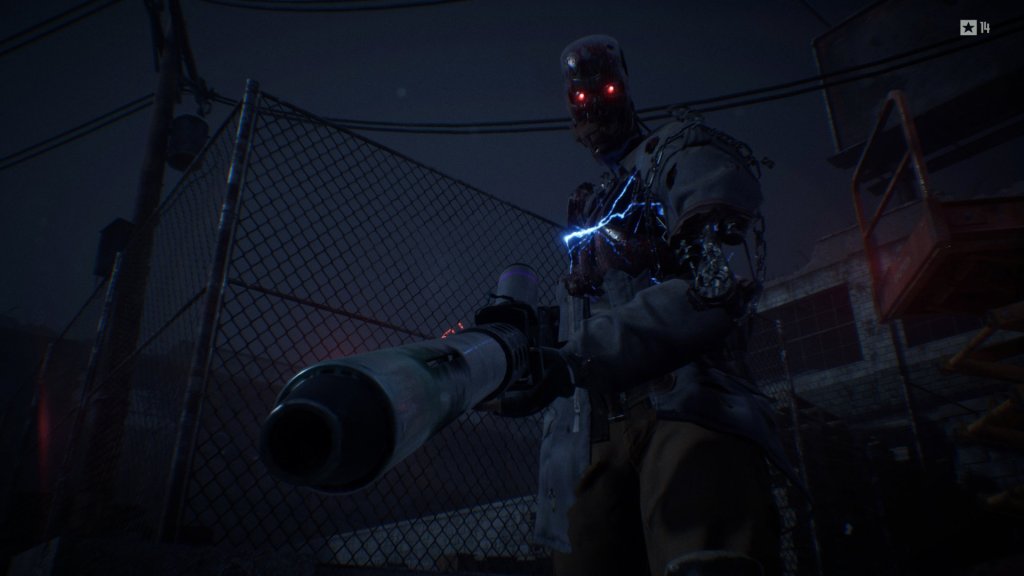
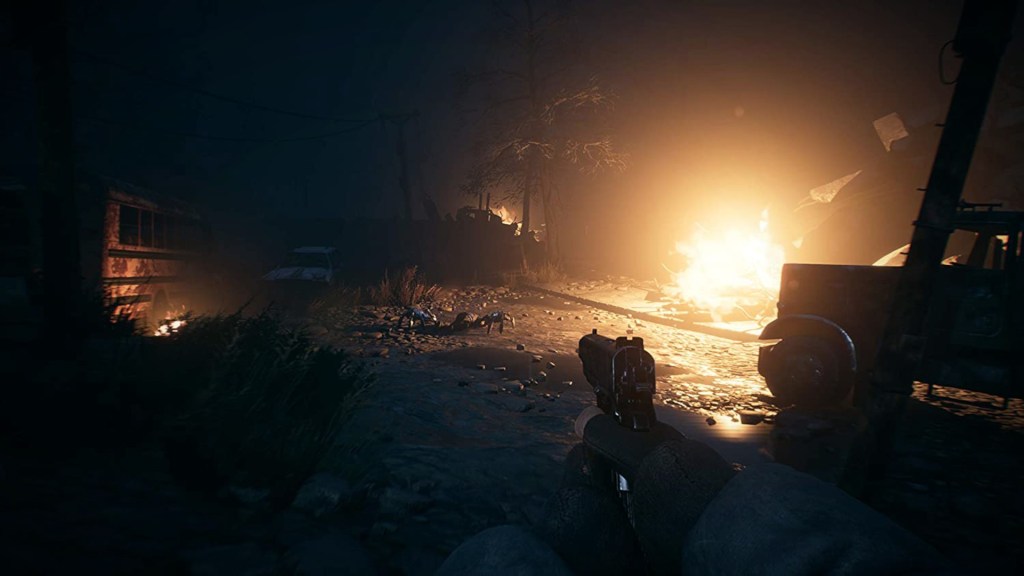
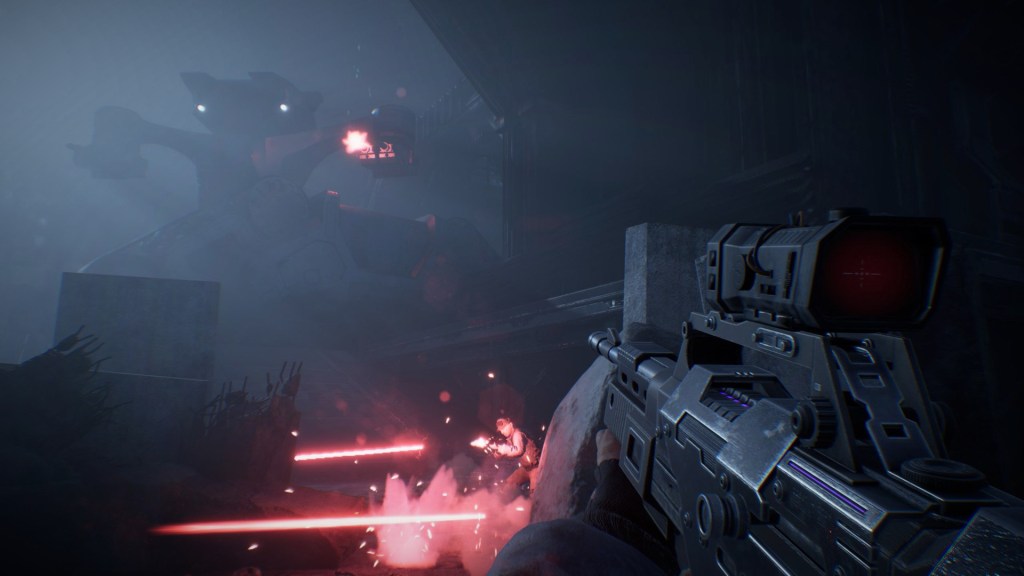
    If you up the default difficulty a notch to make all mistakes potentially fatal, the opening hours force you to explore the semi-open environments carefully, use the rudimentary stealth system to get a good angle before attacking, engage in hit-and-run tactics against groups of foes, and scavenge continuously to craft explosives and healing items. It feels like the kind battle resistance fighter would be waging and the Terminators prove a particularly terrifying enemy that, as a bonus, requires no complex AI. Once detected, they march doggedly towards you at a brisk yet unhurried pace, their red eyes and plasma shots emerging from the distant gloom.

    Of course, Terminator: Resistance has RPG-lite mechanics integrated into the gameplay too, so you’re constantly earning XP towards new levels and investing skill points into three branching but straightforward tech-trees (Combat, Science, and Survival). There are some powerful abilities at the end of each branch – think health regeneration or the ability to use Terminator weapons – but most are just incremental upgrades to damage done with weapons and explosives, increased toughness, more effective stealth, and improved efficiency when crafting, lockpicking, and hacking.

    In theory, this gives you some control over your character build but it doesn’t pan out that way. Firstly, skill upgrades are level-gated so you can’t super-specialise early on. Secondly, while you can prioritise your point distribution within these level brackets, there’s more than enough XP to unlock all but one or two skills by the finale. You become a powerful all-rounder irrespective of your preferences.

    Another unbalanced mechanic is the ability to upgrade plasma weapons by creating a sequence of three circuits, which offer buffs like increased damage, clip size, and fire rate. They come in different rarities, and the connector types you need to line up is randomised, but you can eventually loot or buy dozens of them, letting you tear through many Terminator types with ease by the mid-game.

    If I wanted to be harsh, I’d describe Terminator: Resistance’s mechanics as wide as an ocean but deep as a puddle. However, that relative simplicity in tandem with the short runtime work in its favour. Although the mid-game drags on for too long and returns you to the same regions too often, it remains a more-ish experience. Every outing means XP for new skills, access to new weapons, and a few new upgrades.

    The importance of looking the part

    So far, so six out of ten – but Terminator: Resistance has a trump card.

    Even accounting for the increased resolution and texture quality offered on PC, Terminator: Resistance is not a technically impressive or beautiful game – but it does have some style. I earlier compared it to a scaled-back Fallout 4 and that holds true for the visuals. The environments look dated and lack fine geometric details but the overblown volumetric lighting and depth-of-field are used to create an oppressive atmosphere and mask many limitations, like distant scenery.

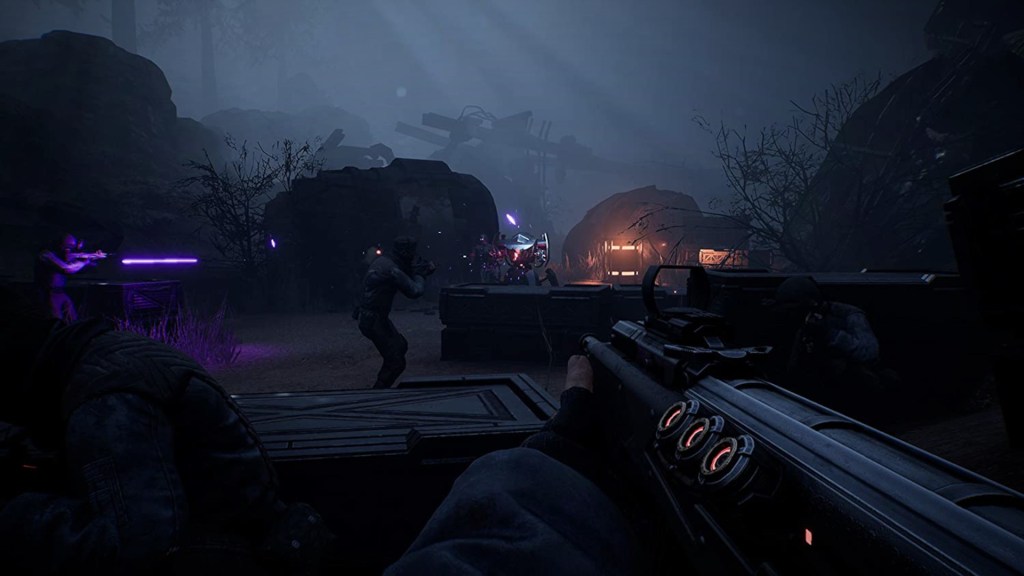
    Although missions set during the day can look flat and washed out, most of your excursions are after nightfall when the world is drenched in shades of cold blue, lit by the harsh glare of fires, piercing spotlights, neon plasma colours, and glowing Terminator eyes.

    Character models are not particularly well-animated or expressive, but humans look suitably detailed and, most importantly, a lot of attention has been placed on recreating the iconic Series-800 Terminators, other recognisable machines like the HK-Aerial and HK-Tank, and the Resistance weapons.

    The soundtrack – unfortunately not available officially – is the true star of Terminator: Resistance. It feels like a diverse original score, not just a reworking of Brad Fiedel’s iconic themes, and could have been a perfect fit for the 1984 original or the sequel. It’s one part electronic rock, one part marching band drum beat, one part moody synthwave, and consistently incredible – well, aside from during the aforementioned sex scenes.

    It elevates almost every moment, regardless of whether you’re skulking through ruins hiding from the spotlight of an HK-Aerial; circling around the world’s least competent HK-Tank in an otherwise dull boss fight; or charging the defences around Skynet’s Time Displacement Equipment with a reprogrammed HK-Tank, dozens of resistance fighters, and neon plasma bursts crisscrossing overhead.

    Style over substance?

    Wrapping up, I can now appreciate how Terminator: Resistance has cultivated a modest but vocal fanbase, especially among fans of the original timeline movies. Hell, I’m even tempted to pick up the PC version at some point – though damn you Teyon for making that a requirement to play the Annihilation Line expansion.

    Terminator: Resistance reaffirmed my belief the audiovisual experience can’t carry a game, but it sure can elevate it. Sadly, in this case, it’s from a middling six-out-of-ten game to a mildly entertaining seven-out-of-ten – the sort of game that’ll always find an appreciative fanbase that might keep it popular enough to warrant a better sequel at some point.

    Between its adherence to events in the original timeline, neon-soaked colour palette, and satisfyingly authentic soundtrack, it’s by far the best Terminator game – or at least the best FPS Terminator game if you’ve got a soft spot for the 8- and 16-bit crossover titles. However, if you’ve got no nostalgic hook or limited playtime that you’d rather fill with only quality titles, you can easily give it a skip.

    Terminator: Resistance was played on Xbox Series S|X. It is also available on PC, Xbox One, and PS4/5 (and got an Enhanced edition for PC and current-gen consoles with a DLC campaign).

  • Retrospective: Castlevania: Lords of Shadow 2 (2014)

    Retrospective: Castlevania: Lords of Shadow 2 (2014)

    The origins of that undead scallywag Dracula was a story I never cared to see. You see, when you’re trying to give a beginning to some of entertainment’s truly big bads, it’s very difficult to create a story that can outdo the mystique around those characters.

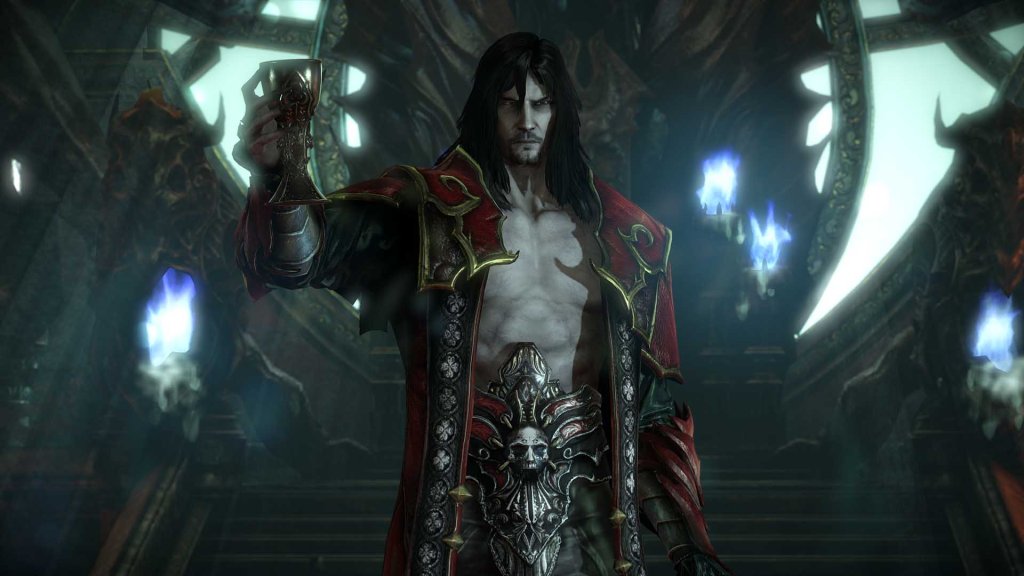
    In 2010 developers Mercury Steam in conjunction with Kojima Productions managed to do just that. At least in the Castlevania universe they did. Players took on the role of Gabrielle Belmont in what was a dark and twisty narrative that saw him go from the right hand of God to, well, the Prince of Darkness. The game drew some fantastic voice acting from Robert Carlyle and Patrick Stewart as we saw how doing the right thing took Gabrielle down the dark path to becoming one of the greatest monsters who ever unlived.

    Coupled with some fantastic visuals in linear levels, that showcased exactly what classic 2D Castlevania levels would look like in 3D, the great combat in Castlevania: Lords of Shadow set up the beginnings of a fantastic series that was all too short lived.

    In 2014 Mercury Steam released Lords of Shadow 2. The game drew on what made the first game so great and then translated it into what I had always wanted from a Castlevania series: a sprawling, epic open 3D world.

    Now this wasn’t the first time that Konami had attempted to translate Castlevania from its 2D origins to 3D. The PS2 saw two 3D entries in the series while the N64 saw two 3D entries of its own. All four games are better left in the past and, in many ways, best not mentioned again either. Capcom’s original legendary Devil May Cry became the closest to a good 3D Castlevania game I ever thought I would get.

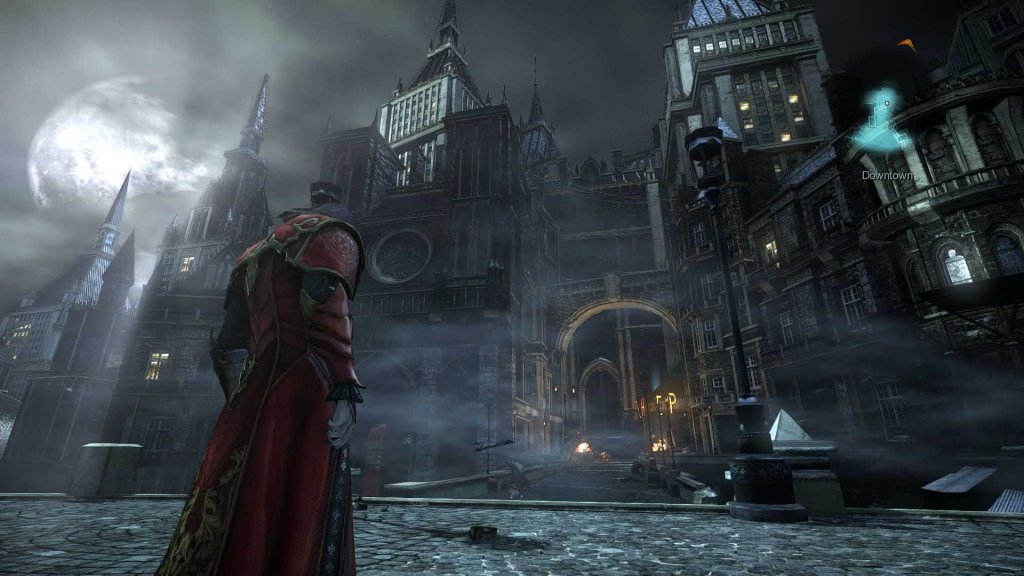
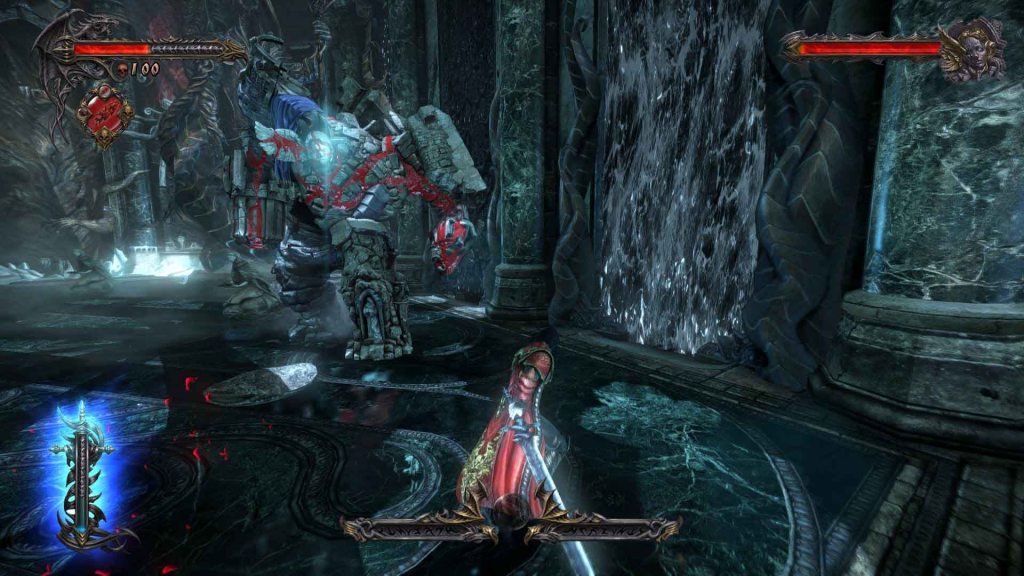
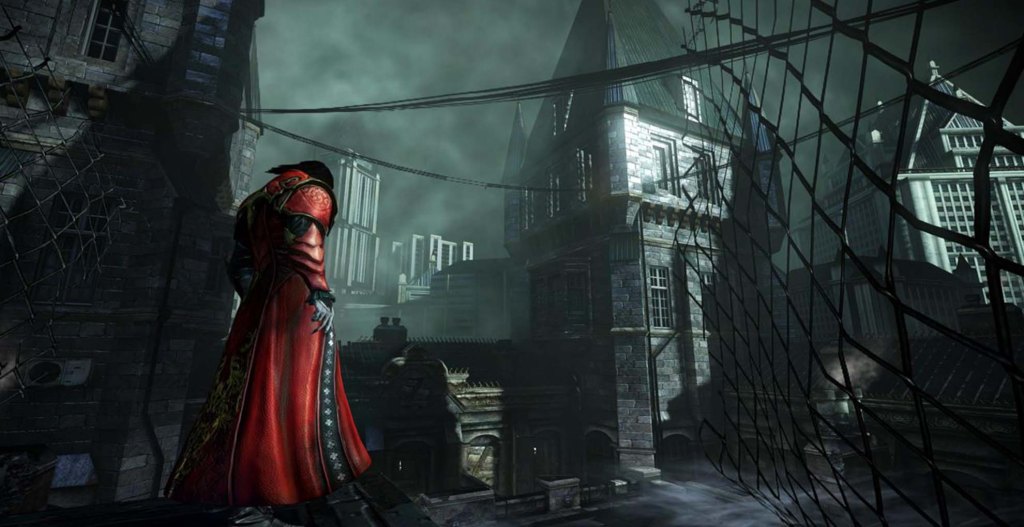
    Lords of Shadow 2 surpassed my expectations of what Mercury Steam would be able to develop. Set both in the modern day and the medieval past of the castle, Lords of Shadow 2 pulled out some fantastic vistas for you to stop and marvel at along your journey. The modern day sections were set in a city that was built upon the dessicated bones of Castle Dracula while the more supernaturally set medieval sections of the game were a triumph of epic, screenshot worthy vistas.

    Mercury Steam managed to translate the Metroidvania style into 3D. As you once again took on the role of an underpowered Dracula, the more you explored and fought, the more powerful you would become and this in turn opened up new areas for you to explore, to both progress the game, and find secrets. It certainly could not have been an easy feat, but I always felt that Lords of Shadow 2 nailed this aspect of what made Castlevania so great. It was an absolute joy to explore the environment which added a grand sense of majesty to the narrative.

    While the exploration is the main reason I truly love this game, the combat was no slouch either. Dracula uses his own blood as a weapon, creating his own version of the now iconic Castlevania whip. However there are new offensive and defensive moves and weapons. The dash and counter system needed to be mastered to be truly effective, especially in later fights, while two new weapons, the Void Sword and Chaos Claws helped you to heal and deal with armored enemies respectively. Using them would drain your magic meters so there was some tactical play in when to use them.

    As much as I loved Lords of Shadow 2, it launched to rather mixed reception. In short, the game didn’t do well with low sales. Add a lot of apparent behind the scenes drama and negativity and Lords of Shadow 2 became the last entry in the series.

    Having replayed it yet again recently, Lords of Shadow 2 still holds up fantastically in environment design and combat, though, visually, its age is starting to show. The PS3 and Xbox 360 era games have a tendency to be rather… muddy. The fantastic exploration still remains highly addictive and the combat is chaotically cathartic and challenging still.

    While the story may have been definitely concluded, this is Castlevania and Dracula after all, who has more than once proven that you can’t keep a good Count down. That said, the chances for a series revival for this are non-existent. The chance of some sort of HD remastering is also non-existent considering the poor sales. Thankfully if you have either an Xbox 360 or PS3, you can still play the game. If you have an Xbox One or an Xbox Series machine, the Lords of Shadow series is part of the Backwards Compatibility program meaning you can still give it a go there, and I highly urge you to.

    Now if you’ll excuse me, I feel a need to explore a certain musty old castle again…