Author: Andrew Logue

  • Editorial: Neverwinter Nights 2: Enhanced Edition is another awkward console port that I’m still glad exists

    Editorial: Neverwinter Nights 2: Enhanced Edition is another awkward console port that I’m still glad exists

    Like the Beamdog “enhanced” ports before it, Aspyr’s Neverwinter Nights 2: Enhanced Edition feels aimed at one of two audiences. The first are nostalgic gamers looking to relive their cherished memories, albeit at the potential cost of ruining them. The second group are likely younger gamers curious about the evolution of CRPGs, from the Infinity Engine classics – with their great writing, gorgeous 2D backdrops, and sprite work – into fully 3D worlds with more voice work, detailed character models, and flashy combat animations that felt increasingly at odds with dice-roll outcomes.

    Tellingly, Neverwinter Nights 2 was the only CRPG in the current enhanced roster that I never finished at launch (and that’s including Aspyr’s Switch-exclusive “remasters” of Star Wars: Knights of the Old Republic 1 & 2), and it took me a while to gather my thoughts. Regardless of my opinion, I want to start by praising the preservation value of these enhanced ports – especially on modern consoles, where backward-compatible libraries are becoming as important a feature as on PC. JRPGs emerged on the early consoles and have been extensively ported, remastered, or remade, whereas western-developed CRPGs only gained widespread popularity on consoles during the Xbox 360 and PlayStation 3 generation, after the release of real-time, action-oriented titles like The Elder Scrolls IV: Oblivion and Mass Effect.

    Neverwinter Nights 2: Enhanced Edition Console Controls

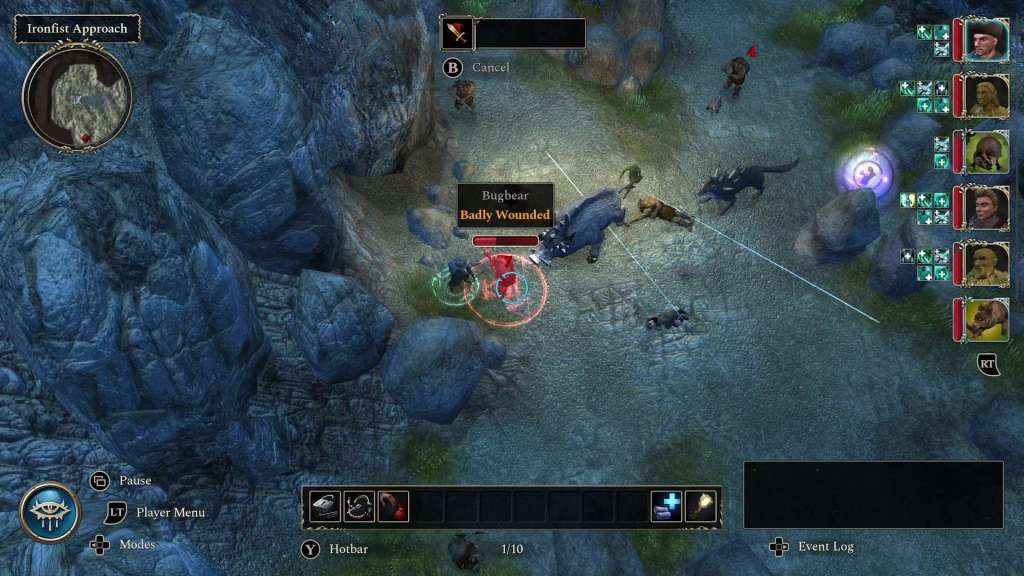
    An obvious issue was that CRPGs were designed exclusively for PC at first, with many featuring real-time-with-pause combat built around mouse and keyboard inputs. Neverwinter Nights 2: Enhanced Edition offers updated controls and a tweaked UI, a claustrophobic over-the-shoulder camera toggle, and solid performance on all consoles (including the Nintendo Switch 1), but these changes can only achieve so much. It remains awkward to play with a gamepad, and that adds a layer of frustration atop a game with no shortage of frustrating elements. That said, the native gamepad support offers greater accessibility and handheld potential for PC players.

    As for the game itself, Neverwinter Nights 2: Enhanced Edition is a slow-burn RPG – even when compared to its sluggish 2002 predecessor that offered an official campaign and expansions that could feel like custom modules built on a budget with limited assets, rather than an epic, hand-crafted campaigns (though, to be fair, the Infinity Engine games also padded out their worlds with repeating outdoor tile-sets and copy-paste interiors, but I found the unique locations and set-pieces more memorable than in the later 3D games).

    For the 2006 sequel, Obsidian used the Electron Toolset – an evolution of the Aurora Toolset – to create a more diverse RPG, but still one clearly built from an asset library. It reintroduced a world map; ditched the formulaic hub-with-four-adjacent-regions design; restored full party management mechanics; and massively improved companion interactions with the player, NPCs, and each other. Unfortunately, at least where the main quests are concerned, the role-playing complexity and player freedom feels limited compared to the Infinity Engine titles. I appreciated the frequent cuts to what the villains are up to in the background, but the overarching quest is linear, significant choices feel artificially binary, and it retreads many familiar themes between a handful of memorable twists.

    Throughout the lengthy prologue and your formative hours in and around the titular city of Neverwinter, you’ll tick off a checklist of CRPG tropes. You’re the adopted child of a former-adventurer father who won’t talk about a past battle and the fate of your mother; the opening village fare has you and your tutorial companions participate in tests of melee, ranged, and magical skill before tragedy inevitably strikes; the opening hours before reaching the city of Neverwinter are a microcosm of mid- to late-game scenarios; and every conflict you can resolve without violence – through a mix of logical replies or attribute-checks – represents a potential ally against an overarching threat later.

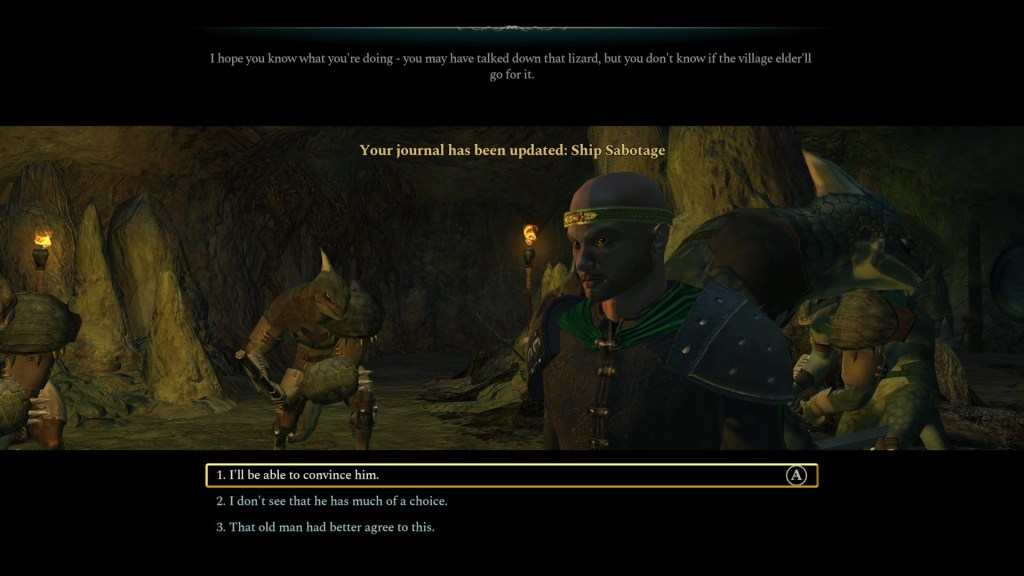
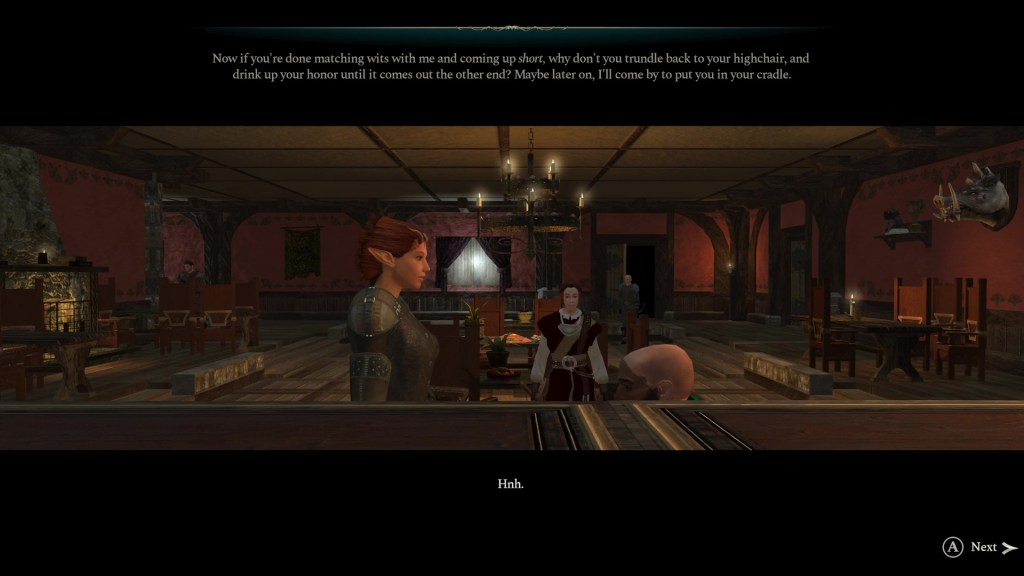
    There are a dozen companions – some you can romance – that cover an eclectic mix of archetypes. They have their own questlines and character growth that the player can influence – all of which pays off during the final battle. Examples include an angsty rogue looking for guidance; a brawling dwarf with a curious moral code and desire to become a monk; an aloof Elven druid who finds herself dependent on others in civilised lands she’d rather avoid; an overconfident, trash-talking sorceress that trouble follows; and an unhinged Gnomish bard with a fondness for lengthy conversations. Unlike the first Neverwinter Nights, they all play a more active role outside of their personal quests. They can calm or antagonise NPCs and will often debate with the player or among themselves when you’re trying to resolve a quest.

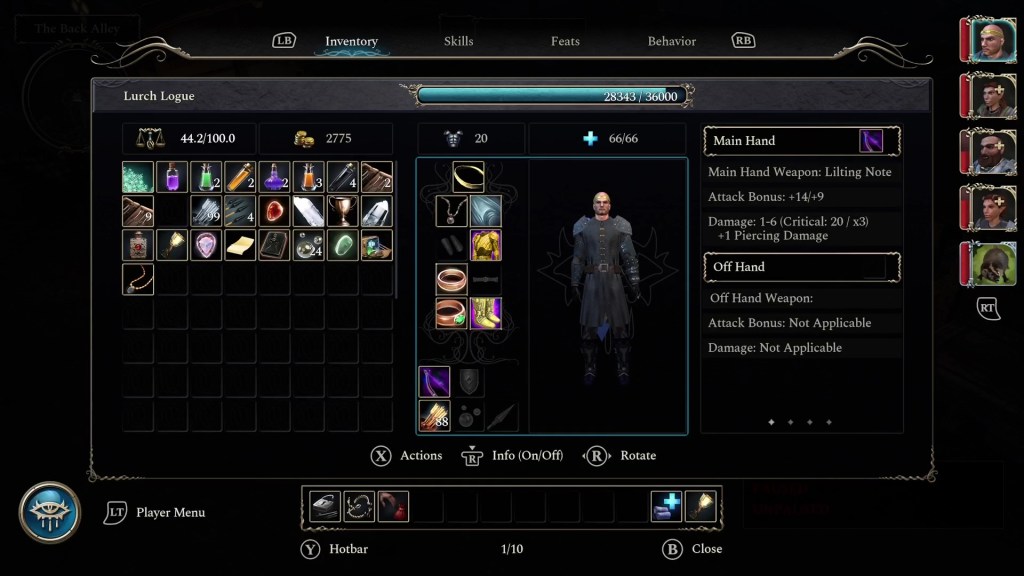
    That constant party interaction and frequent dialogue choices are highlights as the gameplay is, at least well into the second act, poorly paced and unbalanced. The frequency of levelling drops off quickly and too much time is spent simply running back and forth between quest givers. You’ll need to stop to loot, purchase, compare, and equip gear to stay ahead of the escalating and uneven difficulty curve, and it’s essential for players using a gamepad to frequently update the hot-bar, set up AI behaviours, and memorise the best buff and de-buff spells for auto-casting. Without a “story mode” difficulty, sudden spikes – such as early battles against mobs of backstabbing rogues – can kill pacing when most quests involve combat.

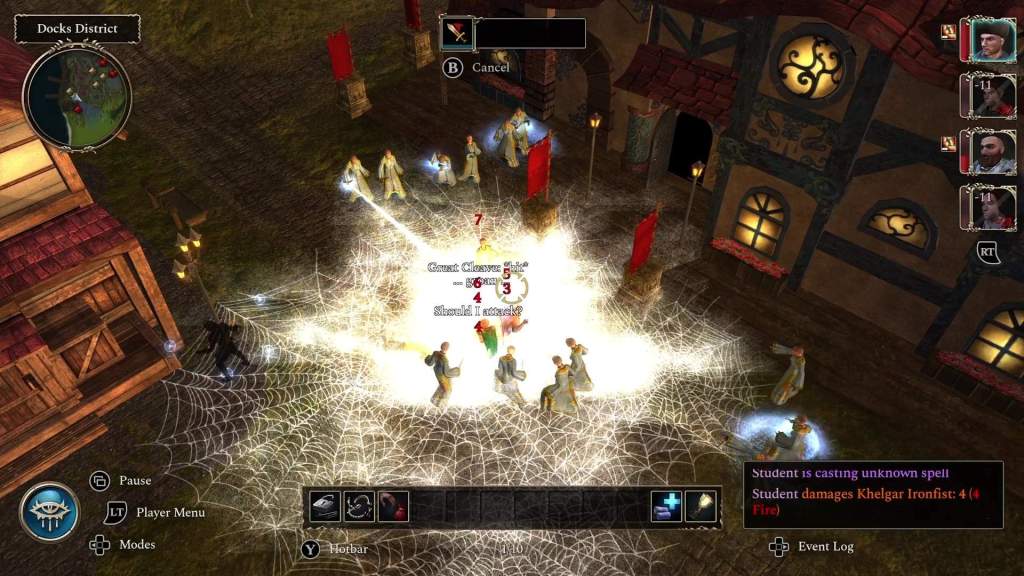
    If modern turn-based or action-RPGs are about incremental progress – the thrill of watching numbers go up – Neverwinter Nights 2: Enhanced Edition is a reminder that most early CRPGs were about exceeding thresholds. Your attributes and gear modify dice rolls that influence total damage output and defence, sure, but only if you exceed thresholds. If you’re not fielding a mixed party, constantly using skills and magic, and resting between every battle to recharge them, you’ll spend an inordinate amount of time watching your party do little as they fail to exceed an enemy’s armour class, spell or damage resistance, and saving throws. There’s no denying the D&D 3.5 ruleset provided a lot of flexibility for character builds and party synergies, but those here for the story, character, and interactions will find it ends up dominating the experience.

    Going back to this type of RPG in 2025 is jarring, even as someone who played them throughout the late ‘90s and early 2000s. Despite the semi-linear progression – with new areas and quests opening up as the plot demands – the difficulty curve feels erratic. You can go from steamrolling a mage before they get a spell off, to watching your entire party wiped by a single bandit in plate armour, which forces you to be incredibly cautious and save-scum by default. It’s far from ideal, but if you are just after a taste of the Neverwinter Nights 2 experience, jumping into the standalone Storm of Zehir and Mysteries of Westgate expansions might be the better choice.

    Despite ending on a negative note – which feels weird having readily sunk another 30 hours into it before writing this up – I am glad it exists, if only to preserve another RPG from a time when player choice, frequent attribute checks, and variable quest outcomes were the focus; not production values and hours of self-indulgent cutscenes that run on so long they trigger my console’s power-saving screen-dimming feature. Neverwinter Nights 2: Enhanced Edition reminded me that the original marked the end of an era for CRPGs, soon to be replaced by more hands-on, gamepad-friendly, action-RPGs that would go on to permeate every other genre.

    Neverwinter Nights 2: Enhanced Edition was played on Xbox Series S|X using a code provided to gameblur by the publisher. It is also available on PC, Xbox One, PS4/5, and Nintendo Switch 1/2.
  • Review: Caput Mortum (PC)

    Review: Caput Mortum (PC)

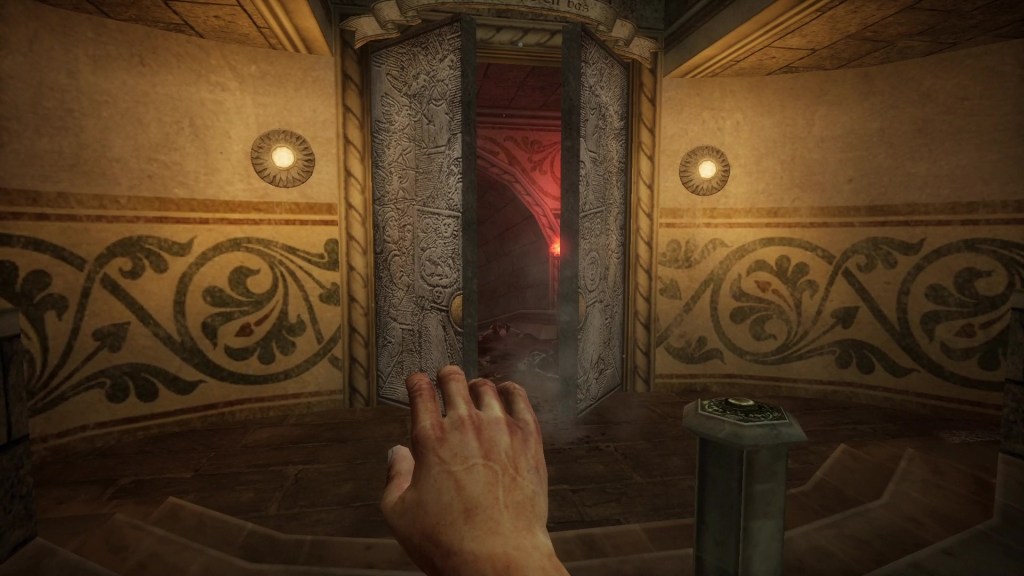
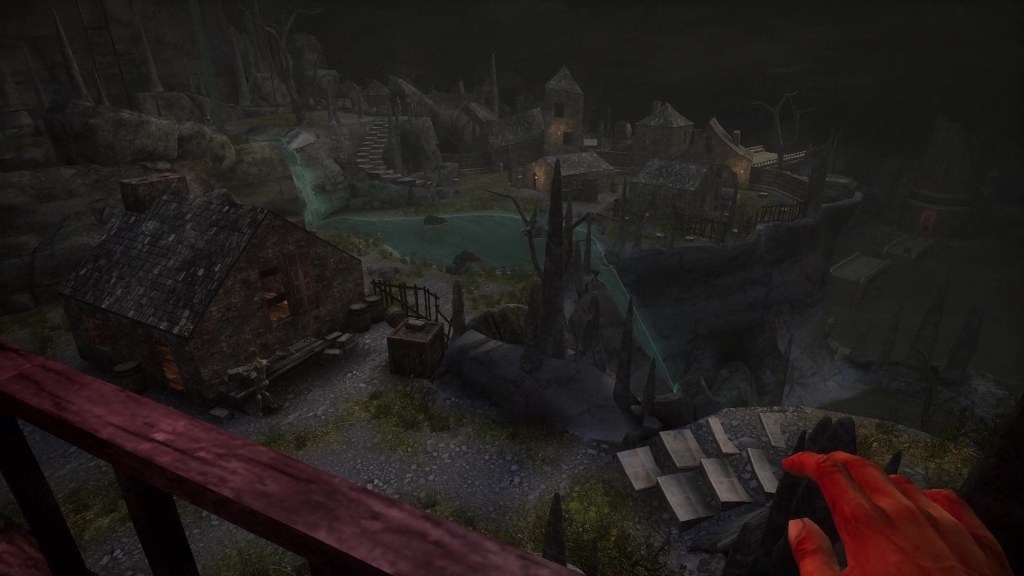
    WildArts Games’ Caput Mortum – apparently a variation of Latin for “Dead Head” – feels as indebted to 2010’s Amnesia: The Dark Descent as it does to its stated inspiration, 1994’s King’s Field. It’s a stylish, indie, first-person dungeon-delve that takes you into the ruined depths of a tower, in 16th century France, once dedicated to alchemy most foul. It combines diverse puzzle and monster encounters with retro-inspired aesthetics (and a retro control scheme for those who want it) to craft a well-paced descent into madness.

    Caput Mortum keeps direct storytelling to a minimum, with scattered notes and environmental details revealing the nature of the alchemists’ work, their barbarous attempts at creating life, and the tragic repercussions. Aside from the protagonist’s willingness to push ever deeper into the tower, they remain a mystery. A simple witness to events until the final moments – albeit with an alternate ending on offer for those willing to play through it a second time and piece together a secret code.

    A minimalist approach works for a game that is maybe 3-4 hours long for a first playthrough. Discovering the fate of the alchemists, their creations, and the nature of the voice calling out to the protagonist kept me pushing forward and exploring every corner of the tower for notes and hints of past events. It helps that despite the late ‘90s-style early-3D environments, each level of the tower feels visually distinct and atmospheric, packed with incidental details, new threats, and tension inducing-audio. The ambient audio keeps you on edge, audio cues let you know when you’re close to being spotted, and the soundtrack features simple but unsettling loops that had me thinking of Monolith’s F.E.A.R.

    Gameplay is all about deliberate movement and manipulating a single hand that interacts with the world, carries around puzzle items or keys, and wields a small selection of weapons that double up as tools. The basic controls and gameplay systems are easy to grasp, while clear guidance – either in the form of actual notes or visual cues – meant I rarely felt lost while solving puzzles, defeating basic enemies, and avoiding those I could not.

    If you’re after an authentically frustrating retro experience, the default controls offer a keyboard-only setup or gamepad layout that forces you to adjust your viewpoint by using keys or bumpers and triggers. These archaic controls ramp up the tension as simply aligning your view to track an enemy or strike at a weak point is artificially difficult. It felt like a novel throwback for the opening levels of the tower, but I would recommend just picking the modern gamepad or keyboard-and-mouse setup as the combat – which is never more complex than baiting an attack animation before striking back – is the least interesting gameplay mechanic.

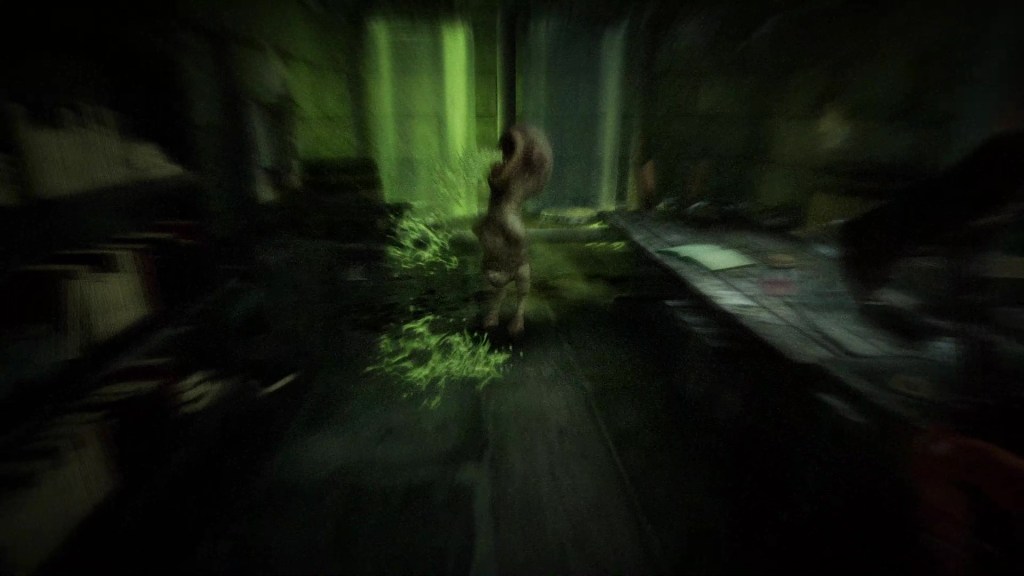
    Instead, exploration and puzzling, sometimes while avoiding unique threats, are the highlights of Caput Mortum. Every level below the tower presents you with a new puzzle blocking your path, often requiring multiple steps, and slowly increasing in complexity the deeper you go. Small levels with a simple two-part key hunt give way to clue hunts, pattern-based puzzles, and alchemical formulas needed to create compounds and explosives. An early encounter with a curious homunculus has you using the hand controls to match gestures to avoid attacks, while a later encounter has you navigating dark drainage tunnels by flaming torch, pursued by a charred and deranged stalker.

    Caput Mortum’s brisk pacing also benefits the gameplay loop. Each level introduces a new puzzle variant or threat, and no stalker-style sequence lasts long enough to frustrate you. There are some anachronistic elements that don’t hold up – like having to swap between a free hand and weapon, or anytime extensive hand gestures are required reveal clues and solve puzzles – but as puzzle and encounter designs are rarely repeated, these issues never stuck in my mind. It’s also worth noting that while game warns you that it only saves once you enter a new level of the tower, there were autosaves after solving major puzzles and before entering dangerous areas.

    Wrapping up, Caput Mortum is both exactly what it markets itself as, and it serves an example of what indie games excel at: providing a compact but no less satisfying experience that provide the same thrills as their AA or AAA peers – just without the bloated playtimes that have come to blight that sector of industry. I played through and enjoyed it over two sessions; I’ve started a second run to unlock the alternate ending; and, when I’m done, I’ll have that increasingly rare sensation of finality that so much of the video game industry seems desperate to avoid giving me.

    Pros:

    • A compelling decent into madness told through notes and environmental storytelling
    • Simple but satisfying puzzle and encounter designs that rarely repeat
    • Retro-inspired presentation that generates an unsettling atmosphere
    • The brisk runtime benefits both the narrative and gameplay loop

    Cons:

    • Some puzzles require more elaborate hand gestures that are tedious when using a controller

    Score: 9/10

    Caput Mortum was reviewed on PC using a code provided to gameblur by the publisher.

  • Review: Heartworm (PC)

    Review: Heartworm (PC)

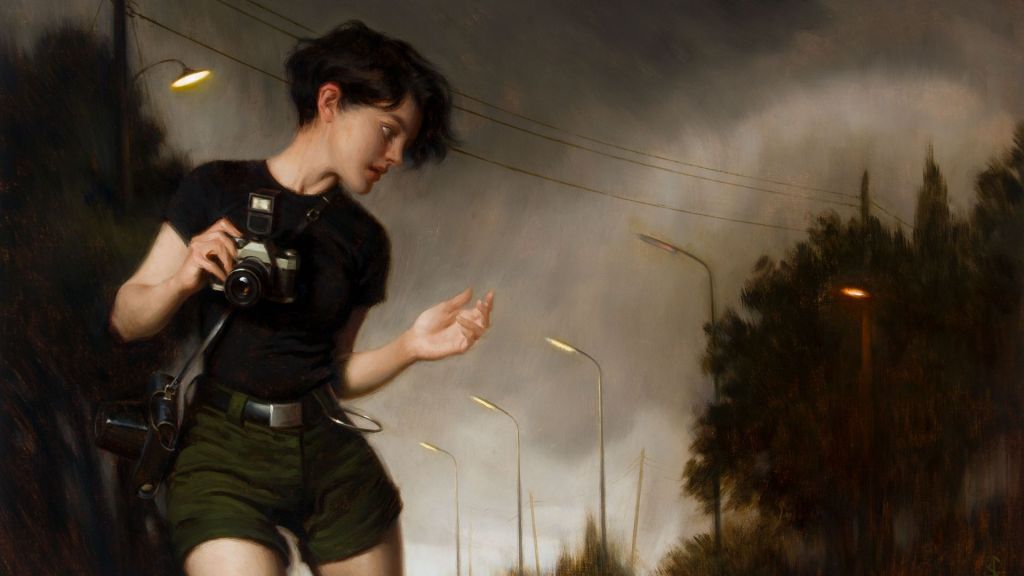
    If you critique Heartworm for what it is – a mostly one-dev passion project brought to fruition with the help of a niche indie publisher – it’s excellent with only a few forgivable flaws. It’s a compact homage to survival- and psychological-horror games of the PlayStation 1-era, notably Resident Evil and Silent Hill, with a story that ruminates on our fears and anxieties around the meaning of life and death.

    Despite a ranking system and achievements related to completion times, Heartworm has an intriguing but once-and-done story I won’t discuss in much detail. You play as Sam, a young woman with a debilitating fixation on mortality, who sets off for an abandoned house that urban legends say has a doorway to the afterlife. No one who enters the house has ever returned, but Sam – haunted by past traumas – thinks she has little to lose.

    With three major areas to explore and a casual playthrough lasting 4-5 hours, Heartworm moves at a brisk pace with mostly logical puzzles and only a handful of mandatory battles. The narrative is driven by stylish retro-inspired cutscenes, Sam’s frequent monologues, and no shortage of flavour text and notes that reveal her thoughts and those of others who have taken the journey before her.

    The surreal and sometimes nightmarish environments she explores are clearly manifestations of her own memories and fears, full of opportunities for Sam to comment on her life and experiences up to that point, but there are lingering threats that seem connected to earlier travellers. It makes for a setting that’s more unsettling than horrifying, so that Heartworm is more a journey of discovery like the original Silent Hill 2 and not some gruelling feat of survival.

    If you are a fan of classic or retro-inspired survival-horror, Heartworm will feel familiar and, at times, a little generic – most notably when it comes to the boss fights that feel more “gamey” than something essential to the narrative themes. Each area is sprawling and interconnected, with the way forward blocked by both conventional and bizarre locks that force you to hunt for actual keys, key-like objects, or clues to solve puzzles you might recognise from three decades of survival-horror games.

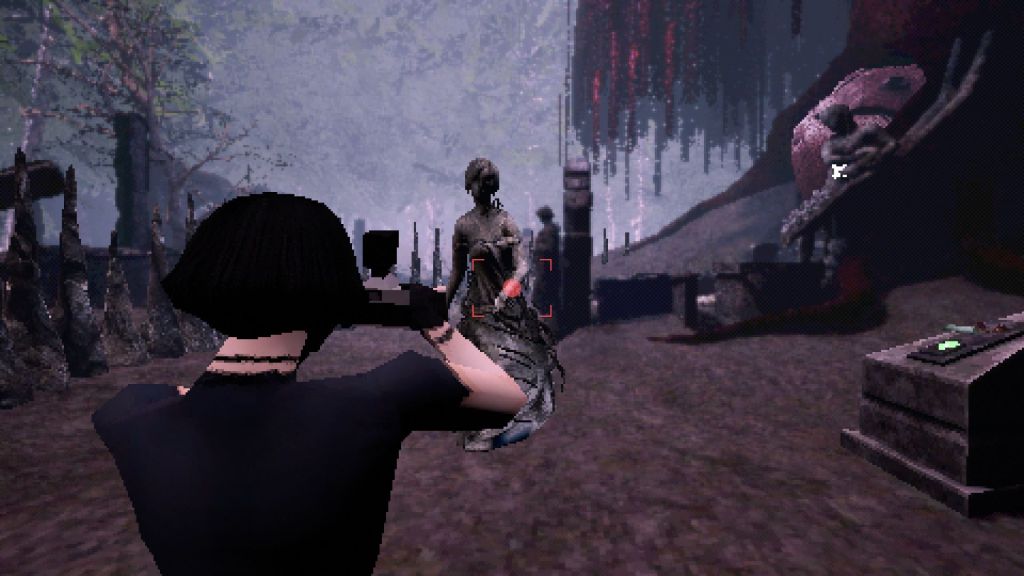
    The opening abandoned house and a hub-like cathedral hanging above a void set the tone and test your basic puzzling abilities. A gloom-shrouded neighbourhood has Silent Hill vibes and introduces roaming enemies – teleporting static ghosts and a giant spider – that you put down using Sam’s camera. The woodlands section feels eerily serene, aside from the rabid dogs, deer, and terrifying statues. The final multi-level clocktower mansion leans heavily into Resident Evil – sometimes literally – with elaborate key hunts that, in turn, lead to Silent Hill-esque environments, such as an abandoned hospital, school, and subway, filled with leaping chained creatures and twitchy mannequins.

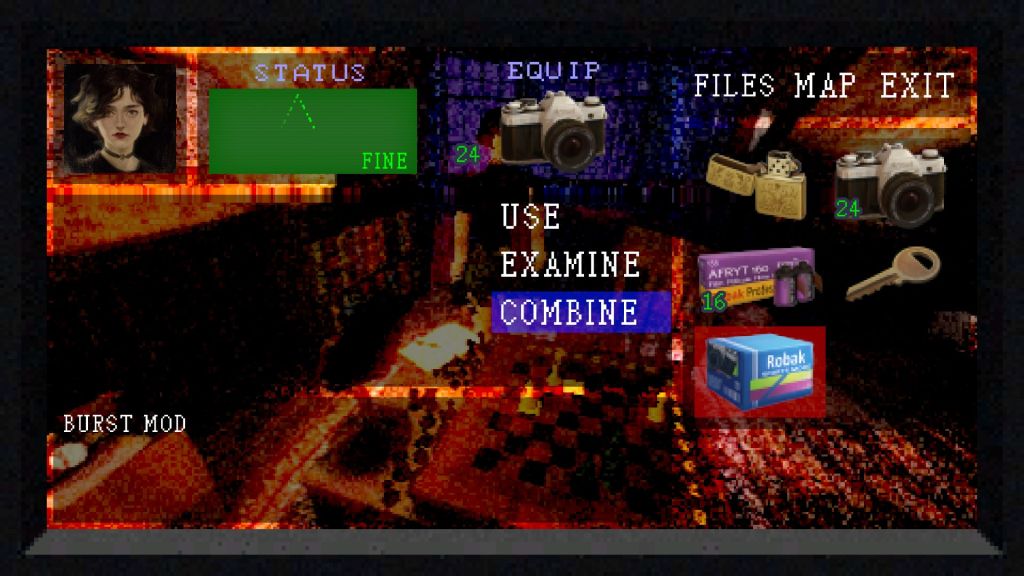
    The combat and boss fights in Heartworm rarely challenge you, as there is plentiful film for Sam’s camera, the ability to snap the camera behind her shoulder for easy third-person aiming, and no shortage of basic healing items that you can combine to form stronger medpacks. It’s all familiar fare and most enemies are easily avoided if you just keep moving. The combat is engaging enough but the focus is clearly on solving puzzles and hitting frequent story beats.

    That said, Heartworm has the potential to frustrate if you’re not paying attention or when using the default pixelated and dithered visual style. If you’re a fan of semi-fixed camera angles and “authenticity”, Heartworm can provide that chunky, upscaled 240p look. If you disable the pixelation and dithering effects, you instead get a good approximation of what modern emulators can produce running early 3D games. Either choice looks great, and the visuals are complemented by unsettling ambient audio and haunting music loops that generate a ton of atmosphere. However, as much I loved the pixellated look, the extreme aliasing makes spotting pick-ups and environmental clues difficult.

    Another issue is that the size of many areas can make backtracking tedious if you’ve missed environmental clues that feature in later puzzles. This applies to a handful of optional puzzles to gain a camera upgrade and secret memory photos – at least one of which is required for the good ending that feels most consistent with Sam’s evolving attitude. There is a file system for documents and a modern map system that highlights both doorways and rooms with remaining items, but I’d recommend you treat Heartworm like a classic survival-horror game and take notes as you go.

    Looping back to my opening line, Heartworm gets so much right as a compact indie game that a few flaws did little to detract from what is otherwise an exceptionally well-made homage to both survival-horror and psychological-horror classics – just one with a more pertinent story that anyone could relate to. The good ending variations are perhaps a little too simplistic given the complexities of mental health issues, but Heartworm – much like Crow Country, My Happy Neighborhood, and Sorry We’re Closed – is another game in the genre that could broaden the audience by tempering the horror with more heart.

    Pros:

    • A compact homage to survival- and psychological-horror classics
    • A brisk and intriguing story that deals with anxieties and fears around the meaning of life and death
    • Plenty of excellent puzzles and competent survival-horror combat
    • A stunningly “authentic” retro-aesthetic

    Cons:

    • Backtracking can be tedious if you miss something
    • Optional secrets determine the ending scene
    • Sam’s evolving attitude and the positive endings might feel too simplistic given the content matter

    Score: 8/10

    Heartworm was reviewed on PC using a code provided by the publisher.

  • Editorial: My Friendly Neighborhood left me convinced cosy-horror is the way to grow the genre (Xbox Series)

    Editorial: My Friendly Neighborhood left me convinced cosy-horror is the way to grow the genre (Xbox Series)

    It has taken two years for My Friendly Neighborhood to arrive on consoles, but it still deserves a top spot on the short list of survival-horror games that go beyond simple body-horror monstrosities and laboratory experiments gone wrong. There is no shortage of tension and a few jump scares to be had, but it also demonstrates a surprising amount of charm and heart that you find in rare cosy-horror titles like Crow Country or Sorry We’re Closed.

    Terror and heart in equal measure

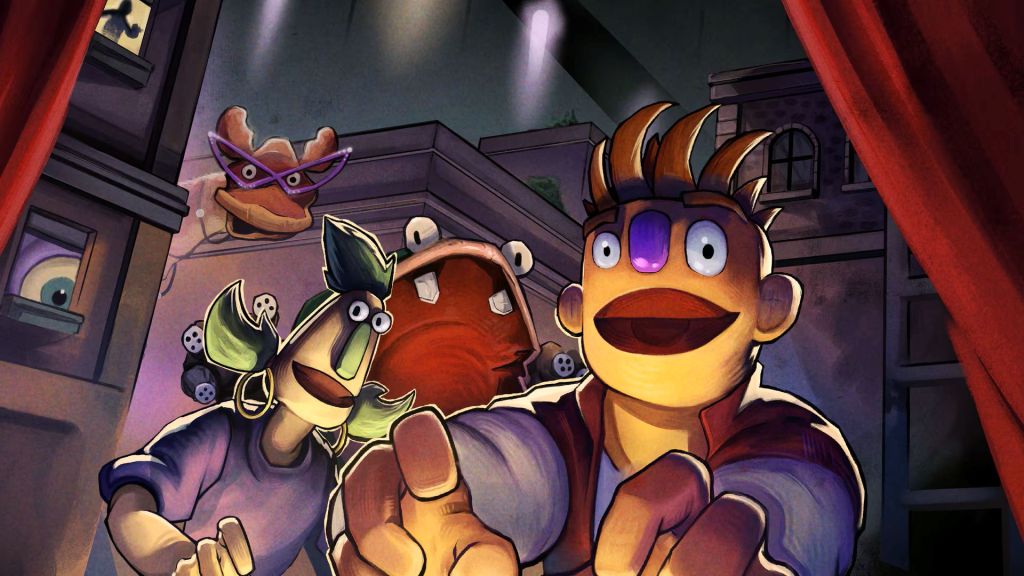
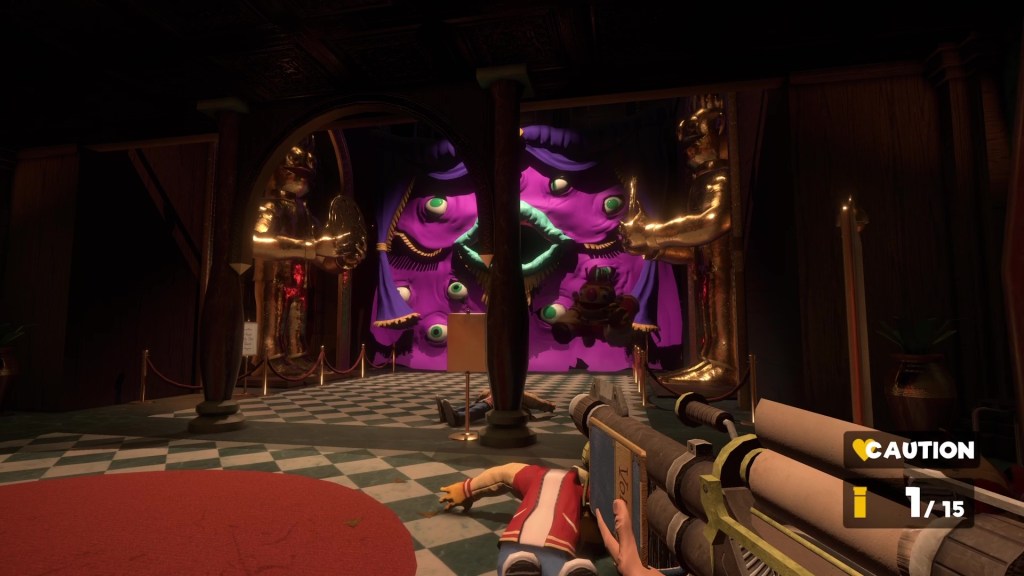
    The cartoonish aesthetics, the focus on a failed children’s puppet show, and the post-war-not-quite-USA setting make for a weird and unsettling experience that plays on established horror tropes while weaving in real-world societal problems. The result is a game that you could breeze through and appreciate the mechanics, while paying little attention to the plot and cast. However, if you read all the lore documents, listen to the puppets’ rambling, and spend some time solving puzzles and backtracking to help the puppets that originally stalk you, it makes the narrative so much more rewarding.

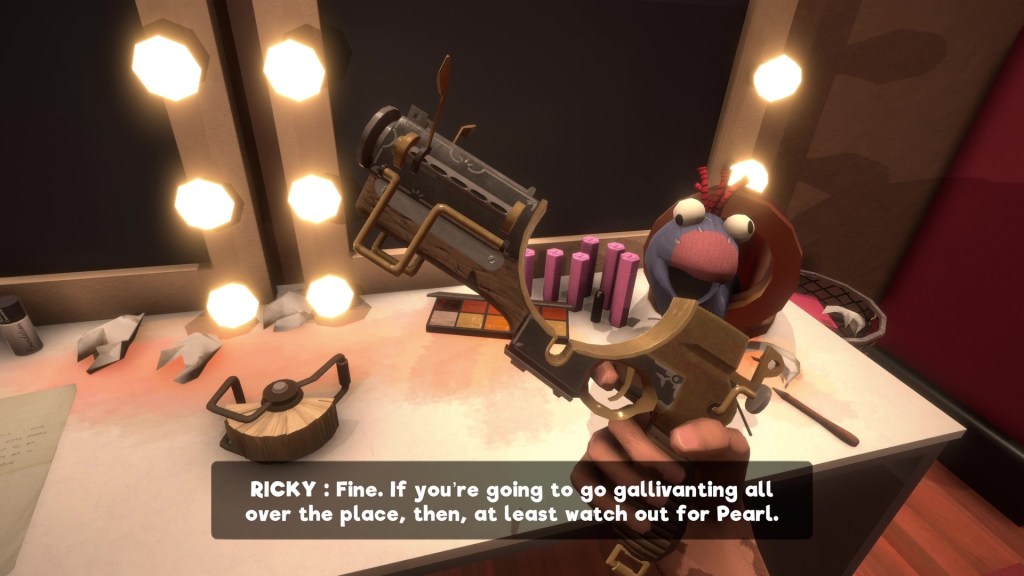
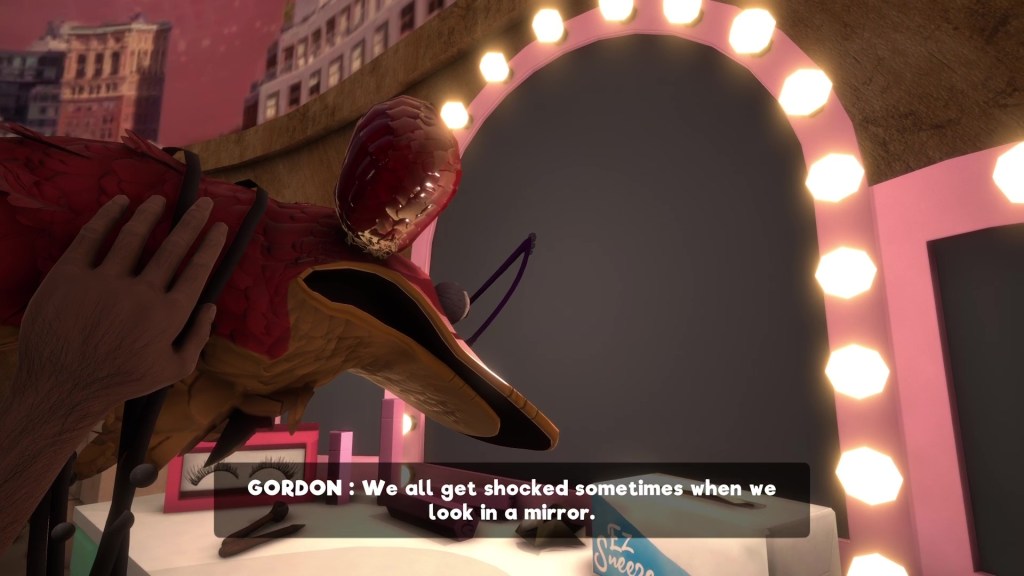
    A big part of the charm is how the protagonist Gordon is portrayed – equal parts brooding, determined, and unexpectedly compassionate – and the quality of the voice work and animations for the puppets you’ll encounter. Aside from Ricky, a sock puppet that aids and taunts Gordon in equal measure, you’ll encounter named puppets that serve as common enemy types, while each location is home to a boss-style puppet that stalks you through certain areas. All the puppets are unhinged and violent, reflecting the slow decline of their show, the character flaws of their former puppeteers, and the decline of society as a whole.

    Gordon’s attempt to shut down the broadcasting antenna goes awry, and he ends up on a journey that takes him through each part of the production studio and back again. Initial terror and confusion give way to dogged determination as he uncovers past events, discovers more about the puppets and the events that led to their growing insanity, and even gets the opportunity to bring peace to its inhabitants while revealing more of his past to the player. It has been a long time since I’ve played a survival-horror game where the narrative and cast have been as much of a draw as the gameplay mechanics – especially one with something to say about how entertainment both influences and is influenced by reality.

    Old-school survival-horror gameplay refined

    Talking of gameplay mechanics, My Friendly Neighborhood is one of those derivative games that show reverence to the source material, but also understand what elements stand the test of time and what anachronistic elements need tweaking or discarding. It keeps the classic haunted mansion design that you explore room by room, searching for keys, puzzle items, and clues to bypass contrived locks or obstacles. In your path are hordes of deranged puppets that can only be subdued permanently with limited duct tape, so you need to manage your routing and resources carefully.

    Despite the first-person perspective, it’s no action game like we’ve come to expect from the modern Resident Evils. Movement, combat, and progression feel far closer in design and pacing to classic survival horror games – right down to the ability to exit rooms to lose pursuers and reset their position. On lower difficulties you have enough resources to be reckless, but My Friendly Neighborhood clearly wants you to manage your inventory and storage box, only attack or subdue enemies you can’t avoid, check the map to plan a path or identify locked rooms with remaining items, and manually save between bouts of progress using limited tokens. It is classic and methodical in the best possible way.

    The combat feels good thanks to great audiovisual feedback from an alphabet-powered rolodex-spewing pistol, rolled up notes used as shells and blasted from a shotgun, and room-clearing grenades with letter shrapnel. That said, the focus is on picking the right tool for the situation and conserving supplies when you can – especially on higher difficulties. As you get a feel for the map layout and identify rooms you’ll return to later, combat becomes more about optimisation than skill, and there’s also incentive to help the boss-type puppets so you can explore with less risk later.

    To do that though, you will tackle increasingly elaborate, nonsensical, but entertaining puzzles. These range from simple key hunts to multi-step memory, logic, and sequence-based puzzles, but a modern map highlights specific key doors and rooms with items, so you’ll never end up aimlessly wandering the compact but dense studio grounds. There is a particularly tough puzzle to unlock a secret area and ultimate weapon – which had me taking notes and screenshots – but finding the items needed to save all the puppets and unlock the “best” ending will come naturally to those who systematically explore.

    Cosy-horror could be the way to keep growing the survival-horror audience

    If you’ve enjoyed the resurgence of survival-horror in both the “AAA” and indie space, My Friendly Neighborhood is easy to recommend – particularly for fans of the emerging cosy-horror trend. It’s only 5-6 hours long and that might put off once-and-done players, but like the classic games that inspired it, you can cruise through it a second time to unlock a different ending and ranking; hunt for secret tapes that enable useful or goofy abilities; mess around with the Speedrun and “Neighborhorde” modes; or just crank up the difficulty and shift the experience closer to true horror.

    My Friendly Neighborhood was played on Xbox Series S|X using a code provided to gameblur by the publisher. It is also available on PC, Xbox One, and PS4/5.

  • Review: Robocop: Rogue City – Unfinished Business (Xbox Series)

    Review: Robocop: Rogue City – Unfinished Business (Xbox Series)

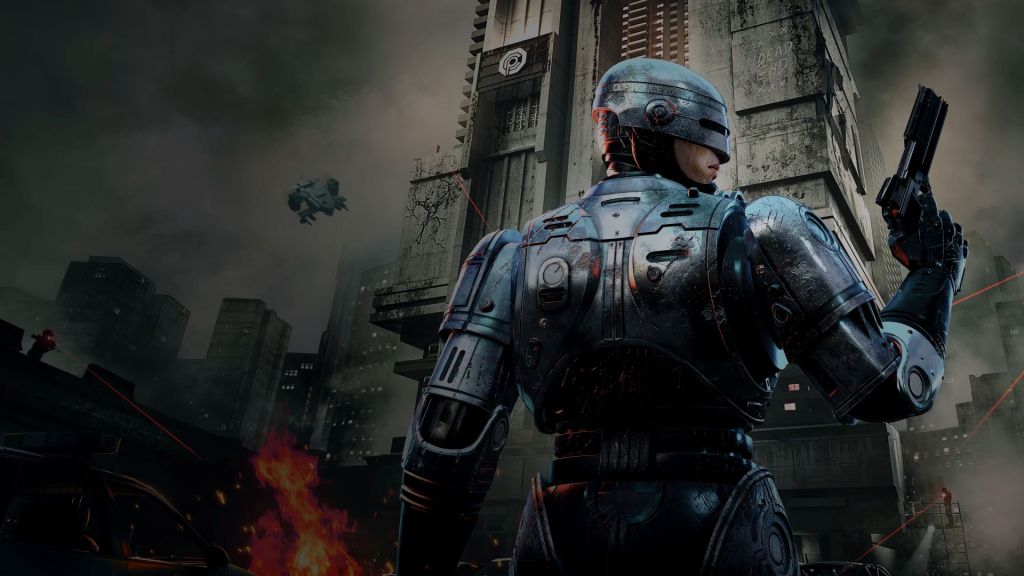
    Robocop: Rogue City slowly grew on me even though it felt too inconsistent and unpolished towards the end. It was another RPG-shooter hybrid from Teyon that I’d add to a list of great “7/10” games – the type I’d sooner replay than many objectively better “AAA” blockbusters when weighing up fun vs. time investment required.

    Like Terminator: Resistance before it, Rogue City nailed the look, sound, and tone of the original Robocop film – even if the gameplay structure and storytelling was a generation behind. Fittingly, Unfinished Business feels like the chunky expansions you would see on PC or consoles during the 2000s. It offers a new story in a fresh setting, but it has clearly been built using the same template, it repurposes many assets, and it retreads a few set-pieces.

    Dead or dead, you’re coming with me!

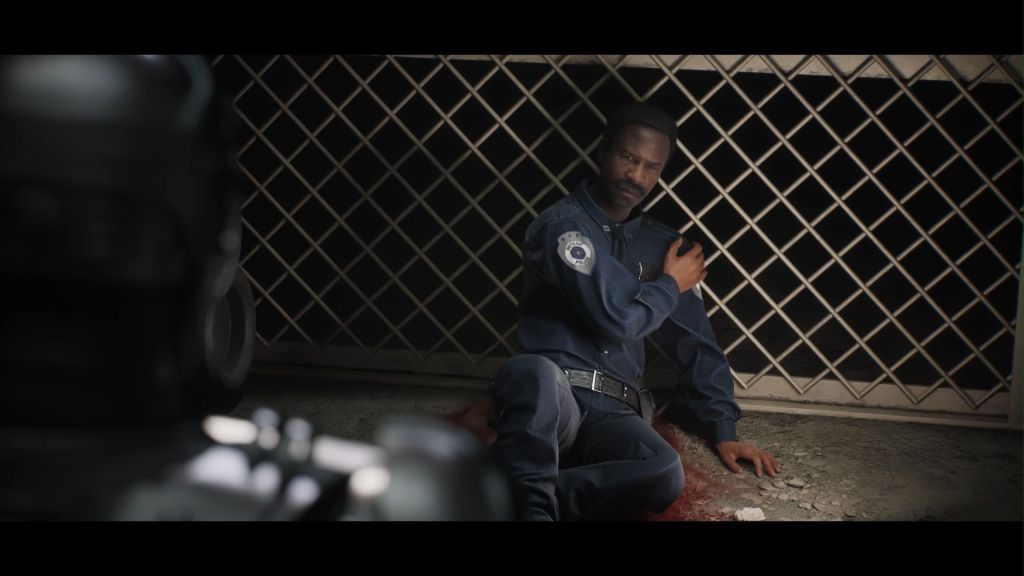
    As a standalone expansion, you don’t need to play Rogue City, but it gives the opening sequence more impact and provides a shared trauma that links Murphy to the new antagonist – a relationship that’s fleshed out in the first exciting flashback mission. There’s an attempt to connect new characters to the original Robocop program that I don’t have a problem with, but Teyon has taken the lazy route of killing off most of the officers you got to know in Rogue City to avoid continuity issues with the films.

    I thought the opening would be used to generate a degree of sympathy for the antagonist and their motivation, but as they’re clearly responsible for attack on the station and go on to commit more atrocities against civilians, there are no grey areas that leave the player questioning Robocop’s trust in established law. The scientist working alongside him fares slightly better, but her redemption arc feels rushed.

    Once again, Unfinished Business does an incredible job using the environment design, audio, and soundtrack to recreate Paul Verhoeven’s vision of the future, but the voice work is inconsistent (including some of Peter Weller’s lines), many NPCs look dated, and the lip-syncing is terrible throughout. It also feels like Teyon rushed the ending again, relying on increasingly short and badly edited cutscenes.

    There is world-building banter, environmental storytelling, and a handful of side missions that highlight how morally bankrupt and corrupt the OCP is, but the delivery feels disjointed as you shift between narrative-heavy sequences and the sensation of being locked into room after room full of enemies. There are a handful of recurring NPCs that they can die or offer slightly altered conversations based on your choices, but the lack of an evolving Detroit district or Metro West hub strips out one of the best elements of Rogue City. Despite a strong start, the story begins to feel like an afterthought that was hurriedly pieced together for the ending.

    Putting the corridor back into corridor-shooter

    As with Rogue City, it was easy enough to forgive the storytelling flaws given how much enthusiasm Teyon shows for the IP, but how much you enjoy the gameplay loop will depend on how much you enjoyed the gunfights. If you tackle everything on offer, aim for a high rank in each mission, and play on harder difficulties, Unfinished Business is maybe 10 hours long – a little over half the length of the base game at half the price.

    That sounds fair, but 80% of the gameplay is a succession of shooting galleries, with the role-playing elements like investigations, dialogue choices, and character build often inconsequential. Even the walk, talk, and investigate sequences – which includes two dull flashbacks from the perspective of other characters – are paired back in complexity. They felt like padding that added little to the overall narrative that couldn’t have been covered in a brief cutscene.

    Part of the problem is that Unfinished Business is oppressively linear and, by virtue of the OmniTower setting, a literal corridor shooter with limited diversity and few memorable locations. You infrequently get the chance to pick one of two corridors; you can unlock a handful of shortcuts to briefly backtrack; and you encounter small hubs with simple sidequests that usually fall along the critical path. Even when you receive two or more objectives in different areas, you can’t progress until you’ve cleared them all, and the order in which you tackle them changes nothing.

    Robocop starts with the basic abilities of each skill tree unlocked this time, but character progression only affects the combat difficulty and never offers an alternate path or quest outcome. The same holds true for the dialogue choices and there are no ending variations. Now Rogue City’s narrative was never as divergent as it seemed, but you could shape Murphy’s personality. Unfinished Business feels too linear and too rigid in comparison.

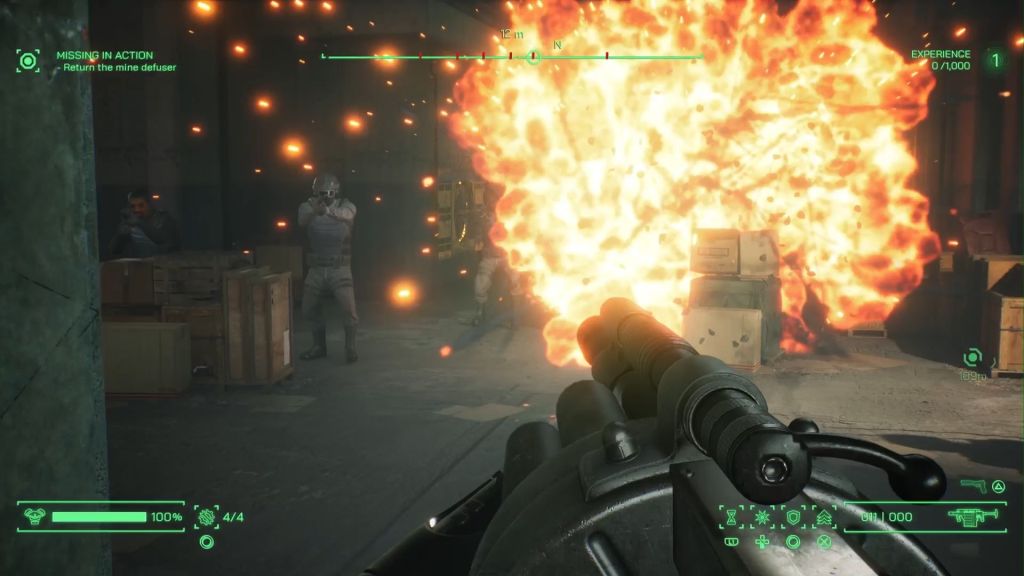
    On the upside, the gunplay still feels immensely satisfying and treats Robocop like a walking tank. He shrugs off small calibre fire while picking out priority targets among common gangs and armoured mercenary forces, while he wades through waves of drones and Otomo androids proving part-man is better than all-machine.

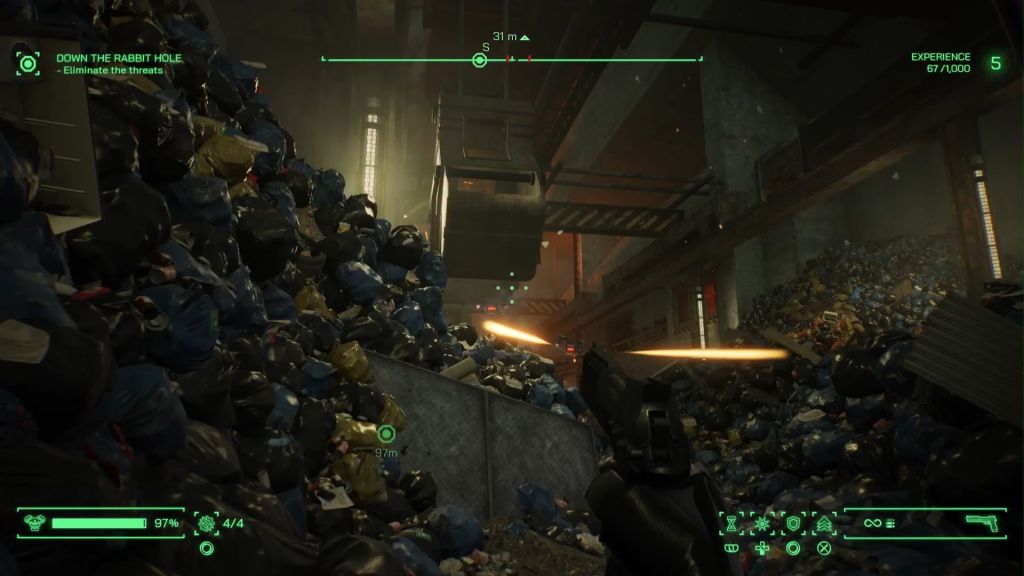
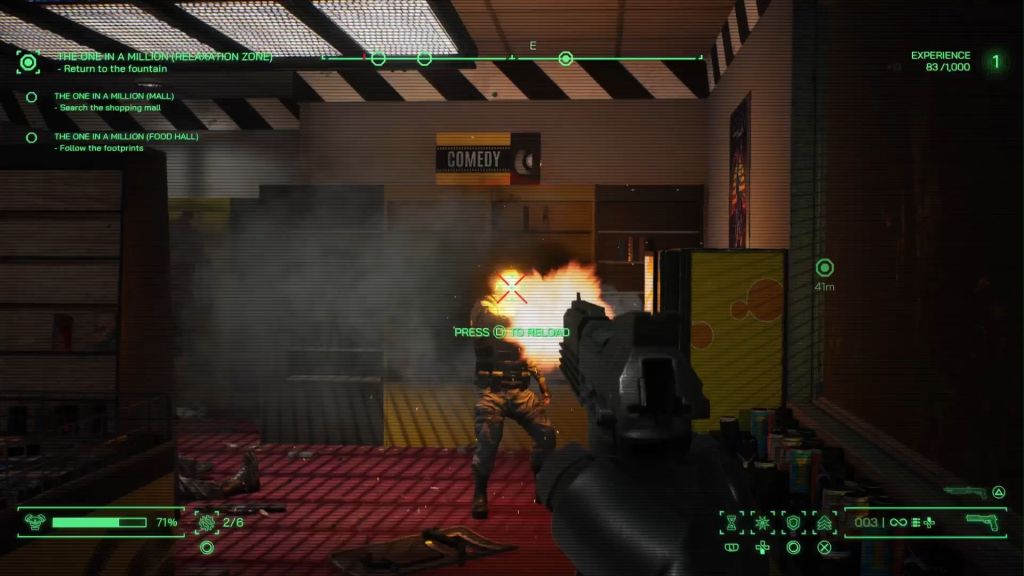
    Aiming highlights enemies and hazards in a glorious, pixelated, retro-green; each pull of the trigger looks, sounds, and feels impactful; and there is plenty of exaggerated gore and meaty sound effects befitting the source material. Secondary weapons still feel redundant or too situational – including the new Cryo Cannon – when you have Robocop’s iconic Auto-9 Pistol that can be upgraded to annihilate almost everything. During the final hour, after a brief stint controlling an ED-209, I simply walked forward with my finger on the trigger, watching hundreds of enemies’ crumple or explode as the iconic theme played in the background.

    There will be trouble…

    Before wrapping up, there are two technical issues that need addressing. You might think linearity would make checkpointing a non-issue, but the autosave system is frustrating for the wrong reasons. The tiny and short-lived icon is easy to miss, and I often spent 10-15 minutes shooting through waves of enemies, rescuing an NPC, and completing objectives, only to exit and continue my game later and find myself back the beginning of the combat sequence. The other issue is that the Cryo Cannon – visually spectacular as it might be – tanks the framerate on even the premium consoles, to the point it affects input responsiveness.

    Those technical gripes aside, I ultimately enjoyed my time with Robocop: Rogue City – Unfinished Business despite flaws it shares with its predecessor. If more Robocop power-fantasy is what you’re after, Unfinished Business delivers with its satisfying gunplay and creative combat scenarios that spice up an otherwise repetitive gauntlet. On the other hand, if you enjoyed Rogue City’s downtime on the streets of Detroit or in the Metro West precinct, defining Murphy’s personality and relationships, Unfinished Business might struggle to hold your attention during long sessions spent plodding through corridors and shooting things.

    Pros:

    • The expansion once again captures the look, sound, and tone of Robocop’s dystopian future
    • The shooting is still immensely satisfying and lets you feel over-powered
    • The soundtrack is still incredible and elevates every scenario

    Cons:

    • The narrative quality and pacing are inconsistent
    • Non-combat gameplay mechanics have been paired back
    • Your dialogue choices and character build mean little

    Score: 7/10

    This review was originally published on Nexushub.

    Robocop: Rogue City – Unfinished Business was reviewed on PS5 using a code provided by the publisher. It is also available on PC and Xbox Series S|X.

  • Editorial: Sea of Stars is a 16-bit RPG for those after the nostalgia without the reality (Nintendo Switch)

    Editorial: Sea of Stars is a 16-bit RPG for those after the nostalgia without the reality (Nintendo Switch)

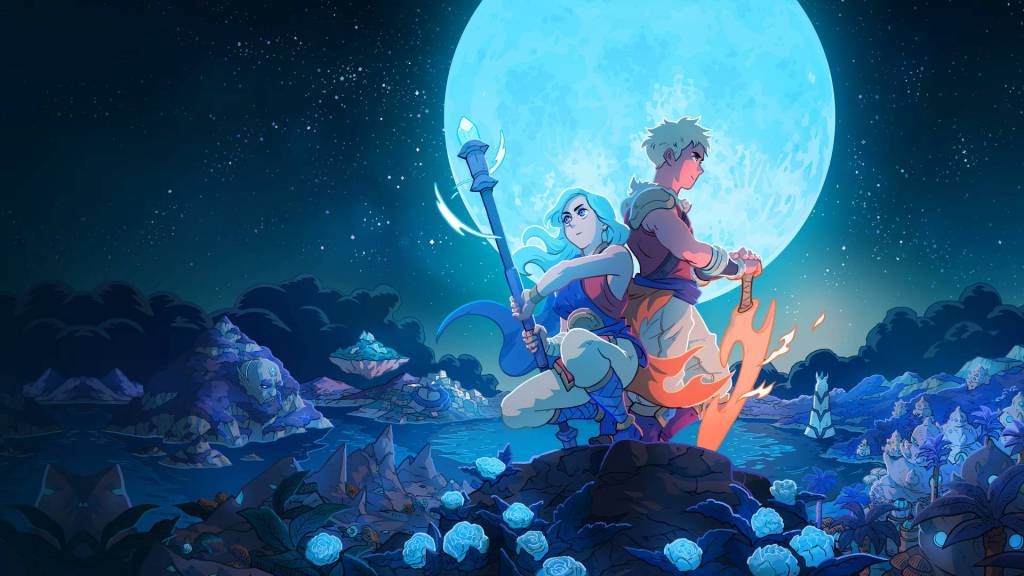
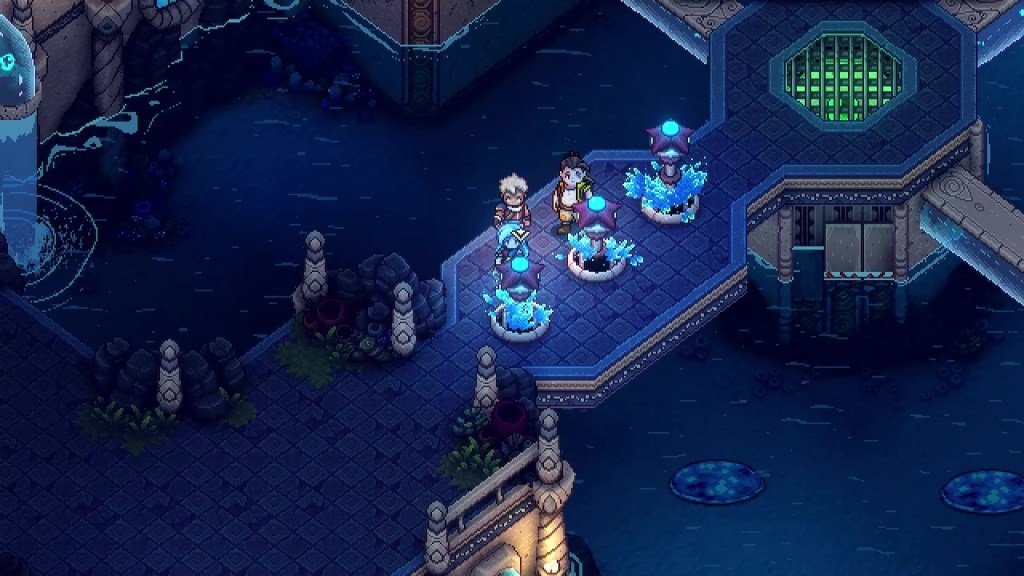
    With Baldur’s Gate on PC and Final Fantasy VII on the PS1 as my formative RPG experiences, I’ve never had a strong affinity for 8- or 16-bit-era JRPGs. With that said, having sunk only a handful of hours into each the earlier Final Fantasy games, Secret of Mana, and Chrono Trigger, the retro-inspired Sea of Stars from Sabotage Studio still felt authentic to me in all the “right” ways. It recreates the look, sound, and storytelling techniques of that classic era, but modernises the gameplay to ditch the more tedious elements of the genre.

    With the inspirations for many character archetypes and narrative themes so obvious, one criticism I could level at Sea of Stars is that it rarely surprised me outside of a handful of plot twists. To its credit, that never bothered me as much as I thought it would. It felt comfortingly familiar, with a gameplay loop and predictable rhythm that moved quickly enough to keep me engaged. Brisk, concise dialogue and streamlined, puzzle-centric dungeons ensure the game has a constant sense of forward momentum (at least up to the point you decide to tackle the end-game tasks to trigger the “true ending”).

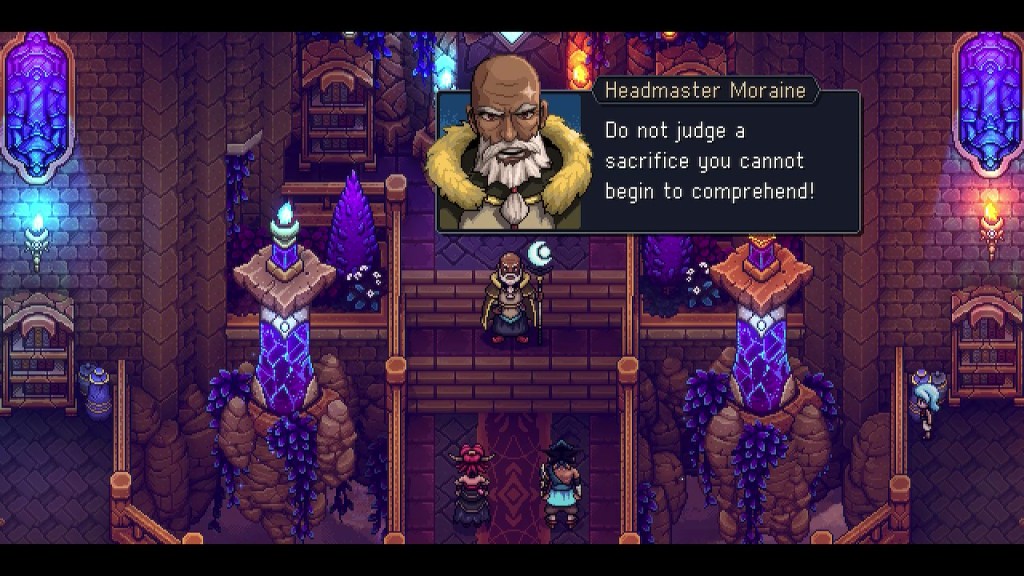
    Familiar JRPG tropes include an altruistic and stoic pair of protagonists with predetermined destinies, their stalwart and enthusiastic friend who demonstrates magical powers alone can’t save the world, and an assortment of allies that range from jovial pirates to ancient alchemists and their creations. There’s lingering evil that still plagues the world; a powerful mentor destined to be revealed as flawed; a shocking betrayal to raise questions about the prophecy; a resurgent evil that descends from the moon; and even the concept of multiverses for good measure. And that’s all revealed within the first third of the game, maybe 10ish hours’ worth, which felt gloriously brisk in contrast to the bloat that infects modern JRPGs.

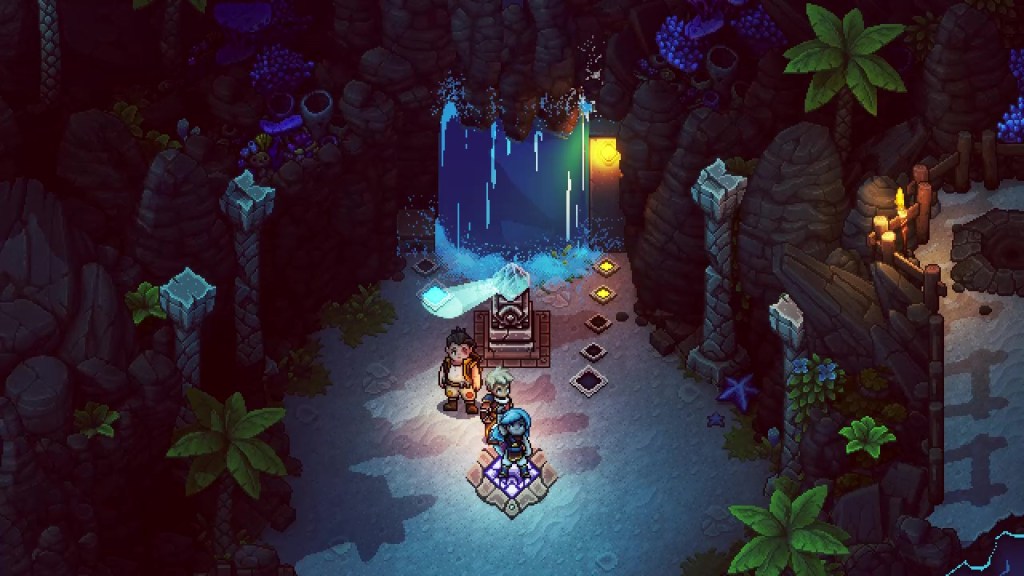
    The world design and basic gameplay loop also lean heavily into some classic designs. You have diverse but illogically compact worlds to explore – by foot, ship, or through the air – presented as a stylised overworld map connecting settlements and dungeons. Story dungeon progression is controlled by access to traversal or puzzle abilities – think manipulating time-of-day, a grappling hook, or water-breathing – with hidden chests tucked away in previous locations becoming accessible too. Every dungeon has two or three doors that, in turn, require two or three keys or switches to open. Each dungeon also has a handful of combat encounters and a boss to defeat at the end.

    You could apply those descriptions to any number of 8- or 16-bit era JRPGs, but Sea of Stars uses modern flourishes and increased combat depth to create a game that feels more action-oriented and respectful of your time. Exploring puzzle-dungeons is a JRPG tradition, but Sea of Stars features more vertical locations with fantastic jumping and climbing animations, while abilities like the wind burst and grapple are manually activated, making the simple act of pushing around blocks or leaping gaps feels more hands-on. You’re still railroaded down restrictive paths towards puzzle objects or battles, but exploration and traversal look and feel more exciting.

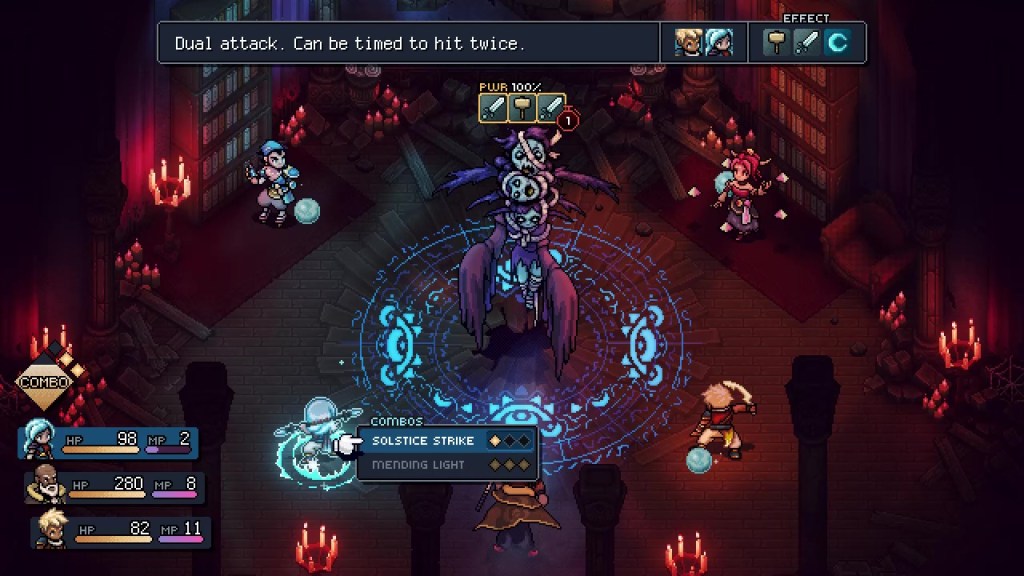
    Similarly, the turn-based combat has plenty of complexity but also rewards timing-based actions to increase damage output or block a chunk of incoming damage. Visible turn markers and a menu-driven system for basic attacks, skills, and items are accounted for, but Sea of Stars favours fewer, more involved battles over grinding basic mobs to stay ahead of an escalating difficulty curve. As an example, basic attacks become progressively less useful for dealing damage, but they restore mana and release “live mana” that your party can absorb to charge attacks with elemental damage or enhance offensive and defensive skills – both essential for damaging tougher foes with physical and magical resistances or recovering the parties’ health and mana quickly.

    Another interesting addition is the “spell lock” mechanic – an initially hidden grid of symbols representing damage types that appear above a foe preparing a spell. Using character skills or combos that involve two party members, breaking these spell locks within the turn limit becomes essential to disrupting powerful attacks that often damage the entire party. It might sound complicated and intimidating, but Sea of Stars is still accessible. Powerful secret gear you miss in one area can often be bought from storekeepers later, while the levelling system gives you a bit of control by picking one attribute to boost more than others at each level-up. Lastly, you can find, buy, and enable relics that function as assists – think bonus health, boosted experience gain, or the ability to instantly see spell lock combination – but also offer options to increase the combat difficulty.

    The last point to touch on is the incredible presentation that plays on nostalgia as effectively as Square Enix’s HD-2D remakes. At first glance, you might pass off static screenshots as Chrono Trigger, but Sea of Stars looks stunning in motion (especially on a Nintendo Switch OLED screen). The isometric style and parallax backgrounds provide depth; looping animations for water, plants, and animals give the impression of life; weather and other atmospheric effects look great; and the time-of-day mechanic coupled with dynamic lighting and simulated reflections set the mood. Character sprites, animations, and spell effects during battles and in-game cutscenes are less impressive, but the animated cutscenes used for key story beats look great while still feeling authentic to the era its emulating. The music also deserves praise, with short but catchy tracks for each location and cutscene that further enhance the mood.

    To wrap up, Sea of Stars is a smart nostalgia-driven JRPG for an audience that no longer has the time they once had for the genre. Complex modern systems and assists are obscured by a veneer of nostalgia-inducing presentation, providing an experience that feels like a late 16-bit era JRPG – just without the grind those games often require. It’s not always perfect and that predictable rhythm – find settlement, get quest, clear dungeon, repeat – can grow tiring towards the end, but it still offers better pacing and variety than most of its inspirations. On one hand, Sea of Stars is exactly what I want from nostalgia-driven throwbacks; on the other, it was a wearying reminder that I’ve been playing video games for far too long.

    Sea of Stars was played on Nintendo Switch using a code provided to gameblur by the publisher. It is also available on PC, Xbox One/Series S|X, PS4/5, and Nintendo Switch 2.

  • Review: The System Shock 2: 25th Anniversary Remaster is a respectful update that had me yearning for a proper remake (Xbox Series)

    Review: The System Shock 2: 25th Anniversary Remaster is a respectful update that had me yearning for a proper remake (Xbox Series)

    Nightdive Studios’ System Shock 2: 25th Anniversary Remaster gives modern gamers, across all current- and last-gen hardware, a chance to play or replay one of the progenitors of the immersive-sim genre now running on their flexible KEX Engine. What you take away from the experience, however, might depend on your expectations going in and your interest in video game history.

    It is important to note up front that this 25th Anniversary Remaster still provides much the same gameplay and visual experience as 1999’s System Shock 2 Classic that’s still available on PC storefronts. There are subtle quality-of-life and visual enhancements you might assume were always there; accessibility is improved with competent gamepad support (for PC too); and the PC version retains modding support. Although it’s not how I would recommend experiencing System Shock 2 for the first time, the co-operative mode returns with cross-platform play. It’s a respectful remaster, though PC players with modding experience might find it unambitious.

    First-time players coming from the System Shock (2023) remake might struggle with the gameplay and visual regressions in this tale of yet another cybernetically-enhanced, amnesiac protagonist going up against a resurgent SHODAN and her former creations. Nevertheless, I would argue System Shock 2 stands alongside games like 1998’s Half-life as timeless, having established the foundations of a genre. The biggest issue is that unlike the games it inspired – think 2017’s Prey, 2012’s Dishonored, or even its spiritual successor, 2007’s Bioshock – the combat feels incredibly dated.

    There is mechanical complexity, with different weapon types, specialised ammunition, and Psi powers best suited to organic, robotic, or hybrid enemies, but the audiovisual feedback is minimal and unsatisfying. It’s more RPG than shooter, with tangible progress measured by how big a chunk of a health-bar each attack removes before triggering a canned death animation. Experienced players could exploit the limited AI and level geometry for easier kills, but new players will find survival a function of their player build, loadout, and resources, not their mobility and aim.

    Regardless of whether you’re swinging a melee weapon that clips through enemies, firing an energy weapon with muted sound effects, or casting a Psi power with underwhelming particle effects, a degree of auto-aim and visible enemy health-bars are needed to offset simple hitboxes, inconsistent hit reactions, and the lack of visceral impact. This weakness would be fatal for a dedicated FPS, but to System Shock 2’s credit, it becomes less significant when you consider the number of other systems and modifiers at play during any given encounter.

    Starting at the beginning, a gamified class-creation tutorial guides you through the basics and introduces three military paths. The Navy career (my preferred choice) offers hacking, repair, and maintenance buffs – all handled through a simple mini-game – that make using conventional weapons, specialised ammunition, and hacked security systems optimal. For those wanting a more direct approach to combat, the Marine career boosts strength, endurance, and weapon skills, which make melee brawls and using heavy or exotic weapons with splash damage feasible – just don’t expect many opportunities to bypass threats.

    If you’re looking for a less conventional experience, the OSA career offers over 30 psionic powers across five tiers. There are mundane alternatives to resistances, weapon repairs, and healing, but you’ll also find creative and potentially game-breaking options like remote hacking, invisibility, organic mind-control, and teleportation. Even the simple direct damage powers offer a unique mechanic that allows you to overcharge them during casting – albeit with the risk of damaging yourself if your timing is off.

    Regardless of your early choices, every career can invest cyber modules (typically granted as a reward for completing objectives) to boost primary attributes, weapon skills, tech skills, or psi powers. Depending on the chosen difficulty – which modifies health, psi-points, and the cost of upgrades – it makes sense to prioritise a few to stay ahead of the escalating difficulty curve, but multi-classing is viable if you thoroughly explore for additional cyber module stashes.

    You can tailor your build even further with four OS upgrades for powerful passives; energy-draining armour and implants; and there is no shortage of consumables to keep you alive during protracted fights or when navigating hazardous areas. There are also organic and robotic components to research for new weapons and damage buffs against enemy types – though a dedicated research skill and backtracking to chemical storerooms for research material still feels like poorly-implemented padding.

    Exploration is still a key element of gameplay, even if the level design and quest structure lack the degree of flexibility seen in modern immersive sims. The menu interface tracks overarching objectives and even the steps taken towards completing them, but clues on how to progress are still found in scattered audio-logs that are often easy to miss. Keycards, keypads, and environmental hazards gently guide the player, but even with a detailed map, System Shock 2 is a game in which you need to take note of text logs and environmental signposting to avoid frustration.

    That said, methodical exploration is how you come to appreciate what all good immersive sims excel at: rewarding or punishing player agency based on how cautious or reckless they are. The decks of TriOptimum’s Von Braun starship and the UNN Rickenbacker are not as large or maze-like as Citadel Station, but the first two-thirds of the game will take you through them more than once and it becomes difficult to avoid combat. You will often open new paths between the interconnected map segments, and there’s incentive to return with improved skills to access new gear or cyber module stashes.

    You slowly come to recognise which routes bypass patrolling enemies; which rooms near central elevators are best used for item storage; and which upgrade terminal, recharge station, surgical bed, or vending machine is the safest to return to when you need to restock. The narrative moves forward as you complete objectives, but the more you explore, the more audio-logs you find that expand on secondary story arcs. These delve into the discovery of the parasite known as The Many, the corruption of the Xerxes AI, the internal strife and downfall of the crew, and the return of SHODAN.

    As with the original System Shock and its remake, fear of the unknown gives way to empowering familiarity – but that is not to say System Shock 2 is forgiving of reckless play. Aside from robust melee weapons that serve as a last resort for late-game enemy variants, weapons degrade with use and ammunition, psi-hypos, and the nanite currency – used for hacking and vending machines – are effectively finite.

    A lack of resources coupled with a few dubious and unaltered quests never impedes progress, but it can kill the pacing. Looping around the recreation deck looking for codes hidden in artwork was as tedious as ever; consuming my last nanites to hack a vending machine that then forced me to buy a quest-essential item was infuriating; and hunting eggs in convoluted engine deck of The Rickenbacker was only marginally less tedious than the aforementioned artwork code hunt.

    As such, the System Shock 2: 25th Anniversary Remaster offers both anachronistic fun and frustration – to the point I was enjoying it but simultaneously thinking how much better a full-blown remake like System Shock (2023) would be. The visual enhancements, like improved textures, ambient occlusion, and more intricate weapon models make a significant difference when compared side by side, but it ultimately looks and plays like the early 3D FPS-RPG hybrid it is.

    As fan of the genre and the original, it feels like a smartly remastered and well-priced excuse to replay it, but I have doubts new fans of the IP coming from the System Shock (2023) remake will find it that playable. On the other hand, those with a gaming history going back a decade or two could treat it as a playable history lesson, showcasing the origins of many mechanics, scenarios, and storytelling methods you’ll have seen in later games.

    Pros:

    • A smart and respectful remaster that preserves System Shock 2’s timeless qualities and a few flaws
    • The updated textures, ambient lighting, and new weapon models don’t gel with the original designs
    • Competent gamepad controls and a multi-plat release improves accessibility
    • There’s only one cyberspace section at the end (which I guess some might consider a negative)

    Cons:

    • It ultimately looks and plays just like the late ‘90s early 3D FPS-RPG hybrid it is
    • Some laborious objectives remain unaltered and can drag down the pacing

    Score: 8/10

    System Shock 2: 25th Anniversary Remaster was reviewed on Xbox Series S|X using a code provided to gameblur by the publisher. It is also available on PC, Xbox One, PS4/5, and Nintendo Switch 1/2.
  • Review: The Alters (Xbox Series)

    Review: The Alters (Xbox Series)

    The Alters is a streamlined and mechanically satisfying survival-game that also asks the question: what would you do if literally faced with the branching possibilities of the choices you never made?

    The overarching plot slowly drifted into the back of my mind the longer I played, but The Alters has an intriguing premise that draws on several classic sci-fi tropes to turn a traditional survival game, with a strong focus on time management, into a thought-provoking journey filled with moments of frustration, elation, and unexpected warmth.

    Jan Dowski, a 35-year-old builder who has already accumulated a lifetime’s worth of regrets, emerges from a landing capsule on an alien world. He soon discovers his captain and crew are dead, and although their massive, wheel-like is base is intact, the engines are offline – a severe problem when the approaching sunrise in this triple star system will bathe the area in lethal radiation.

    After exploring for some basic resources and establishing a distorted communication link to the Ally Corporation funding the mission, Jan discovers the base’s quantum computer, the “Womb” cloning facility, and the rare element “Rapidium” found on the planet, offer him an unconventional means of survival: cloning himself to create a new crew – the titular “Alters” – by imprinting their minds with specialised knowledge and simulated life-paths based on different decisions made at key moments in his digitised memory timeline.

    The more you think about it, the more dubious science and plot-holes you can spot in The Alters, but 11 Bit Studios gets around this by keeping the entire experience surreal. Is the Jan Dowski you are playing as really the original? What should you make of the fact every Alter’s life path converges on joining the Dolly Missions at 35? What is the fate of the Alters if they return to this timeline’s Earth? If interstellar travel and quantum computing are commonplace in this universe, why is the search for the time-manipulating Rapidium so important to humanity’s survival?

    I think what I like most about The Alters is how little those details mattered when I was engaged with the minute-to-minute gameplay and watching my growing Alter crew interact with one another.

    I’d describe The Alters as a hybrid of traditional third-person exploration game and a time-management-heavy survival game, just with a weird and wild crew management twist.

    Upon arriving in a new region, you explore on foot during so-called “daytime” hours – periods of low light and radiation levels – to discover and clear paths to resource deposits, build mining outposts and connect them with pylons, scan and destroy anomalies, find scattered mission gear for base upgrades, personal belongings to boost Alter morale, and later track down even weirder alien samples used for higher-tier research. It looks and feels suitably hands-on and immersive, though after establishing a resource chain, the bulk of your playtime is going to be spent interacting with base functions, engaging with Alters, or navigating assignment, production, and research menus.

    The escalating resource and crafting requirements needed to survive and progress are streamlined compared to many of its peers, but time is always your enemy in The Alters. Efficient working hours are limited without enforcing mood-sapping crunch; the approaching sunrise shortens the time you can spend outside without racking up radiation burns; and a crew of alternate personalities are far more challenging to sustain than the generic staff you’d see in a game like XCOM. You’re not just building dormitories, labs, workshops, and radiation shields; you’ll also need to consider personal cabins, social facilities, contemplation rooms, and gyms.

    Each branch from Jan’s original timeline can result in wildly different personalities, with different anxieties, motivations, and triggers; all of which you’ll want to read up on in the simulated timeline before considering your responses in dialogue or when faced with suggestions. You will have to balance competing requests, deal with the fallout, and keep them all fed, physically healthy, mentally healthy, and entertained. Not treating your Alters as individuals is the quickest way to foster rebellion and jeopardise the mission when they ignore your orders or work inefficiently.

    Regardless of the difficulties you pick for the game’s economy and action elements, you need empathise with your alternate Jans and occasionally boost their morale with gifts, social activities like beer pong and movies, and considering personal requests. It is impossible to clone every Alter variant and experience every potential outcome in a single playthrough, but good relationships teach Jan new life lessons that provide unique dialogue options, open new research paths, and alter the end-of-act outcomes.

    There is a lot to juggle as the clock marches on, but all the assists you could want are present. With enough Alters, the early exploration step gives way to a lot of menu-based gameplay as you quickly build and rearrange base modules, assign Alters to resource or production tasks, select research priorities, and set minimum stock levels or continuous production queues to maintain essentials like food, radiation filters, and repair kits for the sporadic magnetic storms that devastate base modules and hamper most outdoor activities.

    The chosen difficulty coupled with your skill at managing both time and Alters will determine if the mission plays out as scrappy and desperate attempt to survive on the edge, or as a well-oil machine that keeps on top of objectives and ahead of the sunrise with minimal trauma and injuries to the crew. That said, there are a few narrative beats that happen regardless of your actions.

    With the focus on crew interactions as much as it is on the survival mechanics, it helps that The Alters mid-tier price-point does not mean low production values. Like most survival games with base-building and menu-driven systems, The Alters gets a lot of playtime out of limited assets, but it feels polished and the compact environments – both the expanding base and increasingly vertical outdoor regions – look incredibly detailed and atmospheric. Character models also look good, with only a few stiff animations during emotive gestures or while climbing.

    More important is the writing, voice work, and delivery – both during moments where the Alter’s divergent personalities clash, and those in which they share cherished memories or establish new bonds. There are generic lines for common events and gameplay triggers, but I found it easy to empathise with Jan in all his forms. His Alters are exaggerated archetypes but they do an impressive job of leaving you frustrated with their vices, like pride, stubbornness, or self-pity, yet it also often left me elated during moments of unexpected compassion and warmth.

    All that said, I’m no psychologist or support worker with professional experience, so you might find the lack of subtlety in how some mental health issues are presented problematic.

    Even as someone who prefers methodical games that move at my pace over those with time pressures, I enjoyed The Alters far more than I expected. Not so much for the survival gameplay – which is competent, streamlined, and challenging enough in its own right – but more for the thrill of discovering what new Alter I could create, discovering how their lives played out compared to the original Jan Dowski, and watching them bond or clash with one another under increasing pressure.

    I’m not sure if the writing and performances are quite good enough to compete with overproduced, “AAA”-style cinematic adventures with their ridiculous budgets, but The Alters actually got me thinking about whether you could ever stay sane if given the knowledge of the near infinite possibilities of all the decisions you’ve never made.

    Pros:

    • An intriguing setting with a weird and wild crew management twist
    • Streamlined but satisfying survival and time management mechanics
    • A gorgeous alien world to explore and solid voice acting
    • Recreating the high school band with your Alters

    Cons:

    • Possibly too much menu-driven gameplay for some
    • Early challenges can feel unforgiving if you pick the wrong Alter type or research path first

    Score: 9/10

    The Alters was reviewed on Xbox Series S|X using a code provided to gameblur by the publisher. It is also available on PC and PS5.

  • Retrospective: Citizen Sleeper (2023) is all about building a new life, one cycle at a time

    Retrospective: Citizen Sleeper (2023) is all about building a new life, one cycle at a time

    With so many games and so little time, Citizen Sleeper was yet another indie release that caught my eye before being swamped by tsunami of gaming news promoting the next best thing. Thankfully, returning to it three years late is easy, with the minimalist but stylish visuals, slick interface, and evocative soundtrack effectively timeless. And I’m glad I did return, as there is something comfortingly familiar yet fresh about the hybrid structure that blends a choice-driven visual novel with a dice-driven, tabletop-style RPG. It’s also uplifting as hell, despite the often-bleak setting and scenarios you’ll face, and had me wondering if my life was also just a string of choices and more RNG than I care for?

    It’s worth noting up front that you need to be comfortable with a lot of reading if you’re going to gel with Citizen Sleeper. There is no voice work and often paragraph after paragraph of text to work through. From the opening sequence that introduces you to your synthetic “Sleeper” body with a transferred consciousness, through to the heartfelt culmination of relationship-building quest-lines, and the handful of potential endings, Citizen Sleeper conveys everything through excellent writing, lightly animated character portraits, and the accompanying soundtrack. I found it an impressively thought-provoking experience that generated stronger emotions than the glut of cinematic “AAA” games I’ve played over the last decade – many of which featured professional voice work and lavish motion capture.

    It’s possible you will recognise many of the sci-fi tropes the world of Citizen Sleeper is built upon, but the setting remains a strong hook throughout as the game doesn’t rush to explain everything up front. Instead, each character has a link to major players in the Citizen Sleeper universe, and through interacting with them you’ll come to understand the past and present of the world you now inhabit. What’s clear from the get-go is that “The Eye”, a decaying ring station in the Helion system, on the edge of the Core region, is home to human, augmented, and synthetic workers – some bound by company contracts or gang debts – all trying to get by providing essential services or engaging in dangerous space-faring work, like terraforming, resource extraction, and salvaging.

    A corporate collapse a generation before resulted in the emergence of several factions: a workers union that evolved into a corporation with a structure it once despised; a gang straddling the line between governing body and criminality; a commune trying to make The Eye self-sufficient through novel food production methods; a charitable organisation driving new colonisation efforts; and a curious assortment of forgotten AI constructs. It is into this diverse and fragile fringe society that your Sleeper finds themselves, with no friends, no stable work, and no access to the stabiliser drugs essential for maintaining their synthetic bodies.

    To survive, you’ll need to explore, find work opportunities, forge new friendships, and decide what purpose your new life serves on the edge of the inhabited universe. You do that by way an abstract and menu-driven system that is mechanically simple and intuitive yet, thanks to the incredible writing and characterisation, still engaging and frequently tense. If you strip away the narrative layer, Citizen Sleeper is a combination of timers, meters, dice rolls modified by a simple skill tree, and player choices that shape future interactions. It sounds incredibly dry, but like a table-top RPG led by an experienced GM, simple actions can be thrilling with the right narrative framing and high stakes.

    Each cycle, you awake hungry and watch the condition of your synthetic body deteriorate. Each cycle, you’re dealt five or less dice that dictate your chances of successfully completing a job to earn currency to buy food or stabiliser drugs; values that influence your chances of mastering a social interaction that could improve your local reputation; or the exact values required to hack systems within The Eye’s vast and collapsing information network.

    Every time the story imposes a cycle limit before events transpire or limits the number of times you can bungle a task, a segmented ring slowly fills up with abstract but terrifying red markers. Combined with the ever-present hunger and condition meters, they serve as a constant reminder you are living on the edge, and every decision is meaningful.

    The gameplay mechanics can generate tension well enough, but what makes Citizen Sleeper special is how almost every interaction, be that player choice or dice roll, is linked to a specific faction or character. Through repetition, you’ll come to know them all, and through constant engagement, you’ll dig deeper into their lives. You’ll unlock new interactions with a cast of troubled but often hopeful citizens and slowly establish yourself on The Eye. You’ll soon realise Citizen Sleeper has few fail states beyond locking you out of some endings, but thanks to great writing and multiple quest outcomes, it’s incredibly satisfying to define your character through their choices and interactions with others – regardless of whether you choose to settle on The Eye or find a way to move on.

    Wrapping up, Citizen Sleeper is any easy addition to an ever-growing list of iconic indie games that demonstrate how much you can achieve with very little. It’s like a well-written choose-your-own-adventure novel, in which triggering the next turn of the page means engaging in some simple but satisfying table-top-style dice rolls that can sometimes work for or against you. Citizen Sleeper also remains a timely reminder that if you are looking for a place in a community, you should be looking for a collective of individuals that share your values and struggles, not some monolithic organisation – be that corporate, political, or religious – with the expectation of your adherence to some ideological dogma that those in charge rarely follow themselves.

    Citizen Sleeper was played on Xbox Series S|X using a code provided to gameblur by the publisher. It is also available on PC, Xbox One, PS4/5, and Nintendo Switch.

  • Impressions: Tainted Grail: The Fall of Avalon Console Port (Xbox Series S|X)

    Impressions: Tainted Grail: The Fall of Avalon Console Port (Xbox Series S|X)

    I’m always excited for ambitious indie or “AA” RPGs, especially those that might offer serious mechanical or narrative depth – even if it is often found under a veneer of jank like much of Piranha Bytes’ output. In recent years, I’ve sunk more time into both classic and new budget RPGs, like Gothic, Two Worlds, ATOM RPG, and Chernobylite, than I have into AAA RPGs that usually offer incredible production values at the expense of gameplay freedom or branching narratives. Tainted Grail: The Fall of Avalon in one such mid-tier RPG, with a console port arriving after a year in PC early access. Unfortunately, without serious optimisation patches, the result is a mix of admirable ambition and infuriating instability that is much tougher to recommend than its highly praised PC counterpart.

    Starting with the good, Tainted Grail: The Fall of Avalon’s grimdark reimagining of Arthurian legend provides a strong narrative hook. Centuries before the game takes place, a relentless plague – the “Red Death” – swept over Arthur Pendragon’s homeland, forcing him to lead survivors to colonise the mythical island of Avalon and drive back the presence of “Wryd” magic using ancient menhirs activated by Merlin. Your protagonist finds themselves imprisoned on Asylum Island just off the coast, tortured by “Red Priests” that have turned to increasingly desperate and brutal methods to treat the resurgent plague. During this prologue, your hero is bound to a fragment of King Arthur’s soul – now a spectre seemingly oblivious of recent events, who wants to be reborn to restore his kingdom. Unexpectedly, a Knight of the Round Table that aids your escape seems intent on destroying the soul fragments and preventing his rebirth.

    Shipwrecked on the misty southern shores of Avalon, you soon discover that Arthur has been revived multiple times over the centuries to restore the Kingdom of Man, but those efforts have been in vain. The Wyrdness continues to reclaim more of the island, corrupting humans, animals, and mythical beasts. Society has become increasingly brutal, with those taking up the mantle of a Knight of the Round Table no less savage than the bandits that raid caravans and villages. Conflict is brewing between Kamelot and the local human tribes, while a schism in Kamelot’s Court might result in civil war. It’s a dark and blood-soaked setting for a suitably dark and blood-soaked game, but the overarching goal is made clear from the start: regardless of the factions you aid or hinder along the way, you’re going to collect the fragments of Arthur’s soul to revive him or destroy him.

    The basic gameplay loop has been compared to The Elder Scrolls V: Skyrim, which is not an unfair observation, but at least faction and ending choices feel more involved than Skyrim’s singular and half-baked “Civil War” questline. Combined, these regions may not match the scale of an Elder Scrolls map, but they are dense and diverse, packed with quest givers, marked locations, and hundreds of unmarked secrets for those who explore every corner. You assign armour and accessories to equipment slots; you assign weapons, shields, and spells to your left and right hand; you wield blades, hammers, bows, explosives, elemental magic, and summons against both human and monstrous enemies; you craft, brew, and cook hundreds of items to aid you in battle; and you fetch or kill an improbable number things to gain experience towards a flexible levelling system.

    There is an overworld with hub settlements and significant locations. There’s no shortage of interior locations like caves, crypts, ruins, and temples that conveniently loop around on themselves and have a treasure chest at the end. Named enemies serve as boss encounters and often guard the aforementioned treasure chests. Respawning overworld enemies allow you to farm experience and crafting materials and they become tougher during the night when afflicted by Wyrd magic. There’s also a ridiculous amount of gear, consumables, and crafting materials to loot from containers, locked chests, or corpses after every battle. At this point, you’d be right to think Tainted Grail: The Fall of Avalon offers few surprises for fans of the genre and, if anything, the size of many locations, the enemy respawn rate, and the sheer number of optional systems and item tiers can start to feel like unnecessary padding at times.

    Thankfully, Tainted Grail: The Fall of Avalon benefits from its setting and build flexibility. You gain proficiency levels and bonus XP by repeatedly using specific gear and skills like in Skyrim, but for each level you gain and attribute point and skill point to invest wherever you so choose. You can just scrape by as a generalist on medium difficulty, but you can also focus on two or three skill tress with complementary perks, supplement those skills with armour and accessory buffs, and become overpowered – so long as you’re not forced into an encounter outside of your comfort zone. Dialogue and quest solutions are more focussed, with the main quest often forcing you to pick a faction in each region, with player choice and attribute-checks slightly altering events or changing the outcome of standalone side quests. All familiar systems but they’re elevated by the Celtic setting, diverse and enthusiastic voice work, and a soundtrack that shifts from serene exploration tunes to metal combat tracks.

    The problem – as of this impressions piece going up – is that the console release of Tainted Grail: The Fall of Avalon intersperses familiar and satisfying gameplay with a mix of exploitable jank, performance issues, and both random and repeatable crashes. As a mid-tier game with mid-tier pricing, I don’t mind that it often looks and feels last-gen, and I always appreciate games that let me survive tough encounters by clipping through geometry, spamming summons, exploiting OP skills, or dubious AI pathfinding. I don’t even have an issue with the residual PC-like menu that lets you freely toggle resolutions, framerate caps, v-sync, and vegetation quality. What I don’t appreciate is how little those settings influence the wildly variable performance on an Xbox Series X; how console-level VRR doesn’t work if you disable v-sync; or how simply running between certain areas or spawning multiple summons can tank the framerate and crash the game.

    To Tainted Grail: The Fall of Avalon’s credit, you can manually save, quick-save, and even maintain a half-dozen autosaves as often as every minute. This limits lost progress, sure, but random crashes can still ruin tough combat encounters in which saving is disabled, and some areas of the Keeper fortress hub became a stuttering mess and even inaccessible at times – notably the blacksmith and path towards the outlying village. I often had to take lengthy detours around the hub or fast-travel back and forth – presumably loading and de-loading map data – before I could finally engage with essential NPCs and merchants. For a game with dozens of multi-part quests that involve backtracking, this grew more annoying the longer I played and always left me on edge, incessantly saving just in case an autosave triggered in an area that would crash the game again after reloading.

    It’s all the more frustrating as I’ve been enjoying Tainted Grail: The Fall of Avalon despite those issues and desperately want to push forward into Act 2. However, given the current state of the console port during the first act – the act I assume benefitted the most from the early access period – I’m reluctant endure more performance hitches and the ever-present threat of crashes. For fans of the genre who don’t have the option of playing this on PC, I’d suggest you keep Tainted Grail: The Fall of Avalon on your radar while it receives more patches as there’s a solid and satisfying, 7/10-style budget RPG just waiting to emerge from a mire of technical issues.
    Tainted Grail: The Fall of Avalon was played on Xbox Series S|X using a code provided to gameblur by the publisher. It is also available on PC and PS5.