Author: Andrew Logue

  • Impressions: The Riftbreaker: Metal Terror (Xbox Series)

    Impressions: The Riftbreaker: Metal Terror (Xbox Series)

    When I returned to The Riftbreaker to tackle the new Metal Terror DLC, the experience was both familiar and refreshing. I enjoyed the initial release on console, though the gamepad support needed work and the campaign felt padded out by lengthy research times.

    Thankfully, Metal Terror is a more compact and cohesive experience that entertained me but also reminded me why I stopped playing. An hour each night between other games quickly turned into nightly sessions, and then entire weekend mornings disappeared. The Riftbreaker’s compelling blend of base-building, juggling resource allocation, tower defence elements, and twin-stick combat make for a more-ish experience.

    A competing coloniser?

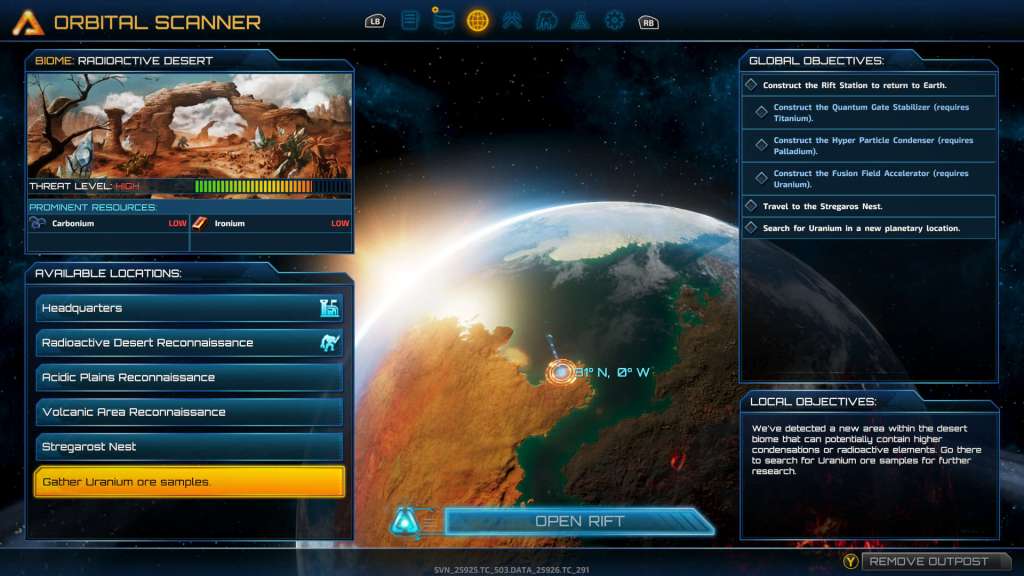
    The Metal Terror DLC can be accessed fairly early in the campaign after you’ve built a few core structures – namely the Rift Station Foundation, Orbital Scanner, and Alien Research Lab – and undertaken at least two reconnaissance missions.

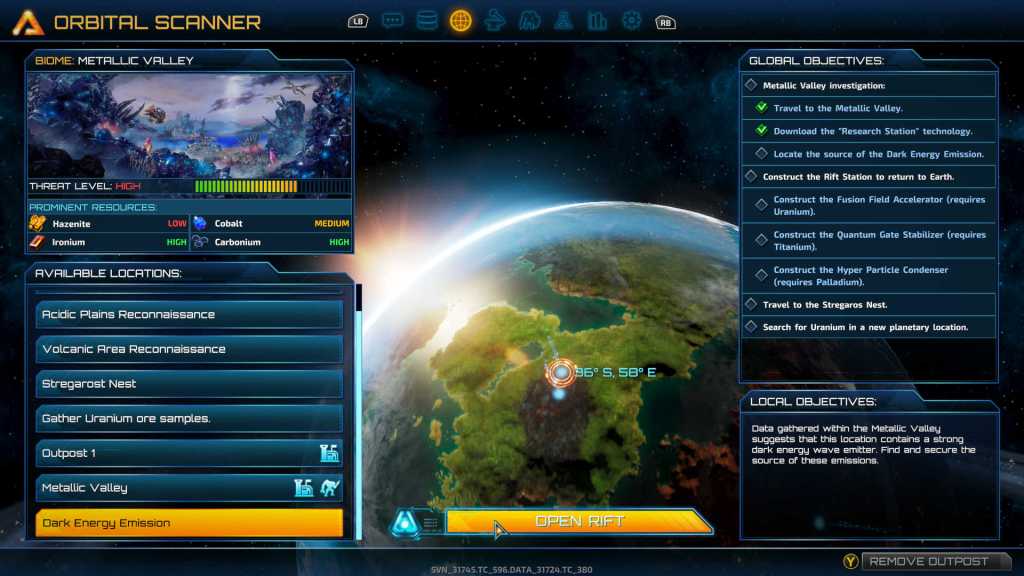
    A meteor comes hurtling past your HQ – a common enough sight in the game – but this time Mr Riggs informs Ashley it was not following a natural trajectory from the nearby asteroid belt. After studying the unusual metallic composition of the debris, a scan for similar deposits reveal a new region on Galatea 37 that looks nothing like you’ve seen before.
    Now while The Riftbreaker has an interesting premise, tons of dialogue between Ashley and Mr Riggs, and a never-ending codex, storytelling was never a strong point. The same holds true for the Metal Terror DLC, but the shorter, focused string of missions, with several instantaneous research rewards, make for much better pacing.

    An early encounter with biomechanical lifeforms and the ruins of an alien starship kicks off a back-and-forth quest to discover the fate of another colonisation gone awry. At first, it seems you may just be dealing with the remnants of an expedition but it soon becomes apparent they may still have a presence in orbit and control over parts of the planet. The mini-narrative does its job of bouncing you between locations and escalating sieges, but also fits nicely with the existing themes of reckless colonisation.
    Less waiting about and better base locations

    For returning players, you can consider the Metal Terror DLC a chance to unlock some situationally useful new structures, a few new weapons and gear, and a new branch on the Alien research tree. For newcomers, or those starting a new run for the DLC, it’s compact enough that it doesn’t interfere with the flow of the main campaign. It also gives you something more interesting to do while waiting on major research projects.

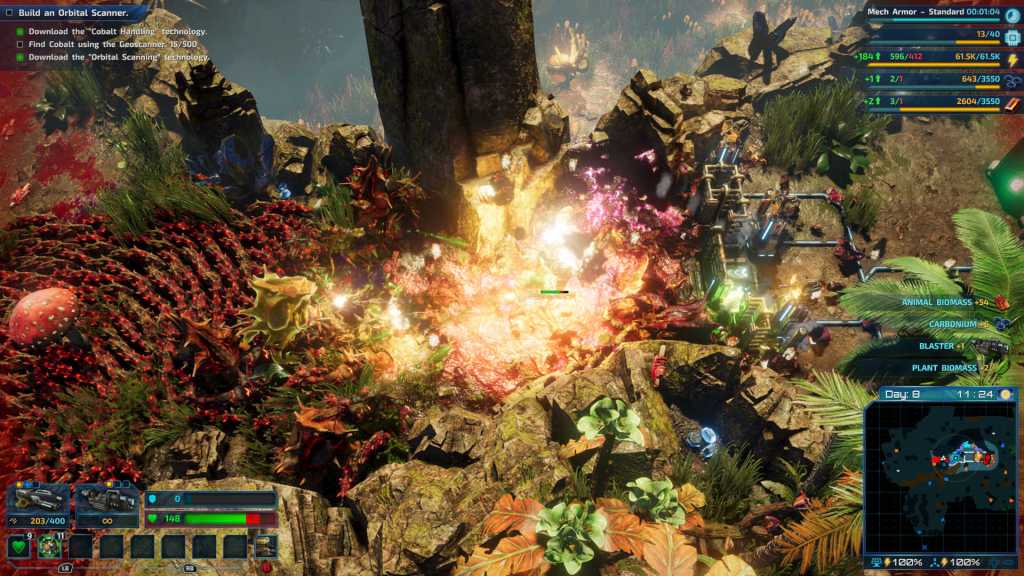
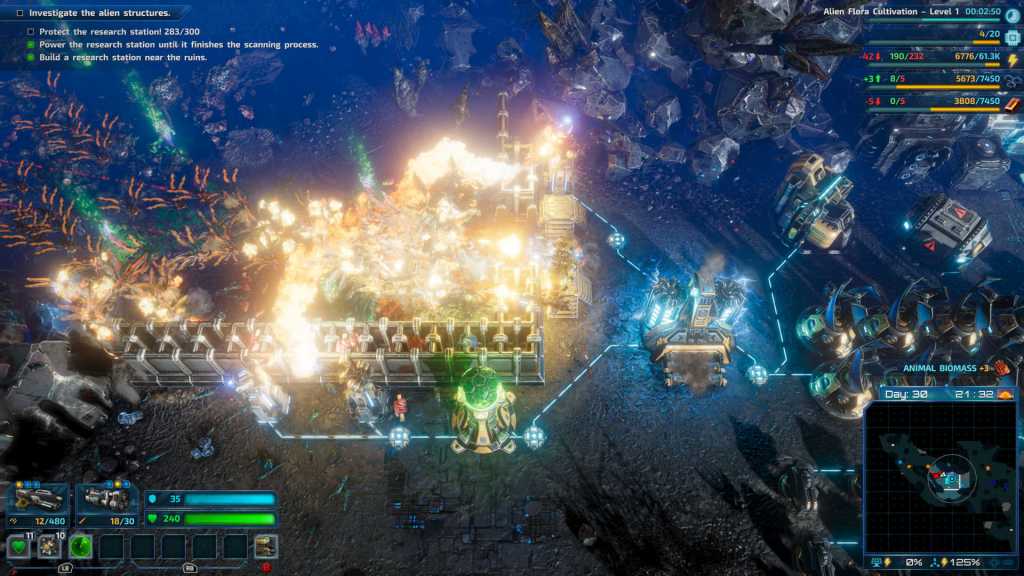
    The mission flow is similar to that of the core game: you arrive in a new location, scout the terrain, investigate an important location, and typically establish a fortified outpost to hold out against a new roster of particularly dangerous foes – dubbed “exo-morphs”. The exo-morphs fill the same basic functions as Galatea 37’s insane flora and fauna, but there are new complications that make outpost defence more challenging and force you to rethink your layout.
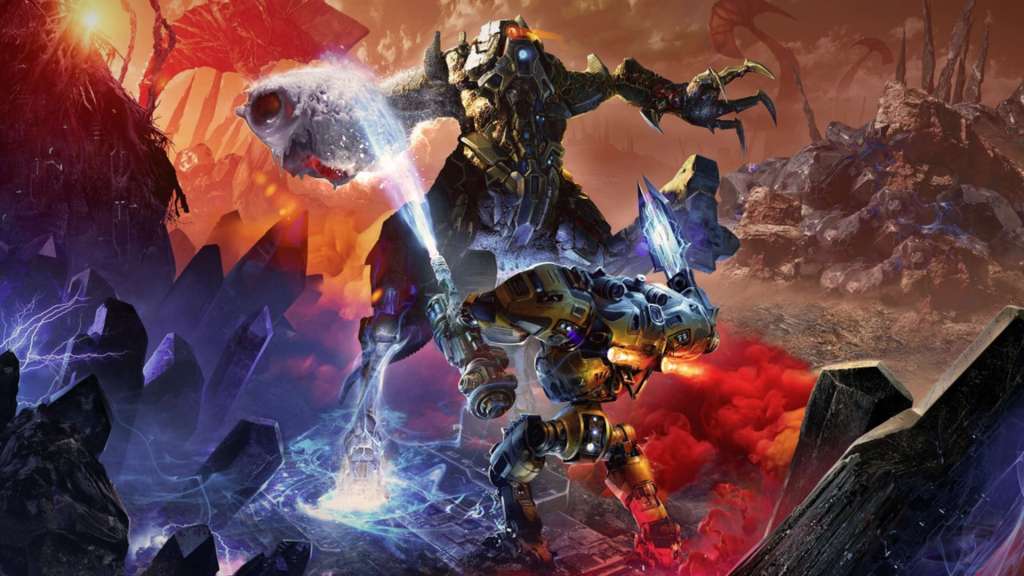
    As an example, swarms of metallic dragonflies function as basic rushers, but they can fly over terrain and attack from any angle. Rolling cube-like forms are easy to kite and destroy on foot but they explode on contact with walls, making it essential to have multiple layers of defence to avoid a sudden breach. The biggest foes are lumbering bipedal mechs that combine devastating close-range attacks with an artillery-like plasma launcher. Of course, there are some new and weird, non-hostile flora and fauna to encounter.

    To make matter worse, events escalate quickly across the Metal-Terror mini-campaign so you’ll be fighting large hordes early on. The upside is that most locations you need to secure are far more forgiving in their layout, with more natural chokepoints and a higher density of basic resources – think carbonium, ironiom, and cobalt – within a defensible perimeter. Sure, it’s beneficial to have invested some research into defensive structures but sieges are never impossible, especially as the mission research rewards are primarily focused on defence and power generation.
    The power of Morphium

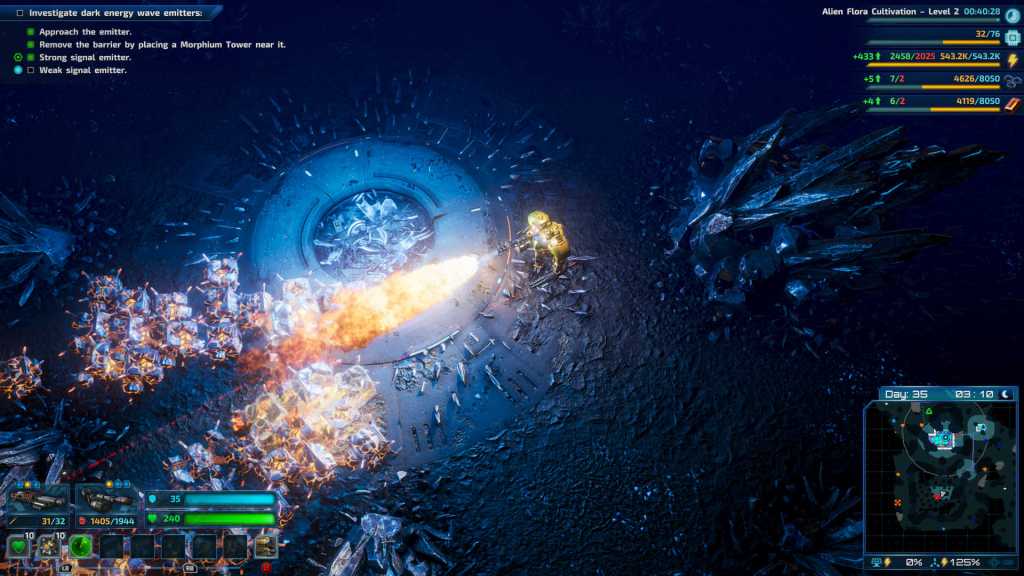
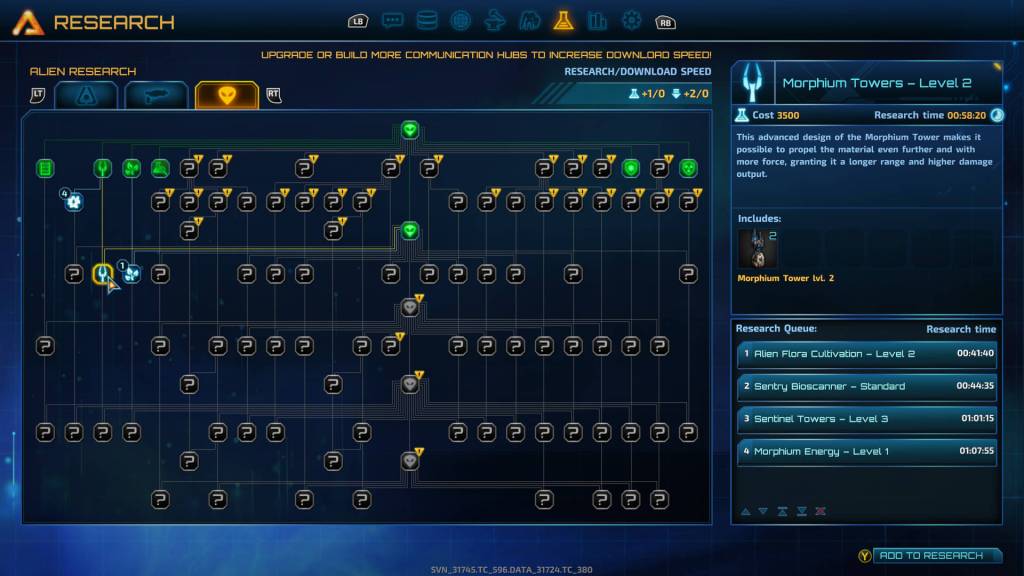
    Introduced quickly in the first new region you visit, “Morphium” liquid is found in pools around the metallic biome and is used to power unique structures. In the opening missions, you’ll first run pipes to existing Morphium towers to clear a path into alien ruins, but those soon become a part of your arsenal. These provide an effective area-of-denial tower that modifies the surrounding terrain – exceptional against the aforementioned rolling cubes – and they only require piped Morphium to function. Similarly, the Morphium powerplant, especially once upgraded to level-3, is highly efficient given the low construction cost and minimal Morphium consumption cost.

    These structures are particularly useful when quickly establishing, powering, and defending an outpost in the metallic biome, as all you need to find is a pool of Morphium. That said, there are new layout challenges as the aboveground piping system is far less efficient than simply dropping energy nodes everywhere (which can connect beneath structures).
    More of the same but still compelling

    If you’ve been playing The Riftbreaker frequently since launch, the Metal Terror DLC might feel a little light on new structures, gear, or game-changing technologies. The narrative detour is entertaining enough and expands on the universe (possibly providing a sequel hook), and slightly alters the existing end-game scenario depending on your final choice. For new players, it’s smartly integrated and feels like a natural part of the overarching questline.

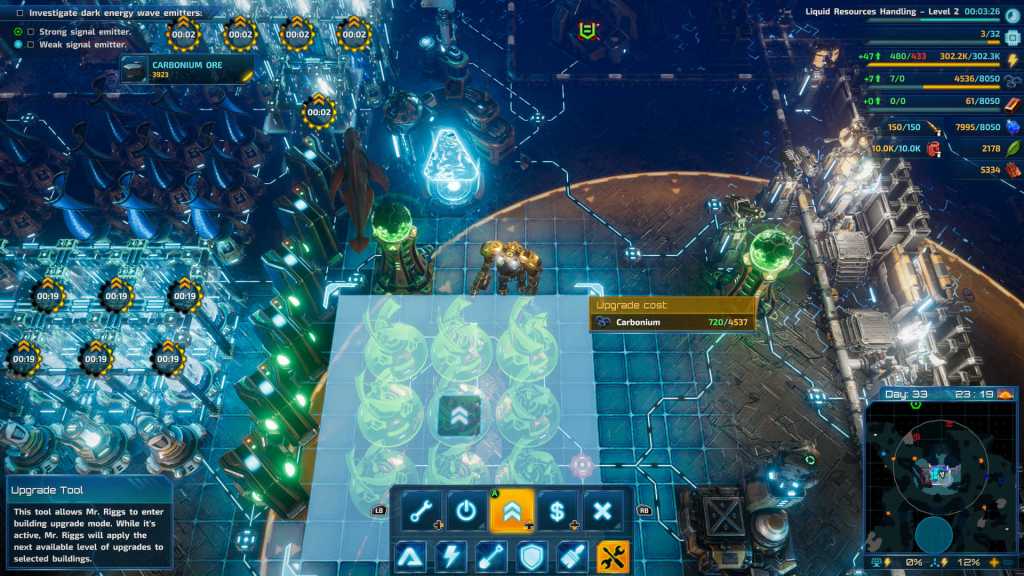
    What I appreciated just as much – and this is a free update for all players now – is the ongoing quality-of-life updates. Make no mistake, building defences and running power nodes while under pressure is still tough on a gamepad, but it’s easier now with smarter automatic placement and default behaviours. There are also updates like placing new turrets on top of your existing defence structures (with an automatic refund for the original structure), and the ability to toggle the selection box size for quick repairs or mass upgrades.

    If you’ve not returned to The Riftbreaker in a while, the Metal Terror DLC is a cheap and entertaining excuse to lose a few more weeks to its compelling gameplay loop. If you’ve never tried The Riftbreaker, consider this a reminder it’s a lot of fun, well-priced, and still part of the Xbox Game Pass service on both PC and Xbox Series consoles.

    An Xbox Series code to cover The Riftbreaker: Metal Terror was provided to gameblur by the publisher. It is also available on PC and PS5.
  • Review: The Riftbreaker (PC and Xbox Series)

    Review: The Riftbreaker (PC and Xbox Series)

    At first glance, you might think The Riftbreaker – developed and published by EXOR Studios – is a simple hybrid of twin-stick shooter and base-building/tower-defence game. To an extent, that’s true, and a skilled player could always draw aggro away from their base and limit the need for extensive defensive structures. However, The Riftbreaker also packs unexpected depth, with hundreds of research options, dozens of building and player upgrades, and the ever-present need to expand and protect resource-generating operations. The Riftbreaker provides plenty of entertainment in short-bursts but can also feel unforgiving and tedious when you mess up and need to recover.

    Story

    The narrative, outside of a flashy opening cutscene, is minimal and stretched thinly over hours of playtime. You take control of captain Ashley Nowak, a “Riftbreaker” – think scientist/commando hybrid – in an AI-powered mecha-Suit called “Mr. Riggs” as they emerge from a one-way jump to the lush world of Galatea 37. Earth is barely liveable, and humans are rift-jumping to distant planets to find resources and establish new colonies. She’s tasked with securing a foothold and building a massive “Rift Station” that will allow two-way travel between Earth and Galatea 37. Of course, things are never easy, and the native species are not happy with the intrusion. Aside from infrequent banter between Ashley and Mr. Riggs, which fleshes out Ashley’s ideologies and past a little more, this overarching objective and the need for rare resources to construct the Rift Station is all the context you’ll get to push forward.

    Gameplay

    Controlling Ashley in her mecha-suit is a breeze, with a familiar twin-stick movement and aiming setup. This makes early exploration an enjoyable foray into the unknown, but you’ll eventually have to decide on the location of your HQ and engage with the base-building, resource-generation, and horde-defence mechanics. The world is filled with finite resource pockets – some immediately apparent, several uncovered through research and scanning – and the continuous generation of these resources is essential to making progress. Carbonium is your basic building material used to craft new structures and gear. Ironium is needed for defensive structures and, most importantly, ammunition production. Cobalt, Palladium, Titanium, and Uranium are rare resources needed for advanced structures, crafting designs, and – in huge amounts – your ultimate goal, the Rift Station. Liquid resources, like water and magma, are essential to the functioning of advanced structures, which can, in turn, produce artificial resources, like coolant and plasma, for even more advanced structures.

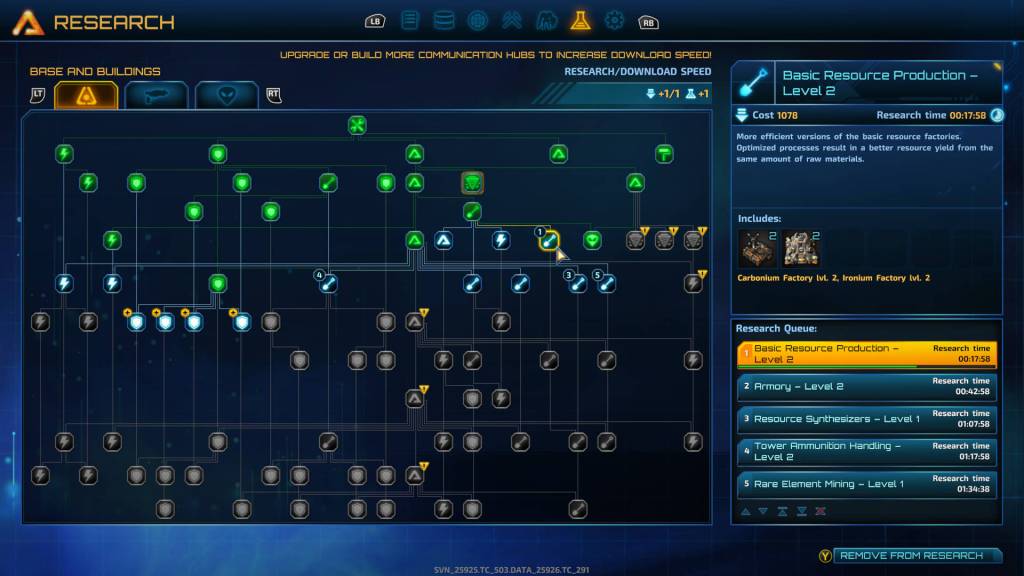
    All the basic, advanced, and defensive structures you can build require considerable power, which can be produced using solar panels and wind turbines (susceptible to environmental conditions), Carbonium powerplants, biomass generators, geothermal power, and even nuclear reactors. Of course, the ability to build advanced base structures, upgrade them for greater efficiency, or craft and equip the multitude of weapon and mech-suit upgrades, requires researching your way through three massive, multi-tier technology trees. Research speed becomes a major obstacle to progress and can feel painfully slow at times – unless you can support multiple power-guzzling Communication Hubs. Naturally, all these structures require space, and making more space means your walls and defensive network is spread thinner (an HQ location with some natural barriers is a must). You’ll quickly discover the need to run power nodes to distant resource-producing outposts, which are then more vulnerable to horde attacks. You could surround them with walls and powerful, specialised turrets but that means more power, AI cores, and resource-hungry ammunition factories.

    If this is all starting to sound overwhelming, it can be. Although not as granular or deep as games like Factorio or Satisfactory, I can’t help but feel The Riftbreaker has been untruthful in its marketing campaign. Resource production and beneficiation, coupled with power generation, underpin everything you do. As a result, it’s possible to get it very wrong and find yourself struggling to recover. As an example, an early push for automated Repair Towers seemed like a great idea, until I realised they were chewing through my resources faster than I could replace destroyed structures and defences, forcing me to run about manually disabling them. This frequent need to repair and upgrade structures also highlighted the variable gamepad support. Exploration, combat, and menu navigation are solid with a gamepad, but the precision placement of structures or trying to mass select them for upgrades is problematic (and nigh-impossible under pressure). The base building feels more intuitive using a mouse and keyboard, and this is an option for console players if they have the hardware.

    Having hopefully conveyed the complexity of resource production, construction, and research, you’ll be relieved to know exploration and twin-stick combat is far simpler and instantly gratifying. Movement and shooting feel great, making it easy to kite hordes, dash out the way of larger creatures, and thin the alien ranks before they break upon your walls. The mecha-suit can handle three swappable weapons per arm – ranging from swords to chain guns, flamethrowers to rocket launchers – which can be upgraded to higher tiers or modded for extra elemental damage. There are passive equipment slots and active abilities to enhance your combat skills and survivability, all of which can be crafted with the right research and sufficient resources. If you’re after a more hands-on approach to base defence, you can prioritise the weapon technology tree and create a walking tank. Many of the upgrades in the alien technology tree become essential once you’ve constructed the Orbital Scanner and begin away-missions to secure rare resources in hostile environments (think heat, radiation, volcanism, and corrosive clouds). Given the ceaseless demands of your primary base, these away-missions to explore and establish distant outposts are paradoxically stressful and relaxing.

    When the environment isn’t trying to kill you – and there is an inordinate number of natural phenomena on Galatea 37, from calm moon phases to damaging hailstorms – it’s the myriad of alien species. These range from basic Zerg-style cannon fodder to lumbering organic artillery and – sticking with the StarCraft analogies – seemingly advanced, cloaked and bladed warriors. Each environment – lush jungle, scorched desert, icy tundra, or volcanic waste – has several unique lifeforms (not all hostile) but they fill similar roles when it comes to assaulting you or your base. Despite Ashley’s apparent desire to study and conserve Galatea 37’s original environment, frequent hordes and respawning alien clusters ensure she butchers hundreds of them on any given day. Combat is less stressful than resource production and base management to be sure, but it’s frequent enough that you’re rarely able to explore for more than a minute without shooting something. On the upside, it’s a great way to hoover up biomass, uncover hidden resources using a scanner, find new species for the alien technology tree, and several unique power or gear designs.

    Presentation

    When it comes to the presentation, The Riftbreaker looks and sound great for most of the experience. The world feels ridiculously detailed, vibrant, and packed with moving and reactive parts – think foliage, liquid pools, and destructible terrain. Firefights against large hordes in forests are a particular highlight, with projectiles tearing through vegetation, while explosions send shockwaves through trees and grass. That said, it can be easy to lose track of Ashley’s mecha-suit in busier scenes. The Riftbreaker can buckle during massive horde attacks but proved scalable on PC and even performed well on the budget Xbox Series S, about 95% of the time. The audio is also a highlight, with loud and impactful combat and a catchy soundtrack that starts serenely before escalating based on nearby threats. With only two voiced characters, Ashely and Mr. Riggs have plenty of exchanges, often cheesy and overwrought. Thankfully, the voice-acting is not too bad and you don’t hear it all that often.

    Notable issues

    A lot is going on in The Riftbreaker at any given moment and you’re rarely given any downtime (even after delving into the heavily customisable difficulty settings). This ensures the world of Galatea 37 is less a mysterious space to explore, and more of a pretty canvas on which to build and murder things. On one hand, the procedural generation ensures each new location – be that a permanent outpost or once-off scouting mission – can throw up new challenges and sights. On the other hand, I wish there was a little more structure to the narrative and lore, rather than needing to read hundreds of journal entries. Maybe some handcrafted scenarios to test your construction and combat skills, as in the They Are Billions campaign. Other irritations include the aforementioned gamepad support and the need to manually upgrade structures once you’ve researched new tiers (a thousand wall segments being a prime example).

    Conclusions

    Considering each mechanic in isolation, The Riftbreaker is packed with interesting systems but the learning curve, balance, and pacing often feel off. It’s a game in which you’re constantly hitting roadblocks – some of which present an engaging challenge, while others simply require you to sit around until you have enough resources or research completes. It’s possible to find yourself desperately reconfiguring your base to balance power supply, resource production, and resource consumption, while constantly stopping to fend off hordes and likely racking up more damages. There is an audience for this sort of challenge and, despite pointing out these challenges, I could not stop playing. However, I think there’s an even larger audience who’ll pick up The Riftbreaker looking for a twin-stick shooter with streamlined base-building elements, only to find themselves bogged down in base micromanagement and making little progress. That said, The Riftbreaker can be a ton of stressful fun – just so long as you know what you’re getting into.

    Pros:

    • Fluid and responsive twin-stick shooting
    • Tons of research, buildings, gear, and upgrades to unlock
    • A lengthy, involved campaign across a procedurally-generated world
    • Visually stunning with decent performance on PC and Xbox Series consoles

    Cons:

    • Variable gamepad support
    • Waiting around for research to complete
    • Exploration = incessant combat

    Score: 7/10

    A review code for The Riftbreaker (PC) was provided to gameblur by the Publisher. The Xbox Series S/X version was accessed using an Xbox Game Pass subscription.

  • Review: Frostpunk – Complete Edition (Xbox Series)

    Review: Frostpunk – Complete Edition (Xbox Series)

    At long last, console gamers can get their hands on the “Complete Edition” of Frostpunk – an engaging, mechanically deep, and often stress-inducing steampunk city-builder with a focus on surviving the elements. Make no mistake, the original console release of Frostpunk is still a great game, but the expansions introduce some much-needed variety to the basic formula. These expansions change how you think about the geometry of your city, introduce new victory conditions, and shift the focus from self-reliance to trading with other settlements.

    Despite only offering three introductory cutscenes (one for each of the major story scenarios), Frostpunk feels far more narrative-driven than many games in the genre. Each scenario is, in essence, an opportunity to craft your own story. There are technologies to research, laws to pass, encounters in the surrounding “Frostlands”, and plenty of player-choice in how you’ll deal with the demands of your people, refugees, and other settlements. This all comes together at the end of a scenario – if you survive – with a montage that provides a timelapse of your developing city while recounting your key decisions.

    Did you establish faith to drive your people forward in the face of hardships or to crush dissent? Did you care for the critically ill and provide burials for the dead, or did you triage mercilessly and eat the corpses when the great storm arrived? Did you care for and educate children, or did you put them to work collecting coal in freezing temperatures? Although all choices offer a mechanically advantageous outcome and shift the numbers around, the narrative context adds weight to your decisions.

    Of course, in any survival game, the complexity of the underlying systems is what dictates its success or failure. The narrative context is a nice touch, but Frostpunk would hold up just fine without them thanks to the myriad of systems you’ll need to consider and balance if you want your city to survive. Heat, food, and shelter are your primary concern. If you can get the basic layout of your city and resource-gathering operations in order quickly, a contented populace and victory are inevitable. Naturally, nothing in the frozen north is that easy.

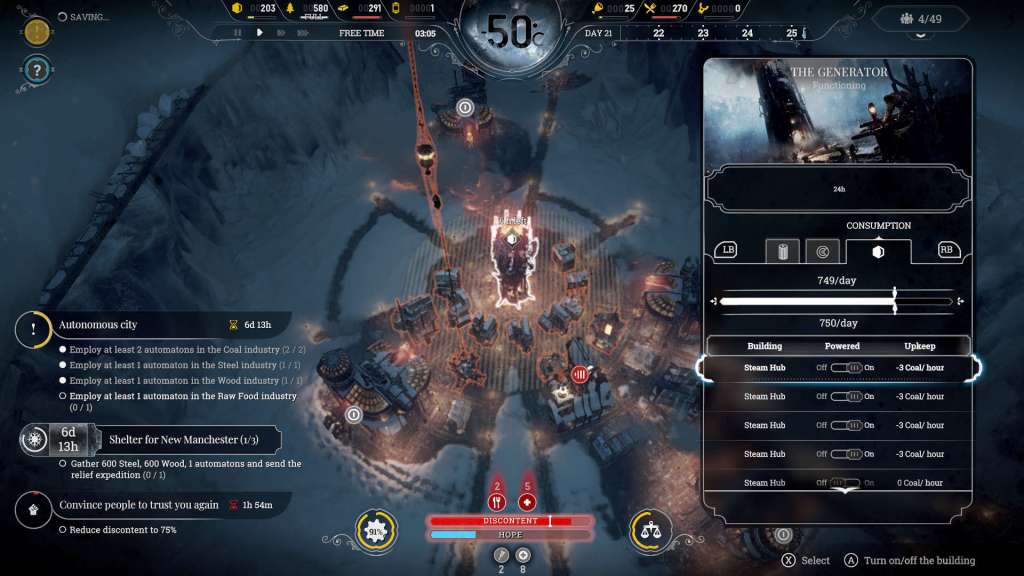
    In most scenarios, life revolves around your coal-consuming generator and the warmth it provides (there’s no nuclear power in this alternate history). An optimal city expands radially, ensuring subsequent upgrades to the generator keep an ever-larger area warm. However, the more efficient your generator, the more coal you burn through. The more coal you need, the more coal-producing industries you need. The more industries you have, the more citizens you need to employ. The more citizens you have, the more housing, food, and medical care you need to provide.

    A new player is going to quickly find themselves overwhelmed, even if they set all the customisable difficulty toggles to easy. The urge to expand, recruit survivors, and generate more resources is alluring, but your citizens have numerous needs that need sustaining. Fail to keep them hopeful, or let discontent swell, and you’ll find yourself exiled to the Frostlands. On the other hand, researching and constructing expensive automatons gives you a 24-hour workforce that never gets hungry, never falls ill in cold temperatures, and doesn’t object to your ruling style. Both are viable paths to victory, but both require careful allocations of resources.

    Of course, building up your city is only half the story. If you’ve researched the right technology, most starting locations offer an infinite source of coal, wood, and steel. However, it’s rarely enough to sustain a large population and decreasing temperatures (which plummet to -100° Celsius during storms), while simultaneously dealing with frequent demands to remedy housing, heating, and medical issues. There are two additional ways to keep your population hopeful and reduce discontent: passing new laws and exploring the Frostlands with scouts.

    The Book of Laws typically offers two variants of any provided law, one callous but effective, the other compassionate with fringe benefits. There are basic “Adaptation” laws, which include choosing between burials or corpse storage (for later “use”), establishing care homes or allowing radical surgical treatments, and putting children to work or educating them. As you advance, you unlock “Purpose” laws – allowing you to chose between Order and Faith. Naturally, the end-game for both these branches of law is authoritarianism, but Order focuses on security and suppressing discontent, whereas Faith focuses on maintaining the hopefulness of your population.

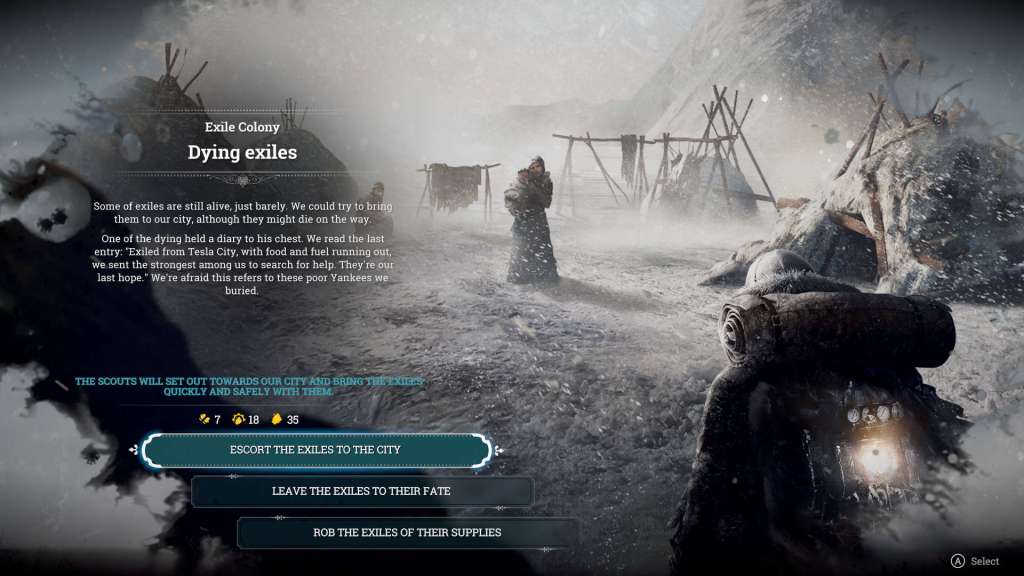
    Sending scouts into the Frostlands is another way to influence your city, bringing people hopeful (or depressing) news and rare “steam cores” required for efficient high-tier buildings. The system is simple and requires little micromanagement, but distances and travel time in the Frostlands are always an issue. Nearby locations can reveal survivors, supplies, or the fate of other generator cities (and almost always reveal two or more new locations to visit). You’ll want to keep your scout teams active all the time, as their discoveries – especially resource caches – can provide a means to get out of trouble fast.

    Ultimately, Frostpunk is a game about learning the ropes, one step at a time. Failure – and you will fail – is an opportunity to take what you’ve learned, apply it to your next attempt, get something else wrong, learn from that experience, and eventually master each mechanic on your way to completing a scenario. You can save at any time but Frostpunk is a game in which failures can be days in the making. Thankfully, scenarios – aside from the “endless” ones – are only a few hours long, so you’ll rarely feel frustrated at starting anew.

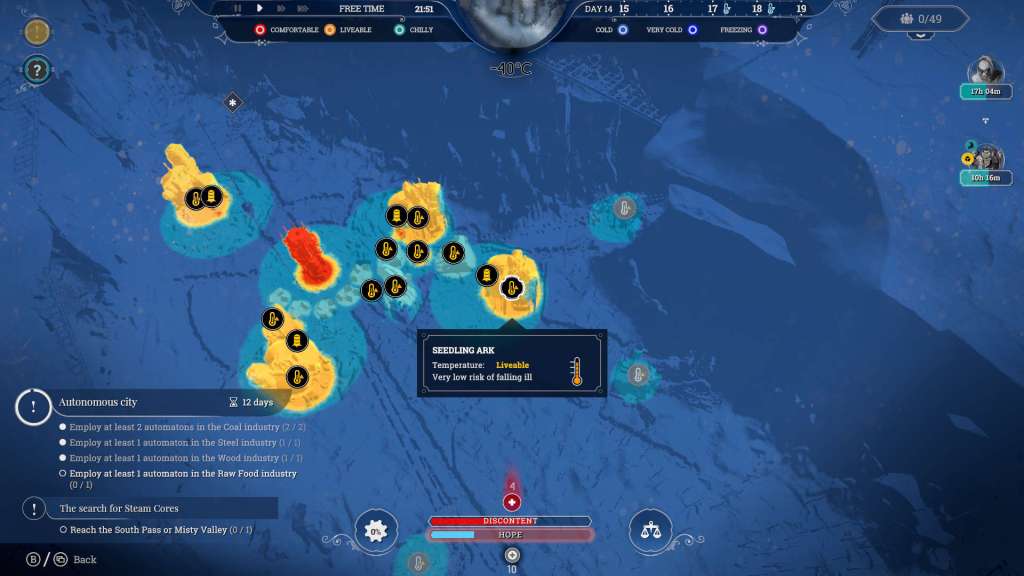
    Like many survival games, Frostpunk suffers from gameplay becoming rote once you’ve established an optimised build order and this is why the console Complete Edition is a great choice (or the expansion pass if you’ve already got the base game). “The Rifts” expansion – along with several of the “endless” scenarios – spices up the city-building element by forcing you to expand to adjacent land using bridges. The perfectly circular city structure and comforting glow of the generator are no longer guaranteed.

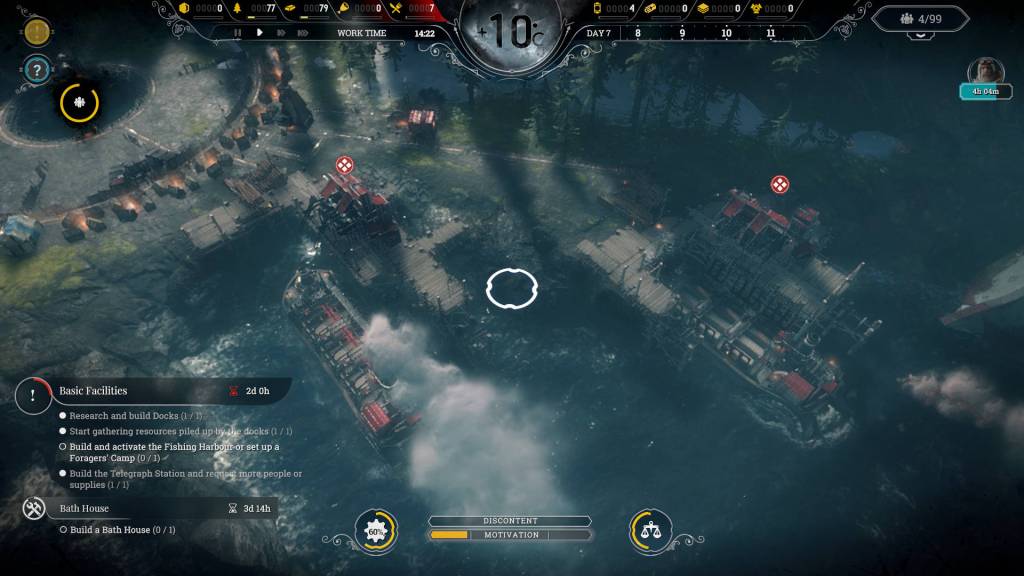
    “The Last Autumn”, which serves as a prequel during the early stages of global cooling, tasks you with constructing a generator. Temperatures are mild, illness rare, and resources abundant, so maintaining the motivation of your cynical workforce and hitting construction deadlines becomes the new challenge. To manage this feat, you need to find a careful balance of new Administration and Labour laws. “On The Edge” serves as a sequel to events in the main campaign, tasking you with the management of a new outpost – sans generator – entirely dependent on “New London” for food supplies and establishing laws. However, New London quickly becomes antagonistic with their demands, and you’re given the choice to scout the Frostlands and establish supply lines with other settlements or try appeasing their unfair demands.

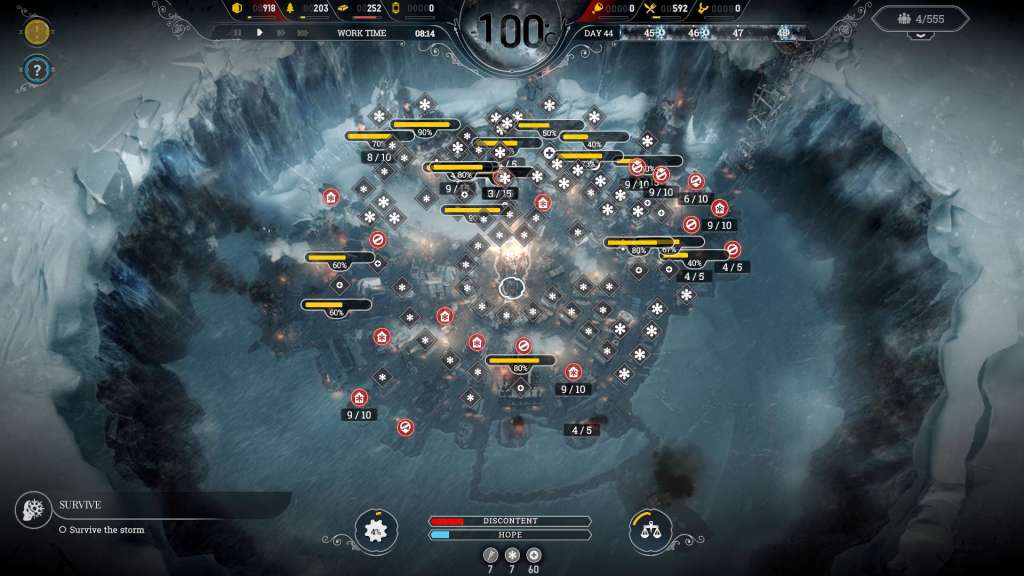
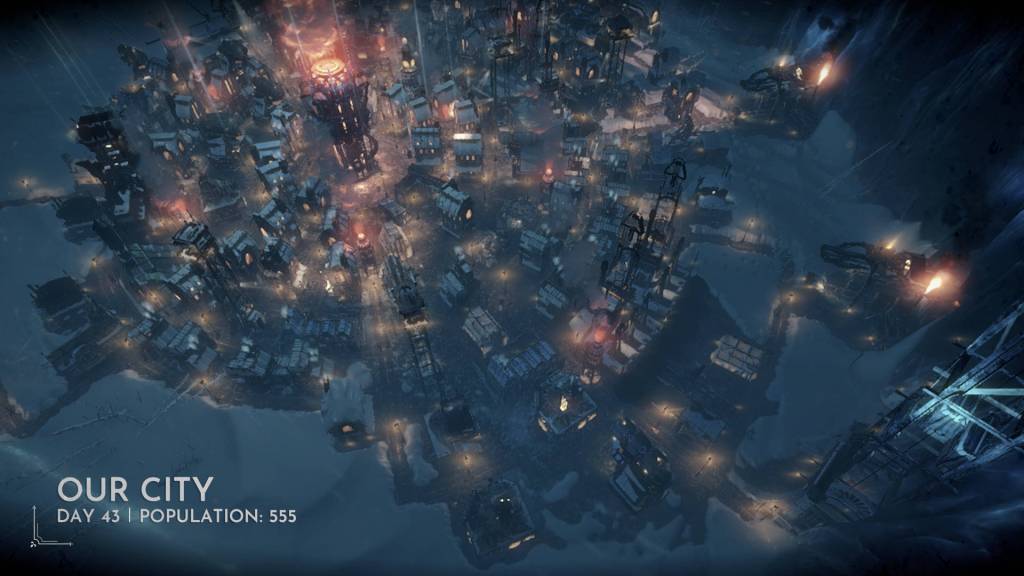
    One slight disappointment is that Frostpunk is yet to receive an official next-gen upgrade. Make no mistake, it can still look great and feel incredibly atmospheric as you watch your torch-wielding workers wade through the snow while howling winds whip back and forth. However, the image looks distinctly soft on a large TV and has plenty of aliasing in motion. Dense ambient city sounds and grumbling workers add to the atmosphere, ensuring your city feels alive, rather than just a visualised spreadsheet. That said, when temperatures drop and troubles multiply, it can be a pain identifying individual structures in a large city and the interface becomes increasingly cluttered. The game does have a pause-time function so you can tinker at your leisure, but it’s times like these I’d found myself missing the mouse and keyboard. Frostpunk Game of the Year Edition is available on Steam, and this is quite an enticing package if you’re more PC gaming inclined.

    Minor visual and control gripes aside, the Frostpunk Complete Edition on console is still a fantastic purchase for fans of survival games or city-builders that demand a lot of planning and micromanagement. It is, however, an incredibly stressful game and might not be for everyone. If you’ve got the patience to carefully think through every move and plan well into the future, and the temperament to make tough decisions that will keep (most) of your citizens alive, there are few survival-focused city-builder experiences like it.

    Pros:

    • A strong, emergent narrative component that’s uncommon in the genre
    • Challenging but fair survival mechanics that often requires making hard decisions
    • A stiff learning curve but individual scenarios are short enough to encourage multiple runs
    • The expansions add plenty of content and much-needed variety to the basic formula

    Cons:

    • Possibly too stressful for some
    • Picking out individual buildings can feel finicky on a gamepad

    Score: 8/10

    Frostpunk – Complete Edition was reviewed on Xbox Series using a provided to gameblur by the publisher. It is also available on PC and PS5.