
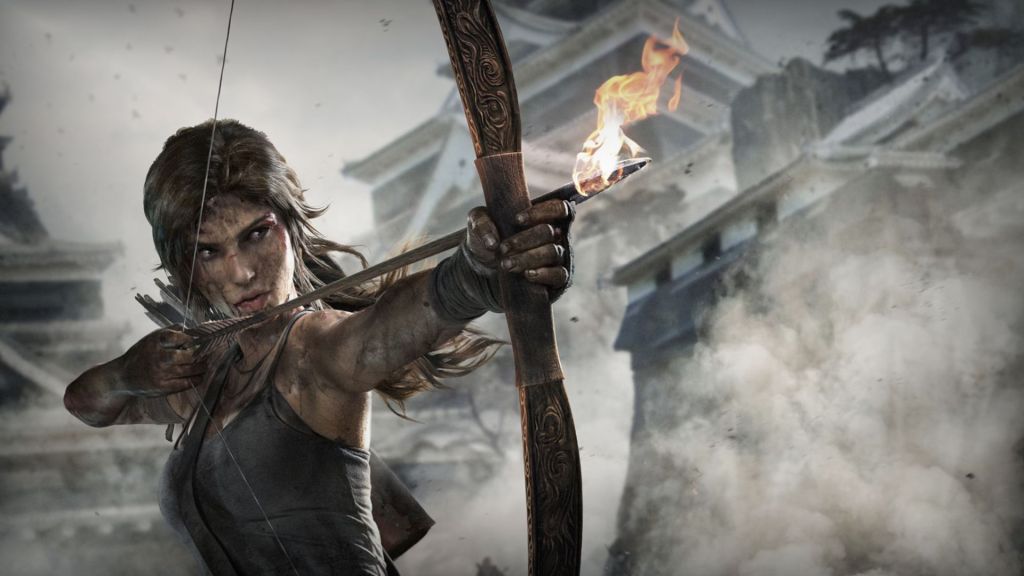
After Aspyr and Crystal Dynamic’s conservative but smart remasters of the CORE-era Tomb Raider games, I had hoped that a remastered Tomb Raider: Legends, Anniversary, and Underworld Trilogy was the next logical step. Instead, we got the shadow drop of a Tomb Raider: Definitive Edition port for the Nintendo Switch 1 and 2. If you’re after a one sentence summary: it’s a solid, feature-complete portable option; however, it’s hard not to notice visual compromises that make it feel like a Switch 1-focussed project that left Aspyr with few options beyond boosting the resolution and framerate for the Switch 2.
Starting with the quality of the game rather than the port, it’s hard to believe this reboot released on the Xbox 360 and PlayStation 3 all the way back in 2013, before receiving a spruced up Definitive Edition for Xbox One and PS4 the following year. It still looks good and feels modern – reinforcing my belief the cinematic, open-world, third-person, action-adventure genre has become too dominant and increasingly stagnant in the “AAA” space. When it was released, Tomb Raider (2013) felt like an impressive and polished hybrid of classic Uncharted-style set-pieces and shooting, merged with the fledgling open-world, action-RPG template.
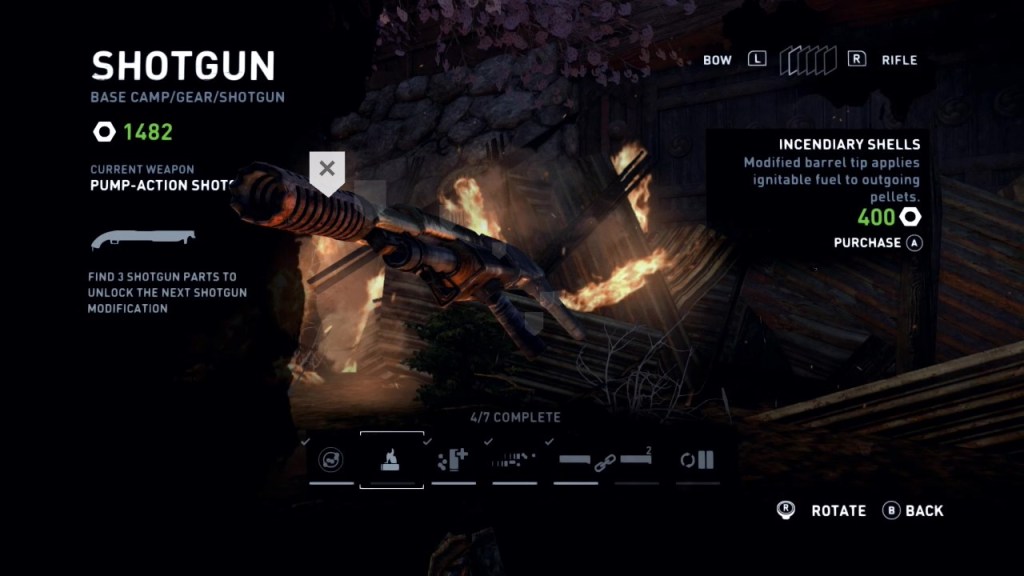
It’s more open-zone in practice, with the plot taking you through each region on the island. The path occasionally loops back through evolving central regions, and all zones are connected by set-pieces or obvious transitions designed to mask loading screens. There are parts that feel more like Crystal Dynamic’s first reboot trilogy – in which you spend the bulk of your time running, jumping, puzzling, and driving rare animals closer to extinction – but there’s a gradual shift towards wild set-pieces and firefights, coupled with a steady flow of XP and points to invest in a limited skill-tree, and no shortage of collectible weapon parts and scrap to improve your arsenal. It was an early indication of the trend that would see RPG and survival-crafting elements shoehorned into every other genre – but it felt fresh at the time.
Although many of those designs have been commonplace, Tomb Raider: Definitive Edition on Switch is still worth playing for the first time if you missed it (or worth replaying if you wanted a portable option). Both newcomers and returning players might find the compact world, brisk pacing, and 12- to 15-hour runtime less daunting compared to the AAA bloat we’ve come to expect in 2025. It also serves as a decent introduction to the character of Lara Croft by proving an entertaining albeit dubiously written origin story. Lara goes from terrified victim, to retching after her first kill in self-defence, to killing hundreds of cult-like castaways in often brutal ways (including gratuitous executions you can unlock in a skill-tree for bonus XP).
It’s a classic example of narrative dissonance in a video game – think gameplay systems and storytelling that don’t feel coherent – but Tomb Raider: Definitive Edition is still a wild ride and good fun if you don’t overthink it. A young Lara and a diverse crew of Hollywood-style archetypes (most only fleshed out later in flashback cutscenes) are shipwrecked in the Dragon’s Triangle while on the hunt for the civilisation of an ancient Japanese Empress who was said to control the weather. A gruelling opening sets the tone, with Lara escaping from a pursuer through a series of gameplay tutorials and classic stick-wriggling, button-mashing, quick-time event (QTEs). As a precursor of what’s to come, failing any of these early QTEs reward you with a gruesome death scene before setting you back to try it again.
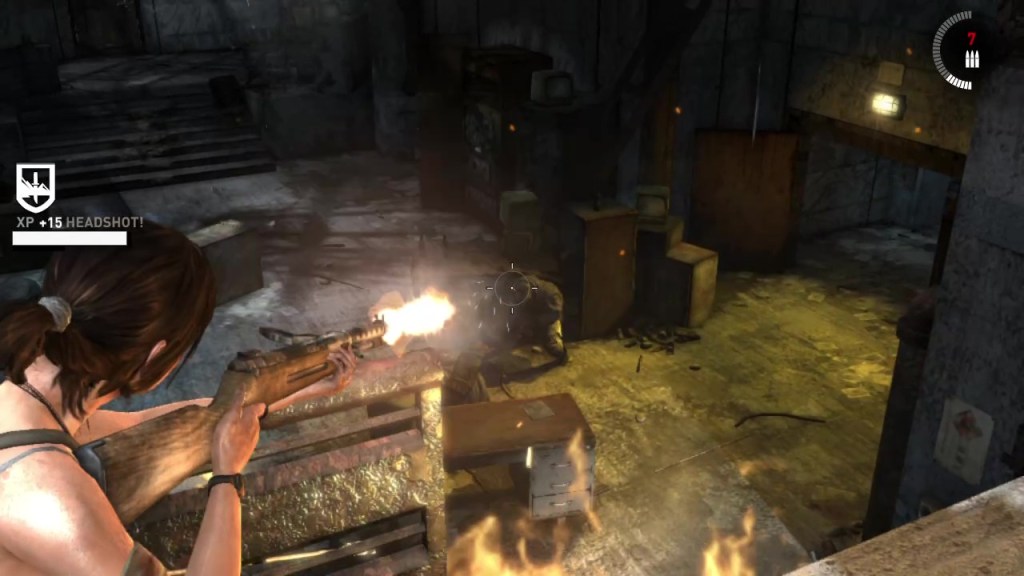
That over-reliance on QTEs and questionably gratuitous violence feels like baggage from the era but, thankfully, most of the game plays out as a mix of slick third-person platforming, light puzzling, wild set-pieces, and scrappy shooting that sees Lara automatically ducking behind anything waist-high. There are white markers to guide you while platforming; Lara gravitates towards ledges and ropes when jumping; puzzles rarely let you think for more than a minute before giving a hint; you can sneak up on enemies and dispatch them stealthily; there’s a “hunters sense” scanning ability you’ll find yourself spamming to highlight enemies and items, and the map slowly fills with dozens of markers as you explore. Thankfully, that familiarity is less of a problem for Tomb Raider: Definitive Edition in 2025 as only those foolish enough to systematically hunt for every collectible will find it overstays its welcome.
Returning to the port itself, it’s worth touching on the visuals and technical performance not because they’re terrible or the game is unplayable – the cutbacks are simply unexpected. The Switch 1 has had many great Xbox One/PS4-era conversions, but Tomb Raider: Definitive Edition loses a considerable amount of vegetation density and shadows that can change the entire feel of many forested areas by leaving them far brighter. That said, if you’ve not played the other versions recently, it’s not a deal breaker. More annoying is the visible pop-in when running through an area and framerate drops from the mid-game Shantytown area onwards on Switch 1 that can impact the responsiveness of the controls. The Switch 2 receives no noticeable visual upgrades, but it does have a higher base resolution and reasonably solid 60fps framerate. It ultimately feels underwhelming and clearly underutilises the improved hardware.

All that said, it’s still a solid portable option for console hardware that has seen far greater uptake than handheld PCs that still have OS and interface issues, compatibility problems, and a lack of developer-created optimised settings for older games. Despite my preference for the older games and criticisms of this port, I played through the bulk of Tomb Raider: Definitive Edition on the original Switch, content to forgive any technical flaws as the tight gameplay loop hooked for another 15 or so hours. Tomb Raider: Definitive Edition may not feel as mechanically fresh in 2025 – having laid many of the foundations for so many modern cinematic, third-person, action-adventures – but it’s compact design and brevity (and budget pricing) offers a breath of fresh air for those daunted by modern AAA games.
Pros:
- Tomb Raider (2013) remains a solid reboot that still plays great
- Completionists will find collectible-hunting sessions a good fit for handheld play
- It still looks good on Nintendo Switch displays (and decent enough when docked)
- The Switch 2 version benefits from boosted resolution and a 60fps framerate…
Cons:
- …but the reduced visual settings compared to other platforms are obvious
- An unstable 30fps framerate can make the controls feel sluggish on the Switch 1 at times
Score: 7/10
Tomb Raider: Definitive Edition was reviewed on Nintendo Switch 1/2 using a code provided by the publisher. It is also available on PC, Xbox One/Series S|X, and PS4/PS5.
 gameblur-v2.0