Tag: Tomb Raider

  • Review: Tomb Raider: Definitive Edition (Nintendo Switch 1/2)

    Review: Tomb Raider: Definitive Edition (Nintendo Switch 1/2)

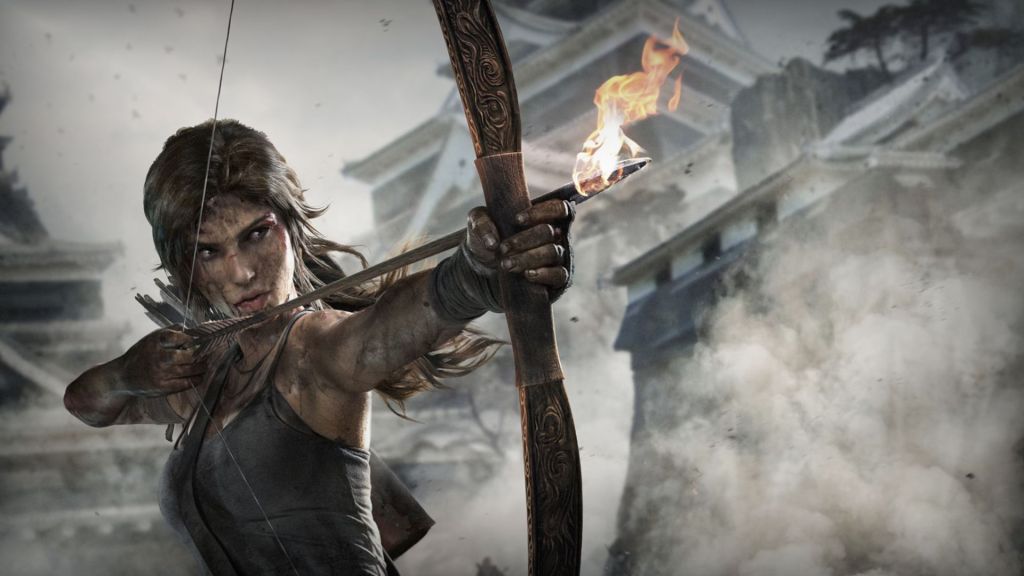
    After Aspyr and Crystal Dynamic’s conservative but smart remasters of the CORE-era Tomb Raider games, I had hoped that a remastered Tomb Raider: Legends, Anniversary, and Underworld Trilogy was the next logical step. Instead, we got the shadow drop of a Tomb Raider: Definitive Edition port for the Nintendo Switch 1 and 2. If you’re after a one sentence summary: it’s a solid, feature-complete portable option; however, it’s hard not to notice visual compromises that make it feel like a Switch 1-focussed project that left Aspyr with few options beyond boosting the resolution and framerate for the Switch 2.

    Starting with the quality of the game rather than the port, it’s hard to believe this reboot released on the Xbox 360 and PlayStation 3 all the way back in 2013, before receiving a spruced up Definitive Edition for Xbox One and PS4 the following year. It still looks good and feels modern – reinforcing my belief the cinematic, open-world, third-person, action-adventure genre has become too dominant and increasingly stagnant in the “AAA” space. When it was released, Tomb Raider (2013) felt like an impressive and polished hybrid of classic Uncharted-style set-pieces and shooting, merged with the fledgling open-world, action-RPG template.

    It’s more open-zone in practice, with the plot taking you through each region on the island. The path occasionally loops back through evolving central regions, and all zones are connected by set-pieces or obvious transitions designed to mask loading screens. There are parts that feel more like Crystal Dynamic’s first reboot trilogy – in which you spend the bulk of your time running, jumping, puzzling, and driving rare animals closer to extinction – but there’s a gradual shift towards wild set-pieces and firefights, coupled with a steady flow of XP and points to invest in a limited skill-tree, and no shortage of collectible weapon parts and scrap to improve your arsenal. It was an early indication of the trend that would see RPG and survival-crafting elements shoehorned into every other genre – but it felt fresh at the time.
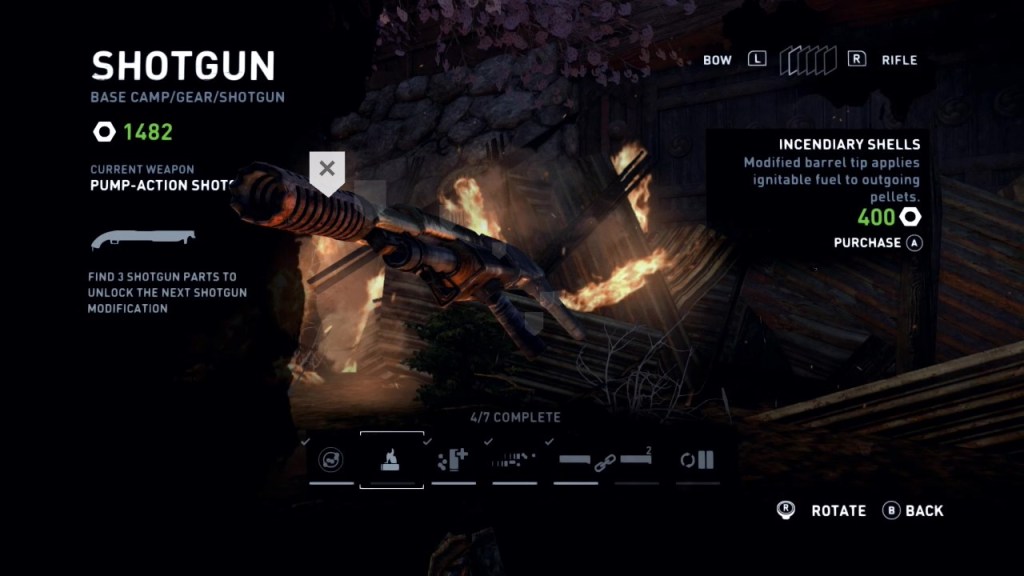
    Although many of those designs have been commonplace, Tomb Raider: Definitive Edition on Switch is still worth playing for the first time if you missed it (or worth replaying if you wanted a portable option). Both newcomers and returning players might find the compact world, brisk pacing, and 12- to 15-hour runtime less daunting compared to the AAA bloat we’ve come to expect in 2025. It also serves as a decent introduction to the character of Lara Croft by proving an entertaining albeit dubiously written origin story. Lara goes from terrified victim, to retching after her first kill in self-defence, to killing hundreds of cult-like castaways in often brutal ways (including gratuitous executions you can unlock in a skill-tree for bonus XP).

    It’s a classic example of narrative dissonance in a video game – think gameplay systems and storytelling that don’t feel coherent – but Tomb Raider: Definitive Edition is still a wild ride and good fun if you don’t overthink it. A young Lara and a diverse crew of Hollywood-style archetypes (most only fleshed out later in flashback cutscenes) are shipwrecked in the Dragon’s Triangle while on the hunt for the civilisation of an ancient Japanese Empress who was said to control the weather. A gruelling opening sets the tone, with Lara escaping from a pursuer through a series of gameplay tutorials and classic stick-wriggling, button-mashing, quick-time event (QTEs). As a precursor of what’s to come, failing any of these early QTEs reward you with a gruesome death scene before setting you back to try it again.
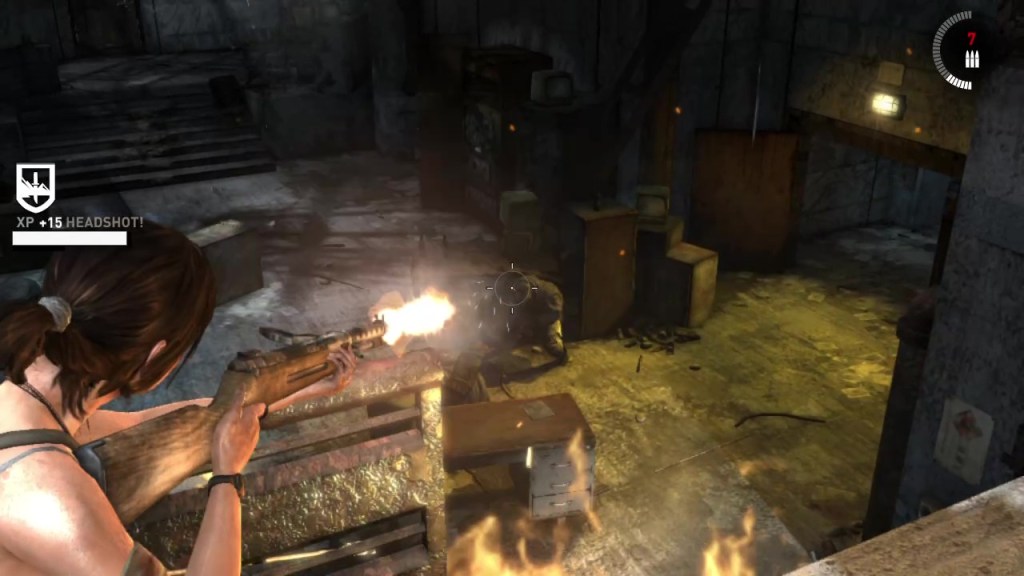
    That over-reliance on QTEs and questionably gratuitous violence feels like baggage from the era but, thankfully, most of the game plays out as a mix of slick third-person platforming, light puzzling, wild set-pieces, and scrappy shooting that sees Lara automatically ducking behind anything waist-high. There are white markers to guide you while platforming; Lara gravitates towards ledges and ropes when jumping; puzzles rarely let you think for more than a minute before giving a hint; you can sneak up on enemies and dispatch them stealthily; there’s a “hunters sense” scanning ability you’ll find yourself spamming to highlight enemies and items, and the map slowly fills with dozens of markers as you explore. Thankfully, that familiarity is less of a problem for Tomb Raider: Definitive Edition in 2025 as only those foolish enough to systematically hunt for every collectible will find it overstays its welcome.

    Returning to the port itself, it’s worth touching on the visuals and technical performance not because they’re terrible or the game is unplayable – the cutbacks are simply unexpected. The Switch 1 has had many great Xbox One/PS4-era conversions, but Tomb Raider: Definitive Edition loses a considerable amount of vegetation density and shadows that can change the entire feel of many forested areas by leaving them far brighter. That said, if you’ve not played the other versions recently, it’s not a deal breaker. More annoying is the visible pop-in when running through an area and framerate drops from the mid-game Shantytown area onwards on Switch 1 that can impact the responsiveness of the controls. The Switch 2 receives no noticeable visual upgrades, but it does have a higher base resolution and reasonably solid 60fps framerate. It ultimately feels underwhelming and clearly underutilises the improved hardware.

    All that said, it’s still a solid portable option for console hardware that has seen far greater uptake than handheld PCs that still have OS and interface issues, compatibility problems, and a lack of developer-created optimised settings for older games. Despite my preference for the older games and criticisms of this port, I played through the bulk of Tomb Raider: Definitive Edition on the original Switch, content to forgive any technical flaws as the tight gameplay loop hooked for another 15 or so hours. Tomb Raider: Definitive Edition may not feel as mechanically fresh in 2025 – having laid many of the foundations for so many modern cinematic, third-person, action-adventures – but it’s compact design and brevity (and budget pricing) offers a breath of fresh air for those daunted by modern AAA games.

    Pros:

    • Tomb Raider (2013) remains a solid reboot that still plays great
    • Completionists will find collectible-hunting sessions a good fit for handheld play  
    • It still looks good on Nintendo Switch displays (and decent enough when docked)
    • The Switch 2 version benefits from boosted resolution and a 60fps framerate…

    Cons:

    • …but the reduced visual settings compared to other platforms are obvious
    • An unstable 30fps framerate can make the controls feel sluggish on the Switch 1 at times

    Score: 7/10

    Tomb Raider: Definitive Edition was reviewed on Nintendo Switch 1/2 using a code provided by the publisher. It is also available on PC, Xbox One/Series S|X, and PS4/PS5.
  • Retrospective: Tomb Raider I Remastered

    Retrospective: Tomb Raider I Remastered

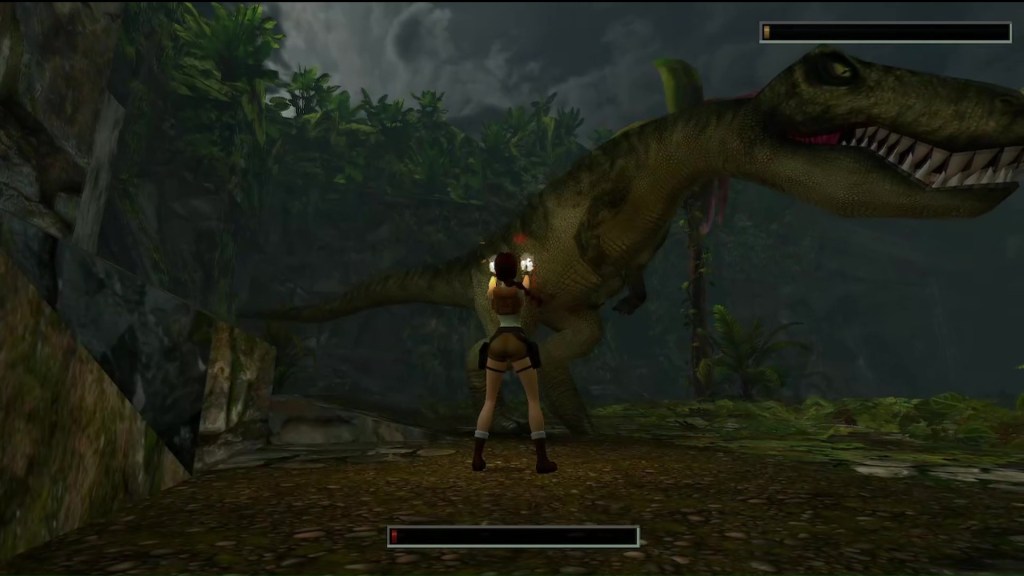
    There are few games as deserving of preservation as the original Tomb Raider. Not because it’s some timeless masterpiece that holds up today, but as a reminder of where we’ve come from, and how far we’ve come. If you’re a fan of games set 3D environments and played from a third-person perspective – the vast majority of blockbuster titles – you could trace at least some part of their ancestry back to 1996’s Tomb Raider.

    Replaying it in 2024, in its freshly remastered form, has been unexpectedly compelling – albeit with a mix of highs and lows I expected. There was raw nostalgia for my 11-year-old self, sitting in front of a small CRT screen, playing it on a SEGA Saturn rented from the local video store – my first experience exploring a truly 3D world after growing up with a NES that was as old as I was, and infrequent visits to arcades to play on-the-rail light-gun games. It was a pivotal moment that ensured video games would became a lifelong hobby – with my very own PSOne and a copy of Tomb Raider II the following year cementing my love of the character and IP.

    If you only have experience with the Crystal Dynamics trilogies – 2006’s Legends or 2013’s soft reboot – Lara Croft in 1996 was a rare example of a female protagonist, at least outside of RPGs with character creation, and, rarer still, possessed a physicality typically reserved for male leads. She was an acrobatic heroine with calves, quads, and glutes so strong she could lunge-jump her own height and was strong enough to push and drag around 8 cubic-metre blocks of stone. The first Tomb Raider would pit her against an equally capable villainess and give her the chance to save the world at the expense of power and fame. I doubt representation was Core Designs’ original intent, but Lara nonetheless proved instrumental in drawing more female gamers into a hobby that all too often felt like young to middle-aged men developing games for young to middle-aged men.

    Of course, nostalgia can only take you so far and it was impossible to enjoy the remaster without looking at it through the lens of 28-years of gaming advances. Revolutionary for the time – and possessing an impressive sense of scale and verticality that early 3D FPS and dungeon crawlers lacked – Tomb Raider now offers a purity of design, so uncluttered by secondary mechanics it almost feels novel. The bulk of the experience is simply observing, planning, and traversing blocky 3D environments using Lara’s equally rigid, grid-based move-set. The goal? Rarely more complex than finding key items or switches within a level to open the exit to the next, before a crude in-game cutscene or flashier CG variant pushed the story forward.

    To spice things up, Lara will sometimes need to solve basic spatial puzzles that typically involve slowly pushing or pulling blocks; while other times she’ll need to draw her weapons to slay a shameful number of endangered species, a few that should’ve stayed extinct, tough mythical creatures, and a handful of human bosses that are an unfortunate reflection of cultural and racial stereotypes in the 1990s. Much like the platforming, combat is all about using Lara’s rigid move-set to avoid enemies that follow far less predictable patterns – often in tight spaces with perilous drops. Combat never feels more than functional, but many encounters can be rendered trivial if you horde powerful ammunition or find high-ground to exploit the limited AI pathfinding. Just don’t stop to ponder who left modern ammunition and health kits in ancient ruins supposedly unexplored in centuries.

    By far the greatest challenge comes from mastering the original controls, especially as the alternative controls offered in this remaster are a twitchy abomination not worth considering. It’s a rough transition from modern games – games that strive to make you not think about the complexity of traversal – however, once you’ve get to grips with Lara’s move-set, they feels perfectly suited to the blocky but carefully crafted environments. It’s a game that requires patience, with a strong focus on planning a sequence of moves and lining up jumps, rather than being reactive, and you’ll want to save regularly if you don’t enjoy hearing Lara’s scream followed by a sickening crunch. The obvious caveat to this design is how clumsy and frustrating simple tasks end up feeling – such as lining Lara up to interact with a switch or pick-up, and how long it can take to trek back to the start of a jumping sequence if you mess up.

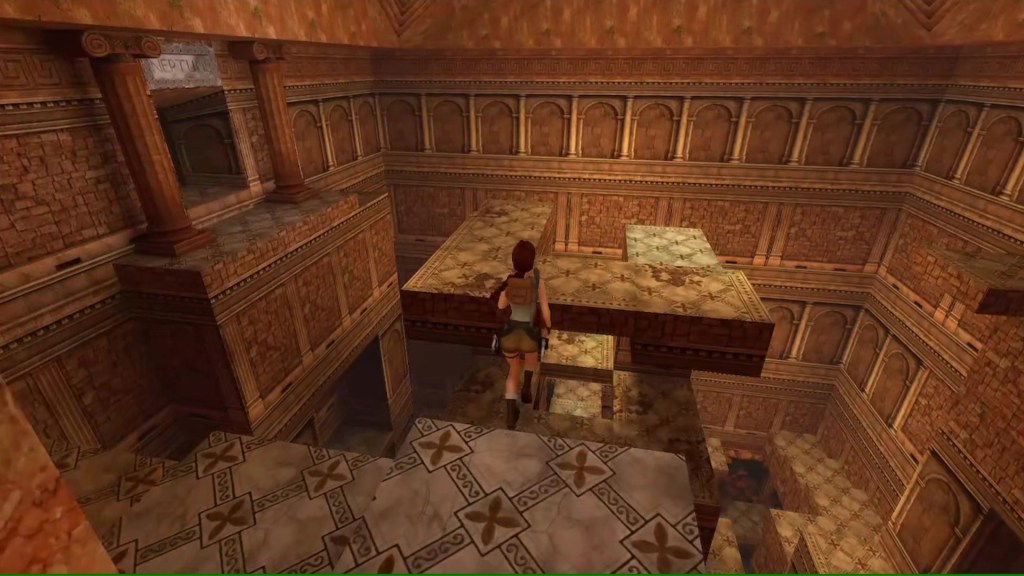
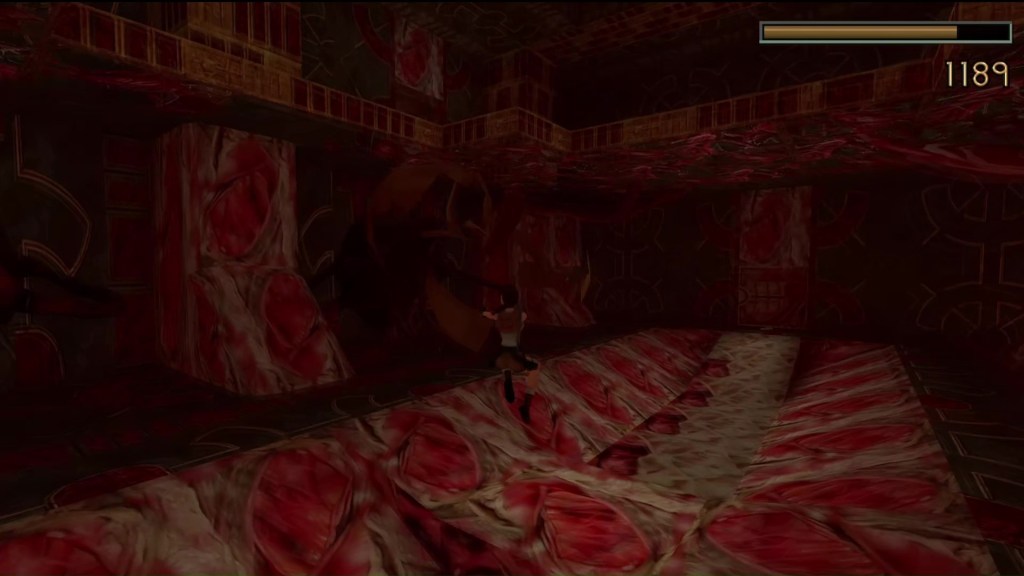
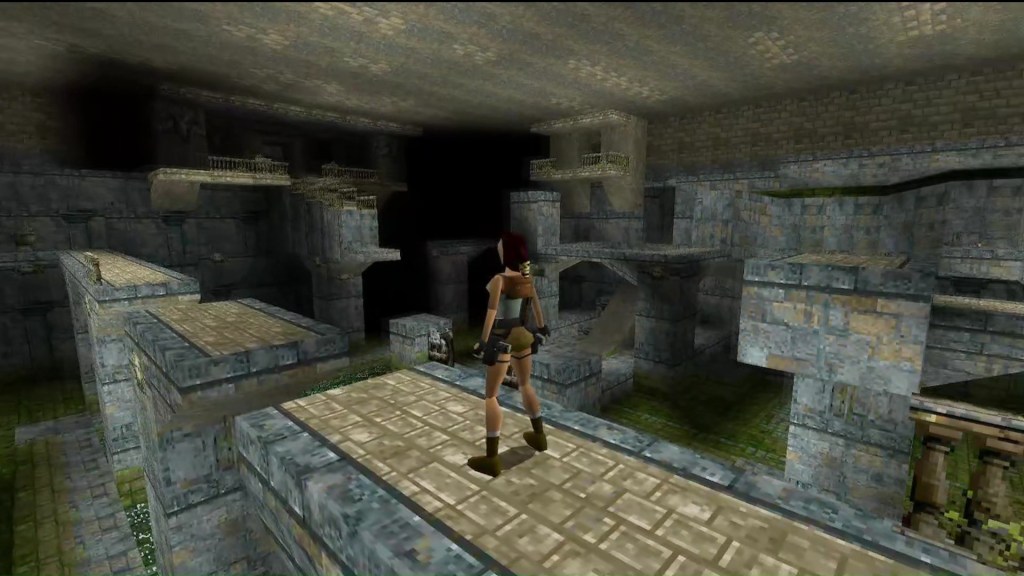
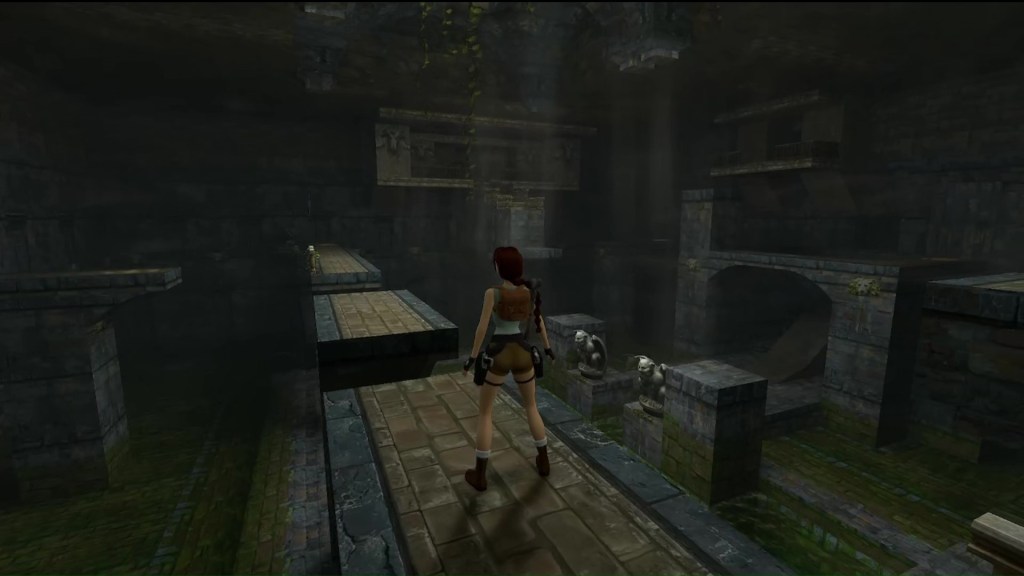
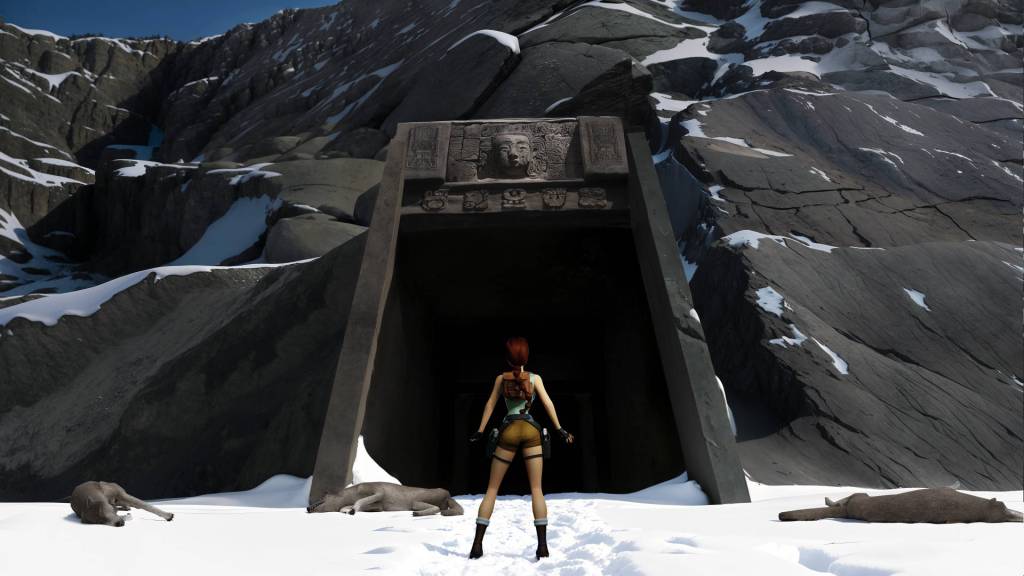
    Moving on to the remastering effort itself – Tomb Raider I Remastered feels smartly touched up and respectful of the original vision, while the only major gripe I have is aforementioned and entirely optional alternate controls. Texture work, character models, and lighting have been overhauled – with the addition of more props where appropriate, and minor geometry changes to introduce new light sources like open ceilings. The world itself is still blocky, and the seams between textures are still obvious, but they feel suitably detailed for modern TVs, those representing water surfaces or lava are better animated, and some even have an impressive parallax effect to simulate depth.

    All character models retain their somewhat angular designs and jerky motion, but they look much more detailed and have been embellished with plenty of added detail – including updated faces and basic lip-syncing for in-game cutscenes. Pixelated 2D sprites for pick-ups and props have been replaced with 3D models, and you can enable an interaction icon to make them easier to find – along with switches and key holes. The new lighting model – especially in rare locations that use beautiful new sky-boxes – looks great, adds to the immersion, and even simulates taking on the colour of the environment. There are more atmospheric effects like dust and mist, while a few locations even have puddles with reflections!

    Talking of atmosphere, Tomb Raider I Remastered still relies primarily on ambient audio to capture that feeling of isolation you’d expect exploring long lost tombs – but it feels like they’ve added a few more music triggers and possibly repurposed a few tracks from the later games. In short, this remaster excels at presenting Tomb Raider as you might remember it. There are oddities, like how some areas feel too dark and the new 3D models for key items too small, but you can always swap back and forth between the remastered and classic visual mode – though you then have to deal with a stuttering 30fps cap that feels awful compared to the remasters 60fps achieved through frame interpolation.

    All of which brings me to who I’d recommend Tomb Raider I Remastered to. From a pure preservation angle and for those interested in the history of video games, it’s an essential remaster. For those just considering the entertainment potential – this is more for fans of the original, especially those without the patience to deal with DOSBOX settings on PC, or console players that once had to deal with a frustratingly restrictive save crystal mechanic. As a long-time fan, the first three acts in Peru, Greece, and Egypt remain the highlight – and levels like The Lost Valley, St. Francis’ Folly, Temple Midas, Obelisk of Khamoon, and Sanctuary of the Scion have not diminished with age. If anything, they finally have a degree of visual spectacle to complement their impressive scope.

    For everyone else still curious in Lara’s original outing, I’d rather suggest Crystal Dynamic’s excellent 2006 reboot, Tomb Raider: Anniversary, which can still serve as an excellent stand-alone experience.

    Tomb Raider I Remastered was reviewed on Nintendo Switch using a code provided to gameblur by the publisher. It is also available on PC, Xbox One/Series S|X, and PS4/5.