

Nightdive Studios’ System Shock 2: 25th Anniversary Remaster gives modern gamers, across all current- and last-gen hardware, a chance to play or replay one of the progenitors of the immersive-sim genre now running on their flexible KEX Engine. What you take away from the experience, however, might depend on your expectations going in and your interest in video game history.
It is important to note up front that this 25th Anniversary Remaster still provides much the same gameplay and visual experience as 1999’s System Shock 2 Classic that’s still available on PC storefronts. There are subtle quality-of-life and visual enhancements you might assume were always there; accessibility is improved with competent gamepad support (for PC too); and the PC version retains modding support. Although it’s not how I would recommend experiencing System Shock 2 for the first time, the co-operative mode returns with cross-platform play. It’s a respectful remaster, though PC players with modding experience might find it unambitious.
First-time players coming from the System Shock (2023) remake might struggle with the gameplay and visual regressions in this tale of yet another cybernetically-enhanced, amnesiac protagonist going up against a resurgent SHODAN and her former creations. Nevertheless, I would argue System Shock 2 stands alongside games like 1998’s Half-life as timeless, having established the foundations of a genre. The biggest issue is that unlike the games it inspired – think 2017’s Prey, 2012’s Dishonored, or even its spiritual successor, 2007’s Bioshock – the combat feels incredibly dated.
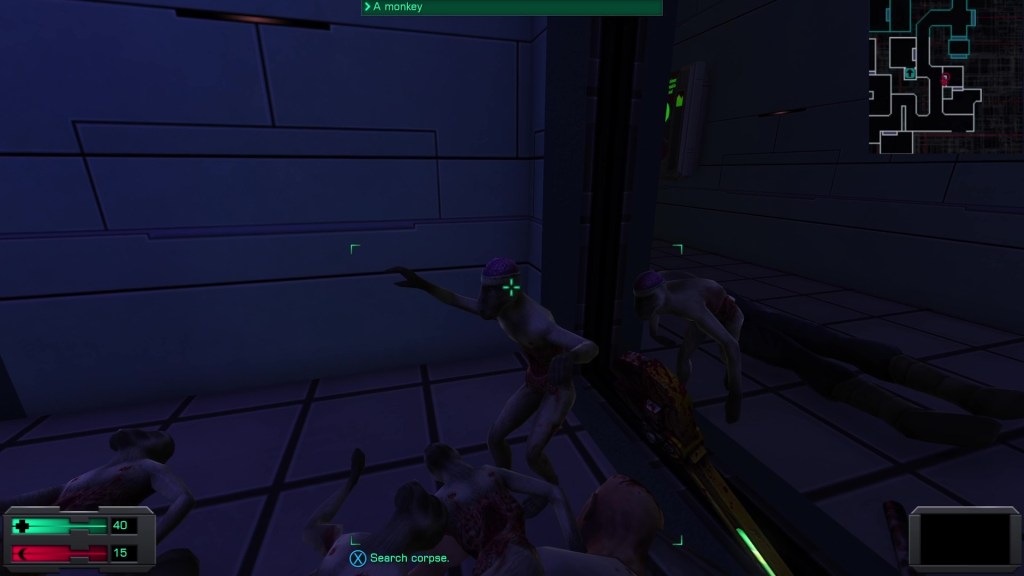
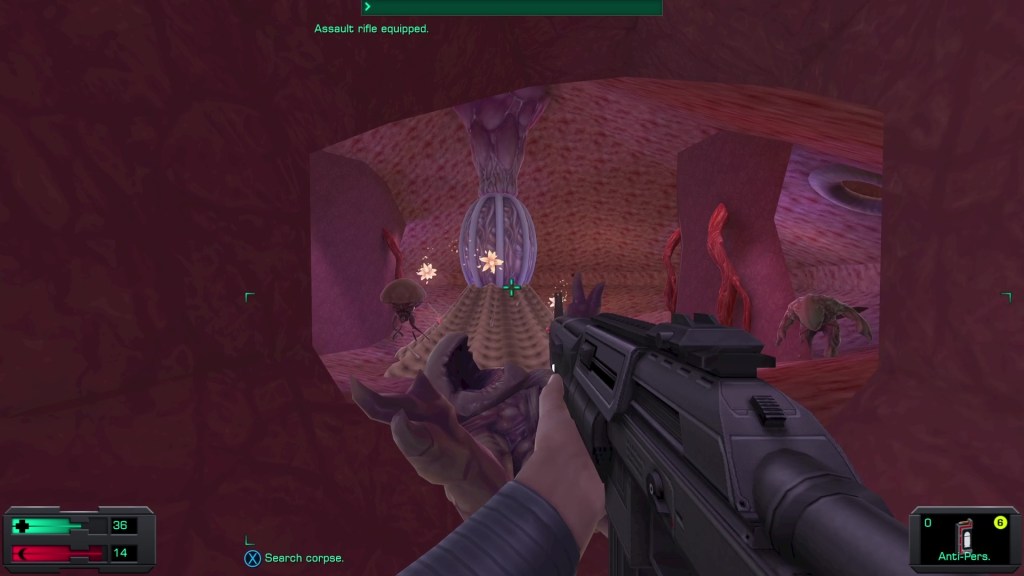
There is mechanical complexity, with different weapon types, specialised ammunition, and Psi powers best suited to organic, robotic, or hybrid enemies, but the audiovisual feedback is minimal and unsatisfying. It’s more RPG than shooter, with tangible progress measured by how big a chunk of a health-bar each attack removes before triggering a canned death animation. Experienced players could exploit the limited AI and level geometry for easier kills, but new players will find survival a function of their player build, loadout, and resources, not their mobility and aim.
Regardless of whether you’re swinging a melee weapon that clips through enemies, firing an energy weapon with muted sound effects, or casting a Psi power with underwhelming particle effects, a degree of auto-aim and visible enemy health-bars are needed to offset simple hitboxes, inconsistent hit reactions, and the lack of visceral impact. This weakness would be fatal for a dedicated FPS, but to System Shock 2’s credit, it becomes less significant when you consider the number of other systems and modifiers at play during any given encounter.
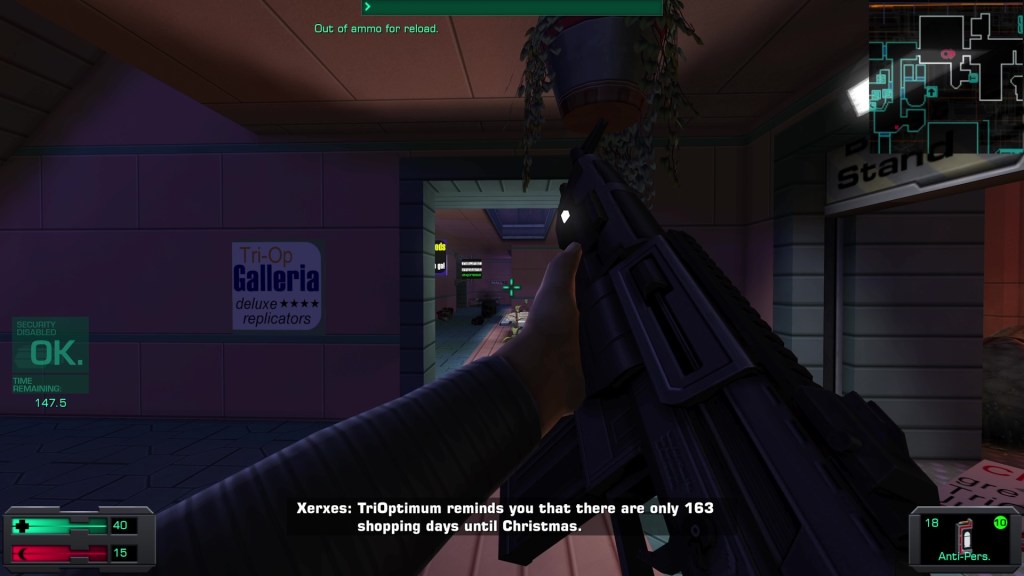
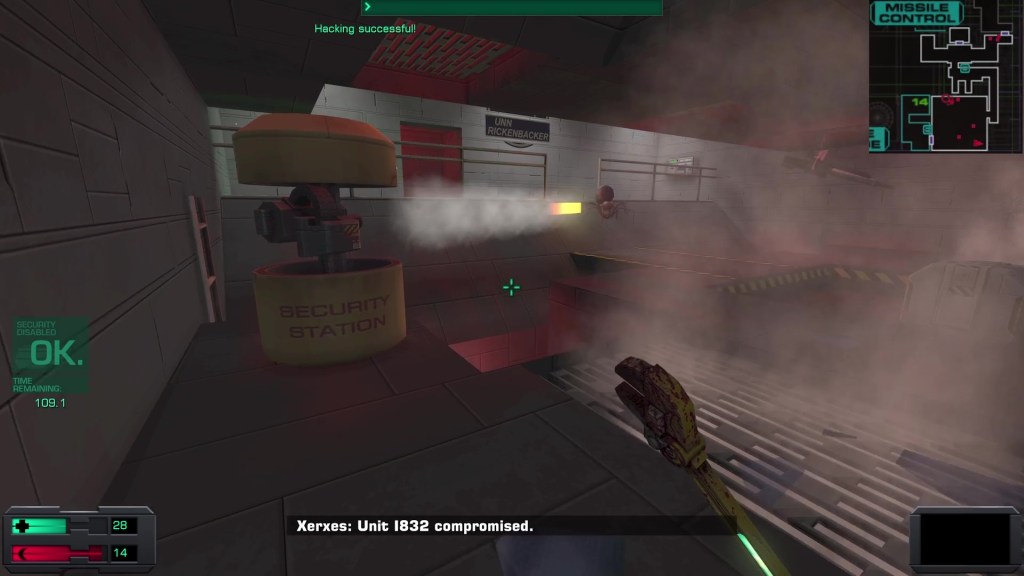
Starting at the beginning, a gamified class-creation tutorial guides you through the basics and introduces three military paths. The Navy career (my preferred choice) offers hacking, repair, and maintenance buffs – all handled through a simple mini-game – that make using conventional weapons, specialised ammunition, and hacked security systems optimal. For those wanting a more direct approach to combat, the Marine career boosts strength, endurance, and weapon skills, which make melee brawls and using heavy or exotic weapons with splash damage feasible – just don’t expect many opportunities to bypass threats.
If you’re looking for a less conventional experience, the OSA career offers over 30 psionic powers across five tiers. There are mundane alternatives to resistances, weapon repairs, and healing, but you’ll also find creative and potentially game-breaking options like remote hacking, invisibility, organic mind-control, and teleportation. Even the simple direct damage powers offer a unique mechanic that allows you to overcharge them during casting – albeit with the risk of damaging yourself if your timing is off.
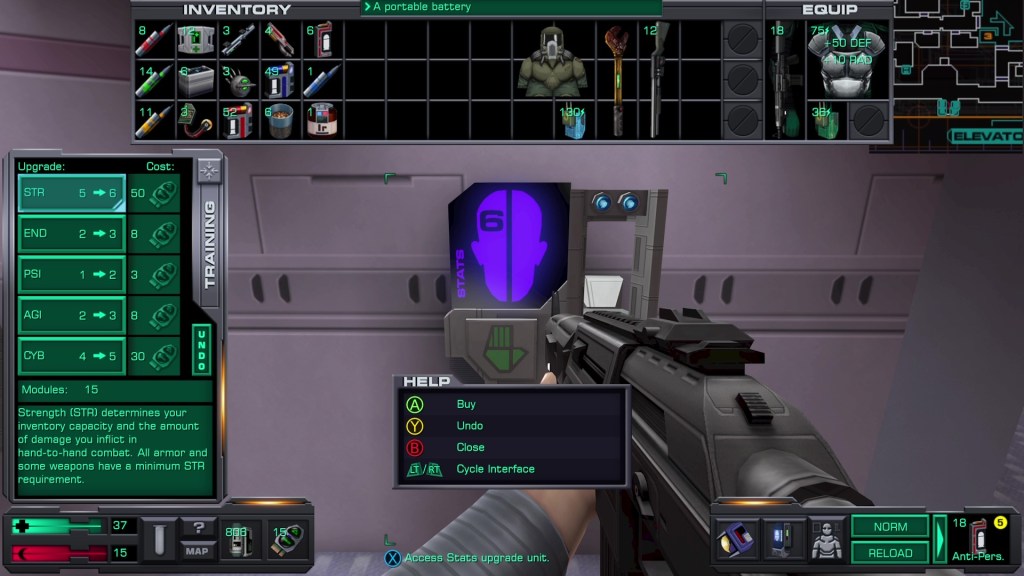
Regardless of your early choices, every career can invest cyber modules (typically granted as a reward for completing objectives) to boost primary attributes, weapon skills, tech skills, or psi powers. Depending on the chosen difficulty – which modifies health, psi-points, and the cost of upgrades – it makes sense to prioritise a few to stay ahead of the escalating difficulty curve, but multi-classing is viable if you thoroughly explore for additional cyber module stashes.
You can tailor your build even further with four OS upgrades for powerful passives; energy-draining armour and implants; and there is no shortage of consumables to keep you alive during protracted fights or when navigating hazardous areas. There are also organic and robotic components to research for new weapons and damage buffs against enemy types – though a dedicated research skill and backtracking to chemical storerooms for research material still feels like poorly-implemented padding.
Exploration is still a key element of gameplay, even if the level design and quest structure lack the degree of flexibility seen in modern immersive sims. The menu interface tracks overarching objectives and even the steps taken towards completing them, but clues on how to progress are still found in scattered audio-logs that are often easy to miss. Keycards, keypads, and environmental hazards gently guide the player, but even with a detailed map, System Shock 2 is a game in which you need to take note of text logs and environmental signposting to avoid frustration.
That said, methodical exploration is how you come to appreciate what all good immersive sims excel at: rewarding or punishing player agency based on how cautious or reckless they are. The decks of TriOptimum’s Von Braun starship and the UNN Rickenbacker are not as large or maze-like as Citadel Station, but the first two-thirds of the game will take you through them more than once and it becomes difficult to avoid combat. You will often open new paths between the interconnected map segments, and there’s incentive to return with improved skills to access new gear or cyber module stashes.
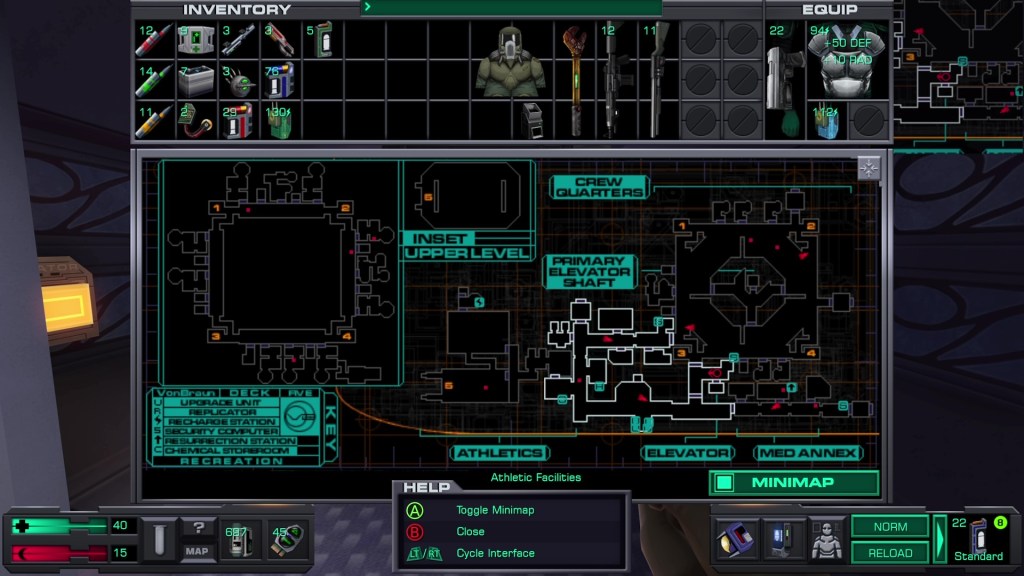
You slowly come to recognise which routes bypass patrolling enemies; which rooms near central elevators are best used for item storage; and which upgrade terminal, recharge station, surgical bed, or vending machine is the safest to return to when you need to restock. The narrative moves forward as you complete objectives, but the more you explore, the more audio-logs you find that expand on secondary story arcs. These delve into the discovery of the parasite known as The Many, the corruption of the Xerxes AI, the internal strife and downfall of the crew, and the return of SHODAN.
As with the original System Shock and its remake, fear of the unknown gives way to empowering familiarity – but that is not to say System Shock 2 is forgiving of reckless play. Aside from robust melee weapons that serve as a last resort for late-game enemy variants, weapons degrade with use and ammunition, psi-hypos, and the nanite currency – used for hacking and vending machines – are effectively finite.
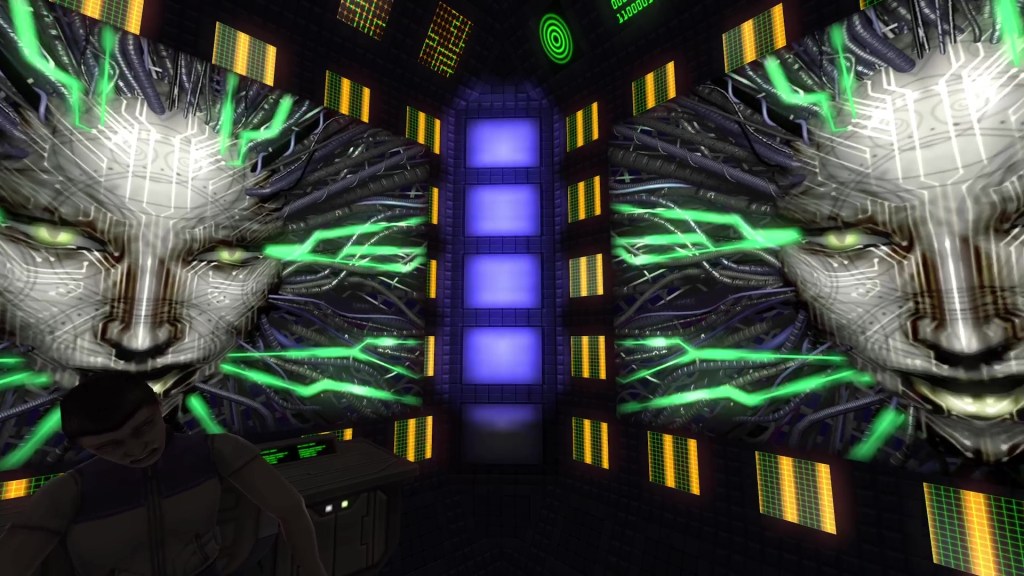
A lack of resources coupled with a few dubious and unaltered quests never impedes progress, but it can kill the pacing. Looping around the recreation deck looking for codes hidden in artwork was as tedious as ever; consuming my last nanites to hack a vending machine that then forced me to buy a quest-essential item was infuriating; and hunting eggs in convoluted engine deck of The Rickenbacker was only marginally less tedious than the aforementioned artwork code hunt.
As such, the System Shock 2: 25th Anniversary Remaster offers both anachronistic fun and frustration – to the point I was enjoying it but simultaneously thinking how much better a full-blown remake like System Shock (2023) would be. The visual enhancements, like improved textures, ambient occlusion, and more intricate weapon models make a significant difference when compared side by side, but it ultimately looks and plays like the early 3D FPS-RPG hybrid it is.
As fan of the genre and the original, it feels like a smartly remastered and well-priced excuse to replay it, but I have doubts new fans of the IP coming from the System Shock (2023) remake will find it that playable. On the other hand, those with a gaming history going back a decade or two could treat it as a playable history lesson, showcasing the origins of many mechanics, scenarios, and storytelling methods you’ll have seen in later games.
Pros:
- A smart and respectful remaster that preserves System Shock 2’s timeless qualities and a few flaws
- The updated textures, ambient lighting, and new weapon models don’t gel with the original designs
- Competent gamepad controls and a multi-plat release improves accessibility
- There’s only one cyberspace section at the end (which I guess some might consider a negative)
Cons:
- It ultimately looks and plays just like the late ‘90s early 3D FPS-RPG hybrid it is
- Some laborious objectives remain unaltered and can drag down the pacing
Score: 8/10
System Shock 2: 25th Anniversary Remaster was reviewed on Xbox Series S|X using a code provided to gameblur by the publisher. It is also available on PC, Xbox One, PS4/5, and Nintendo Switch 1/2.
 gameblur-v2.0