Tag: Syberia

  • Review: Syberia – Remastered (Xbox Series)

    Review: Syberia – Remastered (Xbox Series)

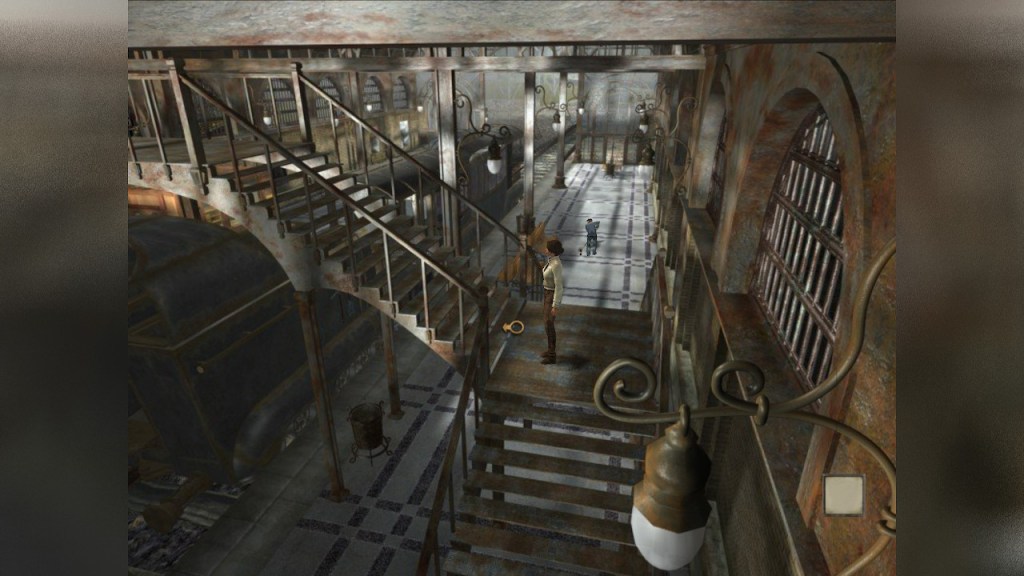
    Syberia first released in 2002 as a point-and-click adventure with relatively unremarkable mechanics for the time. It was, however, elevated by Belgian comic artist Benoit Sokal’s striking designs, an evocative soundtrack, and a narrative that blended the relatable with the surreal. It was easy to play through the remaster for the story – the third time now if I count the awkward console ports of the PC original – and I’d argue Syberia – Remastered is now the most accessible way to play this uneven cult-classic. The updated visuals are beautiful yet faithful, the UI is cleaner, and a few puzzles have even been expanded or tweaked. That, old flaws remain and a few new bugs can frustrate.

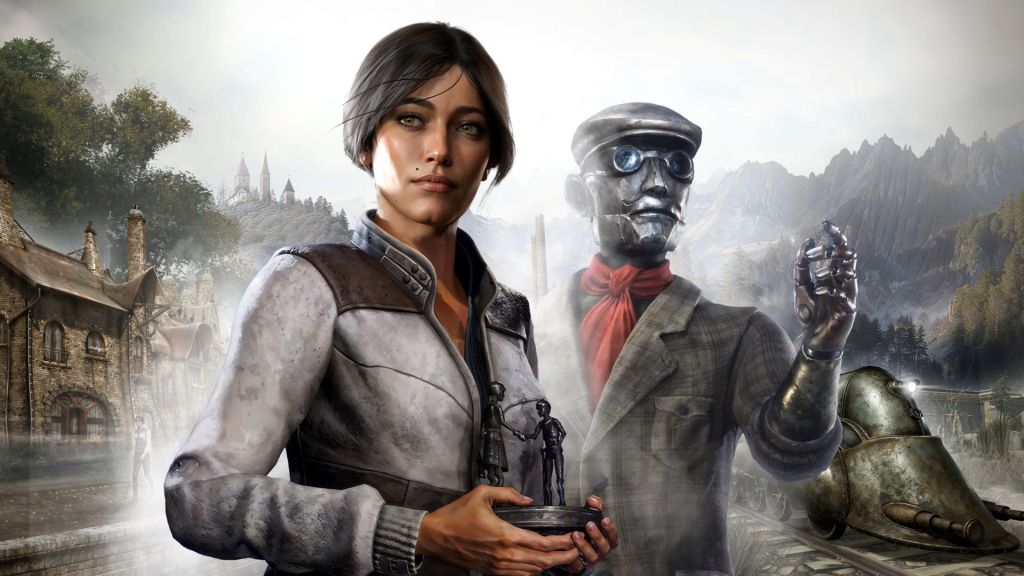
    I think what I love most about Syberia is how it balances a growing sense of wonder with unease. You play as Kate Walker, a New York lawyer who looks and sounds like part of our world, but her journey eastward, from the French Alps towards Russian Siberia, feels increasingly detached from reality. Kate arrives in Valadilène to conclude the sale of the Voralberg family automaton business to an American company, only to find the owner has recently passed away and her short business trip is about to get complicated.

    After learning of another heir, the reclusive Hans Voralburg who was long presumed dead, Kate kicks off a journey that will take her further and further away from her current life – her friends, her family, and everything she thought was important. She ends up travelling on a clockwork train, in the company of the weird but likeable automaton Oscar, following in the footsteps of Hans Voralberg decades later. She delves into the Voralburg’s tragic family history, explores seemingly forgotten corners of the world, and encounters an odd cast of those left behind with unfulfilled dreams.
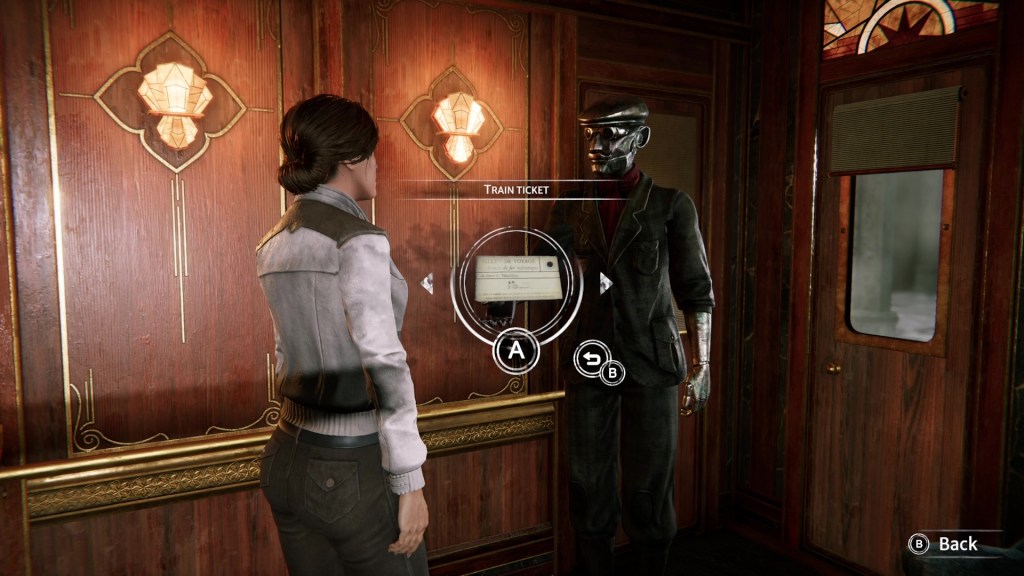
    It makes for a compelling but weirdly paced narrative that sometimes unfolds with no particular sense of direction (other than geographically). As someone who dislikes modern games with bloated runtimes that kill pacing, you’d think it would annoy me. However, given you can see the end of Syberia – Remastered in just 6-7 hours – puzzle-solving skills permitting – it feels more like deliberate and confident pacing. Kate’s journey is literally about going off the rails while on the rails, full of discoveries and revelations, about both her curious client and herself. It’s not always well written, the voice acting is variable, and it features some dated stereotypes, but it had emotional hits that many modern cinematic AAA games fail to generate.

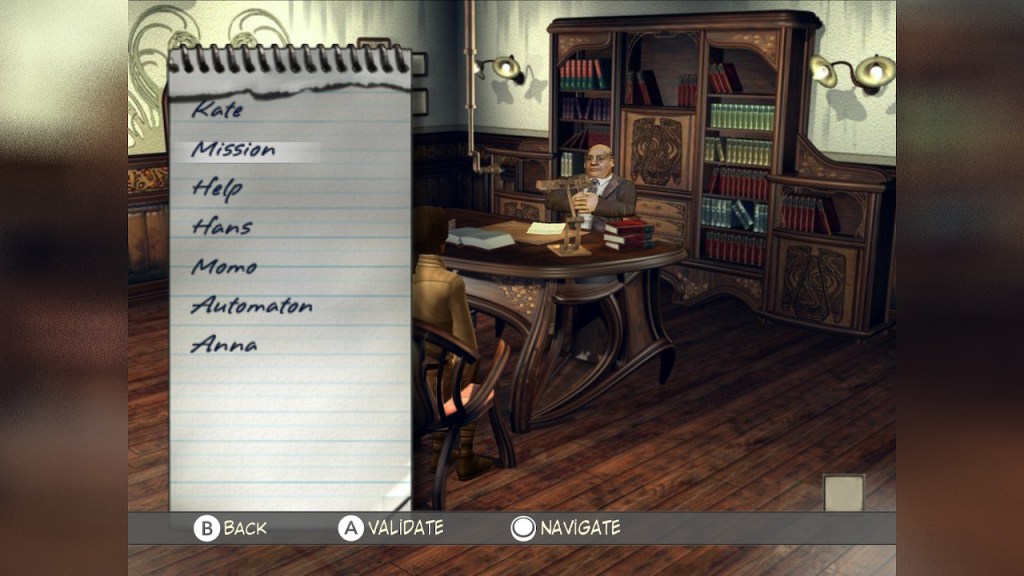
    Gameplaywise, Syberia – Remastered has the same mechanical weaknesses as the original game – even with an updated journal and a handful of expanded puzzles to flesh out some locations. Unlike so many of its peers, Syberia was never about dense environments, pixel-hunting for interaction spots, or use-everything-on-everything experimentation. Instead, you explore large and beautiful zones, exhaust dialogue trees for plot triggers, find a handful key items, and tackle maybe two or three puzzles in each area. It feels more streamlined and logical than most point-and-click games from that era – but the size of the environments can make backtracking tedious.
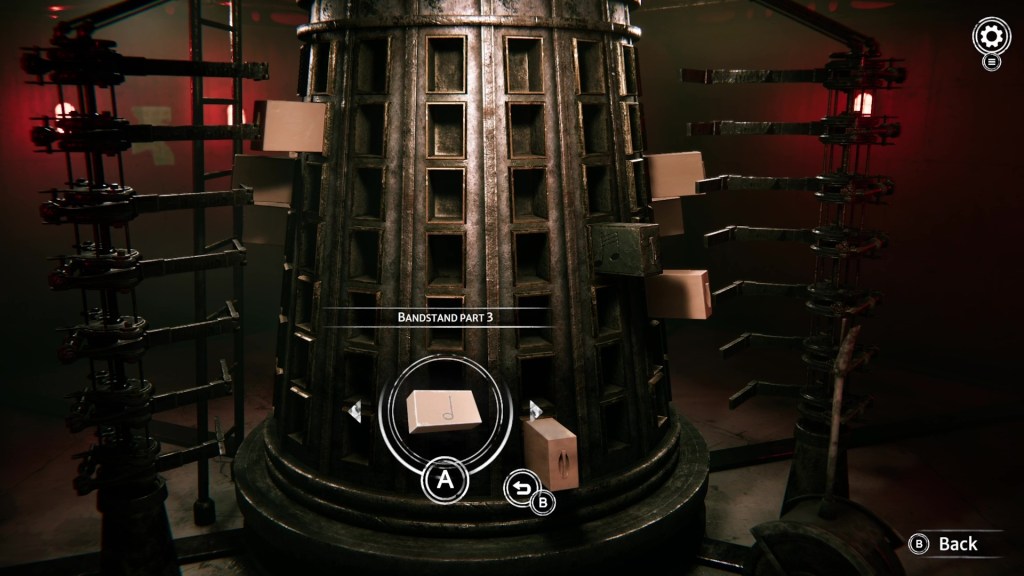
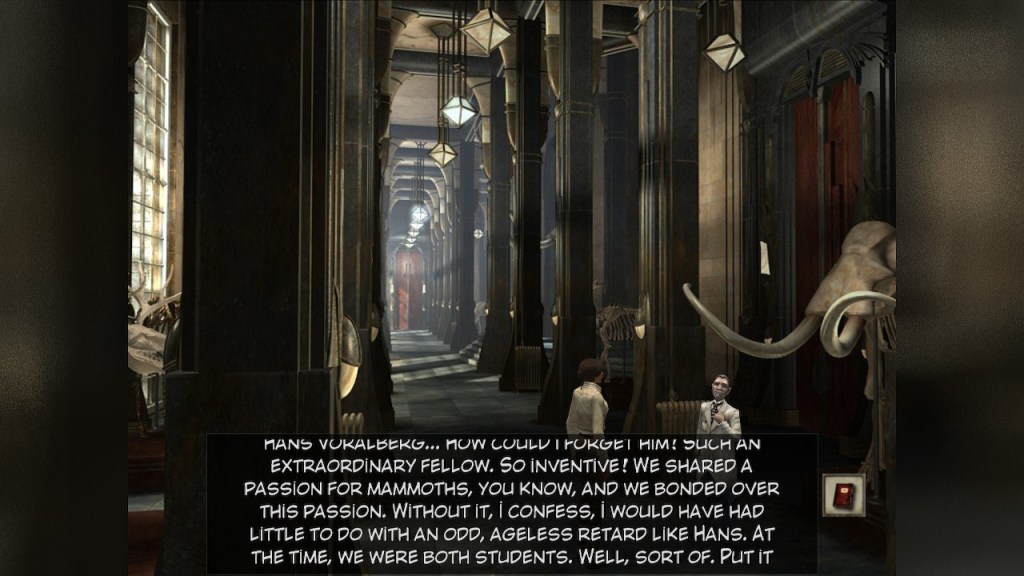
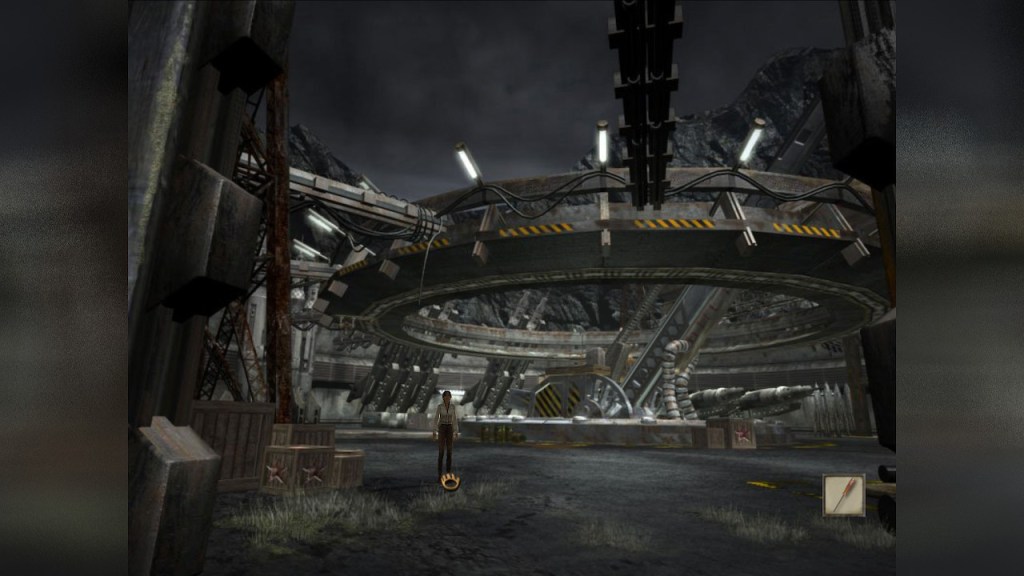
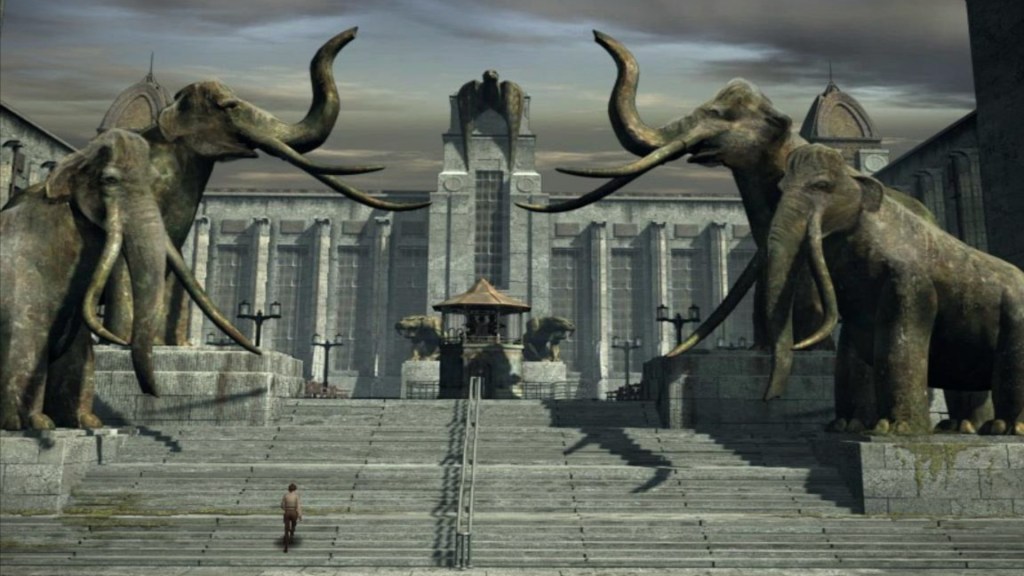
    On the upside, Kate’s initial visit to each location feels suitably wondrous and surreal. She explores a declining alpine town with clockwork buildings and specialised automatons serving the ageing population. She travels to a quirky German university located alongside what look like a giant remnant of the Berlin wall, meeting the bizarre faculty members, exploring an incredible aviary, and learning about Hans’ fascination with Siberian Mammoths. She explores an abandoned Russian industrial city run by a deranged mayor; she visits a cosmodrome to help a drunken cosmonaut get airborne; and she finally help an ageing opera singer feel alive again – if only for a while.

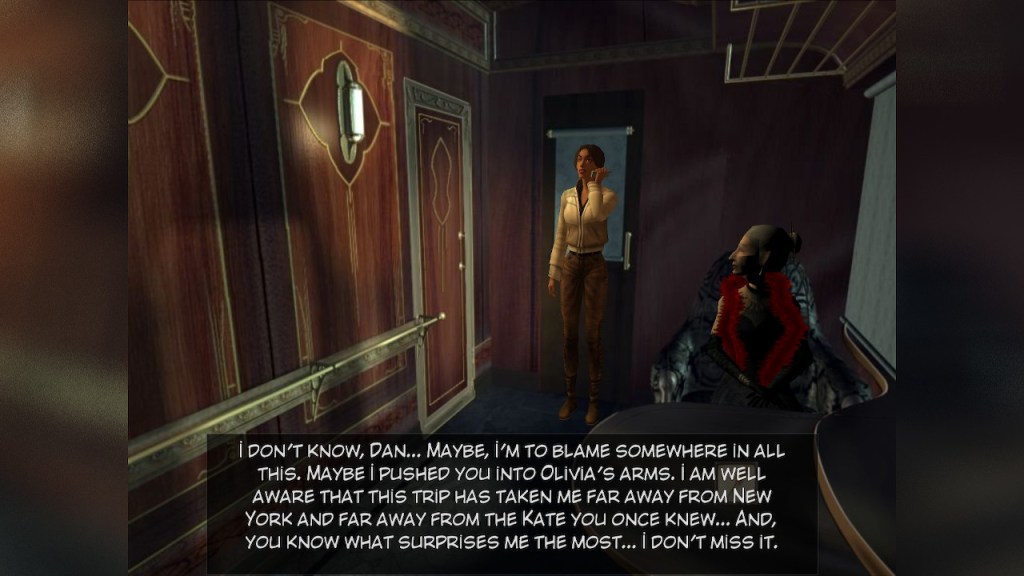
    Every step of the journey feels more surreal than the last and Kate’s fiancé, boss, friend, and mother – most of them self-interested and living shallow lives – frequently call and struggle to make sense of Kate’s trajectory from corporate ladder-climber to headstrong explorer willing to push ever further into the unknown. Again, Syberia is no masterpiece of videogame writing (and this remaster has some dubious subtitles and transcriptions), but it nails the atmosphere and Kate’s voice actor – Sharon Mann for the English dub – did an incredible job of capturing her emotions.
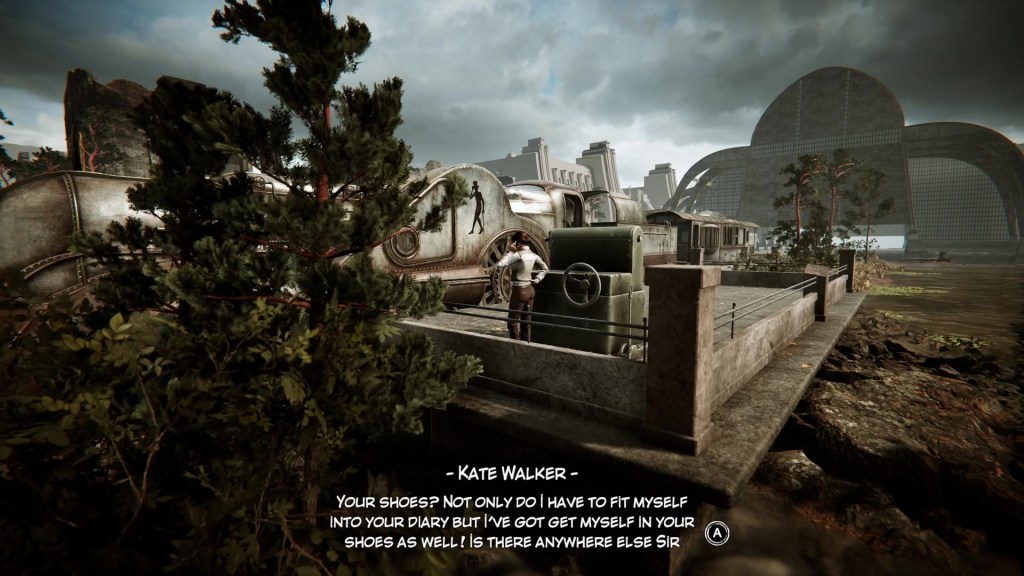
    Of course, most cult classics like Syberia benefit from a mix of hyperbolic praise from fans and the resultant hype for this release. As one of those fans, and a fan of classic point-and-click adventures in general, Syberia – Remastered is a worthy effort at preserving a classic game and making it more accessible on multiple platforms. It stays faithful to the source material despite looking more modern, the expanded puzzles add a minor twist for returning players, and the new journal might prove essential for new player – but I still feel the diverse cast and timeless narrative are the main attraction.

    Pros:

    • Experiencing Kate’s journey of self-discovery through a wondrous but surreal world
    • Beautiful, faithfully remade environments better fit the evocative soundtrack
    • Most puzzles are logical and streamlined
    • The expanded journal system makes the tougher puzzle less of a roadblock

    Cons:

    • Backtracking through larger environments can get tedious
    • Rare movement bugs required restarting the game
    • Subtitles and document transcriptions need work

    Score: 8/10

    Syberia – Remastered was reviewed on Xbox Series S|X using a code provided by the publisher. It is also available on PC and PS5/Pro.
  • Retrospective: Syberia (2002)

    Retrospective: Syberia (2002)

    As a point-and-click adventure originally released on PC in 2002, it’s easy to criticise elements of Syberia’s gameplay, but replaying it for the third time on the Nintendo Switch – the best console port by far – I’m still impressed by its relatable protagonist, timeless artistic vision, and serenely melancholic atmosphere.

    Kate goes adrift

    Syberia wastes no time setting the scene and offering a tantalising glimpse of what awaits Kate Walker, a young and idealistic lawyer from New York, sent to the moribund town of Valadilene in the French Alps to conclude the sale of an ageing automaton factory.

    She arrives just in time to witness the funeral precession for the late factory owner, Anna Voralberg, who revealed the existence of a living heir in her final correspondence. Given the importance of the deal, Kate is left with little choice but to track down Anna’s brother Hans – initially thought to have died decades before – and discover more about his troubled family and the legacy he left behind while traversing Eurasia with an automaton engineer named Oscar and a fantastical wind-up train of his design.

    Despite her obvious commitment to the task, it’s clear from the outset that Kate isn’t comfortable in a rigid corporate environment. She marvels at the weird, wonderful, and sometimes terrifying things she encounters on her journey, but takes them all in her stride. She respects locals with quirky customs and is compassionate when helping others, but she also has a strong set of morals and won’t hesitate to call out scheming or dishonest behaviour – even if she’s willing to bend the rules a few times to progress.

    In contrast, the people she left behind in New York are mostly brash, self-interested, morally flexible, and possess limited imagination. Her boss has no interest in her situation beyond her ability to seal the deal; her fiancé Dan seems unable to differentiate between their romantic and business dynamic, treating her more as an accessory to his ambitions; her mother frequently talks over her and uses guilt as leverage; while her friend Olivia seems has little passion for their profession beyond the lifestyle it allows.

    Kate frequently receives calls from them or calls them for assistance during her adventure, and they serve as useful foils that highlight Kate’s character development. Their lives are so ordinary they can barely comprehend what she’s describing and experiencing, while their desperate attempts to discourage Kate and bring her back home to re-establish the status quo border on self-destructive.

    As a result, simply watching Kate discover who she really is – or maybe rediscover herself – is even more satisfying than the overarching narrative and circumventing the many roadblocks along the way.

    Artistic vision > technical prowess

    Of course, a great protagonist and interesting premise still need a good setting, and Benoît Sokal’s creative vision ensures Syberia is one of the few games with legitimately timeless aesthetics.

    Kate’s world is similar but not exactly our own, though it’s not hard to immerse yourself in it with many modern and historical parallels. There are European towns still dealing with the devastation of the Second World War on industry and families, while Russia – possibly still a Union of some sort – is full of ageing industrial and military complexes abandoned after a Cold War era.

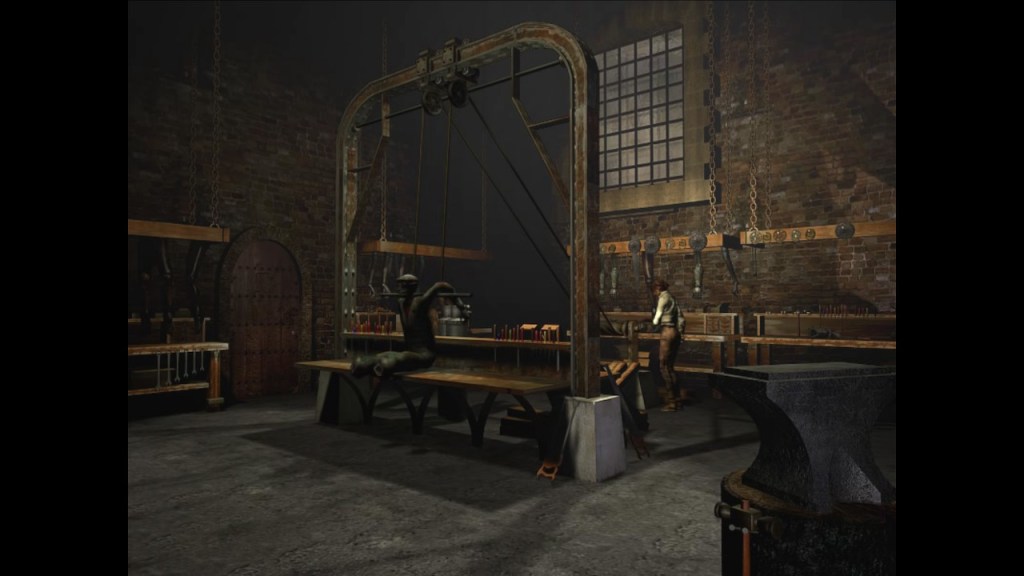
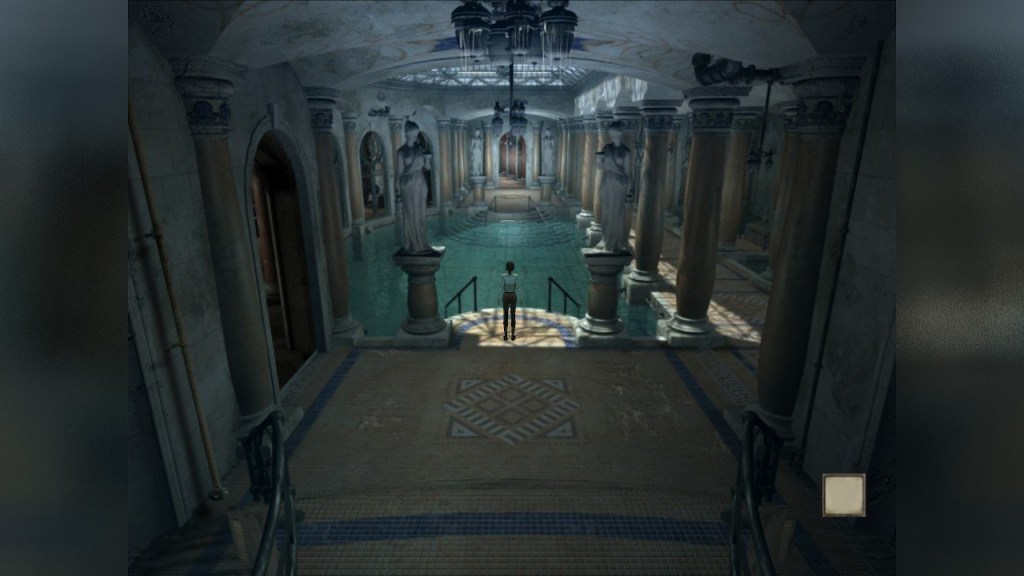
    Valadilene sports cobbled streets, art-deco houses, and an intricate automaton factory, but only a handful of people with nowhere else to go remain. The Barrockstadt University, with its massive mammoth exhibits and tropical aviary, is fading into obscurity, with a few lingering staff and fewer students, all surrounded by decade-old military fortifications and damaged houses that were never restored. The decrepit Komkolzgrad industrial complex and cosmodrome are inhabited by two solitary caretakers with unfulfilled dreams. The Aralbad resort is a refuge for faded stars, situated on the edge of a corrosive salt lake, full of rusted shipwrecks that hint at a more prosperous past.

    Although most backdrops are beautiful and smartly framed static images, there are a handful of video-loop backdrops for more intricate structures, simple water shaders, and 3D character models that add life to many scenes. As a reward for solving more complex puzzles, there are several cutscenes that demonstrate Sokal’s intricate automaton designs in action or handle a few action-centric moments.

    The visuals are complemented by an immersive ambient audio mix and a limited but evocative soundtrack themed around each location – but only sometimes. Syberia has moments of near silence, and I was never sure if it was by design or just audio bugs that have plagued prior releases to varying degrees.

    So Syberia is not exactly subtle about using art and music to express its themes, but this does ensure Kate’s journey through forgotten places filled with forgotten people provides a strangely compelling combination of intricate beauty and haunting solitude.

    Streamlined adventuring but dated designs still frustrate

    When it comes to actually playing Syberia, well, it’s a traditional point-and-click experience that can feel anachronistic by modern standards – even if it’s more streamlined than many of its contemporaries.

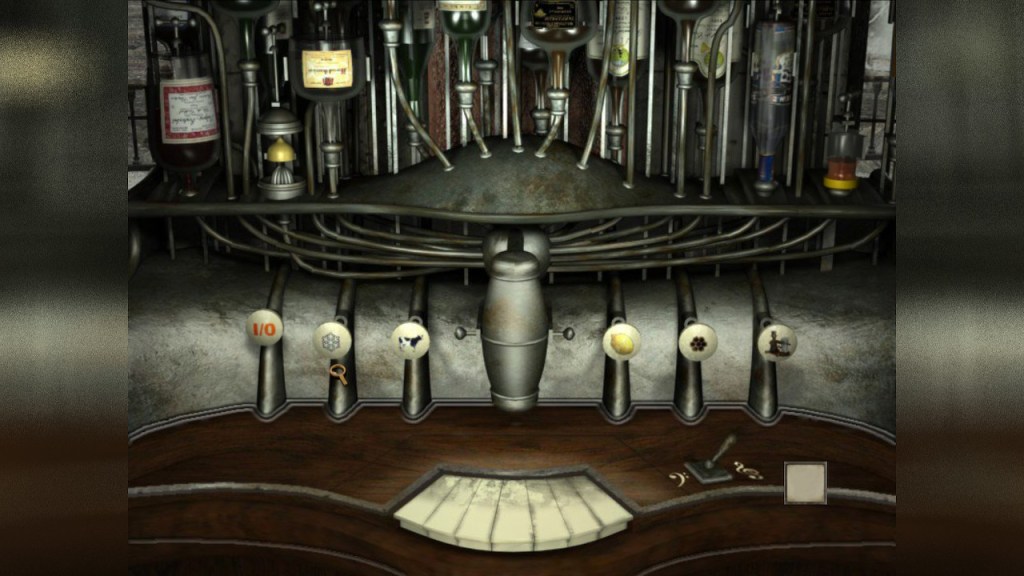
    To solve an assortment of contrived and often absurd puzzles, you’ll be conversing with the small secondary cast, making the odd phone call, collecting notes for clues, collecting key items to use on the appropriate object, and flicking switches and levers on intricate contraptions or control panels.

    To Syberia’s credit, there are only a handful of puzzles per location, and they all feel reasonably logical given the setting – aside from a late-game cocktail mixing contraption. They never require too many steps or items to solve; there are no red herrings; and there are only 2-4 significant NPCs in any location you need to interact with.

    Furthermore, the puzzles and dialogue sequences are usually sequential and scripted, so you’ll never be overwhelmed trying to juggle multiple puzzles and inventory items. Unfortunately, that doesn’t mean Syberia is devoid of classic point-and-click bullshit.

    The first issue, spotting key items within detailed backdrops, can be resolved by enabling icon highlights in the assists menu, but the second issue is inherent to the design of the game – the size of each location and the impact that has on puzzles that force you to backtrack. Unlike many modern point-and-click adventures that feature fewer but denser locations, Syberia aims for an impressive sense of scale, with many of its beautiful backdrops serving as nothing but set-dressing you need to traverse repeatedly.

    In Valadilene, your departure is interrupted when you have to trudge across town to forge a clearance certificate; in Barrockstadt, discovering the location of a rare plant species requires talking to several NPCs scattered across the university grounds repeatedly; in Aralbad, you’ll run up and down an unnecessarily long pier. These moments are compounded by Kate’s sedate pace, inconsistent screen transition triggers, and fixed camera angles that make it easy to mix up your inputs.

    It’s not as bad as it sounds if you know where you’re going, but should you ever get confused, it makes aimless wondering a pain in the arse.

    Going off the rails, on the rails

    So Syberia is not without flaws inherent in the genre but, on balance, I’d still recommend picking it up if you’ve got any interest in the history of point-and-click games; or if you’re willing to forgive a few anachronistic elements for an uplifting narrative that sees Kate grow as a person while journeying through a weird, melancholic, but wondrous world.

    As for which versions to play – PC players who want a classic mouse-driven experience should stick to the GOG or Steam releases, both of which have been updated a few times for modern systems. It’s a tougher choice for console players as I’d only recommend the Nintendo Switch version that sports functional shaders, the ability to switch to the original 4:3 ratio, and even touch-screen play. At a push, the backwards-compatible Xbox 360 version – or PlayStation3 version if you’ve still got it plugged in – are fine but the backdrops and character models are stretched to fit that widescreen aspect ratio, the audio is even more buggy, and many backdrops feel completely static.

    Syberia was played on the Nintendo Switch 1. It is also available on PC, Nintendo Switch 2, Xbox One/Series S/X (back compat), and PS3.