
Tag: Survival-Horror

  • Review: Sorry We’re Closed (Xbox Series)

    Review: Sorry We’re Closed (Xbox Series)

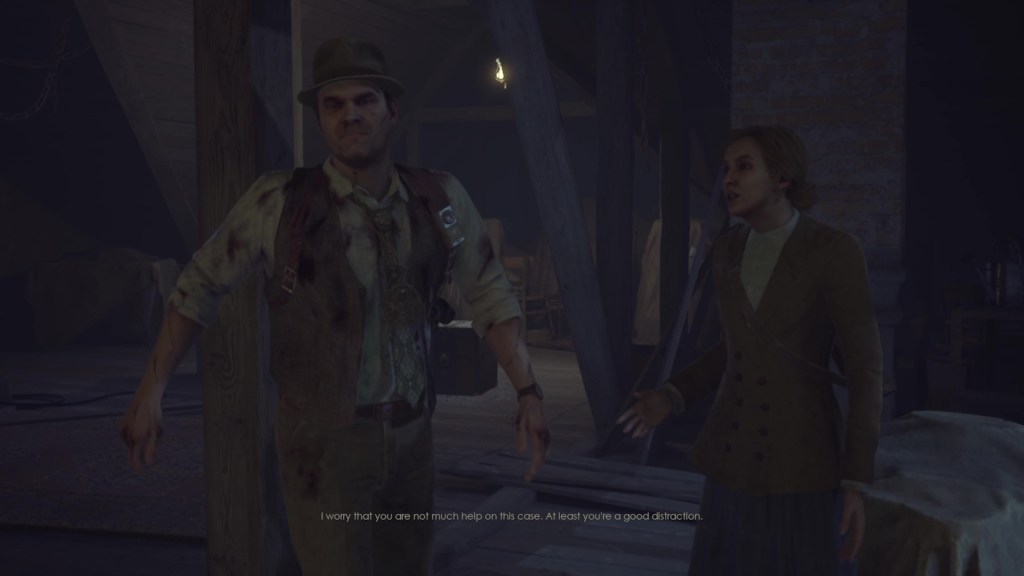
    Sorry We’re Closed is a smart and stylish hybrid of character-driven visual novel, first-person shooting, Silent Hill’s dual-reality horror, Resident Evil’s survival-horror formula, and a bit of that tragicomic weirdness of Deadly Premonition in some of the writing and cutscene direction. It’s not as singularly good as those classics, but it has a satisfying survival-horror framework, visual style, and fantastic original soundtrack that complement a strong narrative thread.

    I found the classic gameplay mechanics engaging enough, but Sorry We’re Closed is primarily caried by the well-paced, choice-heavy story that repurposes a familiar tale of angels and demons as a not-so-subtle allegory for the inherent dangers of falling in love and navigating dysfunctional relationships. As such, half your time is spent simply exploring a small neighbourhood and a demonic hotel, chatting to significant NPCs, and making decisions that affect other relationships and protagonist Michelle’s fate.

    The story begins as Michelle, coasting along in limbo since breaking up with her girlfriend three years prior, finds herself cursed by “The Duchess”: an arch-demon that’s been kidnapping mortals in the hope of finding “love” to fill a void created when she was cast down from the heavens. Several confusing and horrifying encounters later, Michelle finds herself gifted with a literal third eye that allows her peer between realms with a satisfying snap of her fingers.
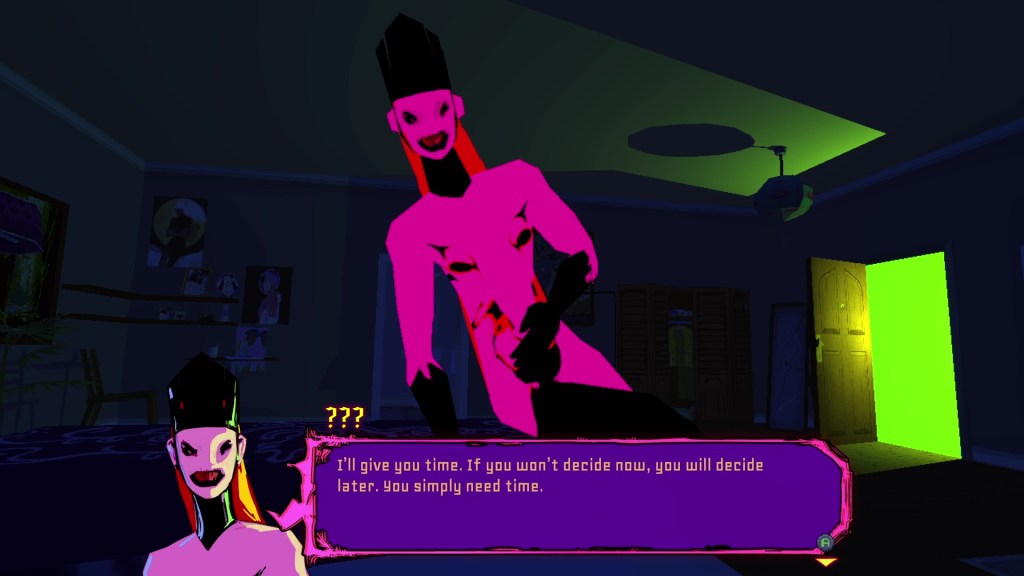
    This ability brings with it the realisation her neighbourhood sits on the edge of the underworld and is home to an assortment of celestials – angels and demons – who masquerade as mortals to socialise with or manipulate those around them.

    Events escalate over the course of four days as the curse takes hold, giving Michelle an opportunity to engage with the small cast repeatedly, get advice, give advice, complete small side quests that usually boil down to finding and delivering items, and face a dozen or so major choices that influence the end-game sequence and available endings. As the narrative is a highlight, I don’t want to spoil too much, but what Sorry We’re Closed does best is present you with characters that seem like classic good or evil archetypes, before delving deeper into their motivations and leaving you conflicted.

    Is it possible to find love without making yourself vulnerable? Can you sustain a relationship without change and sacrifice? Does someone deserve a second chance if their intentions are pure? Do those who’ve done terrible things out of fear still deserve a chance at redemption? Familiar themes that have been tackled in other media, but despite its quirky premise, Sorry We’re Closed’s great writing and relatable cast made it one the best explorations of love and relationships I’ve seen in video game form.
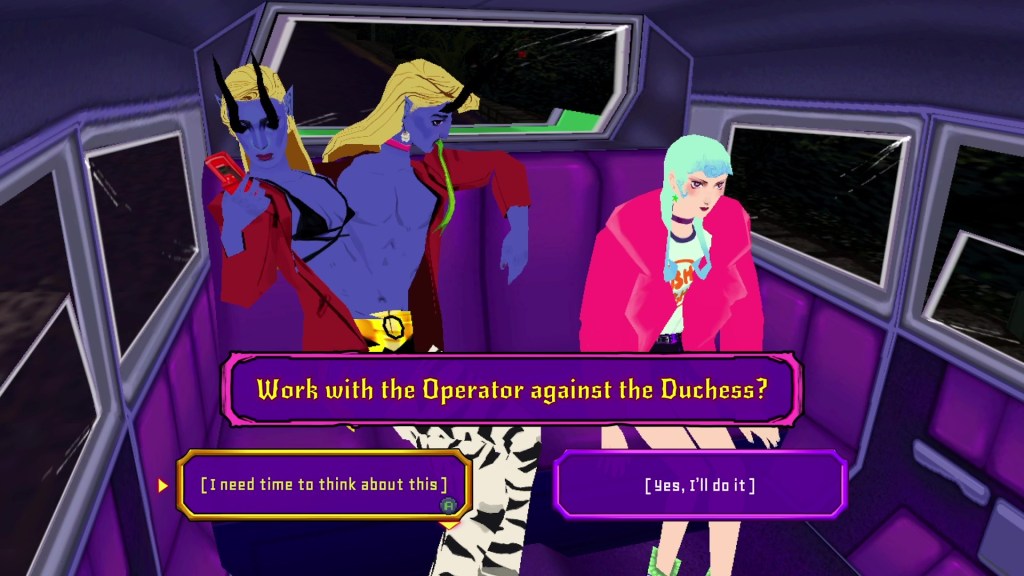
    Of course, as a video game, you expect gameplay. Sorry We’re Closed is no slouch so long as you can accept the back-and-forth flow between dialogue-heavy interludes and traditional survival-horror “dungeons”.

    Each day has Michelle exploring a new location to find a victim of The Duchess – all mortals that refused her advances, descending into madness and monstrous forms that reflect some of the most damaging elements of transactional love or one-sided relationships. Although I enjoyed seeing the consequences of my early choices influence the end-game, these early dungeons were the highlight as a fan of the survival-horror genre.

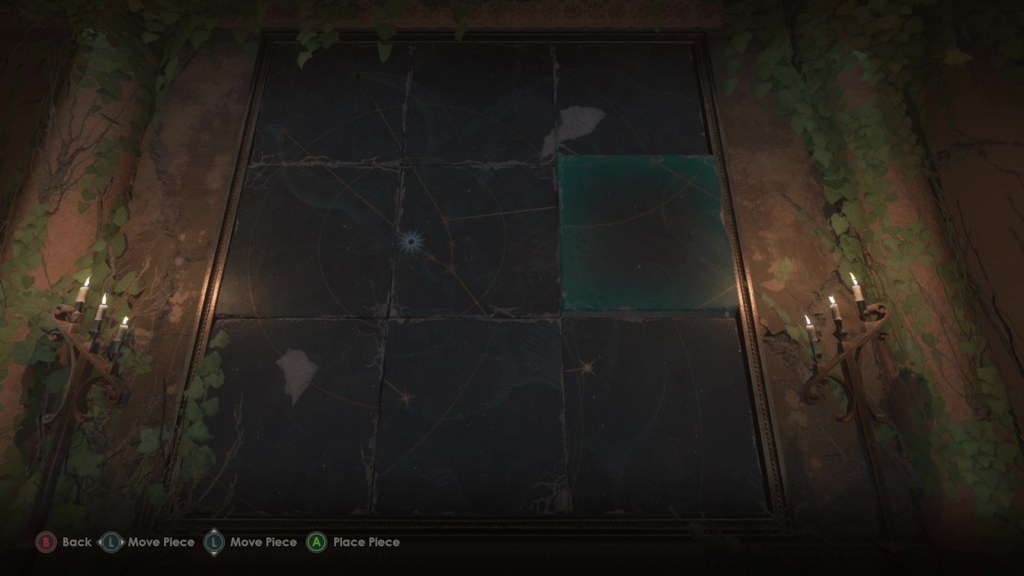
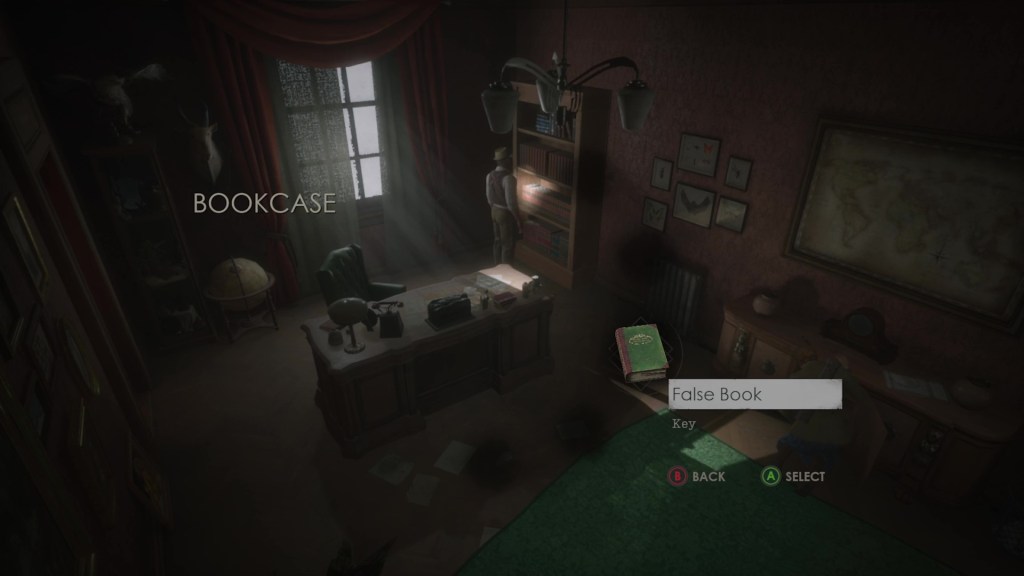
    Each location is visually distinct and creepy; packed with weird encounters, combat, key hunts, and puzzles; and they culminate in an epic boss fight that reinforces the narrative themes through creature design and the accompanying original soundtrack. It often felt like a mix of classic Resident Evil absurdity with a Silent Hill twist thanks to Michelle’s third eye vision.
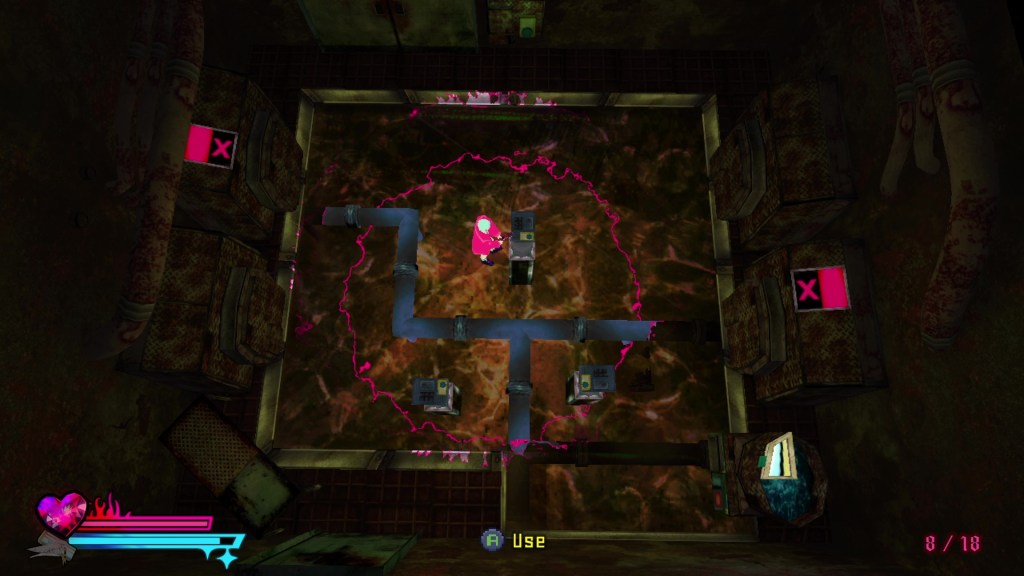
    You explore a grungy underground station, a delipidated aquarium, a surreal crypt, a twisted dream realm, and ascend a corrupted hotel – each new location bringing with it tougher foes, more interesting puzzles, and more lethal traps. You’ll often backtrack through an area once or twice, and the more thoroughly you explore, the more ammunition you’ll have to clear out paths, and the more artefacts you’ll find to fund a small selection of upgrades.

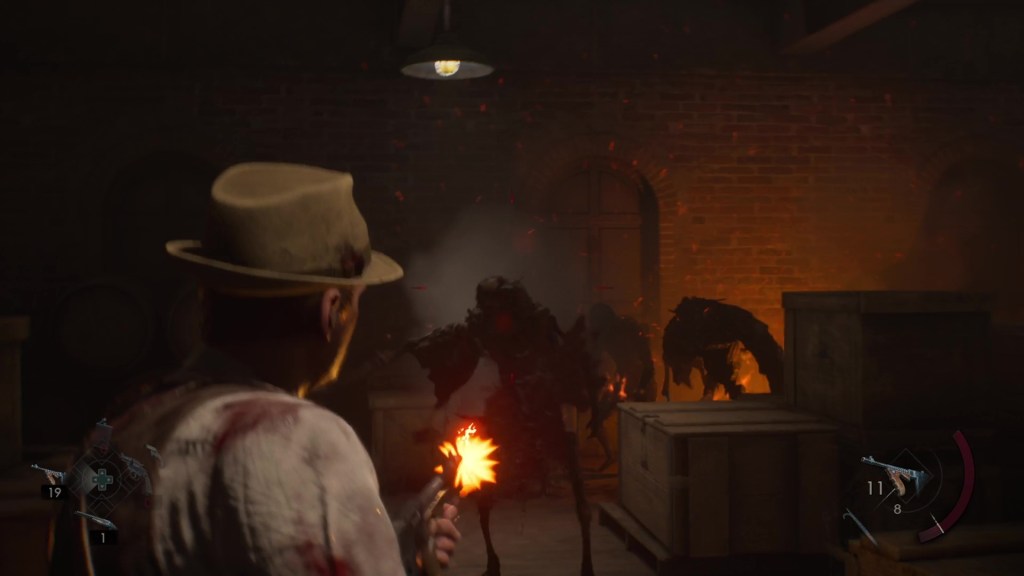
    Sorry We’re Closed switches to a first-person view when aiming, as the focus is on hitting exposed weak points to conserve ammunition, quickly defeat lesser foes, and charge up a “Heartbreaker” shot to deal with tougher demons, bosses, and even a few puzzles. The axe, pistol, and shotgun can fell most enemies at range, but you’ll need to master hitting weak points when Michelle triggers her third eye vision. This grants a second or two of stun to line up a shot, with each successful hit granting another brief stun to line up the next weak point.

    It’s an intense but fun system that rewards racking up combos, especially while dodging the blows from massive boss creatures, but both lining up Michelle before aiming and quickly switching between weak points can feel a little sluggish using a controller.
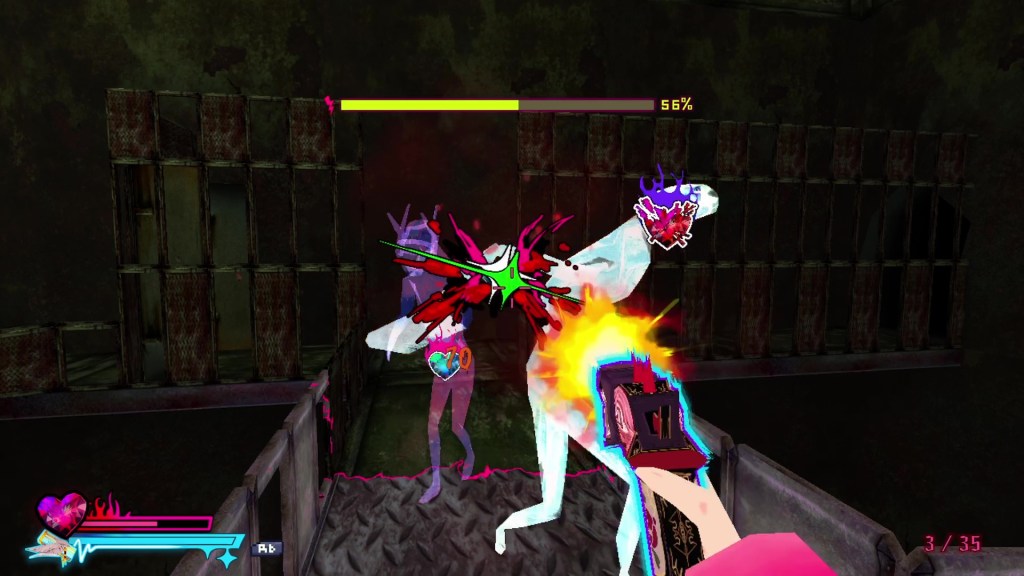
    Minor combat gripes aside, Sorry We’re Closed is easy to recommend to survival-horror fans looking to intersperse the action with a thoughtful player-driven narrative that alters later encounters. If you’re comfortable with the gameplay style or happy to drop the difficulty, I’d also say it might be worth a look for traditional visual novel fans that want a quirky but no less thoughtful exploration of love and relationships.

    Pros:

    • A thoughtful exploration of love and relationships by way of demons and angels
    • A day-by-day narrative structure with plenty of player choice moments
    • Satisfying survival-horror “dungeon” sections and intense boss fights
    • Stylish 32-bit era visuals and a great original soundtrack
    • A new game+ mode to streamline replays for different endings

    Cons:

    • The storytelling would have benefited from voice work
    • Pulling off weak-spot shots can feel inconsistent using a controller

    Score: 8/10

    Sorry We’re Closed was reviewed on Xbox Series S|X using a code provided to gameblur by the publisher. It is also available on PC, Xbox One, PS4/5, and Nintendo Switch.
  • Editorial: Alone in the Dark (2024) is yet another game that committed the unforgivable crime of being good rather than critically acclaimed

    Editorial: Alone in the Dark (2024) is yet another game that committed the unforgivable crime of being good rather than critically acclaimed

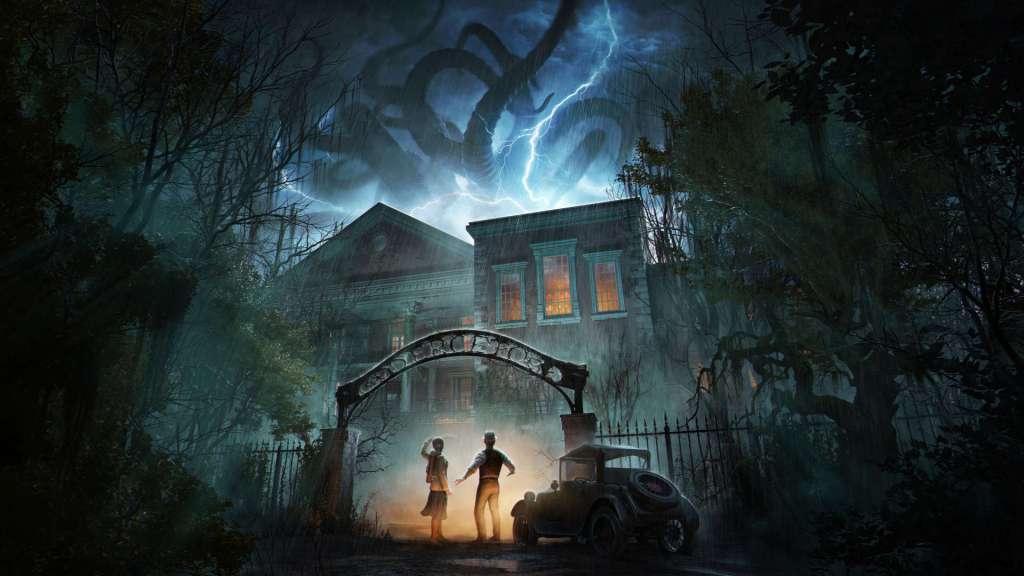
    Alone in the Dark (2024) is not some underappreciated masterpiece, but it is a smart and competently designed reimagining of the influential 1993 original. It plays as a third-person adventure – taking the same approach as Capcom’s Resident Evil 2 and 3 remakes – and transforms a terribly-aged classic into something that straddles the line between narrative-driven, puzzle-oriented “walking sim” and traditional survival-horror: think limited resources, weapon durability, gruesome monsters, and puzzling your through a sprawling mansion full of unorthodox locks.

    Entering a market dominated by recognisable IP it once inspired, replicating the success of recent titles like the Resident Evil 4 remake or Alan Wake 2 was unlikely; however, as a “AA”-style game priced accordingly, it sure as hell didn’t deserve to do so badly the developer Pieces Interactive was shut down a month after its launch.

    Like so many mid-tier and high-profile indie games released over the last decade, Alone in the Dark (2024) committed the unforgivable crime of just being good, rather than critically acclaimed; more often than not a death sentence for IP and sometimes developers in a modern video game market seemingly desperate to gorge itself to death on a never-changing buffet. Yes, the combat is clunky, but I’d argue every other element is good to great.

    The storytelling, the cast, the puzzles, and the thick atmosphere generated by the impressive visuals, ambience, and period-appropriate soundtrack; these are all essential components of a narrative-heavy horror game that takes you far beyond the walls of the Decerto manor. Even the voice work – criticised by those I’ll wager have not played beyond the opening chapter – is a great fit for the protagonists as they begin to question their own sanity and struggle with past trauma. When you throw in accessible gameplay mechanics, brisk narrative pacing, two playable characters with unique encounters, and multiple endings, Alone in the Dark (2024) gets far more right than wrong.

    Unfortunately, that means little in 2024, when talent and quality seem less important than the cosmic alignment of effective marketing, a quiet release period, and luck if a game wants to stand out in a marketplace that’s saturated, risk-averse, and increasingly dominated by the same established IP we’ve seen for decades.

    It’s a shame too that so many reviewers and commentators casually dismiss games like Alone in the Dark (2024) as “not good enough” in contrast to its “AAA” peers, as survival-horror fans are going to deprive themselves of one of the more interesting and stylishly told narratives in the genre. As a remake of sorts, Alone in the Dark (2024) obviously draws on concepts from the original, with ideas from Lovecraft novels and cliches you’d expect from a 1920’s period piece, but it weaves them into a briskly paced narrative with plenty of reveals, red herrings, twists, scares, and cinematic flair.

    Aristocrat Emily Hartwood and grizzled PI Edward Carnby arrive at Decerto Manor looking for her eccentric uncle, who sent a confused letter about a “Dark Man” haunting him and staff engaged in occult rituals. Unlike the original – in which he’s already dead and the abandoned manor is filled with an assortment of creatures and spirits – the remake is set in a dilapidated mental health retreat run by the condescending Dr. Grey and his evasive staff.

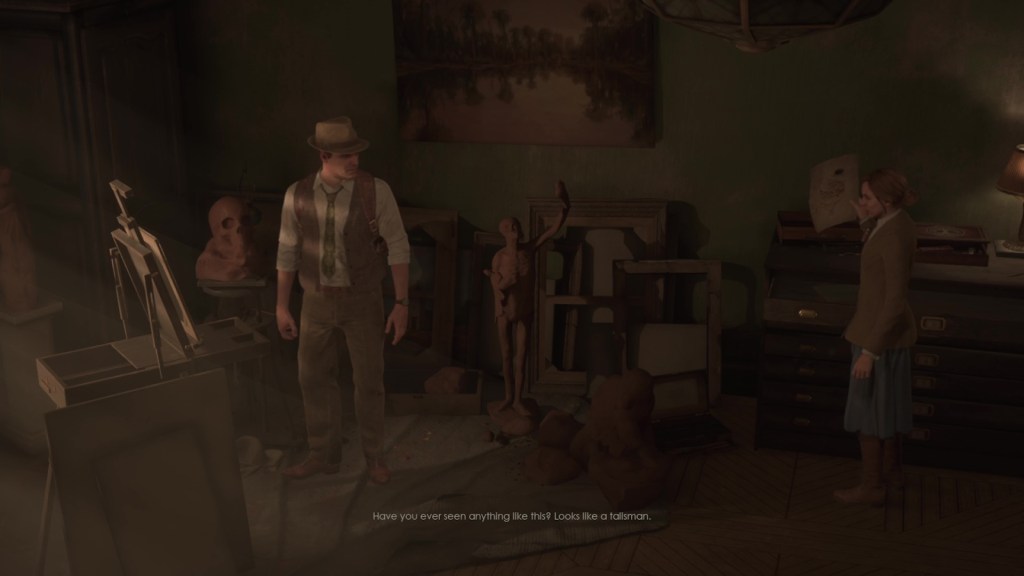
    Jeremy Hartwood has gone missing, some of the patients and staff have died or disappeared under mysterious circumstances, and yet those who remain only seem interested in preparing for a yearly ritual that supposedly has Louisiana Voodoo roots. After skulking through the creepy manor and encountering a few callbacks to the original, a search of Jeremy’s room reveals the designs for a mysterious talisman, before the protagonist you chose is pulled into a nightmarish version of the New Orleans French Quarter based on Jeremy’s twisted memories and wild imagination.

    It’s a slow but unsettling opening that suddenly changes pace and throws you in the deep end, setting the stage for how subsequent chapters will play out as you explore every inch of the manor and increasingly fantastical and often beautiful dreamscapes. The dual-protagonist setup is designed for replays, despite functioning more like the original Resident Evil than Resident Evil 2’s connected A/B scenarios. There is plenty of overlap when it comes to puzzles and progression, but the focus of the story changes and, until the default finale, you’re always left wondering if anything they experience is real.

    Emily sinks into melancholy as she deals with Dr. Grey’s insinuations and tries to discover if the “Dark Man” man haunting her uncle is an actual curse, or just the manifestation of her family’s mental health history. In contrast, Carnby spends more time investigating the cult-like activities of the staff, while becoming increasingly manic in his attempt to save Jeremy from an occult contract – seemingly to make up for past failings.

    During the opening chapters, with identical puzzles and combat scenarios, the differences between the Emily and Carnby feel limited to when and where they encounter the secondary cast, and the nature of their interactions influenced by their personality, gender, and history. Whoever you’re not playing as becomes a foil for the lead, seemingly oblivious to the supernatural elements and often a source of humour when their paths converge. The second of five chapters gives you a little freedom as to the path you take through the manor, but the payoff is the lengthy fourth chapter that lets you tackle three objectives in any order and features a unique section for each protagonist that delves into their suppressed memories.

    If you want to get the full picture – or one of three secret endings based on collectibles and optional interactions – two playthroughs are essential, and all the more enjoyable thanks to a new-game-plus update that adds in new encounters and some unexpected scares.

    What I’m getting at is don’t leave games like Alone in the Dark (2024) languishing in the dark if you’re a fan of the genre – just because some circle-jerk internet chorus believes video games are worth little unless they attain a poorly-defined and often inconsistent “critically acclaimed” status. If this sort of hit-or-fail-terribly mentality continues, we’ll end up in an era of high-production value, low-risk, “AAA” homogeneity – a feat many large publishers have already attained with their remarkably expensive, polished, and heavily-marketed releases that are forgotten within a month. There’s still plenty of value in lower-budget and appropriately priced games that are just good, or hell, just interesting, especially when the quality of entertainment is so subjective anyway.

    Alone in the Dark (2024) was played on Xbox Series S|X. It’s also available on PC and PS5.

  • Review: CONSCRIPT (Nintendo Switch)

    Review: CONSCRIPT (Nintendo Switch)

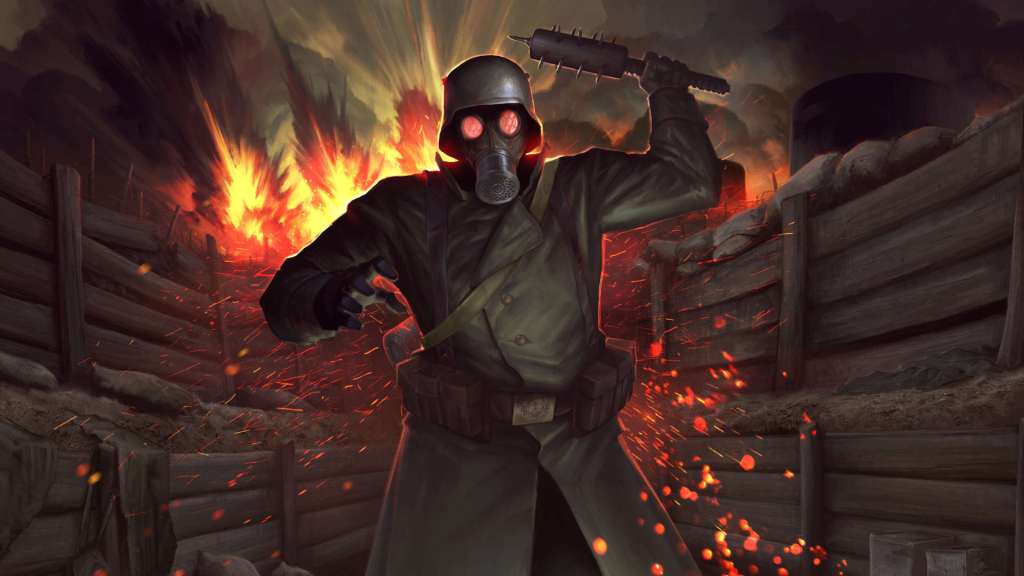
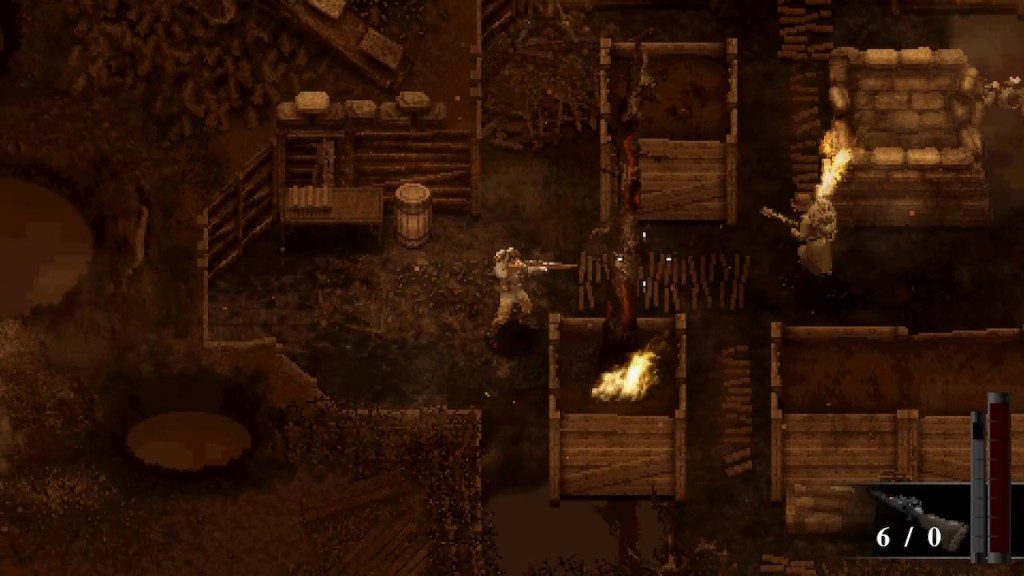
    CONSCRIPT is a gruelling reminder that war is hell and being too committed to old-school design is always a risk. Even as a fan of classic survival-horror, playing through CONSCRIPT on the default settings – the third of four difficulties, no checkpoint saves, no infinite saves – made me realise just how meticulously balanced the best games in the genre are, and how fine a line there is between challenge and frustration. That said, if you stick with it (or use the assists and abandon the unlikely prospect of an initial S-rank run), you’ll find CONSCRIPT a worthy and terrifying addition to the genre; one that combines elements of classic Resident Evil and Silent Hill with the more recent Signalis and Amnesia: The Bunker.

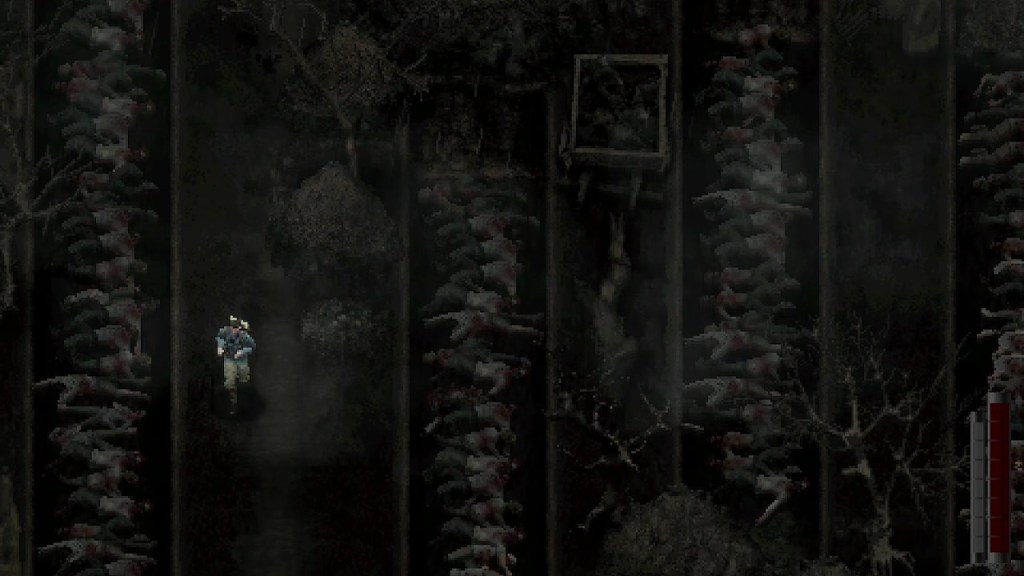
    You could be cynical and accuse CONSCRIPT of being too derivative, but it’s well-designed, polished, and almost shows reverence for games it draws inspiration from – rather than blatantly highlighting those connections to make up for the lack of a unique identity. With a lot of emphasis placed on the sombre tone, your actions when faced with a seemingly futile situation, and multiple endings, it’s a surprisingly low-key but relentless game that felt most similar to Silent Hill 2. A brooding atmosphere, gorgeously gruesome pixel art, unsettling ambience, and minimal spectacle all ensure the focus remains on a vulnerable protagonist trying to survive a hellish situation, while enduring trauma that forces them to question their own values, courage, and sanity.

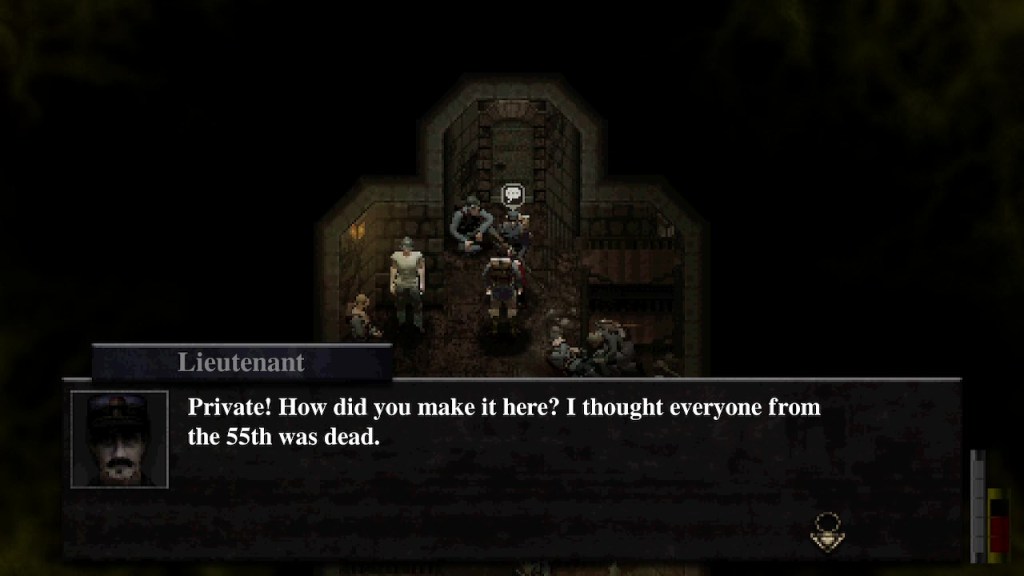
    Over the course of six chapters – with brief interludes that reveal events leading up to his conscription – French soldier André finds himself part off one of the last major German offensives during the infamous Battle of Verdun; a 10-month period during which border forts, trench lines, and towns were changing hands almost daily, with staggering losses on both sides. His overarching goal is to find his injured brother Pierre, but video game logic dictates nothing can be straightforward, even less so in the survival-horror genre where every task is a succession of contrivances. Over the course of several days, he’ll witness the French frontline collapse; he’ll serve as a runner to gather reinforcements; he’ll retake a fort and storm no-man’s land to capture German lines; and explore a ruined town to try find a way into another besieged fort his brother was assigned to.

    Intentional or not, CONSCRIPT is a timely reminder of the innumerable lives destroyed through warmongering, with fallen Germans as likely to drop a family photo as they are ammunition. From a purely gameplay perspective, it’s mechanically familiar and rewarding. You explore room by room for key items and supplies, with little direct guidance, praying that you stumble upon a save room and item box to manage your limited inventory. You decide on whether to expend ammunition to clear safe routes, leg it or roll past enemies while hoping not to take too much damage, or engage in some rudimentary stealth that’ll test your patience and likely double your playtime. There’s a mysterious merchant that’ll trade cigarettes and upgrade your weapons with gun parts, and you can assist rare NPCs who reward you with consumables to boost health and stamina. Aside from the fluid twin-stick style controls and light progression elements, it all feels incredibly old-school and your first playthrough is going to be dominated by blind exploration and excessive backtracking. However, the longer you play, the easier it is to appreciate the depth of the mechanics and how they both reward and punish different playstyles.

    As an example, upgrading basic weapons and scavenging, crafting, or trading for ammunition will usually keep you ahead of the curve if you want to dispatch every German soldier you find; however, without patching damaged sections of barbed wire, more German troops can appear. More problematic is how fresh corpses results in rat swarms that can inflict a poison status that reduces your total health. For aggressive players, this makes it all but mandatory to burn bodies and toss grenades into rat nests in your most frequented areas. On the other hand, crude stealth, running like hell, and using rare opportunities to sit out battles make it easier to preserve supplies and avoid the rat threat, but it becomes a lot harder to complete several objectives and avoid taking damage – especially when dealing with firearm-wielding foes. Naturally, how you play, who you help, and how thoroughly you explore for clues and collectible items can dictate which of four endings you receive (with more hopeful and depressing variants available too).

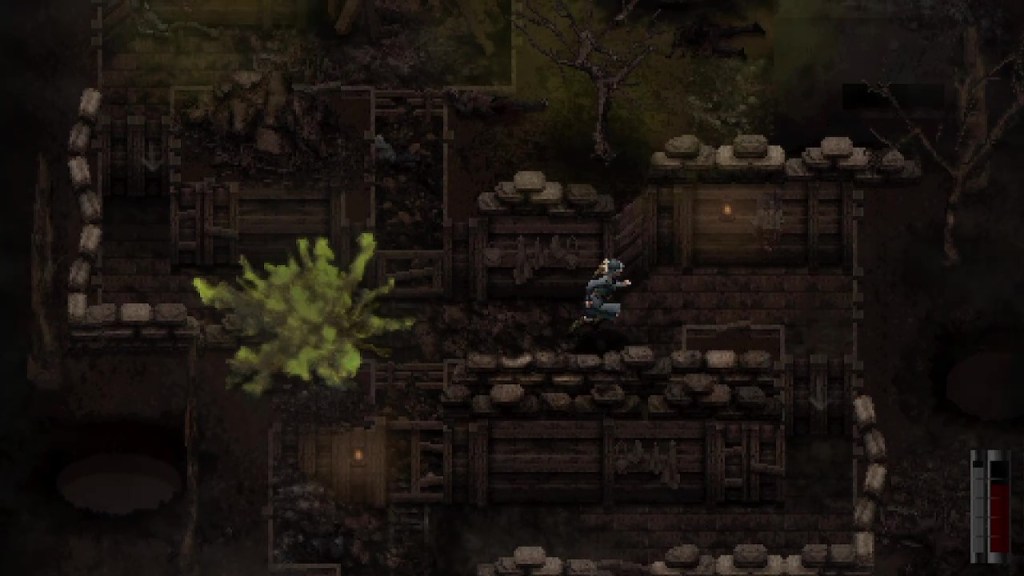
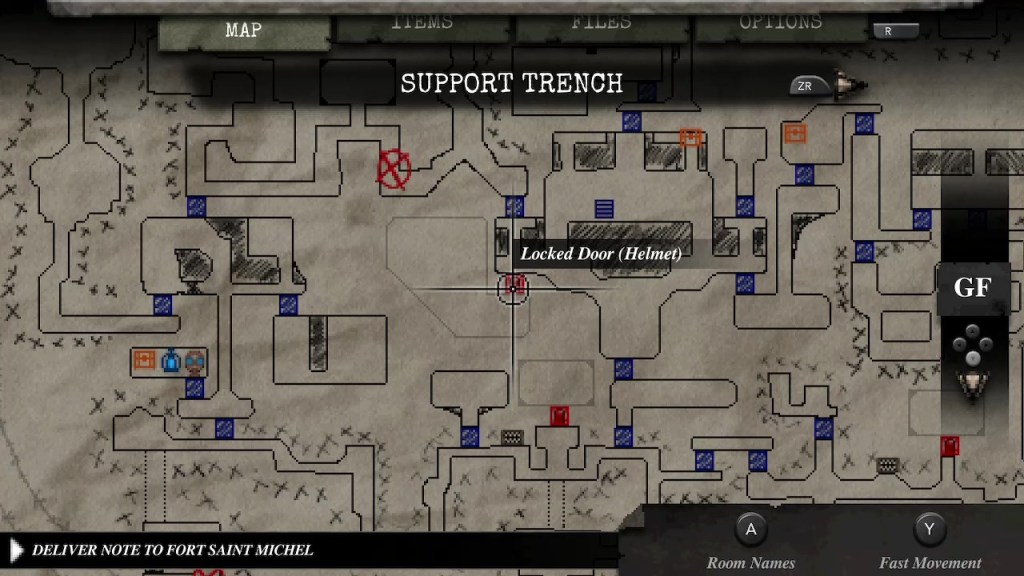
    It all makes for a familiar but satisfying take on the genre – but CONSCRIPT has one notable flaw: questionable map layouts that makes backtracking frustrating, even if you’ve cleared a safe path through them. You traverse dozens of interconnected maps that encompass the ruined outskirts of St. Michel in the south, the frontline trenches and a fort near Souville, and the besieged Fort Vaux and adjacent town to the north. Each chapter tends to focus on thoroughly exploring one area – often above and below ground – and, initially, there’s a satisfying rhythm to finding key items and opening new routes back to rare safe rooms. However, from the third chapter onwards, you encounter more maps with winding routes between exits, large areas with few shortcuts, and no obvious reason why it should be that way other than to drag out the experience.

    Of course, this has always been a potential issue in classic survival-horror games, but CONSCRIPT features larger outdoor spaces that take far longer to traverse. It makes that contrived structure of key hunts and convoluted puzzles that much more obvious, illogical, and just annoying at times. As a consequence, even fans of the genre might find parts of CONSCRIPT tedious – but I would recommend you stick with it as it gets far more right than wrong. Also, despite the serious content matter and oppressively grim tone, it’s a rare treat to play a survival horror games devoid of zombies and secret laboratories.

    Pros:

    • Classic survival-horror gameplay
    • Evocative pixel-art visuals and moody ambience
    • An unusual setting for the genre
    • A relentlessly grim but topical reminder of war’s human cost

    Cons:

    • Map layouts can make puzzling and backtracking frustrating in some chapters

    Score: 8/10

    CONSCRIPT was reviewed on Nintendo Switch using a code provided to gameblur by the publisher. It is also available on PC, Xbox One/Series S|X, and PS4/5.