
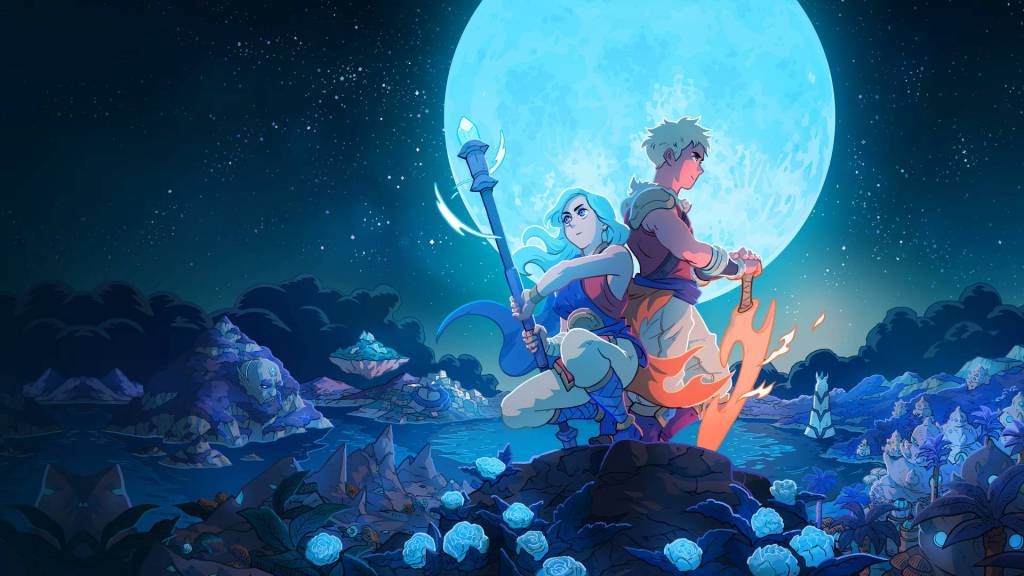
With Baldur’s Gate on PC and Final Fantasy VII on the PS1 as my formative RPG experiences, I’ve never had a strong affinity for 8- or 16-bit-era JRPGs. With that said, having sunk only a handful of hours into each the earlier Final Fantasy games, Secret of Mana, and Chrono Trigger, the retro-inspired Sea of Stars from Sabotage Studio still felt authentic to me in all the “right” ways. It recreates the look, sound, and storytelling techniques of that classic era, but modernises the gameplay to ditch the more tedious elements of the genre.
With the inspirations for many character archetypes and narrative themes so obvious, one criticism I could level at Sea of Stars is that it rarely surprised me outside of a handful of plot twists. To its credit, that never bothered me as much as I thought it would. It felt comfortingly familiar, with a gameplay loop and predictable rhythm that moved quickly enough to keep me engaged. Brisk, concise dialogue and streamlined, puzzle-centric dungeons ensure the game has a constant sense of forward momentum (at least up to the point you decide to tackle the end-game tasks to trigger the “true ending”).
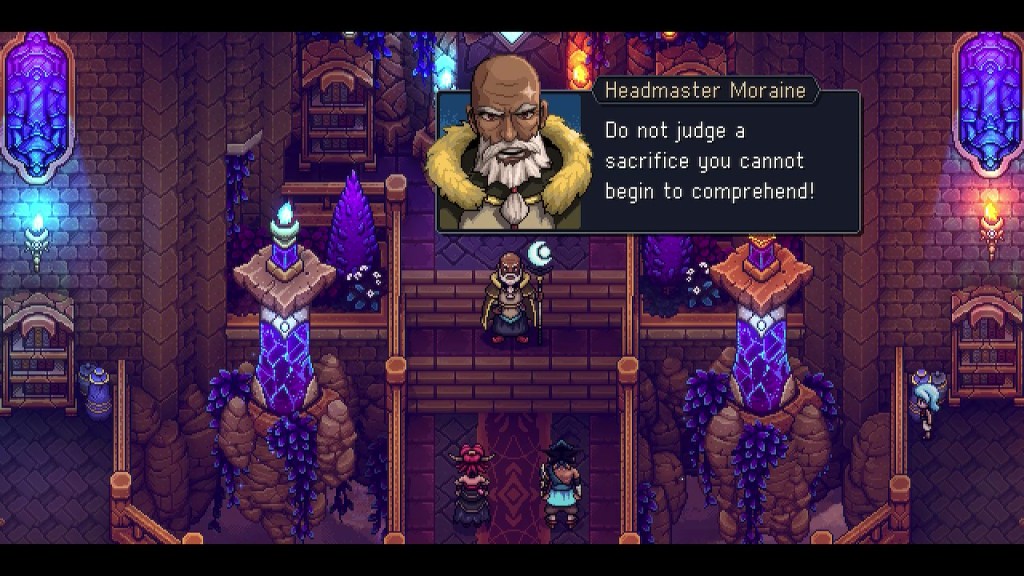
Familiar JRPG tropes include an altruistic and stoic pair of protagonists with predetermined destinies, their stalwart and enthusiastic friend who demonstrates magical powers alone can’t save the world, and an assortment of allies that range from jovial pirates to ancient alchemists and their creations. There’s lingering evil that still plagues the world; a powerful mentor destined to be revealed as flawed; a shocking betrayal to raise questions about the prophecy; a resurgent evil that descends from the moon; and even the concept of multiverses for good measure. And that’s all revealed within the first third of the game, maybe 10ish hours’ worth, which felt gloriously brisk in contrast to the bloat that infects modern JRPGs.
The world design and basic gameplay loop also lean heavily into some classic designs. You have diverse but illogically compact worlds to explore – by foot, ship, or through the air – presented as a stylised overworld map connecting settlements and dungeons. Story dungeon progression is controlled by access to traversal or puzzle abilities – think manipulating time-of-day, a grappling hook, or water-breathing – with hidden chests tucked away in previous locations becoming accessible too. Every dungeon has two or three doors that, in turn, require two or three keys or switches to open. Each dungeon also has a handful of combat encounters and a boss to defeat at the end.
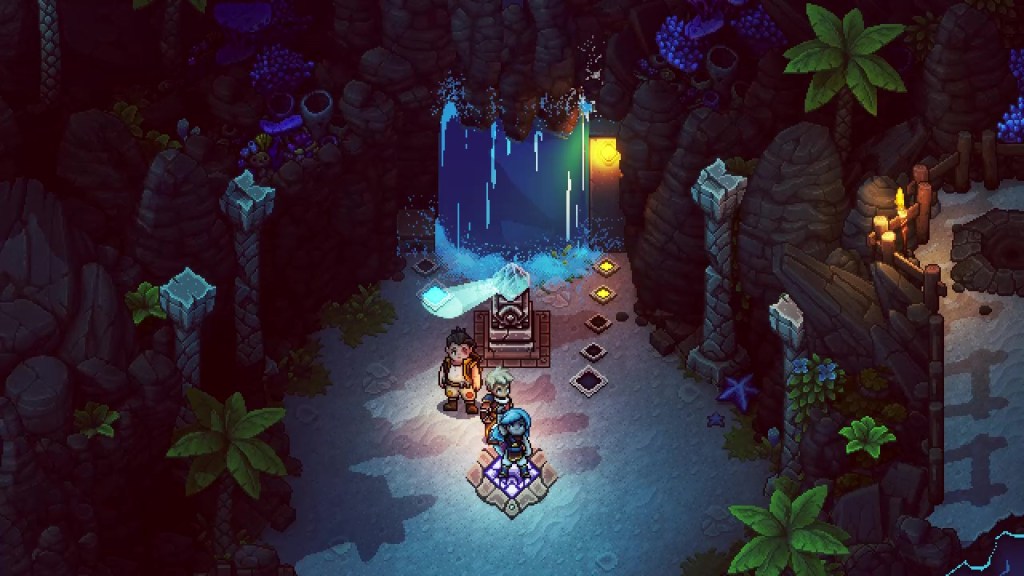
You could apply those descriptions to any number of 8- or 16-bit era JRPGs, but Sea of Stars uses modern flourishes and increased combat depth to create a game that feels more action-oriented and respectful of your time. Exploring puzzle-dungeons is a JRPG tradition, but Sea of Stars features more vertical locations with fantastic jumping and climbing animations, while abilities like the wind burst and grapple are manually activated, making the simple act of pushing around blocks or leaping gaps feels more hands-on. You’re still railroaded down restrictive paths towards puzzle objects or battles, but exploration and traversal look and feel more exciting.
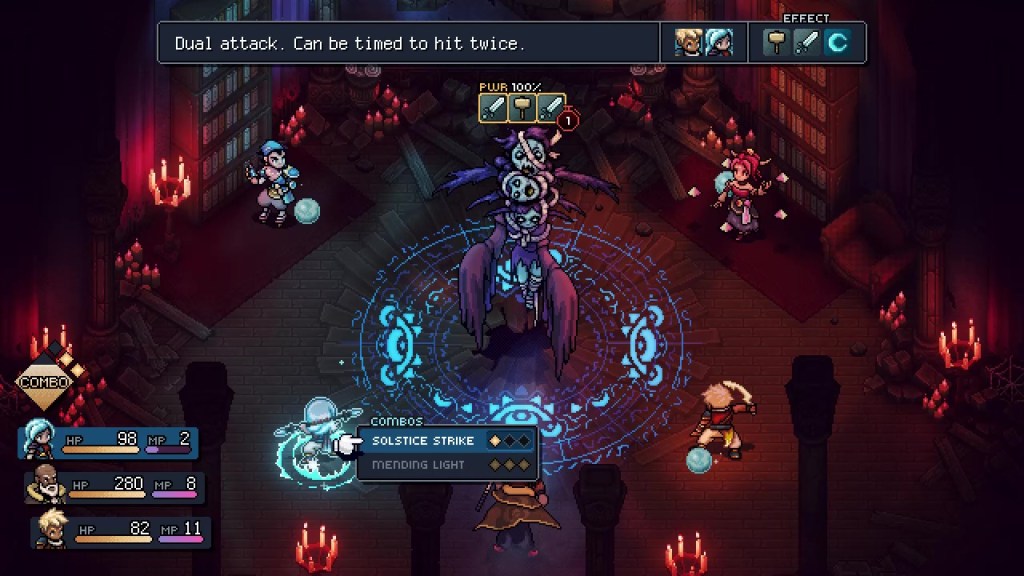
Similarly, the turn-based combat has plenty of complexity but also rewards timing-based actions to increase damage output or block a chunk of incoming damage. Visible turn markers and a menu-driven system for basic attacks, skills, and items are accounted for, but Sea of Stars favours fewer, more involved battles over grinding basic mobs to stay ahead of an escalating difficulty curve. As an example, basic attacks become progressively less useful for dealing damage, but they restore mana and release “live mana” that your party can absorb to charge attacks with elemental damage or enhance offensive and defensive skills – both essential for damaging tougher foes with physical and magical resistances or recovering the parties’ health and mana quickly.
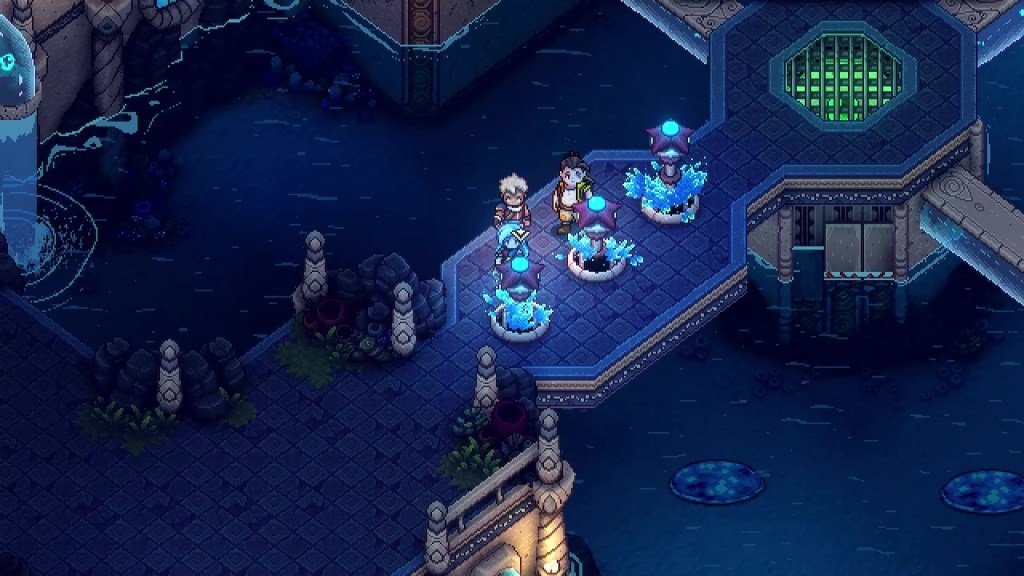
Another interesting addition is the “spell lock” mechanic – an initially hidden grid of symbols representing damage types that appear above a foe preparing a spell. Using character skills or combos that involve two party members, breaking these spell locks within the turn limit becomes essential to disrupting powerful attacks that often damage the entire party. It might sound complicated and intimidating, but Sea of Stars is still accessible. Powerful secret gear you miss in one area can often be bought from storekeepers later, while the levelling system gives you a bit of control by picking one attribute to boost more than others at each level-up. Lastly, you can find, buy, and enable relics that function as assists – think bonus health, boosted experience gain, or the ability to instantly see spell lock combination – but also offer options to increase the combat difficulty.
The last point to touch on is the incredible presentation that plays on nostalgia as effectively as Square Enix’s HD-2D remakes. At first glance, you might pass off static screenshots as Chrono Trigger, but Sea of Stars looks stunning in motion (especially on a Nintendo Switch OLED screen). The isometric style and parallax backgrounds provide depth; looping animations for water, plants, and animals give the impression of life; weather and other atmospheric effects look great; and the time-of-day mechanic coupled with dynamic lighting and simulated reflections set the mood. Character sprites, animations, and spell effects during battles and in-game cutscenes are less impressive, but the animated cutscenes used for key story beats look great while still feeling authentic to the era its emulating. The music also deserves praise, with short but catchy tracks for each location and cutscene that further enhance the mood.
To wrap up, Sea of Stars is a smart nostalgia-driven JRPG for an audience that no longer has the time they once had for the genre. Complex modern systems and assists are obscured by a veneer of nostalgia-inducing presentation, providing an experience that feels like a late 16-bit era JRPG – just without the grind those games often require. It’s not always perfect and that predictable rhythm – find settlement, get quest, clear dungeon, repeat – can grow tiring towards the end, but it still offers better pacing and variety than most of its inspirations. On one hand, Sea of Stars is exactly what I want from nostalgia-driven throwbacks; on the other, it was a wearying reminder that I’ve been playing video games for far too long.
Sea of Stars was played on Nintendo Switch using a code provided to gameblur by the publisher. It is also available on PC, Xbox One/Series S|X, PS4/5, and Nintendo Switch 2.
 gameblur-v2.0