Tag: Review

  • Review: Frostpunk – Complete Edition (Xbox Series)

    Review: Frostpunk – Complete Edition (Xbox Series)

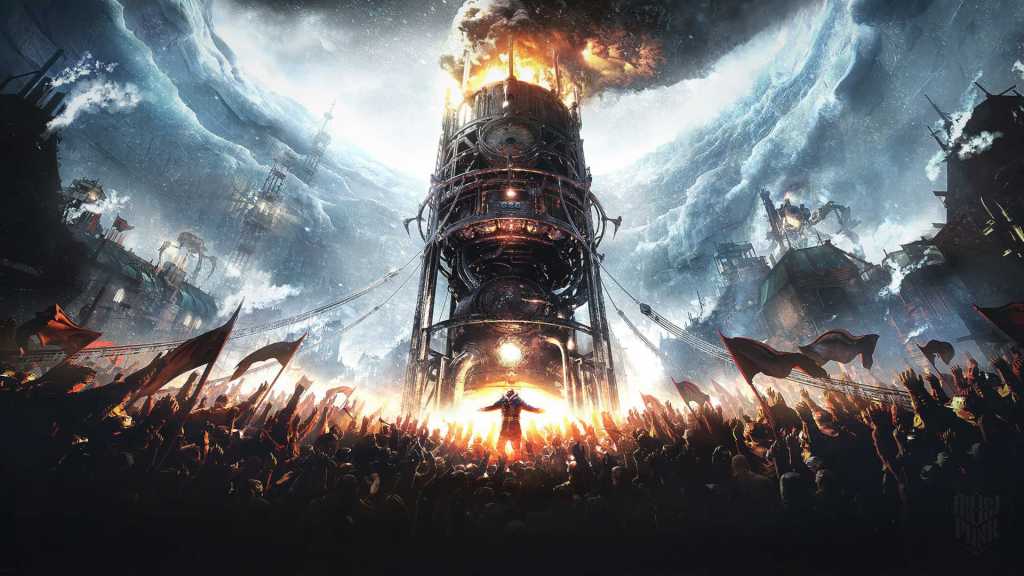
    At long last, console gamers can get their hands on the “Complete Edition” of Frostpunk – an engaging, mechanically deep, and often stress-inducing steampunk city-builder with a focus on surviving the elements. Make no mistake, the original console release of Frostpunk is still a great game, but the expansions introduce some much-needed variety to the basic formula. These expansions change how you think about the geometry of your city, introduce new victory conditions, and shift the focus from self-reliance to trading with other settlements.

    Despite only offering three introductory cutscenes (one for each of the major story scenarios), Frostpunk feels far more narrative-driven than many games in the genre. Each scenario is, in essence, an opportunity to craft your own story. There are technologies to research, laws to pass, encounters in the surrounding “Frostlands”, and plenty of player-choice in how you’ll deal with the demands of your people, refugees, and other settlements. This all comes together at the end of a scenario – if you survive – with a montage that provides a timelapse of your developing city while recounting your key decisions.
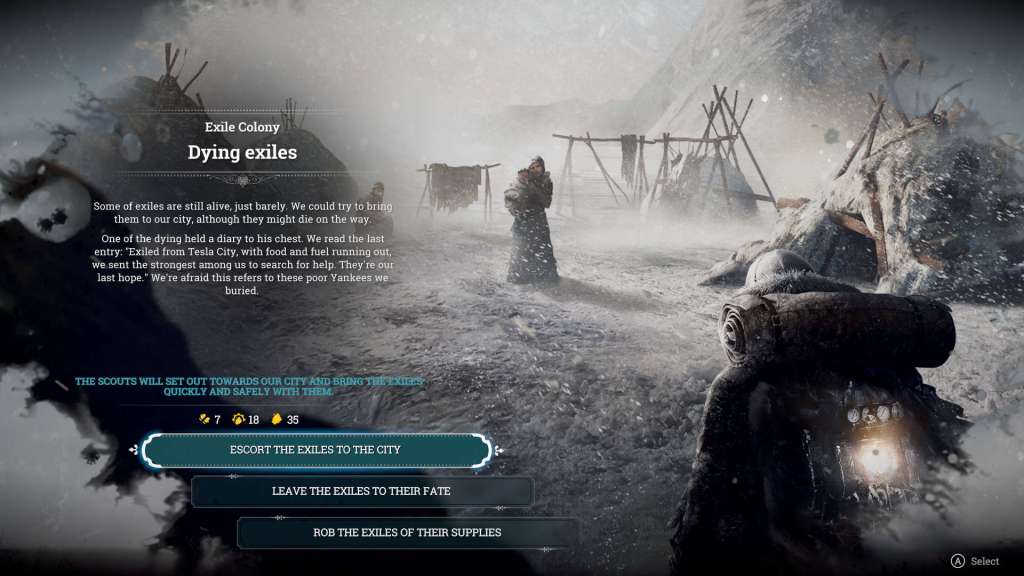
    Did you establish faith to drive your people forward in the face of hardships or to crush dissent? Did you care for the critically ill and provide burials for the dead, or did you triage mercilessly and eat the corpses when the great storm arrived? Did you care for and educate children, or did you put them to work collecting coal in freezing temperatures? Although all choices offer a mechanically advantageous outcome and shift the numbers around, the narrative context adds weight to your decisions.

    Of course, in any survival game, the complexity of the underlying systems is what dictates its success or failure. The narrative context is a nice touch, but Frostpunk would hold up just fine without them thanks to the myriad of systems you’ll need to consider and balance if you want your city to survive. Heat, food, and shelter are your primary concern. If you can get the basic layout of your city and resource-gathering operations in order quickly, a contented populace and victory are inevitable. Naturally, nothing in the frozen north is that easy.
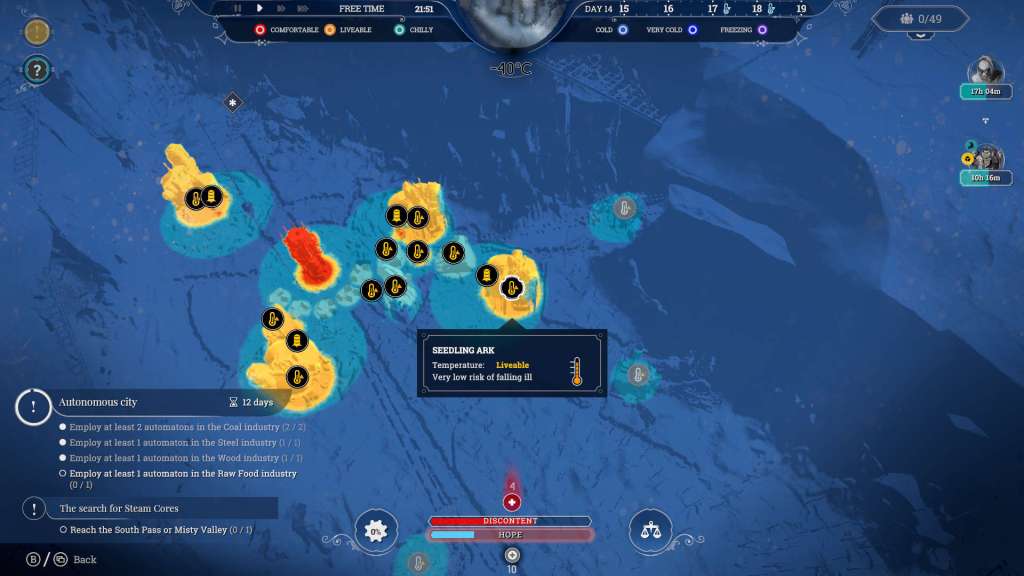
    In most scenarios, life revolves around your coal-consuming generator and the warmth it provides (there’s no nuclear power in this alternate history). An optimal city expands radially, ensuring subsequent upgrades to the generator keep an ever-larger area warm. However, the more efficient your generator, the more coal you burn through. The more coal you need, the more coal-producing industries you need. The more industries you have, the more citizens you need to employ. The more citizens you have, the more housing, food, and medical care you need to provide.

    A new player is going to quickly find themselves overwhelmed, even if they set all the customisable difficulty toggles to easy. The urge to expand, recruit survivors, and generate more resources is alluring, but your citizens have numerous needs that need sustaining. Fail to keep them hopeful, or let discontent swell, and you’ll find yourself exiled to the Frostlands. On the other hand, researching and constructing expensive automatons gives you a 24-hour workforce that never gets hungry, never falls ill in cold temperatures, and doesn’t object to your ruling style. Both are viable paths to victory, but both require careful allocations of resources.
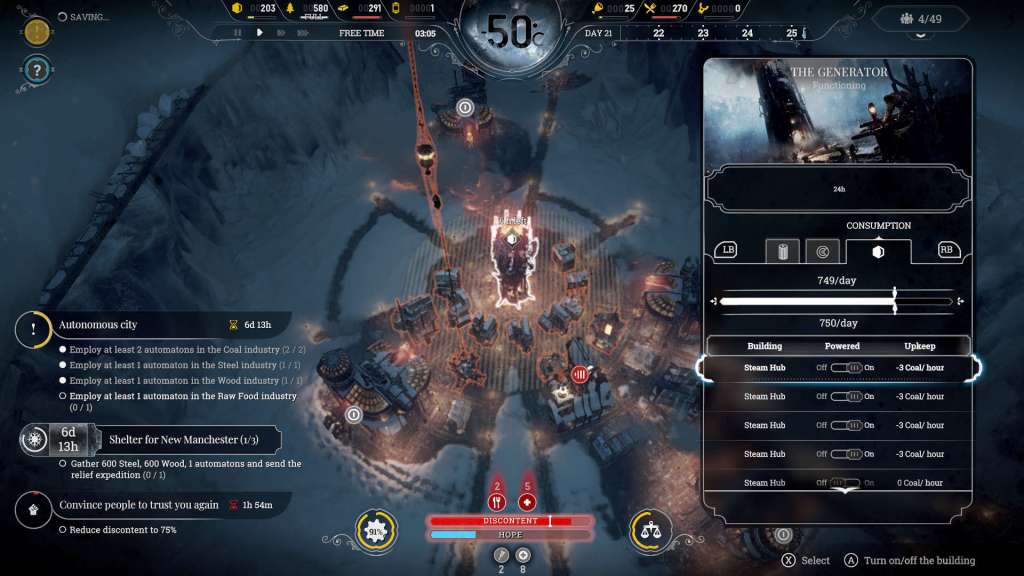
    Of course, building up your city is only half the story. If you’ve researched the right technology, most starting locations offer an infinite source of coal, wood, and steel. However, it’s rarely enough to sustain a large population and decreasing temperatures (which plummet to -100° Celsius during storms), while simultaneously dealing with frequent demands to remedy housing, heating, and medical issues. There are two additional ways to keep your population hopeful and reduce discontent: passing new laws and exploring the Frostlands with scouts.

    The Book of Laws typically offers two variants of any provided law, one callous but effective, the other compassionate with fringe benefits. There are basic “Adaptation” laws, which include choosing between burials or corpse storage (for later “use”), establishing care homes or allowing radical surgical treatments, and putting children to work or educating them. As you advance, you unlock “Purpose” laws – allowing you to chose between Order and Faith. Naturally, the end-game for both these branches of law is authoritarianism, but Order focuses on security and suppressing discontent, whereas Faith focuses on maintaining the hopefulness of your population.
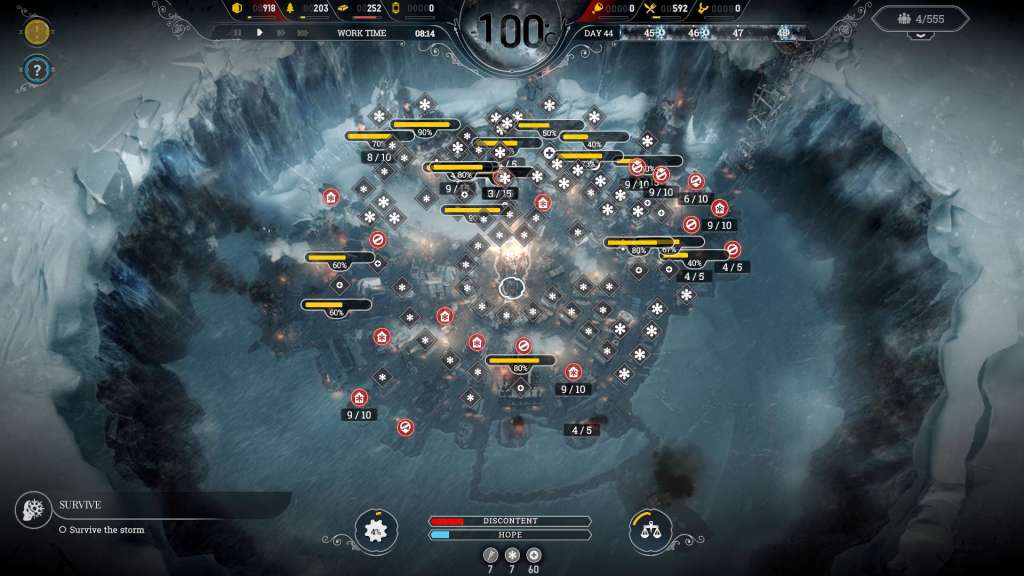
    Sending scouts into the Frostlands is another way to influence your city, bringing people hopeful (or depressing) news and rare “steam cores” required for efficient high-tier buildings. The system is simple and requires little micromanagement, but distances and travel time in the Frostlands are always an issue. Nearby locations can reveal survivors, supplies, or the fate of other generator cities (and almost always reveal two or more new locations to visit). You’ll want to keep your scout teams active all the time, as their discoveries – especially resource caches – can provide a means to get out of trouble fast.

    Ultimately, Frostpunk is a game about learning the ropes, one step at a time. Failure – and you will fail – is an opportunity to take what you’ve learned, apply it to your next attempt, get something else wrong, learn from that experience, and eventually master each mechanic on your way to completing a scenario. You can save at any time but Frostpunk is a game in which failures can be days in the making. Thankfully, scenarios – aside from the “endless” ones – are only a few hours long, so you’ll rarely feel frustrated at starting anew.
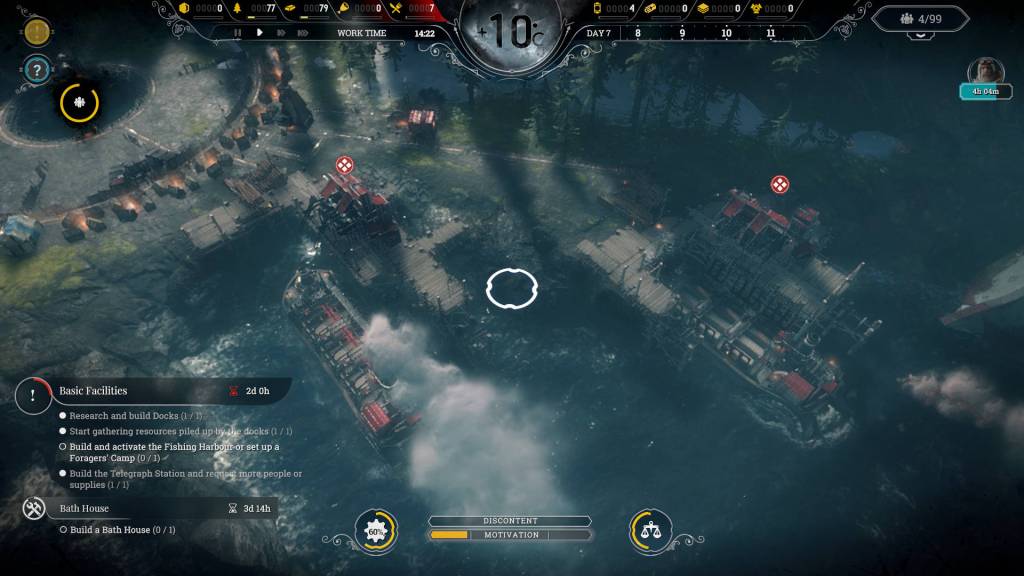
    Like many survival games, Frostpunk suffers from gameplay becoming rote once you’ve established an optimised build order and this is why the console Complete Edition is a great choice (or the expansion pass if you’ve already got the base game). “The Rifts” expansion – along with several of the “endless” scenarios – spices up the city-building element by forcing you to expand to adjacent land using bridges. The perfectly circular city structure and comforting glow of the generator are no longer guaranteed.

    “The Last Autumn”, which serves as a prequel during the early stages of global cooling, tasks you with constructing a generator. Temperatures are mild, illness rare, and resources abundant, so maintaining the motivation of your cynical workforce and hitting construction deadlines becomes the new challenge. To manage this feat, you need to find a careful balance of new Administration and Labour laws. “On The Edge” serves as a sequel to events in the main campaign, tasking you with the management of a new outpost – sans generator – entirely dependent on “New London” for food supplies and establishing laws. However, New London quickly becomes antagonistic with their demands, and you’re given the choice to scout the Frostlands and establish supply lines with other settlements or try appeasing their unfair demands.
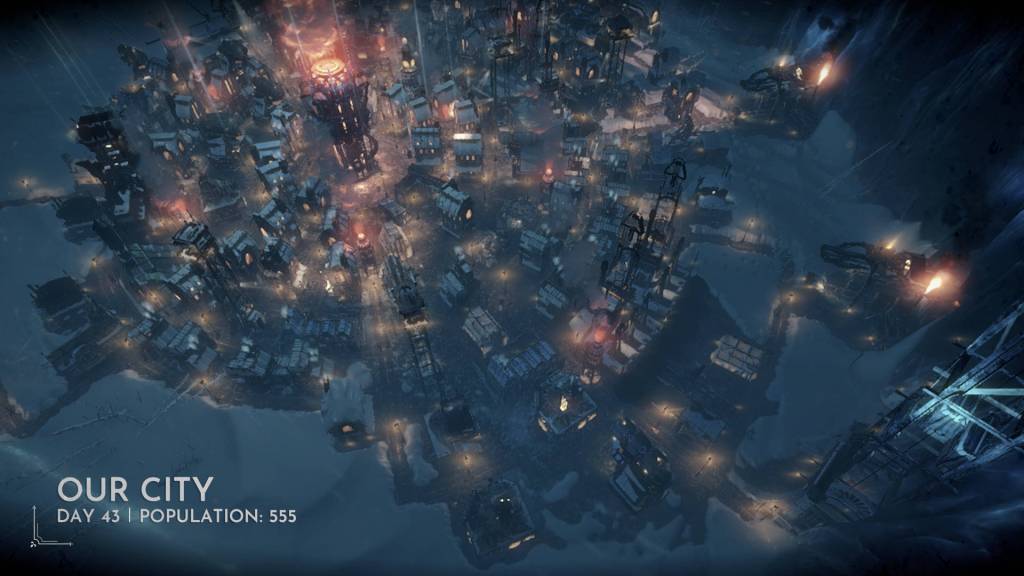
    One slight disappointment is that Frostpunk is yet to receive an official next-gen upgrade. Make no mistake, it can still look great and feel incredibly atmospheric as you watch your torch-wielding workers wade through the snow while howling winds whip back and forth. However, the image looks distinctly soft on a large TV and has plenty of aliasing in motion. Dense ambient city sounds and grumbling workers add to the atmosphere, ensuring your city feels alive, rather than just a visualised spreadsheet. That said, when temperatures drop and troubles multiply, it can be a pain identifying individual structures in a large city and the interface becomes increasingly cluttered. The game does have a pause-time function so you can tinker at your leisure, but it’s times like these I’d found myself missing the mouse and keyboard. Frostpunk Game of the Year Edition is available on Steam, and this is quite an enticing package if you’re more PC gaming inclined.

    Minor visual and control gripes aside, the Frostpunk Complete Edition on console is still a fantastic purchase for fans of survival games or city-builders that demand a lot of planning and micromanagement. It is, however, an incredibly stressful game and might not be for everyone. If you’ve got the patience to carefully think through every move and plan well into the future, and the temperament to make tough decisions that will keep (most) of your citizens alive, there are few survival-focused city-builder experiences like it.

    Pros:

    • A strong, emergent narrative component that’s uncommon in the genre
    • Challenging but fair survival mechanics that often requires making hard decisions
    • A stiff learning curve but individual scenarios are short enough to encourage multiple runs
    • The expansions add plenty of content and much-needed variety to the basic formula

    Cons:

    • Possibly too stressful for some
    • Picking out individual buildings can feel finicky on a gamepad

    Score: 8/10

    Frostpunk – Complete Edition was reviewed on Xbox Series using a provided to gameblur by the publisher. It is also available on PC and PS5.
  • Review: Song of Horror (PS4)

    Review: Song of Horror (PS4)

    Travel with me, if you will, back to the 1990’s when survival horror titles were all the rage. When pre-rendered backdrops presented an immense amount of world depth and tank controls were just another challenge to be overcome. To the days when Resident Evil and all its sundry impersonators were the juggernauts of our nightmares and thrilled us late into the night.

    Time has moved on since then, with the likes of Resident Evil reinventing itself into a brand new Juggernaut, yet the thrill of those games remains ever vigilant in our nostalgic memories, providing moments and scenarios that we still talk about enthusiastically today. Even if replaying them in the light of modern amenities removes some of their sheen and lets us realise that some things were best left in the afterglow of our memories. Not that we would ever really admit that.

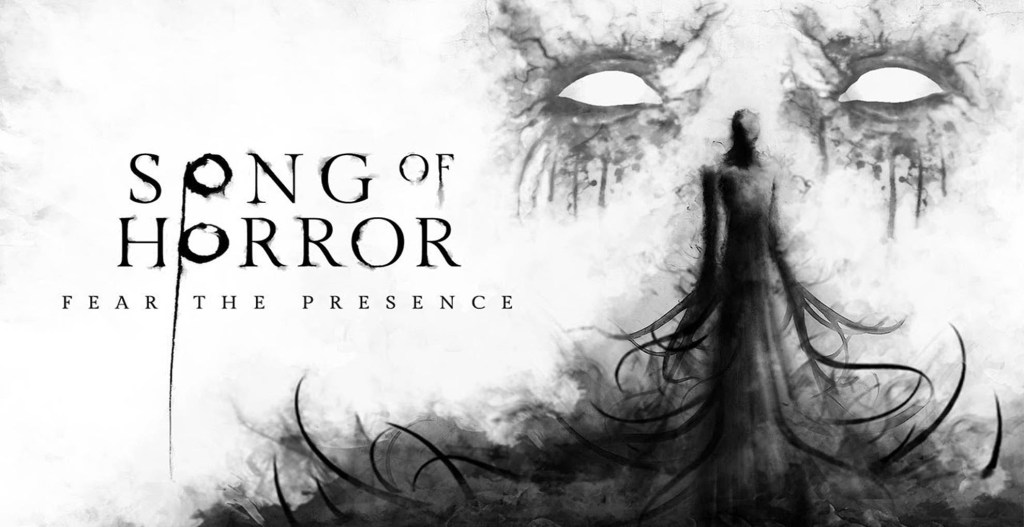
    If this longing for the gloried past of survival horror games still has a hold on you, then look no further than Song of Horror for this retro-inspired title has all the goods. Developer Protocol Games brings back the heyday of 90’s survival horror games, warts and all.

    Set during 1998, Song of Horror begins with the disappearance of author Sebastian Husher. Sent by his publisher to find him, Daniel Noyer soon disappears as well and it’s up to a varied group of individuals to find both him and what happened to Husher and how it all seems to tie into a missing music box. Before long our protagonists find themselves haunted by a malignant supernatural presence. Spanning five episodes, it’s up to you to find the origin of the curse and hopefully, some way to nullify it, before you’re dragged screaming into the darkness.

    If you’ve played any survival horror game in the last two decades, then you’ll know exactly how Song of Horror plays. You’ll investigate each location for clues and items to use to solve the puzzles around you while reading the notes left behind to further the story and explain why each location is devoid of human life. Because Song of Horror focuses on a cursed music box, sound plays a vital role in the game. If you choose to run, the noise you make can attract the entity, known as The Presence, to your location. This adds a wrinkle to how fast you can get through each location to the game’s overall mechanics. Paying attention to the noises around you are vital to your survival. One of the mechanics of listening at a door to what’s behind it before you open a room, will save you from many instant death moments.

    And these moments are frequent, depending on the difficulty you choose. Song of Horror is littered with instant death moments and trap locations. If you hear crying behind a door, then it’s not a good idea to enter the room, as is pulling the tarp off a strangely covered mirror in a storage room or sticking your hand into a bathtub full of grotty water. Song of Horror is designed with permadeath in mind, meaning you can lose the character you’re playing with permanently if you’re not careful. Lose all the characters or the main one for the game and you’ll have to restart the episode. When a new character enters the fray, you can pick up the previous characters items where they perished.

    With four difficulty settings to choose from, each named after a horror writer such as M. R. James and Edgar Allen Poe, determine the games severity. Higher difficulties have more shock encounters and permadeath is a feature of all, with one caveat. The easiest difficulty lets you load up a checkpoint save when a character dies to just before that fatal moment if you’re not in the mood to lose anyone. With Trophies for completing each episode without losing a character and for completing each episode with every character available for that scenario, gives completionists a reason to replay.

    The game has no combat as you can’t fight The Presence. The most you can do is hide from it or interact in mini-games that have you trying to slam a door closed in time while it’s trying to break through or to control your breathing while hiding from one of its manifestations. Knowing your surroundings is important so that you can get to a cupboard or beneath a table in time. Hiding spots do get scarcer as the game progresses.

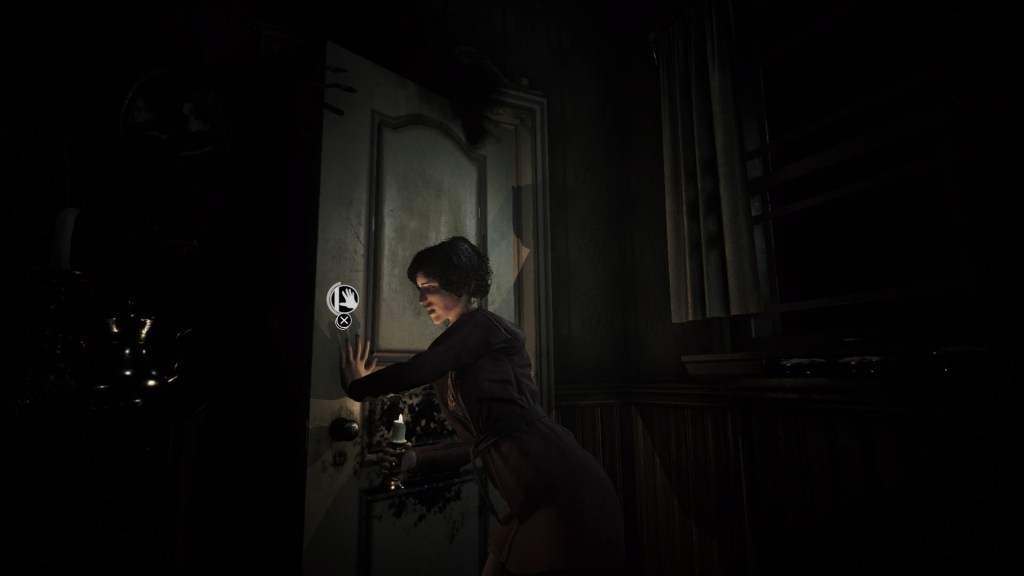
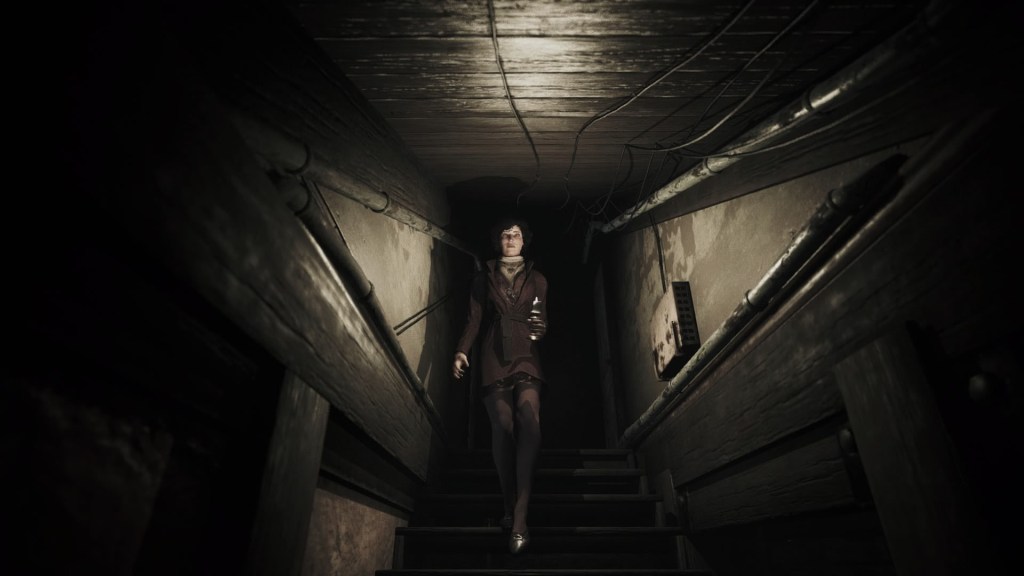
    Song of Horror places you in familiar haunted locales; an abandoned manor, a mental hospital, an empty apartment block, etc. The scares are also of the traditional haunted house variety, though there’s definitely an Asian horror vibe to many of the manifestations and blink and you miss it moments.

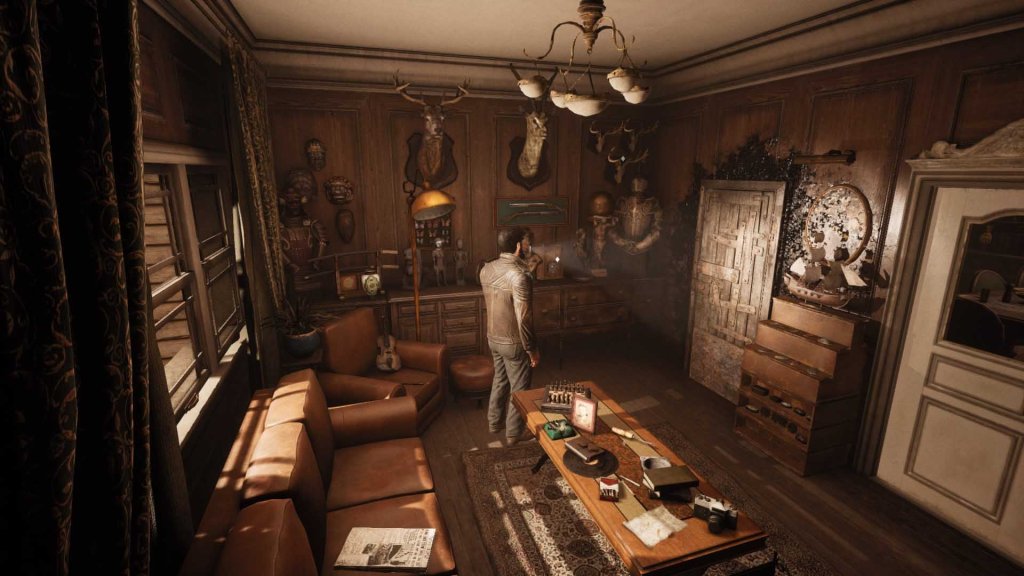
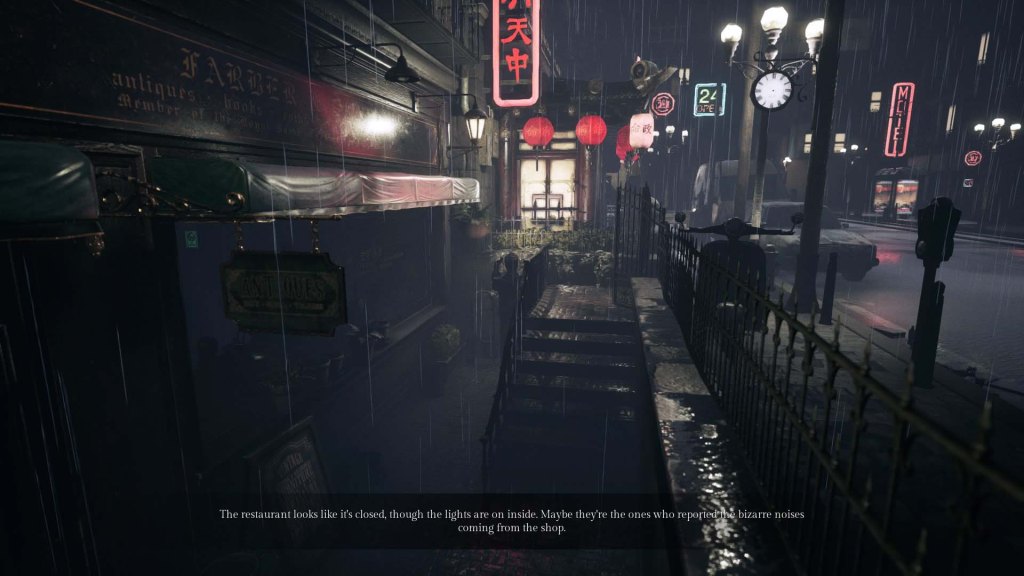
    Though the game uses static camera angles for its environment, the environment itself is fully 3d modelled and is one of the games strongest assets. The set dressing is absolutely superb with Husher Mansion and an antique shop looking absolutely gorgeous in the amount of detail and clutter present. Character models look good, but don’t quite measure up to the environment around them.

    Sadly, for a horror title, Song of Horror isn’t actually scary. Dealing with The Presences attacks becomes rote unfortunately. However, where the game does succeed wonderfully, along with its sumptuous environment details, is in atmosphere. With the use of sound as a warning trigger, the developers have managed to craft a sense of tension and expectancy that permeates each area as you’re always waiting for the shoe to drop, as it were. The palpable sense of dread and suspense is wonderfully realised, something even movies often struggle to get right.

    Song of Horror does have some issues though. First is the character’s movement and speed. Close to “Tank Controls” are the order of the day, making characters a bit of a chore to get used to. Controlling them is tricky with a turn radius that can get you stuck on objects in tight locations or go the wrong way at times, especially when a camera change occurs. Then there’s the character speed which can be frustrating. When you’re being chased by a nigh unstoppable force that can disembowel you with ease, you should be taking off like the Road Runner and not like a geriatric on a Sunday walk down by the lake. This is a peeve I have even with modern horror titles that feel like a slow walk through a museum when you should hot-footing it for your life.

    Finally there’s the game’s bugs. While not game breaking at all, there were plenty of instances of enemies spawning in the floor, characters walking through doors and in one instance Daniel’s torch not syncing with the character as you walk.

    With an atmosphere seeped in tension and dread that can have you holding your breath, Song of Horror more than makes up for its lacklustre scares with gorgeous set dressing and an intriguing, Lovecraftian story.

    Pros:

    • Gorgeous set dressing and environment design
    • Intriguing story

    Cons:

    • Bugs
    • Tank controls
    • Slow movement speed

    Score: 9/10

    A review code for Song of Horror was provided to Gameblur by the publisher.

  • Review: Glyph (Switch)

    Review: Glyph (Switch)

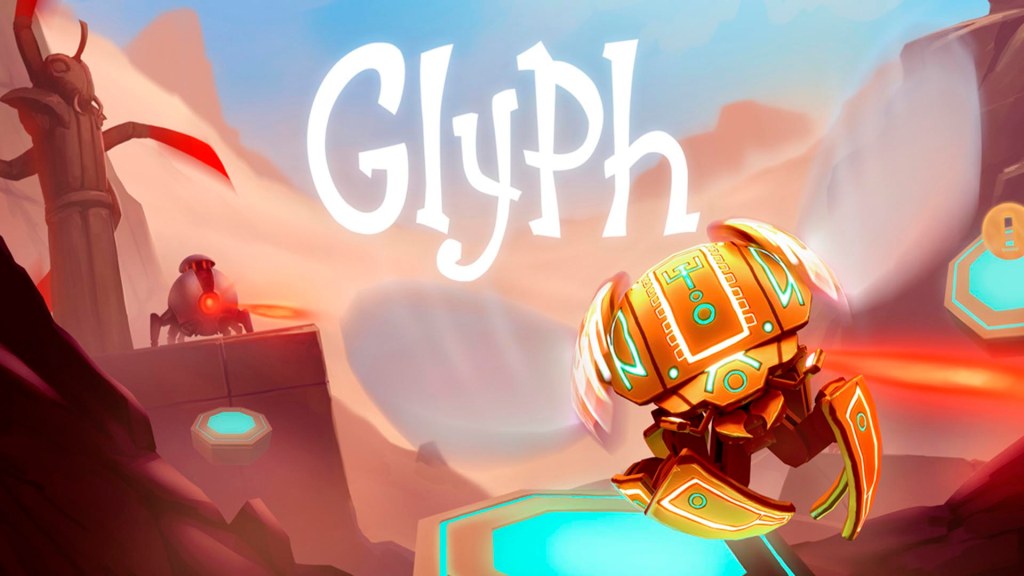
    Amidst the desert ruins of an ancient civilization, you take on the role of Glyph, a mechanical scarab tasked with exploring the sand-drowned ruins of a once-mighty civilization. Buried beneath shifting sands and rolling dunes, this once mighty empire has taken their secrets with them and it’s up to you to find out what those were. Be warned though, for the further in you go, the harder it becomes to extract what those secrets may have been.

    Will you take on the challenge of navigating the lost remnants of this world or will the truth be forever buried beneath the sands of time?

    That is the background to Bolverk Games’ light physics-based platform puzzler, Glyph.

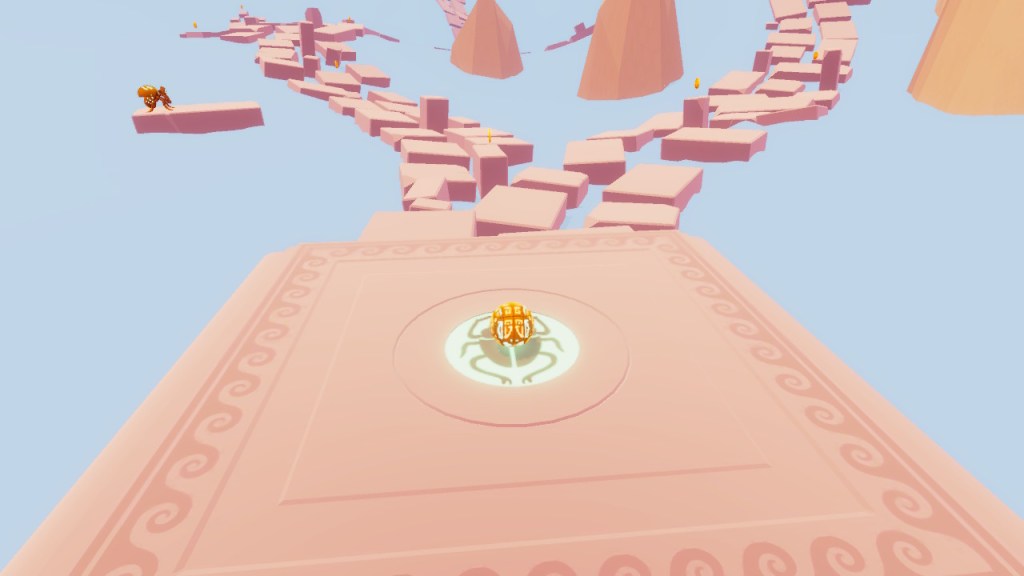
    As the construct Glyph, you’ll be spending nearly all of your time in ball mode, rolling across the landscape while prey to the whims of physics that such a form entails. But fear not, as you’re not entirely helpless. Glyph has a few abilities that the game’s tutorials will take you through in an extensive fashion. What you learn here will be the basis for how you navigate the game’s navigation puzzle levels.

    Glyph can jump, or more correctly bounce, when in contact with surfaces while specific tiles will allow it to double jump. Glyph can also use a ground slam ability to launch itself higher into the air. The final ability unfurls Glyph into avatar mode for a short flight duration to cover the larger distances between platforms and ledges. Combining all these moves together, while paying attention to the way physics affects the way Glyph moves, is the key to success.

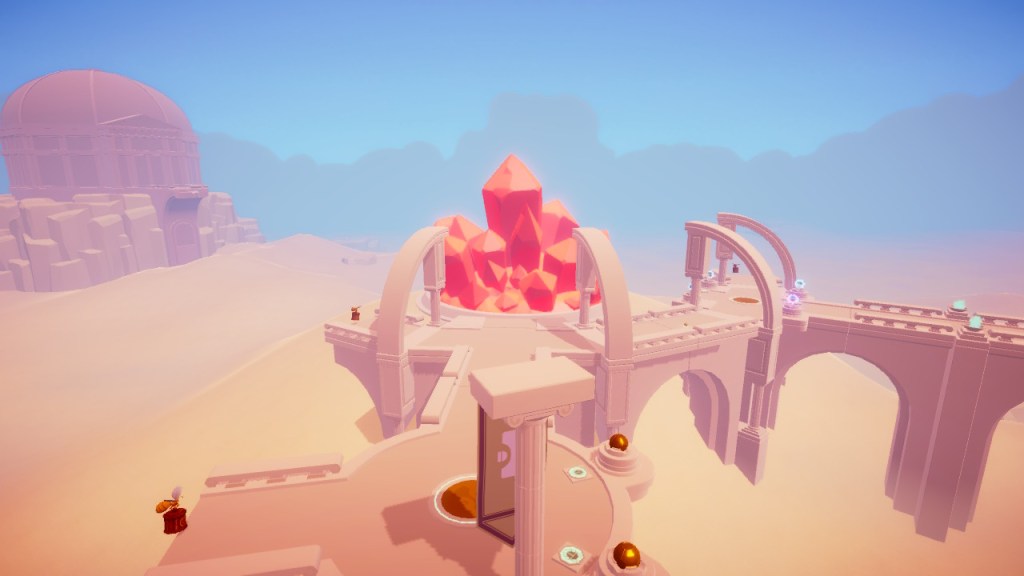
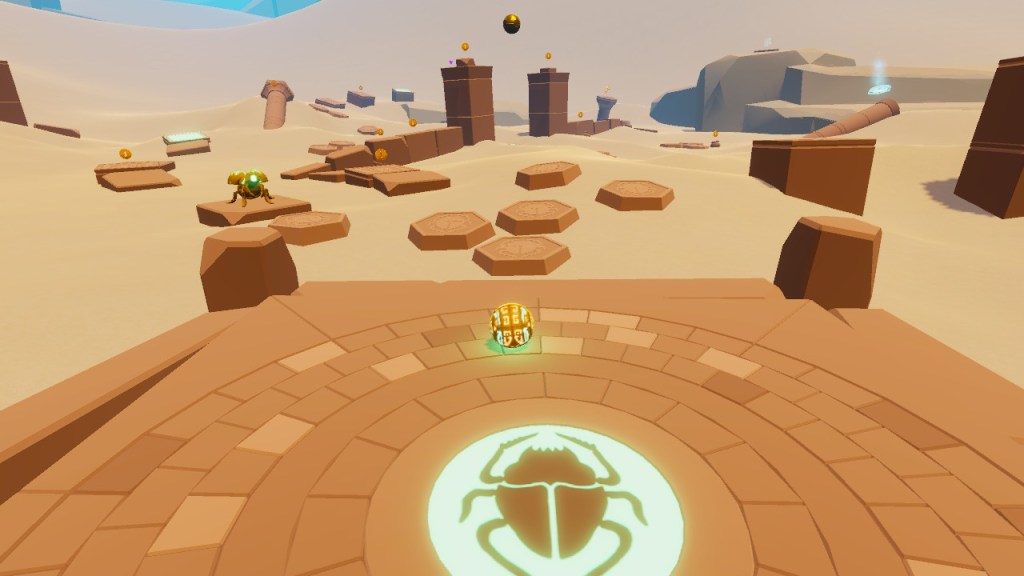
    Bolverk Games have designed levels that, while small, will both entertain and challenge you in equal measure. Sporting a vaguely Egyptian motif, the ruins that you will need to traverse are usually the final remnants of toppled pillars, shattered buildings, and tilted ledges and tiles. Navigating your way across the levels can be an arduous and tricky affair that usually requires all of Glyph’s move set to complete.

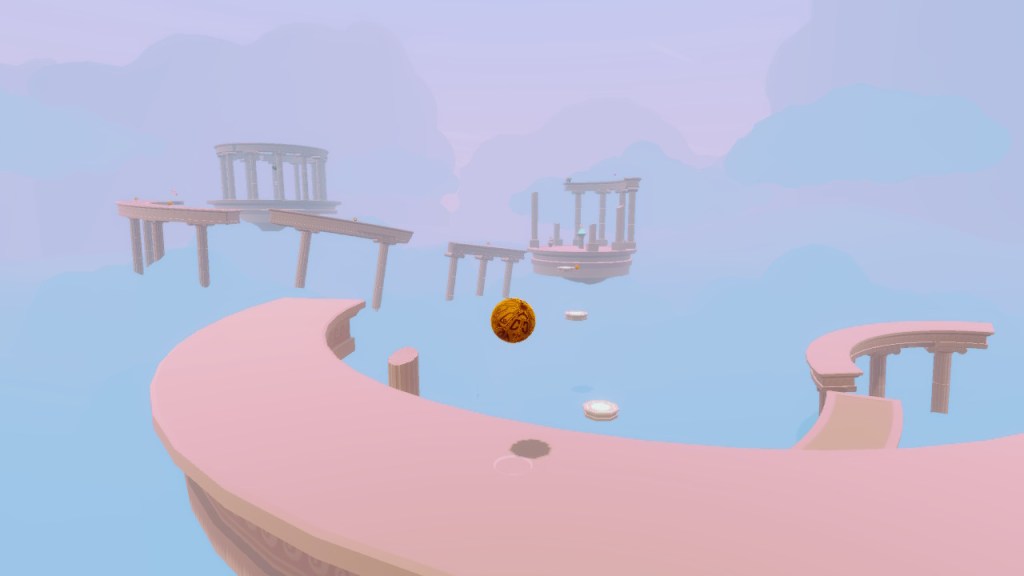
    As a ball, Glyph rolls around as physics would dictate to a degree, meaning that you’ll constantly be nudging him back and forth across the environment lest momentum lets you roll off a ledge to the deadly sands – or clouds as some levels are set in them – below. But Glyph isn’t slavishly locked to the laws of physics. A jump can carry you quite far on its own and Glyph has just enough floatiness and control in the air to make even the minutest of course corrections.

    Scattered across each level are coins to collect, gems to find, keys to pickup to open the level exit, artifacts to procure, and different avatar forms to unlock. The avatar forms are for cosmetics only but the other items are needed to progress. Once you’ve exited the tutorial into the game’s hub, coins will unlock new levels while the gems will open up new pathways to new levels in the hub. The artifacts will open up the game’s incredibly challenging Time Trial levels.

    If you die during a level – it only takes touching the corrupted sands once to send Glyph back to the beginning of the stage – keys and artifacts are reset but thankfully the coins you’ve picked up stay with you. And you will die a lot because Glyph is an incredibly challenging game that walks that tight line between been fun enough to pick up for some relaxing platforming, but hard enough to ensure a tense playing experience that, when you finally complete a level, you’re rewarded with a sense of satisfaction.

    Very early on the challenge picks up significantly, even in the levels that have a lower skull rating. Levels are rated from one to five skulls for difficulty. Often I’d find that I’d been holding my breath and my shoulders and wrists were tense when I’d completed a level, having to put my Switch down for a well-deserved break from what was an ultimately rewarding experience.

    Your completion times are recorded and you can go back to replay the levels for better times if you prefer. Like a parkour game, finding that perfect line takes time but is worth the effort.

    The Time Trial levels are where Glyph throws its hardest challenges at you. They’re small but require serious mastery of the game’s mechanics to reach even its gold, silver, and bronze levels. The gold time can be as low as ten seconds. Each tier per Trial will net you a gem making the effort worth it.

    Visually Glyph is a beautifully stylised game that ran perfectly on the Switch Lite and is drenched in a wonderful fable-like aesthetic and atmosphere. Controls for Glyph are pitch-perfect as well, making your failures your own.

    Packing in a ton of levels, Glyph is the sort of puzzle platforming experience that doesn’t come around often. With stunning visuals, solid controls, and gameplay that appeals to those looking for a laid-back exploration experience as well as a nerve-wracking one, Glyph soars above the competition and should be in your collection.

    Pros:

    • Visually stunning
    • Wonderfully challenging
    • Great level design

    Cons:

    • Recollecting artifacts and keys can get frustrating with repeated deaths

    Score: 8/10