Tag: Remake

  • Editorial: The System Shock (2023) remake rewards the thoughtful and punishes the reckless

    Editorial: The System Shock (2023) remake rewards the thoughtful and punishes the reckless

    As a fan of the immersive sim genre, it’s hard to decide which was the greater tragedy: having to wait 18 years between System Shock 2 and its closest spiritual successor, Prey (2017); or watching Prey (2017)’s developer, Arkane Texas, forced to churn out Redfall in 2023 before being unceremoniously shuttered by Xbox. At least that year Nightdive Studios’ remake of the first System Shock finally arrived on PC, after a turbulent 8-year development cycle that included IP licensing concerns, extended periods of silence, three complete restarts, and a shift from Unity to Unreal Engine 4. To their credit, the result was mostly worth the wait.

    Replaying it by way of 2024’s excellent console ports (for both current- and last-gen hardware), the System Shock remake is faithful to a fault in some regards, but still infinitely more playable without the original’s clunky FPS/point-and-click hybrid controls. System Shock (2023) is far more involved than a traditional FPS, but it controls like one and works well enough when using a controller – aside from sluggish inventory management and an awkward lean toggle.

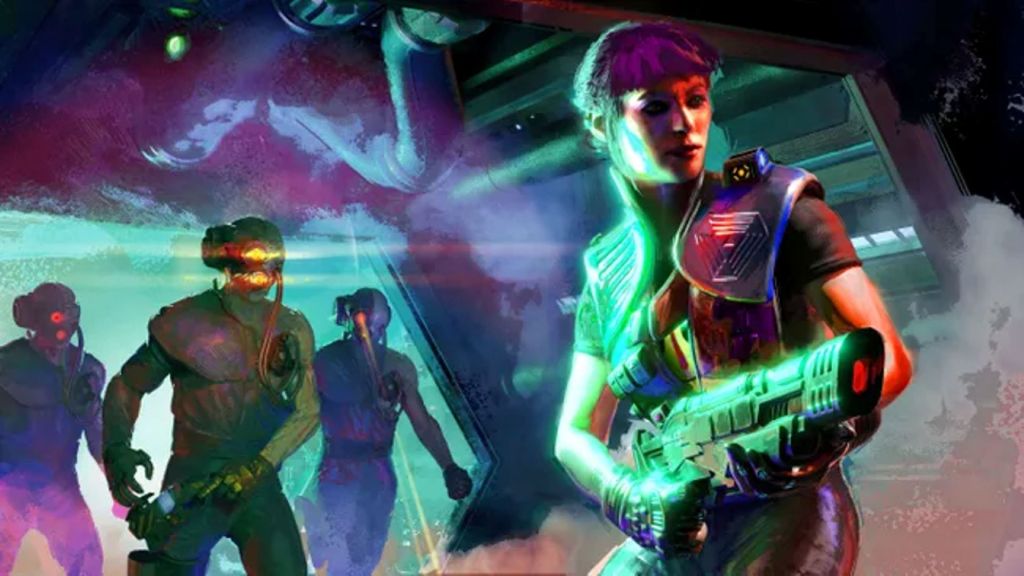
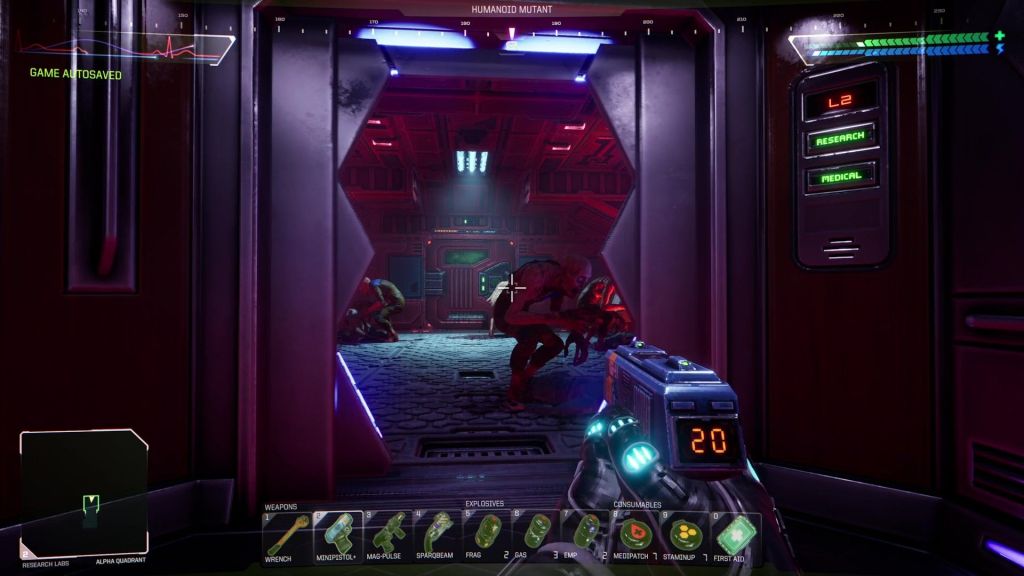
    The updated UE4 visuals and new synth-heavy renditions of the original soundtrack generate late-‘80s/early-‘90s sci-fi vibes – think harsh lines, retro-futuristic tech, an abundance of specular reflections, and overblown neon lighting – and those fresh visuals are enhanced by a pixel filter that adds a veneer of retro-inspired chunkiness to close-range textures, character models, and 3D objects.
    While the audiovisual overhaul and updated control scheme are obvious changes up front, System Shock (2023) deserves more praise for how it manages to recreate much of the original’s level design, mission flow, and iconic encounters, despite expanding and enhancing every element.

    Moving through the multi-level and often maze-like Citadel Station still feels tense and sometimes terrifying, especially given how little handholding there is and the high level of challenge. In stark contrast to the “follow-the-icon” mentality of most modern games, you need to pay attention to your map and signposting to navigate. You also need to parse radio transmissions and audio-logs for clues on how to progress, slowly piecing together the desperate plans of the former crew.

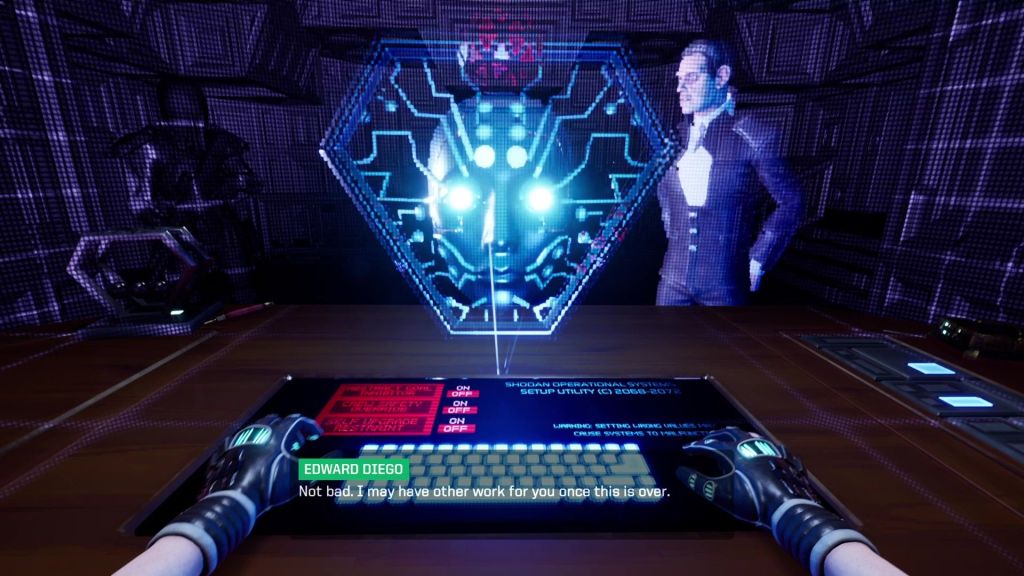
    It helps that System Shock has a cliched but compelling “AI gone rogue” plot. After being arrested for attempting to steal designs for a Tri-Optimum neuro-mod, your hacker protagonist finds themselves transported to Citadel Station and confronted by Vice President Edward Diego with a simple offer: become part of their dubious experiments or utilise their skills to remove the ethical constraints on the station AI, SHODAN, and receive the modification they were after as a reward. Emerging from a medical pod six months later, it turns out unshackling an AI with a god complex was a poor choice and she now wants you crushed like an insect.
    It’s a great setup, but aside from a handful of calls from survivors or Earthside Tri-Optimum staff, the bulk of storytelling is conveyed through optional audio-logs that near-perfectly correlate with environmental details. The more attention you give to the narrative elements, the more you get out of them.

    A first playthrough also nails the sensation of awakening amid a disaster, alone and out of your depth. However, the updated mechanics and returning difficulty levels allow you to tailor the experience to be more forgiving of rushed exploration, poor planning, or scrappy combat.

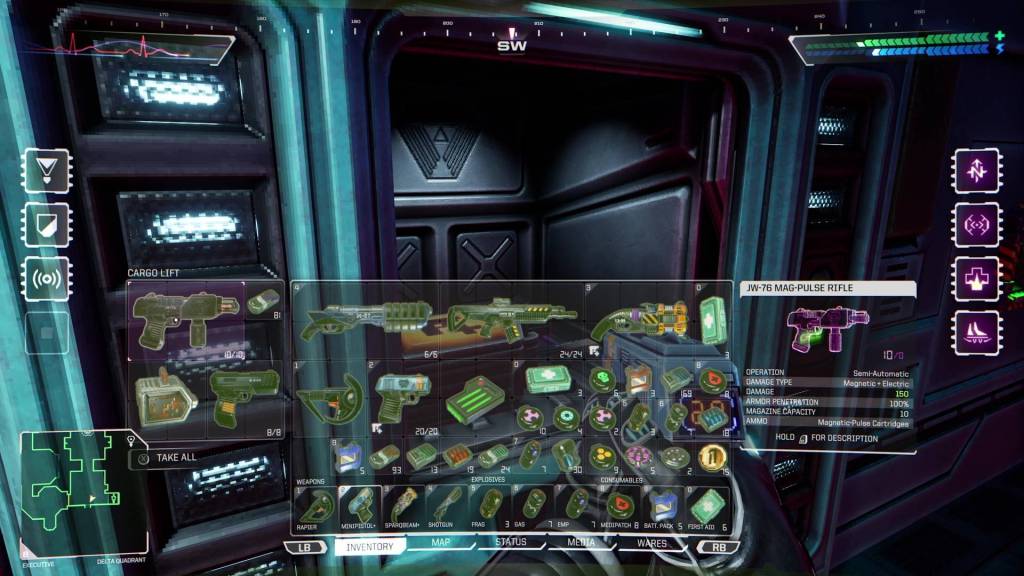
    The overhauled UI and menus better track progression, grid-based inventory management and quick slots for combat are a godsend, and you can customise the difficulty of individual systems. You get simple map markers on the easiest mission difficulty or a 10-hour time limit on hard. Combat is always challenging, but you can tweak incoming damage, mob sizes, and the respawn rate. Cyberspace battles – which play out like classic 6DOF shooters – can be colourful diversions or bullet-hell chaos. Puzzles – a mix of balancing voltages, rerouting power, and finding codes – can be brief distractions or leave you wishing you had a logic probe to simply override them.
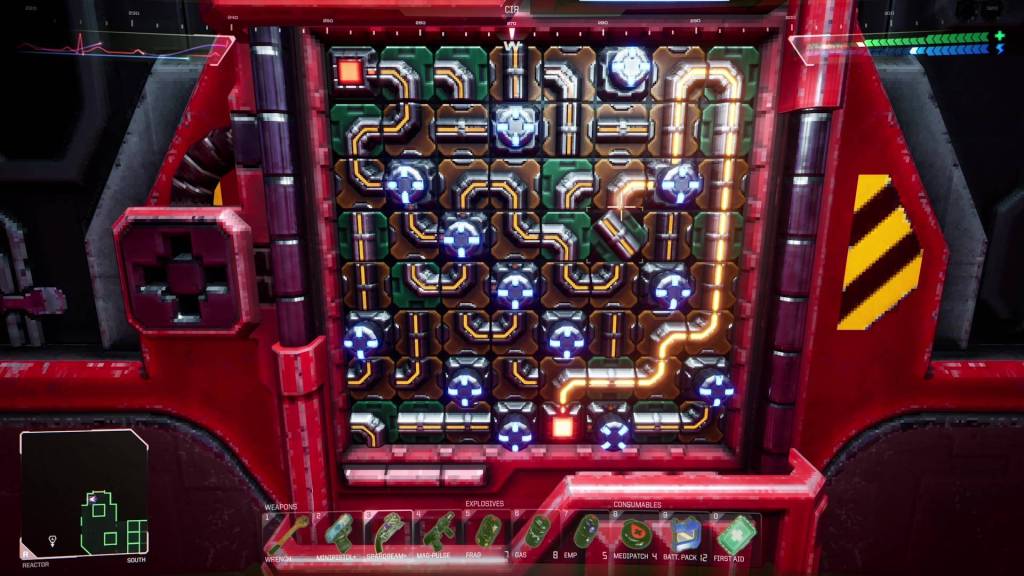
    There are fans of the original that would suggest maxing every difficulty aside from enforcing the time-limit for a first playthrough, but I’d argue even on the easiest settings, System Shock (2023) never loses that inherently challenging immersive sim core. Running straight into a horde of cyborgs is likely to see you shredded regardless of the difficulty, while too many scrappy fights early on will leave you short on supplies and forced to adapt.

    The ability to revive at Restoration Bays is available regardless of the difficulty, so adding a few basic map markers, or simplifying cyberspace combat for those who hate that style of gameplay, is a worthwhile addition if it encourages a modern audience to stick it with it long enough to understand and appreciate the genre’s distinctive player-driven flow.

    All of which brings me to what I love most about System Shock (2023) and the genre as a whole. A good immersive sim punishes a player for a thoughtless approach and sloppy execution, but rewards preparation, planning, and the smart or unconventional use of the tools provided. It’s a genre that facilitates save-scumming, but not to encourage a trial-and-error approach; rather, it allows the player to iterate on a plan and master its execution. An ambush or boss fight shouldn’t require constant quick saving behind every piece of cover to manipulate the odds of being hit; you should want to reload a boss fight because you’ve thought of a way to optimise your approach and finish them off more efficiently.
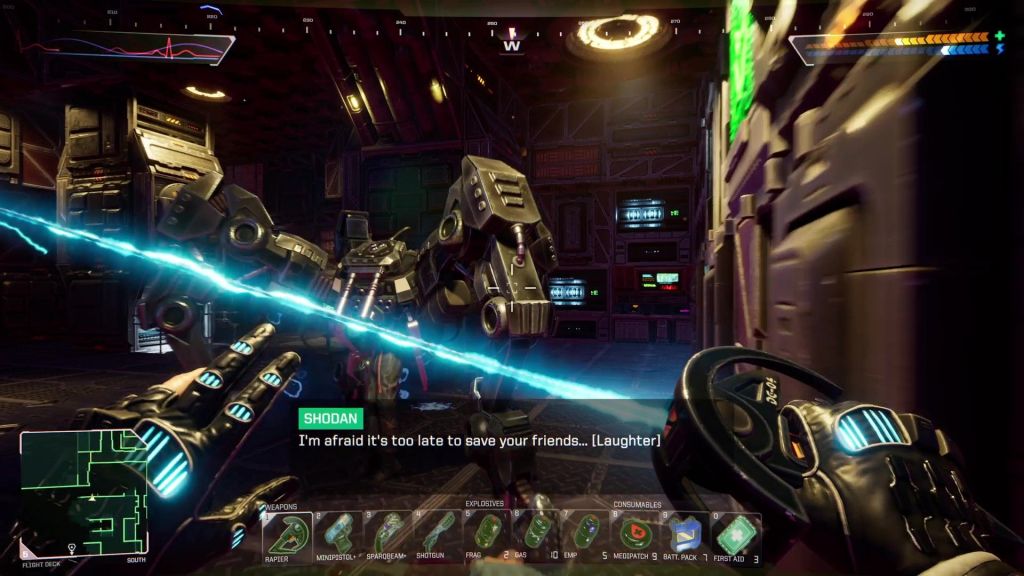
    System Shock (2023) features a handful of mandatory boss fights and ambushes, but most can be subverted by finding alternate paths; engaging in some minor sequence-breaking using the upgraded jump boots; or simply burning through stockpiled ammunition and consumables to trivialise battles. An early boss encounter against a cyborg Diego can play out as a panicked firefight that has you scrambling to dodge plasma rounds and flee as he teleports in close with a laser rapier. Alternatively, you could apply a Reflex Reaction Aid to slow time, a Berserk Combat Booster to buff melee damage, charge in and finish him off with a flurry of your own laser rapier before he can even trigger his teleport.

    The same flexibility applies to conspicuously empty rooms that scream: “ambush”. You could also bolster yourself with dermal patches in preparation for a slow-mo scrap, or you could fling disc-like proximity mines at every wall panel, engage your shield mod, and rush to the middle of the room to watch your foes disintegrate in a flurry of explosions around you.

    Of course, with a limited inventory and storage options, the tools at your disposal are dependent on your willingness to explore, backtrack, and prepare. There’s almost always enough to get by – even within boss arenas if you survive long enough to find them – but cautious and systematic explorers are rewarded with early access to powerful weapons, mod and weapon upgrades, and no shortage of character-enhancing dermal patches and meds.
    Wrapping up, I’d reiterate my argument that a good immersive sim should ensure players can always progress using the tools or mechanics provided, conventionally or otherwise; it should reward them for exploration, preparation, and planning; and punish them for thoughtlessness or scrappy execution. I’ve played far too many modern games that, while often technically impressive and mechanically polished, are so reliant on familiar and effortless gameplay – the idea that player friction should be minimised – that my brain switches off and I run on autopilot until the next set-piece or elaborate cutscenes regains my attention.

    A good immersive sim may lack that scripted spectacle and controlled pacing, but I prefer games where the minute-to-minute gameplay – that essential “game” part of videogame – is consistently engaging and rewarding. If you feel the same, the immersive sim genre is well worth your attention and the System Shock (2023) remake is one of many excellent options available on console and PC.

    System Shock (2023) was played on Xbox Series S|X. It is also available on PC, Xbox One, and PS4/5.
  • Review: Amerzone – The Explorer’s Legacy (2025)

    Review: Amerzone – The Explorer’s Legacy (2025)

    It’s depressing how many remade or remastered games I can now claim to have originally played over three decades ago. Many retro-inspired games have moved on from pixel art to target the look and feel of early 3D games from the late ‘90s on PC or 32-bit consoles – the era that cemented my love of gaming as a lifetime hobby. Amerzone – The Explorer’s Legacy (2025) is one such remake; an updated, expanded, and lavish overhaul of a 1999 point-and-click adventure, known primarily for its association with Belgian artist Benoît Sokal who created many of the creature designs and backdrops before going on to work on the more recognisable Syberia games.

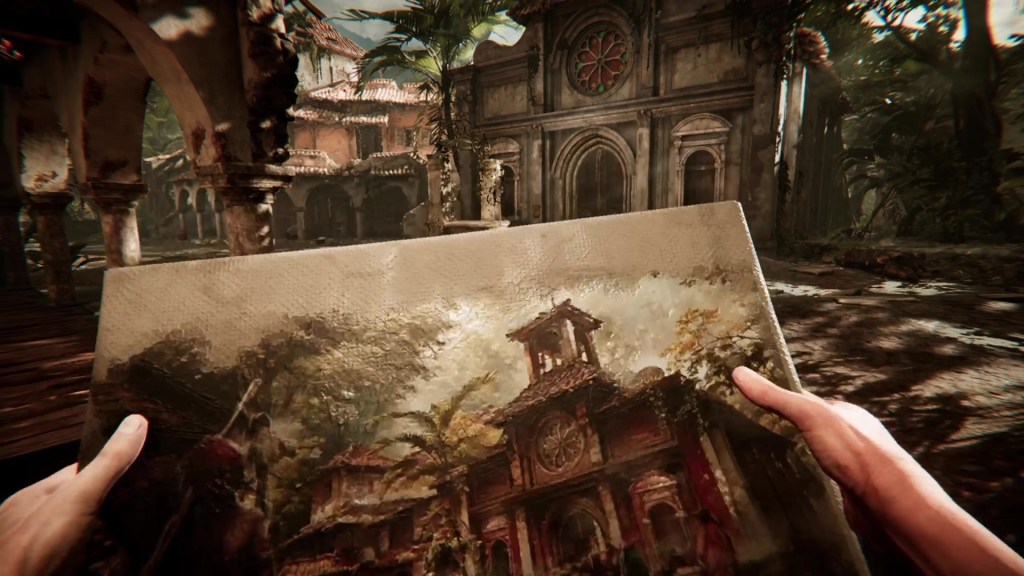
    This remake takes the classic first-person point-and-click structure and converts those weirdly proportioned 360-degree panoramas into beautiful and detailed 3D environments. There’s no free movement, but abrupt screen transitions and an overreliance on short cutscenes are replaced with slick in-game animations for set-pieces, transitions, interactions, and puzzle devices.

    You could argue the updated visuals don’t always capture the bleak atmosphere of the original, but when combined with an expanded soundtrack, new voice work, and more narration, it makes for a cohesive and cinematic adventure with production values closer to what you’d expect from a modern release.

    It’s not just the audiovisual experience that’s been overhauled. A lot of work has gone into expanding and enhancing every location while still retaining the basic layout, significant landmarks, artistic designs, and all the original notebook sketches. The unnamed protagonist also gains more agency and personality through their many journal entries that, in turn, flesh out secondary narratives only briefly touched upon in the original.

    That said, the point-and-click core remains unchanged, and almost all the original puzzles return in some form – albeit often just one part of an expanded design that now requires a few more steps and some QTE-like inputs.

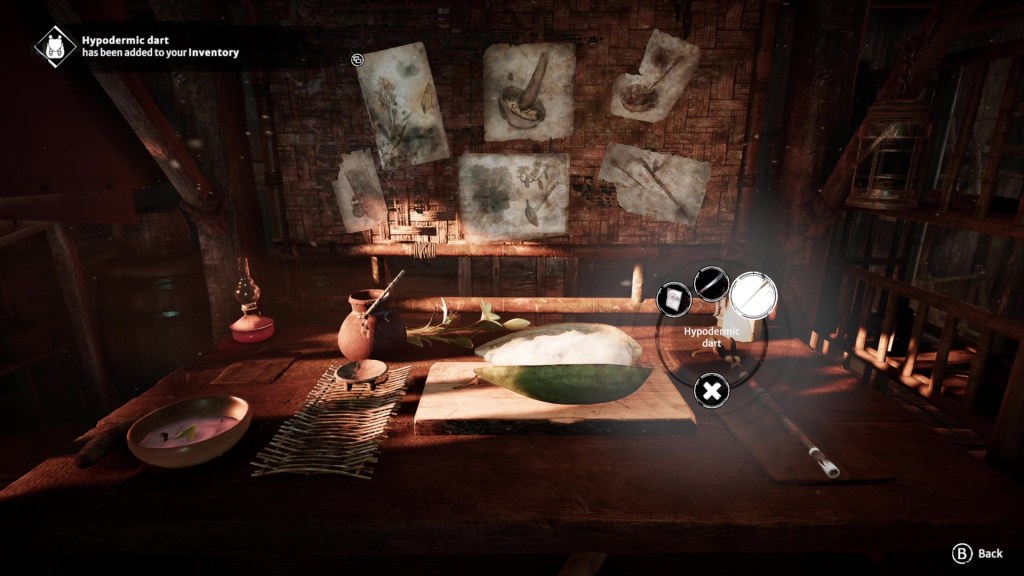
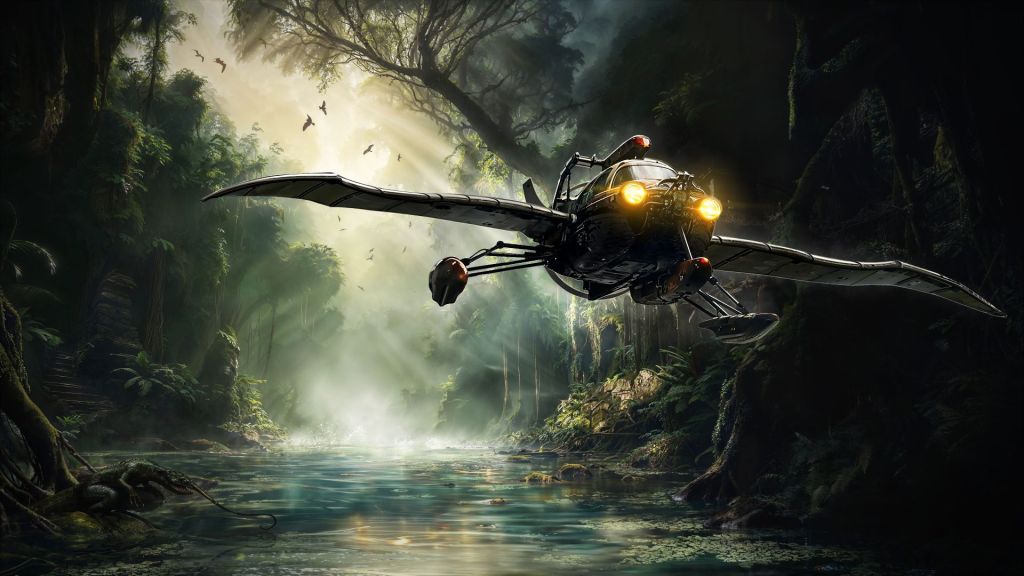
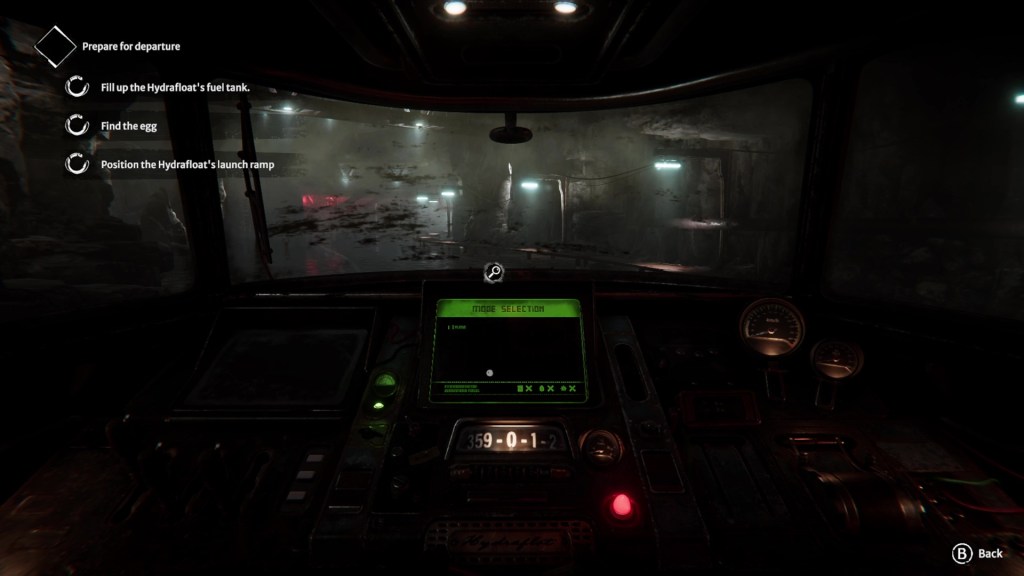
    You’re still exploring compact but detailed locations on the hunt for documents, puzzles, key items, and clues, typically to find fuel or data discs to power the incredible transforming Hydrofloat craft. Puzzles are still designed around using key items on puzzles objects or the environment, but you must often figure out the correct sequence of actions even if you have all the items on hand.

    It retains that classic and increasingly niche design, in which more involved and convoluted puzzles are your reward for making progress. No matter how dangerous or desperate the scenario may seem, Amerzone – The Explorer’s Legacy (2025) has no time-limits, and the world might as well be frozen as you plod around each area and figure out the route forward.

    For those who’ve grown up with games that hold your hand to the point of feeling patronising, Amerzone – The Explorer’s Legacy (2025) can feel too unguided at first, dropping you into dense environments with no HUD or quest log in the corner. Some purists might argue that was integral to immersing yourself in the game world, but the remake expands the journal feature considerably. It offers an improved interface for collected items and notes; you can fast-travel between significant locations once you’ve found a map of the area; and you can enable several player assists.

    By default, the journal tracks core tasks and highlights secondary stories if you’ve found any associated documents or environmental clues, but you can also enable hotspot highlights at the press of a button and a tiered hint system.

    All of which make it much easier to maintain pacing and ensure you reach the end of Amerzone – The Explorer’s Legacy (2025) without hitting roadblocks; essential in an age of diminished attention spans, especially for a niche genre, with dated gameplay that only holds up when paired with a strong narrative hook.

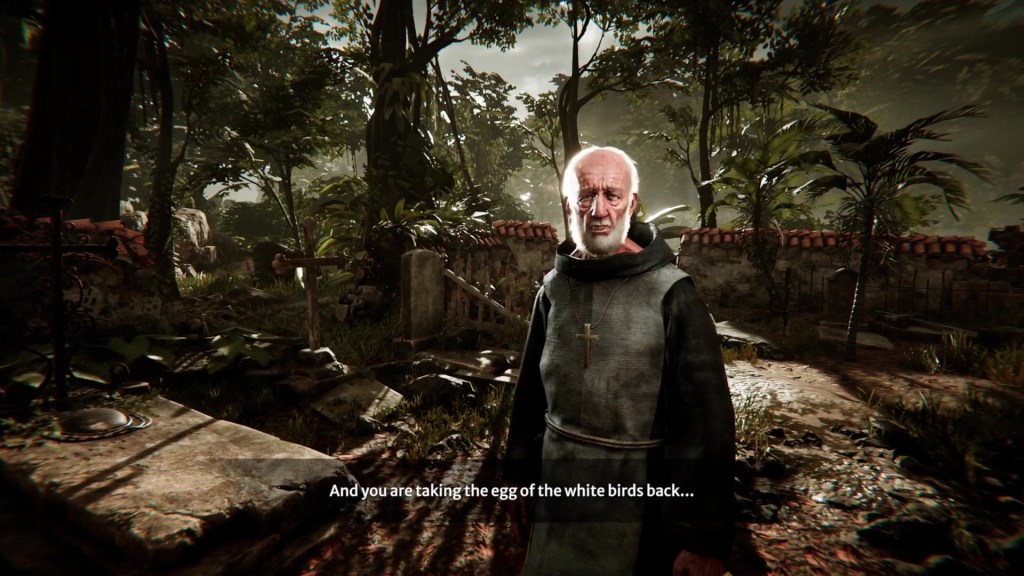
    You need to be invested in the fate of the young reporter, looking to make a name for themselves by undoing the shameful legacy of the dying explorer Valembois. You need to be curious about the fate of his former companions and the dark history of the now isolationist Amerzone nation. You need to understand the reporter’s drive to push ever further upriver, consequences be damned, to see if Valembois’ descriptions of bizarre creatures and ecosystems are accurate or deserving of the ridicule that drove him into seclusion.

    The updated journal in the remake improves the storytelling while also allowing the game to dig deeper into themes of traditional societies living in harmony with nature, the impact of colonialism on native cultures, and the rise of post-colonial autocracies with leaders that twist foreign governance concepts to their own needs. Having a transparent list of notes and chapter locations assigned to each side story could be a double-edge sword for completionists that won’t move on before they’ve found everything, but your reward for finding them all is a short summary of events from the protagonist, befitting their profession. It’s a smart way to literally gather the player’s thoughts and deliver exposition before they set off to the next act.

    The best thing I can say about Amerzone – The Explorer’s Legacy (2025) is that I never expected to enjoy it so much. It’s longer and more complex than the original, but it’s still a brisk experience by modern standards and doesn’t ask more of you than it gives back.

    It provided plenty of exciting spectacle but moved at my own pace, making for a pleasant change from the high-stress, action-oriented titles that make up the bulk of my gaming diet. The gameplay is classic and inherently dated – even with a few updated mechanics and assists – but the audiovisual overhaul makes it feel like a grand adventure the original creators could only dream of. It’s a niche genre now, but for fans, this is about as good as it gets if you’re looking for a remake that respects the original but expands and enhances every aspect of it.

    Pros:

    • An updated, expanded, and lavish overhaul of a lesser-known classic
    • Slick animations and interactions make for a more cinematic adventure
    • An improved journal, more exposition, and frequent narration enhance the storytelling
    • Optional player assists to prevent puzzle roadblocks from killing narrative pacing

    Cons:

    • The updated mechanics and assists won’t change your mind if you’re not a fan of the genre
    • Some noticeable framerate drops when using the performance mode on consoles

    Score: 9/10

    Amerzone – The Explorer’s Legacy (2025) was reviewed on Xbox Series X using a code provided to gameblur by the publisher. It is also available on PC and PS5.

  • Editorial: Alone in the Dark (2024) is yet another game that committed the unforgivable crime of being good rather than critically acclaimed

    Editorial: Alone in the Dark (2024) is yet another game that committed the unforgivable crime of being good rather than critically acclaimed

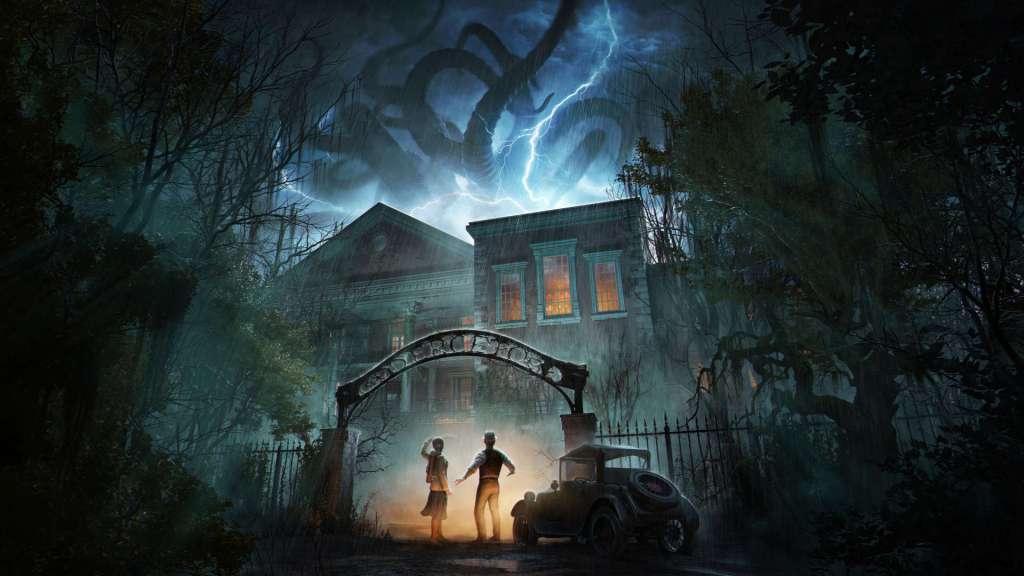
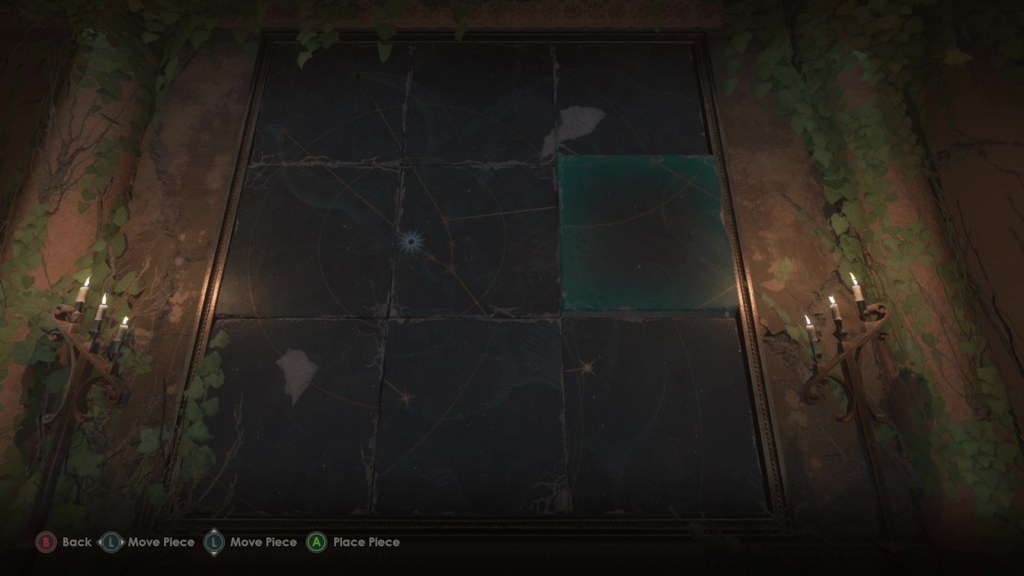
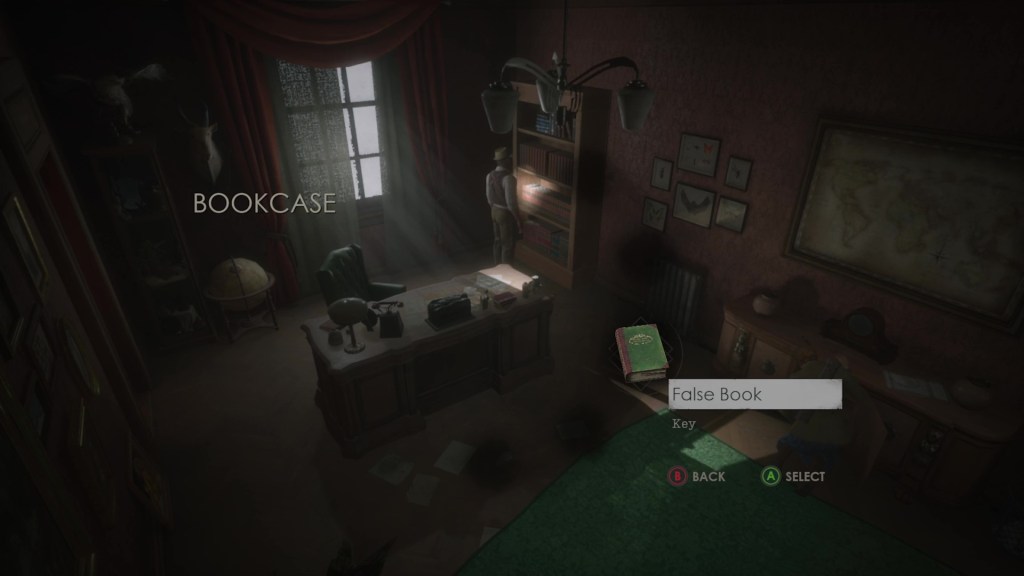
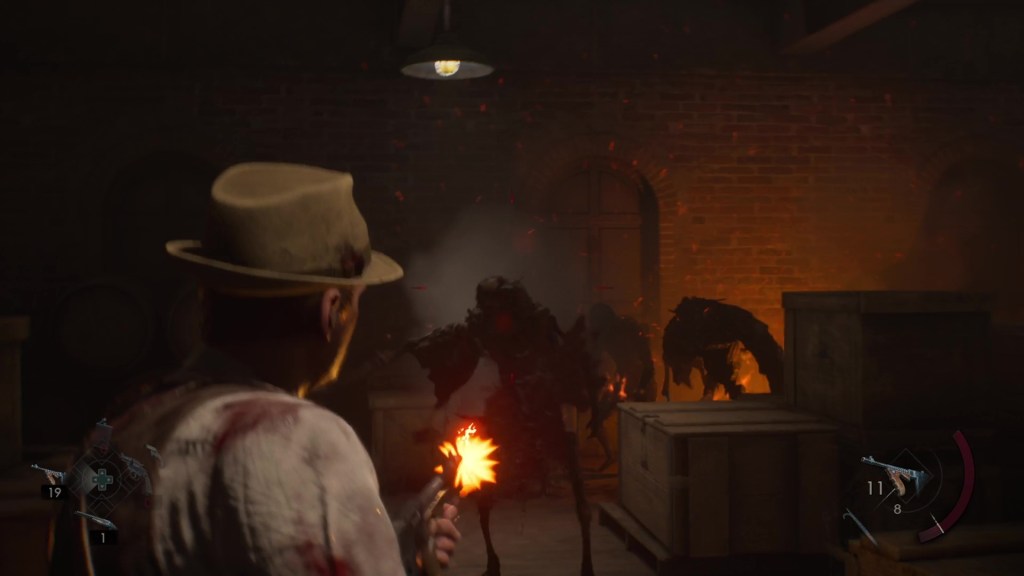
    Alone in the Dark (2024) is not some underappreciated masterpiece, but it is a smart and competently designed reimagining of the influential 1993 original. It plays as a third-person adventure – taking the same approach as Capcom’s Resident Evil 2 and 3 remakes – and transforms a terribly-aged classic into something that straddles the line between narrative-driven, puzzle-oriented “walking sim” and traditional survival-horror: think limited resources, weapon durability, gruesome monsters, and puzzling your through a sprawling mansion full of unorthodox locks.

    Entering a market dominated by recognisable IP it once inspired, replicating the success of recent titles like the Resident Evil 4 remake or Alan Wake 2 was unlikely; however, as a “AA”-style game priced accordingly, it sure as hell didn’t deserve to do so badly the developer Pieces Interactive was shut down a month after its launch.

    Like so many mid-tier and high-profile indie games released over the last decade, Alone in the Dark (2024) committed the unforgivable crime of just being good, rather than critically acclaimed; more often than not a death sentence for IP and sometimes developers in a modern video game market seemingly desperate to gorge itself to death on a never-changing buffet. Yes, the combat is clunky, but I’d argue every other element is good to great.

    The storytelling, the cast, the puzzles, and the thick atmosphere generated by the impressive visuals, ambience, and period-appropriate soundtrack; these are all essential components of a narrative-heavy horror game that takes you far beyond the walls of the Decerto manor. Even the voice work – criticised by those I’ll wager have not played beyond the opening chapter – is a great fit for the protagonists as they begin to question their own sanity and struggle with past trauma. When you throw in accessible gameplay mechanics, brisk narrative pacing, two playable characters with unique encounters, and multiple endings, Alone in the Dark (2024) gets far more right than wrong.

    Unfortunately, that means little in 2024, when talent and quality seem less important than the cosmic alignment of effective marketing, a quiet release period, and luck if a game wants to stand out in a marketplace that’s saturated, risk-averse, and increasingly dominated by the same established IP we’ve seen for decades.

    It’s a shame too that so many reviewers and commentators casually dismiss games like Alone in the Dark (2024) as “not good enough” in contrast to its “AAA” peers, as survival-horror fans are going to deprive themselves of one of the more interesting and stylishly told narratives in the genre. As a remake of sorts, Alone in the Dark (2024) obviously draws on concepts from the original, with ideas from Lovecraft novels and cliches you’d expect from a 1920’s period piece, but it weaves them into a briskly paced narrative with plenty of reveals, red herrings, twists, scares, and cinematic flair.

    Aristocrat Emily Hartwood and grizzled PI Edward Carnby arrive at Decerto Manor looking for her eccentric uncle, who sent a confused letter about a “Dark Man” haunting him and staff engaged in occult rituals. Unlike the original – in which he’s already dead and the abandoned manor is filled with an assortment of creatures and spirits – the remake is set in a dilapidated mental health retreat run by the condescending Dr. Grey and his evasive staff.

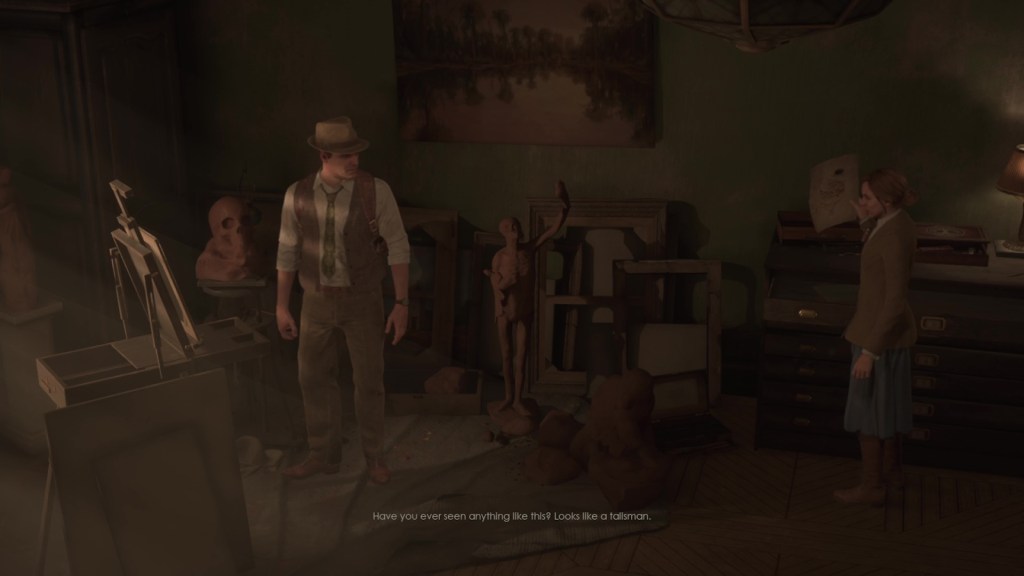
    Jeremy Hartwood has gone missing, some of the patients and staff have died or disappeared under mysterious circumstances, and yet those who remain only seem interested in preparing for a yearly ritual that supposedly has Louisiana Voodoo roots. After skulking through the creepy manor and encountering a few callbacks to the original, a search of Jeremy’s room reveals the designs for a mysterious talisman, before the protagonist you chose is pulled into a nightmarish version of the New Orleans French Quarter based on Jeremy’s twisted memories and wild imagination.

    It’s a slow but unsettling opening that suddenly changes pace and throws you in the deep end, setting the stage for how subsequent chapters will play out as you explore every inch of the manor and increasingly fantastical and often beautiful dreamscapes. The dual-protagonist setup is designed for replays, despite functioning more like the original Resident Evil than Resident Evil 2’s connected A/B scenarios. There is plenty of overlap when it comes to puzzles and progression, but the focus of the story changes and, until the default finale, you’re always left wondering if anything they experience is real.

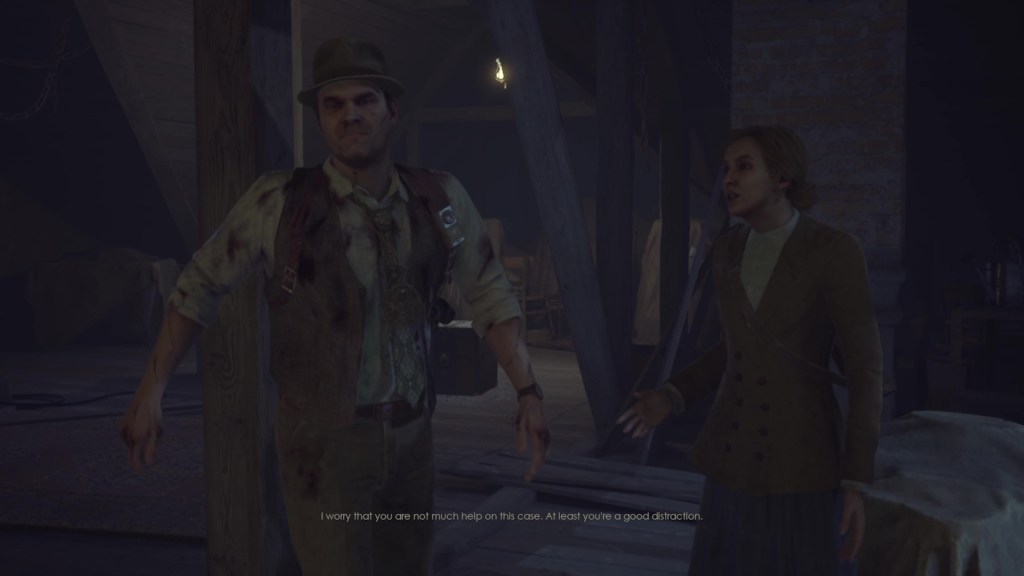
    Emily sinks into melancholy as she deals with Dr. Grey’s insinuations and tries to discover if the “Dark Man” man haunting her uncle is an actual curse, or just the manifestation of her family’s mental health history. In contrast, Carnby spends more time investigating the cult-like activities of the staff, while becoming increasingly manic in his attempt to save Jeremy from an occult contract – seemingly to make up for past failings.

    During the opening chapters, with identical puzzles and combat scenarios, the differences between the Emily and Carnby feel limited to when and where they encounter the secondary cast, and the nature of their interactions influenced by their personality, gender, and history. Whoever you’re not playing as becomes a foil for the lead, seemingly oblivious to the supernatural elements and often a source of humour when their paths converge. The second of five chapters gives you a little freedom as to the path you take through the manor, but the payoff is the lengthy fourth chapter that lets you tackle three objectives in any order and features a unique section for each protagonist that delves into their suppressed memories.

    If you want to get the full picture – or one of three secret endings based on collectibles and optional interactions – two playthroughs are essential, and all the more enjoyable thanks to a new-game-plus update that adds in new encounters and some unexpected scares.

    What I’m getting at is don’t leave games like Alone in the Dark (2024) languishing in the dark if you’re a fan of the genre – just because some circle-jerk internet chorus believes video games are worth little unless they attain a poorly-defined and often inconsistent “critically acclaimed” status. If this sort of hit-or-fail-terribly mentality continues, we’ll end up in an era of high-production value, low-risk, “AAA” homogeneity – a feat many large publishers have already attained with their remarkably expensive, polished, and heavily-marketed releases that are forgotten within a month. There’s still plenty of value in lower-budget and appropriately priced games that are just good, or hell, just interesting, especially when the quality of entertainment is so subjective anyway.

    Alone in the Dark (2024) was played on Xbox Series S|X. It’s also available on PC and PS5.