Tag: PC

  • Impressions: PIGFACE Early Access (PC)

    Impressions: PIGFACE Early Access (PC)

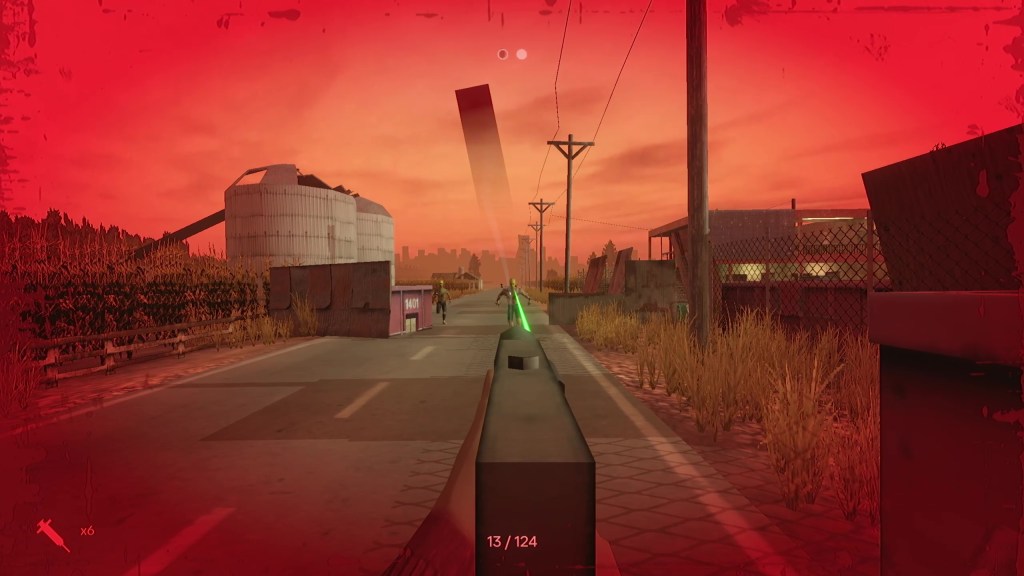
    It took three of PIGFACE’s brisk missions before I finally realised what connection I was trying to dredge from my cluttered memory. PIGFACE may have the appearance of a retro-inspired FPS in the trailers, but it often felt like a slick first-person mod for the earliest Hitman games – think Hitman: Codename 47 (2000) or the sequel, Hitman 2: Silent Assassin (2002). It’s a compelling mix of exploring a sandbox-like maps for quest objectives and entertaining yourself by exploiting AI that are deadly at close-range but incredibly stupid overall.

    PIGFACE functions as a first-person shooter – with gloriously retro aesthetics, chunky gore, and thumping combat music – but running-and-gunning only feels viable when replaying missions with new upgrades. Once you’ve bought body armour; weapon attachments; and amassed equippable masks hidden in each level, it’s easier to tear through levels sowing confusion and popping heads. On your first run, however, you’ll want to take it slow and steady to avoid quick deaths and mission restarts.
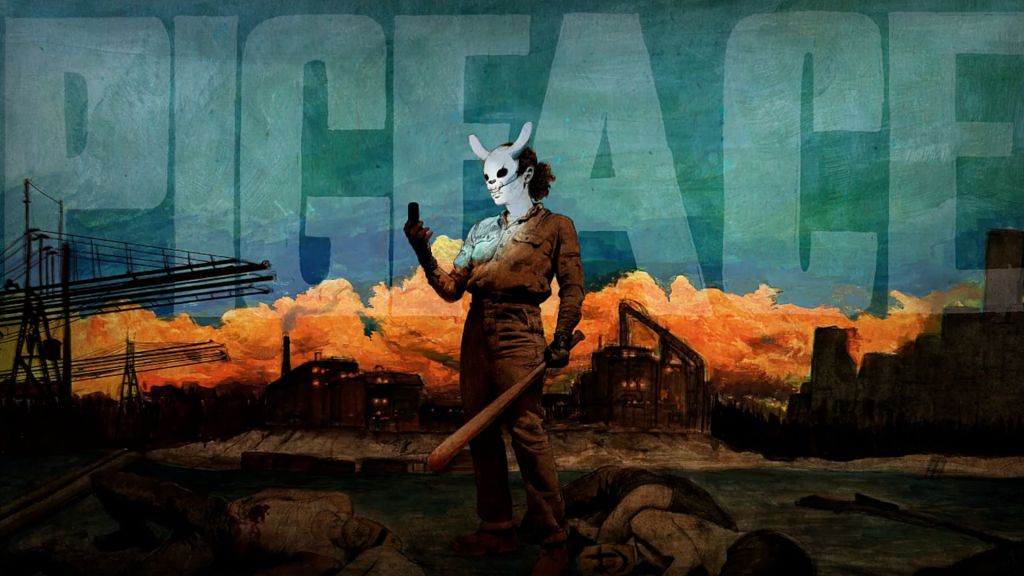
    In this early access build, a brief introduction and tutorial introduce the player to “Exit” – a hit-woman who runs afoul of a vigilante group known as “The Cleaners”. With a bomb embedded in her skull to ensure compliance, she’s sent after several gangs to dismantle illegal drug and weapons trades. It’s a classic setup but also one with a surprising amount of narrative in the form between-mission cutscenes or calls from her handler; a handler that sounds increasingly stressed and unhinged when caught between a merciless killer and his equally intimidating boss.

    It remains to be seen how important that overarching narrative becomes, but it provides light context for a gameplay loop that shifts between Exit’s safehouse where you can buy and upgrade gear, and missions in locations scattered across a map of the local area – think rundown farms, motels, and train stations. From a distinctly ‘90s-era online storefront, the money you earn from completing missions and gathering scrap can be spent on buying new weapons, attachments, consumables, and armour – expanding your options when selecting a loadout in the van you take to each mission.
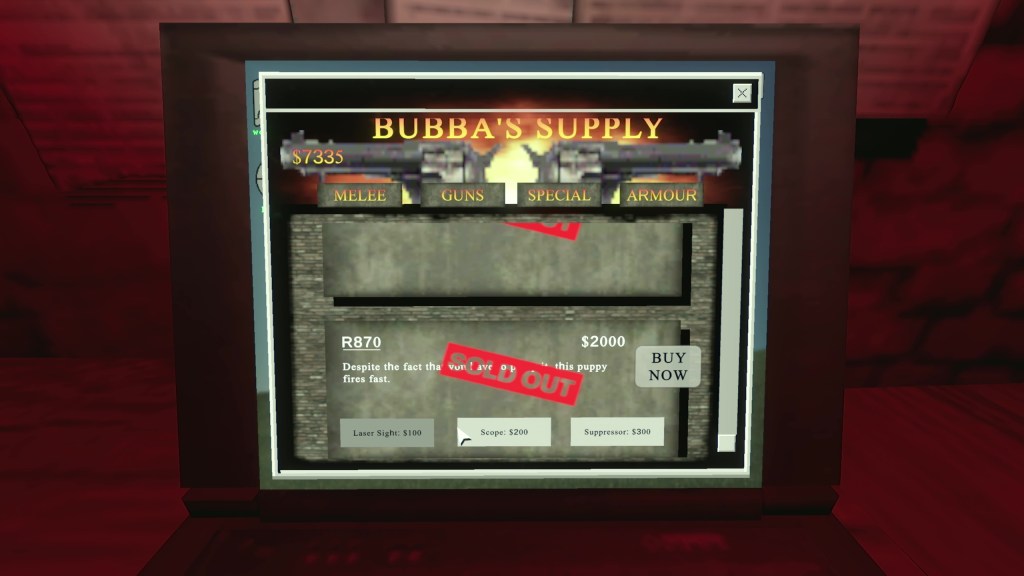
    Armour and morphine shots help you survive more hits; optional masks – which offer a trade-off between perks and flaws – can synergise with your playstyle; but the most important attributes are weapon damage and their noise level. With no crosshair outside of scope and laser pointer attachments, running firefights that draw hordes of goons towards you are unwise. Instead, methodically clearing locations by sneaking in close and swiftly dispatching small groups is optimal. Gunfire may draw everyone in an area, but it still feels satisfyingly “gamey” with an unrealistically short range.

    Once you unlock silencers for every weapon (even if it makes little sense), you can start messing around with the AI in some fun but often immersion-breaking ways. You can snipe at distinct enemies to send them panicking and firing back at you – but their allies will often stand around and do nothing if you’re out of their noise detection range. You can storm a motel floor with a silenced shotgun, blast everyone in sight, only to slip back outside to prey on unaware patrols. Enemies can still kill you quickly if you find yourself surrounded, but once you build up a decent arsenal and accessories, your recklessness is more likely to get you killed than the enemy AI.
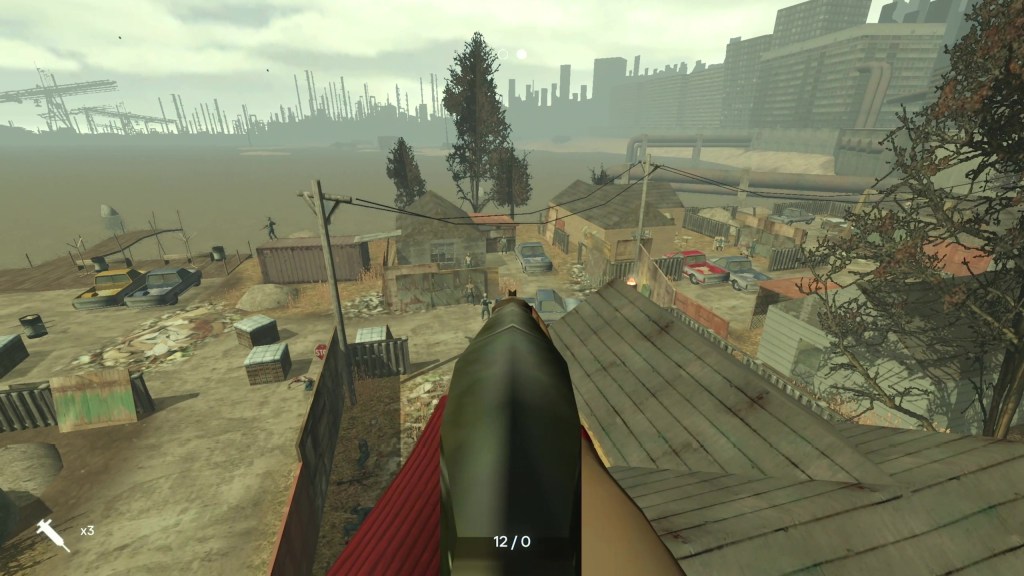
    As of this early access build (v0.24), it’s worth reiterating that PIGFACE is no boomer shooter with a focus on hand-crafted levels and enemy placement; it’s all about finding your own fun in janky sandbox environments reminiscent of the early Hitman games. If you enjoy the idea of brisk sandbox missions, replaying them with new gear or different approach, and just messing around with the AI for fun, PIGFACE is one to keep on your radar or in your wishlist.

    PIGFACE was previewed on PC using a code provided to gameblur by the publisher.
  • Review: Turbo Kid (Nintendo Switch)

    Review: Turbo Kid (Nintendo Switch)

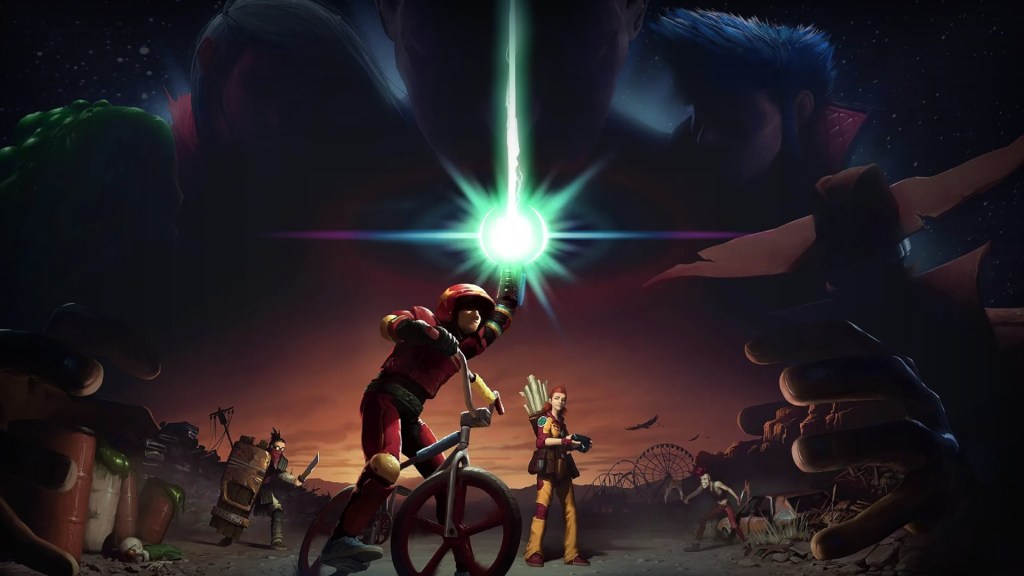
    Once upon an apocalypse, in a 1997 wasteland, there was a kid, his friend, and a bad guy trying to control everything. With his BMX and Turbo Glove, the “Kid” had no choice but to take on the bad guy in a no-holds-barred, gory brawl. But, when the dust had settled and the damage was too great, the Kid rode away into the Wasteland sunset to explore what was left of the world.

    That, boiled down to its essence, is the synopsis of Turbo Kid, a low-budget SF/Superhero movie that, most likely, many have never heard of nor seen. That makes reviewing a videogame based upon said movie a rather amazing thing in of itself. Not only because it’s based on a movie that came out in 2015 and promptly disappeared into the cult market, but because movie tie-ins have a checkered past. The chances of a good adaptation are, as we’ve sadly come to accept, pretty thin on the ground if not backed by massive studios.

    We throw around the expression “labour of love” around a lot when it comes to entertainment and this is one of those times where it shows throughout the experience. Developers Outermind Inc., have joined forces with the original movie team to create an experience that channels the essence of the movie, while expanding upon it in significant ways.

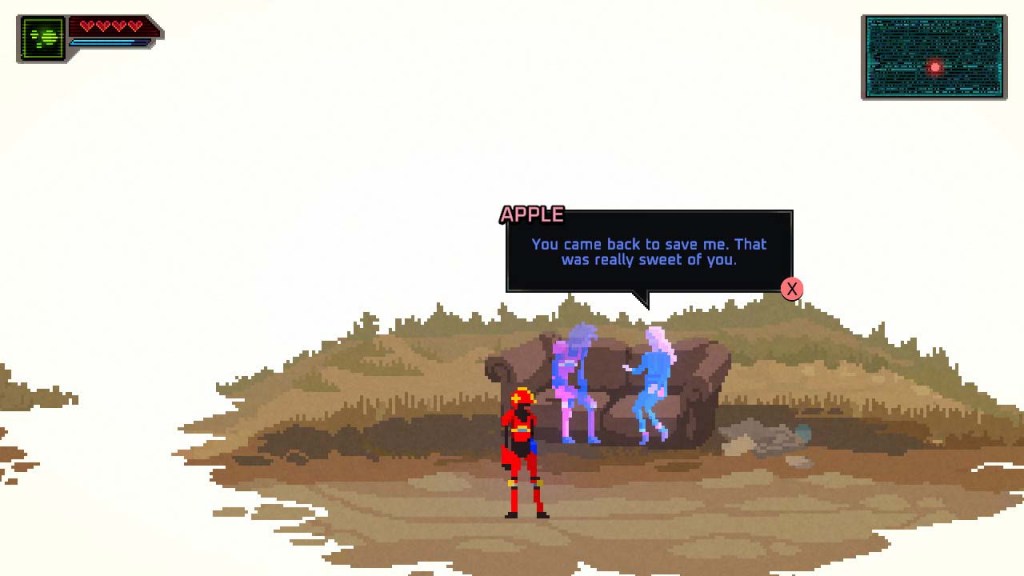
    The world feels bigger and more detailed, with a history behind it that shines through in what you’re told, along with the many visual clues showcasing this new version of post-apocalyptic 1997. There’s a new cast of odd characters, even weirder situations, and a more fleshed out take on the world revealed through impressive visual storytelling.

    The game doesn’t set out to recreate the movie in playable form, instead it continues where the movie left off with the Kid riding out into the Wasteland. He doesn’t get very far though before he’s ambushed and robbed of his weapons and bike. Thus begins a new journey to get his stuff back that eventually dovetails into a new threat for the struggling survivors of this world.

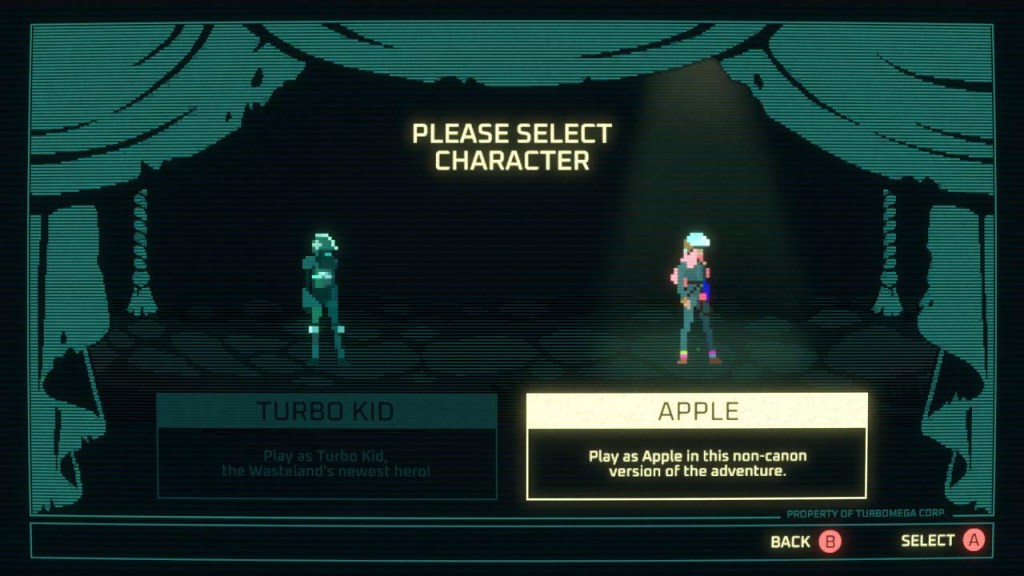
    The Kids journey is canon, though there are two playable characters you can choose from: the Kid or his friend Apple. Apple’s journey is a non-canon one and, even if you haven’t watched the movie, it’s not hard to guess why.

    There’s a lot of story on offer here, either to give context to what’s happening or merely to add some humour to the proceedings – usually through the sidequests which are fun to do because of how they play out versus the rewards. There’s a giant mutant rat looking for sweet, sweet turtle meat; a mysterious voice educated on bygone cult movies; and a sad tale of a robot looking for meaning, amongst others.

    While the story alone is worth the price of admission, we’re lucky that it’s been paired with some truly addictive gameplay.

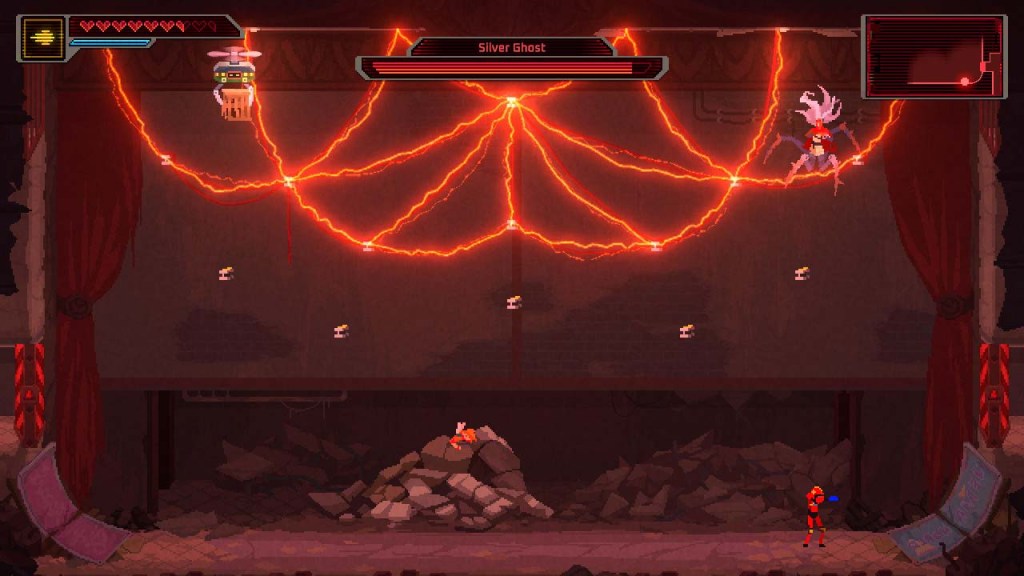
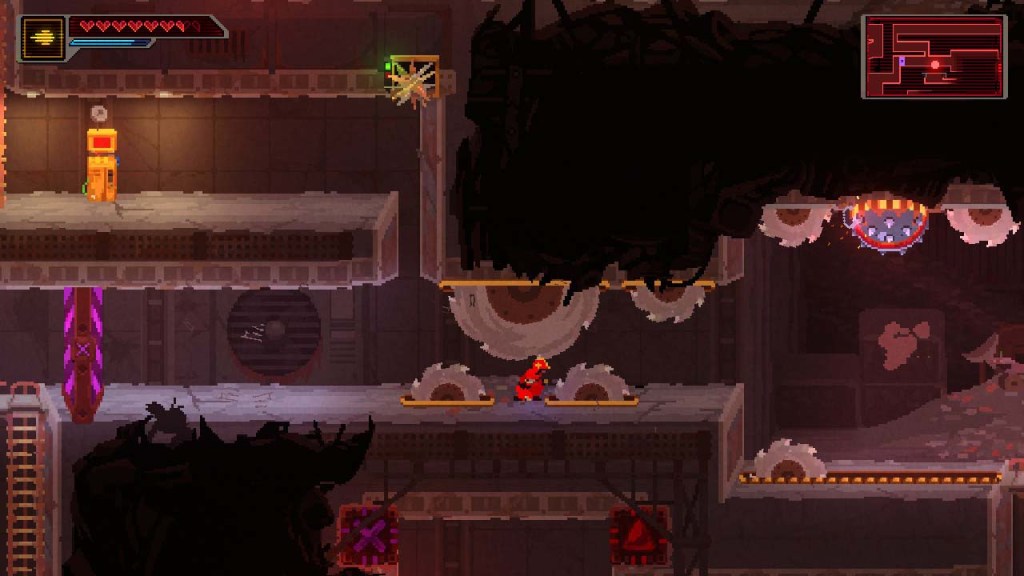
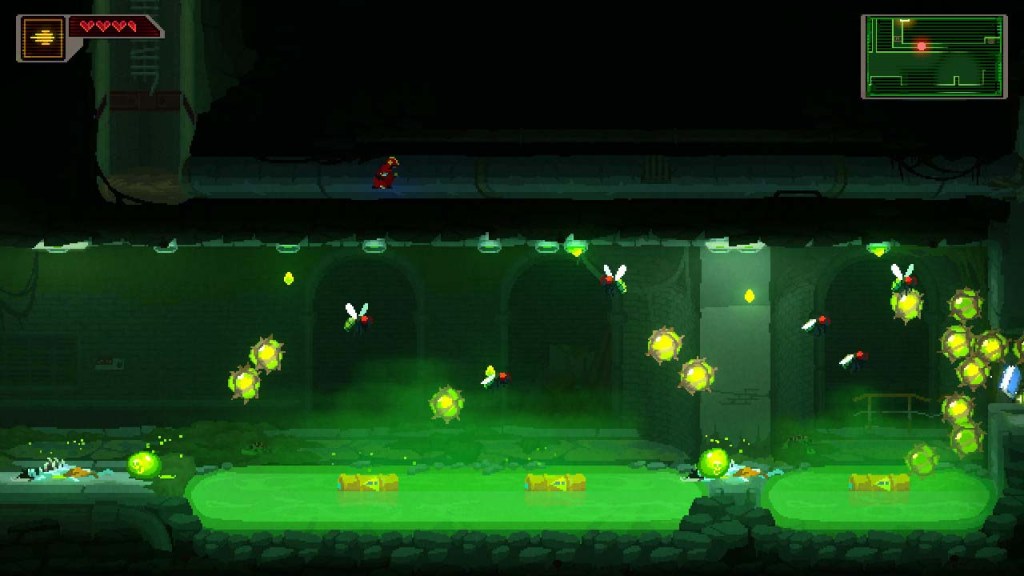
    Turbo Kid is as Metroidvania as it gets, following the common gameplay designs to a tee. There’s the expansive world to explore, replete with blocked off passageways and doors that can only be opened with new abilities; a variety of enemies that make exploration challenging; hidden pathways to find; and bosses to fight for the aforementioned abilities.

    While that is as traditional as it gets, Outermind have managed to implement whatever digital magic it is that makes a genre you’ve played a thousand before times feel just as exciting and fun as your very first go around. Turbo Kid managed to grab me right from the get go and never let go.

    As expected, the Kid’s BMX plays a huge part in traversing the landscape once you’ve reacquired it. Thanks to the magic of technology, you can teleport it to you anytime, anywhere. Once you have it in your arsenal, it becomes even more apparent just how much like a BMX track the world has been designed to emulate. The labyrinthine layout makes great use of half-pipes and jumps to get you around and reach those hard-to-get to areas. You can pull off tricks on your bike and engage in races for various upgrades, such as spiked tires that help you scale walls and ceilings. And it plays just as much a part in the multiple-stage boss fights as your Turbo Glove does.

    While the bulk of your upgrades will be familiar – such as Air Dashes and charged shots – the game lets you customise passive abilities through a chip system which gives you extra abilities or enhances standard ones, such as letting your BMX’s spike wheel ability last longer. You can only equip three chips at a time though.

    One control aspect that took me a bit of time to come to grips with is needing to hold down a button to crouch. Holding down a shoulder button for precision aiming was fine, but having to hold one to crouch went against years of ingrained muscle memory of just pressing down on a D-pad or analog stick to crouch in a 2D game.

    Visually Turbo Kid is a gorgeous pixel art game featuring wonderful animations for both the characters and background elements. As I’ve stated before, the visual design does a ton of heavy lifting in breathing life into the world while telling you it’s backstory.

    From the enemies that heft weighty spiked shields around to those ambiguous, drill-headed characters in the background drilling through garbage, Turbo Kid is gorgeous to look at. The art style reminded me of that classic 1991 2D adventure game Another World, though a more direct inspiration can be found in that other phenomenal 2D action platformer from 2021, Narita Boy. And it’s all rounded out with a pretty good soundtrack to boot.

    If I have any issues with Turbo Kid, it would be that boss fights, while inventive, can feel a little bullet spongy. It’s the one area in the game that did frustrate me occasionally, but on the whole, Turbo Kid is a case of the stars aligning to buck the trend of poor movie tie-in adaptations. It’s addictive, impressive, and a whole heap of fun that kept me hooked from the opening to the finale. Turbo Kid isn’t just amazing, it’s bloody brilliant and one of the best games I’ve played this year.

    Pros:

    • Fun and addictive gameplay
    • Fleshed-out world
    • Gorgeous visuals and animations
    • Labrynthine maps
    • Great soundtrack

    Cons:

    • You need to hold a shoulder button to crouch
    • Bosses can feel like bullet sponges

    Score: 9/10

    Turbo Kid was reviewed on Nintendo Switch using a code provided to gameblur by the publisher. It is also available on PC and Nintendo Switch 2.
  • Review: Heartworm (PC)

    Review: Heartworm (PC)

    If you critique Heartworm for what it is – a mostly one-dev passion project brought to fruition with the help of a niche indie publisher – it’s excellent with only a few forgivable flaws. It’s a compact homage to survival- and psychological-horror games of the PlayStation 1-era, notably Resident Evil and Silent Hill, with a story that ruminates on our fears and anxieties around the meaning of life and death.

    Despite a ranking system and achievements related to completion times, Heartworm has an intriguing but once-and-done story I won’t discuss in much detail. You play as Sam, a young woman with a debilitating fixation on mortality, who sets off for an abandoned house that urban legends say has a doorway to the afterlife. No one who enters the house has ever returned, but Sam – haunted by past traumas – thinks she has little to lose.

    With three major areas to explore and a casual playthrough lasting 4-5 hours, Heartworm moves at a brisk pace with mostly logical puzzles and only a handful of mandatory battles. The narrative is driven by stylish retro-inspired cutscenes, Sam’s frequent monologues, and no shortage of flavour text and notes that reveal her thoughts and those of others who have taken the journey before her.

    The surreal and sometimes nightmarish environments she explores are clearly manifestations of her own memories and fears, full of opportunities for Sam to comment on her life and experiences up to that point, but there are lingering threats that seem connected to earlier travellers. It makes for a setting that’s more unsettling than horrifying, so that Heartworm is more a journey of discovery like the original Silent Hill 2 and not some gruelling feat of survival.

    If you are a fan of classic or retro-inspired survival-horror, Heartworm will feel familiar and, at times, a little generic – most notably when it comes to the boss fights that feel more “gamey” than something essential to the narrative themes. Each area is sprawling and interconnected, with the way forward blocked by both conventional and bizarre locks that force you to hunt for actual keys, key-like objects, or clues to solve puzzles you might recognise from three decades of survival-horror games.

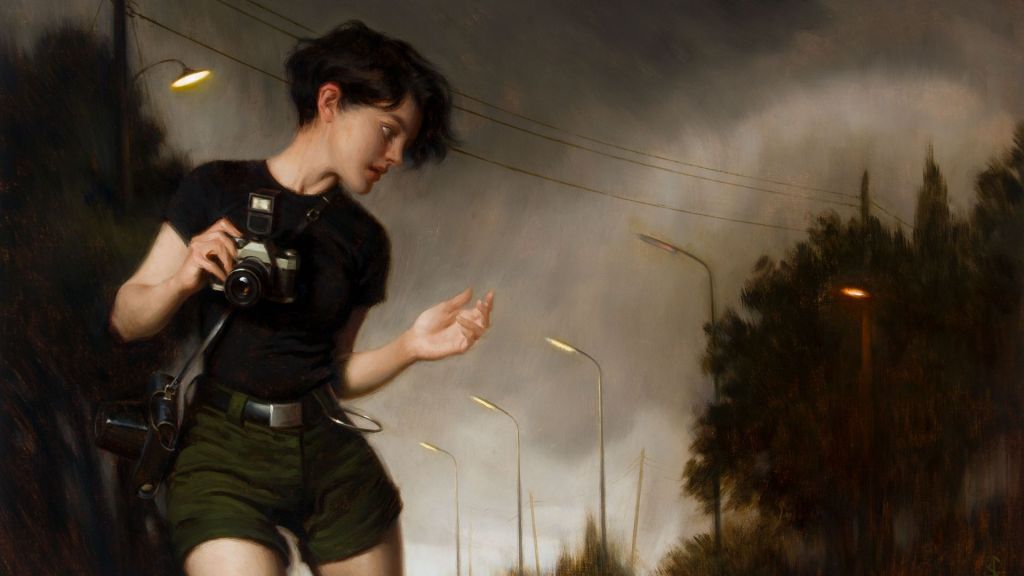
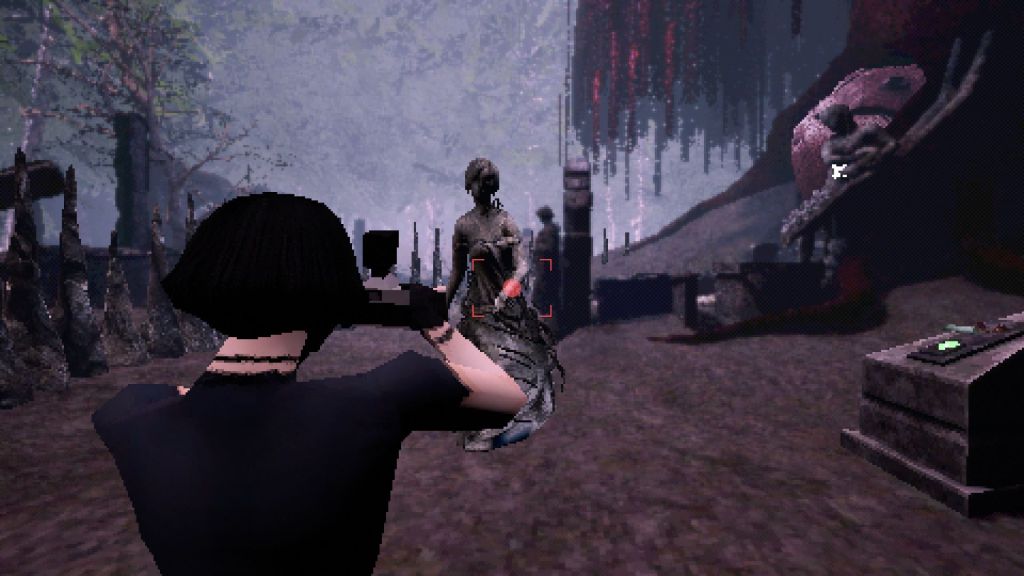
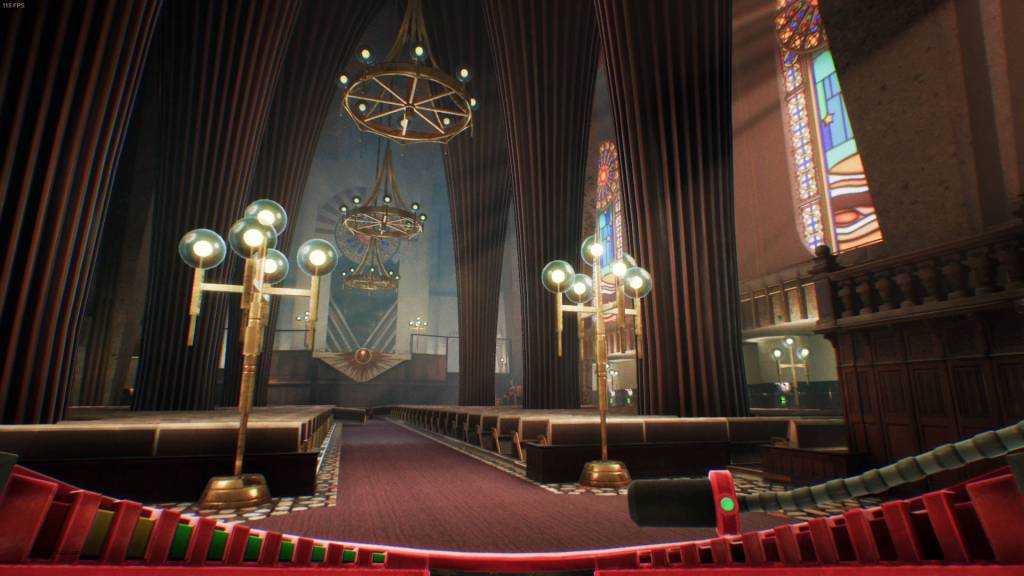
    The opening abandoned house and a hub-like cathedral hanging above a void set the tone and test your basic puzzling abilities. A gloom-shrouded neighbourhood has Silent Hill vibes and introduces roaming enemies – teleporting static ghosts and a giant spider – that you put down using Sam’s camera. The woodlands section feels eerily serene, aside from the rabid dogs, deer, and terrifying statues. The final multi-level clocktower mansion leans heavily into Resident Evil – sometimes literally – with elaborate key hunts that, in turn, lead to Silent Hill-esque environments, such as an abandoned hospital, school, and subway, filled with leaping chained creatures and twitchy mannequins.

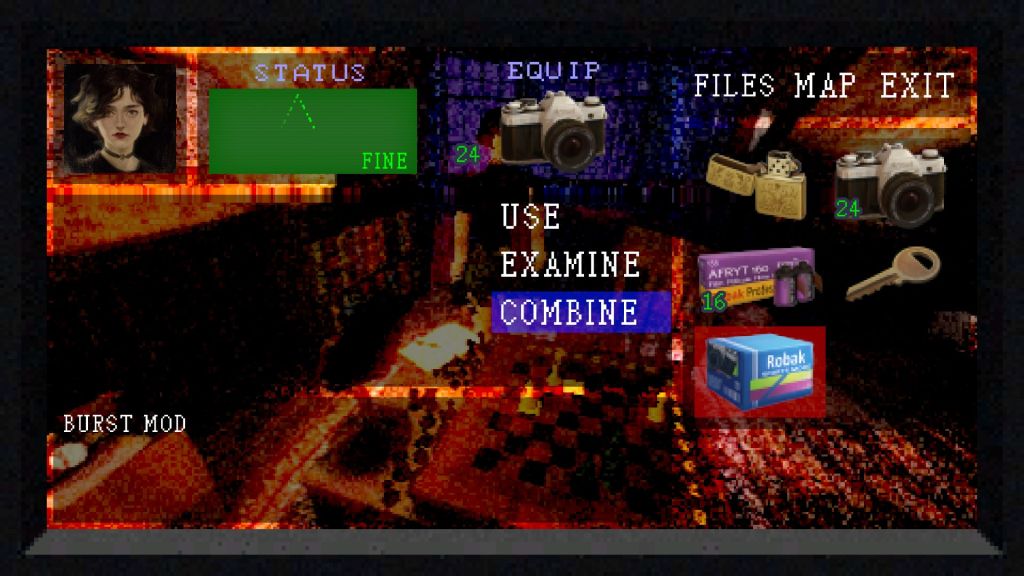
    The combat and boss fights in Heartworm rarely challenge you, as there is plentiful film for Sam’s camera, the ability to snap the camera behind her shoulder for easy third-person aiming, and no shortage of basic healing items that you can combine to form stronger medpacks. It’s all familiar fare and most enemies are easily avoided if you just keep moving. The combat is engaging enough but the focus is clearly on solving puzzles and hitting frequent story beats.

    That said, Heartworm has the potential to frustrate if you’re not paying attention or when using the default pixelated and dithered visual style. If you’re a fan of semi-fixed camera angles and “authenticity”, Heartworm can provide that chunky, upscaled 240p look. If you disable the pixelation and dithering effects, you instead get a good approximation of what modern emulators can produce running early 3D games. Either choice looks great, and the visuals are complemented by unsettling ambient audio and haunting music loops that generate a ton of atmosphere. However, as much I loved the pixellated look, the extreme aliasing makes spotting pick-ups and environmental clues difficult.

    Another issue is that the size of many areas can make backtracking tedious if you’ve missed environmental clues that feature in later puzzles. This applies to a handful of optional puzzles to gain a camera upgrade and secret memory photos – at least one of which is required for the good ending that feels most consistent with Sam’s evolving attitude. There is a file system for documents and a modern map system that highlights both doorways and rooms with remaining items, but I’d recommend you treat Heartworm like a classic survival-horror game and take notes as you go.

    Looping back to my opening line, Heartworm gets so much right as a compact indie game that a few flaws did little to detract from what is otherwise an exceptionally well-made homage to both survival-horror and psychological-horror classics – just one with a more pertinent story that anyone could relate to. The good ending variations are perhaps a little too simplistic given the complexities of mental health issues, but Heartworm – much like Crow Country, My Happy Neighborhood, and Sorry We’re Closed – is another game in the genre that could broaden the audience by tempering the horror with more heart.

    Pros:

    • A compact homage to survival- and psychological-horror classics
    • A brisk and intriguing story that deals with anxieties and fears around the meaning of life and death
    • Plenty of excellent puzzles and competent survival-horror combat
    • A stunningly “authentic” retro-aesthetic

    Cons:

    • Backtracking can be tedious if you miss something
    • Optional secrets determine the ending scene
    • Sam’s evolving attitude and the positive endings might feel too simplistic given the content matter

    Score: 8/10

    Heartworm was reviewed on PC using a code provided by the publisher.

  • Review: Trident’s Tale (Nintendo Switch)

    Review: Trident’s Tale (Nintendo Switch)

    It’s time to man the mizzenmast, batten those hatches, and get a new plank to walk, because the briny seven seas be calling again. Aaargh, me mateys! Me cutlass be ready for a new pirate adventure and the burying of treasure!

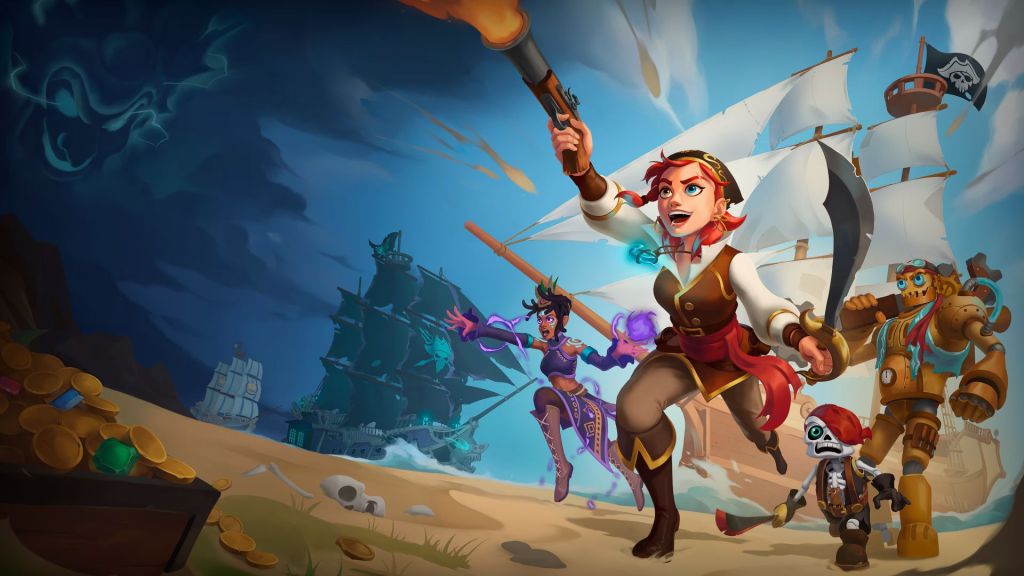
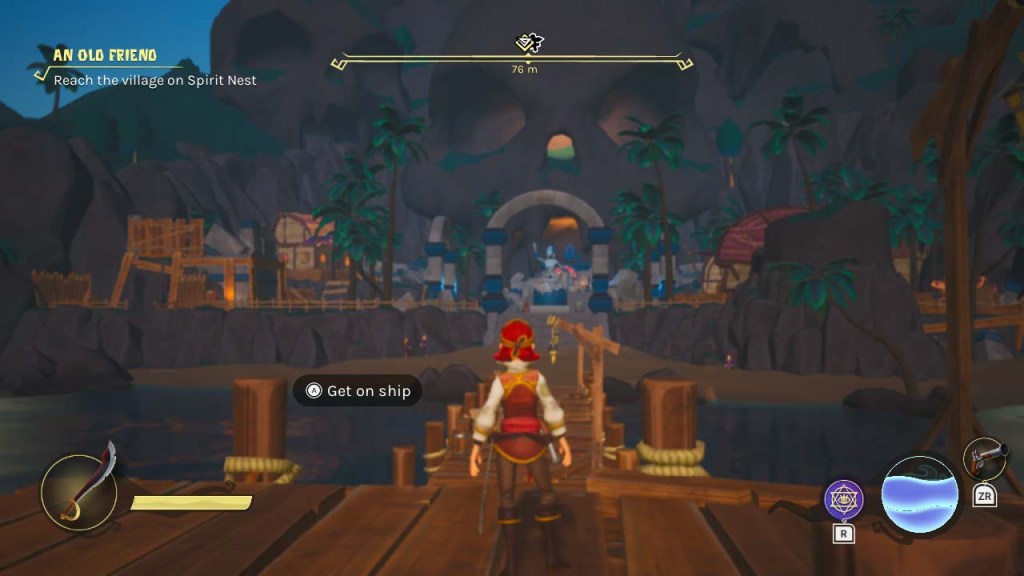
    Developer 3DClouds is attempting to fill that piratical itch with Trident’s Tale, a swashbuckling, seven seas-crossing tale of piracy, treasure hunting, and skeletons. You play as Ocean, a pirate wannabe who can’t wait to leave her island home. But when Ocean finds a hidden piece of the legendary Storm Trident, she puts herself in the crosshairs of a nefarious group of undead pirates also looking for all the pieces.

    The Trident, you see, contains the power of a god and, if all the pieces are united, that power goes to the wielder. To survive, Ocean has to assemble a crew, find the remaining pieces, and become a legend in the process.

    Trident’s Tale cribs it’s ideas from games that have come before about the golden age of piracy. As Trident’s Tale is an all-ages game that feels like it was made with kids in mind, those inspirations have been trimmed back to present an easy-to-get-to-grips-with adventure that spends as much of its time on land as it does at sea.

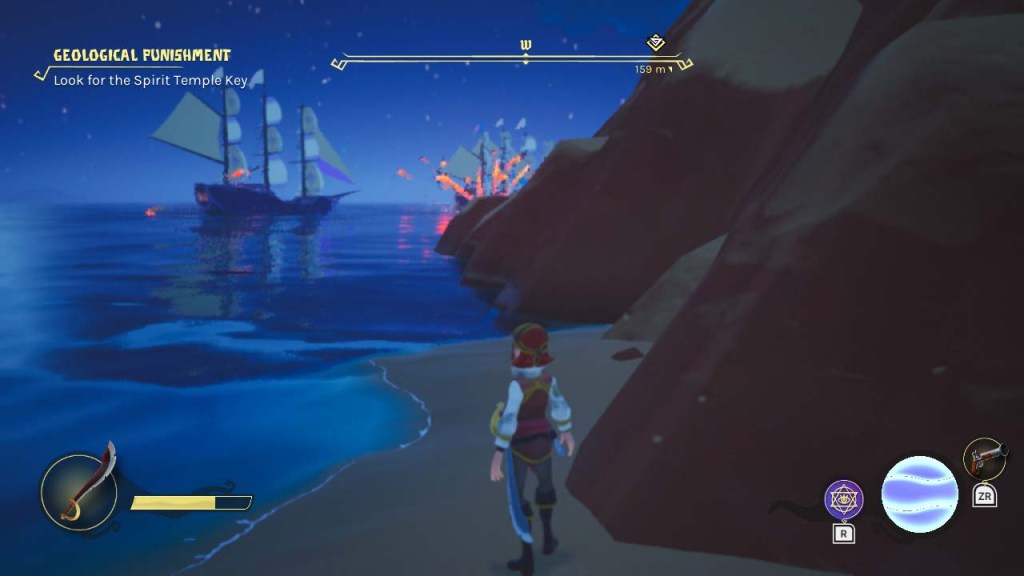
    The gameplay is split into two distinct sections, both beholden to the idea of exploration. There’s a third person, on-foot adventure mode that combines melee combat with light puzzle solving and a healthy dose of platforming. There are, of course, ship sequences that see you explore a large, watery map full of islands and other ships – many of which you can scuttle to continue funding your voyage.

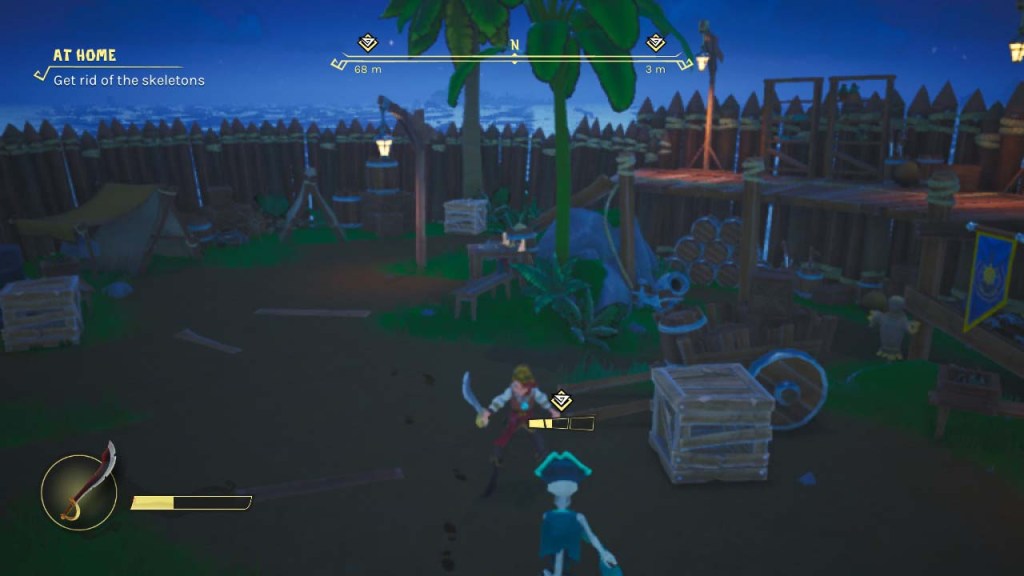
    When you’re not swaying all over the poop deck (that’s real, look it up), your land-legs will be getting a good deal of use on the islands you can explore, either for side-quests and items, or to progress the story. There are resources to collect for a simple crafting system, basic platforming in many locations a nice sense of verticality, and lots of melee combat to go around. The undead will hound your every move. Thankfully, you have a trusty cutlass and pistol to deal with them.

    Ocean has access to light and heavy attacks, a dash to get out of the way, and a pistol that is probably the most useful item in her arsenal. Each weapon has its own special ability, such as the pistols default ability to stun enemies briefly. Scattered across the game are recipes for new weapons, armour, and ship upgrades that use those shiny chunks of bone and iron you’ve been collecting. You can also simply upgrade your existing ones.

    Ogh, and what would a pirate be without a crew? As you travel across the world, you’ll recruit more scallywags to your cause who, thankfully, provide more than just snarky quips while sailing. These crew members give you access to magical attacks for use in both melee and naval combat. A song that heals you while stunning enemies? I’ll take that please!

    Ocean spends a lot of time sailing the seven seas so blue, so it’s nice that ship control and combat have been simplified as well. You raise your sails to get moving, with three settings for speed, and can pick up floating crates in the ocean to gain more resources. There are many islands to explore, either to continue the story, explore temples, find even more resources, or engage in side-quests.

    You can dock at harbours to make life easier or, if you’re close to an island, abandon the helm and dive into the cooling waters for a quick swim to shore, all of which is handled seamlessly. You can always fast-travel to your ship and islands you’ve already explored, which makes backtracking a breeze.

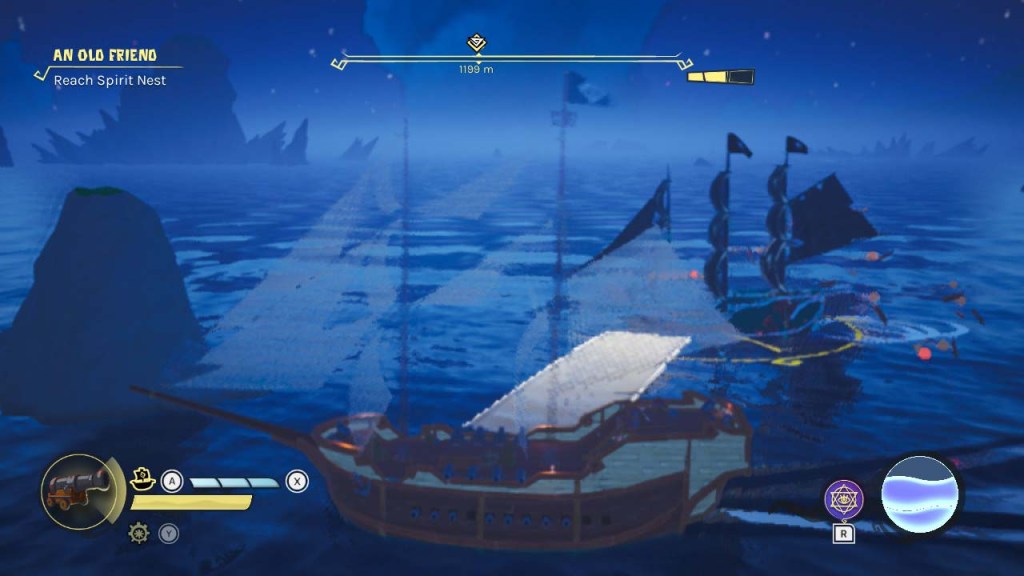
    Where naval combat is concerned, the direction you’re looking aims your cannons. The only complication is adjusting the height of your shot for a broadside or judging the distance when using the front or rear cannons. When an enemy ship is on its last legs, you’ll get a boarding option that just nets you more resources before it’s scuttled. Sadly, there’s no actual boarding of other ships or fighting their crew which was a bit of a letdown.

    The story is passable Saturday-afternoon, pulp fare with a humorous take on proceedings. How much that humour lands will depend on the player though. While I wasn’t too chuffed with much of the dialogue, I did enjoy some of the cringy pirate dad jokes during the loading screens. The voice acting is passable as well and the narrative gets the job done even if it doesn’t truly immerse you in the world or the supposedly high stakes.

    Sadly, Trident’s Tale comes with some serious waterlogged issues that spoil the adventure. Some of those issues are design-related, but the rest are down to poor performance that seriously hampers the experience on the Nintendo Switch.

    The camera position in combat when locked on is a complete pain as it drops low behind your character and obscures the actual combat, blocking your view of both the enemies and their incoming attacks. I stopped using the lock-on and kept the camera at a 3/4 view of the action, which made combat far more palatable as there’s a degree of auto-aim that’ll make sure you don’t miss.

    This introduces the problem of the environment blocking the view depending on the area, but it’s less frustrating than the lock-on issues. on that note, the lock-on disengages as soon as you turn your back to an enemy, so pretty much every move that dashes back and out of harm’s way renders it useless. For a few battles where you really need the lock-on, this is a pain.

    Most significant are the games visuals and performance issues that I’ assume’d hope are limited to the Switch and maybe the last-gen consoles. Bluntly put, this is another case of Unreal Engine and the Switch not mixing politely.

    The stylised art style is nice enough, but the games resolution on Switch is so low that it really hampers visual clarity. Most of the time, it just looks very hazy, with everything from characters to foliage looking blurry and aliased to the point where it can even affect ship-based combat when your circular crosshair gets lost in the visual noise.

    Pop-in, as we’ve come to expect from UE titles, is also present, with smaller environmental assets and props popping in mere feet from the player character. At one point, I wasn’t sure if the circular blob masquerading as a tree was meant to look that way or the textures simply hadn’t loaded in.

    Finally, there’s the overall framerate which can create a sluggish feeling experience, particularly in combat against multiple opponents, where inputs don’t always register. It’s not unplayable mind you, but it feels like the Switch version of the game needs more optimisation. Surprisingly, the developers have managed to implement some fairly nice looking screen space reflections on water surfaces. It does help to make the water look nicer, but I’d gladly see this effect sacrificed in favour of a higher resolution and a more stable frame-rate.

    Even with all these issues, I still found myself enjoying much my time with Trident’s Tale, especially once I ditched the lock-on for combat. There’s a fun, all-ages adventure here just waiting to be given a chance – but I don’t think the Switch version is the best way to experience it.

    Pros:

    • Simple fun designed for all ages
    • Exploration and naval combat feels rewarding
    • Plenty of crafting recipes to find

    Cons:

    • Runs at a low resolution on the Nintendo Switch with severe pop-in
    • The poor framerate results in sluggish controls
    • Some terrible dialogue
    • A frustrating lock-on camera

    Score: 5/10

    Trident’s Tale was reviewed on Nintendo Switch using a code provided to gameblur by the publisher. It is also available on PC, Xbox One/Series S|X , and PS4/5.
  • Tech Review: PowerA OPS v1 Wireless Controller for PC and Cloud Gaming

    Tech Review: PowerA OPS v1 Wireless Controller for PC and Cloud Gaming

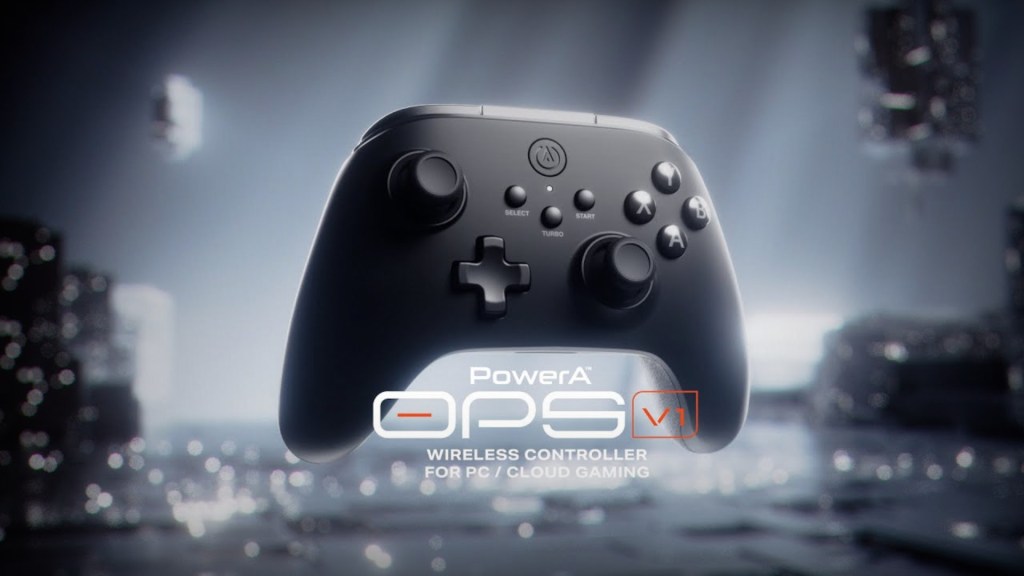
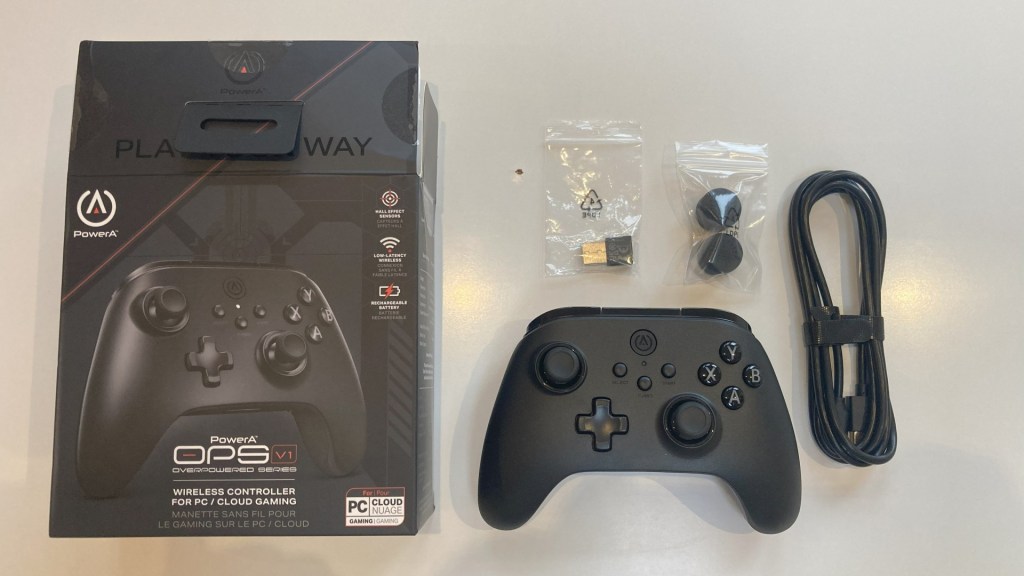
    The PowerA OPS v1 Wireless Controller for PC and Cloud Gaming is a great choice for if you’re looking for budget wireless controller with several features normally available on more premium gamepads. I’ve enjoyed using it over the last two weeks, gaming on both my PC and testing it with game streaming apps on my Smart TV, but like most third-party controllers there are a caveat or two to consider.

    Design and features

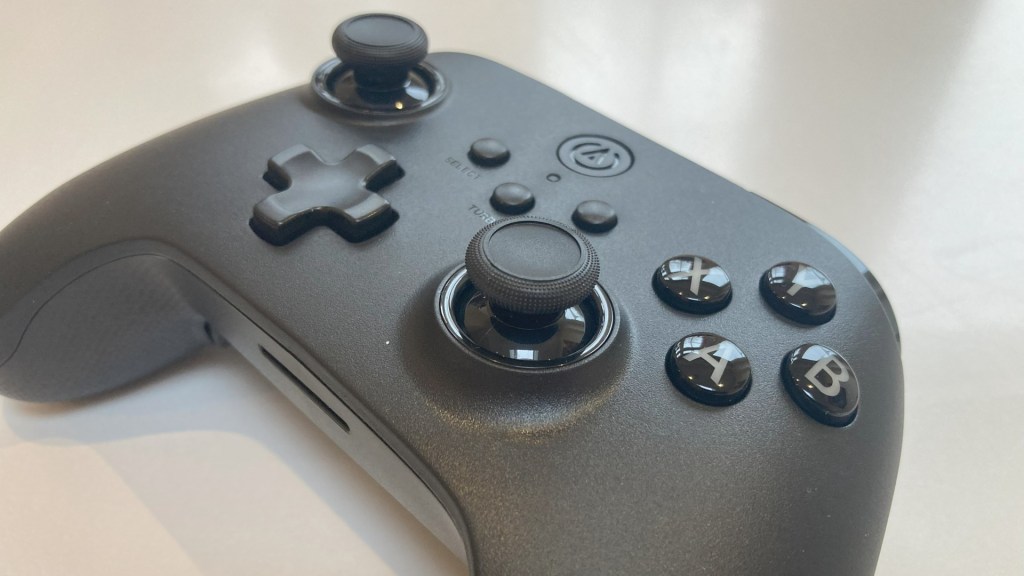
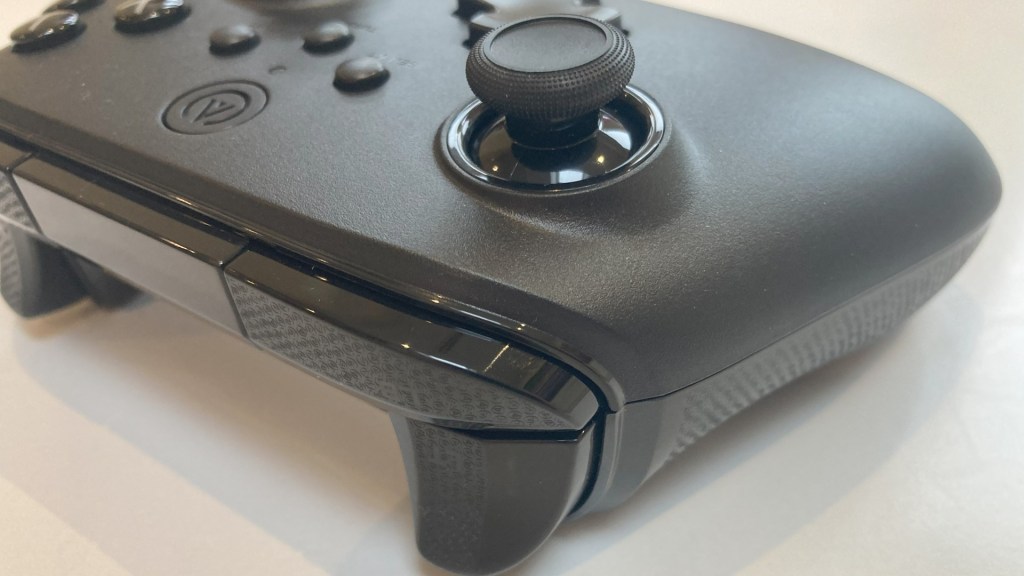
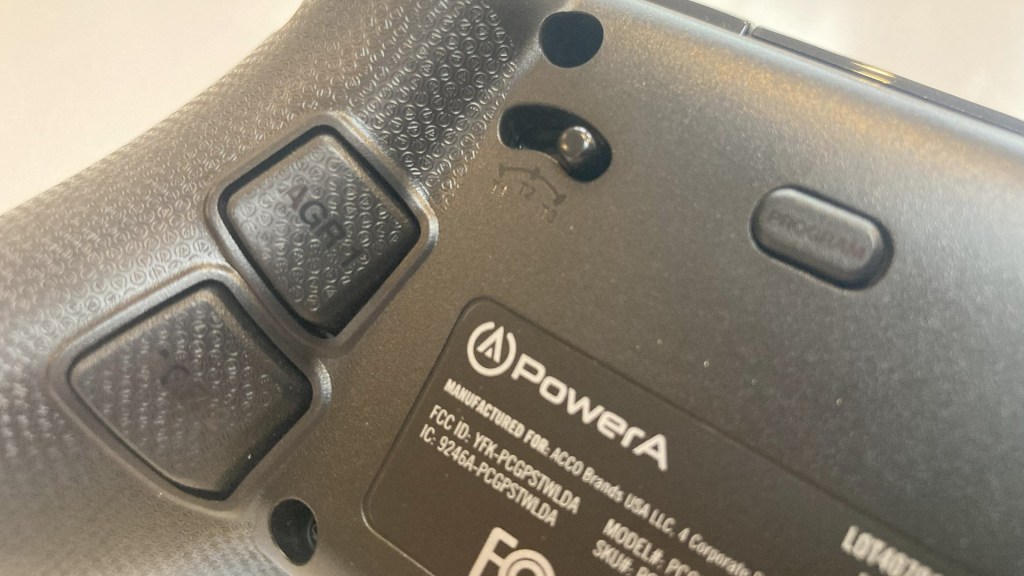
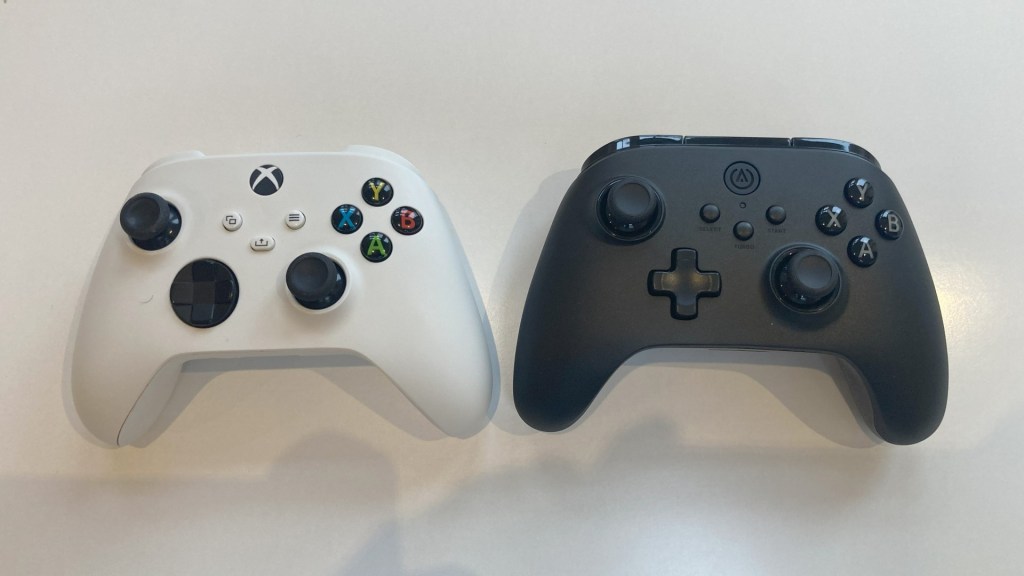
    Befitting its purpose, the Power OPS v1 Wireless Controller feels very familiar to a modern Xbox Series S|X gamepad. Not just the layout but also in form factor. It has a similar overall size, profile, grip curvature, and even feel, with a smooth plastic front and textured plastic grips. Flip it over, however, and you’ll find an internal battery, four programmable buttons, and several toggle switches for on-the-fly tweaking. Most significantly, it features Hall Effect thumbsticks and triggers – position sensors that use magnetic field interactions – which minimise the potential wear and tear you see in traditional potentiometers that leads to stick drift.

    I spent most of my time alternating between slow survival-horror with the Silent Hill 2 remake and the chaotic action of Helldivers 2, finding the Power OPS v1 Wireless Controller satisfying to use, even in comparison to my ageing Xbox Elite V1 and my favourite third-party wired gamepad, the Razer Wolverine V2. The thumbsticks feel responsive, accurate, and sit at a comfortable height with concave tops; the triggers are broad but have a decent range of motion; the bumpers and face buttons are suitably clicky; though the classic D-pad shape might disappoint some who prefer the Xbox Series circular design. It also comes with some seriously chunky thumbstick extensions that I never found a use for, but they might work as mini joysticks for a fighting games or flight sims.

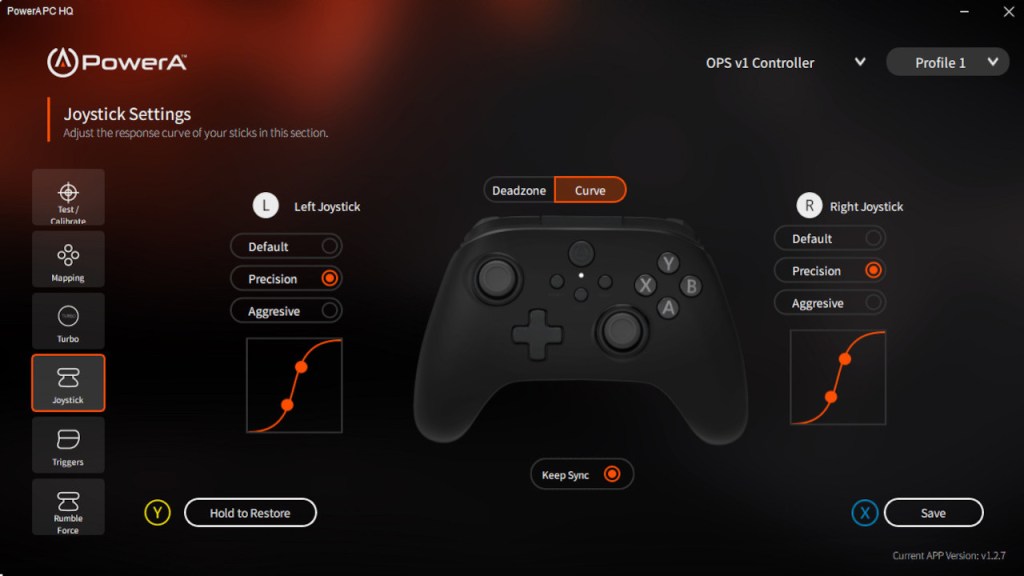
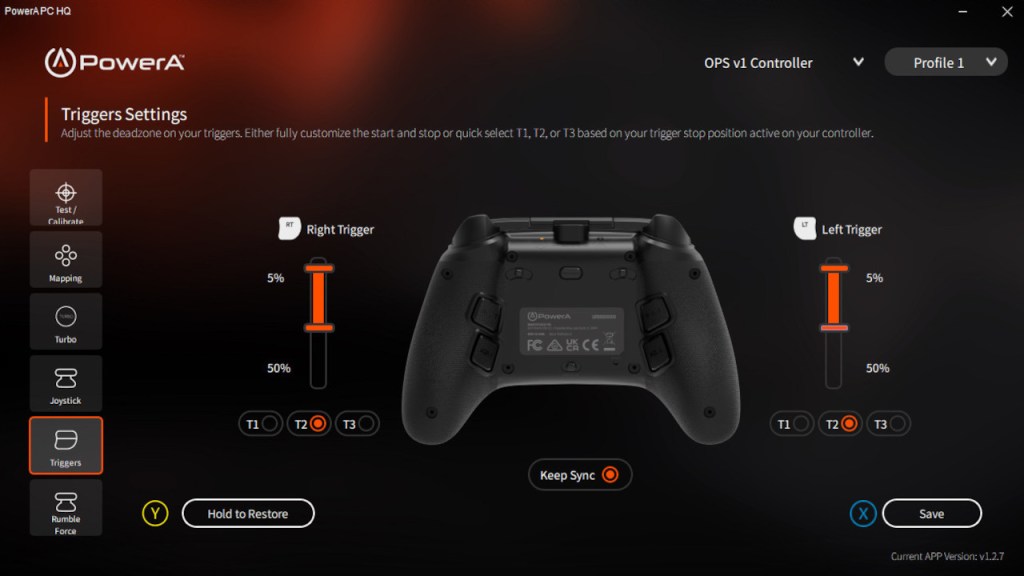
    When it comes to additional features, you’re going to get the most out of the Power OPS v1 Wireless Controller if you download the standalone PowerA PC HQ app (not the PowerA Gamer HQ app you can install and update through the Microsoft Store). You can define individual thumbstick inner/outer deadzones and adjust the response curve; you can tweak the activation range of each trigger for one of three toggle positions; you can tone down the rumble motor intensity if that irritates you as much as it does me; you reassign and enable turbo modes for the face buttons; and you can assign the four rear buttons that sit towards the middle of the grips where my middle fingertips rested comfortably.

    The Power OPS v1 Wireless Controller felt great out the box using default settings, but it’s a solid mix essential, nice-to-have, and more situational features that are not an option if you get a basic Xbox Series or Dualsense controller. I found myself making most use of the two lower rear buttons to keep my thumb on the sticks and forefingers on the triggers in Helldivers 2, while playing around with the right thumbstick response curve gave me a little more control when dealing with the inherently sluggish aiming in the Silent Hill 2 remake.

    Good compatibility with one minor caveat

    The problem with all third-party controllers – and I’m guessing this down to a mix of patents and driver support – is general compatibility and weird limitations you’d expect to be standardised.

    In that regard, the Power OPS v1 Wireless Controller does better than most and gets bonus points for not messing with the layout for no good reason; offering three ways to connect – wired by USB-C, Bluetooth, or using a 2.4 GHz USB-A adapter; and including an internal battery that got me close to their 20-hour claim. If you’re partial to lighter controllers (I prefer a bit of heft), it weighs about as much as an Xbox Series S|X controller without batteries.

    Using the 2.4 GHz adapter, my LG Smart TV recognised it as an Xbox style gamepad, but I did have sporadic issues with Steam and the Xbox PC App if I powered up the controller after starting the app, or if it went into standby and I had to power it back up. As an example, I took a break after playing a few missions in Deep Rock Galactic, then powered it back on to use Xbox PC App Cloud Gaming to test out some other titles only to find it would no longer recognised the controller until I restarted the app. Not the end of the world but it’s something that doesn’t happen with official Xbox controllers (or when it’s connected over a USB-C cable). I should also note it has some weird default button assignments in Windows, so don’t go mashing buttons when you’re not in a game.

    Final thoughts

    PowerA have been making accessories, for better and sometimes worse, for about 15-years at this point. In an increasingly crowded budget market, the $50-equivalent PowerA OPS v1 Wireless Controller for PC and Cloud Gaming is one of the better choices if you want a decent Xbox Series S|X alternative that also sports programmable features usually found on more expensive devices. Even for those uninterested in tweaking settings within an app, the build quality is good, the connectivity options are great, and the Hall Effect thumbsticks and triggers feel excellent.

    Pros:

    • Solid build quality and a similar form factor to an Xbox Series S|X controller
    • Three connectivity options cover a range of devices
    • The Hall Effect thumbsticks and triggers feel great by default
    • Additional customisation features you rarely find at a budget price

    Cons:

    • You’ll need to use the PowerA PC HQ standalone app for full functionality
    • Potential connection issues if powering on after a gaming app is already open

    Score: 8/10

    The PowerA OPS v1 Wireless Controller for PC and Cloud Gaming was reviewed using a sample provided to gameblur by the manufacturer.

  • Review: Frostpunk 2 (PC)

    Review: Frostpunk 2 (PC)

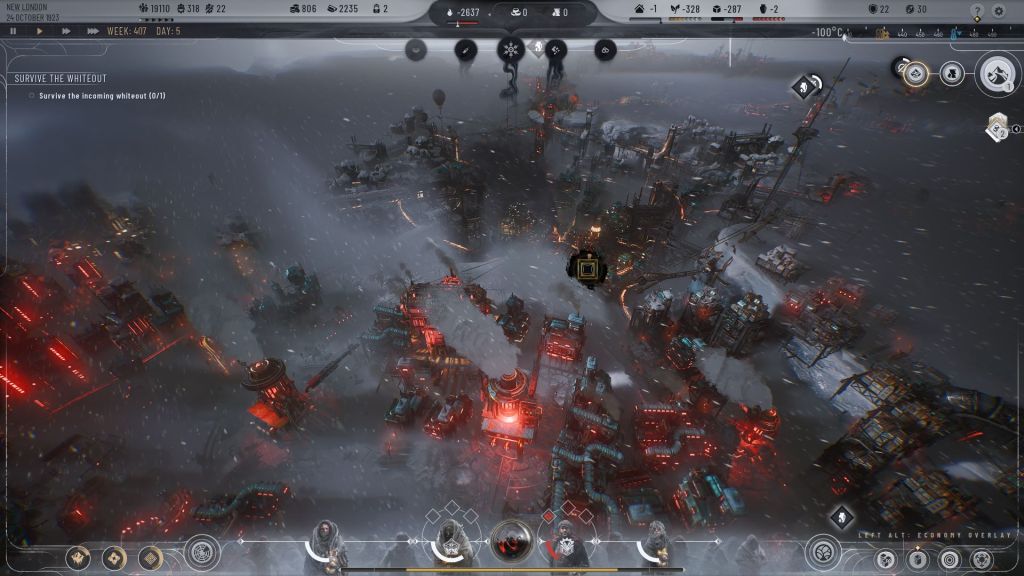
    Frostpunk 2 is not exactly what I expected from a sequel, but it didn’t take long for me to appreciate the shift in gameplay focus. The first game was a gruelling city-builder with choice-driven narrative elements, in which you cautiously expanded your city outwards from the warmth of a central generator, trying to balance resource production, resource consumption, research goals, and survivor demands as temperatures plunged. The basics remain unchanged in Frostpunk 2, but the increased scale and longer timespans result in gameplay that can feel more hands-off, as you juggle supply lines and appease political factions through menus, toggles, and map screens – with less of a focus on traditional city-building optimisations.

    As a result, Frostpunk 2 can feel like a pure management game at times – the kind you play from a detached perspective with many basic functions automated. A game in which entertainment comes from analysing numbers, weighing up choices, trying to balance said numbers, watching the consequences play out, and then adapting or iterating upon your plans. It can feel a little underwhelming in the opening hour or two when you’re focussed exclusively on establishing your first generator city, but it starts to make sense once you begin exploring the Frostlands, creating new settlements and supply lines, and dealing with several factions that have divergent ideas about the future of humanity in the frigid post-apocalypse.

    This gameplay shift makes a lot of sense when you consider the substantial campaign mode that tackles the fate of the New London survivors from the first game – the “A New Home” scenario –and serves as a lengthy tutorial for the free-form Utopia mode. Thirty years have passed since the city survived the first whiteout and the Steward has recently died (or was possibly murdered by one of the emerging factions). After a brief prologue reveals the presence of other survivors in the Frostlands, a civilian council consisting of centrist New Londoners, traditionalist Stalwarts, and adaptable Frostlanders elects the player as the new Steward and tasks them with both re-establishing coal supply lines for the generator and discovering new fuel sources.

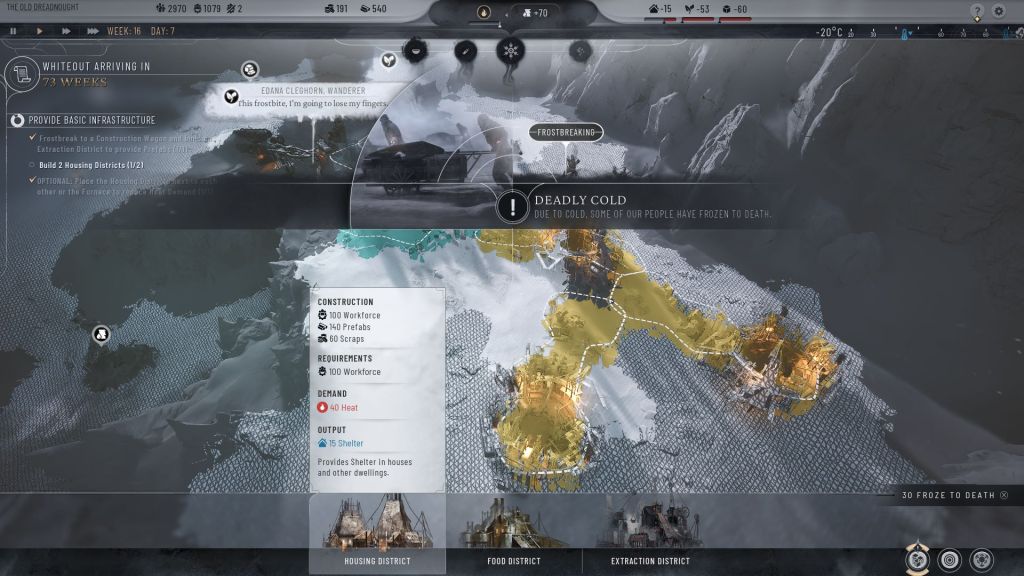
    The five-chapter campaign swiftly expands in scope to encompass vast swathes of the Frostland, with events playing out over hundreds of weeks, rather than days, and several locations from the first games scenarios returning – albeit now with canon outcomes. The impact of this expanded scope is that building out your generator city, or other large settlements, feels less hands-on. The core districts of your city – think housing, food production, or resource extraction – are built in a cluster of several titles and provide a supply of resources like the population you draw a workforce and heatstamps from, fuel for the generator, prefab materials for construction, or scouting teams to explore the Frostlands.

    A thoughtful, compact city, with carefully placed stockpiles and specialised district buildings, does offer benefits like improving productivity or reducing heat and workforce demands, but you can now deploy frost-breaking teams to clear a linear path to distant coal seams, oil deposits, fertile ground, or frozen lumber, and still build an extraction or farming district far from the generator. Certain sheltered areas also offer heat benefits, so you can even place housing districts further out. Once placed, you sit back and watch roads and heating pipes materialise, while the districts build up dynamically based on the terrain, shape, and any specialised buildings you’ve placed within them. It’s all wonderfully animated and your expansive city can look incredible, but it is a significant change from managing individual worker teams and slowly expanding into radial zones around a generator.

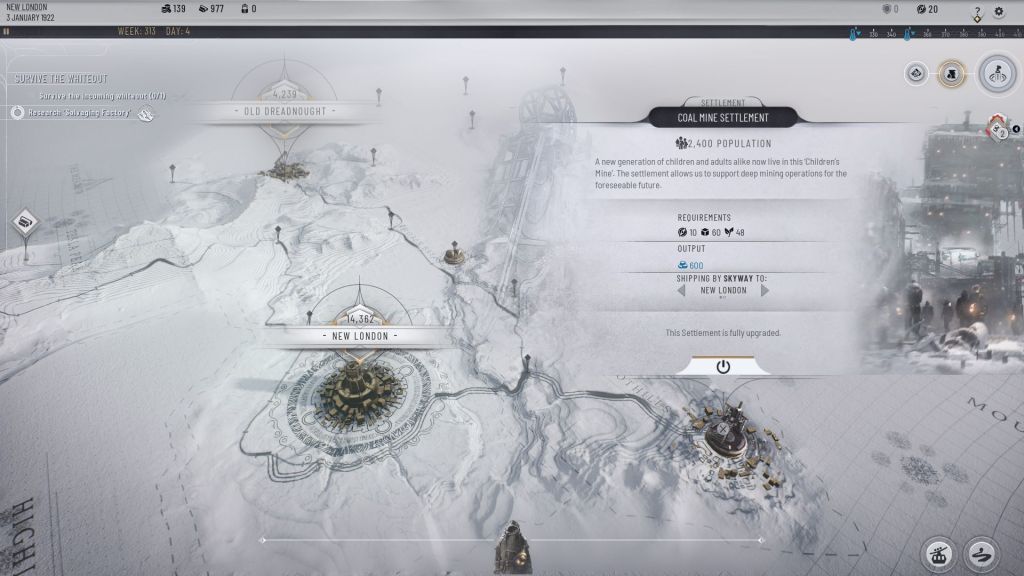
    On the upside, it pushes you to engage with the expanded mechanics faster, as your focus shifts from ensuring the survival of a single city and small population, to re-establishing a new society with all the challenges that entails. Cities or settlements become visually spectacular representations of tables and graphs; swelling population numbers are only of interest for the workforce and heatstamps they generate; and the sprawling Frostlands map evolves into an interconnected network of trails and skyways between resource-generating and resource-consuming markers. Coupled with the accelerated passage of time, Frostpunk 2 feels satisfying but less intimate, as you spend more time in menus adjusting the flow of goods between settlements or shifting your workforce between districts based on current demands.

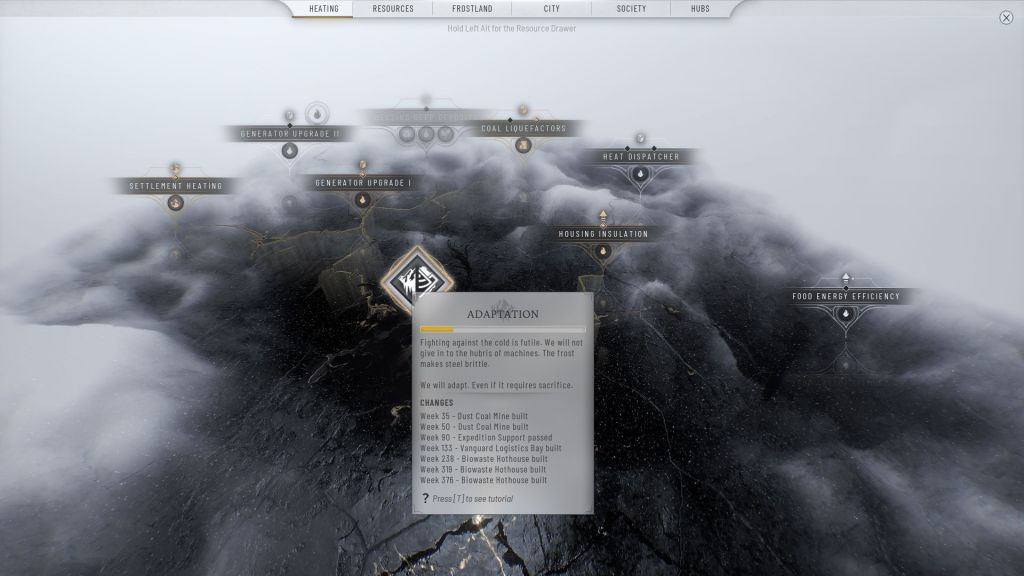
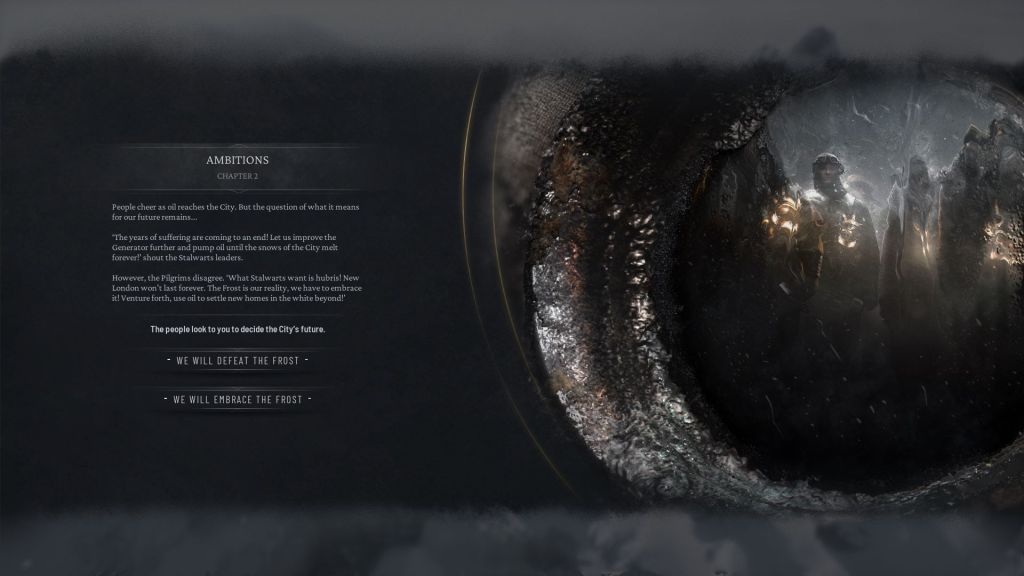
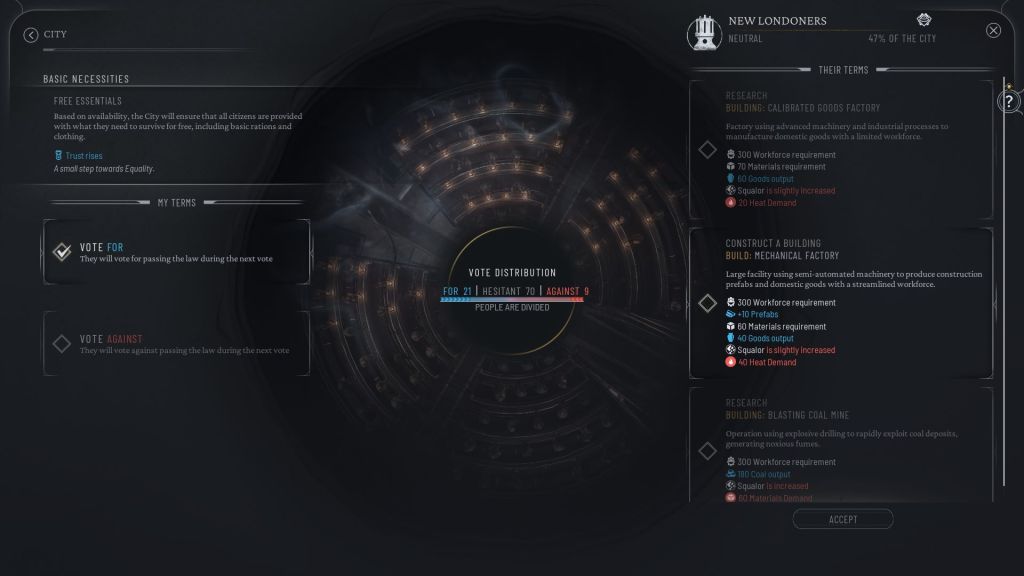
    Naturally, the remnants of humanity quickly fall back into old habits, pursuing their favourite excuse to commit savagery when resource scarcity is no longer their primary concern: ideology. Frostpunk 2 has an expansive selection of potential laws that cover everything from heating and housing to immigration, crime, healthcare, and research opportunities – but enforcing a law is no longer your mandate alone, and it needs to pass a vote in the council. This system complicates everything and introduces a divergent path through the campaign. Each faction has an idea on what the future of humanity should look like, but they’re broadly split between adapting to life in the Frostlands or turning the generator cities and settlements into self-sustaining bastions against the cold.

    Several choices in the campaign force you to choose a direction, and striking a middle ground is difficult if you’re unwilling to forfeit technological advancements that can generate near-infinite resources. To get a vote passed in the council means assessing the mood of each faction, considering the percentage of the council they hold, and engaging in negotiations; a promise to vote for or against a motion that always comes with conditions attached. Those conditions are often passing a law or research goal that aligns with their ideology, with a bonus to trust gained if you fulfil your promise, and potential backlash if you don’t. Obviously, you can’t please everyone; some factions are more aligned with one another than others; and gaining fervour with any of them – for or against you – can generate instability.

    Dominant factions whose laws and traditions you permit might offer to support the city during a crisis, while others might sabotage it to undermine you. It could mean increased productivity in certain sectors, or protests that disrupt output. It’s a constant balancing act, but while finding some degree of balance is ideal, going all in with one faction will unlock more extreme laws and experimental technology to cement their rule. Each of the four difficulty levels adjusts how much trust you gain or lose based on resource scarcity and ideological conflicts, and if the council turns against you, your campaign run is over. It’s worth highlighting at this point there are some arbitrary limitations that feel designed to make life artificially difficult when faced with unexpected campaign choices and political turmoil, such as being unable to mandate a minimum stockpile level of a commodity, or to modify the fuel mix being consumed for the generator.

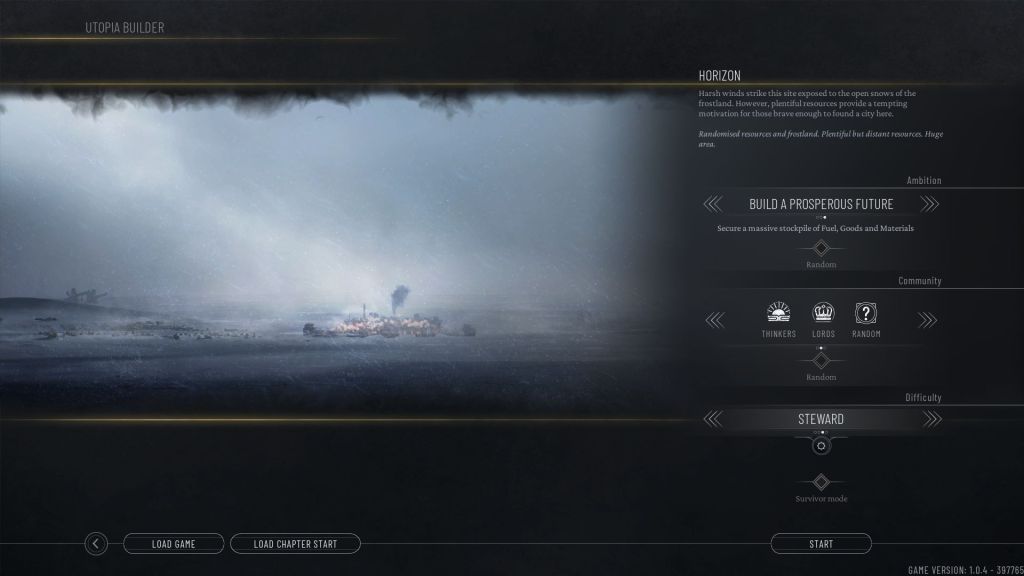
    There’s enough mechanical depth to talk for ages, but to bring this to some sort of conclusion, I’d argue Frostpunk 2 is a fascinating sequel that retains the basic foundations of the original but has a much grander scope. You could dive into the Utopia mode, pick a challenging starting settlement, set your own survival-based victory condition, and crank up the difficulty to better emulate the first game – but Frostpunk 2’s expansive campaign is the highlight. If the first game was about making tough decisions that involved trading a dozen lives for the survival of several hundred, Frostpunk 2 does this on an uncomfortably detached scale as populations swell into the thousands, spread across multiple settlements. It might not be the sequel everyone was expecting, but it feels like a terrifyingly accurate reflection of leadership in a time of crisis, in which your population is no longer a collective of individuals with needs but an ideologically fractious resource you need to maintain.

    Pros:

    • It’s easier to establish interconnected cities and settlements
    • Managing political factions is as stressful as managing resource scarcity
    • The choice-driven campaign changes up how later chapters play out
    • The Utopia mode offers highly customisable scenarios
    • Generator cities, settlements, and the Frostlands look and sound more beautiful than ever

    Cons:

    • Some arbitrary limitations can make life artificially difficult
    • It can feel like a pure management game at times navigating menus and maps
    • The district-based, city-building mechanics feel less significant

    Score: 8/10

    Frostpunk 2 was reviewed on PC using a code provided to gameblur by the publisher. It is now also available on Xbox Series S|X and PS5.
  • Review: Return to Grace (PC)

    Review: Return to Grace (PC)

    Playing Return to Grace had me thinking back to when so-called “walking simulators” were still a divisive topic. Video games like Dear Esther, Gone Home, or Everybody’s Gone to the Rapture – in which the narrative, characters, atmosphere, and audiovisual experience take precedence over mechanical complexity.

    On one hand, it’s a design that benefits Return to Grace, making for an immersive experience focused on the narrative pay-off. On the other, I was reminded of how fine a line this genre walks between compelling and boring if the pacing and length are even slightly off the mark.

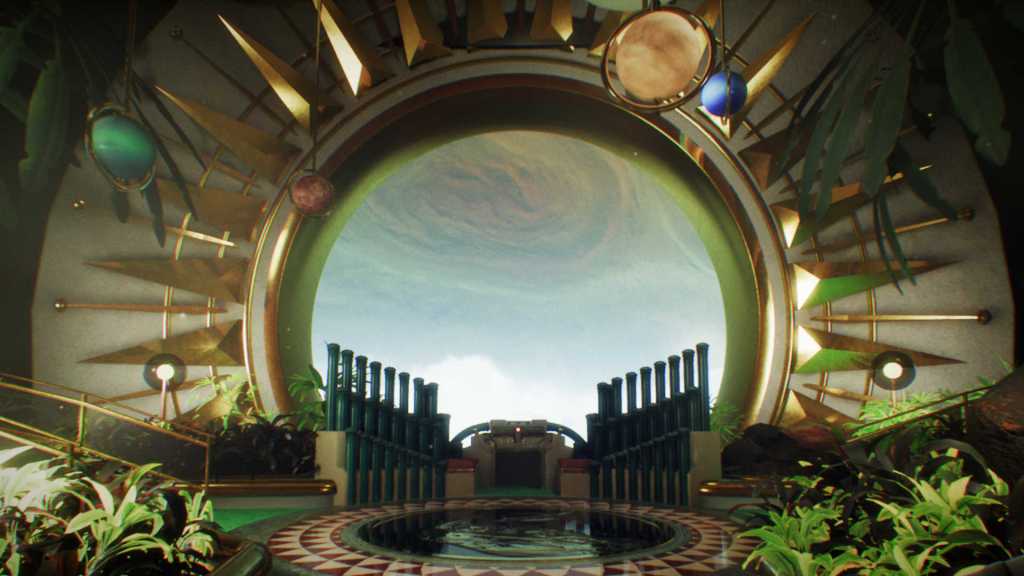
    Return to Grace is a first-person narrative adventure that places you in the environmental suit of Adie Ito – an archaeologist exploring a frozen and stormy Ganymede in 3820 AD, searching for an ancient AI “Grace”, held in god-like reverence.

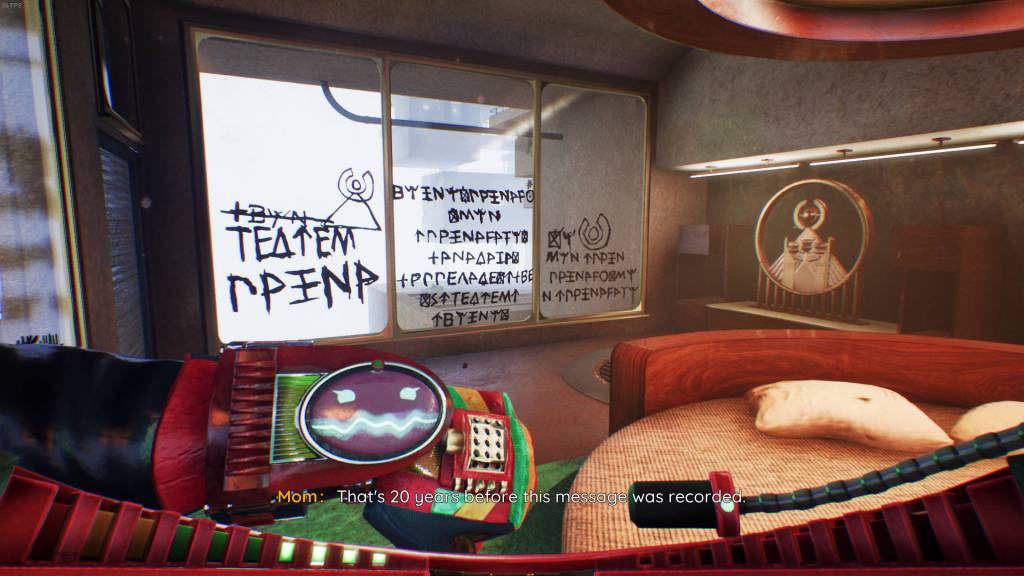
    She was an AI that led humanity into a golden age of peace and expansion across the solar system before her disappearance, a thousand years before, triggered a new dark age with many technological innovations and record keeping lost.

    This is a genre that thrives on strong storytelling and Return to Grace, despite retreading some familiar ideas, offers up an intriguing setting, quirky cast, a briskly paced mystery to unravel, and plenty of optional environmental storytelling and world-building.

    Times have clearly changed since Grace was the caretaker of humanity. Travel throughout the solar system is no longer commonplace as Adie has taken a risky, 300-day journey to get to Ganymede. It’s a one-way trip but she claims everything of value to her on Earth is gone. Record keeping from a thousand years prior is so limited she had to rely on centuries of oral histories to pinpoint the location.

    Even before I appreciated the divergent nature of the narrative, I was already sold on the setting, and I wanted to discover more about its take on the future of humanity.

    Thankfully, that “future history” element is integral to the present investigation-based story; it comes up when Adie comments on the technology she witnesses in the spire; and it often features in her conversations with an entertaining selection of AI personalities she discovers on her journey.

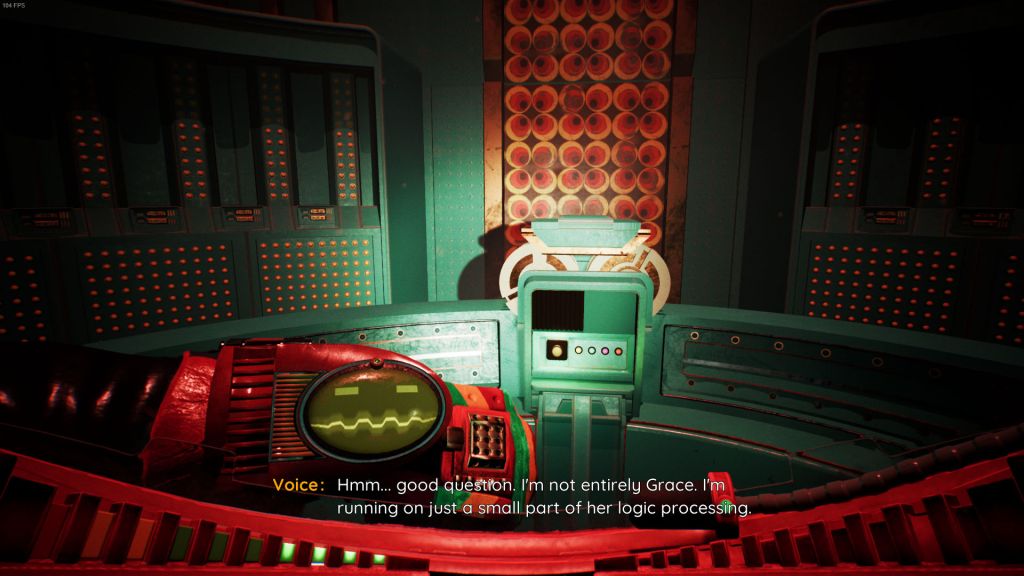
    Shortly after arrival, she awakens “Logic” who – alongside “Control” and “Empathy” – form core components of Grace’s identity. The problem is they’re old back-ups that have little knowledge of what led to Grace’s shutdown, what happened to the people that maintained the spire, or how her interactions with humanity evolved over time.

    What they do have is unique personalities, system permissions, and thoughts on how Adie should proceed. As she pushes on, they create amusing hybrid personalities – for whom Adie picks some choice names – that help her circumvent new obstacles.

    It’s not obvious at first but Return to Grace‘s most significant narrative mechanic is how it tracks your decisions. The consequences can feel a little rushed given the 3–4-hour runtime, but there are a few key moments where Adie can push forward instead of exploring, take risky shortcuts instead of the safer path, or allow the AI to perform certain tasks for her. These decisions feed into evolving AI responses and (if we exclude one obviously bad ending) lead to minor ending variations that felt appropriate for my choices.

    Return to Grace‘s biggest issue – and this is one shared by all games in this genre – is what you’re doing mechanically is rarely that engaging.

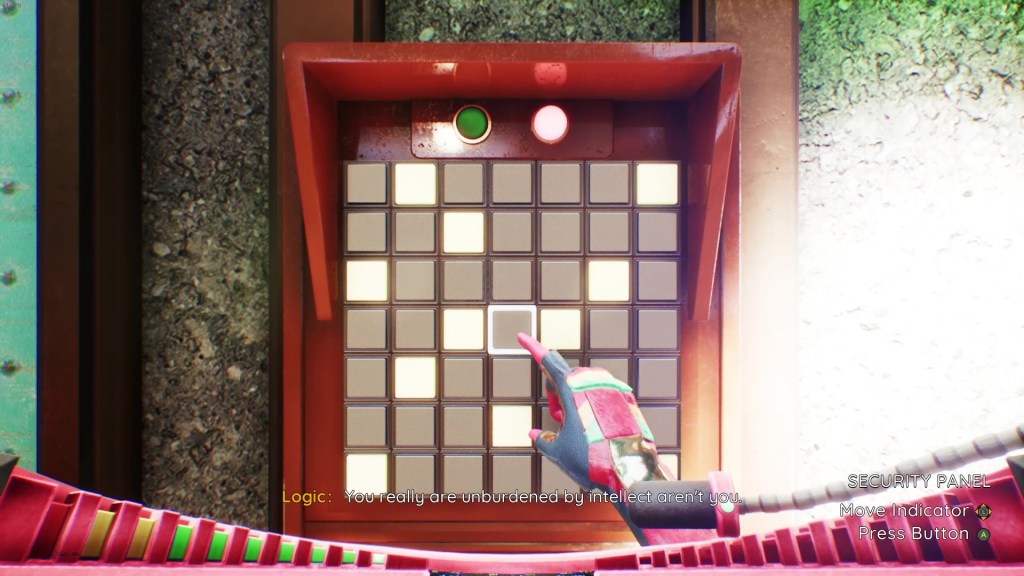
    You explore and move at whatever pace the game dictates; you sit around listening to lengthy conversations that block your ability to interact with anything until they’re finished; you push or mash a single button to trigger scripted traversal moves or optional commentary; and sometimes you engage in pattern- or memory-based puzzles that require little mental effort. Crossing balance beams, briefly controlling a crane, and melting ice with a flame-thrower is about as wild as it gets.

    Thankfully, Return to Grace’s brisk runtime – coupled with some choice comments from the AI if you do get stuck – make this less of an issue and the compelling world had me hacking every door and audio-log I could find for more details. That said, it didn’t make the process of trudging around larger areas, repeating door code inputs, and twirling Adie’s glove to line up sync points a dozen times feel any less repetitive or tedious.

    Return to Grace’s brevity and strong storytelling are its saving grace. It kept me hooked over two evening sessions and I only started ruminating on the weaker elements just before the credits rolled.

    I wanted to find out more about the past events by sifting through the deserted spire; I wanted to hear every one of Adie’s comments on the current state of humanity; I was fascinated by the AI personalities and their attempt to dissect her motivations; and there were moments of doubt that had me wondering if Adie’s quest was misguided.

    If you’re in the mood for a brisk, immersive, thought-provoking adventure with a lightly divergent narrative, and you can accept the somewhat limited and repetitive gameplay loop, Return to Grace is a great addition to the genre.

    Pros:

    • An intriguing setting and briskly-paced mystery to unravel
    • Thought-provoking conversations and ending variations based on your actions
    • A likeable cast with quality voice acting
    • Atmospheric environments and soundtrack

    Cons:

    • An over-reliance on a handful of simple, repeated mechanics
    • The short length makes some AI relationships feel rushed

    Score: 8/10

    Return to Grace was reviewed on PC using a code provided to gameblur by the publisher. It is also available on Xbox Series S|X and PS5.
  • Review: The Riftbreaker (PC and Xbox Series)

    Review: The Riftbreaker (PC and Xbox Series)

    At first glance, you might think The Riftbreaker – developed and published by EXOR Studios – is a simple hybrid of twin-stick shooter and base-building/tower-defence game. To an extent, that’s true, and a skilled player could always draw aggro away from their base and limit the need for extensive defensive structures. However, The Riftbreaker also packs unexpected depth, with hundreds of research options, dozens of building and player upgrades, and the ever-present need to expand and protect resource-generating operations. The Riftbreaker provides plenty of entertainment in short-bursts but can also feel unforgiving and tedious when you mess up and need to recover.

    Story

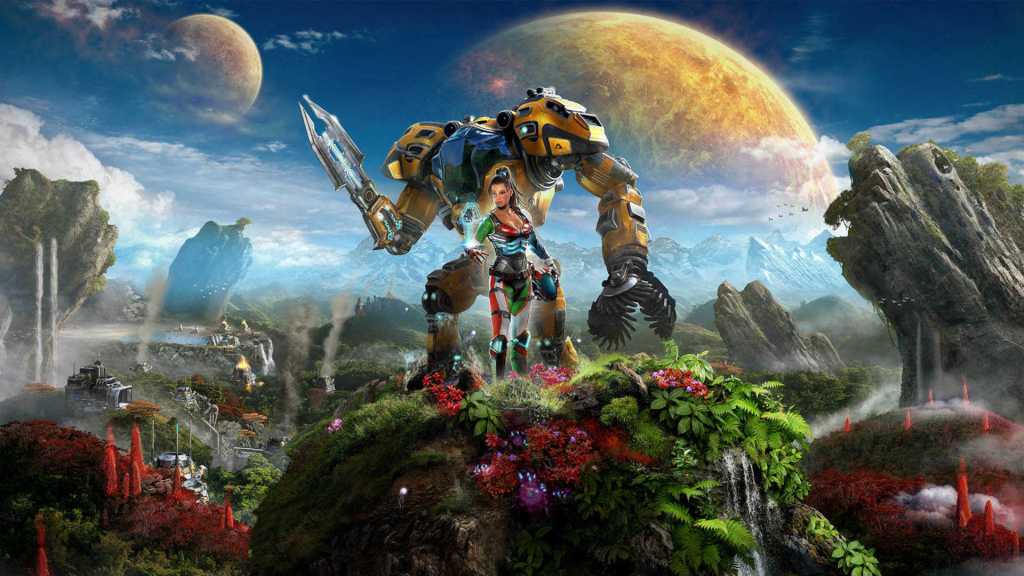
    The narrative, outside of a flashy opening cutscene, is minimal and stretched thinly over hours of playtime. You take control of captain Ashley Nowak, a “Riftbreaker” – think scientist/commando hybrid – in an AI-powered mecha-Suit called “Mr. Riggs” as they emerge from a one-way jump to the lush world of Galatea 37. Earth is barely liveable, and humans are rift-jumping to distant planets to find resources and establish new colonies. She’s tasked with securing a foothold and building a massive “Rift Station” that will allow two-way travel between Earth and Galatea 37. Of course, things are never easy, and the native species are not happy with the intrusion. Aside from infrequent banter between Ashley and Mr. Riggs, which fleshes out Ashley’s ideologies and past a little more, this overarching objective and the need for rare resources to construct the Rift Station is all the context you’ll get to push forward.

    Gameplay

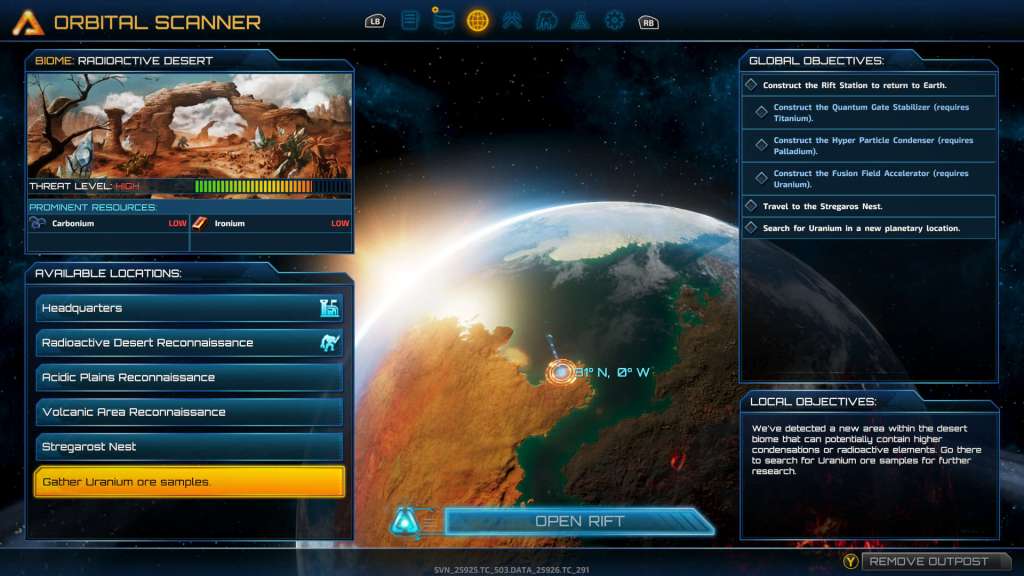
    Controlling Ashley in her mecha-suit is a breeze, with a familiar twin-stick movement and aiming setup. This makes early exploration an enjoyable foray into the unknown, but you’ll eventually have to decide on the location of your HQ and engage with the base-building, resource-generation, and horde-defence mechanics. The world is filled with finite resource pockets – some immediately apparent, several uncovered through research and scanning – and the continuous generation of these resources is essential to making progress. Carbonium is your basic building material used to craft new structures and gear. Ironium is needed for defensive structures and, most importantly, ammunition production. Cobalt, Palladium, Titanium, and Uranium are rare resources needed for advanced structures, crafting designs, and – in huge amounts – your ultimate goal, the Rift Station. Liquid resources, like water and magma, are essential to the functioning of advanced structures, which can, in turn, produce artificial resources, like coolant and plasma, for even more advanced structures.

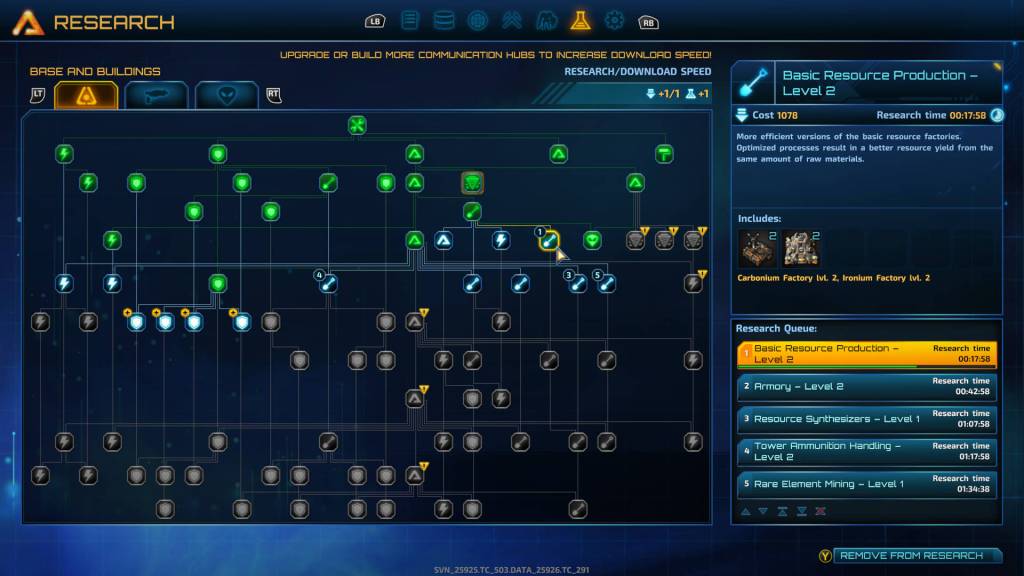
    All the basic, advanced, and defensive structures you can build require considerable power, which can be produced using solar panels and wind turbines (susceptible to environmental conditions), Carbonium powerplants, biomass generators, geothermal power, and even nuclear reactors. Of course, the ability to build advanced base structures, upgrade them for greater efficiency, or craft and equip the multitude of weapon and mech-suit upgrades, requires researching your way through three massive, multi-tier technology trees. Research speed becomes a major obstacle to progress and can feel painfully slow at times – unless you can support multiple power-guzzling Communication Hubs. Naturally, all these structures require space, and making more space means your walls and defensive network is spread thinner (an HQ location with some natural barriers is a must). You’ll quickly discover the need to run power nodes to distant resource-producing outposts, which are then more vulnerable to horde attacks. You could surround them with walls and powerful, specialised turrets but that means more power, AI cores, and resource-hungry ammunition factories.

    If this is all starting to sound overwhelming, it can be. Although not as granular or deep as games like Factorio or Satisfactory, I can’t help but feel The Riftbreaker has been untruthful in its marketing campaign. Resource production and beneficiation, coupled with power generation, underpin everything you do. As a result, it’s possible to get it very wrong and find yourself struggling to recover. As an example, an early push for automated Repair Towers seemed like a great idea, until I realised they were chewing through my resources faster than I could replace destroyed structures and defences, forcing me to run about manually disabling them. This frequent need to repair and upgrade structures also highlighted the variable gamepad support. Exploration, combat, and menu navigation are solid with a gamepad, but the precision placement of structures or trying to mass select them for upgrades is problematic (and nigh-impossible under pressure). The base building feels more intuitive using a mouse and keyboard, and this is an option for console players if they have the hardware.

    Having hopefully conveyed the complexity of resource production, construction, and research, you’ll be relieved to know exploration and twin-stick combat is far simpler and instantly gratifying. Movement and shooting feel great, making it easy to kite hordes, dash out the way of larger creatures, and thin the alien ranks before they break upon your walls. The mecha-suit can handle three swappable weapons per arm – ranging from swords to chain guns, flamethrowers to rocket launchers – which can be upgraded to higher tiers or modded for extra elemental damage. There are passive equipment slots and active abilities to enhance your combat skills and survivability, all of which can be crafted with the right research and sufficient resources. If you’re after a more hands-on approach to base defence, you can prioritise the weapon technology tree and create a walking tank. Many of the upgrades in the alien technology tree become essential once you’ve constructed the Orbital Scanner and begin away-missions to secure rare resources in hostile environments (think heat, radiation, volcanism, and corrosive clouds). Given the ceaseless demands of your primary base, these away-missions to explore and establish distant outposts are paradoxically stressful and relaxing.

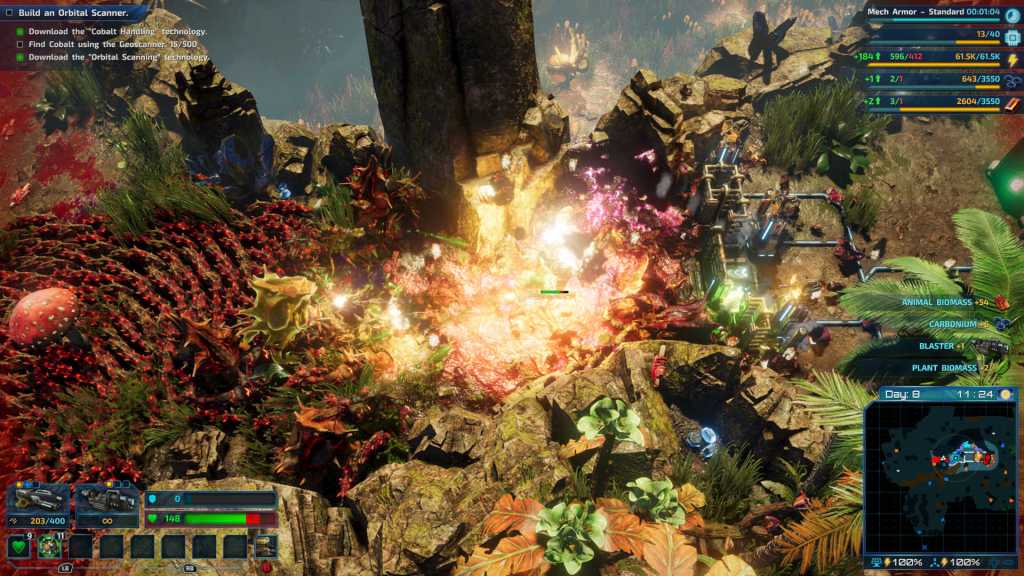
    When the environment isn’t trying to kill you – and there is an inordinate number of natural phenomena on Galatea 37, from calm moon phases to damaging hailstorms – it’s the myriad of alien species. These range from basic Zerg-style cannon fodder to lumbering organic artillery and – sticking with the StarCraft analogies – seemingly advanced, cloaked and bladed warriors. Each environment – lush jungle, scorched desert, icy tundra, or volcanic waste – has several unique lifeforms (not all hostile) but they fill similar roles when it comes to assaulting you or your base. Despite Ashley’s apparent desire to study and conserve Galatea 37’s original environment, frequent hordes and respawning alien clusters ensure she butchers hundreds of them on any given day. Combat is less stressful than resource production and base management to be sure, but it’s frequent enough that you’re rarely able to explore for more than a minute without shooting something. On the upside, it’s a great way to hoover up biomass, uncover hidden resources using a scanner, find new species for the alien technology tree, and several unique power or gear designs.

    Presentation

    When it comes to the presentation, The Riftbreaker looks and sound great for most of the experience. The world feels ridiculously detailed, vibrant, and packed with moving and reactive parts – think foliage, liquid pools, and destructible terrain. Firefights against large hordes in forests are a particular highlight, with projectiles tearing through vegetation, while explosions send shockwaves through trees and grass. That said, it can be easy to lose track of Ashley’s mecha-suit in busier scenes. The Riftbreaker can buckle during massive horde attacks but proved scalable on PC and even performed well on the budget Xbox Series S, about 95% of the time. The audio is also a highlight, with loud and impactful combat and a catchy soundtrack that starts serenely before escalating based on nearby threats. With only two voiced characters, Ashely and Mr. Riggs have plenty of exchanges, often cheesy and overwrought. Thankfully, the voice-acting is not too bad and you don’t hear it all that often.

    Notable issues

    A lot is going on in The Riftbreaker at any given moment and you’re rarely given any downtime (even after delving into the heavily customisable difficulty settings). This ensures the world of Galatea 37 is less a mysterious space to explore, and more of a pretty canvas on which to build and murder things. On one hand, the procedural generation ensures each new location – be that a permanent outpost or once-off scouting mission – can throw up new challenges and sights. On the other hand, I wish there was a little more structure to the narrative and lore, rather than needing to read hundreds of journal entries. Maybe some handcrafted scenarios to test your construction and combat skills, as in the They Are Billions campaign. Other irritations include the aforementioned gamepad support and the need to manually upgrade structures once you’ve researched new tiers (a thousand wall segments being a prime example).

    Conclusions

    Considering each mechanic in isolation, The Riftbreaker is packed with interesting systems but the learning curve, balance, and pacing often feel off. It’s a game in which you’re constantly hitting roadblocks – some of which present an engaging challenge, while others simply require you to sit around until you have enough resources or research completes. It’s possible to find yourself desperately reconfiguring your base to balance power supply, resource production, and resource consumption, while constantly stopping to fend off hordes and likely racking up more damages. There is an audience for this sort of challenge and, despite pointing out these challenges, I could not stop playing. However, I think there’s an even larger audience who’ll pick up The Riftbreaker looking for a twin-stick shooter with streamlined base-building elements, only to find themselves bogged down in base micromanagement and making little progress. That said, The Riftbreaker can be a ton of stressful fun – just so long as you know what you’re getting into.

    Pros:

    • Fluid and responsive twin-stick shooting
    • Tons of research, buildings, gear, and upgrades to unlock
    • A lengthy, involved campaign across a procedurally-generated world
    • Visually stunning with decent performance on PC and Xbox Series consoles

    Cons:

    • Variable gamepad support
    • Waiting around for research to complete
    • Exploration = incessant combat

    Score: 7/10

    A review code for The Riftbreaker (PC) was provided to gameblur by the Publisher. The Xbox Series S/X version was accessed using an Xbox Game Pass subscription.