Tag: Nintendo Switch

  • Review: Trident’s Tale (Nintendo Switch)

    Review: Trident’s Tale (Nintendo Switch)

    It’s time to man the mizzenmast, batten those hatches, and get a new plank to walk, because the briny seven seas be calling again. Aaargh, me mateys! Me cutlass be ready for a new pirate adventure and the burying of treasure!
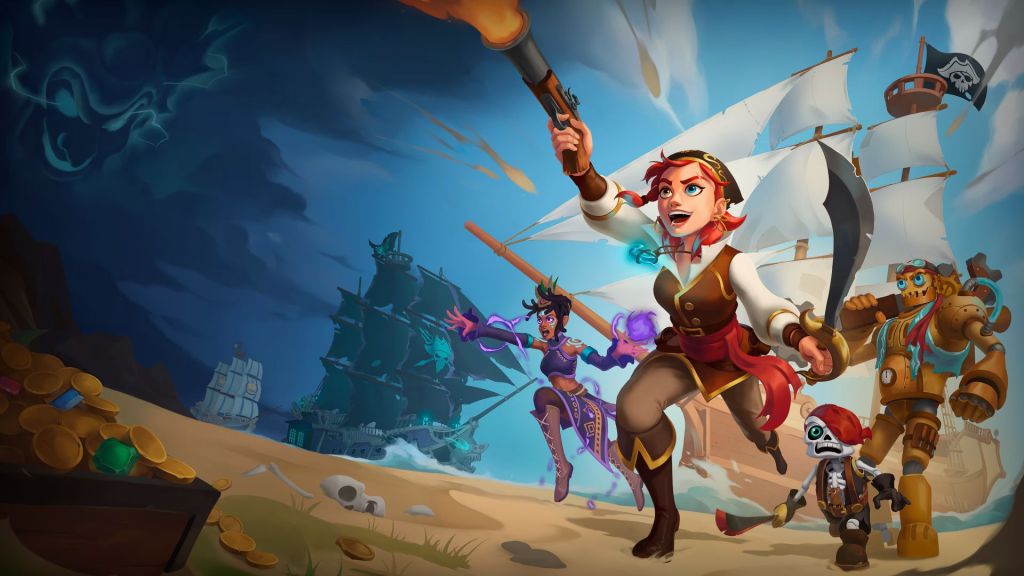
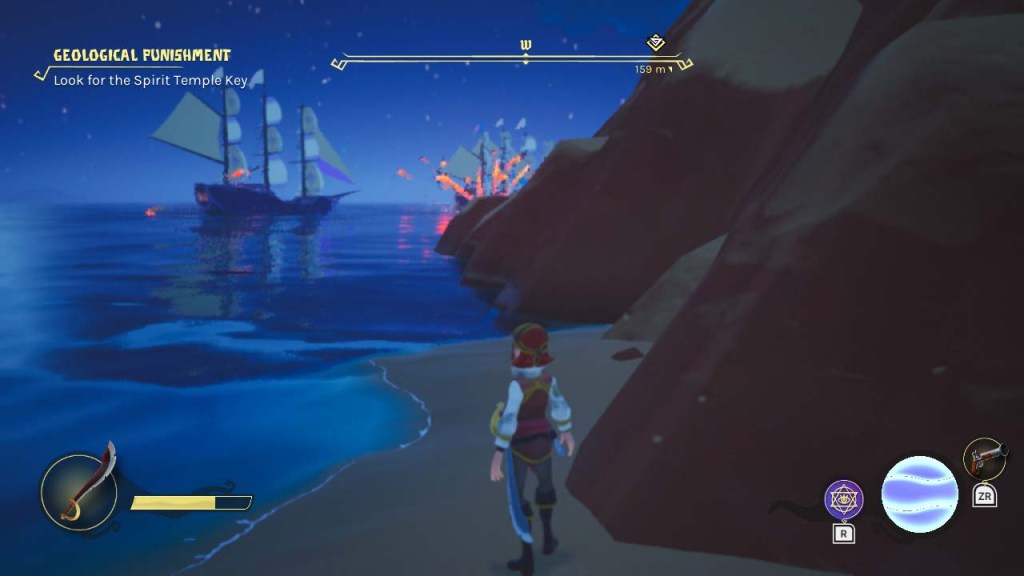
    Developer 3DClouds is attempting to fill that piratical itch with Trident’s Tale, a swashbuckling, seven seas-crossing tale of piracy, treasure hunting, and skeletons. You play as Ocean, a pirate wannabe who can’t wait to leave her island home. But when Ocean finds a hidden piece of the legendary Storm Trident, she puts herself in the crosshairs of a nefarious group of undead pirates also looking for all the pieces.

    The Trident, you see, contains the power of a god and, if all the pieces are united, that power goes to the wielder. To survive, Ocean has to assemble a crew, find the remaining pieces, and become a legend in the process.

    Trident’s Tale cribs it’s ideas from games that have come before about the golden age of piracy. As Trident’s Tale is an all-ages game that feels like it was made with kids in mind, those inspirations have been trimmed back to present an easy-to-get-to-grips-with adventure that spends as much of its time on land as it does at sea.

    The gameplay is split into two distinct sections, both beholden to the idea of exploration. There’s a third person, on-foot adventure mode that combines melee combat with light puzzle solving and a healthy dose of platforming. There are, of course, ship sequences that see you explore a large, watery map full of islands and other ships – many of which you can scuttle to continue funding your voyage.

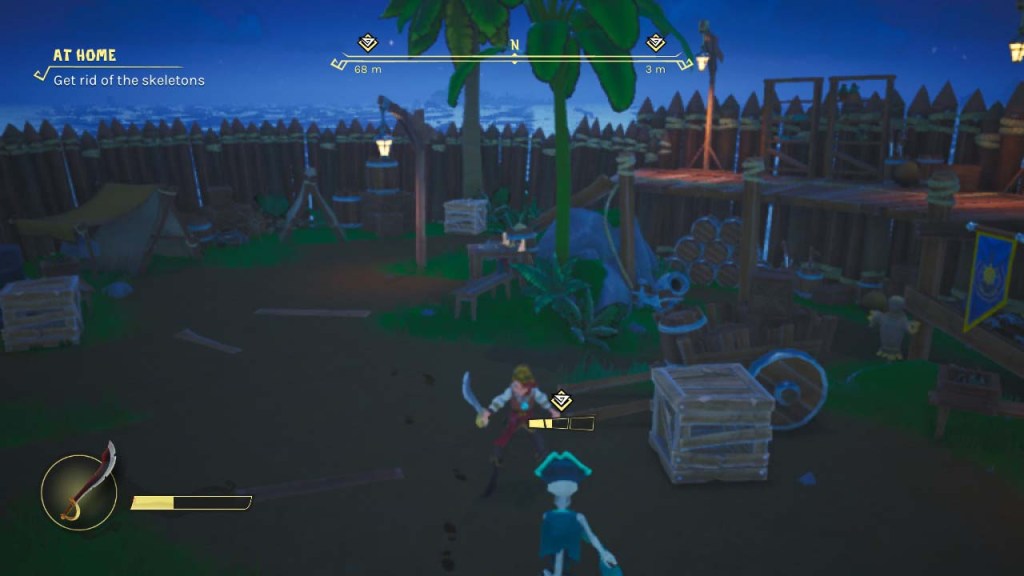
    When you’re not swaying all over the poop deck (that’s real, look it up), your land-legs will be getting a good deal of use on the islands you can explore, either for side-quests and items, or to progress the story. There are resources to collect for a simple crafting system, basic platforming in many locations a nice sense of verticality, and lots of melee combat to go around. The undead will hound your every move. Thankfully, you have a trusty cutlass and pistol to deal with them.

    Ocean has access to light and heavy attacks, a dash to get out of the way, and a pistol that is probably the most useful item in her arsenal. Each weapon has its own special ability, such as the pistols default ability to stun enemies briefly. Scattered across the game are recipes for new weapons, armour, and ship upgrades that use those shiny chunks of bone and iron you’ve been collecting. You can also simply upgrade your existing ones.

    Ogh, and what would a pirate be without a crew? As you travel across the world, you’ll recruit more scallywags to your cause who, thankfully, provide more than just snarky quips while sailing. These crew members give you access to magical attacks for use in both melee and naval combat. A song that heals you while stunning enemies? I’ll take that please!

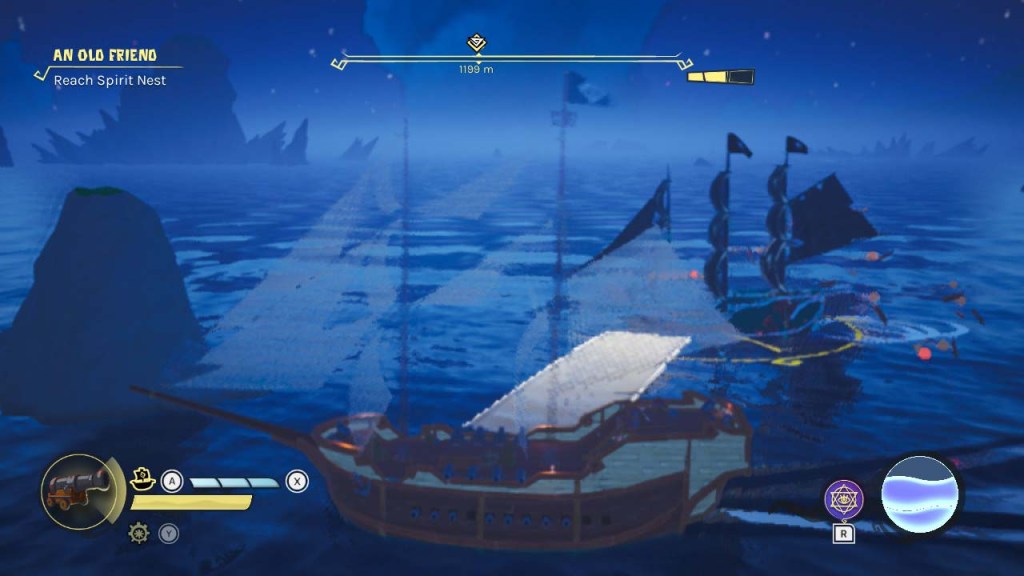
    Ocean spends a lot of time sailing the seven seas so blue, so it’s nice that ship control and combat have been simplified as well. You raise your sails to get moving, with three settings for speed, and can pick up floating crates in the ocean to gain more resources. There are many islands to explore, either to continue the story, explore temples, find even more resources, or engage in side-quests.

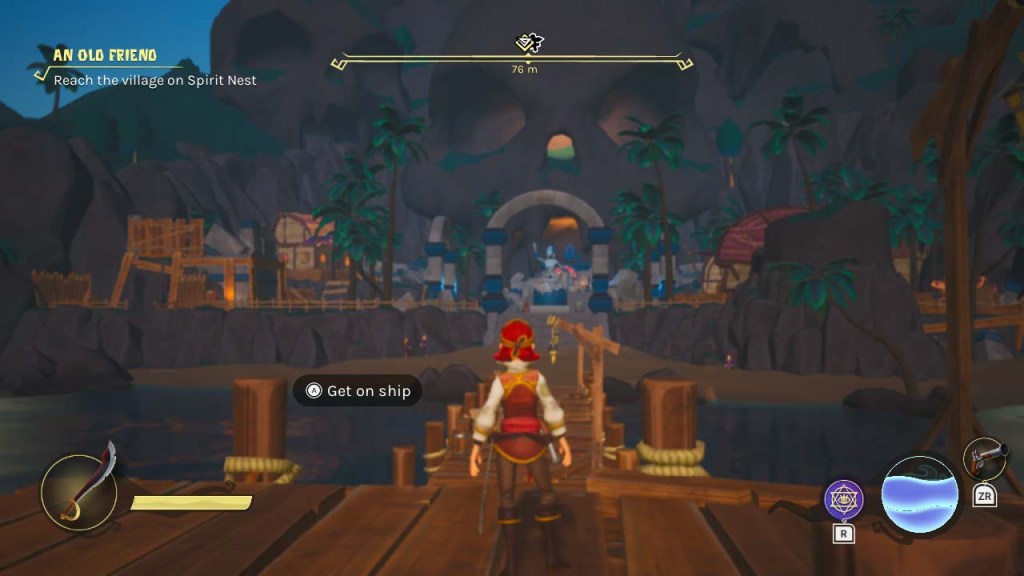
    You can dock at harbours to make life easier or, if you’re close to an island, abandon the helm and dive into the cooling waters for a quick swim to shore, all of which is handled seamlessly. You can always fast-travel to your ship and islands you’ve already explored, which makes backtracking a breeze.

    Where naval combat is concerned, the direction you’re looking aims your cannons. The only complication is adjusting the height of your shot for a broadside or judging the distance when using the front or rear cannons. When an enemy ship is on its last legs, you’ll get a boarding option that just nets you more resources before it’s scuttled. Sadly, there’s no actual boarding of other ships or fighting their crew which was a bit of a letdown.

    The story is passable Saturday-afternoon, pulp fare with a humorous take on proceedings. How much that humour lands will depend on the player though. While I wasn’t too chuffed with much of the dialogue, I did enjoy some of the cringy pirate dad jokes during the loading screens. The voice acting is passable as well and the narrative gets the job done even if it doesn’t truly immerse you in the world or the supposedly high stakes.

    Sadly, Trident’s Tale comes with some serious waterlogged issues that spoil the adventure. Some of those issues are design-related, but the rest are down to poor performance that seriously hampers the experience on the Nintendo Switch.

    The camera position in combat when locked on is a complete pain as it drops low behind your character and obscures the actual combat, blocking your view of both the enemies and their incoming attacks. I stopped using the lock-on and kept the camera at a 3/4 view of the action, which made combat far more palatable as there’s a degree of auto-aim that’ll make sure you don’t miss.

    This introduces the problem of the environment blocking the view depending on the area, but it’s less frustrating than the lock-on issues. on that note, the lock-on disengages as soon as you turn your back to an enemy, so pretty much every move that dashes back and out of harm’s way renders it useless. For a few battles where you really need the lock-on, this is a pain.

    Most significant are the games visuals and performance issues that I’ assume’d hope are limited to the Switch and maybe the last-gen consoles. Bluntly put, this is another case of Unreal Engine and the Switch not mixing politely.

    The stylised art style is nice enough, but the games resolution on Switch is so low that it really hampers visual clarity. Most of the time, it just looks very hazy, with everything from characters to foliage looking blurry and aliased to the point where it can even affect ship-based combat when your circular crosshair gets lost in the visual noise.

    Pop-in, as we’ve come to expect from UE titles, is also present, with smaller environmental assets and props popping in mere feet from the player character. At one point, I wasn’t sure if the circular blob masquerading as a tree was meant to look that way or the textures simply hadn’t loaded in.

    Finally, there’s the overall framerate which can create a sluggish feeling experience, particularly in combat against multiple opponents, where inputs don’t always register. It’s not unplayable mind you, but it feels like the Switch version of the game needs more optimisation. Surprisingly, the developers have managed to implement some fairly nice looking screen space reflections on water surfaces. It does help to make the water look nicer, but I’d gladly see this effect sacrificed in favour of a higher resolution and a more stable frame-rate.

    Even with all these issues, I still found myself enjoying much my time with Trident’s Tale, especially once I ditched the lock-on for combat. There’s a fun, all-ages adventure here just waiting to be given a chance – but I don’t think the Switch version is the best way to experience it.

    Pros:

    • Simple fun designed for all ages
    • Exploration and naval combat feels rewarding
    • Plenty of crafting recipes to find

    Cons:

    • Runs at a low resolution on the Nintendo Switch with severe pop-in
    • The poor framerate results in sluggish controls
    • Some terrible dialogue
    • A frustrating lock-on camera

    Score: 5/10

    Trident’s Tale was reviewed on Nintendo Switch using a code provided to gameblur by the publisher. It is also available on PC, Xbox One/Series S|X , and PS4/5.

  • Editorial: Crow Country might be the cosiest survival-horror game (and perfect for the Nintendo Switch)

    Editorial: Crow Country might be the cosiest survival-horror game (and perfect for the Nintendo Switch)

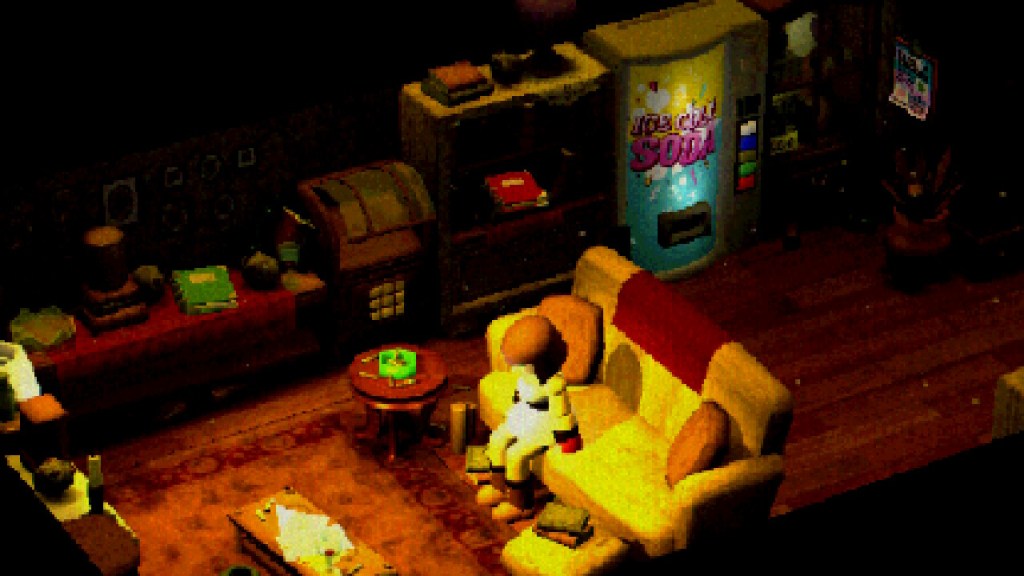
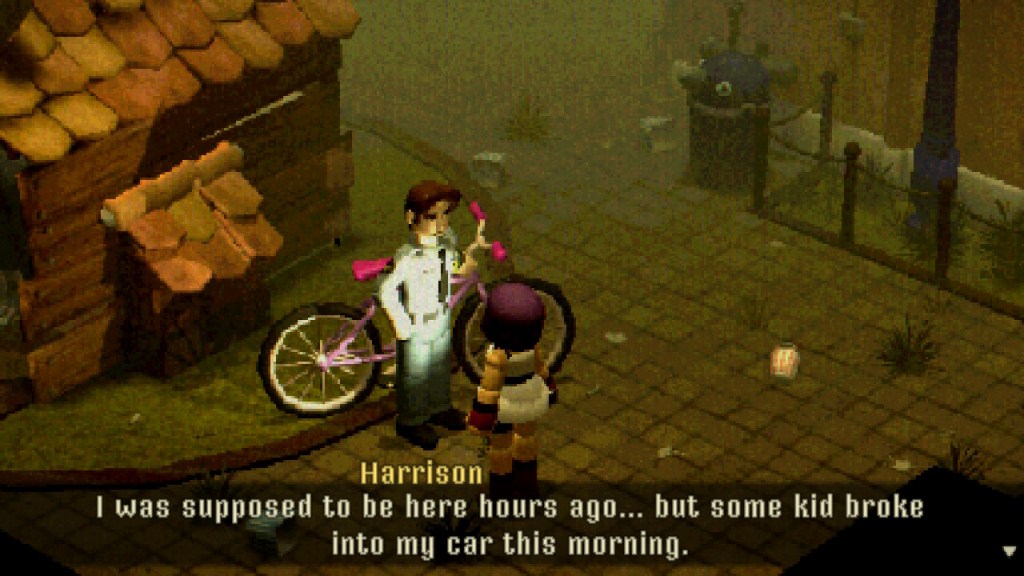
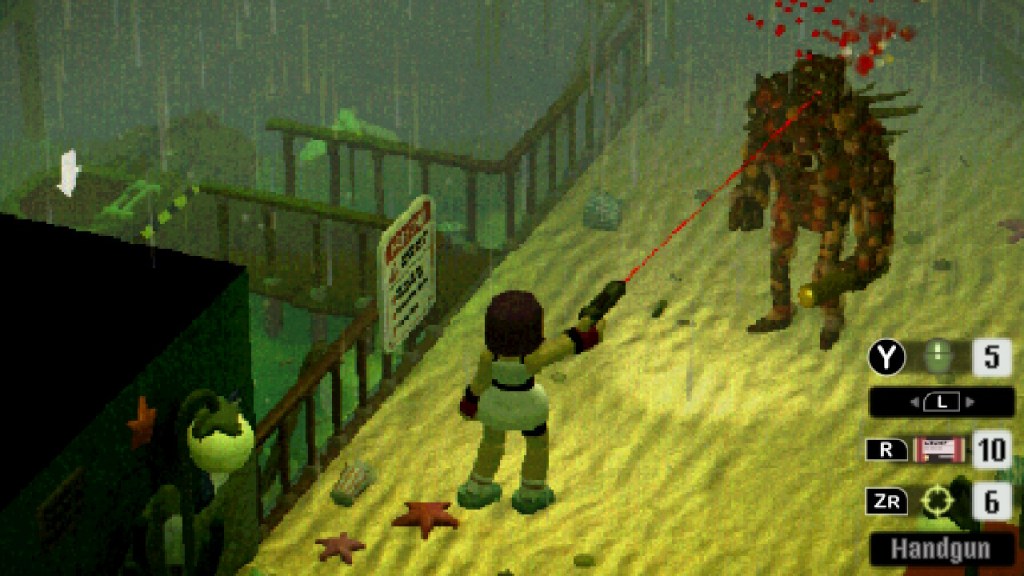
    Crow Country is an incredible homage to classic survival-horror from the 32-bit era – think Resident Evil and Silent Hill – but it’s also one of the most charming games I can think of in the genre, and a near-perfect fit for the Nintendo Switch as a result. It’s suitably creepy and tense at times, but also accessible, humorous, and often heartfelt. It’s got resource management elements and revels in the illogical puzzle design so prevalent in the genre, but it could easily serve as an entry point into classic survival-horror for new or younger players.

    The highlight for me is the fantastic air of mystery about it. The protagonist – supposedly “Special Agent Mara Forest” – clearly knows far more then she’s willing reveal to others, and constantly slips up in conversation with others or when making observations about what she sees around her.

    She arrives at the shuttered Crow Country amusement park, two years after an incident led to its closure, only to find its rundown attractions still occupied by shambling, vaguely humanoid creatures, several evasive former staff members, and other interested parties, all converging on the same evening.

    Like any good horror game, Crow Country leaves the player feeling confused and vulnerable at first, but as Mara solves more puzzles, opens up new areas, interacts with survivors, and night falls, she slowly unravels an admittedly weird sci-fi-ish conspiracy and discovers the motivations of the former staff and the owner she’s desperate to find – Edward Crow.

    As Mara uncovers the truth, observant players can also piece together clues from several notes and Mara’s conversations to figure out who she really is and why she’s there long before the story tells you outright. It’s not then most surprising reveal, sure, but the narrative moves at a brisk pace and never feels secondary to the gameplay.

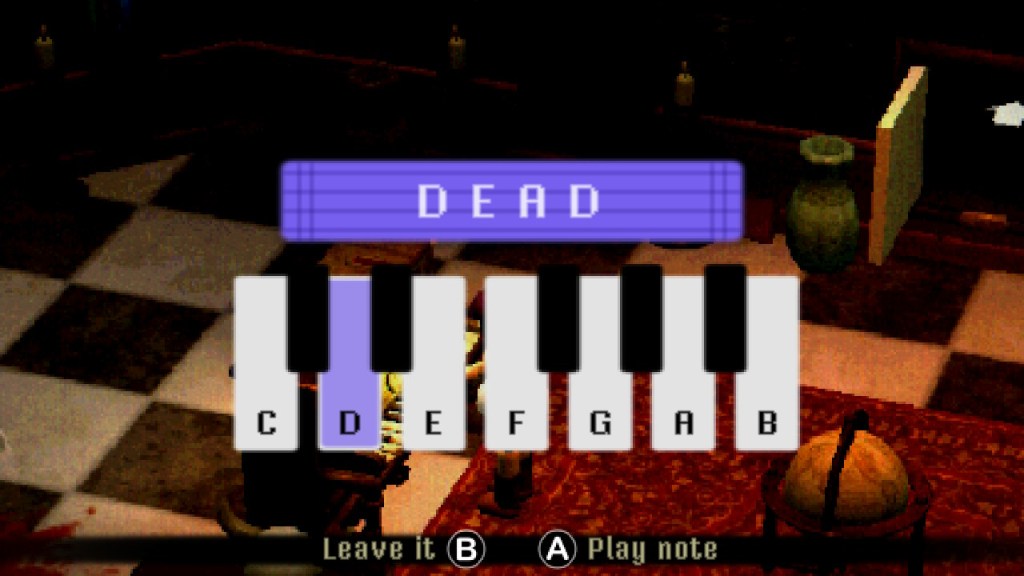
    How you traverse the small but dense environments, solve puzzles, and survive will feel comfortingly familiar to survival-horror fans. You’ll explore an expanding and evolving map room-by-room; you’re locked in place to shoot using a laser pointer; you can run past shambling foes; hoover up ammunition, grenades, med-kits, and antidotes; solve puzzles and complete mini-games to find key items or secrets (like powerful weapons and upgrades for them); and soak in the wonderfully detailed, retro-styled environments complemented by creepy ambience and music. My only real criticism of Crow Country is that the gameplay offers few surprises to veterans of the genre.

    Crow Country’s 5-ish hour playtime works in its favour here, as the combat is limited but never frustrating, the puzzles and mini-games always entertaining, and secrets are abundant. If you dislike the sluggish combat, you can avoid everything but the final boss if you’re nimble. Crow Country has a curious twist on the traditional survival-horror formula, as despite new “guests”, traps, and even boobytrapped items appearing as the night progresses, the horror elements diminish over time.

    There are some dark and tragic moments, but it was hard not to get behind Mara’s dogged determination, fearlessness, and fondness for awkward jokes. I soon found myself less interested in hoarding resources and purging every room, and instead fixated on unravelling the true nature of the park and Mara’s connection to it.

    For those who value an entertaining story and good narrative pacing above survival mechanics, Crow Country also offers a ton of smart assists to avoid aimless backtracking. The map highlights unsolved puzzle locations or points of interest, and fortune teller machine can offer hints. Shortcuts and save rooms (with soothing music, of course) are smartly placed, and there’s no inventory limit or item boxes – just a maximum amount of ammunition and healing items you can carry at any given time. If you run low on supplies, returning to Mara’s car, rumaging through a trash can, or kicking a vending machine will likely spit out a box of handgun bullets or small med-kit.

    Even the ranking system rewards playing it safe as it doesn’t consider total playtime or number of saves. There’s also an “Exploration” mode that disable enemies completely, or a “Murder of Crows” mode for those who want a tougher challenge with most assists disabled or limited.

    Better still, irrespective of whether you’re playing it docked or in handheld mode, Crow Country looks great (especially on an OLED display), sounds great, and runs smoothly on the Nintendo Switch. The only notable difference from the next-gen console versions is that larger rooms can take a few more seconds longer to load.

    I called it a homage, but perhaps the most novel thing about Crow Country is that it’s a rare example of “cosy” survival horror. The sort of game perfect for playing cozied up under blanket – on the couch or in bed – despite the horror-focused nature of the genre.

    Crow Country was played on Nintendo Switch using a code provided to gameblur by the publisher. It is also available on PC, Xbox One/Series S|X, and PS4/5.

  • Review: ADORE (Nintendo Switch)

    Review: ADORE (Nintendo Switch)

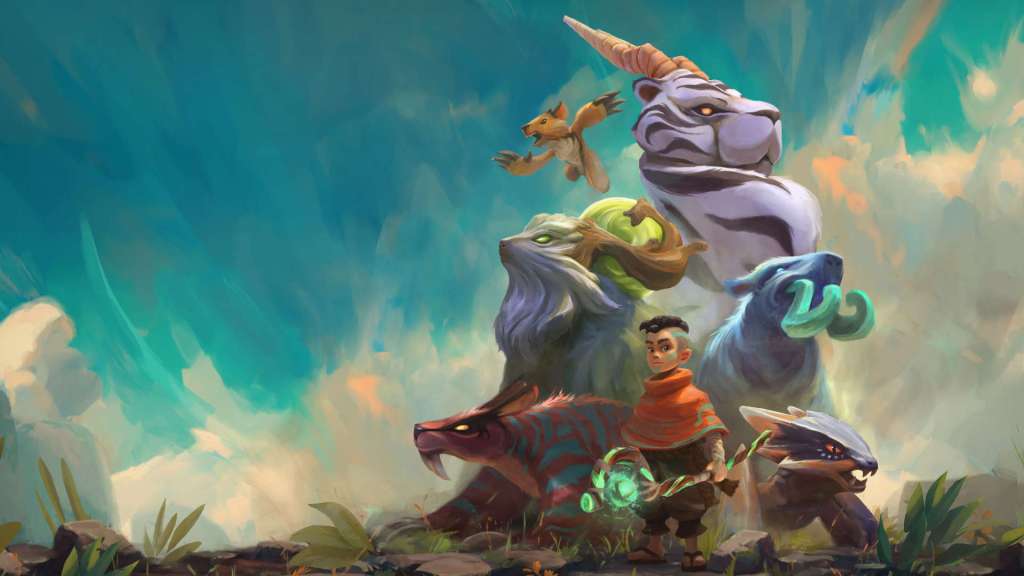
    ADORE is an intriguing “hands-off” action-RPG from Brazilian developer Cadabra Games. The focus is on capturing, upgrading, and synergising creatures that function as your attack abilities – a feat you’ll achieve by grinding procedurally-generated maps for said creatures and a myriad of upgrade resources. With real-time, isometric combat exclusively using summons, it feels novel at first, but progression begins to feel repetitive, unrewarding, and even frustrating at times.

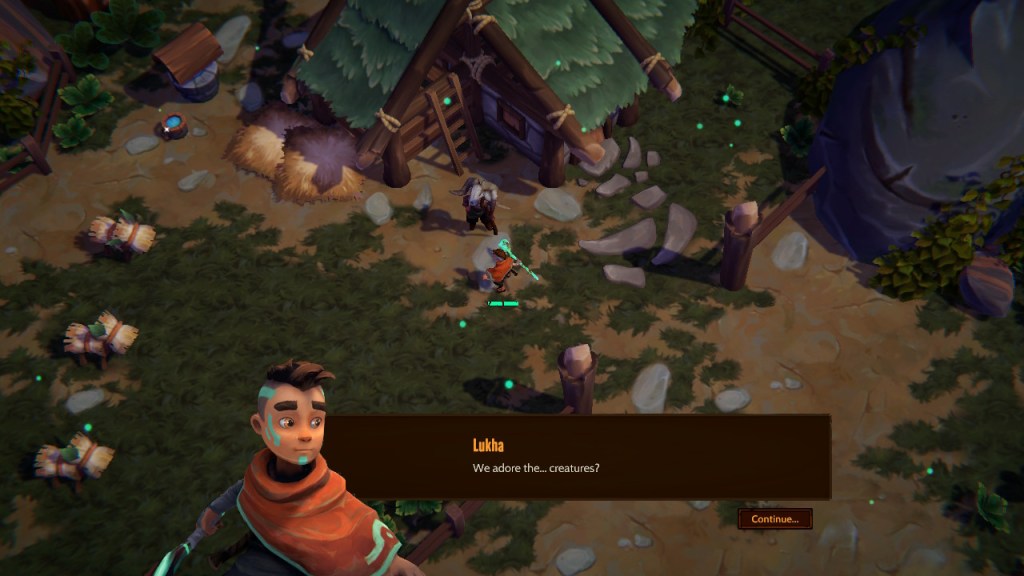
    Starting with the good, ADORE has an interesting premise. Your protagonist has been cohabited by the spirit of “Draknar”, the god of creatures, who was slain by his brother “Ixer”. Ixer’s betrayal has resulted in a curse spreading across the land, corrupting once-peaceful creatures, and leaving it up to Lukha and a hidden village of fellow Adorers to try to set things right.

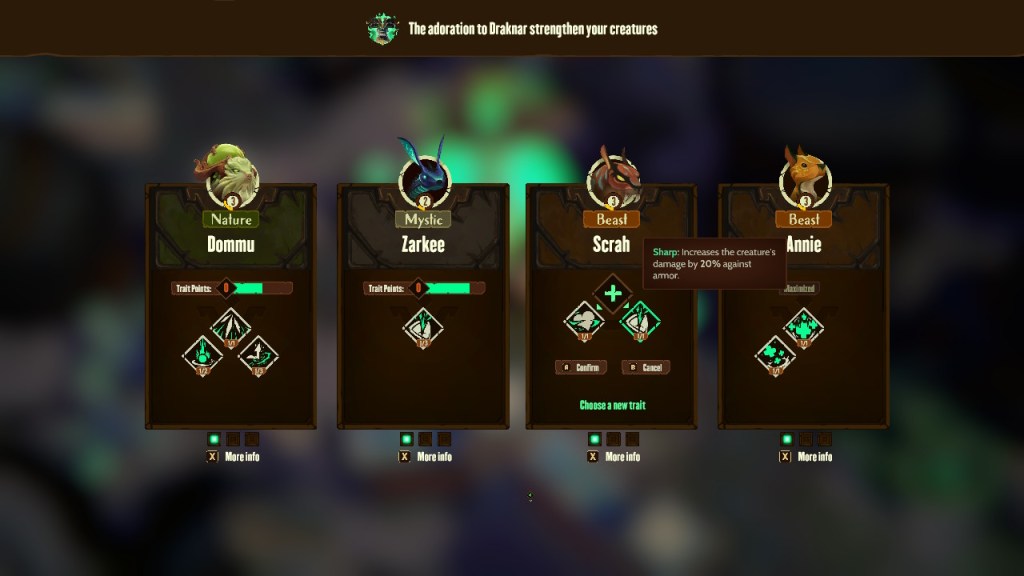
    ADORE gets off to a slow start but the combat and upgrade mechanics are surprisingly deep. At first, you only need to consider the type of creature – think beast, mystic, nature, or arcane – and their attack patterns.

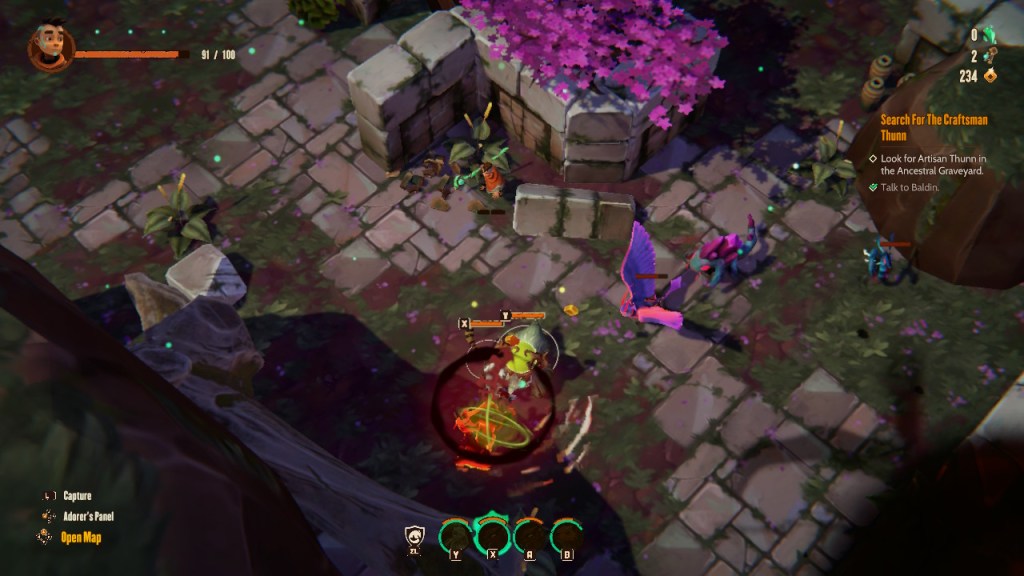
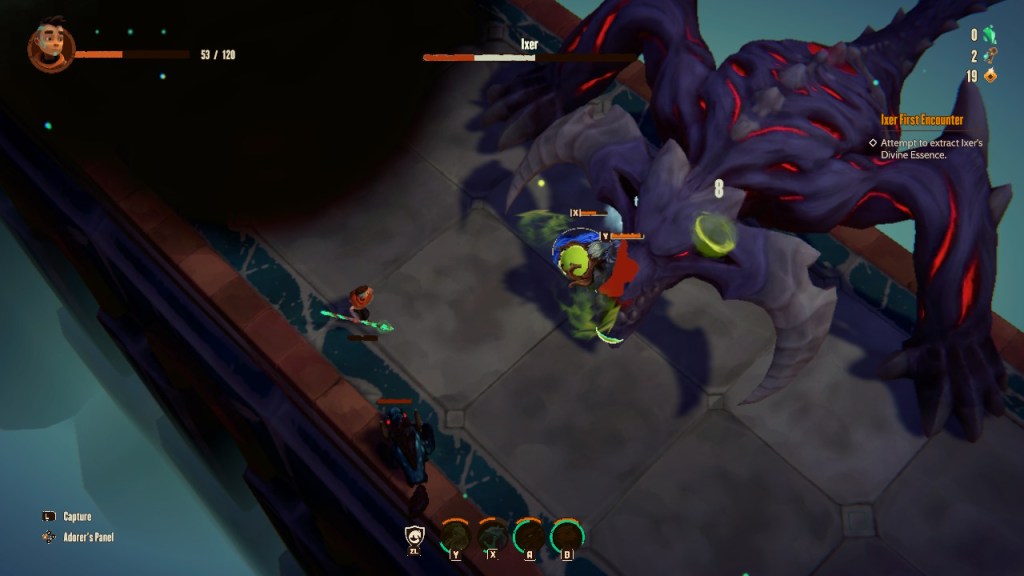
    Some dash forward for a flurry of quick attacks; some waddle along before dealing a sweeping AoE attack; others have to charge up for a few seconds before dealing a devastating high-damage attack. With up to four creatures assigned to the face buttons (or keys), picking the right attack behaviour is essential, and so too is using the correct damage type to counter armour. You also have a limited, recharging stamina pool to manage, so you can’t just spam all of them at once.

    That’s only the basics, however. Creatures charge up special attacks you can selectively trigger; they can develop synergies with other creature types to unlock new abilities; they can gain experience from Shrines of Draknar to unlock new traits and level existing ones; upgradeable artefacts carried by Lukha add useful triggered abilities; while equipped runes provide him varying levels of passive buffs if you have the points to invest. On top of that, you can collect ingredients and cook meals to heal and buff your team mid-mission.

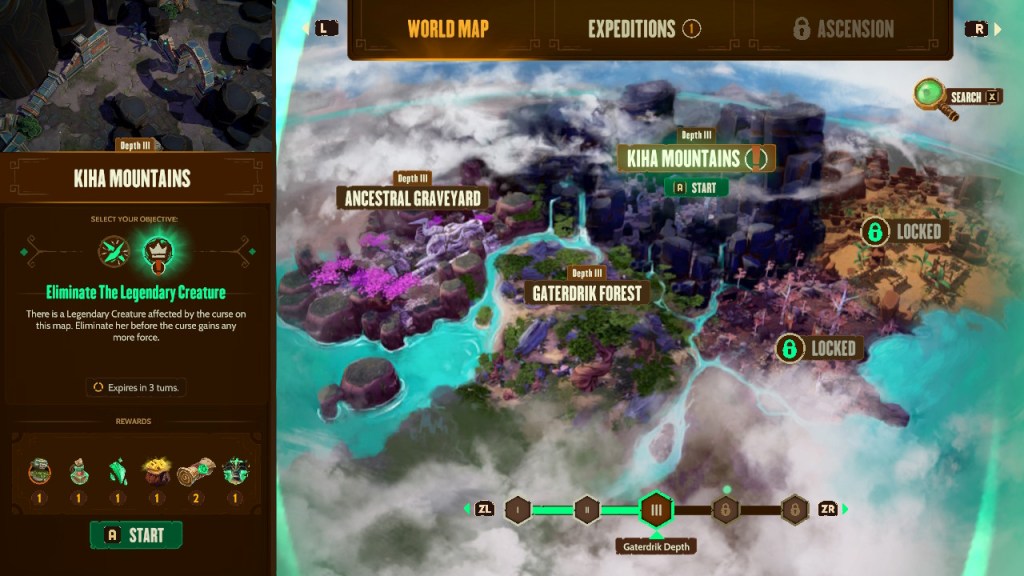
    You set out from a central hub and slowly unlock five regions on a world map. There’s a string of plot-related missions – most of which are just item or creature hunts before a battle against another Adorer or puzzle-like encounter with Ixer – and there’s a constantly refreshing list of optional missions.

    You jump through a portal in the Adorer village into simplistic maps made up of interconnected segments, each with a handful of hostile creatures to capture or defeat, a mini-mission or two –think activating switches or guiding floating orbs while under attack – and, hopefully, a useful item spawn like the “Particles of Gaterdrik” used to capture creatures, cooking or crafting materials, and upgrade shrines.

    With 39 creatures to capture, managing their upgrades, synergies, and constantly shuffling them in and out of your active party can be fiddly with a gamepad, but there’s a lot of fun to be had in slowly creating a diverse and powerful menagerie. So too is mastering the deceptively simple-looking isometric combat, which forces Lukha to stay mobile and dodge attacks, summon creatures when you spot a gap or first-strike opportunity, and quickly recall them before enemies can land a counter – potentially knocking them out of action for a mission if their health hits zero.

    Unfortunately, moving the plot forward, capturing new creatures, and obtaining resources for upgrades involves grinding short missions and longer excursions; to the point progression feels repetitive and unrewarding, undermining the overall experience.

    To ADORE’s credit, it always indicates what challenges you might face – like a legendary creature – and what resources are available on any given mission. The problem is how quickly the resource costs escalate. Activating one or two runes, levelling your creatures up two to three times, and enhancing an artefact once; are all manageable in the opening hours but as your roster grows, you’ll be forced to tackle the longest multi-map excursions or multiple short missions to achieve any significant progress.

    As fun and tactical as the combat may be, and as stylish as the character designs and environment first appear, it doesn’t take long before your brain settles into a monotonous routine and both the vibrant backdrops – which already suffer from that “made in Unity” look – blur together.

    Of course, grinding to upgrade your party is hardly a novel idea in video games, but the gameplay loop falls flat here due to a few annoying design choices. The first issue is that you have to manually pick up most rewards and they’re prone to falling out of the playable area or hidden behind chunks of the environment.

    The second issue is how death results in dropping most of your currency and crystal shards – essential for purchasing and upgrading artefacts, or expanding rune slots and rune activation points. Both simply add a degree of frustration to an already grindy progression system.

    Now ADORE should entertain those that love collecting and upgrading creatures for battles, with no shortage of upgrade mechanics to engage with and satisfyingly tactical real-time combat. It’s the mission and progression structure that leaves me conflicted. On one hand, it’s a smart way to get more mileage out of limited assets, gives you plenty of time to engage with the mechanics, and its a good fit for short sessions on the Switch or Steam Deck. On the other hand, the longer you play, the less rewarding the progression system feels, and the more formulaic and repetitive the gameplay loop feels.

    Pros:

    • A novel, hands-off, summons-based combat system
    • Plenty of mechanical depth when it comes to upgrading and synergising your party
    • Perfect for shorter sessions on the Switch or Steam Deck

    Cons:

    • The progression system feels increasingly unrewarding and repetitive
    • The rogue-like punishment for death adds nothing but frustration

    Score: 7/10

    ADORE was reviewed on Nintendo Switch using a code provided to gameblur by the publisher. It is also available on PC, Xbox One/Series S|X, and PlayStation 4/5.

  • Retrospective: Syberia (2002)

    Retrospective: Syberia (2002)

    As a point-and-click adventure originally released on PC in 2002, it’s easy to criticise elements of Syberia’s gameplay, but replaying it for the third time on the Nintendo Switch – the best console port by far – I’m still impressed by its relatable protagonist, timeless artistic vision, and serenely melancholic atmosphere.

    Kate goes adrift

    Syberia wastes no time setting the scene and offering a tantalising glimpse of what awaits Kate Walker, a young and idealistic lawyer from New York, sent to the moribund town of Valadilene in the French Alps to conclude the sale of an ageing automaton factory.

    She arrives just in time to witness the funeral precession for the late factory owner, Anna Voralberg, who revealed the existence of a living heir in her final correspondence. Given the importance of the deal, Kate is left with little choice but to track down Anna’s brother Hans – initially thought to have died decades before – and discover more about his troubled family and the legacy he left behind while traversing Eurasia with an automaton engineer named Oscar and a fantastical wind-up train of his design.

    Despite her obvious commitment to the task, it’s clear from the outset that Kate isn’t comfortable in a rigid corporate environment. She marvels at the weird, wonderful, and sometimes terrifying things she encounters on her journey, but takes them all in her stride. She respects locals with quirky customs and is compassionate when helping others, but she also has a strong set of morals and won’t hesitate to call out scheming or dishonest behaviour – even if she’s willing to bend the rules a few times to progress.

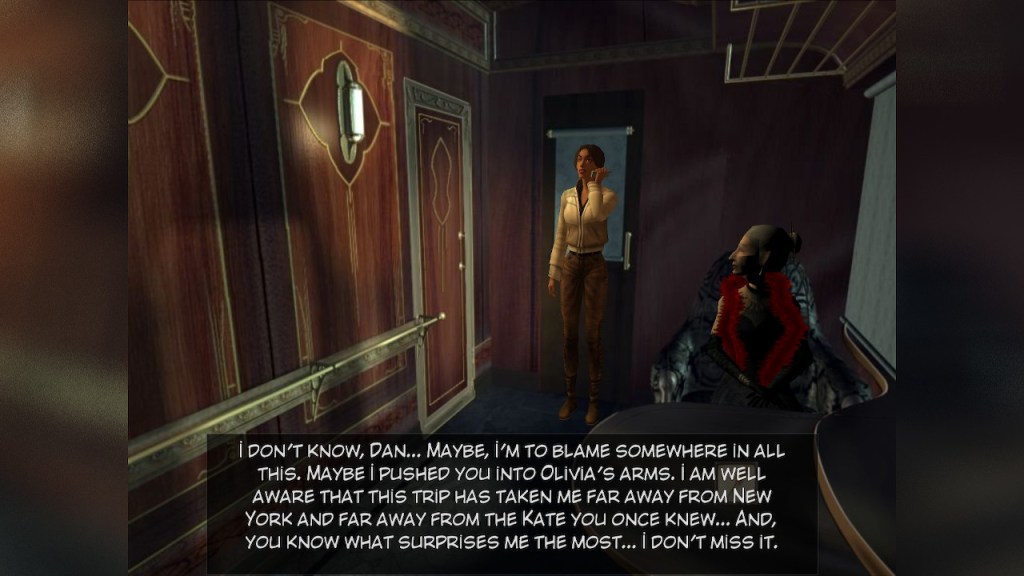
    In contrast, the people she left behind in New York are mostly brash, self-interested, morally flexible, and possess limited imagination. Her boss has no interest in her situation beyond her ability to seal the deal; her fiancé Dan seems unable to differentiate between their romantic and business dynamic, treating her more as an accessory to his ambitions; her mother frequently talks over her and uses guilt as leverage; while her friend Olivia seems has little passion for their profession beyond the lifestyle it allows.

    Kate frequently receives calls from them or calls them for assistance during her adventure, and they serve as useful foils that highlight Kate’s character development. Their lives are so ordinary they can barely comprehend what she’s describing and experiencing, while their desperate attempts to discourage Kate and bring her back home to re-establish the status quo border on self-destructive.

    As a result, simply watching Kate discover who she really is – or maybe rediscover herself – is even more satisfying than the overarching narrative and circumventing the many roadblocks along the way.

    Artistic vision > technical prowess

    Of course, a great protagonist and interesting premise still need a good setting, and Benoît Sokal’s creative vision ensures Syberia is one of the few games with legitimately timeless aesthetics.

    Kate’s world is similar but not exactly our own, though it’s not hard to immerse yourself in it with many modern and historical parallels. There are European towns still dealing with the devastation of the Second World War on industry and families, while Russia – possibly still a Union of some sort – is full of ageing industrial and military complexes abandoned after a Cold War era.

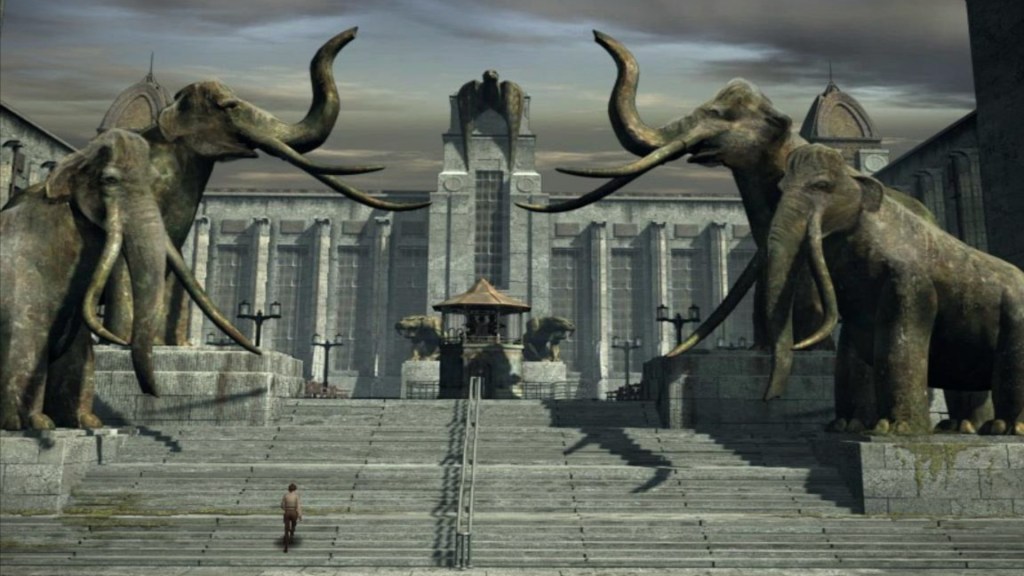
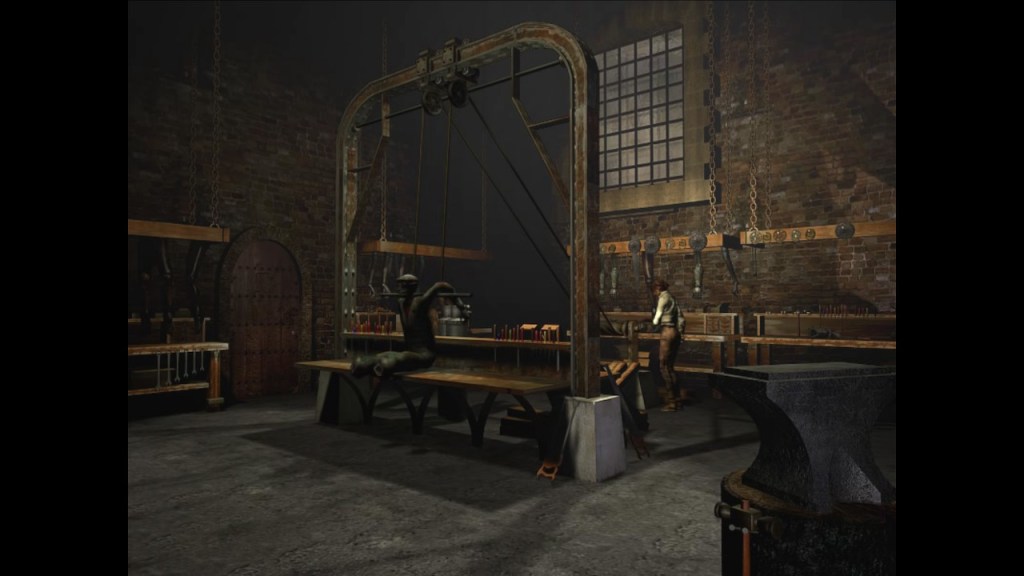
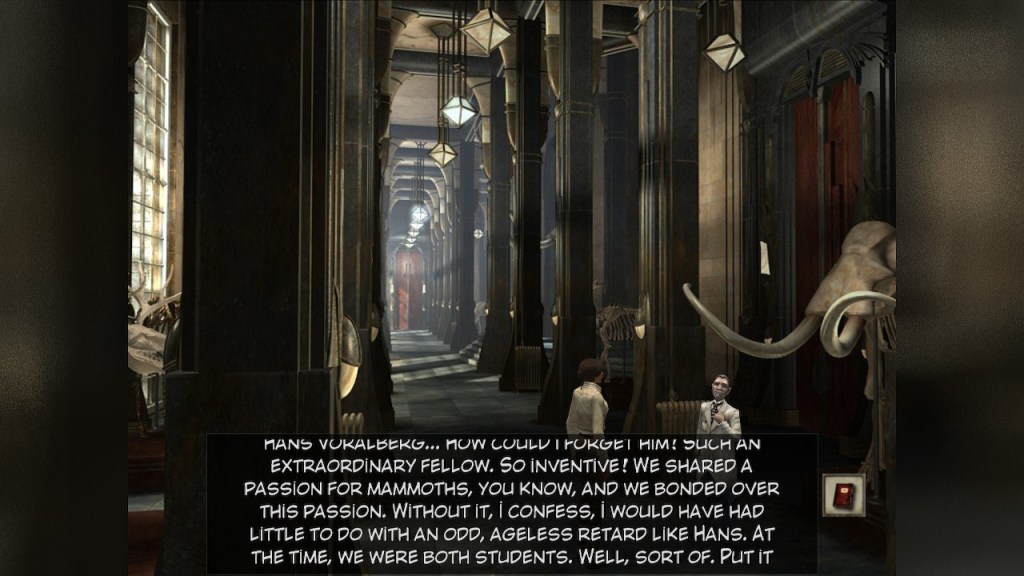
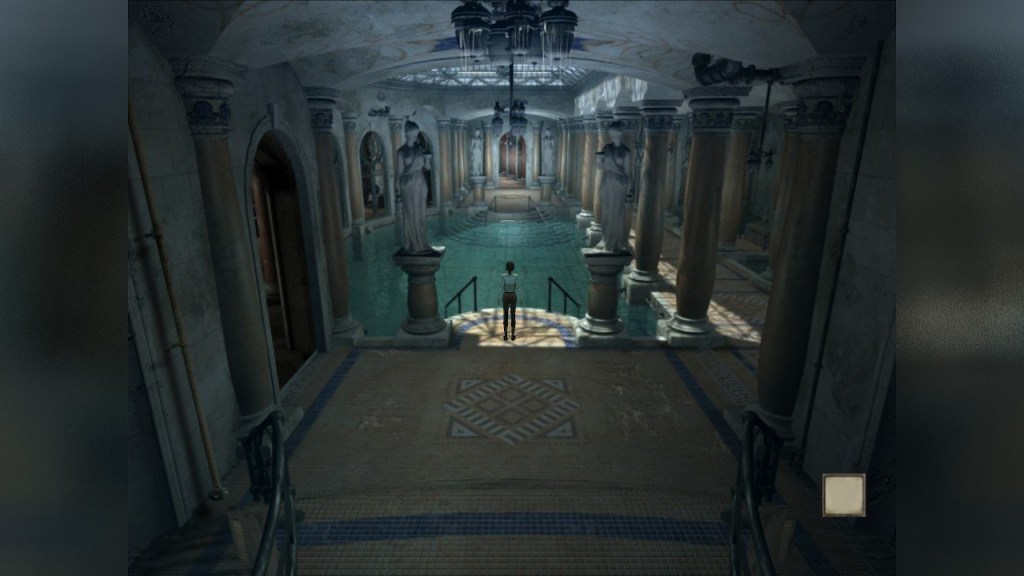
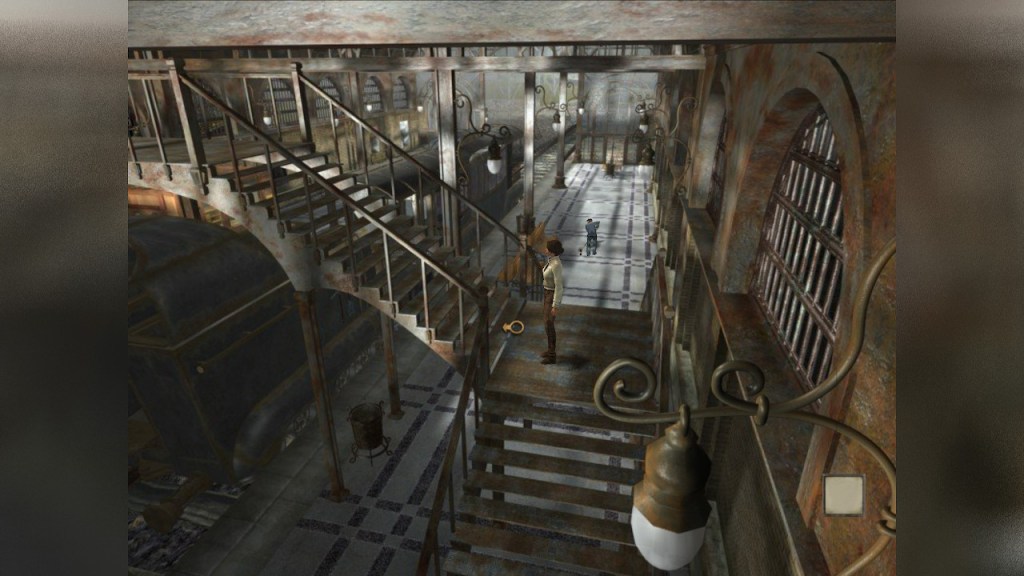
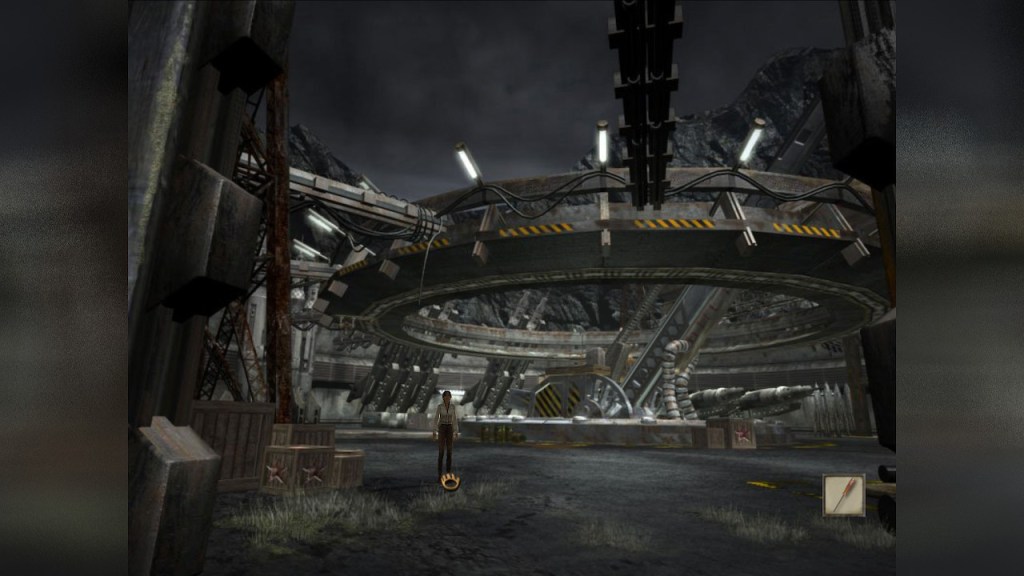
    Valadilene sports cobbled streets, art-deco houses, and an intricate automaton factory, but only a handful of people with nowhere else to go remain. The Barrockstadt University, with its massive mammoth exhibits and tropical aviary, is fading into obscurity, with a few lingering staff and fewer students, all surrounded by decade-old military fortifications and damaged houses that were never restored. The decrepit Komkolzgrad industrial complex and cosmodrome are inhabited by two solitary caretakers with unfulfilled dreams. The Aralbad resort is a refuge for faded stars, situated on the edge of a corrosive salt lake, full of rusted shipwrecks that hint at a more prosperous past.

    Although most backdrops are beautiful and smartly framed static images, there are a handful of video-loop backdrops for more intricate structures, simple water shaders, and 3D character models that add life to many scenes. As a reward for solving more complex puzzles, there are several cutscenes that demonstrate Sokal’s intricate automaton designs in action or handle a few action-centric moments.

    The visuals are complemented by an immersive ambient audio mix and a limited but evocative soundtrack themed around each location – but only sometimes. Syberia has moments of near silence, and I was never sure if it was by design or just audio bugs that have plagued prior releases to varying degrees.

    So Syberia is not exactly subtle about using art and music to express its themes, but this does ensure Kate’s journey through forgotten places filled with forgotten people provides a strangely compelling combination of intricate beauty and haunting solitude.

    Streamlined adventuring but dated designs still frustrate

    When it comes to actually playing Syberia, well, it’s a traditional point-and-click experience that can feel anachronistic by modern standards – even if it’s more streamlined than many of its contemporaries.

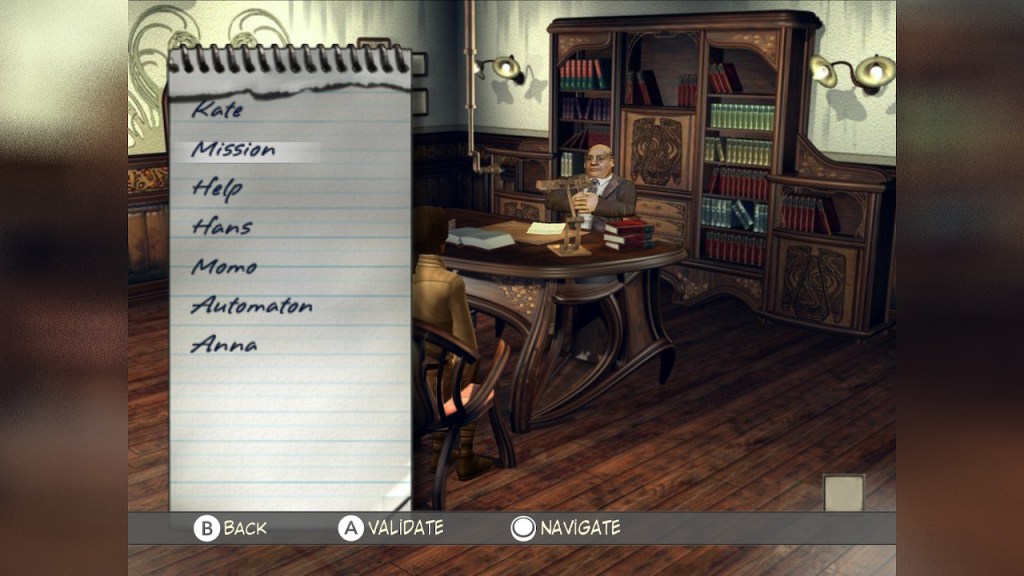
    To solve an assortment of contrived and often absurd puzzles, you’ll be conversing with the small secondary cast, making the odd phone call, collecting notes for clues, collecting key items to use on the appropriate object, and flicking switches and levers on intricate contraptions or control panels.

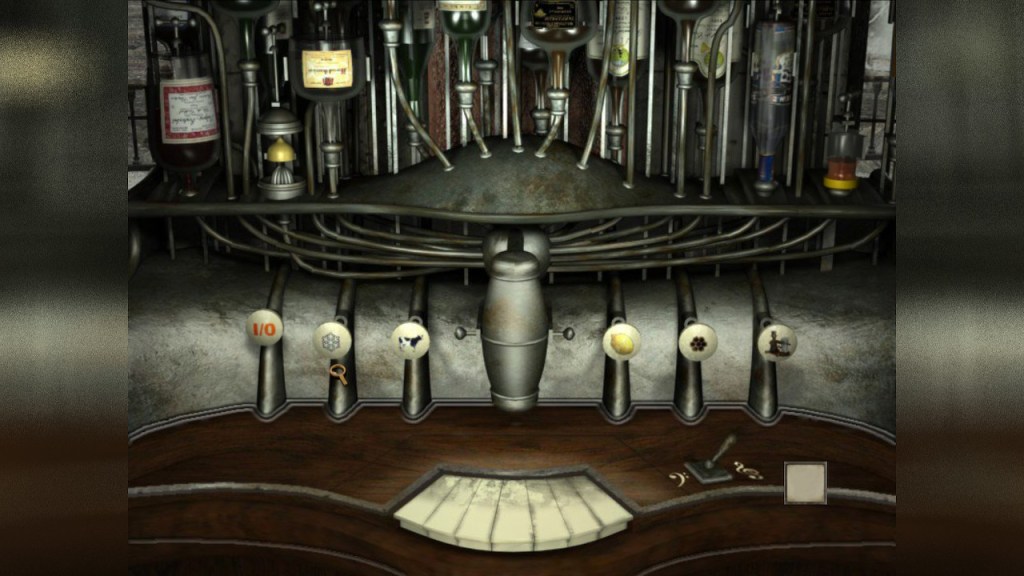
    To Syberia’s credit, there are only a handful of puzzles per location, and they all feel reasonably logical given the setting – aside from a late-game cocktail mixing contraption. They never require too many steps or items to solve; there are no red herrings; and there are only 2-4 significant NPCs in any location you need to interact with.

    Furthermore, the puzzles and dialogue sequences are usually sequential and scripted, so you’ll never be overwhelmed trying to juggle multiple puzzles and inventory items. Unfortunately, that doesn’t mean Syberia is devoid of classic point-and-click bullshit.

    The first issue, spotting key items within detailed backdrops, can be resolved by enabling icon highlights in the assists menu, but the second issue is inherent to the design of the game – the size of each location and the impact that has on puzzles that force you to backtrack. Unlike many modern point-and-click adventures that feature fewer but denser locations, Syberia aims for an impressive sense of scale, with many of its beautiful backdrops serving as nothing but set-dressing you need to traverse repeatedly.

    In Valadilene, your departure is interrupted when you have to trudge across town to forge a clearance certificate; in Barrockstadt, discovering the location of a rare plant species requires talking to several NPCs scattered across the university grounds repeatedly; in Aralbad, you’ll run up and down an unnecessarily long pier. These moments are compounded by Kate’s sedate pace, inconsistent screen transition triggers, and fixed camera angles that make it easy to mix up your inputs.

    It’s not as bad as it sounds if you know where you’re going, but should you ever get confused, it makes aimless wondering a pain in the arse.

    Going off the rails, on the rails

    So Syberia is not without flaws inherent in the genre but, on balance, I’d still recommend picking it up if you’ve got any interest in the history of point-and-click games; or if you’re willing to forgive a few anachronistic elements for an uplifting narrative that sees Kate grow as a person while journeying through a weird, melancholic, but wondrous world.

    As for which versions to play – PC players who want a classic mouse-driven experience should stick to the GOG or Steam releases, both of which have been updated a few times for modern systems. It’s a tougher choice for console players as I’d only recommend the Nintendo Switch version that sports functional shaders, the ability to switch to the original 4:3 ratio, and even touch-screen play. At a push, the backwards-compatible Xbox 360 version – or PlayStation3 version if you’ve still got it plugged in – are fine but the backdrops and character models are stretched to fit that widescreen aspect ratio, the audio is even more buggy, and many backdrops feel completely static.

    Syberia was played on the Nintendo Switch 1. It is also available on PC, Nintendo Switch 2, Xbox One/Series S/X (back compat), and PS3.

  • Review: Wonder Boy: Asha in Monster World (Nintendo Switch)

    Review: Wonder Boy: Asha in Monster World (Nintendo Switch)

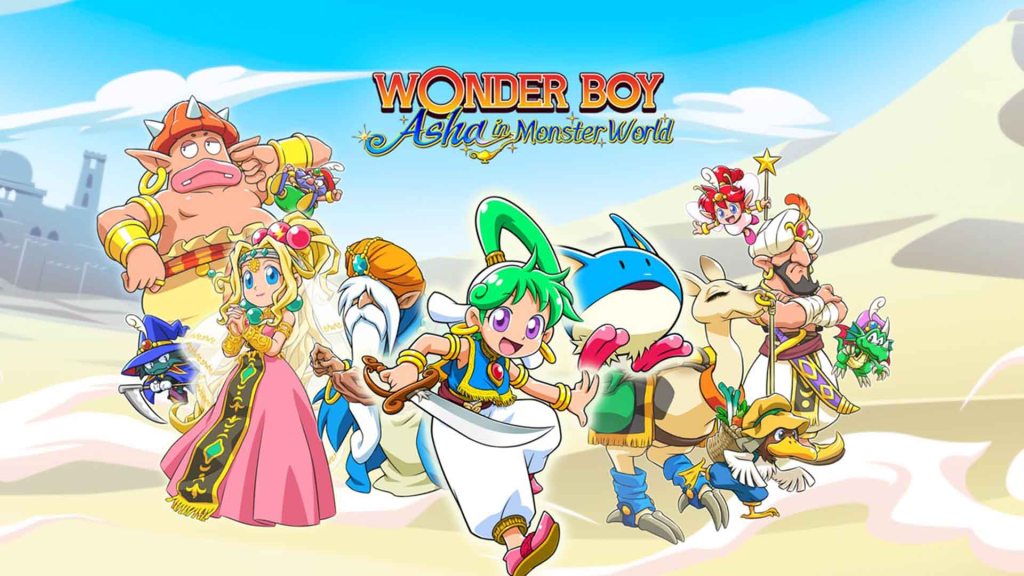
    You know the story. A once peaceful land suddenly assailed by dark forces. Ancient prophecies of a great evils return. Adults doing the one thing they’re clearly good at: sending a kid to slay an adult’s problem.

    Enter Asha, a young warrior looking to earn her badge amongst her people as a great warrior, ready to stand tall and defend her homeland. Before you know it, a simple trial to prove your worth as a fighter turns into a fight to save the world before you can even say; “Isn’t that your job?”. Asha handles it all like a champ though, with a smile and aplomb and tonnes of personality.

    Welcome to Wonder Boy: Asha in Monster World, a remake of the 1994 Mega Drive, Sega published and Westone developed Monster World 4. Developed by Artdink, this new version of the game updates Asha for modern console owners while preserving its gameplay design and story.

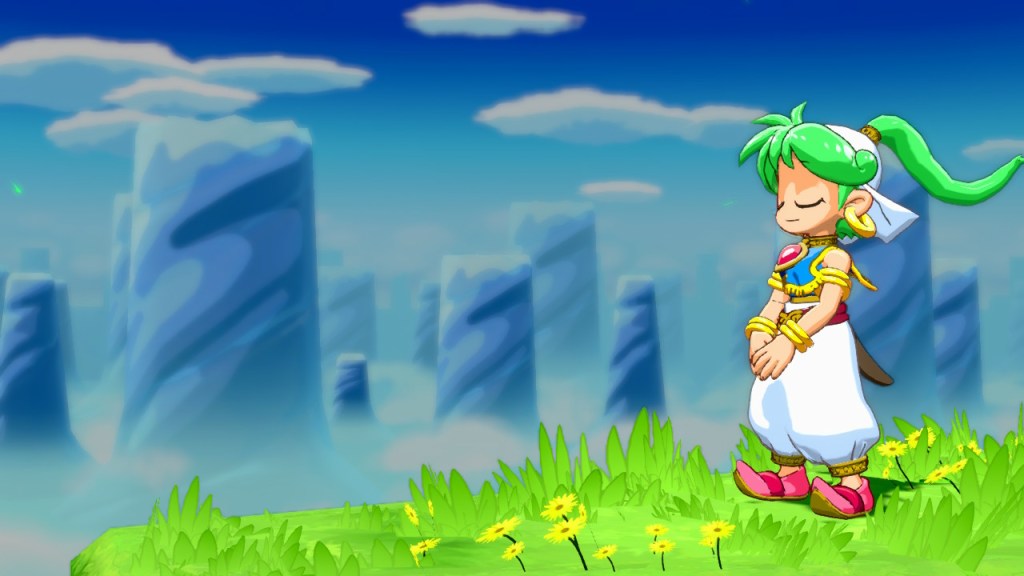
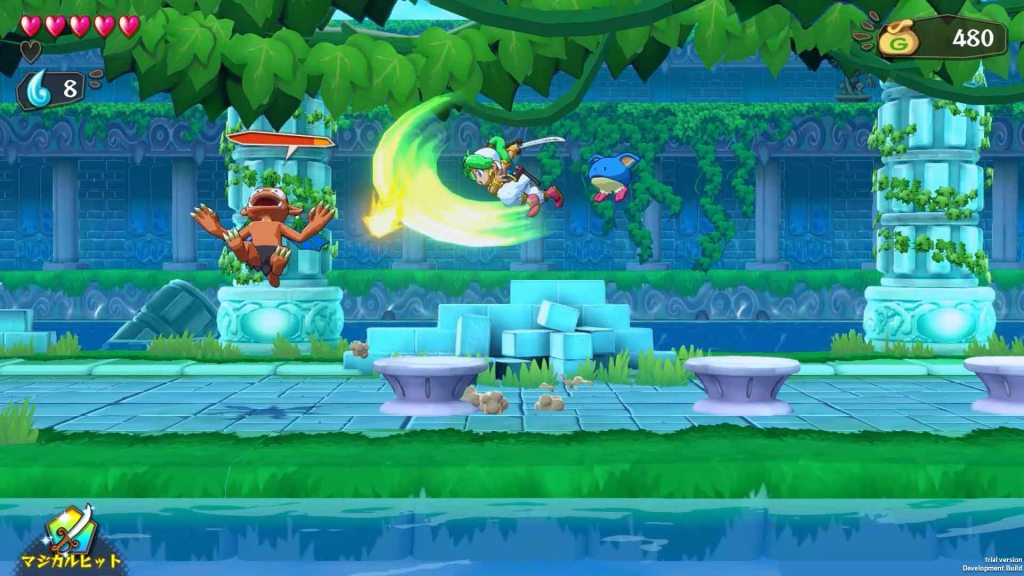
    Now sporting full 3D graphics and a cel-shaded aesthetic, Asha in Monster World completely redesigns the game’s visual elements into a gorgeous new skin full of personality. Asha in Monster World is a bright, primary coloured explosion of a game, with a cheery exterior that fully matches our protagonist’s personality. Asha doesn’t say much, but her personality shines through in her every action. Whether she’s sliding across ice, opening a chest or seeing something amazing for the first time, her personality exudes charm and fun.

    While that same level of design doesn’t extend to all of the games characters, Artdink have done a great job of making every NPC that needs to stand out, do so.

    Now having never played the original Monster World 4 game, I can’t tell you just how much of a liberty Artdink have taken with redesigning the environment for 3D. Judging by screenshots of the original game, most of the levels look exactly as they did in the original 2D version but with that cartoony 3D makeover. While they look good, if somewhat basic, they don’t exude the same level of personality as our plucky protagonist and are rather bare when compared to the level of detail and bric-a-brac that litter modern games.

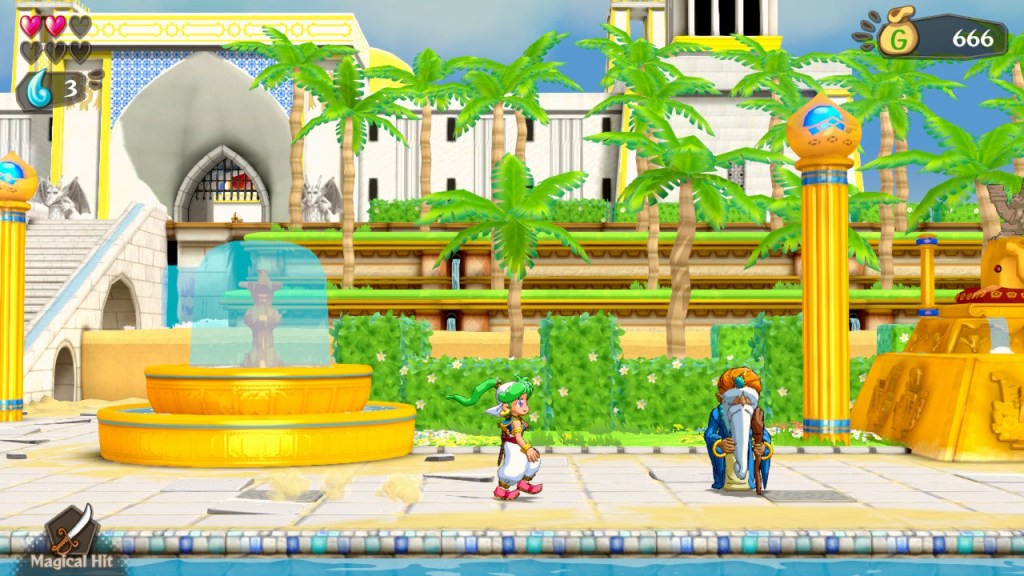
    As a RPG platformer, Asha more than delivers on the platforming front while having just enough RPG elements to break up all the dungeon crawling that you’re going to be doing. Once you’ve made your way to the city of Rapadagna, you’ll be able to walk around the multi-layered environment, talking to people, completing easy sidequests and purchasing new swords, shields and bracelets for Asha. Swords and shields are pretty explanatory while the bracelets increase the amount of hearts our protagonist has.

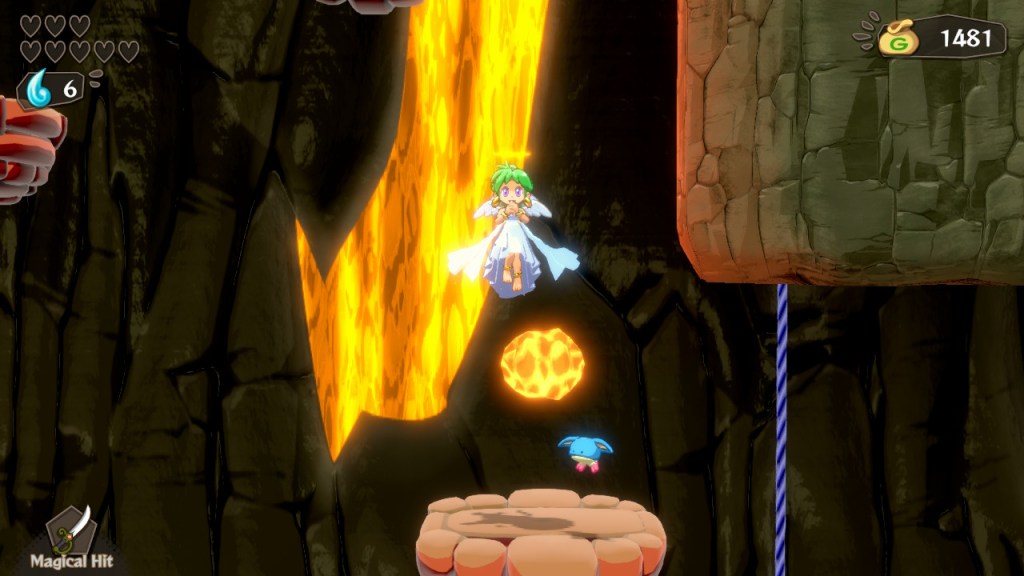
    Across her adventure, Asha will be collecting coins and money dropped from enemies to buy new upgrades, while collecting the Life Drops scattered across the environment will award a permanent extra heart for every ten drops. Asha’s pet, the Pepelogoo, is an indispensable tool in the game. Pepe can be used to collect items just out of Asha’s reach, block certain environmental hazards, act as a platform and help Asha to float short distances and act as a double jump when she is holding onto him. The double jump system is, initially, an awkward mechanic of having to press a button to summon Pepe before you can use him as such. It quickly becomes second nature though. If killed in action, Pepe can also use one of Asha’s elixirs to revive her exactly where she pegged it.

    Both the city and dungeons employ a depth level approach to level design with various elements of the city and dungeons placed on different layers for you to walk into and out of. This is employed to good effect in the dungeons to create a maze-like environment that lightly hints at Metroidvania elements. Dungeons are self-contained though so there’s no reason to go back and forth between locations if you’ve thoroughly explored it the first time round.

    Wonder Boy: Asha in Monster World does make some concession to modern design though. Firstly you can now save anywhere via the system menu. The Sage that acted as a save point in the original game is still there but his job is now yours for whenever you feel the need. Secondly, in the original game you could miss items if you killed the level boss before completely exploring the area. This was due to the fact that defeating a boss would lock for the level for the rest of the game. Now you can jump back in, with a handy little display next to the entry point of the four main dungeons showing you how many Life Drops you’ve missed in the area. One concession that I do wish the developers had made was the inclusion of a map for each of the dungeons. Only the Ice Pyramid section comes with a map to help you navigate its corridors.

    Since Asha on Monster Land is a slavish remake of the original game, the actual gameplay may either make it or break it for you. While the platforming can get fairly involved especially with Pepe making up a good portion of manouverability, the combat is rather rote. Asha has four attacks. She can attack in front of her, above her and below her during a jump. She has a magical sword attack that deals extra damage when activated, though you do this by holding down a button and then just slashing away with one of her three attacks.

    By not changing the game at all in this manner, Artdink have made certain that the game stays absolutely true to its roots, but it also creates a game that is extremely light on challenge. Yes it has that 90’s flavour that games of the time had, but by today’s 2D platforming standards it’s nearly devoid of challenge, at least for me. Certain platforming sections cost me some hearts but ultimately the game, including the bosses who are based on pattern recognition, were a cakewalk. And I’d honestly be lying if I said this bothered me. Gamer’s who order the physical edition of the game will be blessed with the original Monster World 4 so that they can check out the differences for themselves.

    Wonder Boy: Asha in Monster World may not provide you with a challenging experience but what it will give you is a bright, cheery adventure filled with personality and charm. This is the sort of game that I feel we need more of; whimsical, entertaining and all about having fun.

    Pros:

    • Platforming can be a little challenging
    • Easy and whimsical in nature
    • Asha has loads of personality
    • Visually pretty

    Cons:

    • Only physical copies come with the original Monster World IV
    • Some may find the game too easy

    Score: 8/10

    Wonder Boy: Asha in Monster World was reviewed using a code provided to gameblur by the publisher.

  • Review: Glyph (Switch)

    Review: Glyph (Switch)

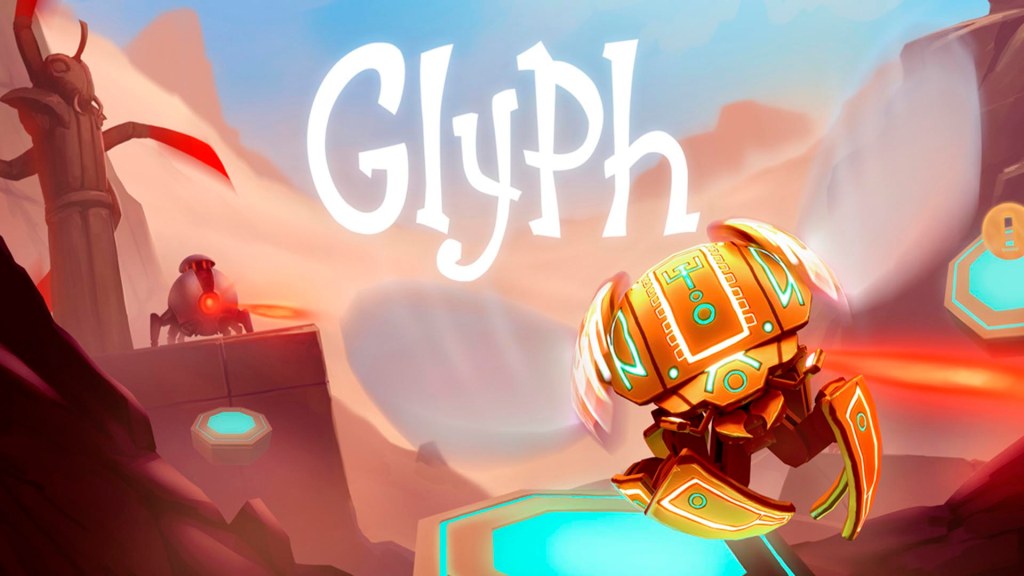
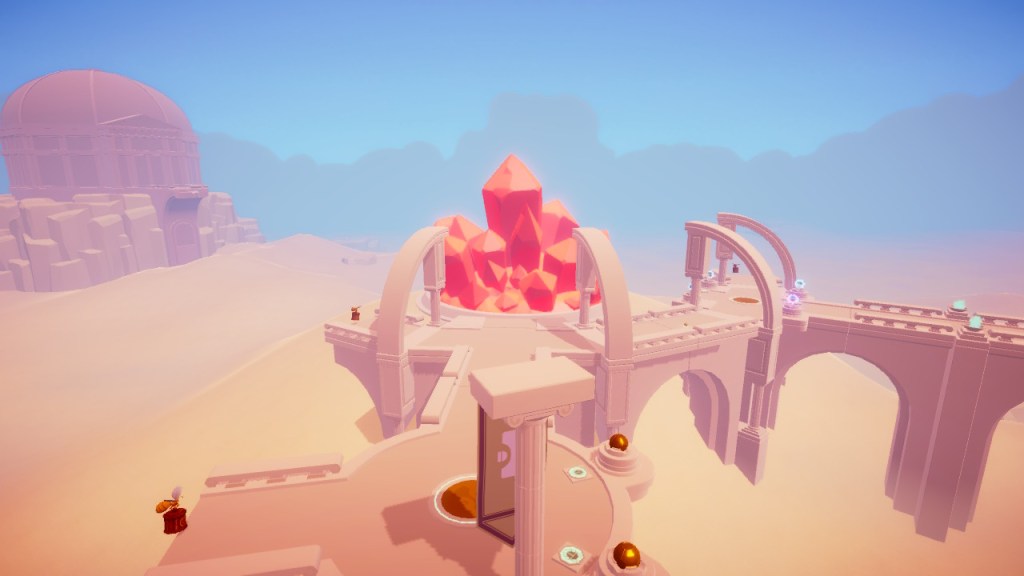
    Amidst the desert ruins of an ancient civilization, you take on the role of Glyph, a mechanical scarab tasked with exploring the sand-drowned ruins of a once-mighty civilization. Buried beneath shifting sands and rolling dunes, this once mighty empire has taken their secrets with them and it’s up to you to find out what those were. Be warned though, for the further in you go, the harder it becomes to extract what those secrets may have been.

    Will you take on the challenge of navigating the lost remnants of this world or will the truth be forever buried beneath the sands of time?

    That is the background to Bolverk Games’ light physics-based platform puzzler, Glyph.

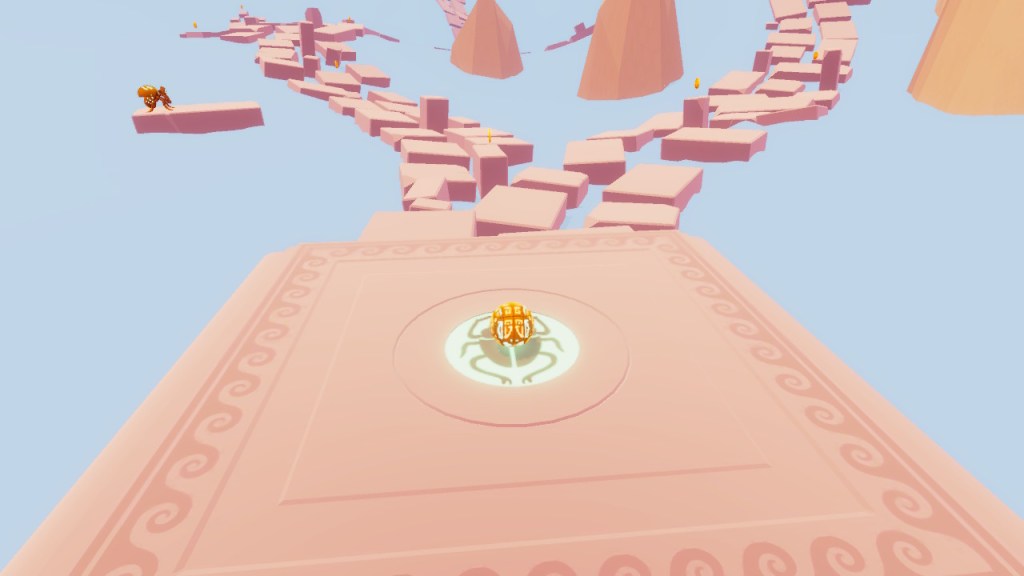
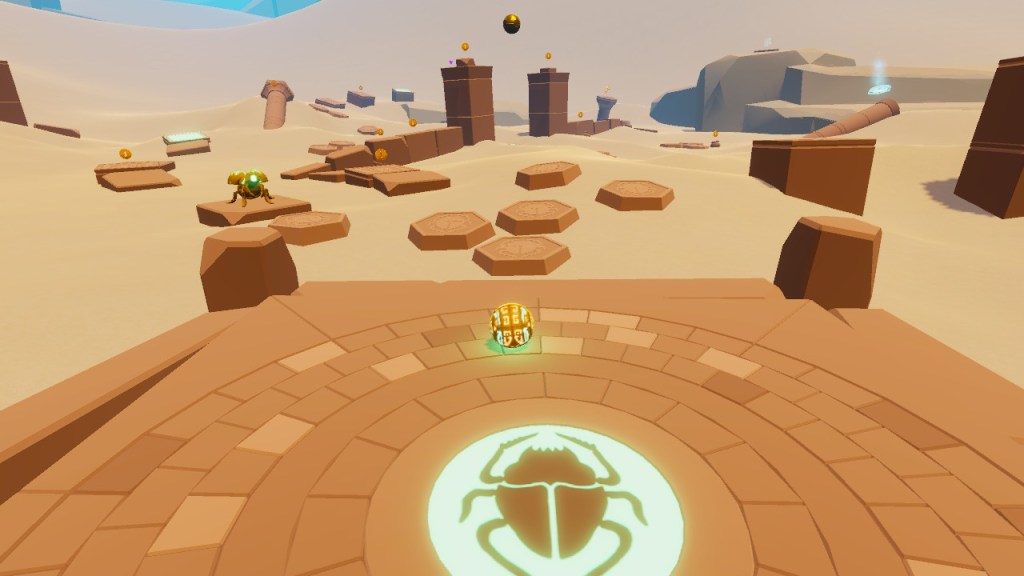
    As the construct Glyph, you’ll be spending nearly all of your time in ball mode, rolling across the landscape while prey to the whims of physics that such a form entails. But fear not, as you’re not entirely helpless. Glyph has a few abilities that the game’s tutorials will take you through in an extensive fashion. What you learn here will be the basis for how you navigate the game’s navigation puzzle levels.

    Glyph can jump, or more correctly bounce, when in contact with surfaces while specific tiles will allow it to double jump. Glyph can also use a ground slam ability to launch itself higher into the air. The final ability unfurls Glyph into avatar mode for a short flight duration to cover the larger distances between platforms and ledges. Combining all these moves together, while paying attention to the way physics affects the way Glyph moves, is the key to success.

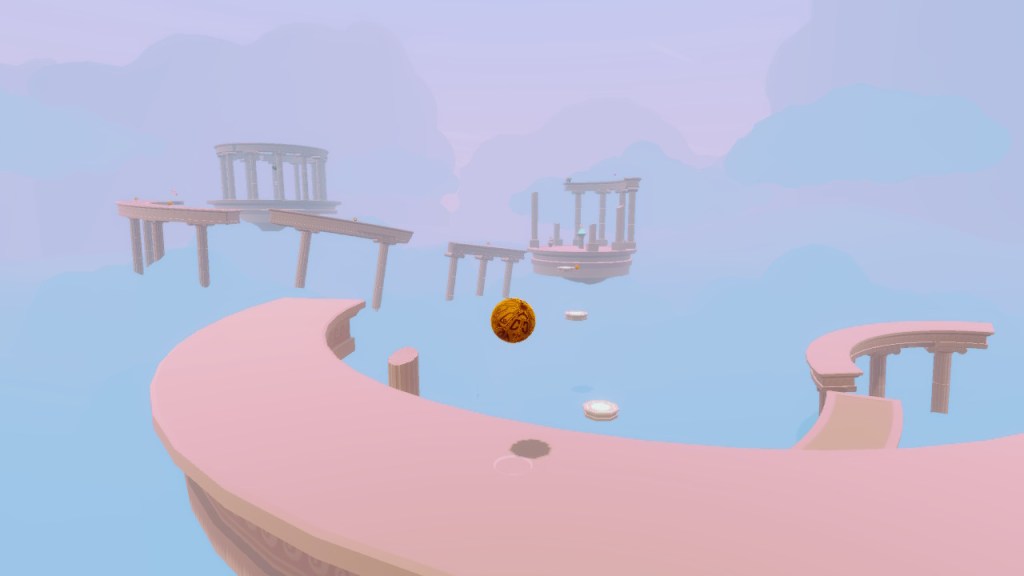
    Bolverk Games have designed levels that, while small, will both entertain and challenge you in equal measure. Sporting a vaguely Egyptian motif, the ruins that you will need to traverse are usually the final remnants of toppled pillars, shattered buildings, and tilted ledges and tiles. Navigating your way across the levels can be an arduous and tricky affair that usually requires all of Glyph’s move set to complete.

    As a ball, Glyph rolls around as physics would dictate to a degree, meaning that you’ll constantly be nudging him back and forth across the environment lest momentum lets you roll off a ledge to the deadly sands – or clouds as some levels are set in them – below. But Glyph isn’t slavishly locked to the laws of physics. A jump can carry you quite far on its own and Glyph has just enough floatiness and control in the air to make even the minutest of course corrections.

    Scattered across each level are coins to collect, gems to find, keys to pickup to open the level exit, artifacts to procure, and different avatar forms to unlock. The avatar forms are for cosmetics only but the other items are needed to progress. Once you’ve exited the tutorial into the game’s hub, coins will unlock new levels while the gems will open up new pathways to new levels in the hub. The artifacts will open up the game’s incredibly challenging Time Trial levels.

    If you die during a level – it only takes touching the corrupted sands once to send Glyph back to the beginning of the stage – keys and artifacts are reset but thankfully the coins you’ve picked up stay with you. And you will die a lot because Glyph is an incredibly challenging game that walks that tight line between been fun enough to pick up for some relaxing platforming, but hard enough to ensure a tense playing experience that, when you finally complete a level, you’re rewarded with a sense of satisfaction.

    Very early on the challenge picks up significantly, even in the levels that have a lower skull rating. Levels are rated from one to five skulls for difficulty. Often I’d find that I’d been holding my breath and my shoulders and wrists were tense when I’d completed a level, having to put my Switch down for a well-deserved break from what was an ultimately rewarding experience.

    Your completion times are recorded and you can go back to replay the levels for better times if you prefer. Like a parkour game, finding that perfect line takes time but is worth the effort.

    The Time Trial levels are where Glyph throws its hardest challenges at you. They’re small but require serious mastery of the game’s mechanics to reach even its gold, silver, and bronze levels. The gold time can be as low as ten seconds. Each tier per Trial will net you a gem making the effort worth it.

    Visually Glyph is a beautifully stylised game that ran perfectly on the Switch Lite and is drenched in a wonderful fable-like aesthetic and atmosphere. Controls for Glyph are pitch-perfect as well, making your failures your own.

    Packing in a ton of levels, Glyph is the sort of puzzle platforming experience that doesn’t come around often. With stunning visuals, solid controls, and gameplay that appeals to those looking for a laid-back exploration experience as well as a nerve-wracking one, Glyph soars above the competition and should be in your collection.

    Pros:

    • Visually stunning
    • Wonderfully challenging
    • Great level design

    Cons:

    • Recollecting artifacts and keys can get frustrating with repeated deaths

    Score: 8/10

  • Review: Ghosts ‘n Goblins Resurrection (PS4)

    Review: Ghosts ‘n Goblins Resurrection (PS4)

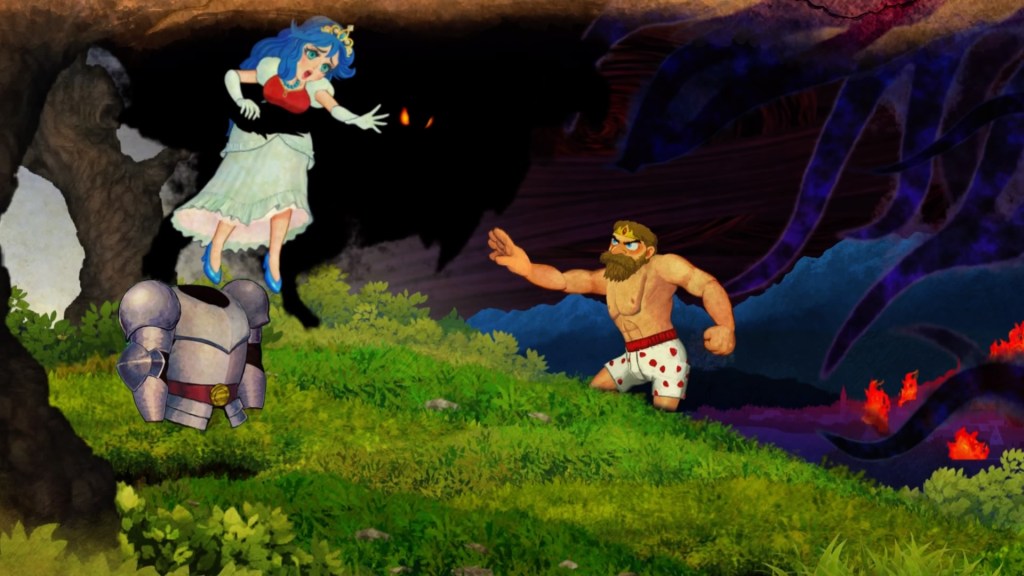
    After a hard day of knighting, you just want to get out of that stiff armour and lounge around in your boxers, hopefully while in the company of your dearest princess. But wouldn’t you know it, evil doesn’t care about your day off, or that princesses have better things to do than get abducted every second week. So off you go, grabbing that armour while, in the distance, your kingdom burns beneath a devilish assault.

    So with armour clenched tight, lance in hand and a permanent scowl on his face, our hero Arthur prepares to face another manic Monday. . .

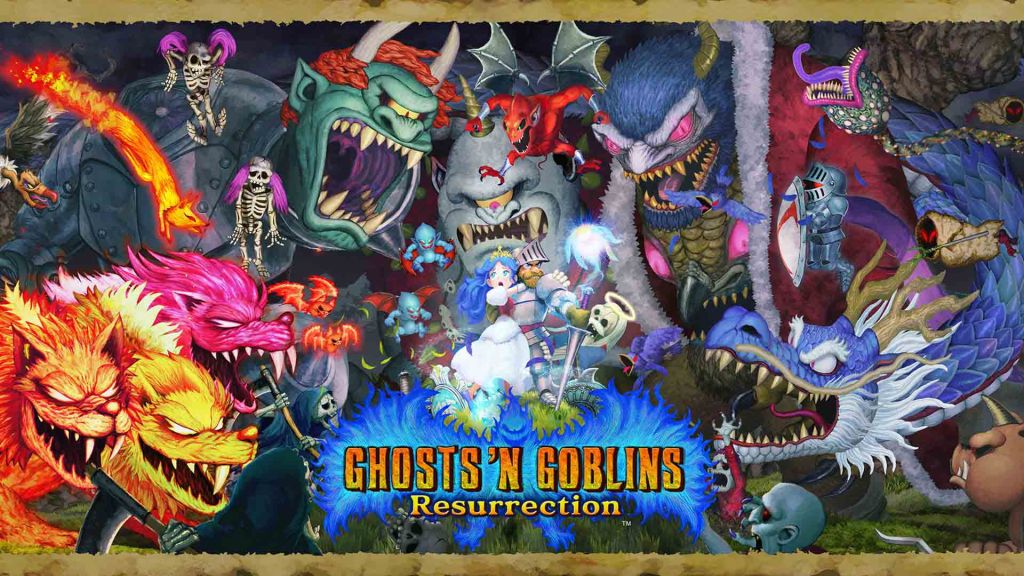
    Well okay, it’s not really Monday. I’m pretty sure what day it is doesn’t matter when your kingdom is burning. But what it is, is the day we welcome the Ghosts ‘n Goblins series back with Ghosts ‘n Goblins Resurrection. That’s right, the original rock hard, make you cry Dark Souls of its day has a new game and it’s here to show you what hard really is all about.

    Ghosts ‘n Goblins Resurrection originally launched earlier this year, February to be exact, on Nintendo Switch and now Capcom has finally brought it to PS4 with PS5 backwards compatibility, Xbox One and PC, letting the rest of the gaming community experience one of gaming’s toughest hard love franchises.

    As both a reboot and a remake of the original Ghosts ‘n Goblins, Resurrection yet again places you in the armour of put upon knight Arthur as his princess is kidnapped while a demonic invasion turns the kingdom into an overrun, twisted hellscape. You’re going to have to side-scroll and platform your way through one tough level after another in an attempt to beat the ever-loving snot out of the dastardly evil behind this plot while, hopefully, not breaking your controller in the process.

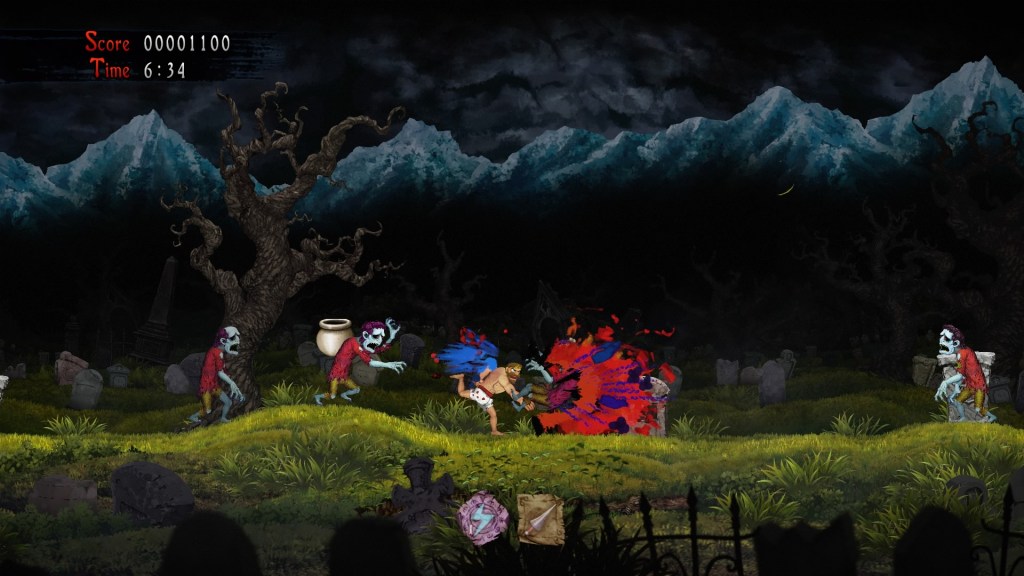
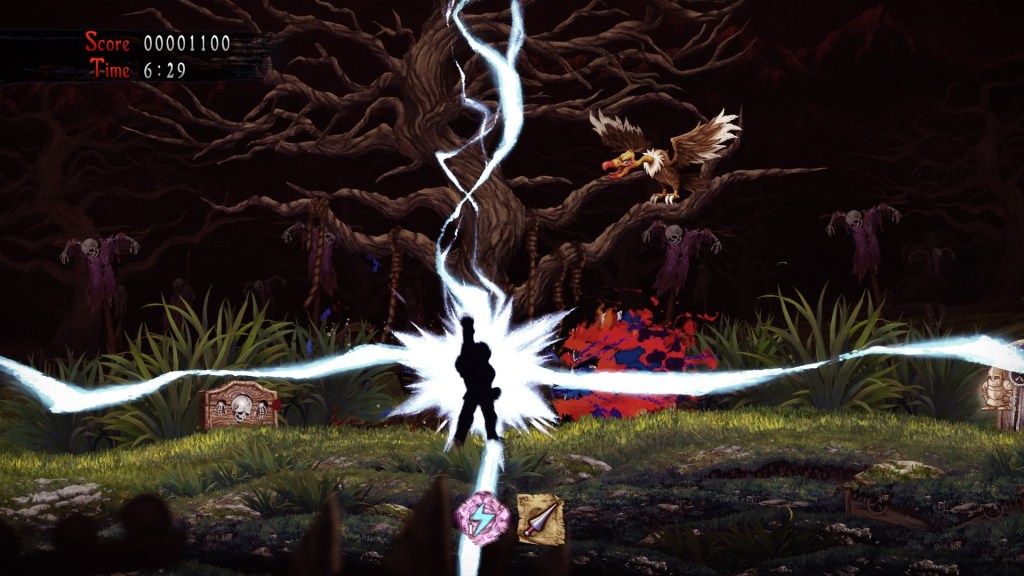
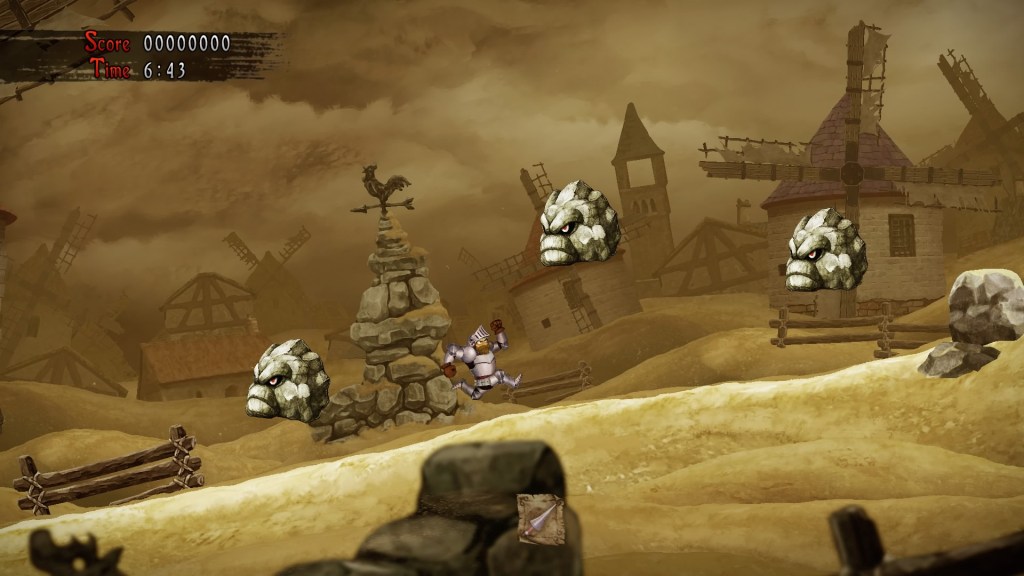
    Once you get past the stunning visual style that Capcom has employed for this reboot which makes the game look like a fable drawn from a storybook, you’ll find that Capcom has employed the old adage of “if it ain’t broke, don’t fix it”. Arthur moves exactly as he did in the older games, just with better animation. He possesses the same level of speed, making timing a critical choice and can only jump over and onto objects if you jump while moving. Jumping while standing still will merely propel Arthur straight up, meaning you have to unlearn many of the moves that modern platformers have brought to the table since then. Arthur can also attack in three directions: in front of him, above him by aiming up and below him if you attack while jumping and pressing down on the D-pad or directional buttons.

    The key to success in a level, beyond mastering the way Arthur controls and having twitch reflexes, is in memorising the level design and enemy attack patterns. Levels usually have moving parts to them, which adds a nice sense of dynamics to the environment. What weapon you wield is just as important as all of the above. Arthur’s arsenal has expanded since the first game though his trusty default lance is usually the best all-rounder. Picking the right tool for the job, as the saying goes, is tantamount to success. The hammer that unleashes a small arc of energy across distances requires you to get too close to enemies while the dual-shot crossbow requires a lot of jumping to hit an enemy because of the arrows diagonal shots. The holy water is still useless. Weapons can drop from chests or jar carrying enemies.

    Two big additions to this game are Umbra bees and a local two-player co-op mode. Collecting the bees scattered across the levels will unlock magic abilities for Arthur. Magic does need to be charged up for use so you with a brief cool down so you can’t just spam it, making its use more tactical than a Hail Mary when you suddenly find yourself surrounded. The two player co-op lets a second player use a ghostly ancestor of Arthur’s to help him through the levels. Controlling one of three spirits with their own abilities, player two can help Arthur through a level by carrying him around, for instance.

    The games visuals are gorgeous, employing a multi-layered approach to screen elements that make the characters seem like a combination of paper art and puppets with elements placed on top of one another. The animation is also wonderful and each enemy has their own distinct visual style and movement. The visuals, which look straight out of a storybook, can’t hide the games difficulty though.

    Because Resurrection, as befitting a GnG title, is hard. But not unbeatably so. Capcom has chosen to incorporate four difficulty settings, aiming at embracing modern gaming conventions while still attracting the hard-core crowd.

    Page lets you respawn at the exact spot you died at with no level time limit and a max of four hits you can take before crumbling to a skeleton. Squire gives you the same four hit limit, level checkpoint and mid-level rebirth checkpoints but throws back in the time limit. Knight takes you down to three hits, checkpoints, a time limit and an increase in enemy speed. Legend takes you back to the original GNG settings by dropping you down to a two hit maximum with no rebirth checkpoints and more enemies.

    Ghosts ‘n Goblins Resurrection is the perfect platform to showcase Arthur’s return to his own series. It’s both difficult enough to appeal to stalwart series veterans while making enough concessions that casual gamers too will be able to finish it. It’s also a wonderful showcase for the versatility of the RE Engine with its gorgeous visuals and animation. Whether you’re a GNG neophyte or accomplished devil slayer, this game should not be missed.

    Pros:

    • Not as difficult as the original Ghosts ‘n Goblins
    • Gorgeous storybook aesthetic
    • Full of character
    • Different difficulty levels

    Cons:

    • Magic takes a bit too long to activate

    Score: 9/10

    Ghosts ‘n Goblins Resurrection was reviewed using a code provided to gameblur by the publisher.

  • Review: Kingdom of Arcadia (Nintendo Switch)

    Review: Kingdom of Arcadia (Nintendo Switch)

    Sam is just an everyday, terribly average ordinary kid who loves videogames and whose dad just happens to possess a vintage arcade machine. Sam impatiently jumps the gun and powers up the machine without dads approval and wouldn’t you know it, the arcade machine is special and Sam is no longer in Kansas.

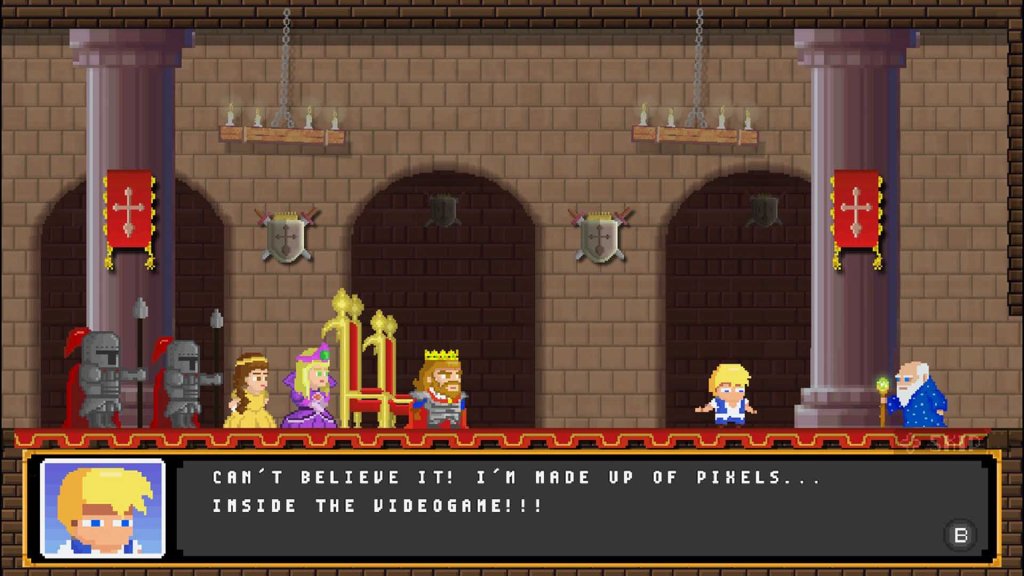
    Welcome to the Kingdom of Arcadia, whose inhabitants know that they are made of pixels and that Sam isn’t from their world at all. And as such, he’s clearly the only one that can save them. Evil forces have corrupted the land and Sam has to travel to four castles to retrieve magical sceptres. It’s the only way to get home so what’s a terribly average kid in videogame land to do? Grab some armour and a sword of course because he’s clearly trained for this.

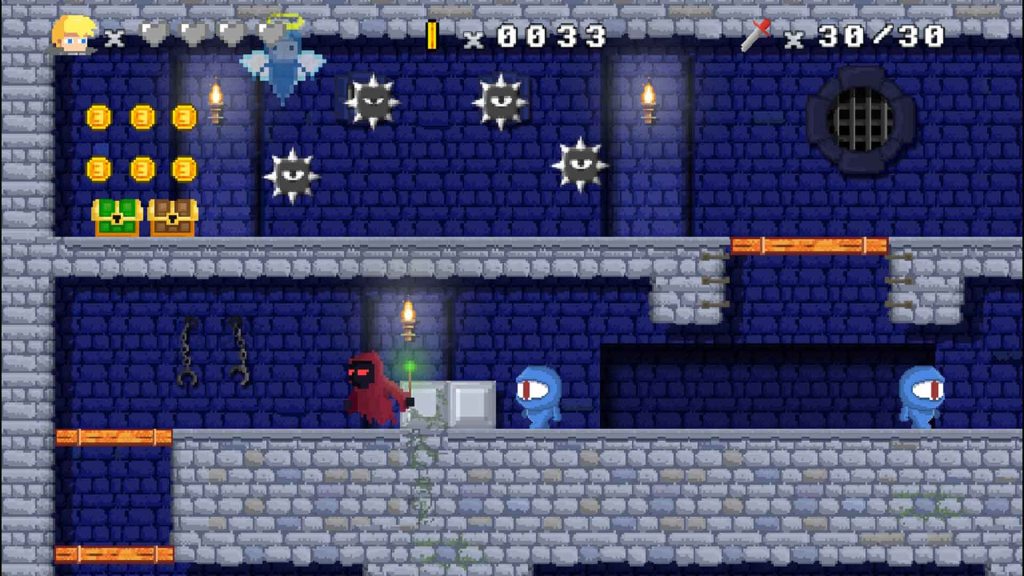
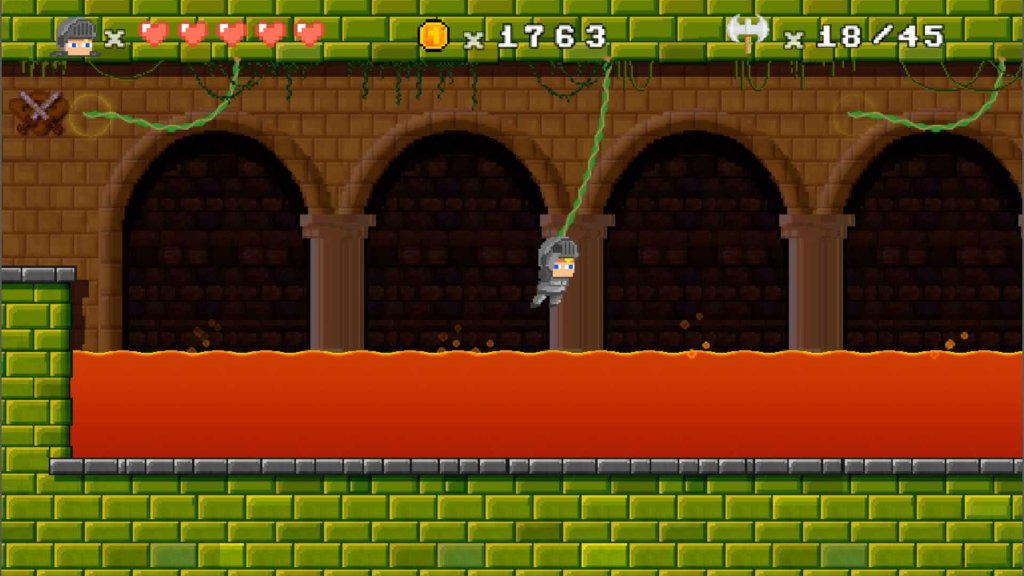
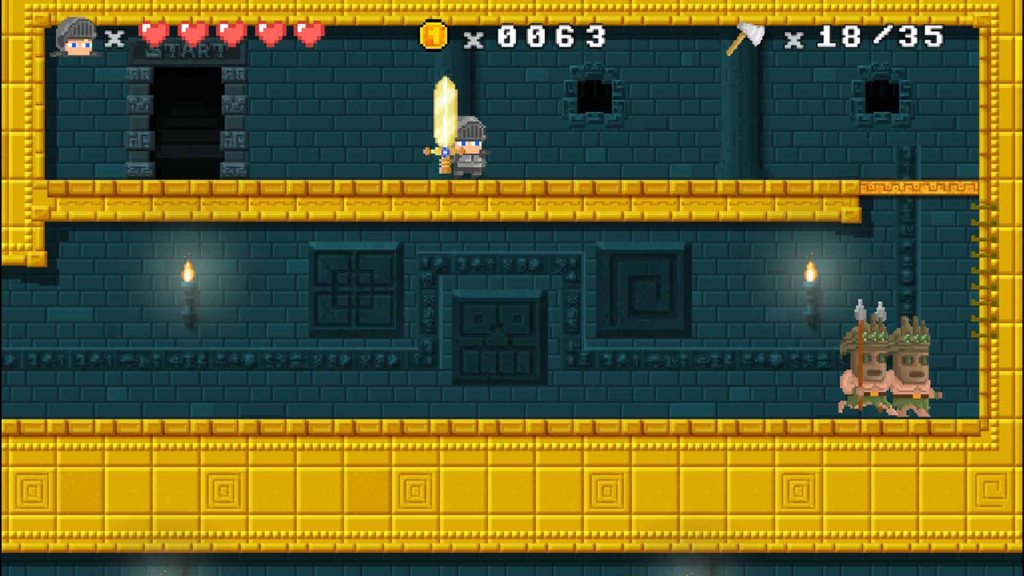
    Set across four worlds broken up into five levels each – six if you count the boss rooms – Kingdom of Arcadia is a 2D action platformer built as they made them in yesteryear. Though it markets itself as a metroidvania, Kingdom of Arcadia is a far more linear affair with some light exploration and light upgrading elements. Developer Spoonbox Studio has built Kingdom of Arcadia on a very basic core set of systems that, outside of the light upgrade system, doesn’t change.

    Sam has three skills: a double jump, a slashing sword attack and a secondary throwing weapon attack. There’s no learning new combos, picking up anti-gravity boots or homing missiles or a hookshot. The levels are designed around these three skills, keeping the game simple, stark and all the better for it. The platforming is absolutely on point and getting hit or missing a jump is usually on you rather than the game. Don’t let the simplicity fool you however, because Kingdom of Arcadia gets quite challenging from the second world onwards.

    Levels begin small but grow larger with each world, but not to the extent that one could label it a metroidvania. Usually you’re traversing to one end of the level to hit a switch, or switches, that open the path to the levels exit. Once again, there’s no backtracking between massive areas waiting to find a new sword to open up a new path twenty screens away. Instead the levels play out like mini-dungeons as you traverse dastardly environment hazards and enemies looking to swiss-cheese you.

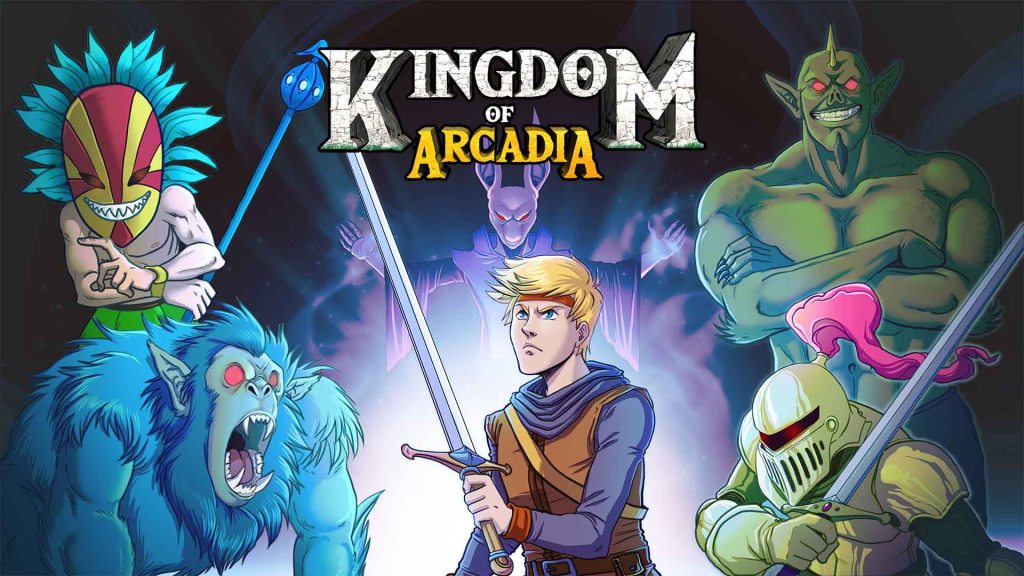
    Kingdom of Arcadia also doesn’t do too much different in what you’re facing in these levels. There are spiked areas, rotating platforms, crumbling platforms, cannons etc. Enemies also follow a familiar archetype, wizards throwing spells, bouncing eyeballs and undead skeletons, most of which are merely reskins unfortunately. Where Kingdom of Arcadia does get it right though, is in the construction of its levels.

    The enemies in each level don’t pose a threat on their lonesome but most of the levels are designed around incorporating the combat around the platforming and precision timing. So you’ll have a snowball throwing yeti at the far end of a room but getting to him may require navigating a spike pit along with moving spiked platforms that block your projectile attacks. Making it to him without getting hit becomes an exercise in patience and precision. Rushing it will usually cost you a heart, which you have few enough of already. It’s these moments that are Kingdom of Arcadia’s strong points even if they’re based around patience and pattern recognition.

    Death may start you back at the beginning of a level but chests you’ve collected and switches you’ve thrown don’t reset unless you leave the level and come back in so it’s in your best interest to stick it through to the end.

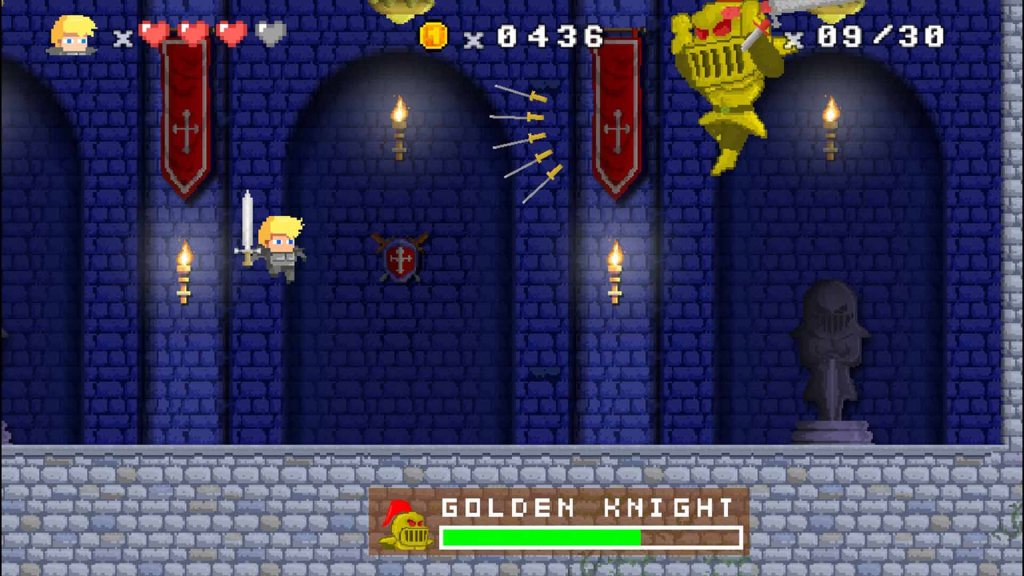
    Some levels have mini-bosses in them as well and they’re usually a cakewalk, involving learning their pattern and figuring out when to strike. The main bosses fall into the same category of pattern recognition and patience as well. They’re more challenging than the mini-bosses but aren’t as memorable as they should have been.

    Each level has enough secret areas to find. Hidden behind cracked walls they usually contain loot chests which grant money, extra secondary ammo or another valuable heart, all of which are invaluable. Money is extremely important as you need to pay for the upgrades to Sam’s health and damage output. Nicely when upgrading Sam’s armour which grants you more health, it also changes his visual look. The sword grows larger and has a wider hit radius as well, while you’re secondary projectile weapon will change from a knife to an axe to a hammer as you upgrade. The upgrades don’t come cheap though and you will most likely have to farm levels later on so it’s a good thing each enemy drops money when killed.

    Visually Kingdom of Arcadia is pleasant enough to look at. The presentation is nice and clean and there’s just enough detail in the sprites to make them charming.

    Where Kingdom of Arcadia doesn’t fare as well though is in the writing and sound design. The writing clearly feels like translation issues were at play or it was thrown together at the last minute. It’s not terrible, but it certainly does have shades of old games within it. Less effective are the sound effects which sound as though they were pulled from a free repository. The musical tracks are effective but lack the punch that usually makes 2D platformer soundtracks resonant. They do the job but fade into the background while playing.

    Kingdom of Arcadia may not challenge platform and metroidvania experts and while it lacks replayability, what it does provide for the time it will take you to finish it, is a charming and challenging fun action platformer that feels as though it were ripped straight from the golden past of 2D gaming simplicity.

    Pros:

    • Increase in environmental challenge
    • Upgrading has a visual effect
    • Death is usually your fault

    Cons:

    • No real replayability
    • Reskinned enemies
    • You will have to grind levels to upgrade
    • Sound effects could have been better

    Score: 6/10