
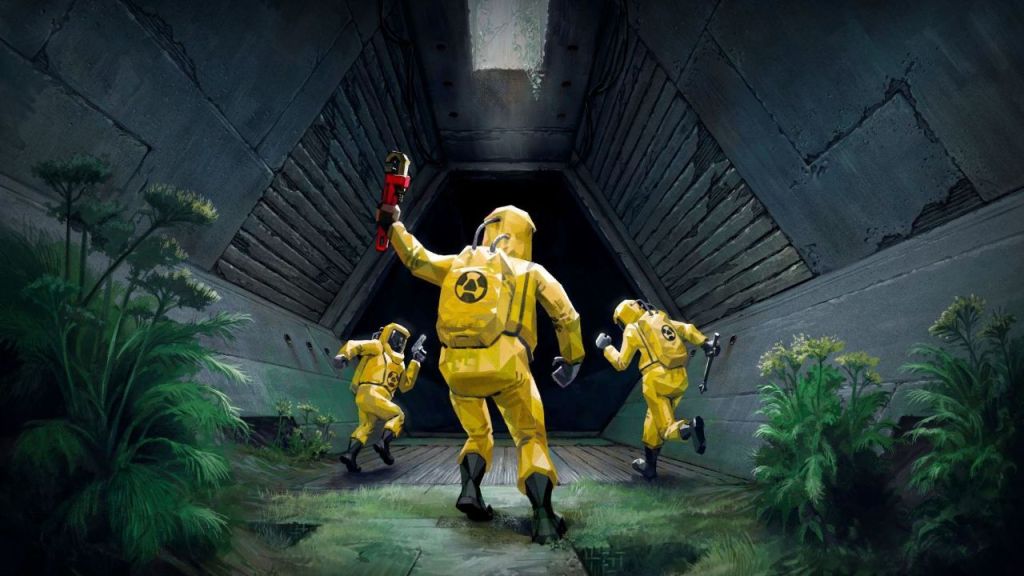
Looking at Kvark’s retro-styled visuals, industrial complex setting, and science-gone-wrong premise, it is easy enough to make Half-Life comparisons – but those features could apply to hundreds of games released since 1998. The Half-Life characteristic that Kvark emulates best is that satisfying, cyclic rhythm between exploration, environmental puzzles, and brief, brutal firefights. Kvark released on PC near the end of last year, but I wanted to replay the console port as there are few games that capture the essence of Half-Life on console, and Valve seems disinterested in preserving access to their Xbox 360- and PS3-era ports like The Orange Box collection and the Left 4 Dead games.
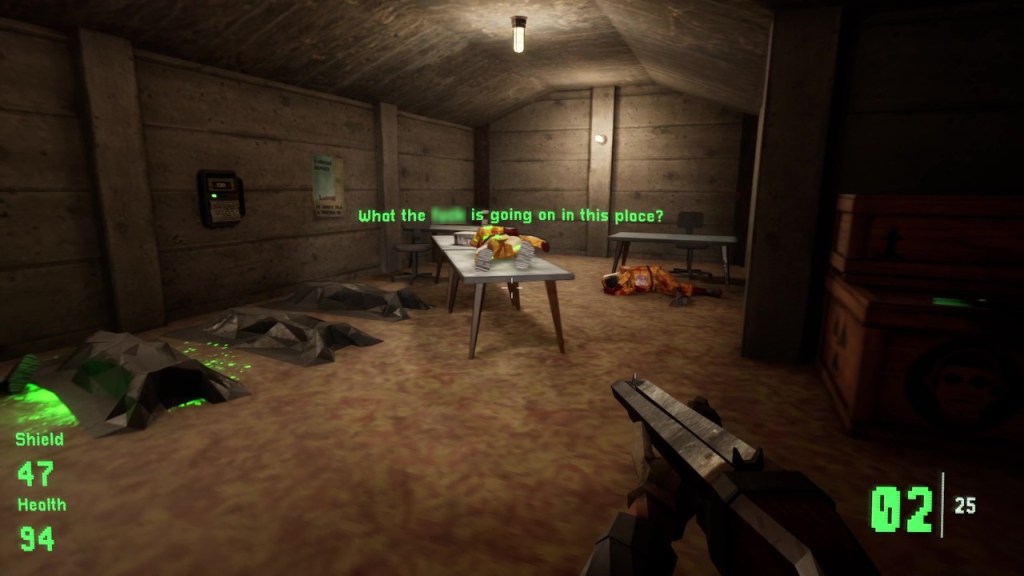
Unlike Half-Life‘s unexpectedly strong narrative thread, Kvark sticks to the classic retro-FPS approach of providing some light context and leaving the rest up to the player. It takes place in an alternate-history Czech Republic, under Soviet-style rule during the Cold War period. The titular “Kvark” corporation has moved on from nuclear power, to nuclear weapons, and finally a dubious injectable substance – “anethium” – to create super-workers and super-soldiers. It’s a videogame setup we’ve seen a hundred times before, so it should come as no surprise your prisoner protagonist wakes up in a cell to discover both human clean-up teams and grotesque mutants are out to kill them.
There are entertaining propaganda videos that reveal what the corporation has been up to and hint at the threats you’ll face in the upcoming chapter, but the bulk of the storytelling is handled by scattered notes or hidden drawings that reveal the ineptitude of the government and staff, or provide the odd code or hint to access secret areas. Survival is your primary goal, and as the Kvark complex was relocated far underground to avoid the gaze of Western imperialist spies, that means an 8–10-hour gauntlet through prisons, sewers, manufacturing facilities, mines, laboratories, and quarantine zones. The overall tone is one of dark, cynical humour, but it can feel suitably oppressive and tense, with open skies only appearing in the final third of the game.
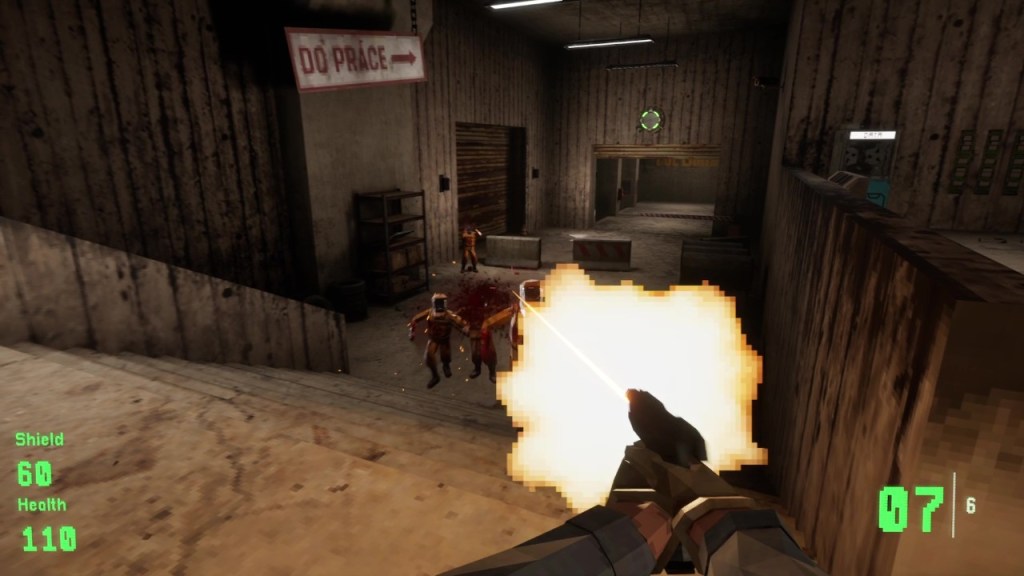
Gameplaywise, Kvark focusses on what all good first-person shooters should: responsive movement; weapons that look, sound, and feel good to use; and hand-crafted combat encounters against a variety of enemy types that force you to use your full arsenal. There’s nothing inherently novel about the shooting or the traditional weapon categories – ranging from a mostly ceremonial wrench through a pistol, shotguns, rifles, a crossbow, an energy weapon, a grenade, and a minigun – but they all have a situational use and limited ammunition reserves that prevent you from just sticking to an allrounder. Even the perfunctory skill tree, which encourages you to hunt for anethium injectables, offers mostly incremental buffs and one risk-reward perk that reduces total health and healing efficiency in exchange for health gain through kills.
With solid but familiar foundations, it’s that aforementioned rhythm of exploration and environmental puzzling, interspersed with bouts of violent combat, that channel Half-Life vibes. Aside from a few short-lived platforming sections in the second chapter, both the level design and variety feel good given its length, with many looping back, over, or under themselves to give an impressive sense of scale. Within the ruined corridors, rooms, and vents of the facility you’ll scrounge for weapons, ammunition, and secrets; you’ll flip switches, connect cables, ride carts, and activate machinery to open the way forward; and you’ll deal with clean-up squads and hordes of mutants by staying mobile, kiting melee enemies, prioritising those with ranged attacks, and making use of explosives (or explosive hazards) – all before shifting back to exploring for more resources in preparation for the next combat encounter.
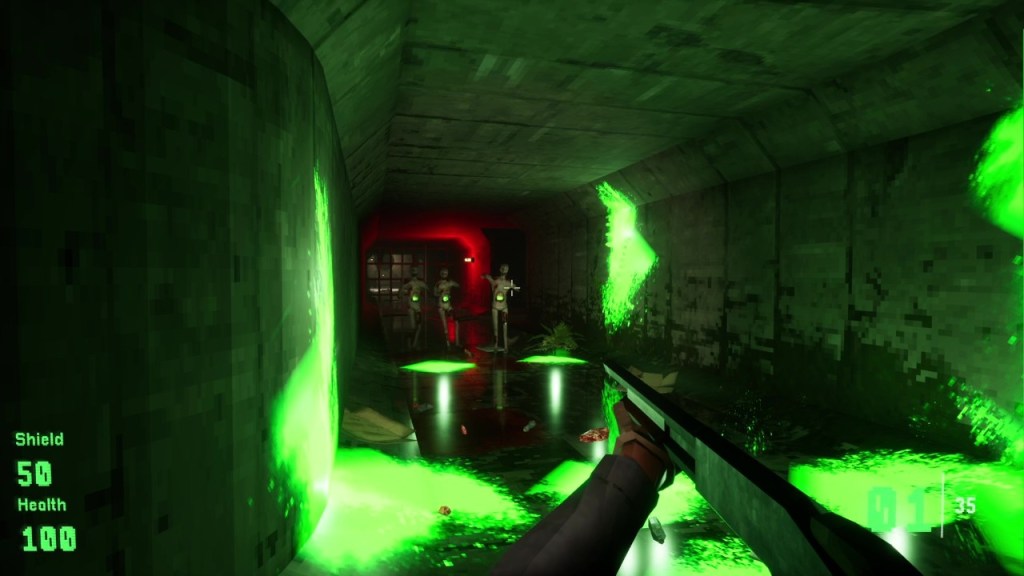
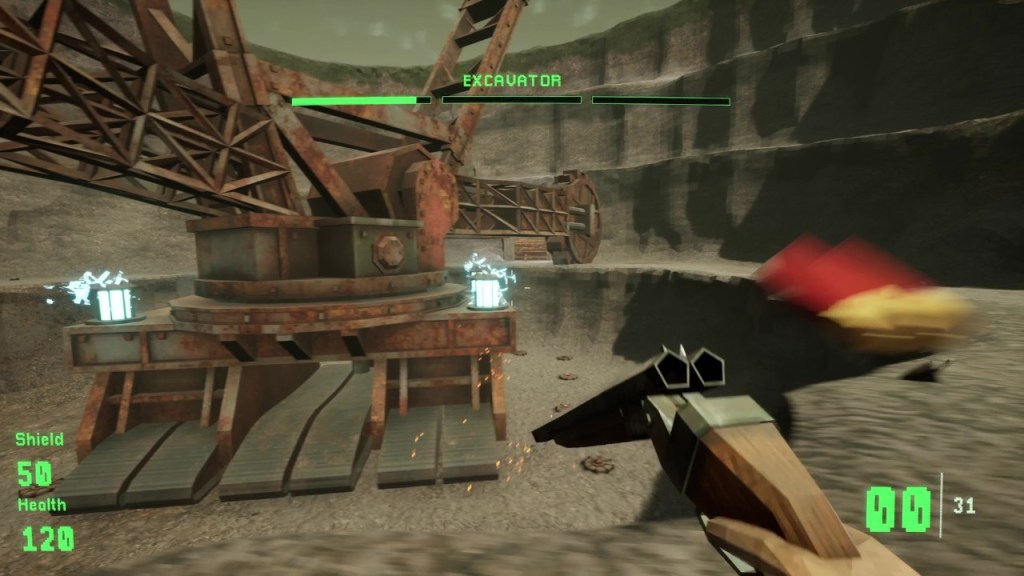
Kvark feels more forgiving than it did during early access period, but the checkpoints and resource stashes still feel balanced around surviving a handful of significant encounters each level – encouraging a more methodical and tactical approach to firefights on all but the easiest difficulty. As the game progresses, you’ll encounter larger mobs in bigger and more hazardous arenas that’ll test your shooting skills or your ability to scavenge resources mid-battle. Mutated rats, spiders, and zombies rush you or spew glowing goo and webbing that make fighting in tight spaces a pain. Clean-up squads force you to use cover as they evolve from baton- and pistol-wielding goons supported by flying drones, into armoured squads with shotguns, flamethrowers, miniguns, and robot support. With the action confined to an arena, it was only the three boss encounters that felt more annoying than challenging, with the focus on dealing with mobs while avoiding AoE attacks and hitting weak-points.
When it comes to the presentation, Kvark will likely be divisive. I enjoy the clean, retro-styled visuals imitating early fully-3D environments and the ability to interact with so many objects, but there is a lot of asset reuse to build out the more sprawling levels. Every other element feels near-perfect, from the blocky character models, crude weapon animations, and chunky gore effects, to the ambient audio, roar of gunfire, and a mostly subdued electronic soundtrack that ramps up during combat. It also ran smoothly on an Xbox Series X – performance that’ll likely hold true for current-gen consoles – with a helpful touch of auto-aim and some decent rumble feedback for gunfire and footsteps. The only notable issues I found (as of this review going up) were several crashes during the second level of the first chapter, and the placement of some checkpoints at the entrance of restock rooms instead of at the exit, so you have to collect everything again after reloading.
Taken as a whole, Kvark doesn’t offer much novelty when it comes to the premise, mechanics, or visual style, but it has something so many modern games lack – rhythm and pacing. You could go back and call Half-Life dated based on the visuals, limited set-pieces, and no progression mechanics, but I’d challenge anyone to play it and claim it’s not fun. Kvark is not as timeless, sure, but it finds a similar groove by ensuring you’re constantly cycling between exploration, light puzzling, and brutal firefights, all before hitting the next checkpoint and starting the cycle anew. As such, Kvark is easy to recommend – especially at an indie price-point – to fans of the genre that play on console and want a taste of that classic Half-Life formula.
Kvark was played on Xbox Series S|X using a code provided to gameblur by the publisher. It is also available on PC, Xbox One, PS4/5, and Nintendo Switch.
 gameblur-v2.0