Tag: Fatbot Games

  • Impressions: GRAVELORD (PC) Early Access

    Impressions: GRAVELORD (PC) Early Access

    GRAVELORD was not the trajectory I expected Fatbot Games to take, having discovered their Vaporum games after playing through Almost Human’s Legend of Grimrock 1 and 2 – all of them grid-based, first-person, real-time, dungeon-crawlers. Vaporum offered a more streamlined and polished take on the now niche genre – replacing multiple party members with an expanded gear and ability system – but they stuck to the creatively blocky world design, abundant puzzles, hundreds of secrets, and real-time combat that I’d best describe as a deadly grid-dance. In contrast, GRAVELORD is a retro-inspired first-person shooter competing in a saturated market – but between their knack for level design and the unexpectedly great shooting, it might have a chance of standing out.

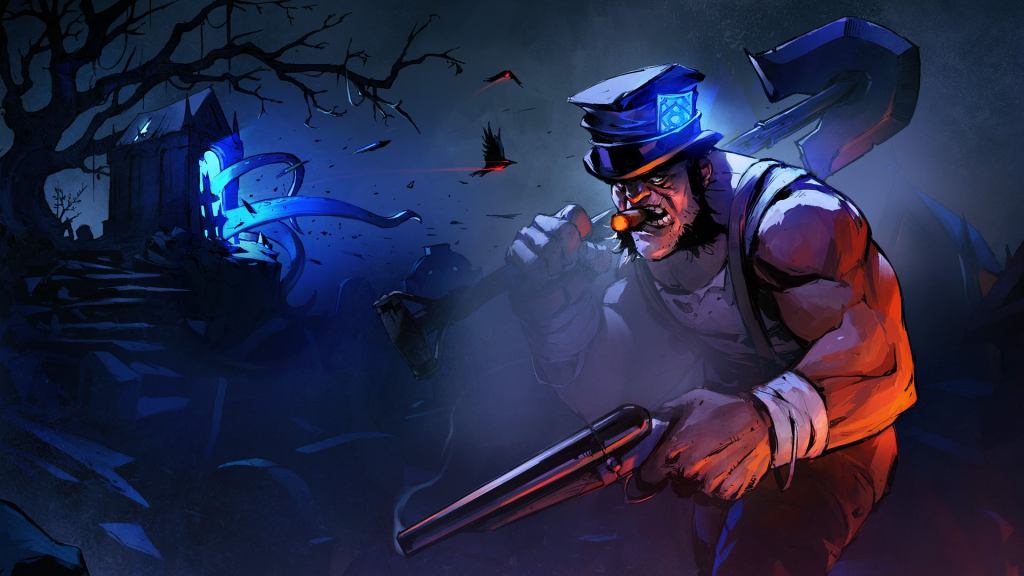
    Befitting the genre, GRAVELORD is light on story elements. The intro reveals the hulking, square-jawed, top hat-wearing gravedigger Queedo, who works in the employ of Death as his ancestors always have. The problem that you’re running and gunning towards is an alchemist by the name of Keron Husk – murderer of Queedo’s father and manufacturer of supposedly life-extending potions that have instead created an undead scourge. Unless you read through the short comic-style collectibles found in each map, that’s all the context you’ll get. Queedo’s personality boils down to barely controlled rage and a string of bad jokes in a Cockney accent that grew tiring by the end of the first map, so it’s probably for the best that narrative elements don’t interrupt the flow of gameplay too often.
    Based on this first episode – with 8 maps and a boss at the end – GRAVELORD is remarkably traditional in structure and, to its benefit, distinctly Quake-like when it comes to movement, gunplay, and the visual design language. You traverse Gothic-themed maps on the hunt for coloured keys or switches, following visual cues like coloured lighting; you acquire traversal-based abilities like a spectral grapple and double-jump to reach new areas and secrets; every time you collect said key item, you can expect monster spawns; and most maps culminate in a chaotic charge to the exit or a boss fight, typically under the influence of “rage” runes that briefly buff resilience and weapon fire rate.

    Despite footsteps that suggest he weighs half a ton, Queedo hurtles around the map like he’s sprinting on an ice-rink. The movement mechanics are perfect for surviving firefights in a game with no hit-scan enemies and a high default difficulty (I spent a lot of time on low health and save-scumming) but it does force you to slow down when tackling platforming sections or avoiding environmental hazards that litter many arenas.
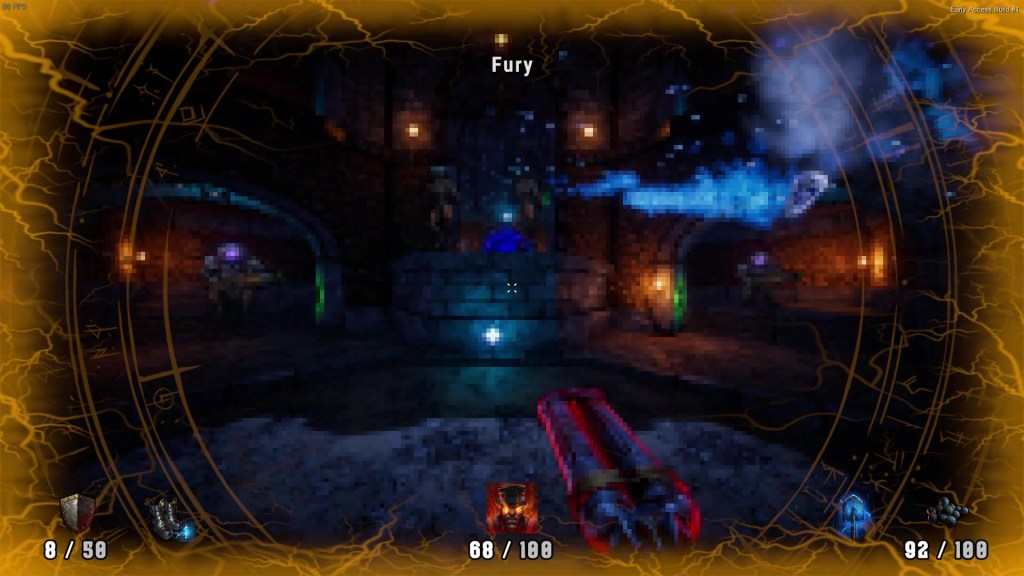
    Given their prior games, the shooting was an unexpected highlight, with a familiar but powerful arsenal ranging from a shovel to a pistol, double-barrelled shotgun, chain-gun, grenade-launcher, and, in a nod to their prior games, an arcing Fumium rifle as the special. Every weapon remained useful throughout for specific enemy types – think melee rushers, nimble flying spitters, tanky explosive users, and magic wielding sorcerers – and they both sound and feel powerful in use. Enemies react to hits with staggering animations, blood splatter, or a gory demise, and when you throw in a dynamic soundtrack that shifts between creepy ambience and thumping combat loops, GRAVELORD ensures simply shooting at something feels good, no matter what you have in hand – a feat that shouldn’t be taken for granted despite the genre.

    The other highlight was Fatbot Games’ dense, intricate, and secret-packed level design. The maps can feel sprawling and maze-like, yet they’re incredibly compact and often loop back past, over, or under themselves. In addition to typical key hunts, there is no shortage of consumables tucked away, or secret buttons and rotating statues (with riddle-like clues) that lead to mega-health boosts, early access to powerful weapons, and a range of character and weapon upgrades.
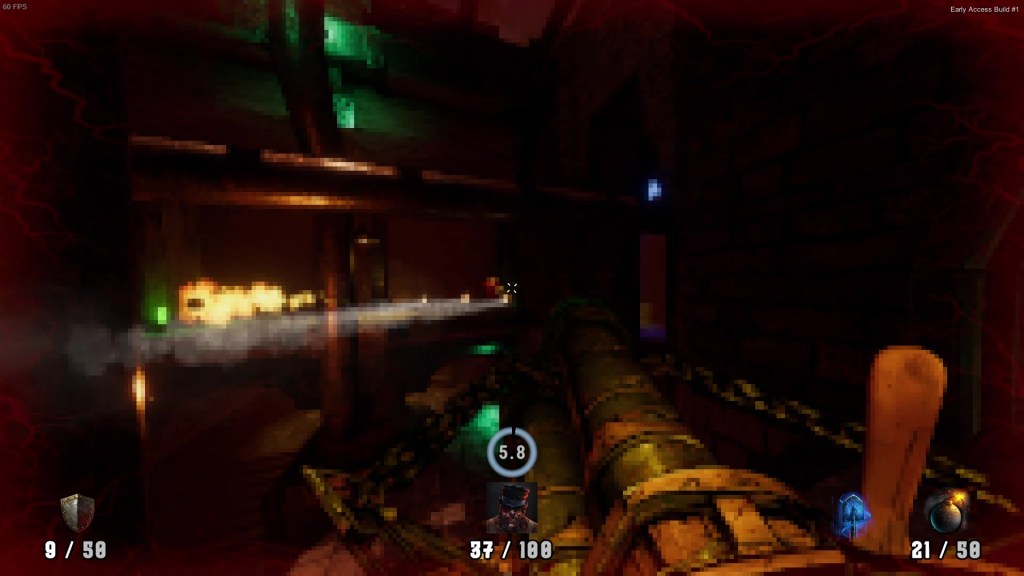
    Regardless of whether you’re purging graveyards, riding conveyer belts through crypts, avoiding magma pools in crematoriums, swimming through sewers, or navigating a gothic town, each map feels hand-crafted with a ton of thought going into their layout and enemy composition. I’ve no doubt most maps could be blitzed through by speed-runners in a few minutes once you know what you need to do, but compulsive secret hunters could spend upwards of half an hour scouring them fully.

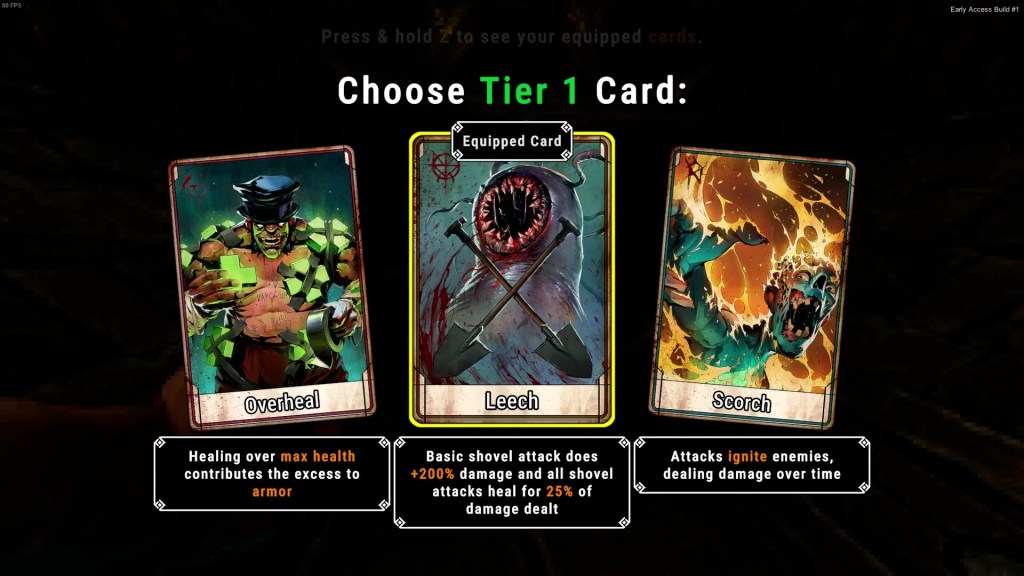
    The last mechanics to touch on feel like an attempt to include rogue-like elements in a traditional save-anywhere FPS, to varying degrees of success. Collecting weapon alt-fire modes on each map feels pointlessly irritating, though I’ll accept resetting movement abilities due to the map design and gating progression. The 3-tier card system, which allows you to pick one from a random draw, feels more thoughtful and impactful as you can choose to favour an aggressive or defensive build. As an example, I could massively boost my survivability by combining a card that regenerates 30 health points with cards that let me deal more damage and receive less damage at or below 30 health.
    As it stands, GRAVELORD might not offer much novelty, but it looks to be a solid entry into the retro-FPS market with legitimately great shooting that emulates the classics, and fantastic level design that draws on Fatbot Games’ heritage.

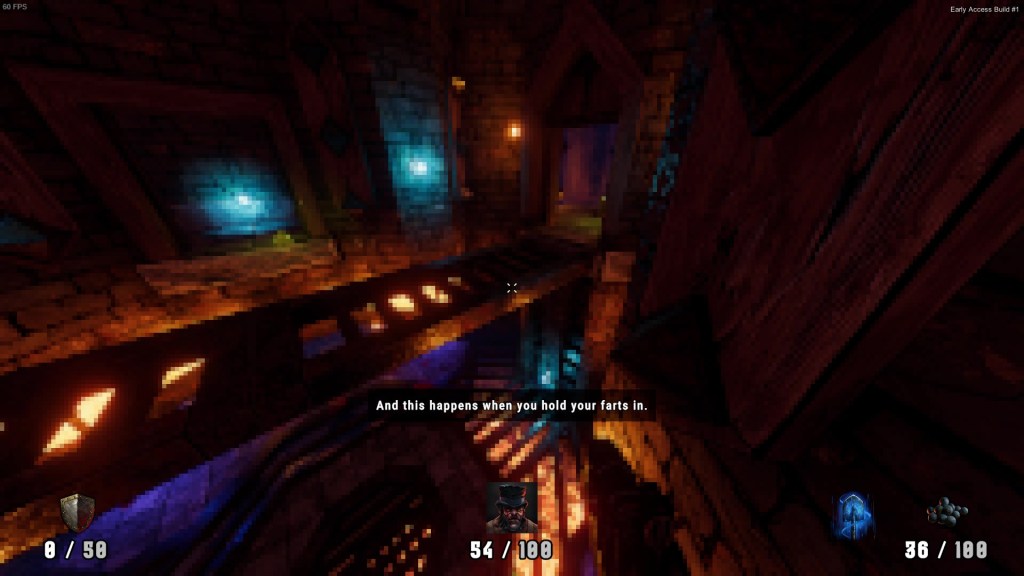
    That said, there is one element that might prove divisive. GRAVELORD currently has a strong visual filter enabled, far more aggressive than the marketing materials suggest, that ensures everything more than a meter from the player becomes heavily pixellated and increasingly indistinct at range. It feels similar in function to the filter seen in Prodeus, but it’s ramped up to 11 and I doubt it’s working as intended. It grew on me over time, but there seems to be no option to tone it down in this early access build, and I’m wondering if a degree of auto-aim might be due to the fact distant enemies are often reduced to a handful of moving pixels difficult to track against the background?

    GRAVELORD was previewed on PC using a code provided to gameblur by the publisher.
  • Retrospective: Vaporum (2017)

    Retrospective: Vaporum (2017)

    I love Vaporum and many of the classic games that inspired it, but it’s a difficult sell to newcomers. Clunky, archaic movement limitations and artificial grid-like environments – elements you might criticise in any other modern game – are core gameplay features and, if you buy into the nostalgic aspect, all part of the charm

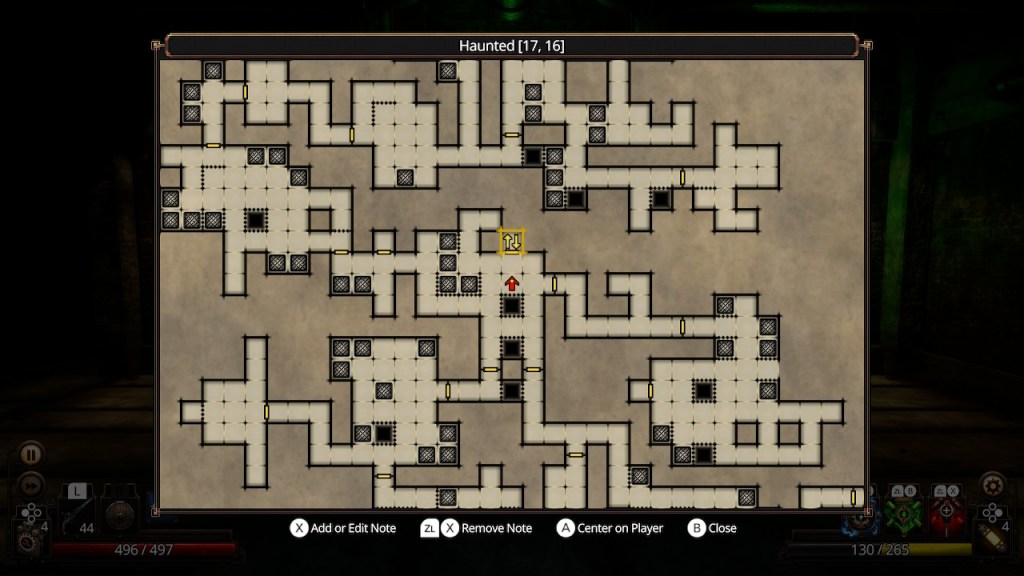
    Vaporum is a retro-inspired but infinitely more accessible modern “blobber” – think first-person dungeon-crawler, usually party-based, and with RPG elements. You trudge around labyrinthine grid-based levels, searching for keys, solving puzzles, hunting for secret areas, avoiding hazards, and defeating enemies to progress between floors. It’s a wonderfully contrived game world that makes little sense unless the primary purpose of the facility was to frustrate and/or kill its researchers.

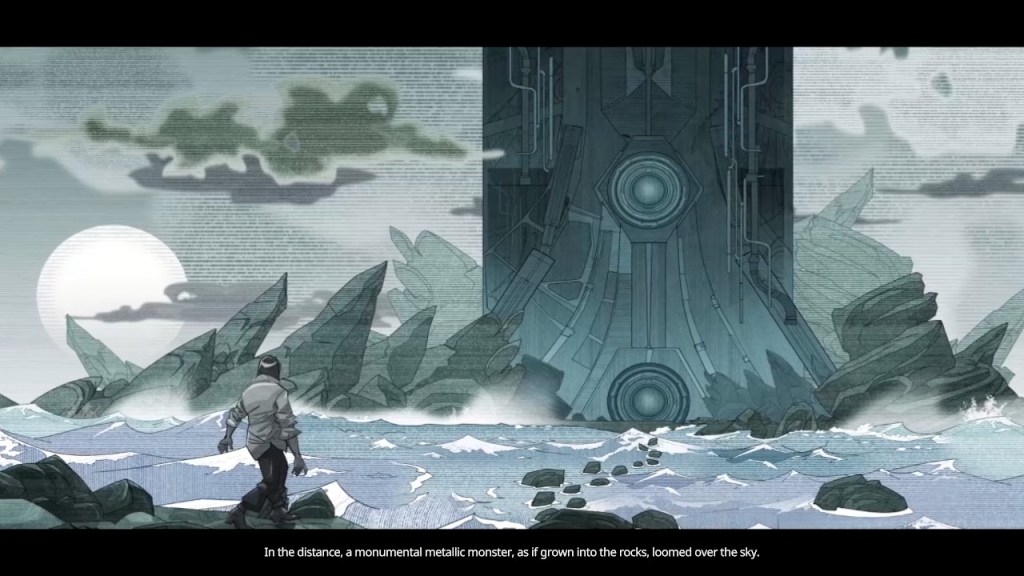
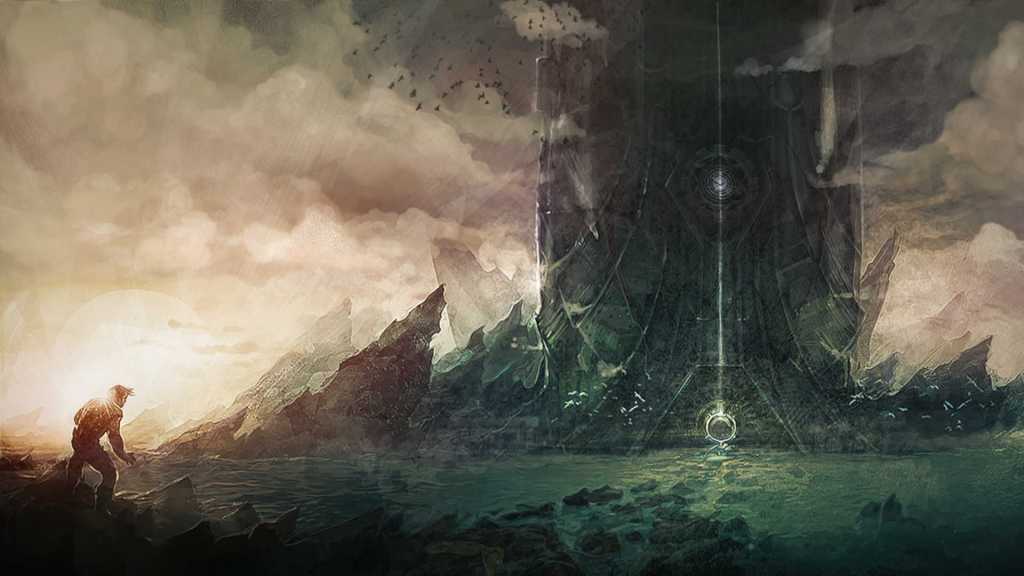
    Events take place entirely within a massive steampunk tower, in the midst of a raging and stormy sea, though figuring out who the protagonist is forms part of the early mystery. The ominous tower beckons them in and although they know they have some connection to it, everything else is a blur.

    As you explore, a combination of written notes and scratchy audio logs spur on their memory, leading to revelatory monologues that slowly reveal the truth about their past and the present research into a mysterious substance known as “Fumium”. It’s a dated but effective approach that works in a game not particularly suited to conventional cinematics – though I wish there was a little more world-building to flesh out events beyond the tower.

    Although many games in this sub-genre – from 1985’s The Bard’s Tale to 2017’s StarCrawlers – shift into turn-based combat when you encounter a foe, Vaporum uses the real-time approach first pioneered by 1987’s Dungeon Master and almost perfected by 2012’s Legend of Grimrock. Unlike many of its predecessors – and one of the reasons it received multiple console ports – is that is Vaporum is not “party-based” and doesn’t rely extensively on an emulated mouse cursor in combat.

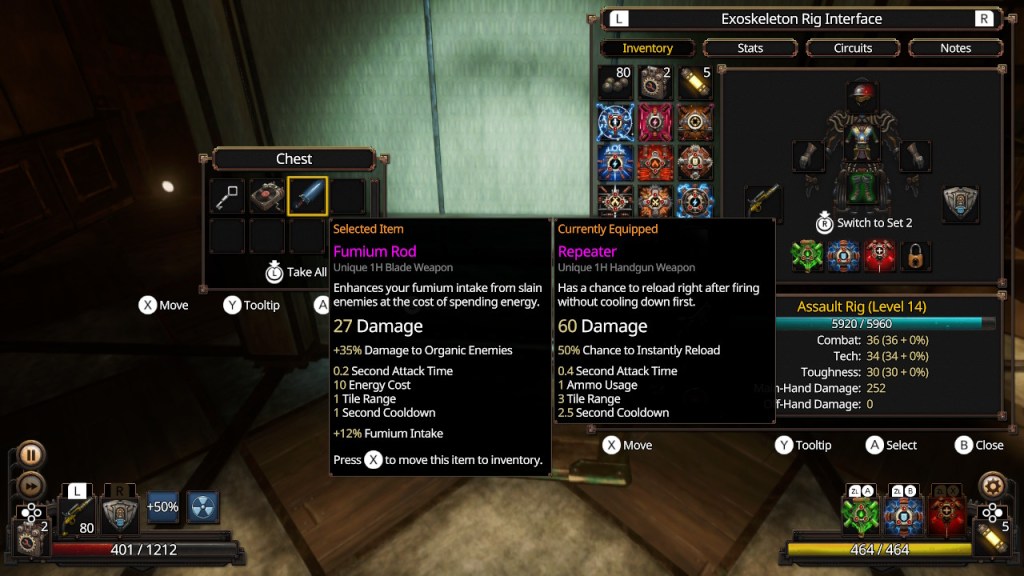
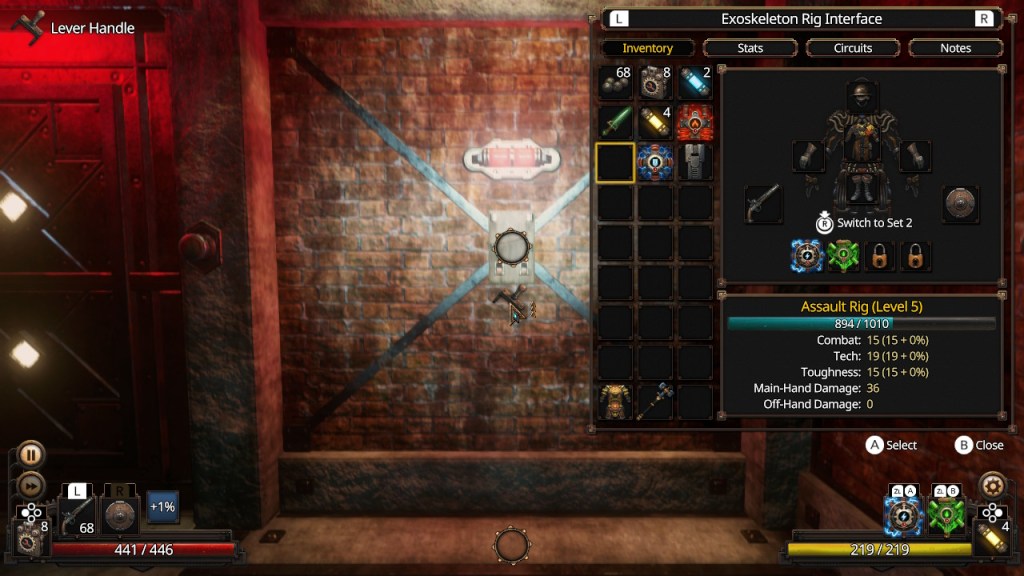
    You control a lumbering exoskeleton rig – a sensation not dissimilar to Delta in BioShock 2 – with four starting classes to pick from. These range from pure offence to pure defence, with a few unique perks and 10 gear slots that can be configured without restrictions. There are two offensive slots that can either handle one-handed maces, blades, or pistols combined with a shield, or a single but powerful two-handed weapon. You unlock up to four “gadget” slots that provide elemental damage or support abilities akin to spells, and there are four armour slots to mix and match attribute-boosting gear.

    Fumium gained from destroyed enemies goes towards increasing your rig level, unlocking circuits to invest in a dozen linear skill trees that cover weapon types, energy generation for gadgets, elemental damage and resistance, and general survivability. Each point invested provides a useful but incremental upgrade, while the third level provides a minor perk, and the fifth a choice between two major perks.

    On the whole, it’s a versatile and adaptable system that replaces multiple less-specialised party members. It also feels reasonably balanced given you can only max out 3 or 4 skill trees in a single playthrough. You could prioritise damage output to quickly remove threats; turn yourself into a physical and elementally resistant tank that reflects back a huge portion of damage; or pick a middle ground.

    Whatever your choice, exploration, puzzling, and indeed the combat all hinge on understanding and navigating the grid-like environment, rather than simply increasing your level and gear quality – a design many seem to ignore when you consider the number of videos with players retreating into a corner to just trade blows with enemies.

    Vaporum can look and sound great despite its relative simplicity. The throbbing, clanking, and hissing industrial-steampunk setting is a perfect match for the artificial grid-based world. That said, Vaporum is at its most boring when you’re plodding down claustrophobic corridors or backtracking to a locked door, moving past hundreds of near-identically-textured walls and floors.

    You move block by block in any direction relative to your view, which you can swing 90 degrees at a time. Free-look is great to scan for nefariously-hidden switches and objects, and you’ll engage in some light inventory management and menu-ing to use key items.

    Thankfully, what it lacks in fluidity, it makes up for with purpose.

    When you’re forced to move quickly to hit switches, dodge floor traps, or engage in combat with multiple foes, you’ll come to appreciate the convoluted but engaging movement system that forces you to be actively aware of your position in grid space.

    There are times you need to dash between multiple switches by picking the most effective route. Other times you’ll be dashing between safe spots to avoid fireballs or pit traps. Far too much time is spent shifting around large boxes around to open a path. No matter what you’re doing,

    When it comes to secret hunting, the predictable and repetitive grid-like nature of the environment is both a blessing and a curse. A quick look at the map often reveals blank spaces that hide a secret room but opening them can mean hunting for the tiniest differences in a common texture. It’s worth the effort though, as powerful gear, consumables that permanently increase your basic attributes, rare upgrade circuits, and even revealing documents are common rewards.

    Battling on a grid can feel a bit limited at first and, so long as you’re up against a single enemy and have a 2-by-2 grid space, it’s possible to simply shuffle around them and get in free hits as they transition or reorient. Vaporum attempts to spice things up by giving some enemies projectile attacks, quick strafes, area-of-effect attacks, knock-back attacks, and sideswipes, but one-on-one battles are always survivable if you’re patient.

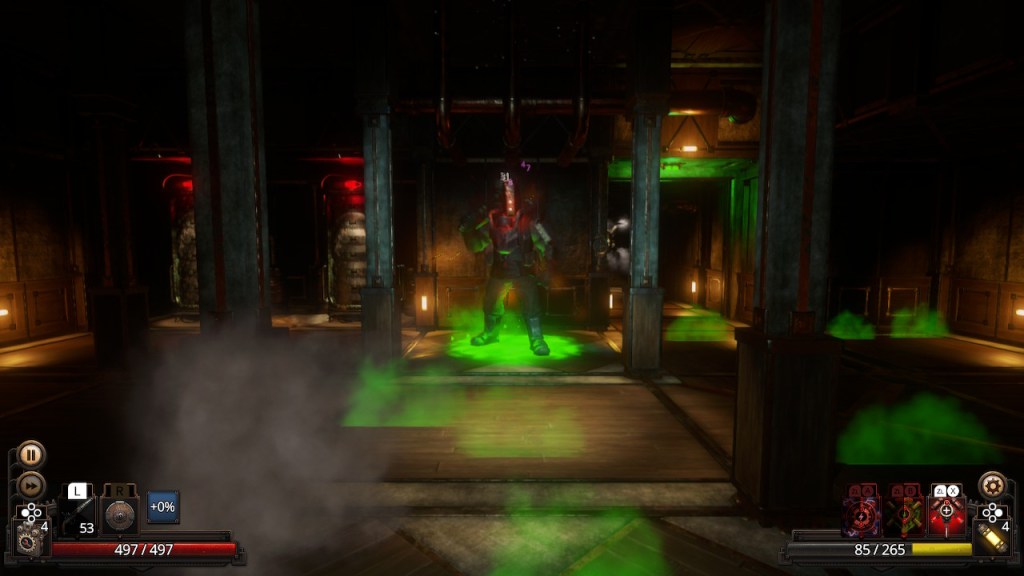
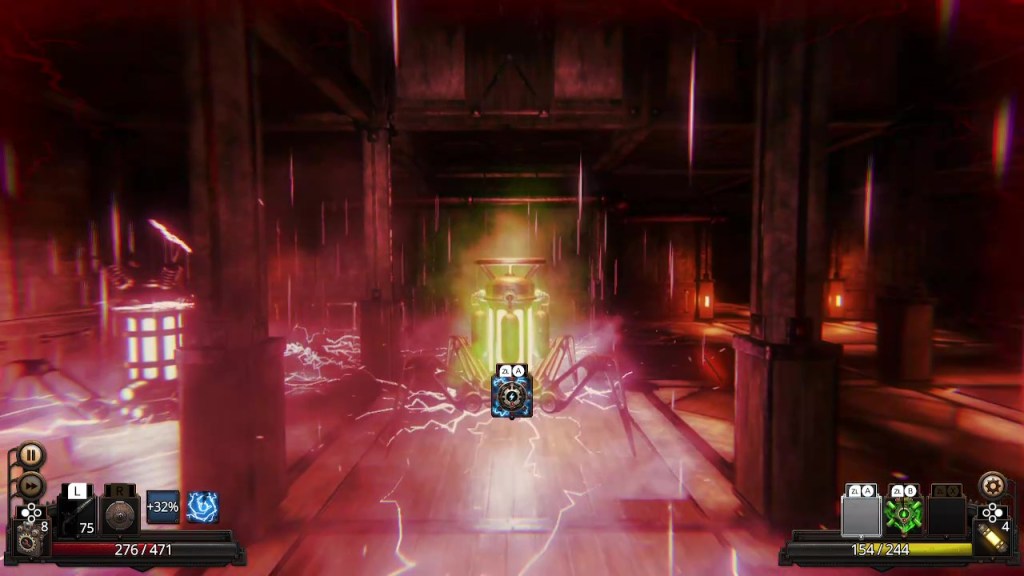
    In contrast, group battles – especially those with hazards thrown in – will quickly tax your powers of observation, planning, adaptability, and reflexes. Vaporum is perhaps too fond of locking you in rooms, resulting in combat that feels like an awkward dance as you avoid being boxed in, try not to strafe into a hazard or AoE attack, dodge crisscrossing projectiles (or lead enemies into them), clear space to trigger a repair kit, and line up priority targets.

    It’s often chaotic and unpredictable but if you keep a clear head and have a decent sense of spatial awareness, it can be a lot of fun and you’ll often come out on top.

    So, six years on from launch, and 36 years since Dungeon Master introduced real-time combat to the formula, Vaporum is an interesting mix of old designs with more modern sensibilities. The PC version feels most intuitive to play but the console ports are great, irrespective of which platform/s you own.

    I strongly recommend it for dungeon-crawler and RPG fans, though I’d hazard a guess the audience will always be niche. That said, if you can wrap your brain around the grid-based structure, Vaporum provides a weirdly compelling mix of methodical exploration and secret hunting, plenty of mentally taxing spatial puzzles, and high-intensity combat that requires you simultaneously plan and react.

    Screenshots were captured on the Nintendo Switch. Vaporum is also available on PC, Xbox One/Xbox Series, PS4/PS5.