Tag: Expansion

  • Impressions: The Riftbreaker: Heart of the Swamp (Xbox Series)

    Impressions: The Riftbreaker: Heart of the Swamp (Xbox Series)

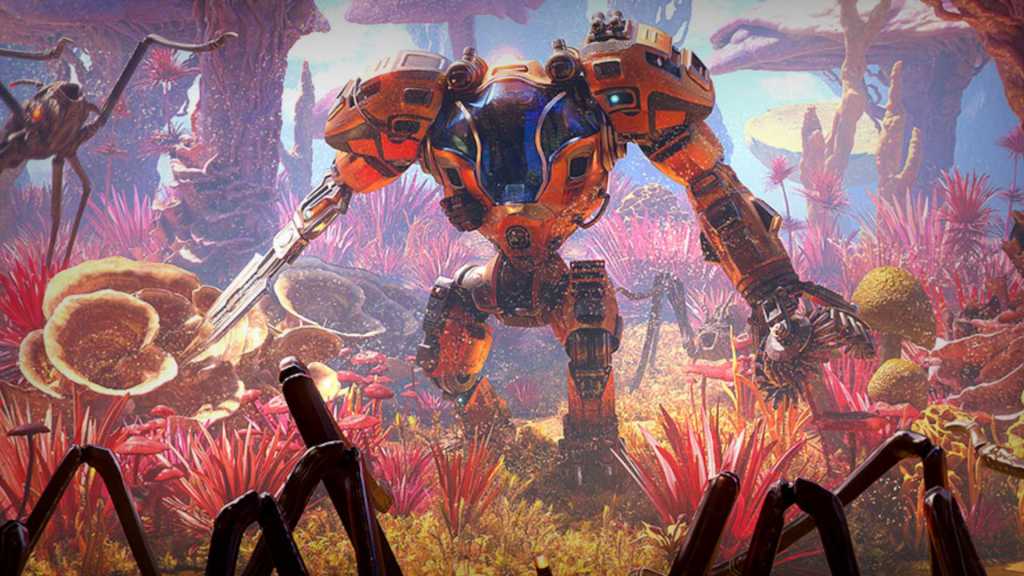
    Returning to the The Riftbreaker for the fourth time, I’m forever impressed at how EXOR Studios has continued to expand and refine its hybrid base-building, supply-line managing, research- and loot-driven, isometric hack-and-slash, twin-stick shooter. If you critique each element in isolation, they’re not as developed or balanced as the games they draw inspiration from, but The Riftbreaker’s priority is always giving you the tools you need to have fun – something far too many developers seem to actively discourage these days.

    My excuse for investing another 20 hours into The Riftbreaker was the recently released Heart of the Swamp expansion (which arrived on console at few months after PC), with a ton of free content for the base game including a new swamp biome, new creatures, new research options, new structures to manage waterlogged environments, and massive new defensive towers and base-shields that’ll be put to good use before the end of the new story campaign. That said, The Riftbreaker is nothing if not formulaic when it comes to mission design and progression, so you’re primarily getting more tools to overcome a few new challenges, to complete a familiar job – assess and defeat a new threat to the Galatea 37 mission.
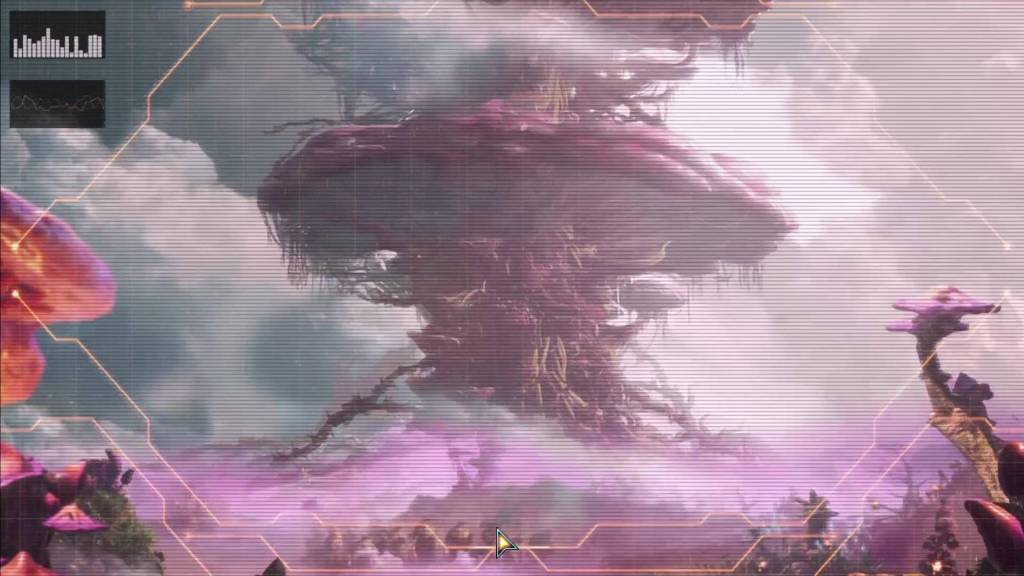
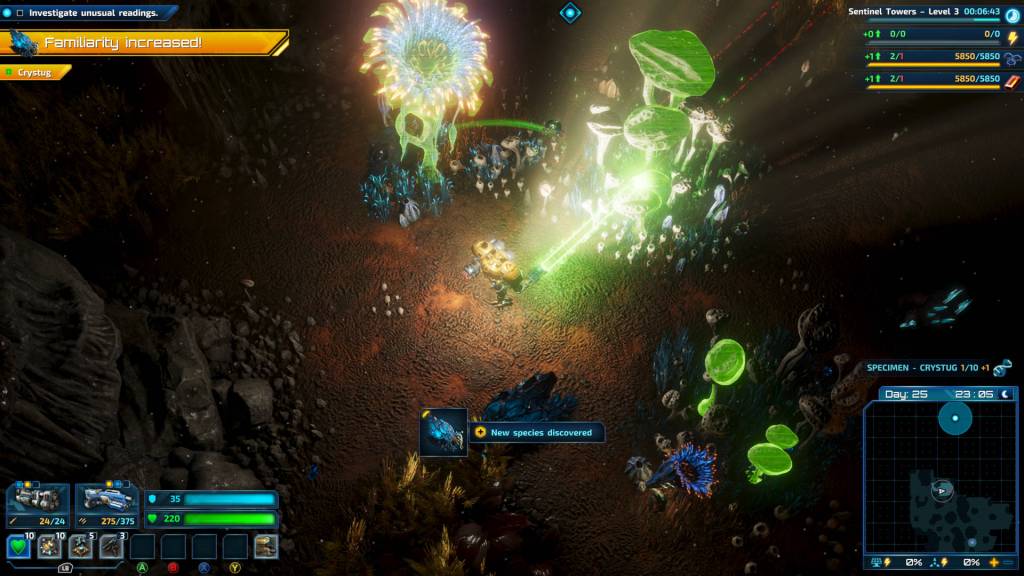
    The Heart of the Swamp expansion kicks off only once you’ve investigated potential Titanium, Uranium, and Palladium deposits to begin constructing the Rift Station back to Earth, with yet another mysterious meteorite crashing in the headquarter region. This time it’s giant mushroom spores, which leads Ashley and Mr Riggs to a massive flowering mushroom “tree”, invaded by a myriad of parasitic creatures and thorn vines draining its remarkable sap. Despite the new setting, events follow a familiar rhythm: investigate the organism while defending your outposts from waves of enemies, travel to the source of the threat to try wipe it out, then engage in a chaotic hold-out finale.
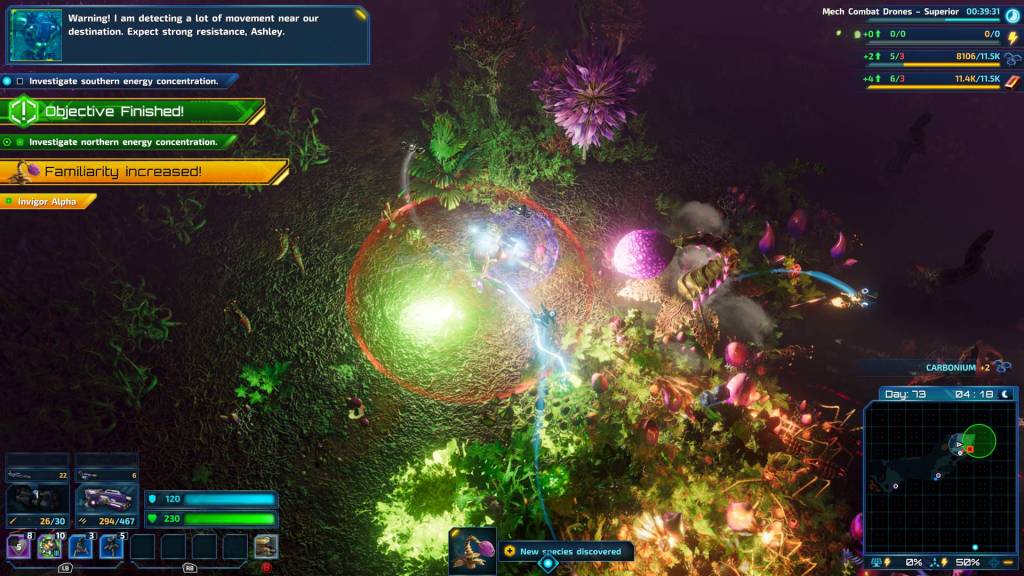
    The biggest challenge introduced in the Heart of the Swamp expansion – if you accept insanely hostile plant life and rapidly regrowing thorn thickets are typical of Galatea 37 – is establishing and sustaining several outposts on isolated patches of solid ground around the base of the giant mushroom. The saturated air makes renewable power generation difficult, while natural gas vents, Carbonium, and Ironium deposits are also scattered across small islands. The swarms of parasites you fend off come in waves, with self-replicating horrors emerging later, and that lack of space is a serious impediment to a solid defence. Of course, The Riftbreaker excels at giving you a myriad of tools for the job and, even if some are clearly optimal, you can hack together your own solution to just about any problem – be that through quantity or quality.
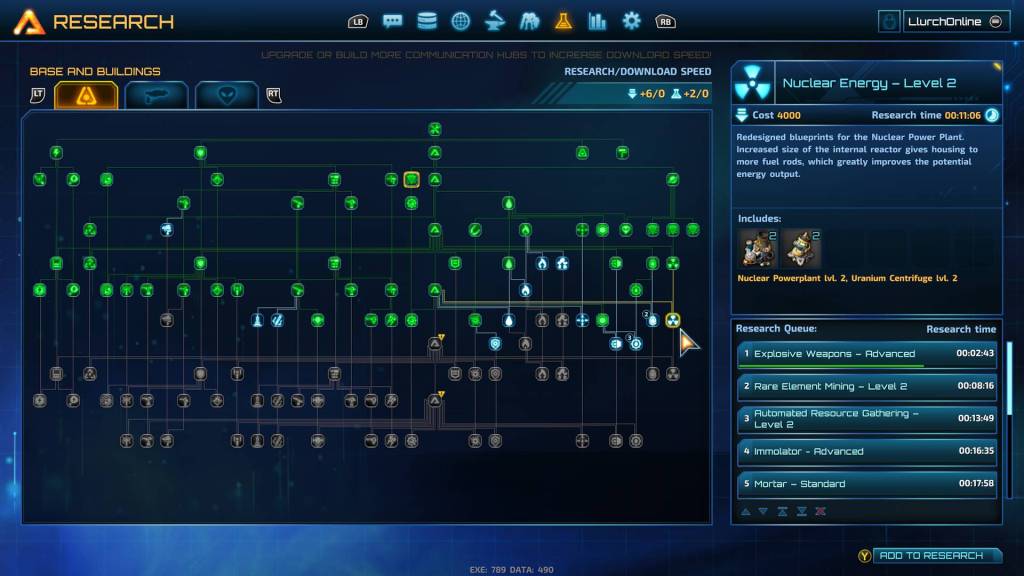
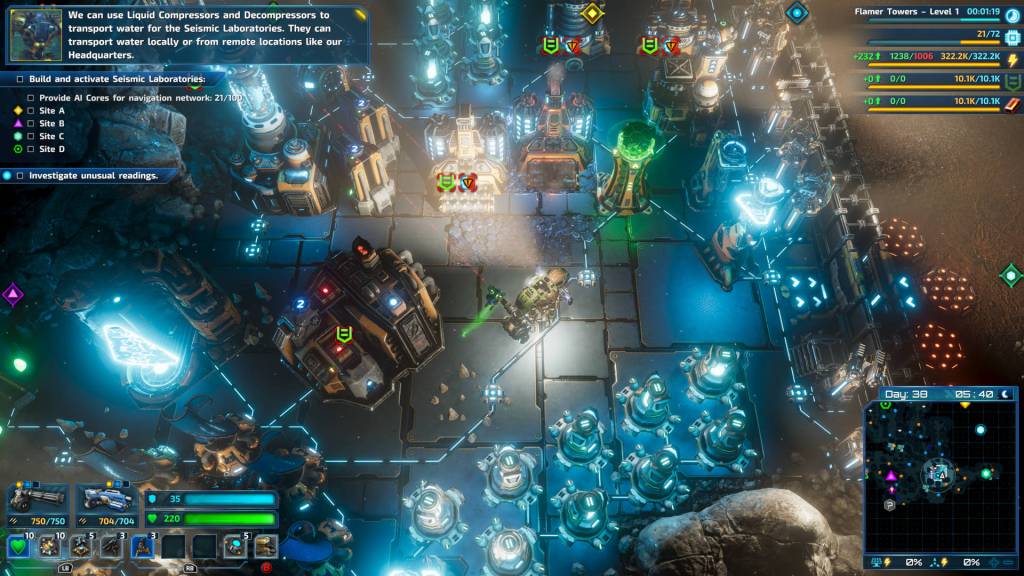
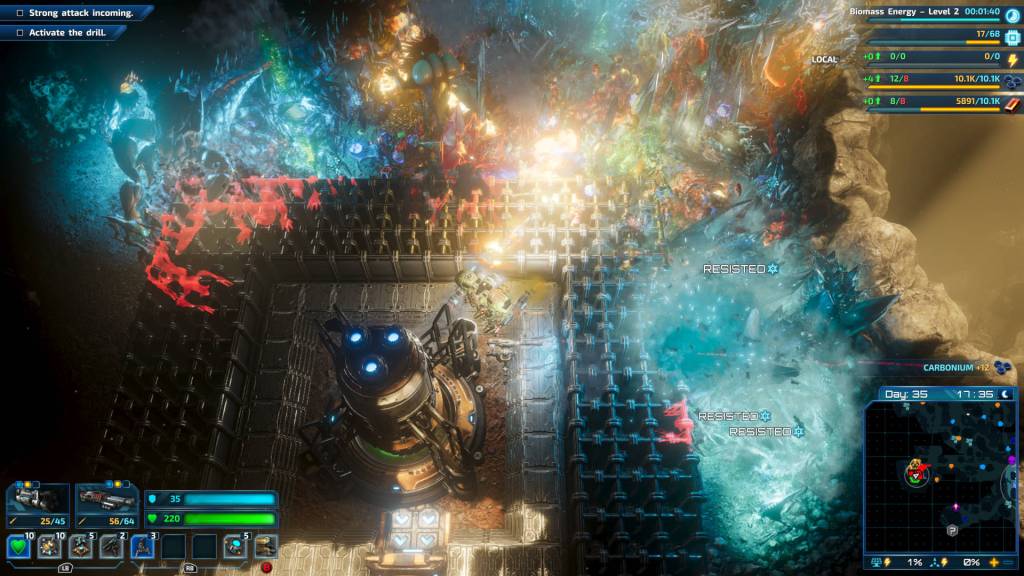
    I’d recommend anyone starting this expansion ensure they have large Carbonium and Ironium outposts set up to cover basic construction costs remotely, but you can establish mines alongside research outposts with some planning. In addition to utilising existing structures like Energy Pylons to transmit power between outposts, there’s a fresh selection of land-based, floating, and pipe-mounted defensive towers – including massive piercing towers and cluster munition towers – that allow you to build defensive lines in the swampy water. If you explore thoroughly early on, you’ll also discover a source of sap that can be converted in plasma; a novel solution to construct advanced buildings and base shields, buying you much needed time to destroy the massive swarms in the finale that shredded my base and framerate in equal measure.
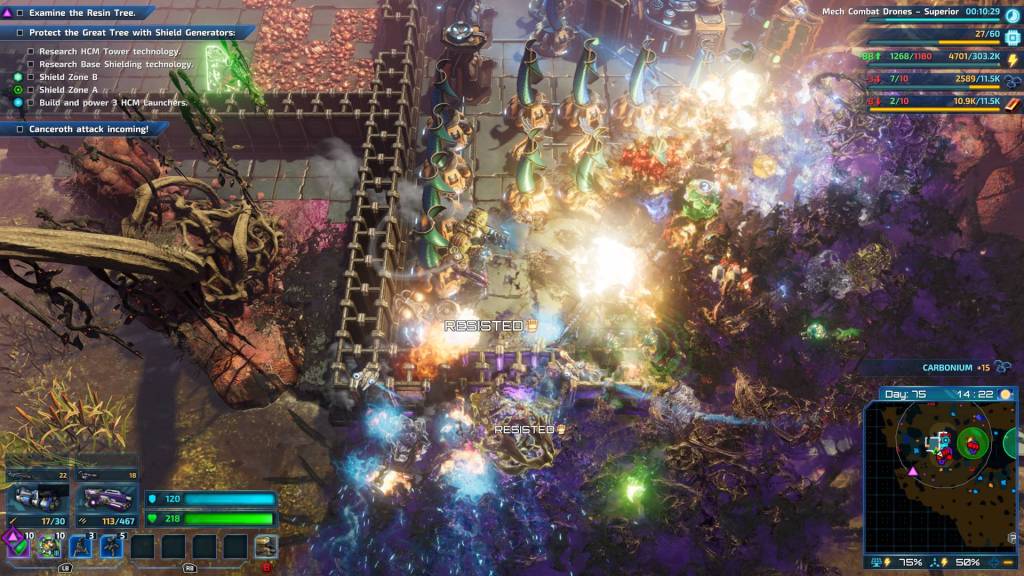
    It’s admittedly familiar fare at this point, three years and two expansions since launch, but Heart of the Swamp is another solid addition to The Riftbreaker. It offers another excuse to explore more of Galatea 37’s hostile biomes; expand and upgrade my existing outposts; research more of the sprawling tech tree for new buildings and higher-tier gear crafting; and engage in more visually spectacular base-defence events. It’s a fantastic hybrid of genres that deserves to be more successful than it is, and I strongly recommend you pick it up if any of this looks exciting. With the “Complete Edition” on storefronts, this looks to be the last paid expansion, but there’ still the promise of online co-op in the future that could make a great game an incredible one.

    The Riftbreaker: Heart of the Swamp was played on Xbox Series S|X using a code provided to gameblur by the publisher. It is also available on PC and PS5.
  • Impressions: The Riftbreaker: Into The Dark (Xbox Series)

    Impressions: The Riftbreaker: Into The Dark (Xbox Series)

    Survival games usually frustrate me, as I find many mechanically dull, to the point they’re incapable of obscuring their busywork structure. When it comes to The Riftbreaker, I’m always happy to sink another dozen hours into its satisfying hybrid gameplay loop. The new “Into the Dark” DLC is my latest excuse to return, and it provides more of that one-more-mission/building/upgrade loop – albeit with a few new challenges and some familiar technical issues.

    Their budget for writing and voice acting must be huge

    If you played through the base game or the Metal Terror DLC, the basic structure of this expansion won’t come as much of a surprise. A massive earthquake followed by a powerful neutrino emission rocks your primary HQ region, which sets Ashley and Mr Riggs on another multi-stage adventure to discover the source of a not-so-new threat to Galatea 37.

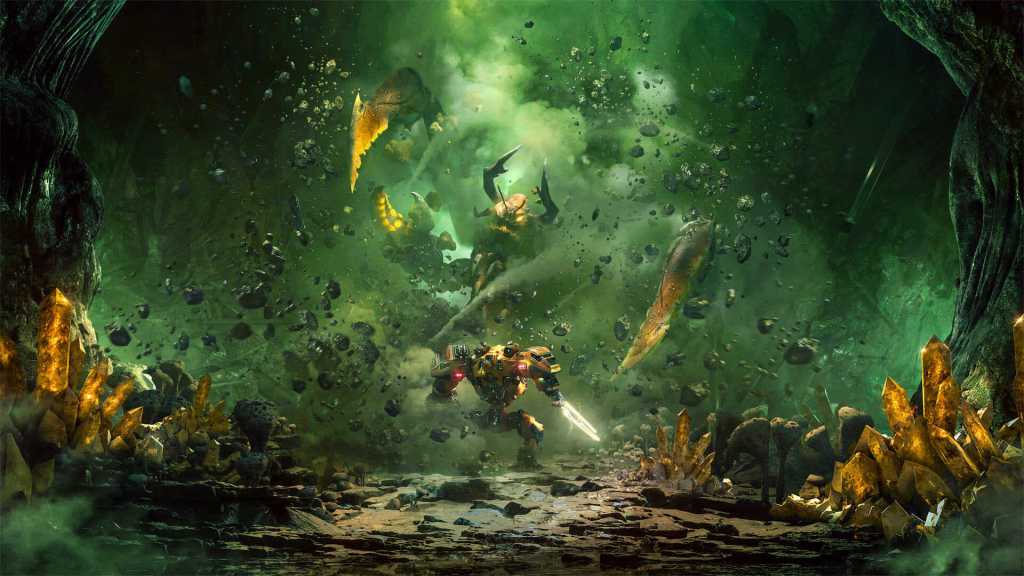
    They’ll discover anomalous growths guarded by crystal-infused wildlife and lumbering bipeds capable of summoning new forces; they’ll explore a surface region to triangulate the position of a massive underground creature; they’ll research new technology to breach, explore, and survive in a massive crystalline cavern system below the surface; and they’ll fend off waves of creatures so large and so frequently, the reproduction and maturation rate of Galatea 37’s wildlife is probably the least believable sci-fi concept.

    While The Riftbreaker is ultimately a mechanics- and systems-focused game, Into the Dark uses its narrative elements to delve into Ashley’s failed Orion expedition she references in the base game. The “new” threat appears to be a familiar one and, once again, Ashley and Mr Riggs spend an inordinate amount of time discussing what they’ve observed, generating wild hypotheses, and experiencing several “eureka” moments that feel utterly detached from the player’s actions.

    They’re still a likeable pair of protagonists but I’m forever amazed at the amount of recorded dialogue in this game and the constant disconnect between Ashley’s intentions to preserve the planet’s ecosystem, while periodically murdering thousands of its denizens to pave the way for human colonisation.

    A slow start leads to a chaotic finish

    Ignoring the narrative dissonance, The Riftbreaker remains as mechanically engaging and complex as ever – even if Into the Dark feels more about adapting existing tools to a new biome, rather than managing an entirely new resource and dependent technologies we got in the Metal Terror DLC.

    The opening missions above ground and within a maze of canyons feel unremarkable. The introduction of summoner-type creatures and mobs with a limited self-revive ability complicates combat and pushes out beyond your walls, but you’ll still be going through that familiar loop of exploring, scanning objects of interest, establishing outposts, and fortifying them against waves of enemies.

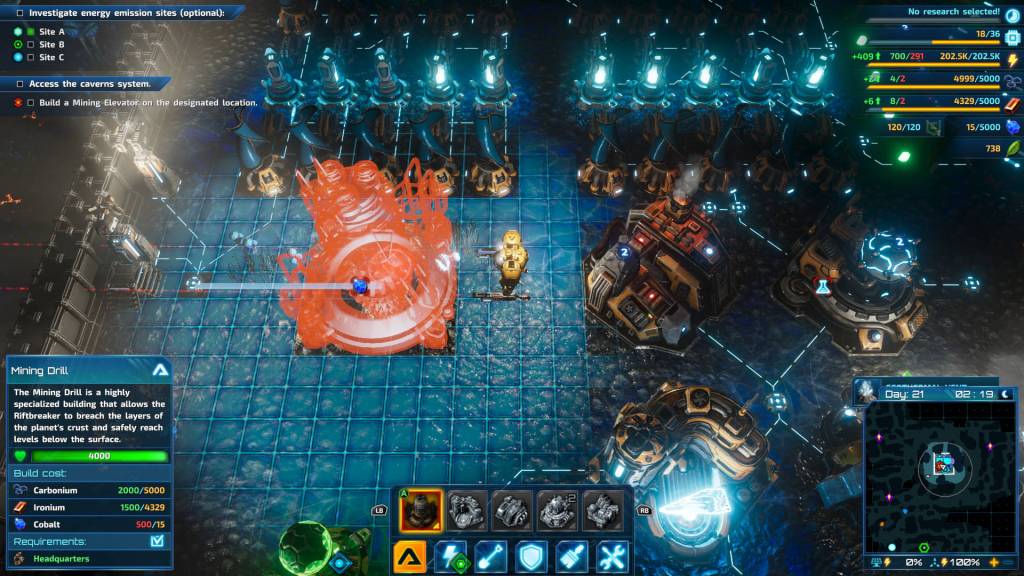
    Things get interesting about a third of the way through the new campaign when you finally construct a drilling craft and descend into the unexpectedly vibrant and colourful caverns below. The caverns offer a mix of solid formations and soft limestone you can drill through, so below ground, base building and combat take on a new spatial dimension, especially when objectives force you to build and hold several distant outposts.

    The caverns offer abundant construction resources that you’ll have to drill to uncover, but extremely limited wind and sunlight complicate power generation if you’ve been investing in green energy and storage solutions, while a lack of standing water and fluids requires workarounds for advanced base structures.

    I found myself scrambling to make use of carbonium power plants and abundant plant and animal biomass, while investing in new regenerating defensive structures, automated resource gatherers, and, most significantly, technologies that allowed for the direct transmission of power and other resources to distant outposts without laying vulnerable cable or pipe networks.

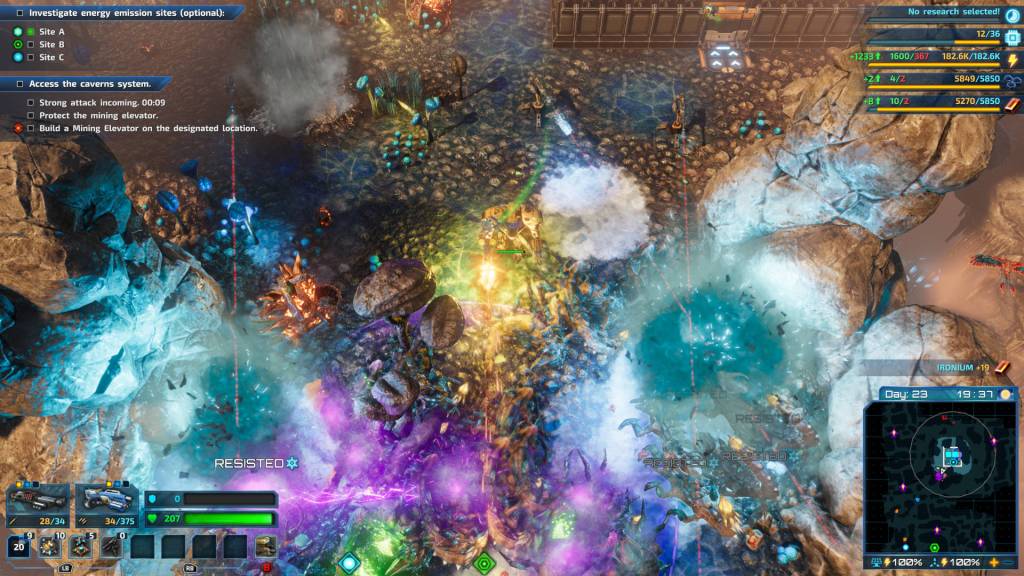
    When it comes to base defence and combat, careful drilling and planning your perimeter around solid rock pillars can make defence feel easier at first, but several powerful towers are unavailable below ground and periodic earthquakes can damage multiple structures simultaneously (though at least you can rebuild from ruins now). There are a few massive creatures that’ll bore through soft limestone and beeline towards your base, but kiting is much easier for common mobs. The downside – or maybe the upside if you enjoy combat – is that Into the Dark throws a lot of enemies at you from the get-go.

    Circle-strafing and dodging around enemies are rarely viable tactics underground, so backing up into a dead end while exploring is usually fatal. When hunkered behind your walls, massive hordes are often forced to converge and throw themselves at your defences for what feels like minutes at a time. Deeper, smartly-designed, multi-layered defences are essential – especially when protecting distant outposts operating on a local grid – and I finally came to appreciate the incredible combination of repair towers with minefields and new traps.

    If you’re partial to twin-stick combat, there’s no shortage of it. Into the Dark feels relentless from the start, with bigger hordes crammed into smaller spaces, and fewer chances to intercept them before they hit your defensive lines. To help you survive the increased challenge and two arcade-like boss fights, there are, of course, new elementally-themed towers, traps, and weapon technologies to research.

    They’re coming outta the goddamn walls!

    The Into the Dark DLC easily consumed another dozen hours and is just as expansive and feature-rich as the Metal Terror DLC, offering a ton of new or reworked content at a low price.

    Some elements – like the incessant, lengthy conversations and revelations about Ashley’s past mission – can feel underwhelming, while the opening missions above ground are familiar fare. However, once you finally head below ground, you’ll quickly come to appreciate the unique base-building, defence, and energy-generating challenges, and experience the thrill of overcoming them with new technologies and smart planning.

    The Riftbreaker: Into the Dark was played on Xbox Series S|X using a code provided to gameblur by the publisher. It is also available on PC and PS5.