
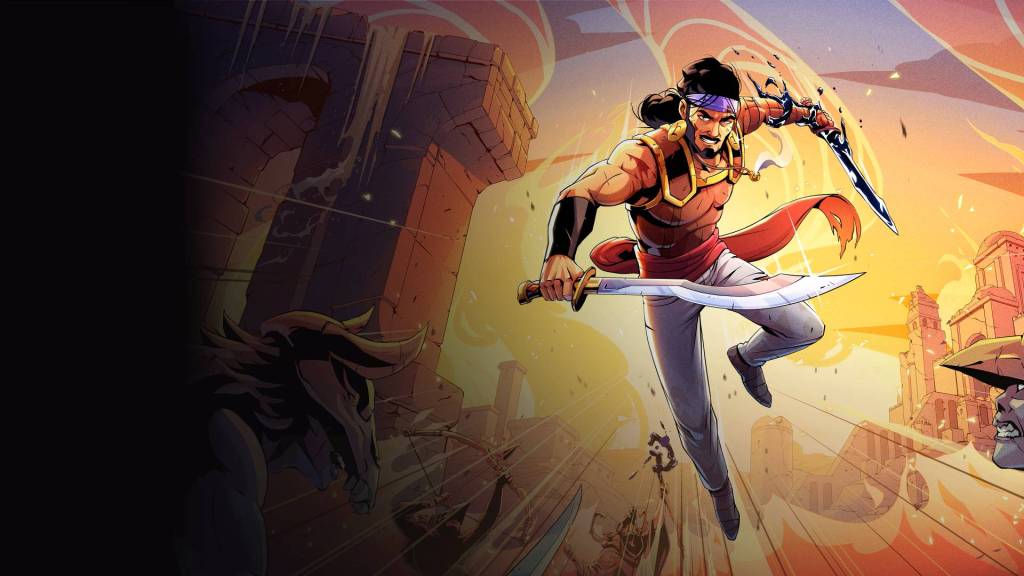
Arriving on consoles a year after launching into early access on PC, the full release of The Rogue Prince of Persia is a fun but limited rogue-lite. It layers classic Prince of Persia aesthetics and themes atop the fast and fluid gameplay of Dead Cells, and then tries, with reasonable success, to offer narrative context by way of an expanding storyline that fits the time-travelling, repetition-driven gameplay loop.
If you are going in with no knowledge of the original trilogy, or no nostalgic expectations, it feels like a good companion game to the recent Prince of Persia: The Lost Crown that adopted a 2D Metroidvania framework. However, after a half-dozen hours, nearing the end of the second act, I was already growing tired of retreading familiar layouts and early bosses just to progress another story beat.

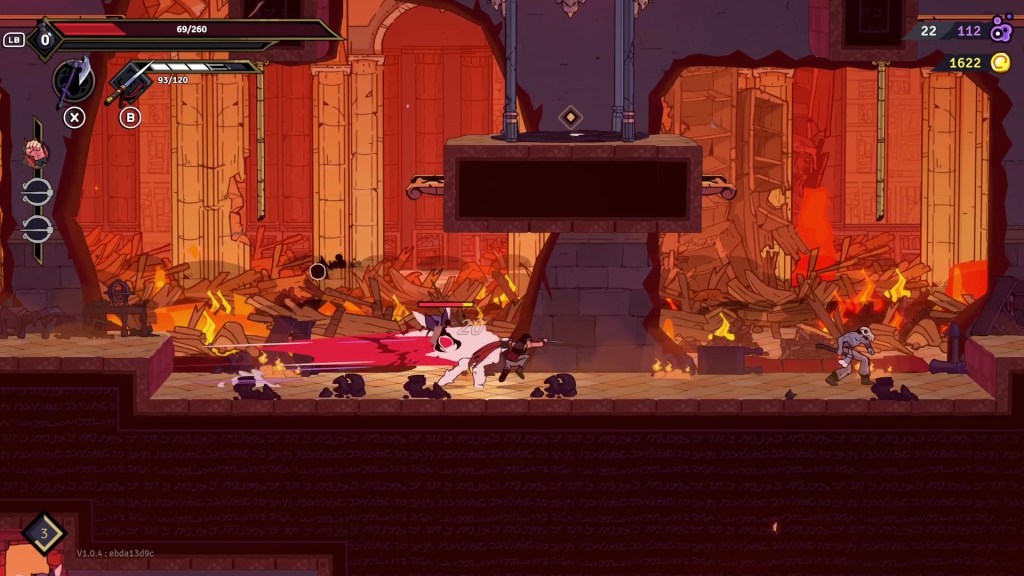
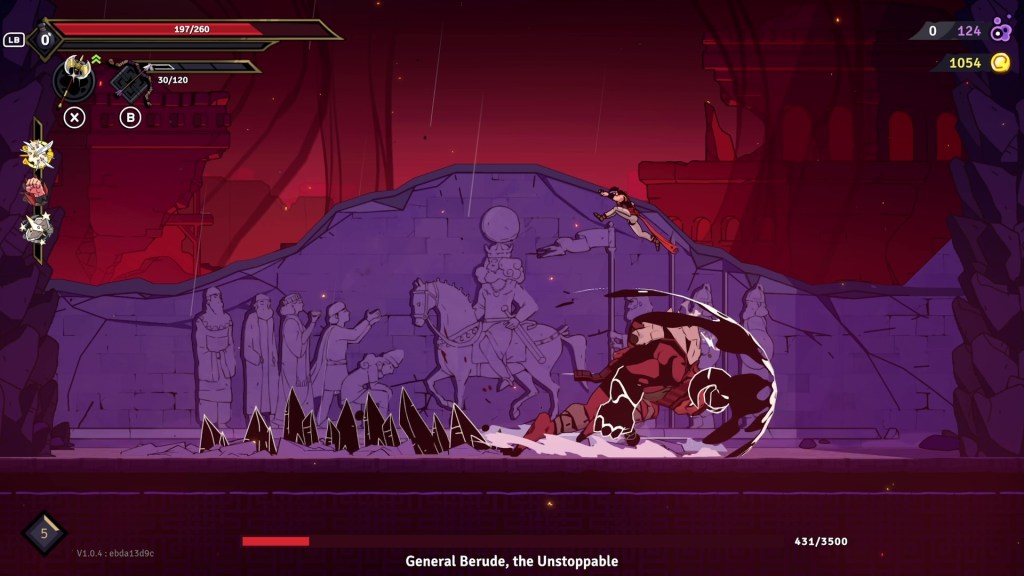
That said, The Rogue Prince of Persia nails the opening hours. The traversal and combat feel responsive, look slick, and is always accompanied by an excellent soundtrack that blends Persian themes with a thumping beat. Evil Empire’s prior game, Dead Cells, was always fast but, befitting a Prince of Persia protagonist, this game is all about seamlessly flowing between stylish platforming and bouts of acrobatic combat.
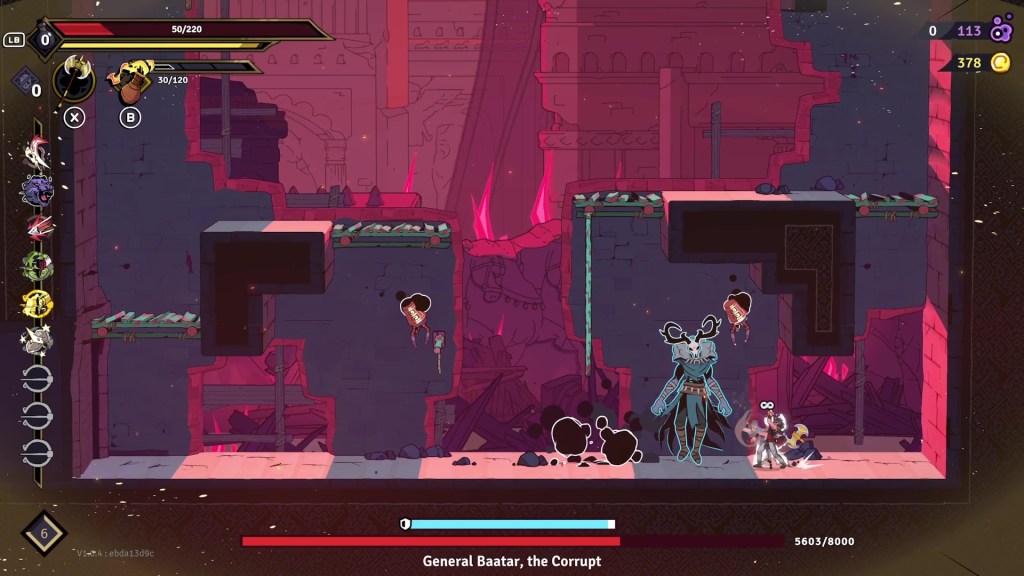
The side-on 2D perspective and clutter-free backdrops keep the action simple and readable, even while hurtling through platforming sections, avoiding deadly traps and spike pits, and prioritising enemies among clustered mobs. Despite the lack of third dimension, a wall run, vault, and dash – tied to the left and right triggers – add impressive complexity and the freedom of movement you would expect from the IP.
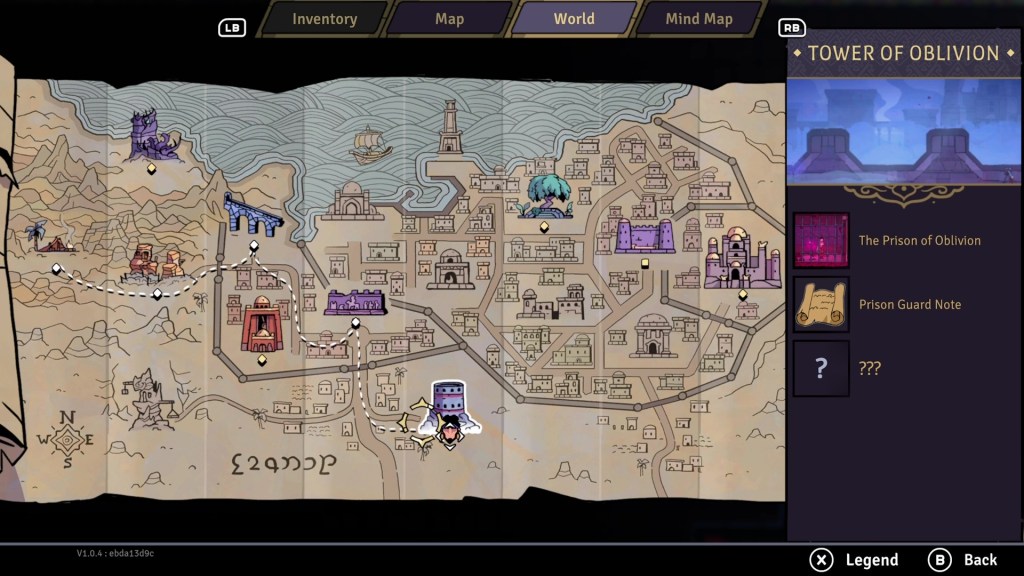
In addition to scrambling up geometry within the gameplay plane, you can wall-run up, down, or across background walls. This allows you to string together lengthy sequences of wall-runs, jumps, dashes, and pole hops to keep off the ground with ease. Mastering this movement takes time – especially as the laws governing conservation of momentum don’t exist in this universe – but the move-set is essential for surviving the toughest platforming sections and avoiding the elaborate attack patterns of both common foes and bosses.
Combat finds a good balance between simple and complex. Every weapon has a distinct attack speed, basic combo, and charged attack; secondary weapons typically provide ranged attacks that consume energy generated by melee strikes; while aerial slams, dashes, and vaults keep you out of harm’s way. The Rogue Prince of Persia is one of those games a skilled speedrunner could likely complete in a single run with only starter weapons.
That said, befitting its rogue-like structure, there are a myriad of secondary systems tied to narrative and character progression to incentivise pushing forward each time you fall. More importantly – and especially if you’re returning to the game for the first time since the early access launch – story beats are more common, and the progression systems provide more permanent buffs.
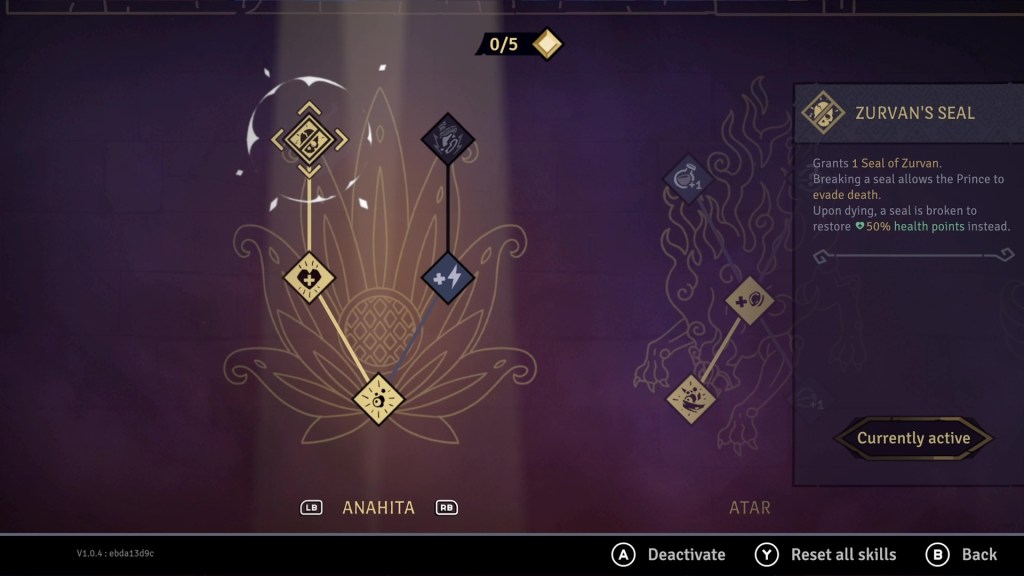
Retreading early levels gets faster and more stylish thanks to conventional XP-based levelling and a ‘Souls-like, dropped-on-death resource. As you level, skill points can be assigned and freely reassigned across a half-dozen skill trees, buffing survivability, movement, energy gain, and resource farming. Several unlock a stackable “second chance” ability that I’d consider vital to getting through later runs.
Collecting the souls of corrupted Hun warriors is a risk-reward system. You can stash them at an alter found at the start of each level – or smash it for more souls and push on to the next. Back at the oasis hub, you can infuse these souls into unlocking new weapons or medallions (which provide passive abilities tied to your movement or combat abilities) that can appear in a run. It is a solid, addictive, one-more-run structure undone by a lack of diversity in environmental design, a limited number bosses, and set-pieces repeated too often.
The evolving story is a highlight. The new prince falls to a Hun warlord in the opening scene, revealing a dark magic aiding the horde and the prince’s secret – a medallion that revives him at the last place he slept should he die. It’s a familiar setup for the IP and adds context for the rogue-lite gameplay loop. To keep the player engaged, each run offers a few branching paths between convergence points – usually a boss – with NPC encounters that sometimes change based on the prince’s knowledge, and a mind map that tracks clues hinting at where to explore next.
There’s fun banter and exposition between the prince, NPCs, and members of his family he saves, but the pace can slow dramatically at points. I found myself avoiding most combat and ignoring NPCs unless a quest demands you talk to them for a key item. Each act introduces new locations along your path to the palace but, to complete a quest, you need to complete several interactions along a fixed route and repeat all of them if you fall before the end.
Another issue is that despite the aesthetic changes between environments and procedurally generated layouts, you only need to clear them a handful of times to recognise repeating locations, overused scripted events, and the fact they ultimately play out much the same way regardless. As soon as you become stuck on a late-run boss or the pace of levelling falls off, the repetitive design becomes more obvious and less satisfying.
All that said, The Rogue Prince of Persia is an indie project, at a lower price point, and (currently) available on Xbox Game Pass and PlayStation Plus. With that in mind, it’s a fun and well-designed spin-off that could have done with a little more variety and less stringent quest flags. If you enjoyed Prince of Persia: The Lost Crown’s 2D gameplay or loved Dead Cells and want to scratch a similar itch (albeit with a more platforming-focussed twist) The Rogue Prince of Persia will prove well worth your time.
This article originally appeared on Nexushub.
The Rogue Prince of Persia was played on PS5 using a code provided to gameblur by the publisher, and on Xbox Series S/X using Xbox Game Pass. It is also available on PC.
 gameblur-v2.0