

If you critique Heartworm for what it is – a mostly one-dev passion project brought to fruition with the help of a niche indie publisher – it’s excellent with only a few forgivable flaws. It’s a compact homage to survival- and psychological-horror games of the PlayStation 1-era, notably Resident Evil and Silent Hill, with a story that ruminates on our fears and anxieties around the meaning of life and death.
Despite a ranking system and achievements related to completion times, Heartworm has an intriguing but once-and-done story I won’t discuss in much detail. You play as Sam, a young woman with a debilitating fixation on mortality, who sets off for an abandoned house that urban legends say has a doorway to the afterlife. No one who enters the house has ever returned, but Sam – haunted by past traumas – thinks she has little to lose.
With three major areas to explore and a casual playthrough lasting 4-5 hours, Heartworm moves at a brisk pace with mostly logical puzzles and only a handful of mandatory battles. The narrative is driven by stylish retro-inspired cutscenes, Sam’s frequent monologues, and no shortage of flavour text and notes that reveal her thoughts and those of others who have taken the journey before her.
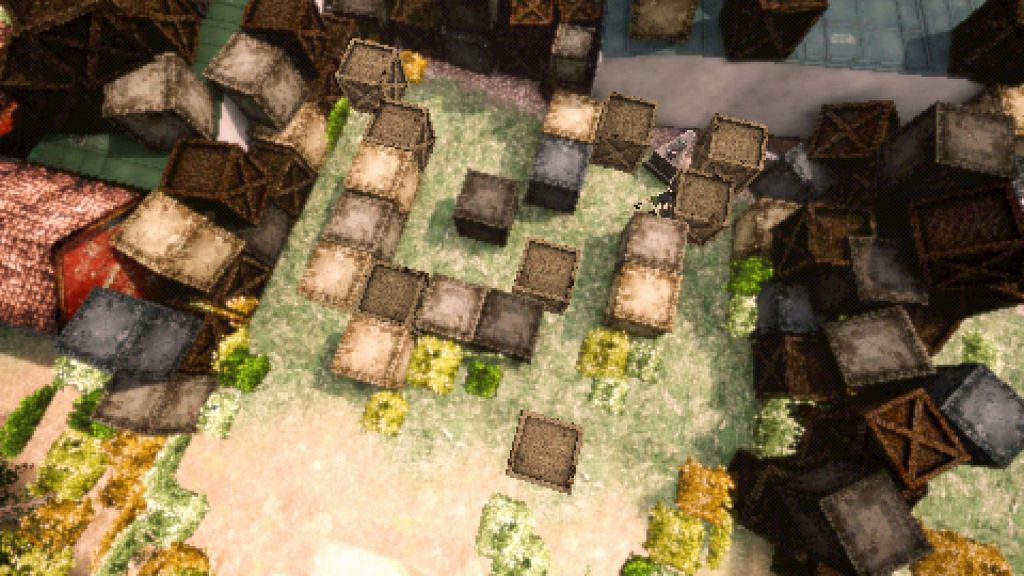
The surreal and sometimes nightmarish environments she explores are clearly manifestations of her own memories and fears, full of opportunities for Sam to comment on her life and experiences up to that point, but there are lingering threats that seem connected to earlier travellers. It makes for a setting that’s more unsettling than horrifying, so that Heartworm is more a journey of discovery like the original Silent Hill 2 and not some gruelling feat of survival.
If you are a fan of classic or retro-inspired survival-horror, Heartworm will feel familiar and, at times, a little generic – most notably when it comes to the boss fights that feel more “gamey” than something essential to the narrative themes. Each area is sprawling and interconnected, with the way forward blocked by both conventional and bizarre locks that force you to hunt for actual keys, key-like objects, or clues to solve puzzles you might recognise from three decades of survival-horror games.
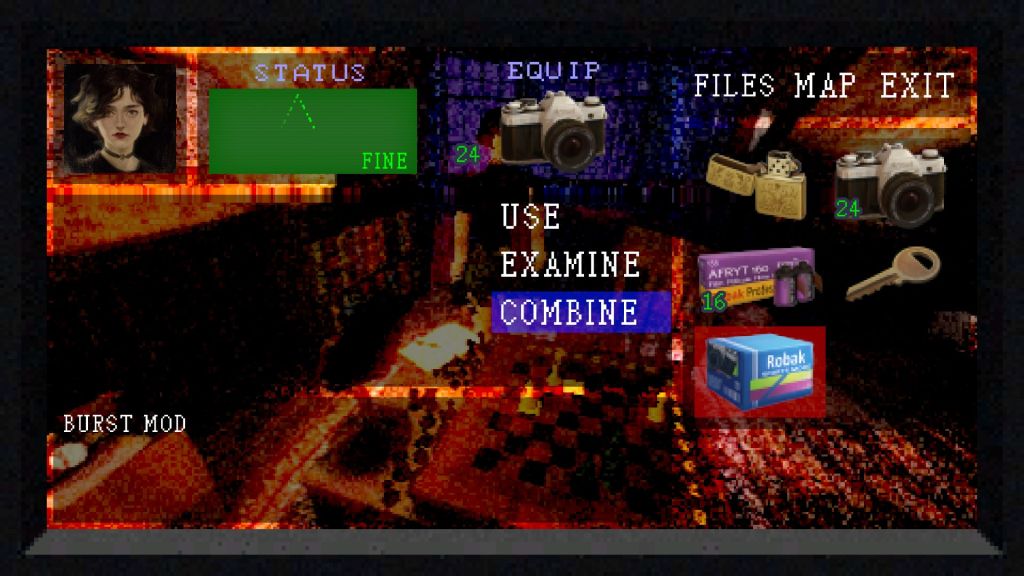
The opening abandoned house and a hub-like cathedral hanging above a void set the tone and test your basic puzzling abilities. A gloom-shrouded neighbourhood has Silent Hill vibes and introduces roaming enemies – teleporting static ghosts and a giant spider – that you put down using Sam’s camera. The woodlands section feels eerily serene, aside from the rabid dogs, deer, and terrifying statues. The final multi-level clocktower mansion leans heavily into Resident Evil – sometimes literally – with elaborate key hunts that, in turn, lead to Silent Hill-esque environments, such as an abandoned hospital, school, and subway, filled with leaping chained creatures and twitchy mannequins.
The combat and boss fights in Heartworm rarely challenge you, as there is plentiful film for Sam’s camera, the ability to snap the camera behind her shoulder for easy third-person aiming, and no shortage of basic healing items that you can combine to form stronger medpacks. It’s all familiar fare and most enemies are easily avoided if you just keep moving. The combat is engaging enough but the focus is clearly on solving puzzles and hitting frequent story beats.
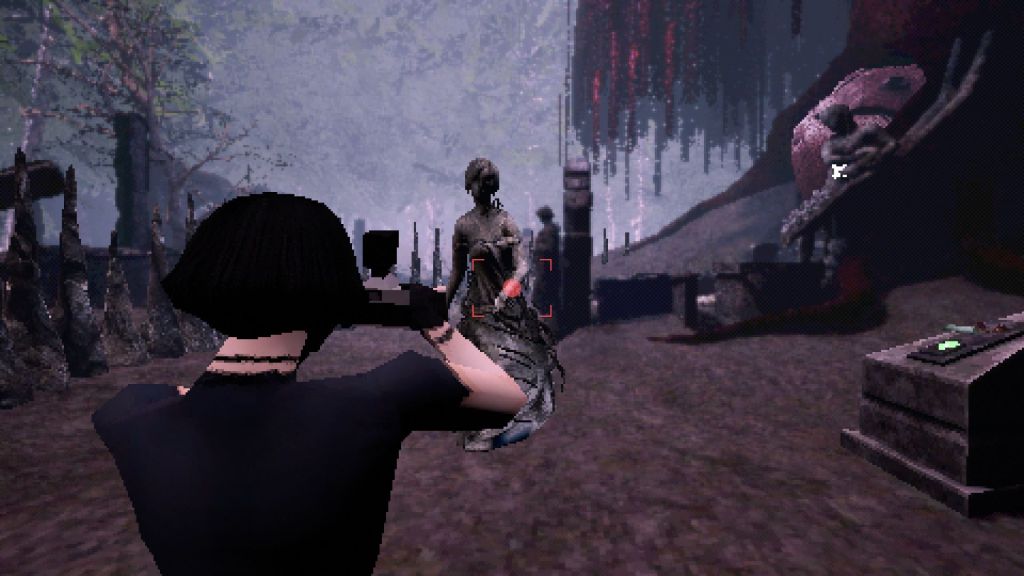
That said, Heartworm has the potential to frustrate if you’re not paying attention or when using the default pixelated and dithered visual style. If you’re a fan of semi-fixed camera angles and “authenticity”, Heartworm can provide that chunky, upscaled 240p look. If you disable the pixelation and dithering effects, you instead get a good approximation of what modern emulators can produce running early 3D games. Either choice looks great, and the visuals are complemented by unsettling ambient audio and haunting music loops that generate a ton of atmosphere. However, as much I loved the pixellated look, the extreme aliasing makes spotting pick-ups and environmental clues difficult.
Another issue is that the size of many areas can make backtracking tedious if you’ve missed environmental clues that feature in later puzzles. This applies to a handful of optional puzzles to gain a camera upgrade and secret memory photos – at least one of which is required for the good ending that feels most consistent with Sam’s evolving attitude. There is a file system for documents and a modern map system that highlights both doorways and rooms with remaining items, but I’d recommend you treat Heartworm like a classic survival-horror game and take notes as you go.

Looping back to my opening line, Heartworm gets so much right as a compact indie game that a few flaws did little to detract from what is otherwise an exceptionally well-made homage to both survival-horror and psychological-horror classics – just one with a more pertinent story that anyone could relate to. The good ending variations are perhaps a little too simplistic given the complexities of mental health issues, but Heartworm – much like Crow Country, My Happy Neighborhood, and Sorry We’re Closed – is another game in the genre that could broaden the audience by tempering the horror with more heart.
Pros:
- A compact homage to survival- and psychological-horror classics
- A brisk and intriguing story that deals with anxieties and fears around the meaning of life and death
- Plenty of excellent puzzles and competent survival-horror combat
- A stunningly “authentic” retro-aesthetic
Cons:
- Backtracking can be tedious if you miss something
- Optional secrets determine the ending scene
- Sam’s evolving attitude and the positive endings might feel too simplistic given the content matter
Score: 8/10
Heartworm was reviewed on PC using a code provided by the publisher.
 gameblur-v2.0