
Tag: Consoles

  • Console Review: Frostpunk 2 (Xbox Series)

    Console Review: Frostpunk 2 (Xbox Series)

    Although I enjoyed my first experience with the Frostpunk IP on console, I had a feeling the port of Frostpunk 2 would prove more challenging. Despite sharing many core mechanics, Frostpunk 2 is far more menu-driven, with a focus on tweaking supply lines and juggling resource allocation across multiple Frostland sites, rather than restrictive city-building in one location. The result is an engrossing sequel with far greater scope and complexity, but it doesn’t always gel with a controller.

    That said, Frostpunk 2 is still a great sequel so long as you’re not after more of the same. The campaign and sandbox-style missions begin with the familiar task of building up a settlement around a generator and exploiting local resources, but it takes less time to establish a logistics hub and dispatch Frostland teams to explore a sprawling over-world map. There are technology paths that focus on fortifying and sustaining a single mega-city by tapping into unlimited resource deposits, but the branching campaign chapters will still force you to explore the Frostlands to either settle or loot distant locations.
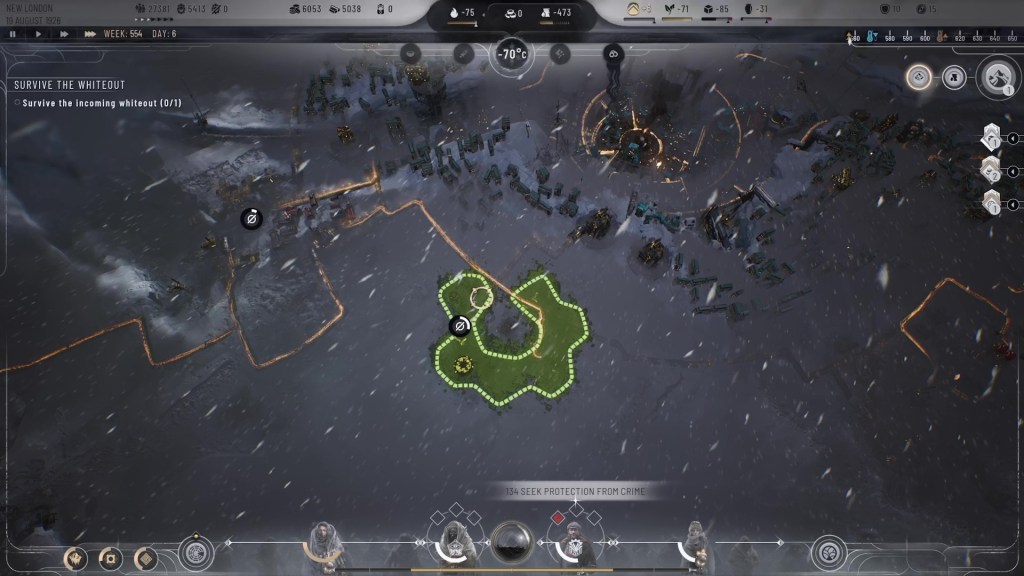
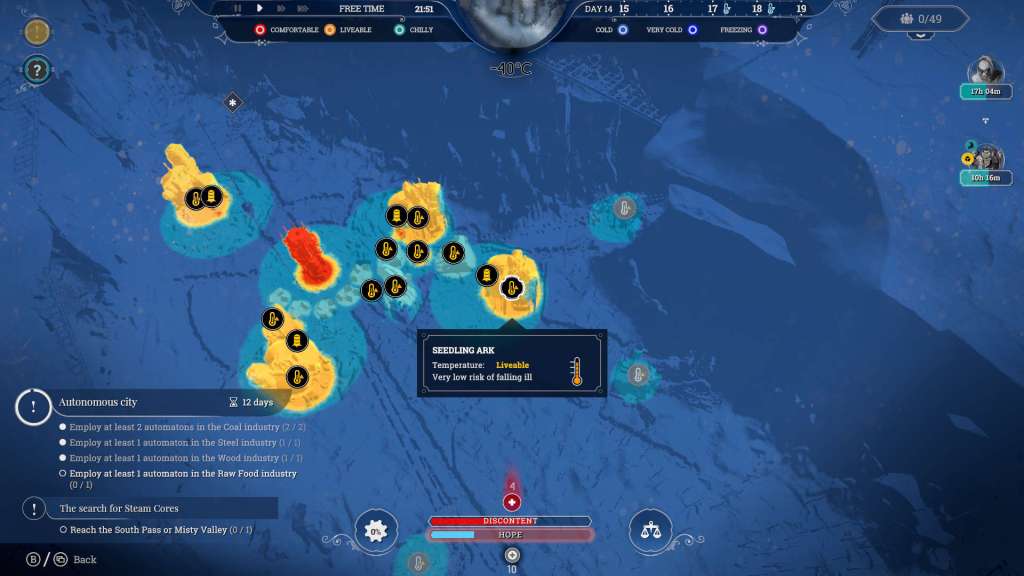
    Frostpunk 2 feels considerably more epic in scope thanks to new mechanics and an accelerated timeframe. The in-game clock hurtles forward through days and weeks, so it plays out over years and decades, rather than the days and months of the original. The city-building elements – which now involve sprawling districts, hubs, and key buildings – feels less exacting. In contrast, menu-driven systems that control the flow of heat and workers across your city are vital, and so too are Frostland supply lines let you balance the flow of colonists, food, fuel, and goods between settlements and outposts.

    Some may find the reduced focus on city-building disappointing, but there are new and expanded mechanics to keep you engaged. The most obvious is the new council and enhanced interplay of factions within your city. It starts with a simple vote to keep your player on as a steward (which can trigger an early game-over screen) but you’ll soon find yourself using these council sessions to vote on introducing new laws. These govern everything from education and social support, to policing and healthcare – all of which come with pros, cons, and faction preferences. If you play your cards right, there is even a path to entrench yourself as an autocratic leader who rules by edict.
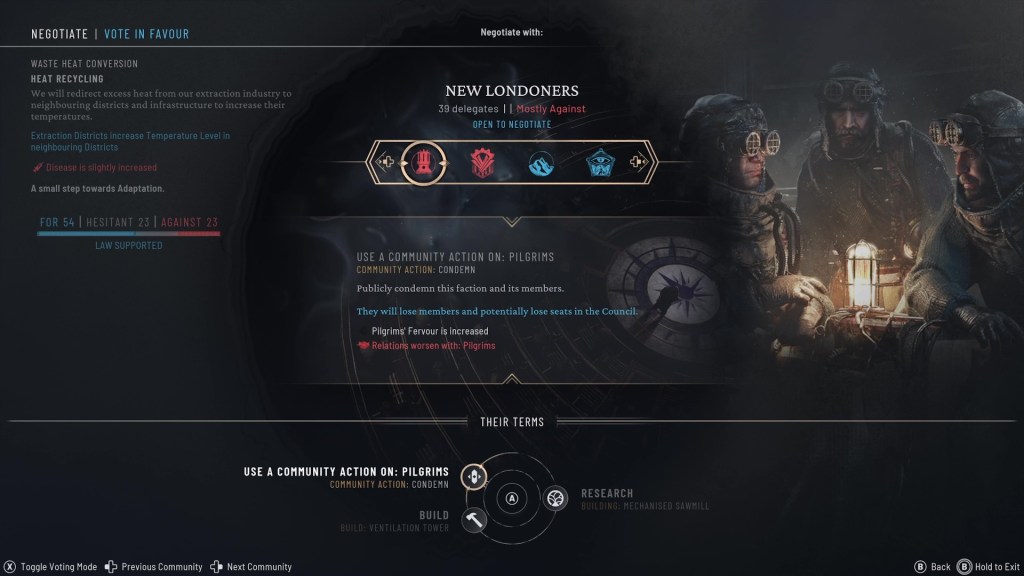
    Factions can organically support your decisions, negotiate over future policy and research goals, or force you into a vote if you’ve ignored their requests for too long. If a faction gains dominance, they can start claiming housing districts, offer more support if you’re aligned with them, develop potentially problematic rituals, and even rebel against you – damaging structures and your economy. There is plenty of leniency on the lower difficulties, but a combination of social unrest, fanatics, sabotage, and the elements can conspire to destroy your settlement if problems are left to fester.

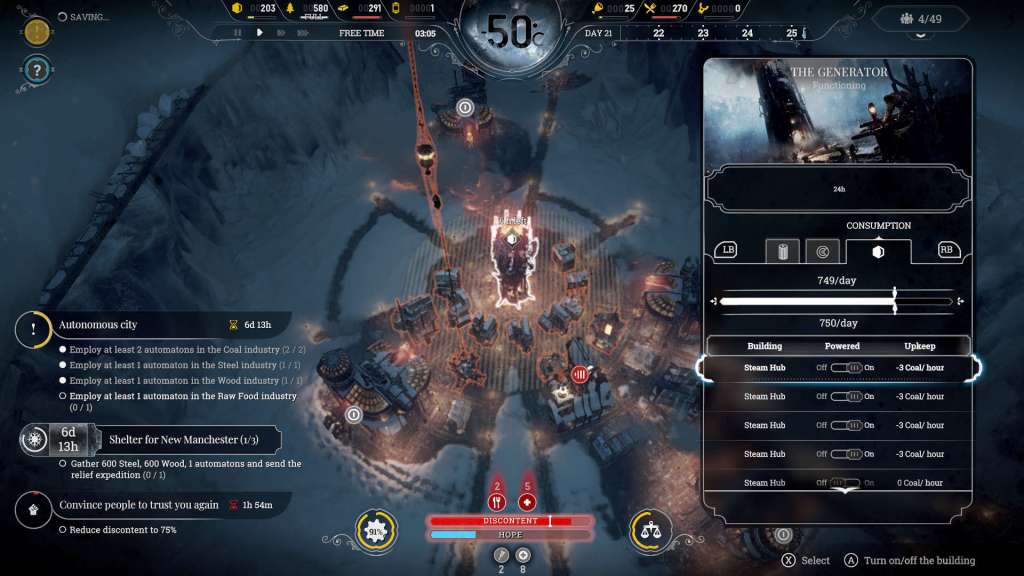
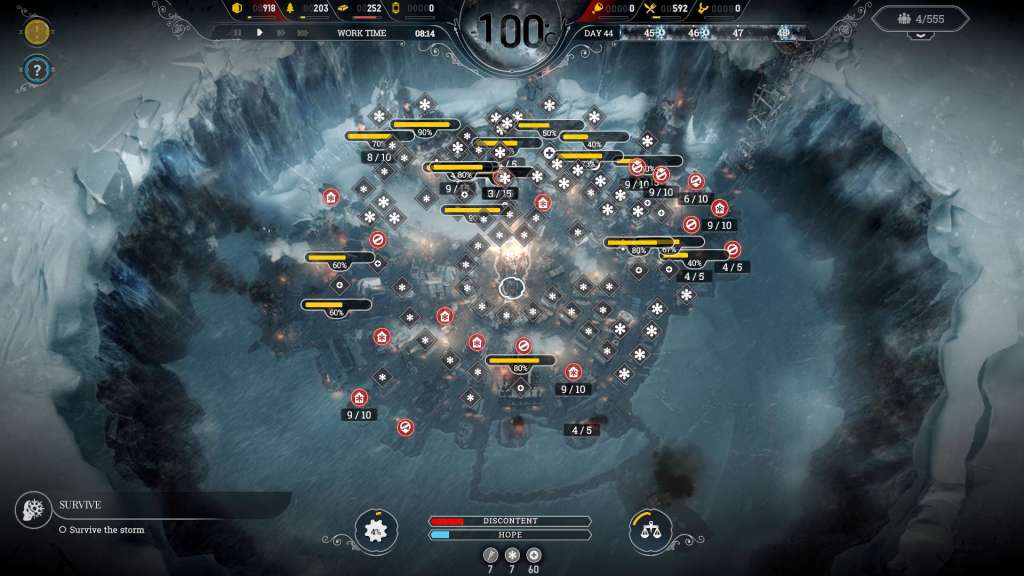
    It is a complex and sometimes overwhelming interplay of systems, but it is incredibly satisfying to keep your city thriving on the edge of disaster – especially when you are reaping the rewards of an earlier narrative decision or newly researched technology. Gameplay can feel dry as you simply define development zones, flip between information overlays, and shift sliders, but the audiovisual elements are immersive. The city announcer, citizen comments, and short narrative vignettes convey the impact of your choices. Machines clear the ice, basic foundations grow into bustling districts, and well-lit paths and heat pipes connect them. Better still, you can zoom right out into the Frostlands view, zoom back into secondary settlements, or pan across the over-world map to track approaching Whiteout storms that still threaten your settlements from time to time and cut off distant outposts.
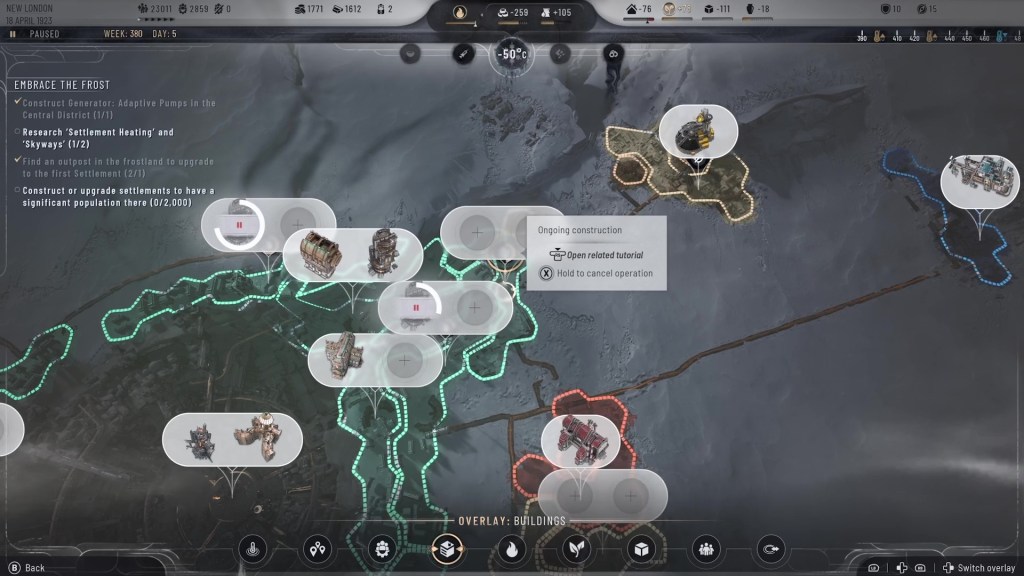
    Unfortunately, all that complexity means playing Frostpunk 2 on console (or on PC using a gamepad) will have you fighting the controls just often enough to be frustrating. Selecting the wrong structure in a radial menu or placing a district in the wrong spot is annoying but manageable. Struggling to navigate the screen overlay icons or struggling to shift sliders in sensible increments is far more impactful as the game goes on. When you throw in other annoyances – like repeatedly zooming into a settlement while trying to connect Frostland supply lines, or tutorial pop-ups that won’t close – Frostpunk 2 can begin to grate. I just hope 11 bit Studios is still working on refining the control scheme as the rest of the package is an excellent choice for fans of the city-builders and management games with a survival twist.

    Pros:

    • It’s easier to establish interconnected cities and settlements
    • Managing political factions is almost as stressful as managing resources and the elements
    • The choice-driven campaign changes up how later chapters play out
    • Generator cities, settlements, and the Frostlands all look and sound more beautiful than ever

    Cons:

    • The gamepad control scheme feels smartly designed but is awkward and sometimes frustrating in practice
    • It can feel like a pure management game at times as you navigate menus, overlays, and maps

    Score: 7/10

    Frostpunk 2 was reviewed on Xbox Series S|X using a code provided to gameblur by the publisher. It is also available on PC and PS5.
  • Editorial: Warhammer Age of Sigmar: Realms of Ruin is a great case study on what does and does not work with console RTS

    Editorial: Warhammer Age of Sigmar: Realms of Ruin is a great case study on what does and does not work with console RTS

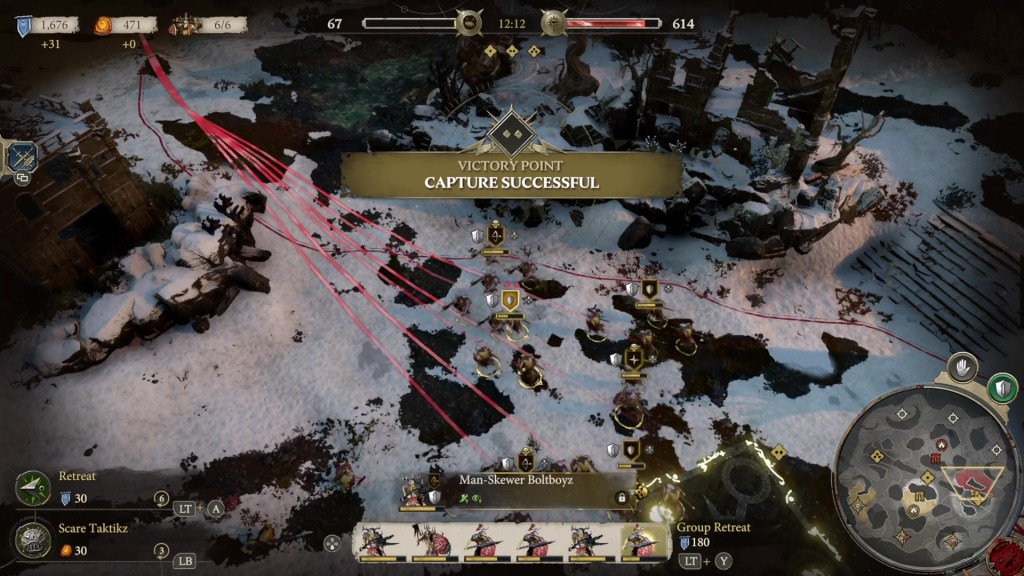
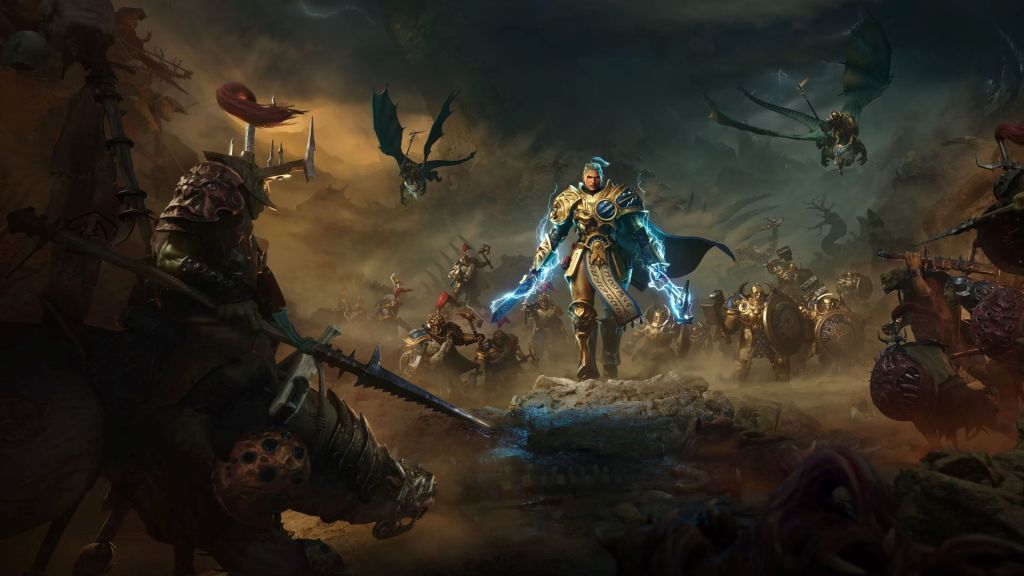
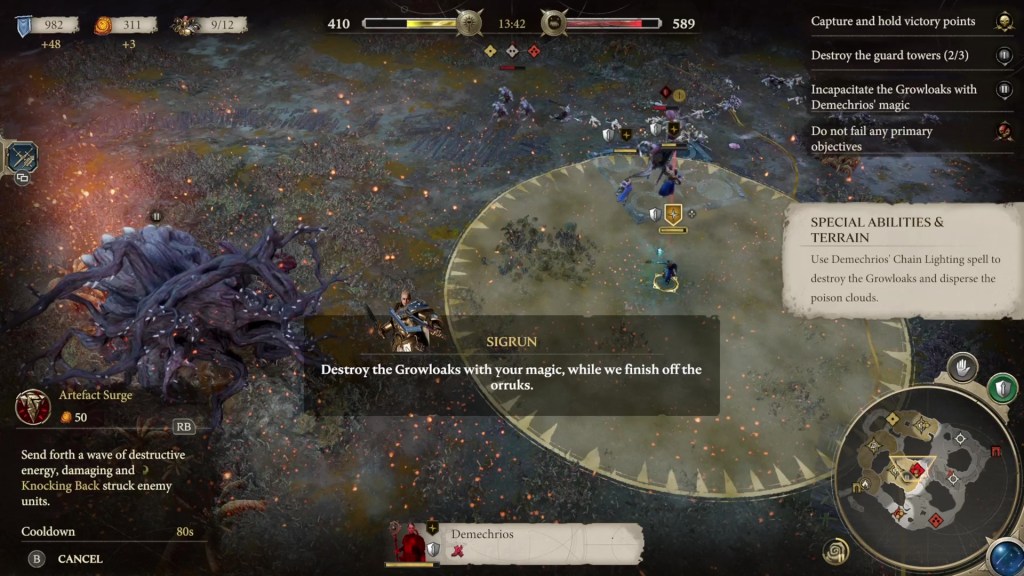
    As someone who has always enjoyed playing real-time strategy ports on console – going all the way back to Command & Conquer and Red Alert on the PS1 – Warhammer Age of Sigmar: Realms of Ruin feels like a case study on what does and doesn’t work when you have to work around the limitations of a gamepad.

    During the cinematic-heavy campaign, there were times I was reminded of the methodical, scripted approach Blizzard pioneered with the StarCraft and WarCraft III – a design that works well enough on console when the player has more control over the pacing. The rest of the time – by which I mean a third of the campaign missions and every other mode: AI skirmishes, Conquest, or multiplayer – it often felt like trying to play a fast-paced, lane- and territory-control-focussed MOBA with a severe handicap.

    Starting with the positives, there’s a cinematic 18-mission campaign, with four difficulty settings and optional mission challenges, complemented by AI skirmish maps and a Conquest mode – think a succession of increasingly tough skirmish maps with modifiers. With beautiful environments, detailed character models, and intricate unit animation, Warhammer Age of Sigmar: Realms of Ruin’s in-engine cutscenes do an impressive job presenting another grim, violent, yet often amusing and absurd Warhammer story. It’s full of contrived scenarios, improbable attrition rates, one-note faction leaders making poor decisions, and – more so than any recent RTS I can think of – it shamelessly functions as a glorified tutorial for basic commands, faction abilities, and game modes.

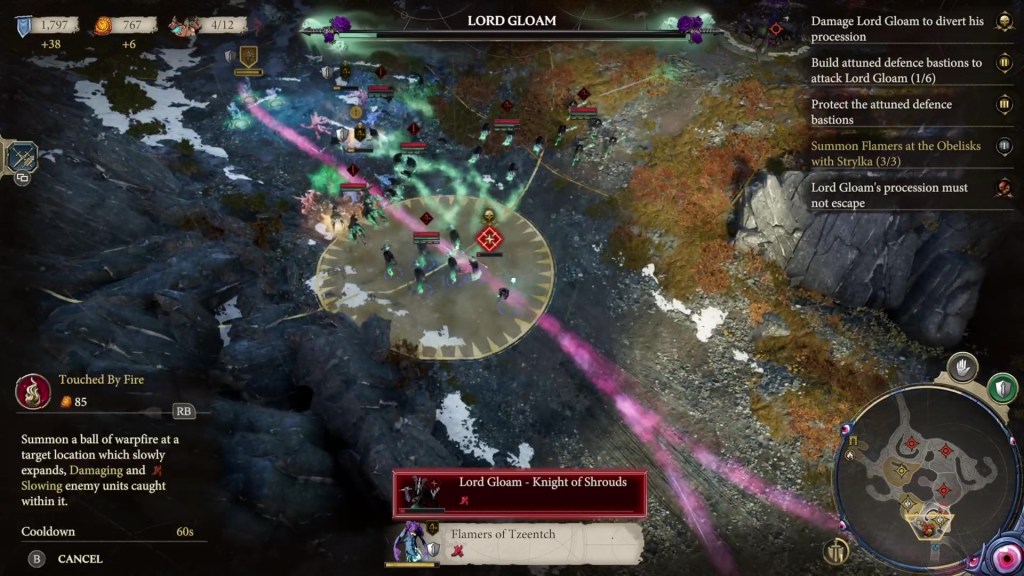
    The Stormcast Eternals seek an artefact of power that may help them reclaim the Region of Ghur; the Ork Kruleboyz are in pursuit of the same prize to elevate the status of their Warboss; and a few flashback missions reveal how The Disciples of Tzeentch originally battled the undead Nighthaunt faction for possession of the artefact. It’s all stylishly presented and – if you can get to grips with the gamepad controls and gameplay basics – the campaign is decent fun and moves at a brisk pace, switching up factions, objective types, and introducing a few novel scenarios. There are times you’re just battling from point-A to point-B down branching corridors, claiming Arcane Conduits to build outposts and generate resources as you go, but there are a few missions that rely almost exclusively on heroes; one that functions as an unforgiving tower defence; one that features clunky stealth; several that have you battle over control points, and even gimmicky boss battles that add some twist to chipping away at a giant HP bar.

    The campaign also serves to highlight what the control scheme and game design gets right. Much like the underappreciated Halo Wars 1 and 2, Warhammer Age of Sigmar: Realms of Ruin focuses on streamlined base-building, managing only two resources, and smaller skirmishes influenced by unit composition, positioning, and the strategic use of abilities – more so than sheer numbers. You can upgrade you primary building to recruit new unit types and unlock three-tiers of unit and outpost upgrades – many of which are mutually exclusive abilities or passive buffs to specialise units. Each faction also has two defence-oriented structures – a tower that deals minor damage but buys you time to muster your army, and a healing bastion to support defensive groups.

    The controls are what you’d expect from a modern console RTS with one situationally useful addition – “DirectStep” control. The camera latches to your selected unit or group, it’s easier to aim and trigger abilities, and you assign movement or attack-move waypoints to individual units. It’s a smart option for managing small skirmishes but it decreases situational awareness, and I found myself falling back on the emulated reticule controls. In the introduction, I mentioned Warhammer Age of Sigmar: Realms of Ruin could feel like a MOBA, and that’s because it adheres to the rule-of-three design and forces you to multi-task. There are three unit types in the combat triangle (shields vs. bows, bows vs. swords, and swords vs, shields); often three objectives to clear out or three control points to hold; and there are typically three paths you need to defend around any Arcane Conduit. It should come as no surprise the d-pad is used to manage 3 control groups, pad with the last input used to quickly cycle through units within a group.

    On paper and in practice, the controls and streamlined gameplay loop work well enough in the campaign – even on tougher missions that feel like skirmish maps with the AI playing by a general ruleset, rather than custom scripting. The problem is how quickly they buckle when you’re under pressure. In addition to juggling multiple control groups spread across a map, you’ve got to cycle units to access their abilities, deal with barely coherent formations, and interrupt dubious automated decisions. The challenge feels greater still when you realise how quickly the balance of combat shifts when something goes wrong – allowing other players or the AI to push you into a losing spiral. In Warhammer Age of Sigmar: Realms of Ruin, the less of the map you control, the less you can upgrade or reinforce your troops, and the less multitasking your opponent requires to contain and destroy you.

    The most persistent issue is micro-managing your way around the combat-lock mechanic. Units engaged at melee range can’t disengage – unless they’re sent retreating back to your main structure before you can regain control. With no obvious formation behaviour and ranged units prone to outrunning melee units, you need to constantly assign individual attack orders based on type, then utilise abilities to further modify the flow of battle – usually by buffing your troops or inflicting an area-of-affect attack. You can alternate between move and attack-move commands, and you can define the firing-arc of ranged units, but to effectively micromanage just one army, you need to use all three available control groups. On top of that challenge, you’ve still got pathfinding issues and, despite several upgrades allowing you to focus on ranged damage, hybrid units are prone to engaging in melee once they get close – even if their target is combat-locked with another unit.

    As a result, Warhammer Age of Sigmar: Realms of Ruin sits in a weird middle ground, demonstrating both smart design decisions that make a lot of sense in a console RTS – but it also demands a degree of manic multitasking simply not suited to a gamepad. Most campaign missions are either scripted enough or offer maps defensible enough that you can push out cautiously and regroup if things go wrong. However, that’s simply not an option on AI skirmish or Conquest maps, where even the low-difficulty AI can simultaneously contest all control points, harass your outposts, and spam abilities in battle against your primary force. It had me wishing for a pause-and-command option even if it was antithetical to the developer’s intent. An inadvertent positive is that a few multiplayer matches against other human players felt more balanced, as my opponents stuck to managing a single but mobile army I could frantically counter with my own.

    Warhammer Age of Sigmar: Realms of Ruin was played on Xbox Series S|X using a code provided to gameblur by the publisher. It is also available on PC and PS5.
  • Review: Return to Grace (PC)

    Review: Return to Grace (PC)

    Playing Return to Grace had me thinking back to when so-called “walking simulators” were still a divisive topic. Video games like Dear Esther, Gone Home, or Everybody’s Gone to the Rapture – in which the narrative, characters, atmosphere, and audiovisual experience take precedence over mechanical complexity.

    On one hand, it’s a design that benefits Return to Grace, making for an immersive experience focused on the narrative pay-off. On the other, I was reminded of how fine a line this genre walks between compelling and boring if the pacing and length are even slightly off the mark.

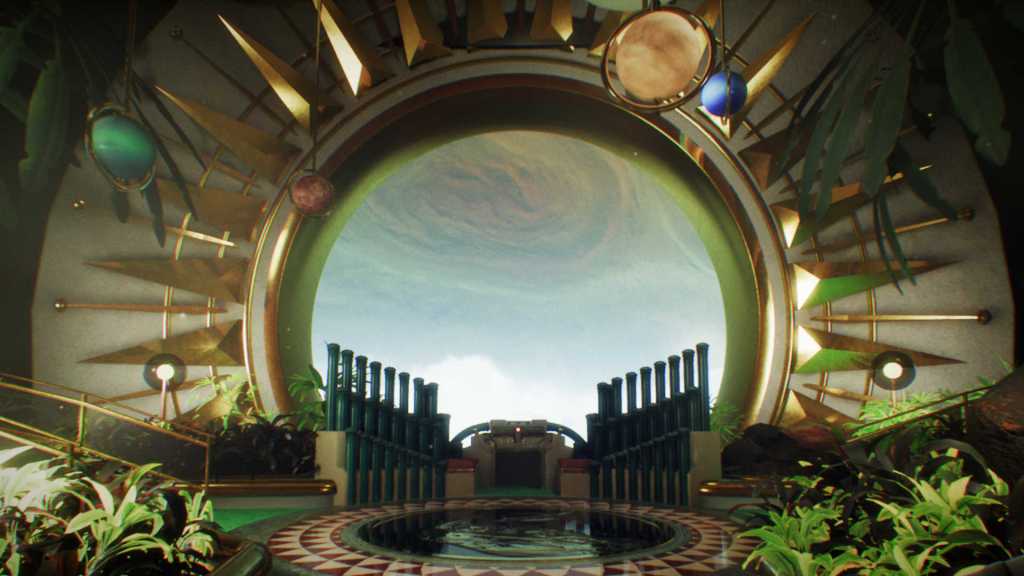
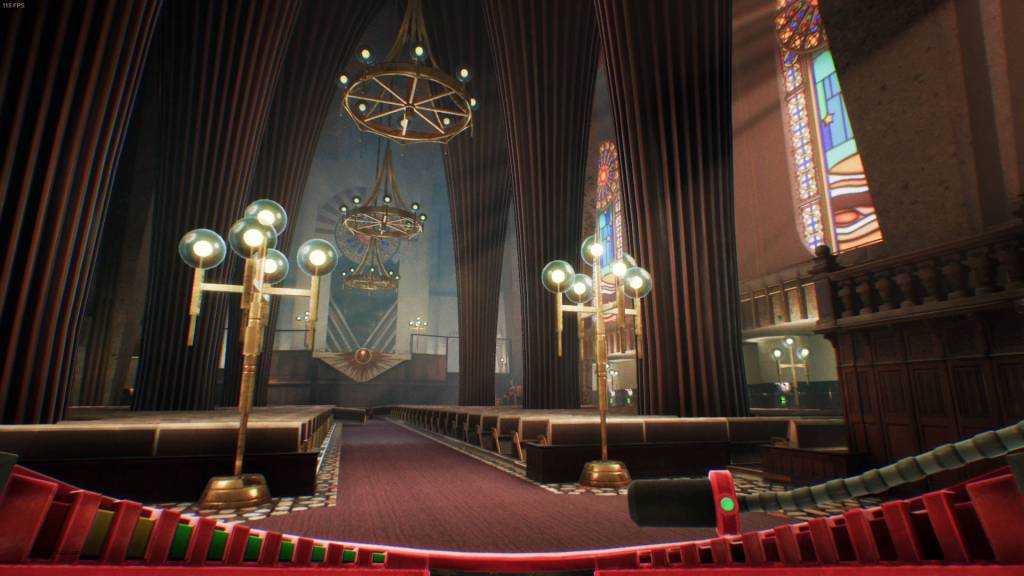
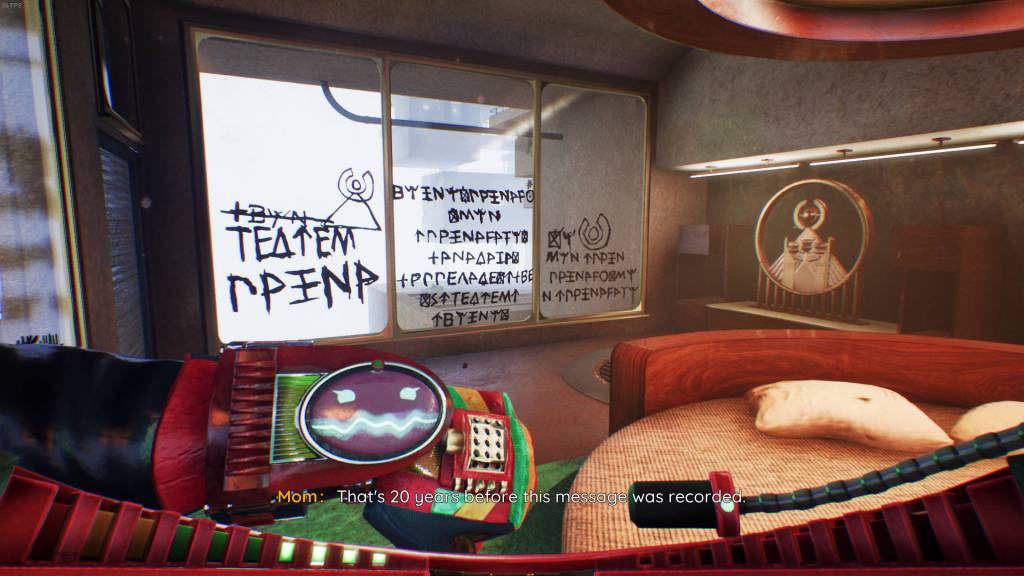
    Return to Grace is a first-person narrative adventure that places you in the environmental suit of Adie Ito – an archaeologist exploring a frozen and stormy Ganymede in 3820 AD, searching for an ancient AI “Grace”, held in god-like reverence.

    She was an AI that led humanity into a golden age of peace and expansion across the solar system before her disappearance, a thousand years before, triggered a new dark age with many technological innovations and record keeping lost.

    This is a genre that thrives on strong storytelling and Return to Grace, despite retreading some familiar ideas, offers up an intriguing setting, quirky cast, a briskly paced mystery to unravel, and plenty of optional environmental storytelling and world-building.

    Times have clearly changed since Grace was the caretaker of humanity. Travel throughout the solar system is no longer commonplace as Adie has taken a risky, 300-day journey to get to Ganymede. It’s a one-way trip but she claims everything of value to her on Earth is gone. Record keeping from a thousand years prior is so limited she had to rely on centuries of oral histories to pinpoint the location.

    Even before I appreciated the divergent nature of the narrative, I was already sold on the setting, and I wanted to discover more about its take on the future of humanity.

    Thankfully, that “future history” element is integral to the present investigation-based story; it comes up when Adie comments on the technology she witnesses in the spire; and it often features in her conversations with an entertaining selection of AI personalities she discovers on her journey.

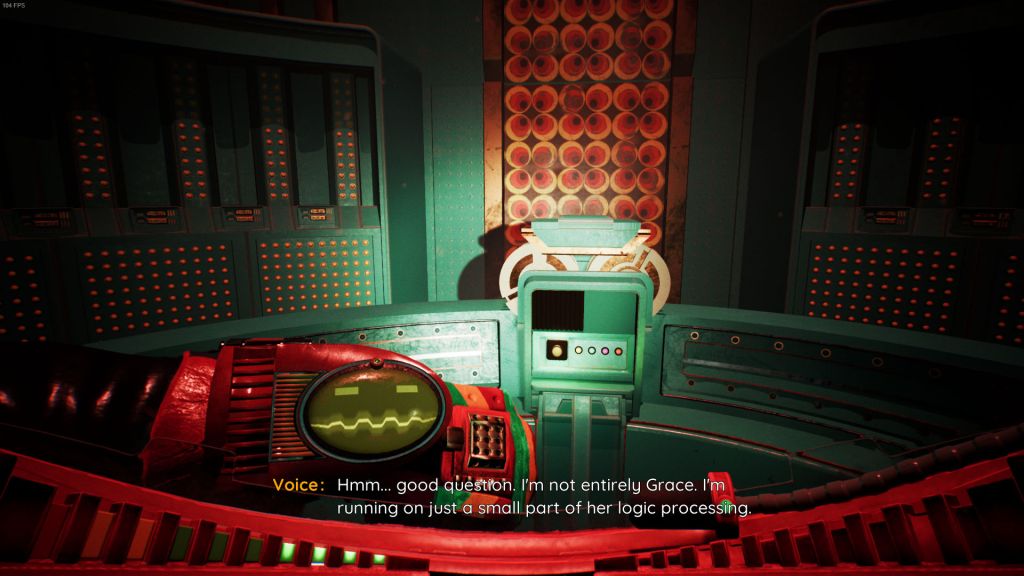
    Shortly after arrival, she awakens “Logic” who – alongside “Control” and “Empathy” – form core components of Grace’s identity. The problem is they’re old back-ups that have little knowledge of what led to Grace’s shutdown, what happened to the people that maintained the spire, or how her interactions with humanity evolved over time.

    What they do have is unique personalities, system permissions, and thoughts on how Adie should proceed. As she pushes on, they create amusing hybrid personalities – for whom Adie picks some choice names – that help her circumvent new obstacles.

    It’s not obvious at first but Return to Grace‘s most significant narrative mechanic is how it tracks your decisions. The consequences can feel a little rushed given the 3–4-hour runtime, but there are a few key moments where Adie can push forward instead of exploring, take risky shortcuts instead of the safer path, or allow the AI to perform certain tasks for her. These decisions feed into evolving AI responses and (if we exclude one obviously bad ending) lead to minor ending variations that felt appropriate for my choices.

    Return to Grace‘s biggest issue – and this is one shared by all games in this genre – is what you’re doing mechanically is rarely that engaging.

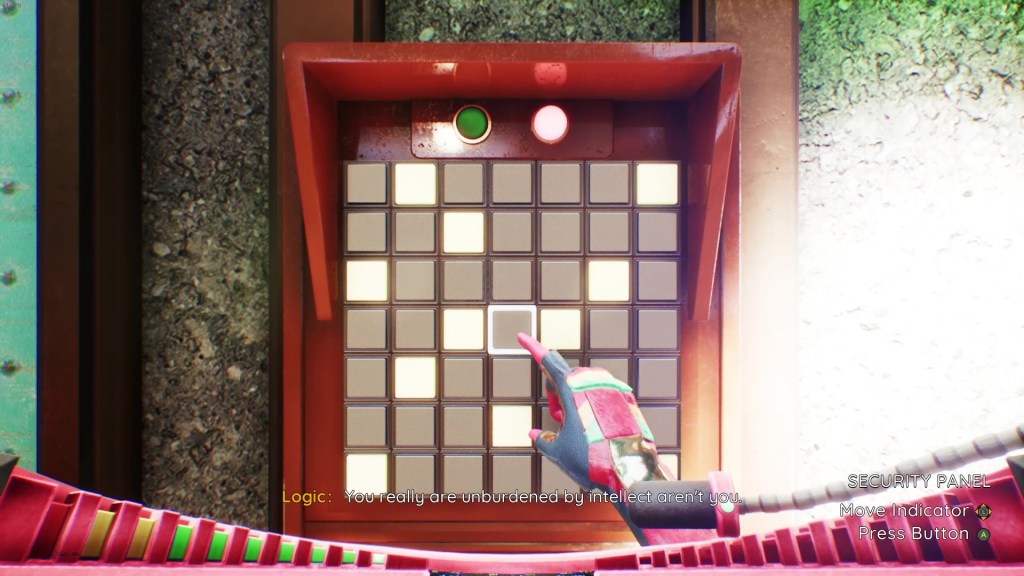
    You explore and move at whatever pace the game dictates; you sit around listening to lengthy conversations that block your ability to interact with anything until they’re finished; you push or mash a single button to trigger scripted traversal moves or optional commentary; and sometimes you engage in pattern- or memory-based puzzles that require little mental effort. Crossing balance beams, briefly controlling a crane, and melting ice with a flame-thrower is about as wild as it gets.

    Thankfully, Return to Grace’s brisk runtime – coupled with some choice comments from the AI if you do get stuck – make this less of an issue and the compelling world had me hacking every door and audio-log I could find for more details. That said, it didn’t make the process of trudging around larger areas, repeating door code inputs, and twirling Adie’s glove to line up sync points a dozen times feel any less repetitive or tedious.

    Return to Grace’s brevity and strong storytelling are its saving grace. It kept me hooked over two evening sessions and I only started ruminating on the weaker elements just before the credits rolled.

    I wanted to find out more about the past events by sifting through the deserted spire; I wanted to hear every one of Adie’s comments on the current state of humanity; I was fascinated by the AI personalities and their attempt to dissect her motivations; and there were moments of doubt that had me wondering if Adie’s quest was misguided.

    If you’re in the mood for a brisk, immersive, thought-provoking adventure with a lightly divergent narrative, and you can accept the somewhat limited and repetitive gameplay loop, Return to Grace is a great addition to the genre.

    Pros:

    • An intriguing setting and briskly-paced mystery to unravel
    • Thought-provoking conversations and ending variations based on your actions
    • A likeable cast with quality voice acting
    • Atmospheric environments and soundtrack

    Cons:

    • An over-reliance on a handful of simple, repeated mechanics
    • The short length makes some AI relationships feel rushed

    Score: 8/10

    Return to Grace was reviewed on PC using a code provided to gameblur by the publisher. It is also available on Xbox Series S|X and PS5.

  • Retrospective: Vaporum (2017)

    Retrospective: Vaporum (2017)

    I love Vaporum and many of the classic games that inspired it, but it’s a difficult sell to newcomers. Clunky, archaic movement limitations and artificial grid-like environments – elements you might criticise in any other modern game – are core gameplay features and, if you buy into the nostalgic aspect, all part of the charm

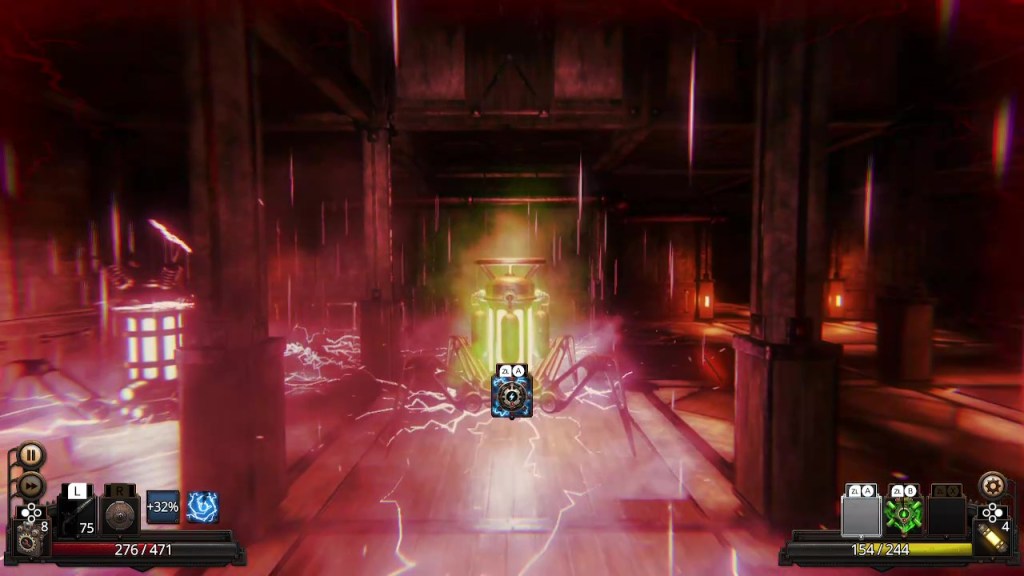
    Vaporum is a retro-inspired but infinitely more accessible modern “blobber” – think first-person dungeon-crawler, usually party-based, and with RPG elements. You trudge around labyrinthine grid-based levels, searching for keys, solving puzzles, hunting for secret areas, avoiding hazards, and defeating enemies to progress between floors. It’s a wonderfully contrived game world that makes little sense unless the primary purpose of the facility was to frustrate and/or kill its researchers.

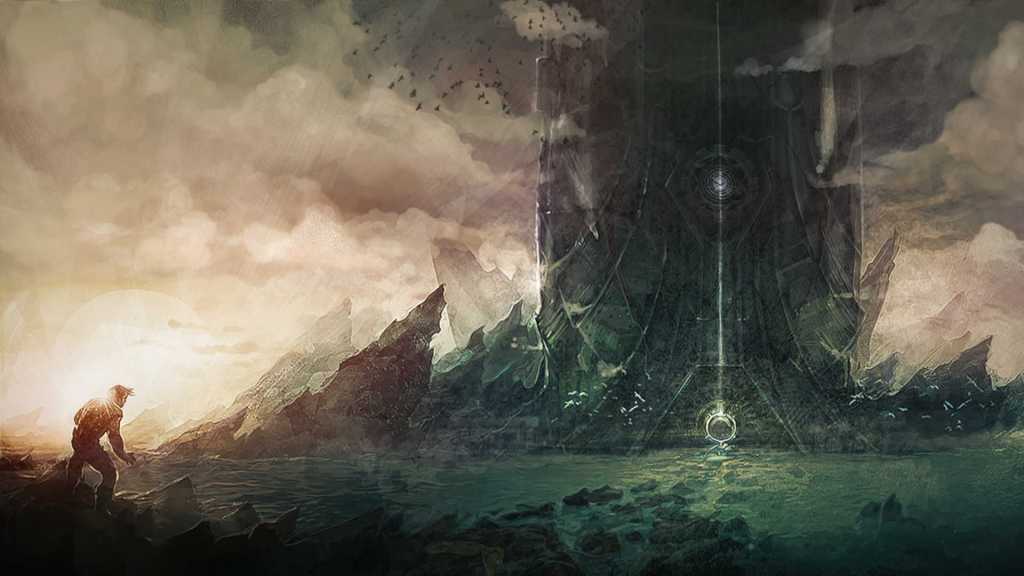
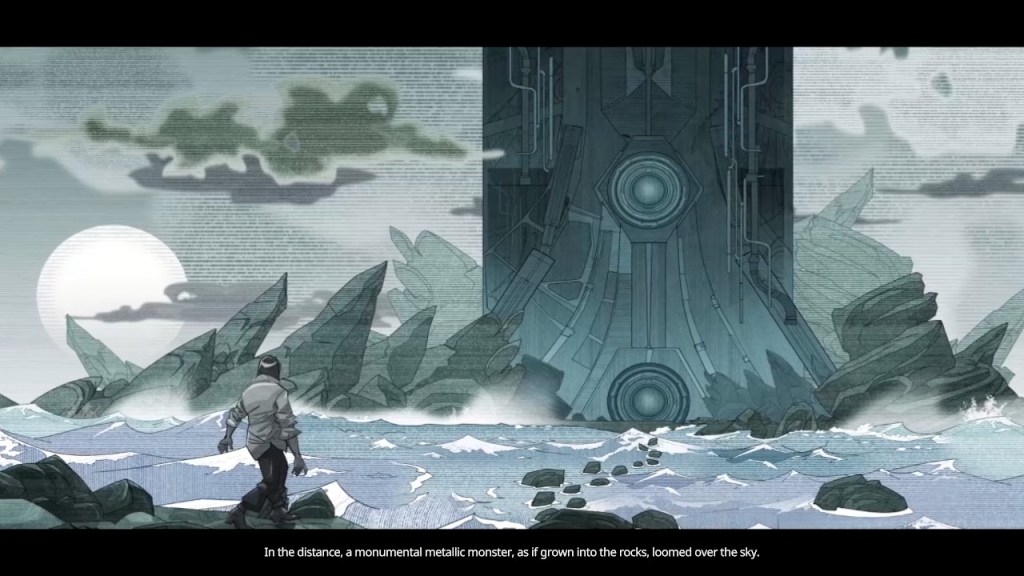
    Events take place entirely within a massive steampunk tower, in the midst of a raging and stormy sea, though figuring out who the protagonist is forms part of the early mystery. The ominous tower beckons them in and although they know they have some connection to it, everything else is a blur.

    As you explore, a combination of written notes and scratchy audio logs spur on their memory, leading to revelatory monologues that slowly reveal the truth about their past and the present research into a mysterious substance known as “Fumium”. It’s a dated but effective approach that works in a game not particularly suited to conventional cinematics – though I wish there was a little more world-building to flesh out events beyond the tower.

    Although many games in this sub-genre – from 1985’s The Bard’s Tale to 2017’s StarCrawlers – shift into turn-based combat when you encounter a foe, Vaporum uses the real-time approach first pioneered by 1987’s Dungeon Master and almost perfected by 2012’s Legend of Grimrock. Unlike many of its predecessors – and one of the reasons it received multiple console ports – is that is Vaporum is not “party-based” and doesn’t rely extensively on an emulated mouse cursor in combat.

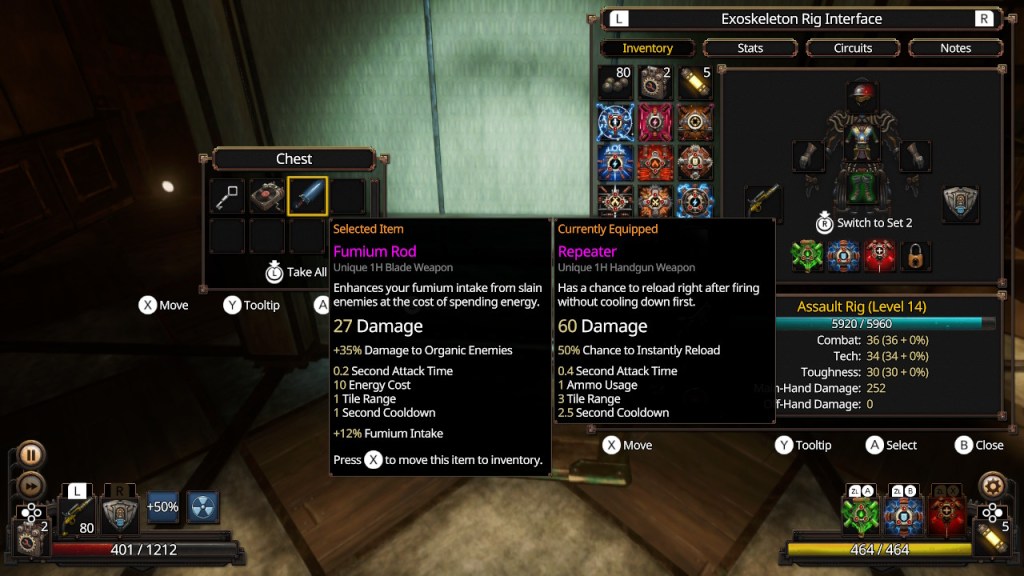
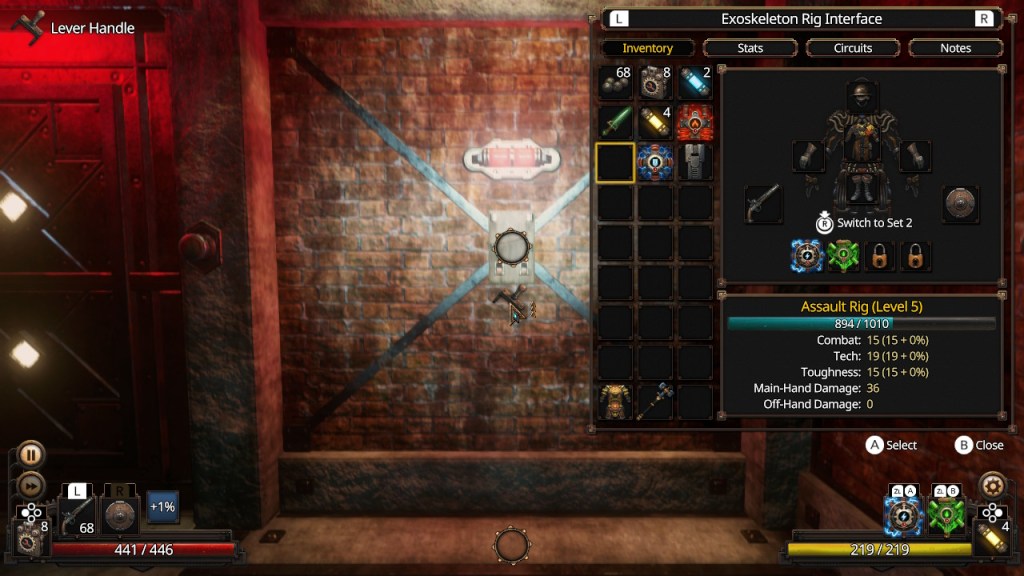
    You control a lumbering exoskeleton rig – a sensation not dissimilar to Delta in BioShock 2 – with four starting classes to pick from. These range from pure offence to pure defence, with a few unique perks and 10 gear slots that can be configured without restrictions. There are two offensive slots that can either handle one-handed maces, blades, or pistols combined with a shield, or a single but powerful two-handed weapon. You unlock up to four “gadget” slots that provide elemental damage or support abilities akin to spells, and there are four armour slots to mix and match attribute-boosting gear.

    Fumium gained from destroyed enemies goes towards increasing your rig level, unlocking circuits to invest in a dozen linear skill trees that cover weapon types, energy generation for gadgets, elemental damage and resistance, and general survivability. Each point invested provides a useful but incremental upgrade, while the third level provides a minor perk, and the fifth a choice between two major perks.

    On the whole, it’s a versatile and adaptable system that replaces multiple less-specialised party members. It also feels reasonably balanced given you can only max out 3 or 4 skill trees in a single playthrough. You could prioritise damage output to quickly remove threats; turn yourself into a physical and elementally resistant tank that reflects back a huge portion of damage; or pick a middle ground.

    Whatever your choice, exploration, puzzling, and indeed the combat all hinge on understanding and navigating the grid-like environment, rather than simply increasing your level and gear quality – a design many seem to ignore when you consider the number of videos with players retreating into a corner to just trade blows with enemies.

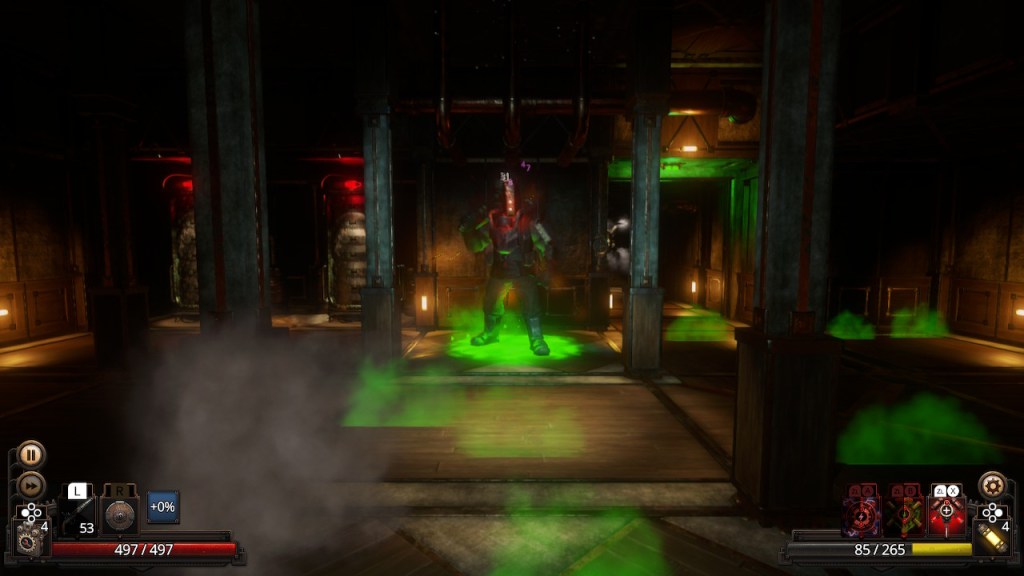
    Vaporum can look and sound great despite its relative simplicity. The throbbing, clanking, and hissing industrial-steampunk setting is a perfect match for the artificial grid-based world. That said, Vaporum is at its most boring when you’re plodding down claustrophobic corridors or backtracking to a locked door, moving past hundreds of near-identically-textured walls and floors.

    You move block by block in any direction relative to your view, which you can swing 90 degrees at a time. Free-look is great to scan for nefariously-hidden switches and objects, and you’ll engage in some light inventory management and menu-ing to use key items.

    Thankfully, what it lacks in fluidity, it makes up for with purpose.

    When you’re forced to move quickly to hit switches, dodge floor traps, or engage in combat with multiple foes, you’ll come to appreciate the convoluted but engaging movement system that forces you to be actively aware of your position in grid space.

    There are times you need to dash between multiple switches by picking the most effective route. Other times you’ll be dashing between safe spots to avoid fireballs or pit traps. Far too much time is spent shifting around large boxes around to open a path. No matter what you’re doing,

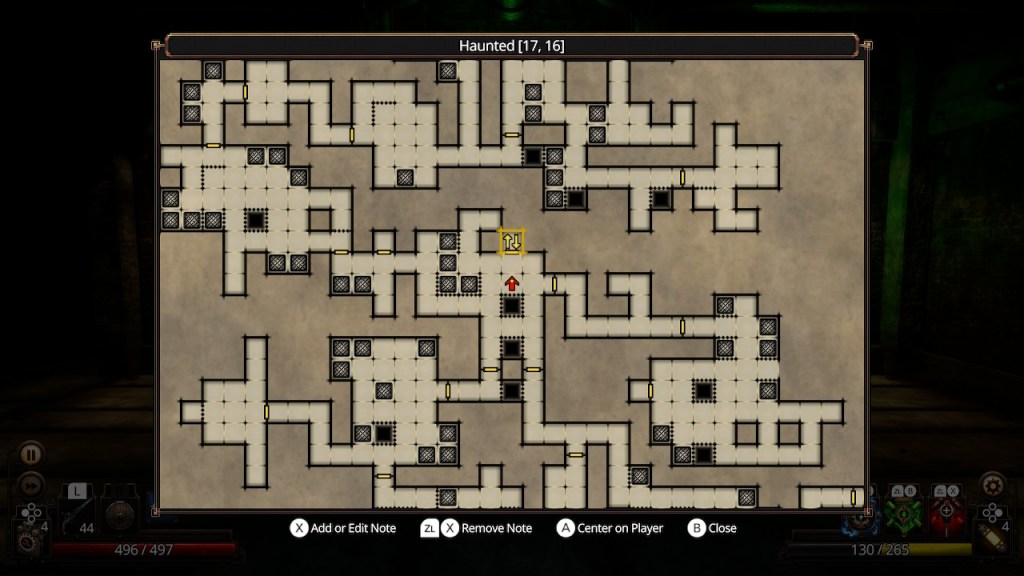
    When it comes to secret hunting, the predictable and repetitive grid-like nature of the environment is both a blessing and a curse. A quick look at the map often reveals blank spaces that hide a secret room but opening them can mean hunting for the tiniest differences in a common texture. It’s worth the effort though, as powerful gear, consumables that permanently increase your basic attributes, rare upgrade circuits, and even revealing documents are common rewards.

    Battling on a grid can feel a bit limited at first and, so long as you’re up against a single enemy and have a 2-by-2 grid space, it’s possible to simply shuffle around them and get in free hits as they transition or reorient. Vaporum attempts to spice things up by giving some enemies projectile attacks, quick strafes, area-of-effect attacks, knock-back attacks, and sideswipes, but one-on-one battles are always survivable if you’re patient.

    In contrast, group battles – especially those with hazards thrown in – will quickly tax your powers of observation, planning, adaptability, and reflexes. Vaporum is perhaps too fond of locking you in rooms, resulting in combat that feels like an awkward dance as you avoid being boxed in, try not to strafe into a hazard or AoE attack, dodge crisscrossing projectiles (or lead enemies into them), clear space to trigger a repair kit, and line up priority targets.

    It’s often chaotic and unpredictable but if you keep a clear head and have a decent sense of spatial awareness, it can be a lot of fun and you’ll often come out on top.

    So, six years on from launch, and 36 years since Dungeon Master introduced real-time combat to the formula, Vaporum is an interesting mix of old designs with more modern sensibilities. The PC version feels most intuitive to play but the console ports are great, irrespective of which platform/s you own.

    I strongly recommend it for dungeon-crawler and RPG fans, though I’d hazard a guess the audience will always be niche. That said, if you can wrap your brain around the grid-based structure, Vaporum provides a weirdly compelling mix of methodical exploration and secret hunting, plenty of mentally taxing spatial puzzles, and high-intensity combat that requires you simultaneously plan and react.

    Screenshots were captured on the Nintendo Switch. Vaporum is also available on PC, Xbox One/Xbox Series, PS4/PS5.

  • Review: Frostpunk – Complete Edition (Xbox Series)

    Review: Frostpunk – Complete Edition (Xbox Series)

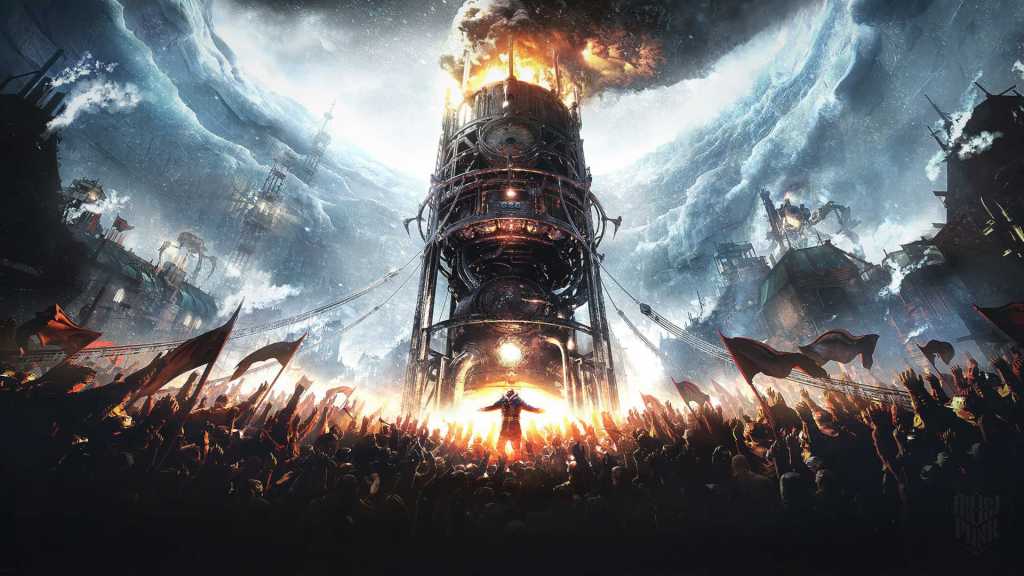
    At long last, console gamers can get their hands on the “Complete Edition” of Frostpunk – an engaging, mechanically deep, and often stress-inducing steampunk city-builder with a focus on surviving the elements. Make no mistake, the original console release of Frostpunk is still a great game, but the expansions introduce some much-needed variety to the basic formula. These expansions change how you think about the geometry of your city, introduce new victory conditions, and shift the focus from self-reliance to trading with other settlements.

    Despite only offering three introductory cutscenes (one for each of the major story scenarios), Frostpunk feels far more narrative-driven than many games in the genre. Each scenario is, in essence, an opportunity to craft your own story. There are technologies to research, laws to pass, encounters in the surrounding “Frostlands”, and plenty of player-choice in how you’ll deal with the demands of your people, refugees, and other settlements. This all comes together at the end of a scenario – if you survive – with a montage that provides a timelapse of your developing city while recounting your key decisions.

    Did you establish faith to drive your people forward in the face of hardships or to crush dissent? Did you care for the critically ill and provide burials for the dead, or did you triage mercilessly and eat the corpses when the great storm arrived? Did you care for and educate children, or did you put them to work collecting coal in freezing temperatures? Although all choices offer a mechanically advantageous outcome and shift the numbers around, the narrative context adds weight to your decisions.

    Of course, in any survival game, the complexity of the underlying systems is what dictates its success or failure. The narrative context is a nice touch, but Frostpunk would hold up just fine without them thanks to the myriad of systems you’ll need to consider and balance if you want your city to survive. Heat, food, and shelter are your primary concern. If you can get the basic layout of your city and resource-gathering operations in order quickly, a contented populace and victory are inevitable. Naturally, nothing in the frozen north is that easy.

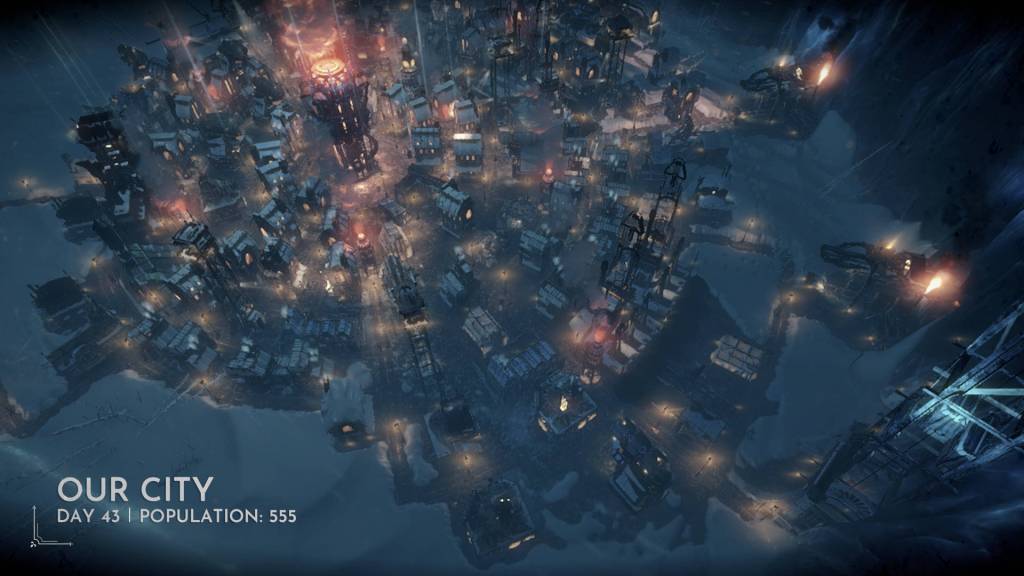
    In most scenarios, life revolves around your coal-consuming generator and the warmth it provides (there’s no nuclear power in this alternate history). An optimal city expands radially, ensuring subsequent upgrades to the generator keep an ever-larger area warm. However, the more efficient your generator, the more coal you burn through. The more coal you need, the more coal-producing industries you need. The more industries you have, the more citizens you need to employ. The more citizens you have, the more housing, food, and medical care you need to provide.

    A new player is going to quickly find themselves overwhelmed, even if they set all the customisable difficulty toggles to easy. The urge to expand, recruit survivors, and generate more resources is alluring, but your citizens have numerous needs that need sustaining. Fail to keep them hopeful, or let discontent swell, and you’ll find yourself exiled to the Frostlands. On the other hand, researching and constructing expensive automatons gives you a 24-hour workforce that never gets hungry, never falls ill in cold temperatures, and doesn’t object to your ruling style. Both are viable paths to victory, but both require careful allocations of resources.

    Of course, building up your city is only half the story. If you’ve researched the right technology, most starting locations offer an infinite source of coal, wood, and steel. However, it’s rarely enough to sustain a large population and decreasing temperatures (which plummet to -100° Celsius during storms), while simultaneously dealing with frequent demands to remedy housing, heating, and medical issues. There are two additional ways to keep your population hopeful and reduce discontent: passing new laws and exploring the Frostlands with scouts.

    The Book of Laws typically offers two variants of any provided law, one callous but effective, the other compassionate with fringe benefits. There are basic “Adaptation” laws, which include choosing between burials or corpse storage (for later “use”), establishing care homes or allowing radical surgical treatments, and putting children to work or educating them. As you advance, you unlock “Purpose” laws – allowing you to chose between Order and Faith. Naturally, the end-game for both these branches of law is authoritarianism, but Order focuses on security and suppressing discontent, whereas Faith focuses on maintaining the hopefulness of your population.

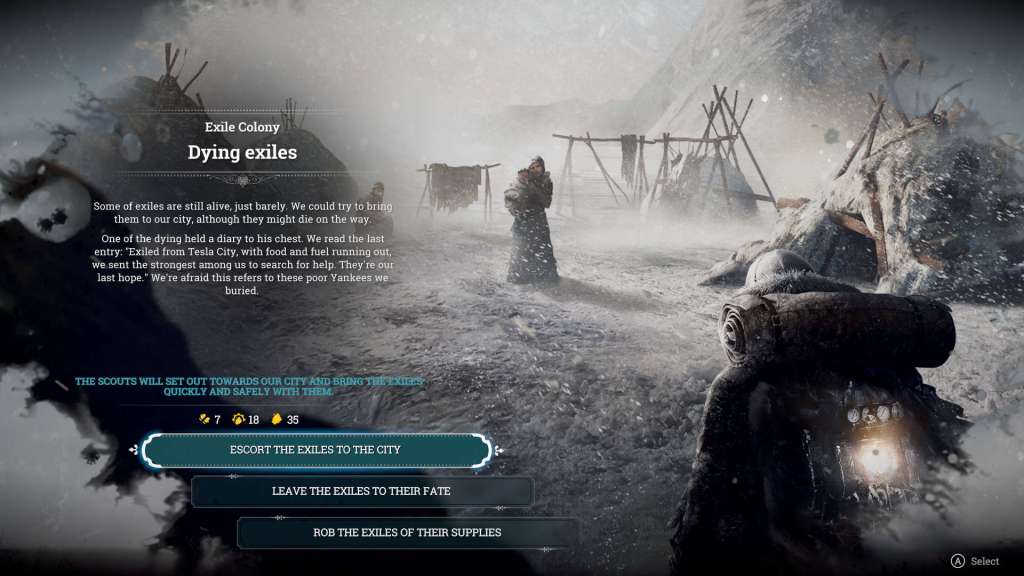
    Sending scouts into the Frostlands is another way to influence your city, bringing people hopeful (or depressing) news and rare “steam cores” required for efficient high-tier buildings. The system is simple and requires little micromanagement, but distances and travel time in the Frostlands are always an issue. Nearby locations can reveal survivors, supplies, or the fate of other generator cities (and almost always reveal two or more new locations to visit). You’ll want to keep your scout teams active all the time, as their discoveries – especially resource caches – can provide a means to get out of trouble fast.

    Ultimately, Frostpunk is a game about learning the ropes, one step at a time. Failure – and you will fail – is an opportunity to take what you’ve learned, apply it to your next attempt, get something else wrong, learn from that experience, and eventually master each mechanic on your way to completing a scenario. You can save at any time but Frostpunk is a game in which failures can be days in the making. Thankfully, scenarios – aside from the “endless” ones – are only a few hours long, so you’ll rarely feel frustrated at starting anew.

    Like many survival games, Frostpunk suffers from gameplay becoming rote once you’ve established an optimised build order and this is why the console Complete Edition is a great choice (or the expansion pass if you’ve already got the base game). “The Rifts” expansion – along with several of the “endless” scenarios – spices up the city-building element by forcing you to expand to adjacent land using bridges. The perfectly circular city structure and comforting glow of the generator are no longer guaranteed.

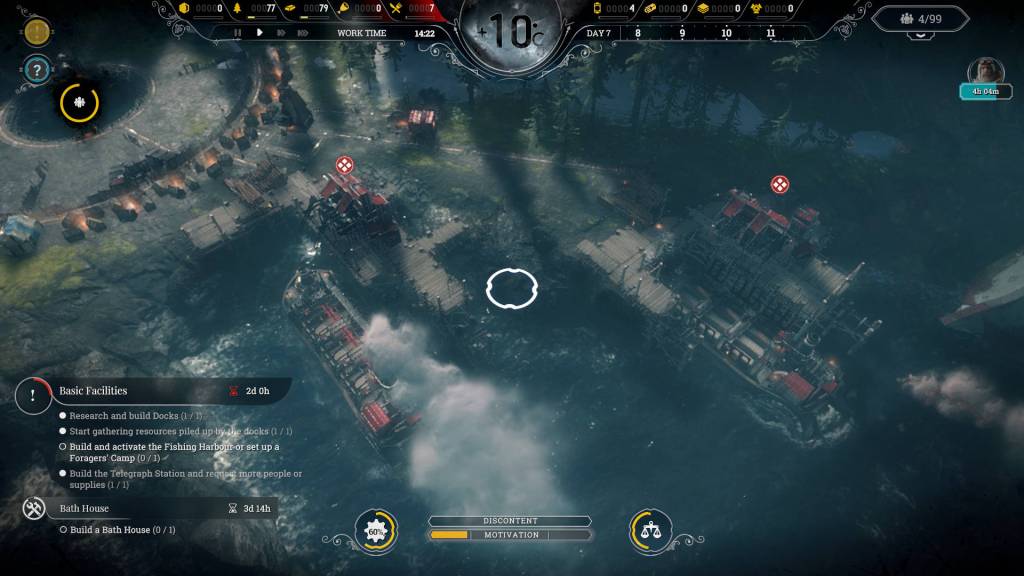
    “The Last Autumn”, which serves as a prequel during the early stages of global cooling, tasks you with constructing a generator. Temperatures are mild, illness rare, and resources abundant, so maintaining the motivation of your cynical workforce and hitting construction deadlines becomes the new challenge. To manage this feat, you need to find a careful balance of new Administration and Labour laws. “On The Edge” serves as a sequel to events in the main campaign, tasking you with the management of a new outpost – sans generator – entirely dependent on “New London” for food supplies and establishing laws. However, New London quickly becomes antagonistic with their demands, and you’re given the choice to scout the Frostlands and establish supply lines with other settlements or try appeasing their unfair demands.

    One slight disappointment is that Frostpunk is yet to receive an official next-gen upgrade. Make no mistake, it can still look great and feel incredibly atmospheric as you watch your torch-wielding workers wade through the snow while howling winds whip back and forth. However, the image looks distinctly soft on a large TV and has plenty of aliasing in motion. Dense ambient city sounds and grumbling workers add to the atmosphere, ensuring your city feels alive, rather than just a visualised spreadsheet. That said, when temperatures drop and troubles multiply, it can be a pain identifying individual structures in a large city and the interface becomes increasingly cluttered. The game does have a pause-time function so you can tinker at your leisure, but it’s times like these I’d found myself missing the mouse and keyboard. Frostpunk Game of the Year Edition is available on Steam, and this is quite an enticing package if you’re more PC gaming inclined.

    Minor visual and control gripes aside, the Frostpunk Complete Edition on console is still a fantastic purchase for fans of survival games or city-builders that demand a lot of planning and micromanagement. It is, however, an incredibly stressful game and might not be for everyone. If you’ve got the patience to carefully think through every move and plan well into the future, and the temperament to make tough decisions that will keep (most) of your citizens alive, there are few survival-focused city-builder experiences like it.

    Pros:

    • A strong, emergent narrative component that’s uncommon in the genre
    • Challenging but fair survival mechanics that often requires making hard decisions
    • A stiff learning curve but individual scenarios are short enough to encourage multiple runs
    • The expansions add plenty of content and much-needed variety to the basic formula

    Cons:

    • Possibly too stressful for some
    • Picking out individual buildings can feel finicky on a gamepad

    Score: 8/10

    Frostpunk – Complete Edition was reviewed on Xbox Series using a provided to gameblur by the publisher. It is also available on PC and PS5.