Category: Videogame Review

  • Review: Robocop: Rogue City (Xbox Series)

    Review: Robocop: Rogue City (Xbox Series)

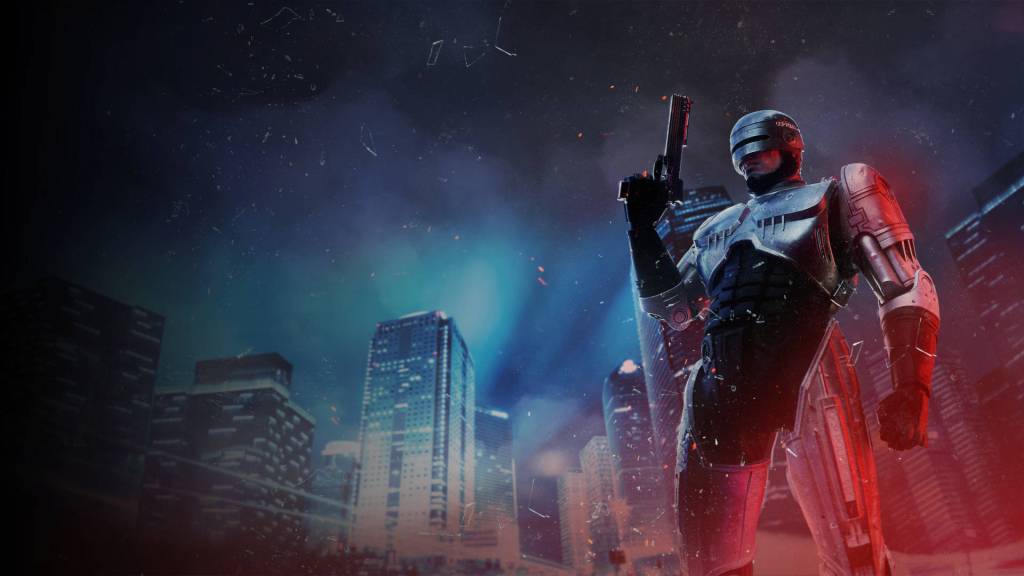
    Robocop: Rogue City is quality 7-out-of-10 fare – one of those games that lack the production values of an “objectively” higher-scoring “AAA” title but are often way more fun to play. As such, how much you enjoy it will depend on what you’re willing to forgive to finally play a good game based on an underutilised IP. It shares many of the same highs and lows as Terminator: Resistance, demonstrating a lot of passion and an obvious love of the IP. However, some great character interactions, solid shooting, an authentic sense of style, and a flashy new engine can’t obscure the disjointed campaign flow, limited mechanical depth, dated character models, and awful cutscenes.

    If you’ve watched the 1987 film recently, it’s easy to argue Robocop: Rogue City retreads too many themes. What makes us human and who gets to decide? Is the rigid application of laws truly just? Is there no end to corporate greed and the collateral damage it causes? Repetition, sure, but these themes make for some of the best interactions between Robocop and the supporting cast and they tie into a narrative role-playing mechanic that influences the fate of several characters and Old Detroit. That said, it’s no subversive masterpiece. Robocop guns down hundreds of gang members with no consideration for the socio-economic manipulation that pushed them into that life, and there’s no shortage of real-world examples that demonstrate trying to resolve violence with violence begets more violence.
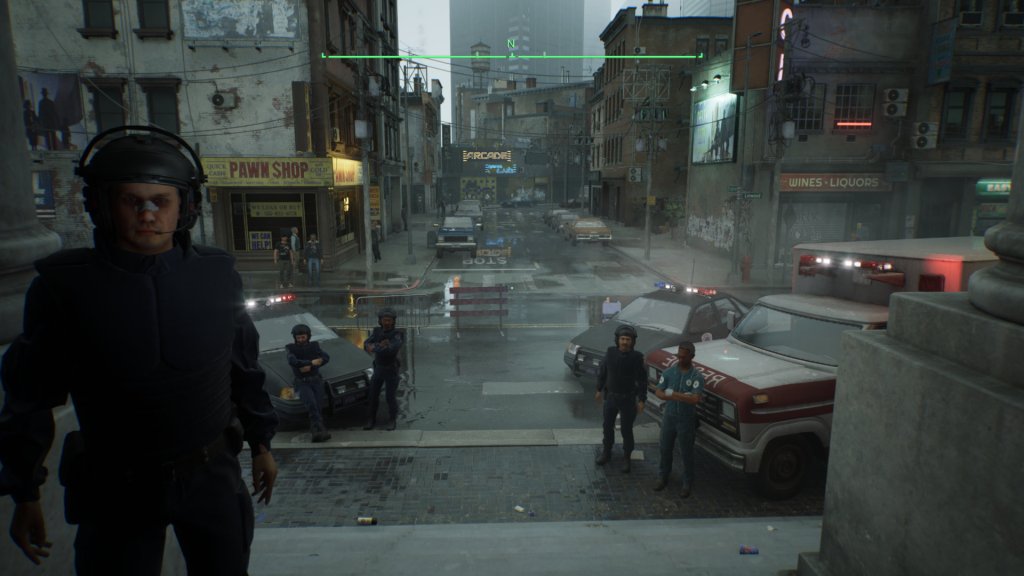
    The events of Robocop: Rogue City take place after the second film, with resurgent gangs, an ongoing Nuke drug problem, and the OCP still looking for any excuse to replace the police force with robots and level Old Detroit to make way for their Delta City project. Robocop experiences more glitches during an attack on the Channel 9 building, so OCP inserts a chip to monitor his performance (tying into the progression mechanics) and assigns him mandatory therapy sessions (used to define, question, and reinforce your role-playing choices). He’s then let off the leash to investigate “the new guy in town”, a mysterious villain whom several gangs and mercenaries are vying to work for.
    This kicks off an interesting but poorly paced story that revolves around Robocop in more ways than one. A good chunk of the opening half is spent shooting through several gangs to interrogate their leaders; destroying more dysfunctional ED-209s; dealing with OCP’s ongoing efforts to undermine the existing police force; avoiding or engaging with mayoral election campaigns intent on using him for political goals; and uncovering an even deeper conspiracy within OCP that leads into a drawn out finale and a bizarre final boss that, I guess, is was somewhat foreshadowed. I know this is both a video game and Robocop is satirical sci-fi, but the plot is still full of contrivances, inconsistent logic, and sudden deviations that make it feel as though the script was written on the fly.
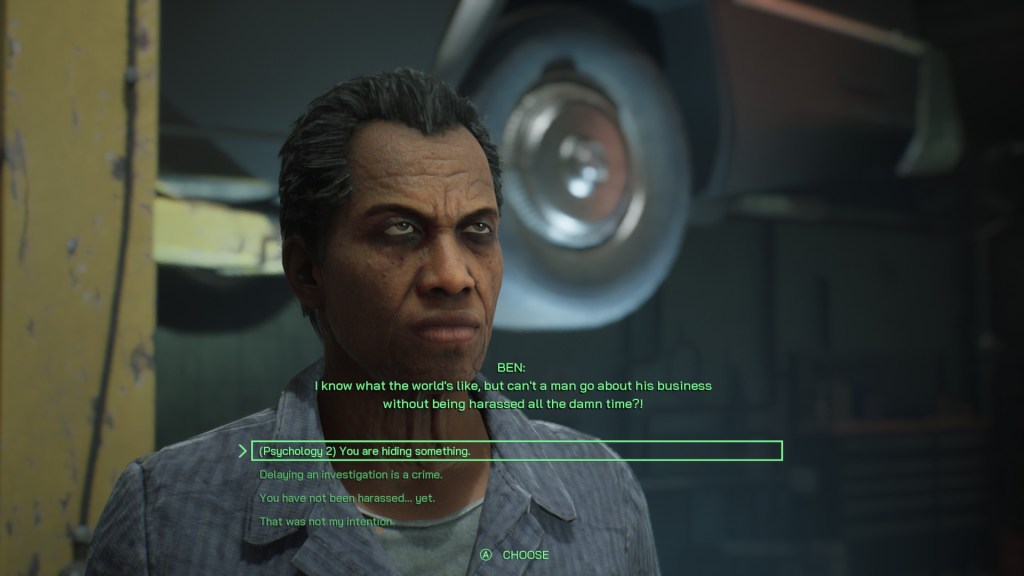
    That said, if you focus instead on optional missions and smaller moments between Robocop and Lewis, his fellow officers, the citizens of Old Detroit, and even the antagonists, you’ll find much better writing, unexpectedly touching moments, and get the chance to explore lovingly recreated spaces like the Metro West Police Station. Peter Weller’s voice and delivery add instant authenticity and, with the notable exception of OCP’s CEO “the Old Man”, the rest of the voice cast give it their all – even if most performances aren’t going to win any awards. During many of these moments, you choose Robocop’s response or actions, which don’t drastically alter the events you experience, but they do change how he perceives himself and how the cast interacts with him down the line.
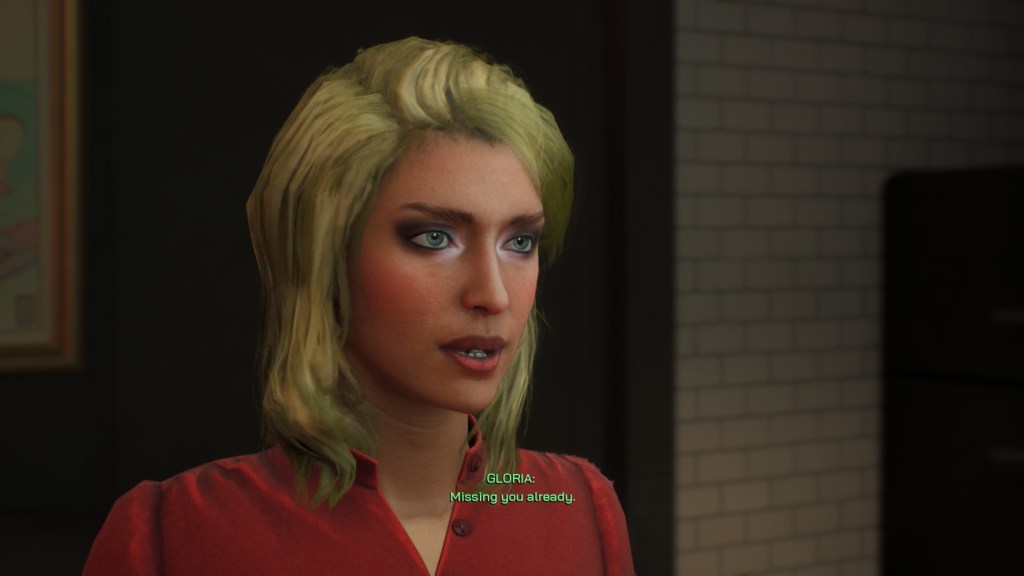
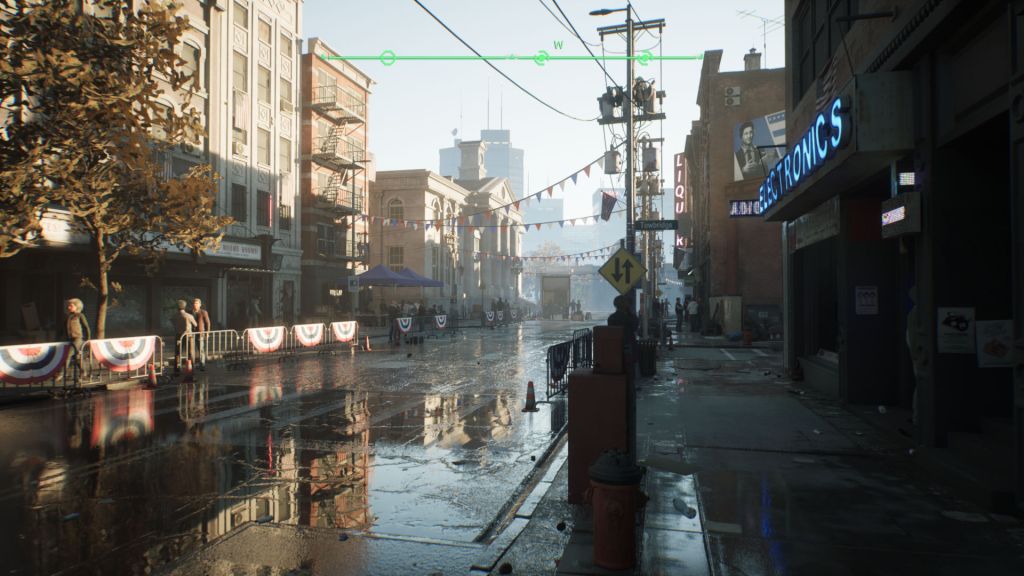
    The problem is no matter how good Robocop: Rogue City looks – with incredibly detailed environments, destruction physics, realistic lighting, and exaggerated gore – the vast majority of character models look dated and stiffly animated, lip-syncing is all over the place, and the cutscene direction feels crude: think simplistic framing, awkward cuts, poor dialogue delivery, and shifting sound levels. Robocop’s model looks great, Weller’s delivery is perfect, and the soundtrack variations of the original theme are brilliant – but all that can’t stop many cutscenes robbing the game of the emotional impact the writers clearly intended.
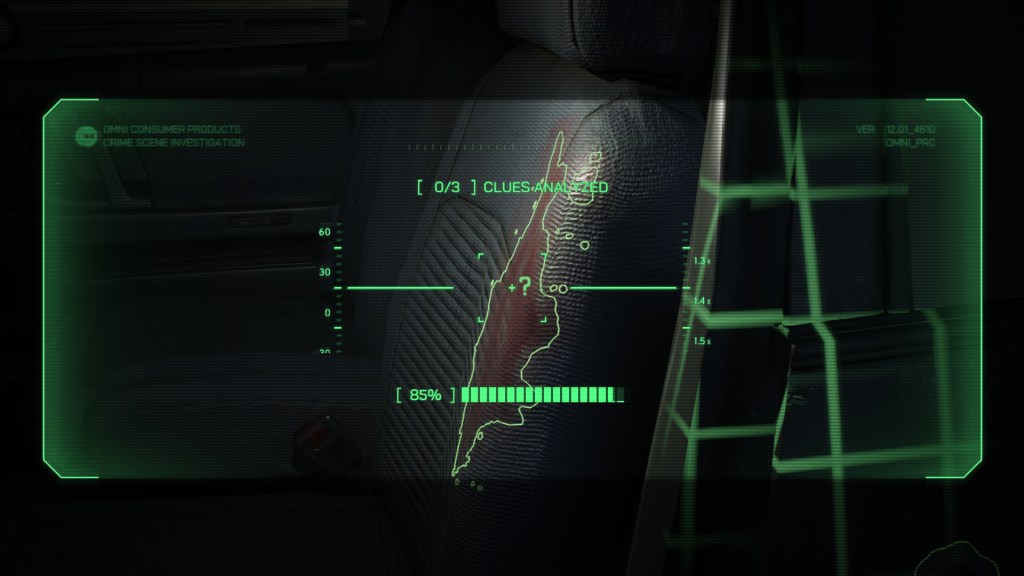
    Now I’ve got this far without discussing the gameplay in-depth, and I’d argue that’s because there’s not a lot of depth – well, at least not enough when tackling all the primary and secondary missions takes almost 20 hours, alternating between corridor shooting galleries and repeat visits to a hub-like Old Detroit that evolves over time. Mechanically, Robocop: Rogue City is another RPG-shooter hybrid like Terminator: Resistance – albeit with less looting, crafting, and upgrading gear and a greater focus on satisfying gunplay based around Robocop’s iconic Auto-9 and his incredible resilience. There are simple dialogue and scanning-based investigations, but while some larger chapters and the Old Detroit hub often reminded me of Eidos Montreal’s Deus Ex games, Robocop is no Adam Jenson. Even if a mission starts off peaceful, it’s guaranteed to end in a gunfight.

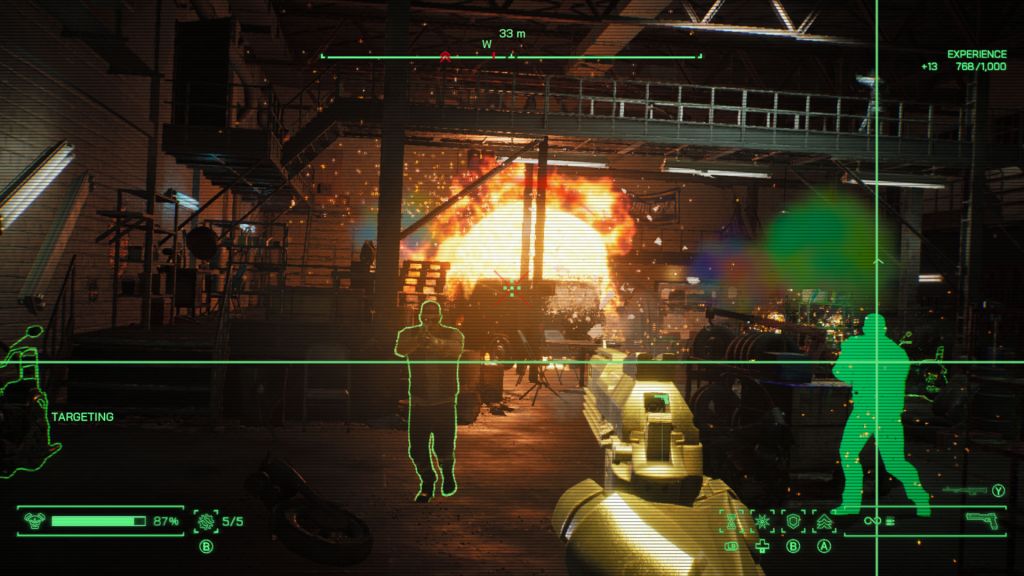
    Thankfully, the shooting is solid, and Robocop: Rogue City nails the sensation of being half-man and half-machine, with the durability and manoeuvrability of a tank. I’d always laugh when yet another gang member or mercenary threatened Robocop and pulled out a handgun or rifle, as only high calibre rounds and explosives pose a significant threat. From the moment Robocop thuds into the Channel 9 building, draws his iconic Auto-9, and the classic theme kicks in, you’ll spend most of your time shooting enemies in the head, in the groin if they’re armoured, or in weak points if they’re robotic. Although you can carry another weapon in reserve, the customisable Auto-9 with unlimited ammo is your workhorse tool and clearly received the most attention.
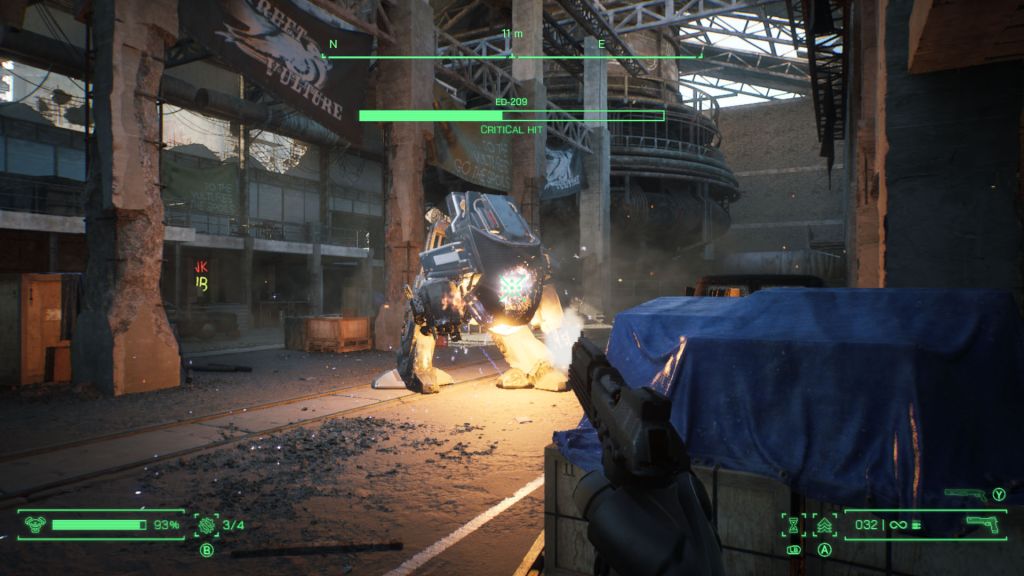
    Firefights are dynamic and evolve to a degree, just not enough to sustain a campaign twice the length of the classic FPS that inspired it. Enemies with more armour, bigger guns, or special abilities are slowly introduced; environments are full of hazards you can throw at enemies, or throw enemies into; most secondary weapons are useful in specific situations; there are offensive and defensive skills you can put points into for incremental buffs and perks; and you can upgrade the Auto-9 using “PCB” omni boards and chips that feels like a less-intuitive variation of what we got in Terminator: Resistance.

    The problem is it takes hours to get impactful perks if you don’t take a min-max approach – think deadly ricochet shots, bullet-deflecting armour, and bursts of slow-motion actually long enough to be useful – while there’s a steady increase in the number of tank-ish enemies that offset their impact and drag out firefights. As I was blasting through an end-game gauntlet, about 18 hours in, I realised I was just going through the same motions on autopilot: pull the left trigger, smile as the CRT effect and targeting outlines appeared, pull the right trigger, watch heads or groins explode. Considered in isolation, most scripted firefights are entertaining, but there are a lot of them, and they all blur together over time.
    Now despite ending on a low note, Teyon still deserves plenty of praise for creating the best Robocop video game available, just as they did for the Terminator IP, and that makes this a must-play for fans of Terminator: Resistance. For those not part of that crowd, Robocop: Rogue City can still be a lot of fun if you’re heavily invested in the IP and can look past inconsistent production values or underdeveloped systems. It somewhat outstays its welcome but provides a unique opportunity to role-play a conflicted Robocop, violently prosecuting justice through a CRT filter, to a fantastic soundtrack. If nothing else, it might also convince you the IP could work in a dedicated narrative-adventure game.

    Pros:

    • Great interactions between Robocop and the secondary cast that revisit themes from the 1987 film
    • Recreated locations from the films and classic Robocop lines delivered by Peter Weller himself
    • A customisable and immensely satisfying Auto-9 that explodes heads, hands, and groins alike
    • A progression system that (eventually) unlocks some overpowered perks

    Cons:

    • Weird campaign pacing and contrivances
    • The emotional impact of many encounters is undermined by crude cutscenes and character models
    • Not enough mechanical depth to sustain a 15-20 hour campaign
    • No permanent CRT filter option and no New Game Plus

    Score: 7/10

    Robocop: Rogue City was reviewed on Xbox Series S|X using a code provided to gameblur by the publisher. It is also available on PC and PS5.
  • Review: ADORE (Nintendo Switch)

    Review: ADORE (Nintendo Switch)

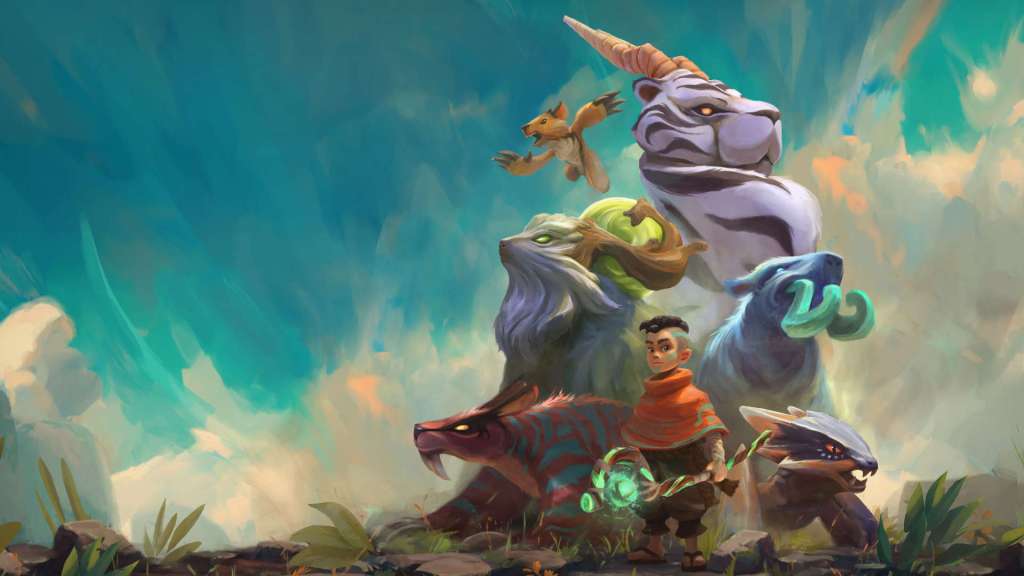
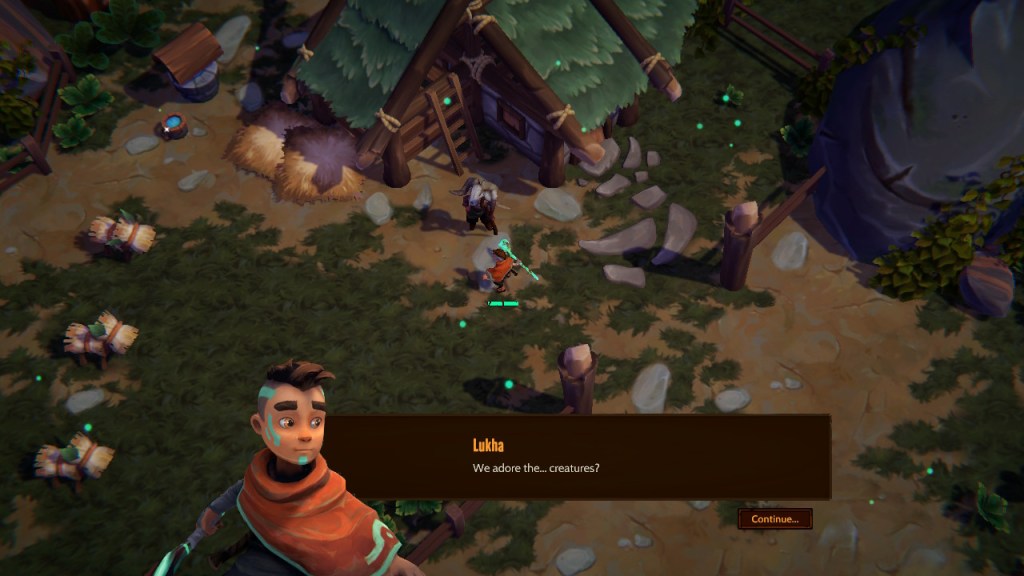
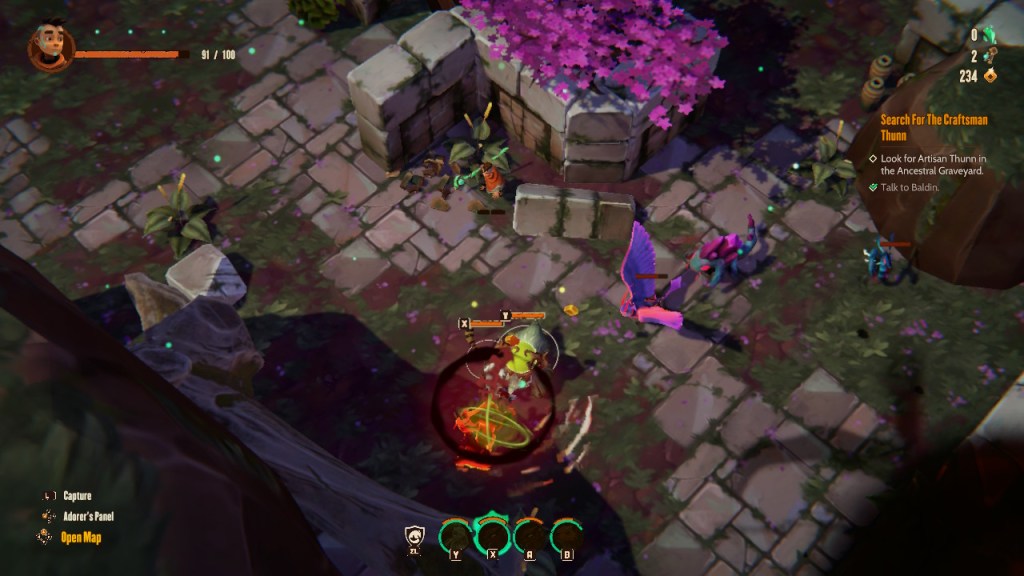
    ADORE is an intriguing “hands-off” action-RPG from Brazilian developer Cadabra Games. The focus is on capturing, upgrading, and synergising creatures that function as your attack abilities – a feat you’ll achieve by grinding procedurally-generated maps for said creatures and a myriad of upgrade resources. With real-time, isometric combat exclusively using summons, it feels novel at first, but progression begins to feel repetitive, unrewarding, and even frustrating at times.

    Starting with the good, ADORE has an interesting premise. Your protagonist has been cohabited by the spirit of “Draknar”, the god of creatures, who was slain by his brother “Ixer”. Ixer’s betrayal has resulted in a curse spreading across the land, corrupting once-peaceful creatures, and leaving it up to Lukha and a hidden village of fellow Adorers to try to set things right.

    ADORE gets off to a slow start but the combat and upgrade mechanics are surprisingly deep. At first, you only need to consider the type of creature – think beast, mystic, nature, or arcane – and their attack patterns.

    Some dash forward for a flurry of quick attacks; some waddle along before dealing a sweeping AoE attack; others have to charge up for a few seconds before dealing a devastating high-damage attack. With up to four creatures assigned to the face buttons (or keys), picking the right attack behaviour is essential, and so too is using the correct damage type to counter armour. You also have a limited, recharging stamina pool to manage, so you can’t just spam all of them at once.

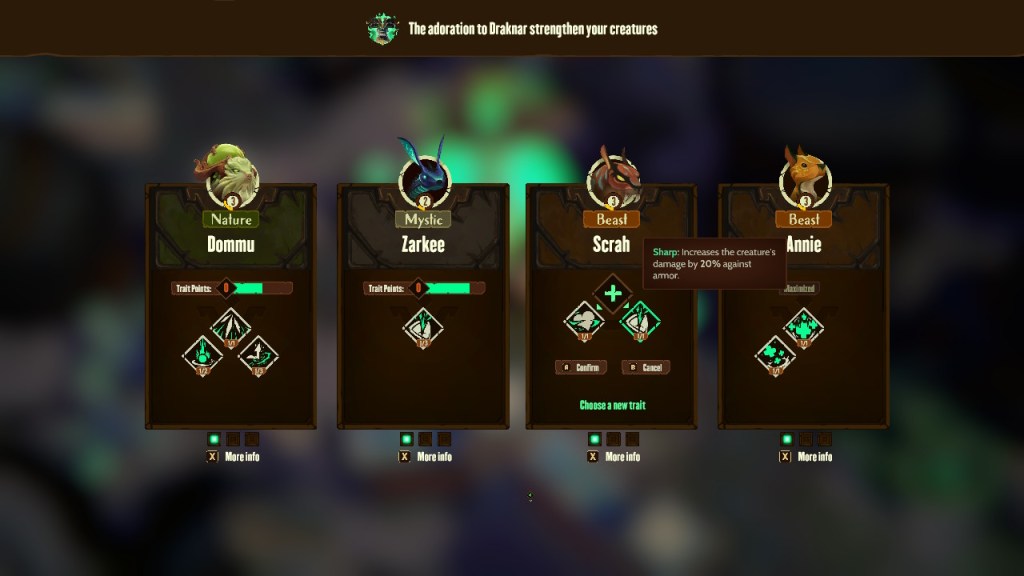
    That’s only the basics, however. Creatures charge up special attacks you can selectively trigger; they can develop synergies with other creature types to unlock new abilities; they can gain experience from Shrines of Draknar to unlock new traits and level existing ones; upgradeable artefacts carried by Lukha add useful triggered abilities; while equipped runes provide him varying levels of passive buffs if you have the points to invest. On top of that, you can collect ingredients and cook meals to heal and buff your team mid-mission.

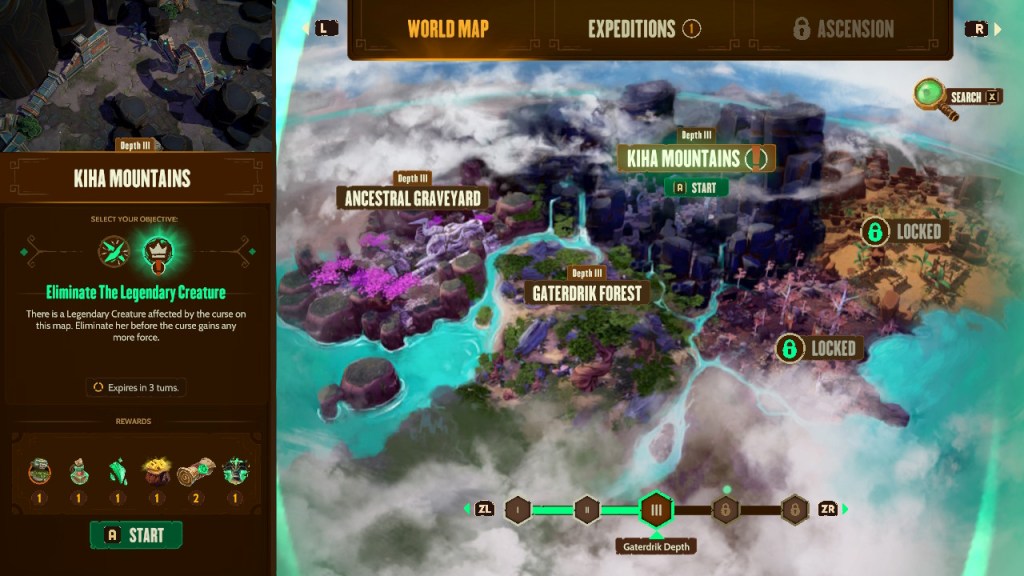
    You set out from a central hub and slowly unlock five regions on a world map. There’s a string of plot-related missions – most of which are just item or creature hunts before a battle against another Adorer or puzzle-like encounter with Ixer – and there’s a constantly refreshing list of optional missions.

    You jump through a portal in the Adorer village into simplistic maps made up of interconnected segments, each with a handful of hostile creatures to capture or defeat, a mini-mission or two –think activating switches or guiding floating orbs while under attack – and, hopefully, a useful item spawn like the “Particles of Gaterdrik” used to capture creatures, cooking or crafting materials, and upgrade shrines.

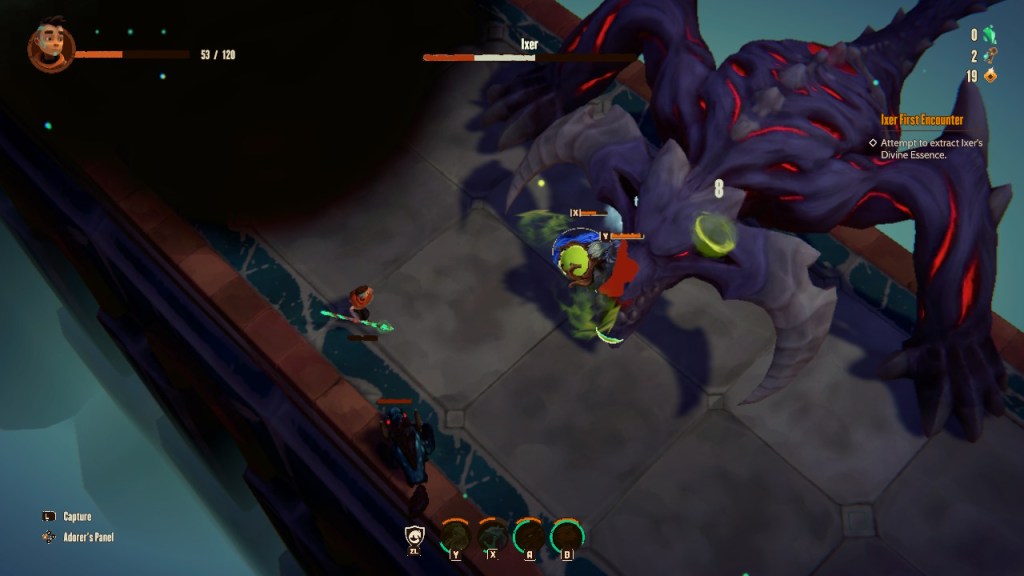
    With 39 creatures to capture, managing their upgrades, synergies, and constantly shuffling them in and out of your active party can be fiddly with a gamepad, but there’s a lot of fun to be had in slowly creating a diverse and powerful menagerie. So too is mastering the deceptively simple-looking isometric combat, which forces Lukha to stay mobile and dodge attacks, summon creatures when you spot a gap or first-strike opportunity, and quickly recall them before enemies can land a counter – potentially knocking them out of action for a mission if their health hits zero.

    Unfortunately, moving the plot forward, capturing new creatures, and obtaining resources for upgrades involves grinding short missions and longer excursions; to the point progression feels repetitive and unrewarding, undermining the overall experience.

    To ADORE’s credit, it always indicates what challenges you might face – like a legendary creature – and what resources are available on any given mission. The problem is how quickly the resource costs escalate. Activating one or two runes, levelling your creatures up two to three times, and enhancing an artefact once; are all manageable in the opening hours but as your roster grows, you’ll be forced to tackle the longest multi-map excursions or multiple short missions to achieve any significant progress.

    As fun and tactical as the combat may be, and as stylish as the character designs and environment first appear, it doesn’t take long before your brain settles into a monotonous routine and both the vibrant backdrops – which already suffer from that “made in Unity” look – blur together.

    Of course, grinding to upgrade your party is hardly a novel idea in video games, but the gameplay loop falls flat here due to a few annoying design choices. The first issue is that you have to manually pick up most rewards and they’re prone to falling out of the playable area or hidden behind chunks of the environment.

    The second issue is how death results in dropping most of your currency and crystal shards – essential for purchasing and upgrading artefacts, or expanding rune slots and rune activation points. Both simply add a degree of frustration to an already grindy progression system.

    Now ADORE should entertain those that love collecting and upgrading creatures for battles, with no shortage of upgrade mechanics to engage with and satisfyingly tactical real-time combat. It’s the mission and progression structure that leaves me conflicted. On one hand, it’s a smart way to get more mileage out of limited assets, gives you plenty of time to engage with the mechanics, and its a good fit for short sessions on the Switch or Steam Deck. On the other hand, the longer you play, the less rewarding the progression system feels, and the more formulaic and repetitive the gameplay loop feels.

    Pros:

    • A novel, hands-off, summons-based combat system
    • Plenty of mechanical depth when it comes to upgrading and synergising your party
    • Perfect for shorter sessions on the Switch or Steam Deck

    Cons:

    • The progression system feels increasingly unrewarding and repetitive
    • The rogue-like punishment for death adds nothing but frustration

    Score: 7/10

    ADORE was reviewed on Nintendo Switch using a code provided to gameblur by the publisher. It is also available on PC, Xbox One/Series S|X, and PlayStation 4/5.

  • Review: Return to Grace (PC)

    Review: Return to Grace (PC)

    Playing Return to Grace had me thinking back to when so-called “walking simulators” were still a divisive topic. Video games like Dear Esther, Gone Home, or Everybody’s Gone to the Rapture – in which the narrative, characters, atmosphere, and audiovisual experience take precedence over mechanical complexity.

    On one hand, it’s a design that benefits Return to Grace, making for an immersive experience focused on the narrative pay-off. On the other, I was reminded of how fine a line this genre walks between compelling and boring if the pacing and length are even slightly off the mark.

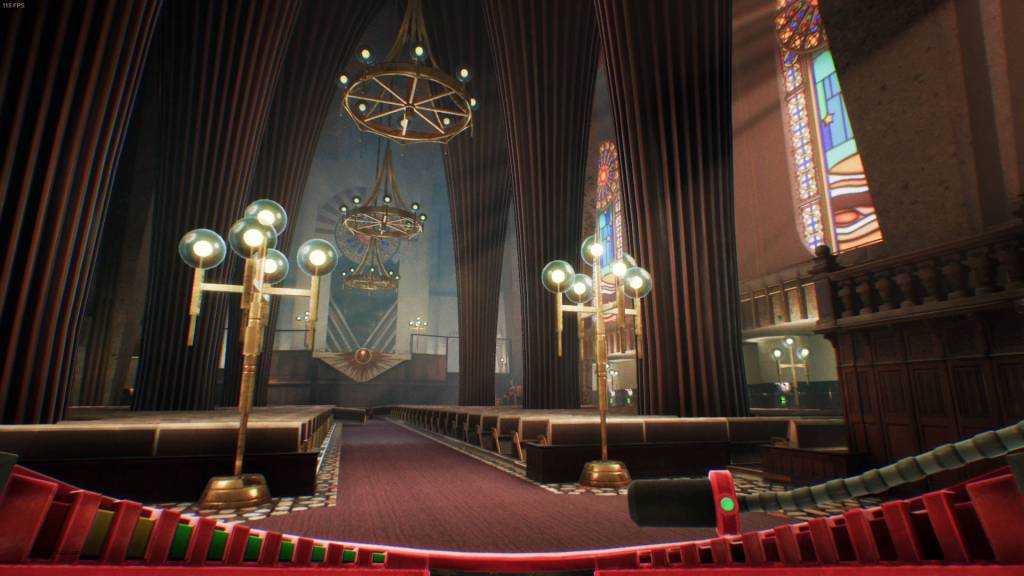
    Return to Grace is a first-person narrative adventure that places you in the environmental suit of Adie Ito – an archaeologist exploring a frozen and stormy Ganymede in 3820 AD, searching for an ancient AI “Grace”, held in god-like reverence.

    She was an AI that led humanity into a golden age of peace and expansion across the solar system before her disappearance, a thousand years before, triggered a new dark age with many technological innovations and record keeping lost.

    This is a genre that thrives on strong storytelling and Return to Grace, despite retreading some familiar ideas, offers up an intriguing setting, quirky cast, a briskly paced mystery to unravel, and plenty of optional environmental storytelling and world-building.

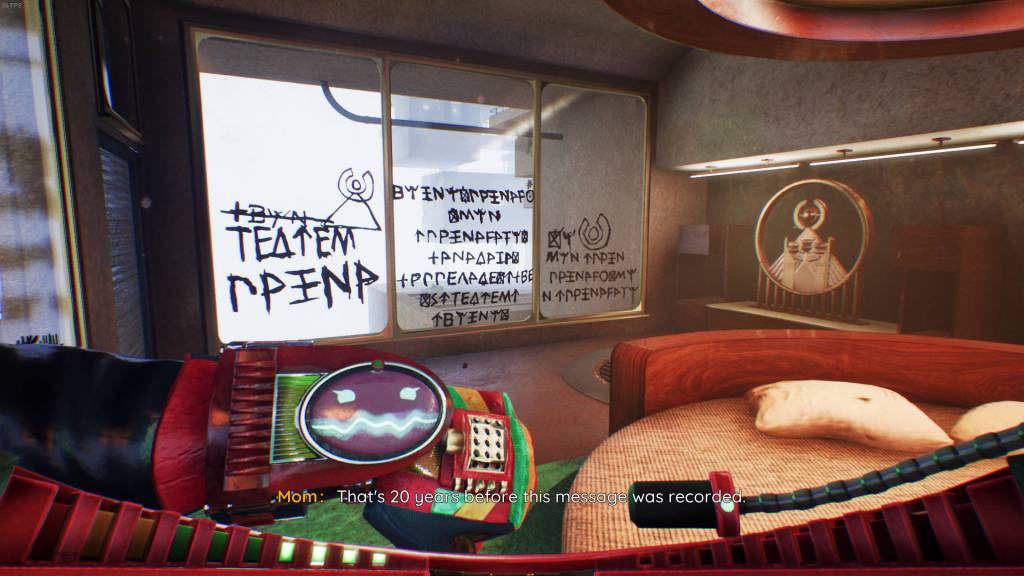
    Times have clearly changed since Grace was the caretaker of humanity. Travel throughout the solar system is no longer commonplace as Adie has taken a risky, 300-day journey to get to Ganymede. It’s a one-way trip but she claims everything of value to her on Earth is gone. Record keeping from a thousand years prior is so limited she had to rely on centuries of oral histories to pinpoint the location.

    Even before I appreciated the divergent nature of the narrative, I was already sold on the setting, and I wanted to discover more about its take on the future of humanity.

    Thankfully, that “future history” element is integral to the present investigation-based story; it comes up when Adie comments on the technology she witnesses in the spire; and it often features in her conversations with an entertaining selection of AI personalities she discovers on her journey.

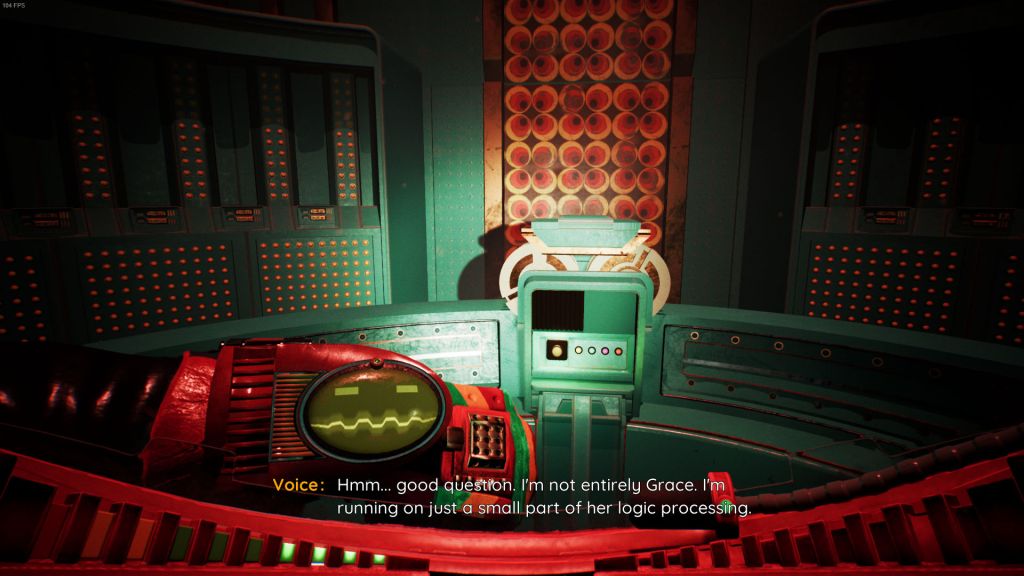
    Shortly after arrival, she awakens “Logic” who – alongside “Control” and “Empathy” – form core components of Grace’s identity. The problem is they’re old back-ups that have little knowledge of what led to Grace’s shutdown, what happened to the people that maintained the spire, or how her interactions with humanity evolved over time.

    What they do have is unique personalities, system permissions, and thoughts on how Adie should proceed. As she pushes on, they create amusing hybrid personalities – for whom Adie picks some choice names – that help her circumvent new obstacles.

    It’s not obvious at first but Return to Grace‘s most significant narrative mechanic is how it tracks your decisions. The consequences can feel a little rushed given the 3–4-hour runtime, but there are a few key moments where Adie can push forward instead of exploring, take risky shortcuts instead of the safer path, or allow the AI to perform certain tasks for her. These decisions feed into evolving AI responses and (if we exclude one obviously bad ending) lead to minor ending variations that felt appropriate for my choices.

    Return to Grace‘s biggest issue – and this is one shared by all games in this genre – is what you’re doing mechanically is rarely that engaging.

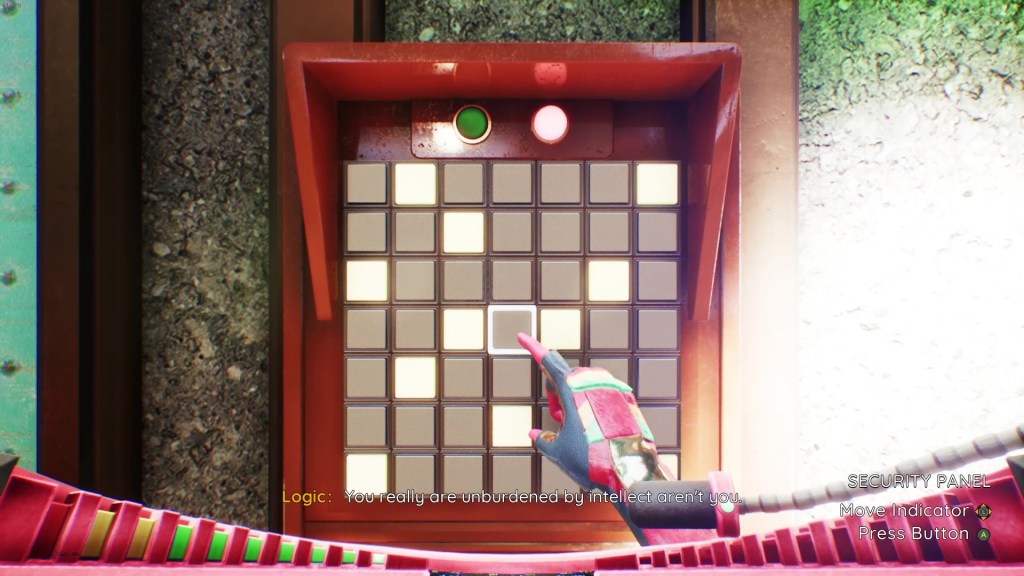
    You explore and move at whatever pace the game dictates; you sit around listening to lengthy conversations that block your ability to interact with anything until they’re finished; you push or mash a single button to trigger scripted traversal moves or optional commentary; and sometimes you engage in pattern- or memory-based puzzles that require little mental effort. Crossing balance beams, briefly controlling a crane, and melting ice with a flame-thrower is about as wild as it gets.

    Thankfully, Return to Grace’s brisk runtime – coupled with some choice comments from the AI if you do get stuck – make this less of an issue and the compelling world had me hacking every door and audio-log I could find for more details. That said, it didn’t make the process of trudging around larger areas, repeating door code inputs, and twirling Adie’s glove to line up sync points a dozen times feel any less repetitive or tedious.

    Return to Grace’s brevity and strong storytelling are its saving grace. It kept me hooked over two evening sessions and I only started ruminating on the weaker elements just before the credits rolled.

    I wanted to find out more about the past events by sifting through the deserted spire; I wanted to hear every one of Adie’s comments on the current state of humanity; I was fascinated by the AI personalities and their attempt to dissect her motivations; and there were moments of doubt that had me wondering if Adie’s quest was misguided.

    If you’re in the mood for a brisk, immersive, thought-provoking adventure with a lightly divergent narrative, and you can accept the somewhat limited and repetitive gameplay loop, Return to Grace is a great addition to the genre.

    Pros:

    • An intriguing setting and briskly-paced mystery to unravel
    • Thought-provoking conversations and ending variations based on your actions
    • A likeable cast with quality voice acting
    • Atmospheric environments and soundtrack

    Cons:

    • An over-reliance on a handful of simple, repeated mechanics
    • The short length makes some AI relationships feel rushed

    Score: 8/10

    Return to Grace was reviewed on PC using a code provided to gameblur by the publisher. It is also available on Xbox Series S|X and PS5.

  • Review: The Riftbreaker (PC and Xbox Series)

    Review: The Riftbreaker (PC and Xbox Series)

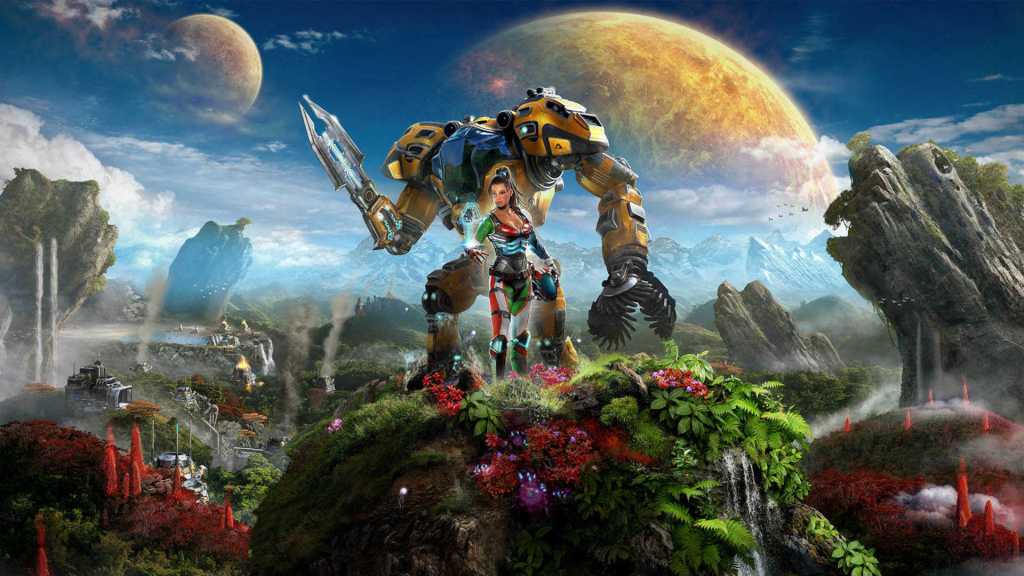
    At first glance, you might think The Riftbreaker – developed and published by EXOR Studios – is a simple hybrid of twin-stick shooter and base-building/tower-defence game. To an extent, that’s true, and a skilled player could always draw aggro away from their base and limit the need for extensive defensive structures. However, The Riftbreaker also packs unexpected depth, with hundreds of research options, dozens of building and player upgrades, and the ever-present need to expand and protect resource-generating operations. The Riftbreaker provides plenty of entertainment in short-bursts but can also feel unforgiving and tedious when you mess up and need to recover.

    Story

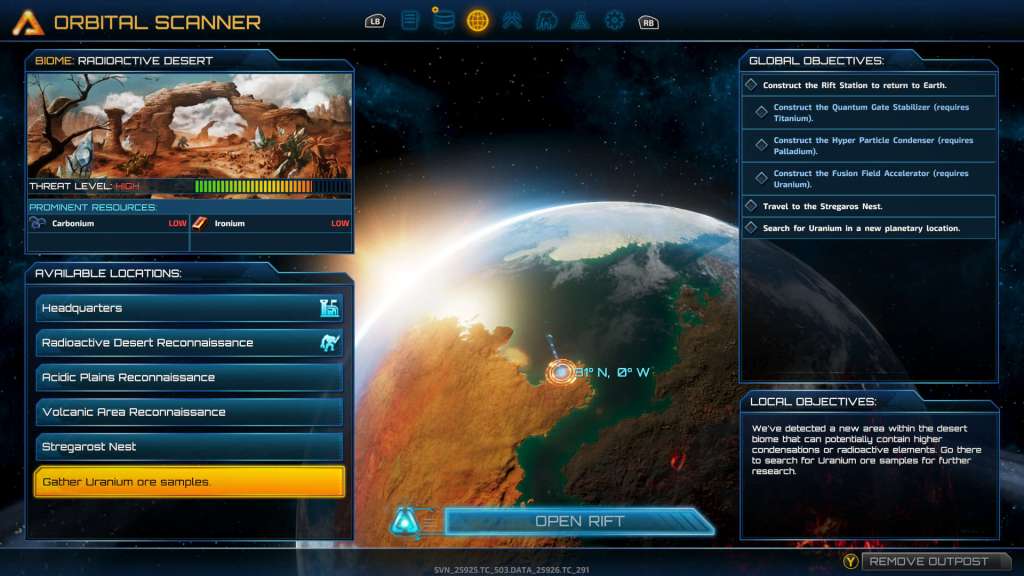
    The narrative, outside of a flashy opening cutscene, is minimal and stretched thinly over hours of playtime. You take control of captain Ashley Nowak, a “Riftbreaker” – think scientist/commando hybrid – in an AI-powered mecha-Suit called “Mr. Riggs” as they emerge from a one-way jump to the lush world of Galatea 37. Earth is barely liveable, and humans are rift-jumping to distant planets to find resources and establish new colonies. She’s tasked with securing a foothold and building a massive “Rift Station” that will allow two-way travel between Earth and Galatea 37. Of course, things are never easy, and the native species are not happy with the intrusion. Aside from infrequent banter between Ashley and Mr. Riggs, which fleshes out Ashley’s ideologies and past a little more, this overarching objective and the need for rare resources to construct the Rift Station is all the context you’ll get to push forward.

    Gameplay

    Controlling Ashley in her mecha-suit is a breeze, with a familiar twin-stick movement and aiming setup. This makes early exploration an enjoyable foray into the unknown, but you’ll eventually have to decide on the location of your HQ and engage with the base-building, resource-generation, and horde-defence mechanics. The world is filled with finite resource pockets – some immediately apparent, several uncovered through research and scanning – and the continuous generation of these resources is essential to making progress. Carbonium is your basic building material used to craft new structures and gear. Ironium is needed for defensive structures and, most importantly, ammunition production. Cobalt, Palladium, Titanium, and Uranium are rare resources needed for advanced structures, crafting designs, and – in huge amounts – your ultimate goal, the Rift Station. Liquid resources, like water and magma, are essential to the functioning of advanced structures, which can, in turn, produce artificial resources, like coolant and plasma, for even more advanced structures.

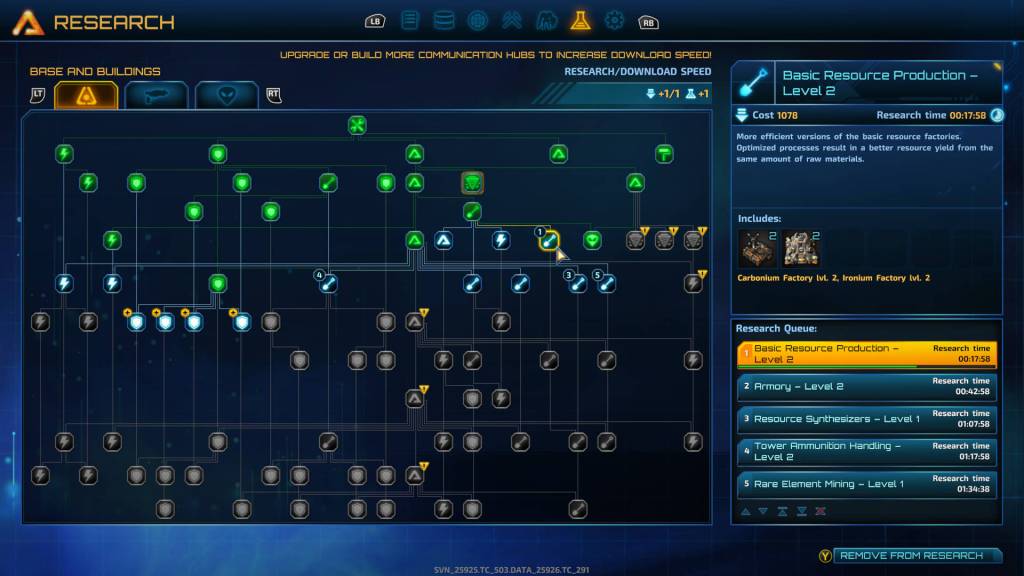
    All the basic, advanced, and defensive structures you can build require considerable power, which can be produced using solar panels and wind turbines (susceptible to environmental conditions), Carbonium powerplants, biomass generators, geothermal power, and even nuclear reactors. Of course, the ability to build advanced base structures, upgrade them for greater efficiency, or craft and equip the multitude of weapon and mech-suit upgrades, requires researching your way through three massive, multi-tier technology trees. Research speed becomes a major obstacle to progress and can feel painfully slow at times – unless you can support multiple power-guzzling Communication Hubs. Naturally, all these structures require space, and making more space means your walls and defensive network is spread thinner (an HQ location with some natural barriers is a must). You’ll quickly discover the need to run power nodes to distant resource-producing outposts, which are then more vulnerable to horde attacks. You could surround them with walls and powerful, specialised turrets but that means more power, AI cores, and resource-hungry ammunition factories.

    If this is all starting to sound overwhelming, it can be. Although not as granular or deep as games like Factorio or Satisfactory, I can’t help but feel The Riftbreaker has been untruthful in its marketing campaign. Resource production and beneficiation, coupled with power generation, underpin everything you do. As a result, it’s possible to get it very wrong and find yourself struggling to recover. As an example, an early push for automated Repair Towers seemed like a great idea, until I realised they were chewing through my resources faster than I could replace destroyed structures and defences, forcing me to run about manually disabling them. This frequent need to repair and upgrade structures also highlighted the variable gamepad support. Exploration, combat, and menu navigation are solid with a gamepad, but the precision placement of structures or trying to mass select them for upgrades is problematic (and nigh-impossible under pressure). The base building feels more intuitive using a mouse and keyboard, and this is an option for console players if they have the hardware.

    Having hopefully conveyed the complexity of resource production, construction, and research, you’ll be relieved to know exploration and twin-stick combat is far simpler and instantly gratifying. Movement and shooting feel great, making it easy to kite hordes, dash out the way of larger creatures, and thin the alien ranks before they break upon your walls. The mecha-suit can handle three swappable weapons per arm – ranging from swords to chain guns, flamethrowers to rocket launchers – which can be upgraded to higher tiers or modded for extra elemental damage. There are passive equipment slots and active abilities to enhance your combat skills and survivability, all of which can be crafted with the right research and sufficient resources. If you’re after a more hands-on approach to base defence, you can prioritise the weapon technology tree and create a walking tank. Many of the upgrades in the alien technology tree become essential once you’ve constructed the Orbital Scanner and begin away-missions to secure rare resources in hostile environments (think heat, radiation, volcanism, and corrosive clouds). Given the ceaseless demands of your primary base, these away-missions to explore and establish distant outposts are paradoxically stressful and relaxing.

    When the environment isn’t trying to kill you – and there is an inordinate number of natural phenomena on Galatea 37, from calm moon phases to damaging hailstorms – it’s the myriad of alien species. These range from basic Zerg-style cannon fodder to lumbering organic artillery and – sticking with the StarCraft analogies – seemingly advanced, cloaked and bladed warriors. Each environment – lush jungle, scorched desert, icy tundra, or volcanic waste – has several unique lifeforms (not all hostile) but they fill similar roles when it comes to assaulting you or your base. Despite Ashley’s apparent desire to study and conserve Galatea 37’s original environment, frequent hordes and respawning alien clusters ensure she butchers hundreds of them on any given day. Combat is less stressful than resource production and base management to be sure, but it’s frequent enough that you’re rarely able to explore for more than a minute without shooting something. On the upside, it’s a great way to hoover up biomass, uncover hidden resources using a scanner, find new species for the alien technology tree, and several unique power or gear designs.

    Presentation

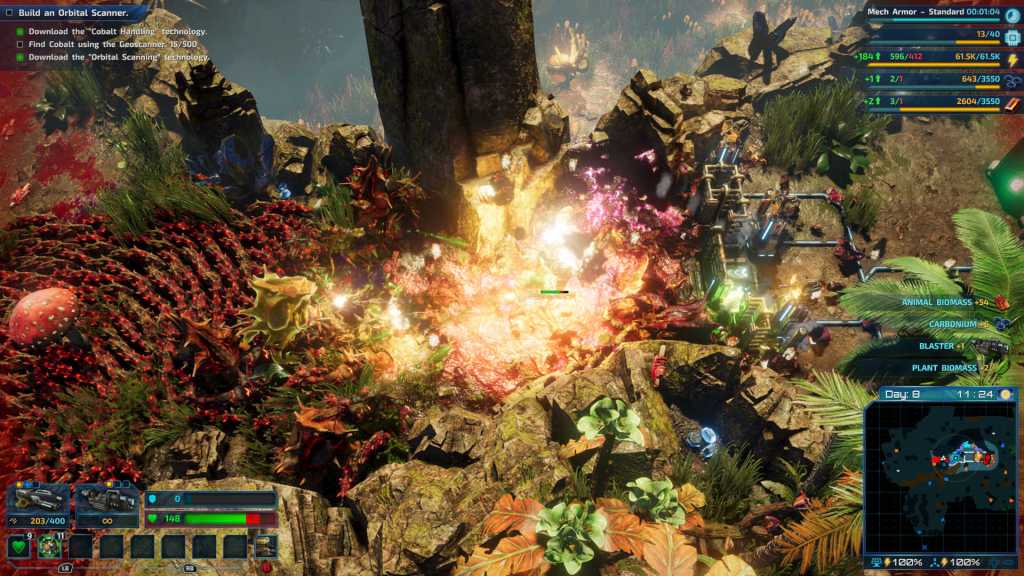
    When it comes to the presentation, The Riftbreaker looks and sound great for most of the experience. The world feels ridiculously detailed, vibrant, and packed with moving and reactive parts – think foliage, liquid pools, and destructible terrain. Firefights against large hordes in forests are a particular highlight, with projectiles tearing through vegetation, while explosions send shockwaves through trees and grass. That said, it can be easy to lose track of Ashley’s mecha-suit in busier scenes. The Riftbreaker can buckle during massive horde attacks but proved scalable on PC and even performed well on the budget Xbox Series S, about 95% of the time. The audio is also a highlight, with loud and impactful combat and a catchy soundtrack that starts serenely before escalating based on nearby threats. With only two voiced characters, Ashely and Mr. Riggs have plenty of exchanges, often cheesy and overwrought. Thankfully, the voice-acting is not too bad and you don’t hear it all that often.

    Notable issues

    A lot is going on in The Riftbreaker at any given moment and you’re rarely given any downtime (even after delving into the heavily customisable difficulty settings). This ensures the world of Galatea 37 is less a mysterious space to explore, and more of a pretty canvas on which to build and murder things. On one hand, the procedural generation ensures each new location – be that a permanent outpost or once-off scouting mission – can throw up new challenges and sights. On the other hand, I wish there was a little more structure to the narrative and lore, rather than needing to read hundreds of journal entries. Maybe some handcrafted scenarios to test your construction and combat skills, as in the They Are Billions campaign. Other irritations include the aforementioned gamepad support and the need to manually upgrade structures once you’ve researched new tiers (a thousand wall segments being a prime example).

    Conclusions

    Considering each mechanic in isolation, The Riftbreaker is packed with interesting systems but the learning curve, balance, and pacing often feel off. It’s a game in which you’re constantly hitting roadblocks – some of which present an engaging challenge, while others simply require you to sit around until you have enough resources or research completes. It’s possible to find yourself desperately reconfiguring your base to balance power supply, resource production, and resource consumption, while constantly stopping to fend off hordes and likely racking up more damages. There is an audience for this sort of challenge and, despite pointing out these challenges, I could not stop playing. However, I think there’s an even larger audience who’ll pick up The Riftbreaker looking for a twin-stick shooter with streamlined base-building elements, only to find themselves bogged down in base micromanagement and making little progress. That said, The Riftbreaker can be a ton of stressful fun – just so long as you know what you’re getting into.

    Pros:

    • Fluid and responsive twin-stick shooting
    • Tons of research, buildings, gear, and upgrades to unlock
    • A lengthy, involved campaign across a procedurally-generated world
    • Visually stunning with decent performance on PC and Xbox Series consoles

    Cons:

    • Variable gamepad support
    • Waiting around for research to complete
    • Exploration = incessant combat

    Score: 7/10

    A review code for The Riftbreaker (PC) was provided to gameblur by the Publisher. The Xbox Series S/X version was accessed using an Xbox Game Pass subscription.

  • Review: Frostpunk – Complete Edition (Xbox Series)

    Review: Frostpunk – Complete Edition (Xbox Series)

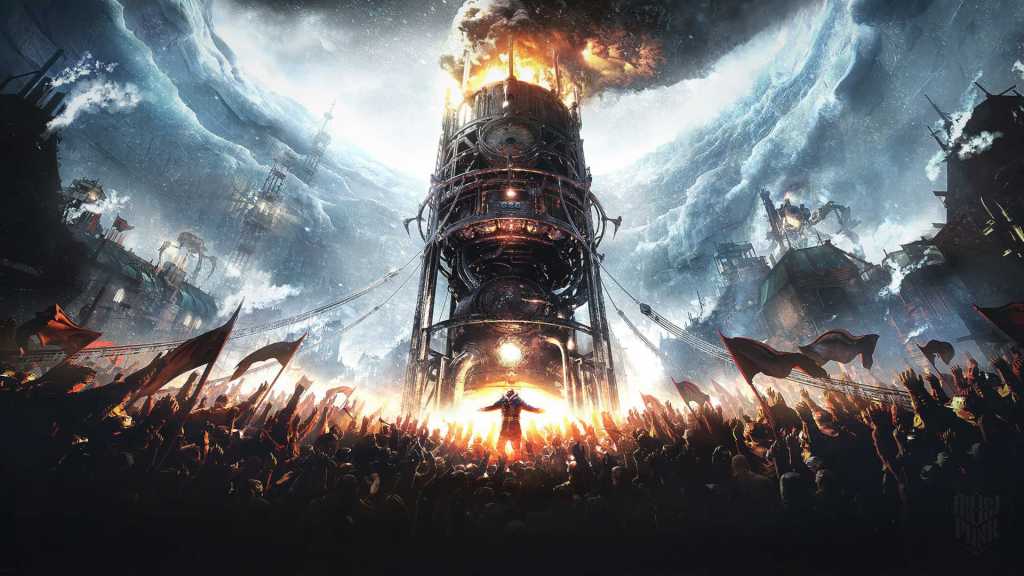
    At long last, console gamers can get their hands on the “Complete Edition” of Frostpunk – an engaging, mechanically deep, and often stress-inducing steampunk city-builder with a focus on surviving the elements. Make no mistake, the original console release of Frostpunk is still a great game, but the expansions introduce some much-needed variety to the basic formula. These expansions change how you think about the geometry of your city, introduce new victory conditions, and shift the focus from self-reliance to trading with other settlements.

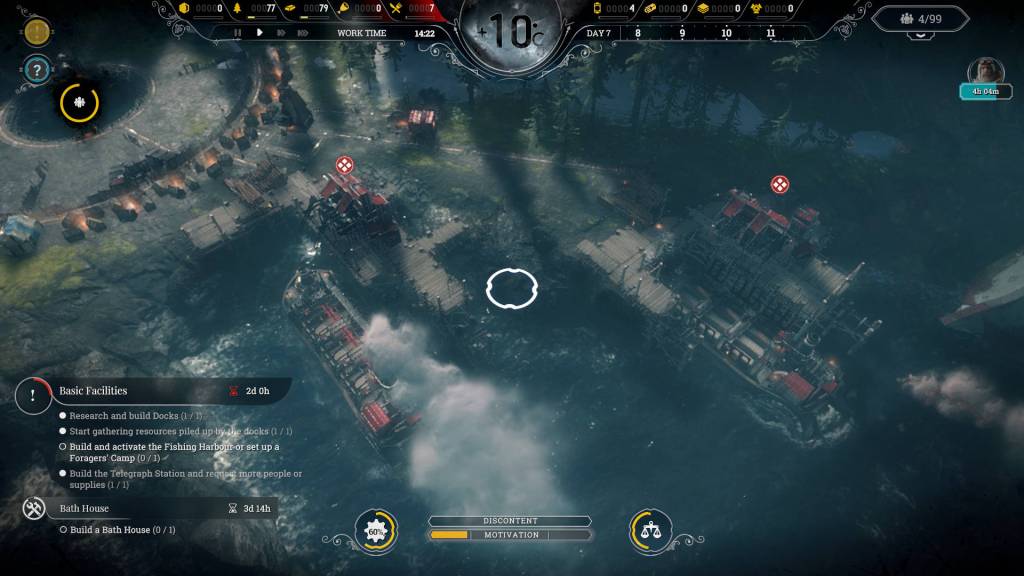
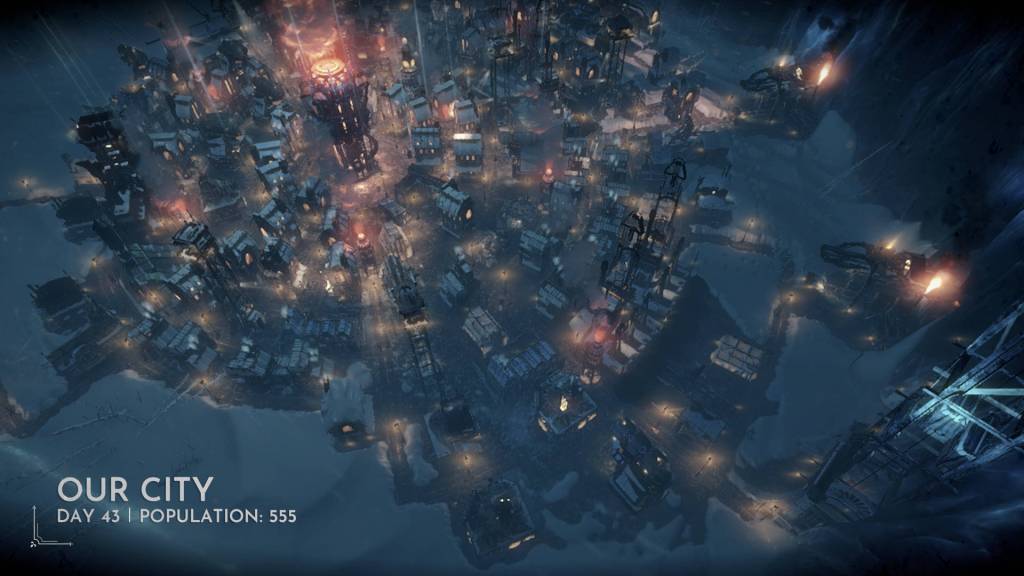
    Despite only offering three introductory cutscenes (one for each of the major story scenarios), Frostpunk feels far more narrative-driven than many games in the genre. Each scenario is, in essence, an opportunity to craft your own story. There are technologies to research, laws to pass, encounters in the surrounding “Frostlands”, and plenty of player-choice in how you’ll deal with the demands of your people, refugees, and other settlements. This all comes together at the end of a scenario – if you survive – with a montage that provides a timelapse of your developing city while recounting your key decisions.

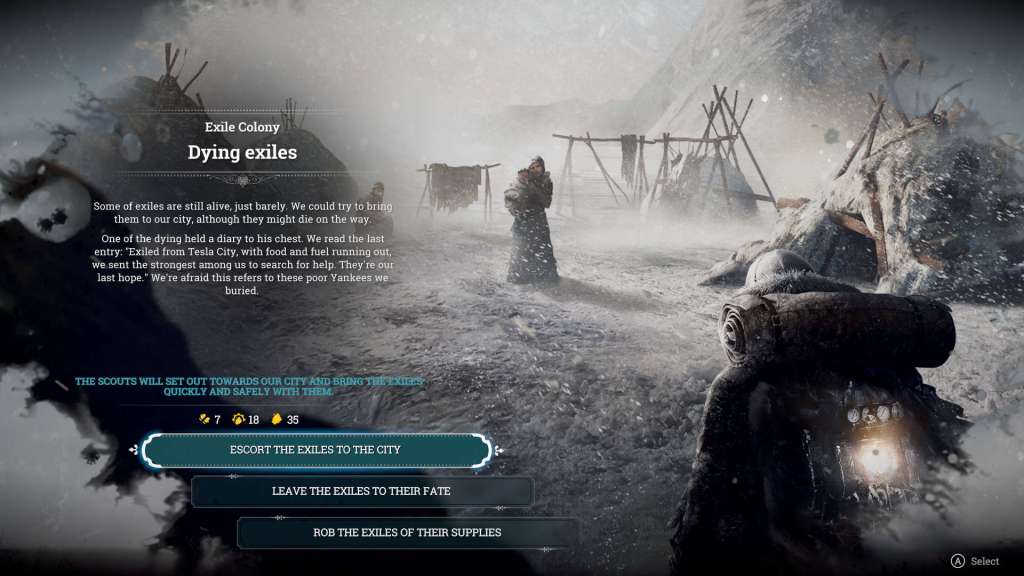
    Did you establish faith to drive your people forward in the face of hardships or to crush dissent? Did you care for the critically ill and provide burials for the dead, or did you triage mercilessly and eat the corpses when the great storm arrived? Did you care for and educate children, or did you put them to work collecting coal in freezing temperatures? Although all choices offer a mechanically advantageous outcome and shift the numbers around, the narrative context adds weight to your decisions.

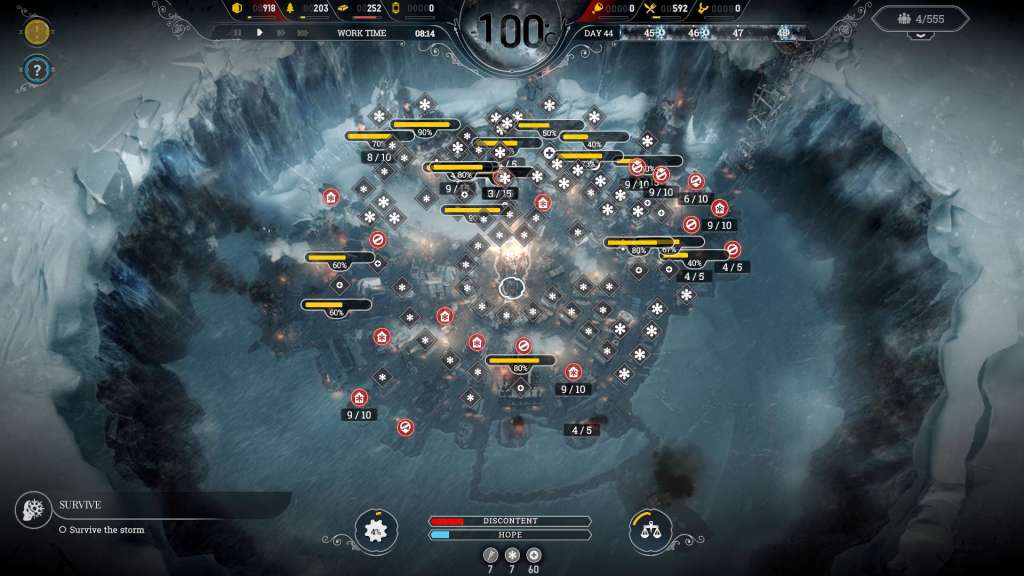
    Of course, in any survival game, the complexity of the underlying systems is what dictates its success or failure. The narrative context is a nice touch, but Frostpunk would hold up just fine without them thanks to the myriad of systems you’ll need to consider and balance if you want your city to survive. Heat, food, and shelter are your primary concern. If you can get the basic layout of your city and resource-gathering operations in order quickly, a contented populace and victory are inevitable. Naturally, nothing in the frozen north is that easy.

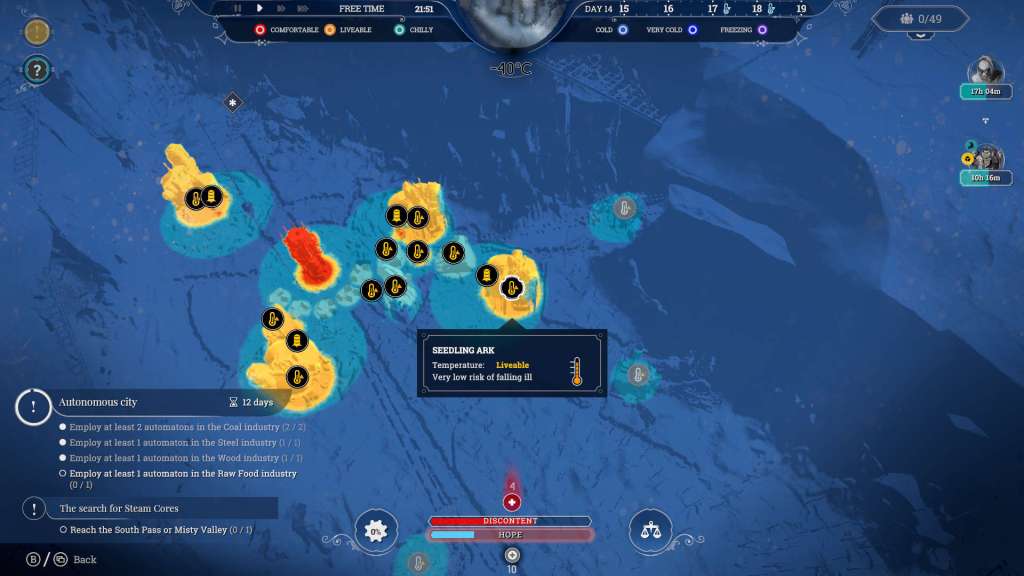
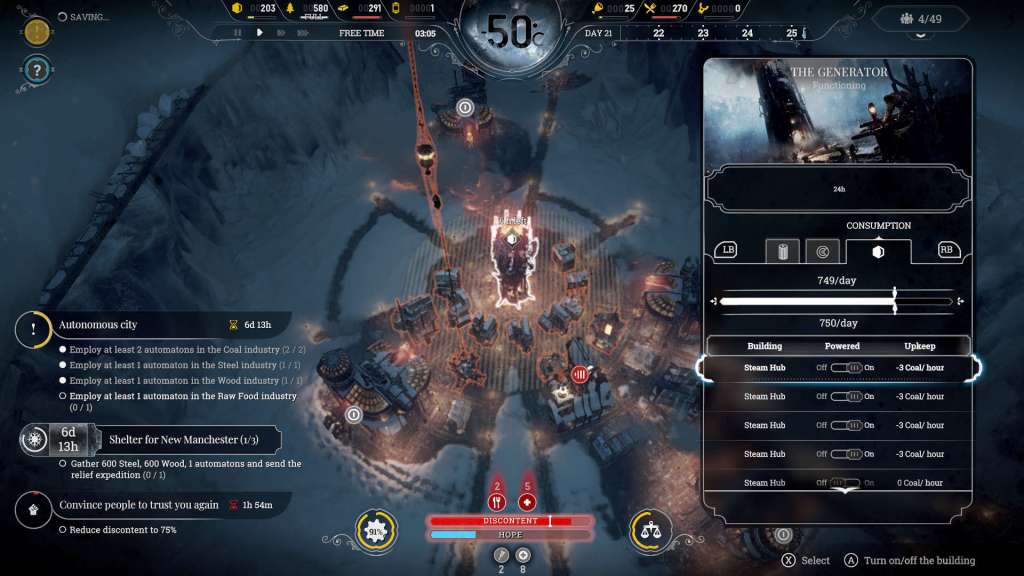
    In most scenarios, life revolves around your coal-consuming generator and the warmth it provides (there’s no nuclear power in this alternate history). An optimal city expands radially, ensuring subsequent upgrades to the generator keep an ever-larger area warm. However, the more efficient your generator, the more coal you burn through. The more coal you need, the more coal-producing industries you need. The more industries you have, the more citizens you need to employ. The more citizens you have, the more housing, food, and medical care you need to provide.

    A new player is going to quickly find themselves overwhelmed, even if they set all the customisable difficulty toggles to easy. The urge to expand, recruit survivors, and generate more resources is alluring, but your citizens have numerous needs that need sustaining. Fail to keep them hopeful, or let discontent swell, and you’ll find yourself exiled to the Frostlands. On the other hand, researching and constructing expensive automatons gives you a 24-hour workforce that never gets hungry, never falls ill in cold temperatures, and doesn’t object to your ruling style. Both are viable paths to victory, but both require careful allocations of resources.

    Of course, building up your city is only half the story. If you’ve researched the right technology, most starting locations offer an infinite source of coal, wood, and steel. However, it’s rarely enough to sustain a large population and decreasing temperatures (which plummet to -100° Celsius during storms), while simultaneously dealing with frequent demands to remedy housing, heating, and medical issues. There are two additional ways to keep your population hopeful and reduce discontent: passing new laws and exploring the Frostlands with scouts.

    The Book of Laws typically offers two variants of any provided law, one callous but effective, the other compassionate with fringe benefits. There are basic “Adaptation” laws, which include choosing between burials or corpse storage (for later “use”), establishing care homes or allowing radical surgical treatments, and putting children to work or educating them. As you advance, you unlock “Purpose” laws – allowing you to chose between Order and Faith. Naturally, the end-game for both these branches of law is authoritarianism, but Order focuses on security and suppressing discontent, whereas Faith focuses on maintaining the hopefulness of your population.

    Sending scouts into the Frostlands is another way to influence your city, bringing people hopeful (or depressing) news and rare “steam cores” required for efficient high-tier buildings. The system is simple and requires little micromanagement, but distances and travel time in the Frostlands are always an issue. Nearby locations can reveal survivors, supplies, or the fate of other generator cities (and almost always reveal two or more new locations to visit). You’ll want to keep your scout teams active all the time, as their discoveries – especially resource caches – can provide a means to get out of trouble fast.

    Ultimately, Frostpunk is a game about learning the ropes, one step at a time. Failure – and you will fail – is an opportunity to take what you’ve learned, apply it to your next attempt, get something else wrong, learn from that experience, and eventually master each mechanic on your way to completing a scenario. You can save at any time but Frostpunk is a game in which failures can be days in the making. Thankfully, scenarios – aside from the “endless” ones – are only a few hours long, so you’ll rarely feel frustrated at starting anew.

    Like many survival games, Frostpunk suffers from gameplay becoming rote once you’ve established an optimised build order and this is why the console Complete Edition is a great choice (or the expansion pass if you’ve already got the base game). “The Rifts” expansion – along with several of the “endless” scenarios – spices up the city-building element by forcing you to expand to adjacent land using bridges. The perfectly circular city structure and comforting glow of the generator are no longer guaranteed.

    “The Last Autumn”, which serves as a prequel during the early stages of global cooling, tasks you with constructing a generator. Temperatures are mild, illness rare, and resources abundant, so maintaining the motivation of your cynical workforce and hitting construction deadlines becomes the new challenge. To manage this feat, you need to find a careful balance of new Administration and Labour laws. “On The Edge” serves as a sequel to events in the main campaign, tasking you with the management of a new outpost – sans generator – entirely dependent on “New London” for food supplies and establishing laws. However, New London quickly becomes antagonistic with their demands, and you’re given the choice to scout the Frostlands and establish supply lines with other settlements or try appeasing their unfair demands.

    One slight disappointment is that Frostpunk is yet to receive an official next-gen upgrade. Make no mistake, it can still look great and feel incredibly atmospheric as you watch your torch-wielding workers wade through the snow while howling winds whip back and forth. However, the image looks distinctly soft on a large TV and has plenty of aliasing in motion. Dense ambient city sounds and grumbling workers add to the atmosphere, ensuring your city feels alive, rather than just a visualised spreadsheet. That said, when temperatures drop and troubles multiply, it can be a pain identifying individual structures in a large city and the interface becomes increasingly cluttered. The game does have a pause-time function so you can tinker at your leisure, but it’s times like these I’d found myself missing the mouse and keyboard. Frostpunk Game of the Year Edition is available on Steam, and this is quite an enticing package if you’re more PC gaming inclined.

    Minor visual and control gripes aside, the Frostpunk Complete Edition on console is still a fantastic purchase for fans of survival games or city-builders that demand a lot of planning and micromanagement. It is, however, an incredibly stressful game and might not be for everyone. If you’ve got the patience to carefully think through every move and plan well into the future, and the temperament to make tough decisions that will keep (most) of your citizens alive, there are few survival-focused city-builder experiences like it.

    Pros:

    • A strong, emergent narrative component that’s uncommon in the genre
    • Challenging but fair survival mechanics that often requires making hard decisions
    • A stiff learning curve but individual scenarios are short enough to encourage multiple runs
    • The expansions add plenty of content and much-needed variety to the basic formula

    Cons:

    • Possibly too stressful for some
    • Picking out individual buildings can feel finicky on a gamepad

    Score: 8/10

    Frostpunk – Complete Edition was reviewed on Xbox Series using a provided to gameblur by the publisher. It is also available on PC and PS5.
  • Review: Song of Horror (PS4)

    Review: Song of Horror (PS4)

    Travel with me, if you will, back to the 1990’s when survival horror titles were all the rage. When pre-rendered backdrops presented an immense amount of world depth and tank controls were just another challenge to be overcome. To the days when Resident Evil and all its sundry impersonators were the juggernauts of our nightmares and thrilled us late into the night.
    Time has moved on since then, with the likes of Resident Evil reinventing itself into a brand new Juggernaut, yet the thrill of those games remains ever vigilant in our nostalgic memories, providing moments and scenarios that we still talk about enthusiastically today. Even if replaying them in the light of modern amenities removes some of their sheen and lets us realise that some things were best left in the afterglow of our memories. Not that we would ever really admit that.

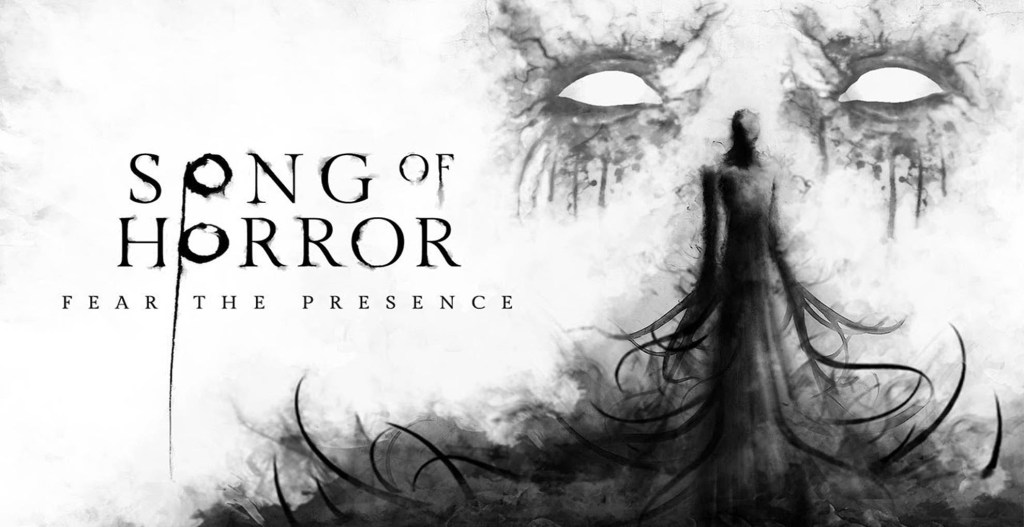
    If this longing for the gloried past of survival horror games still has a hold on you, then look no further than Song of Horror for this retro-inspired title has all the goods. Developer Protocol Games brings back the heyday of 90’s survival horror games, warts and all.

    Set during 1998, Song of Horror begins with the disappearance of author Sebastian Husher. Sent by his publisher to find him, Daniel Noyer soon disappears as well and it’s up to a varied group of individuals to find both him and what happened to Husher and how it all seems to tie into a missing music box. Before long our protagonists find themselves haunted by a malignant supernatural presence. Spanning five episodes, it’s up to you to find the origin of the curse and hopefully, some way to nullify it, before you’re dragged screaming into the darkness.

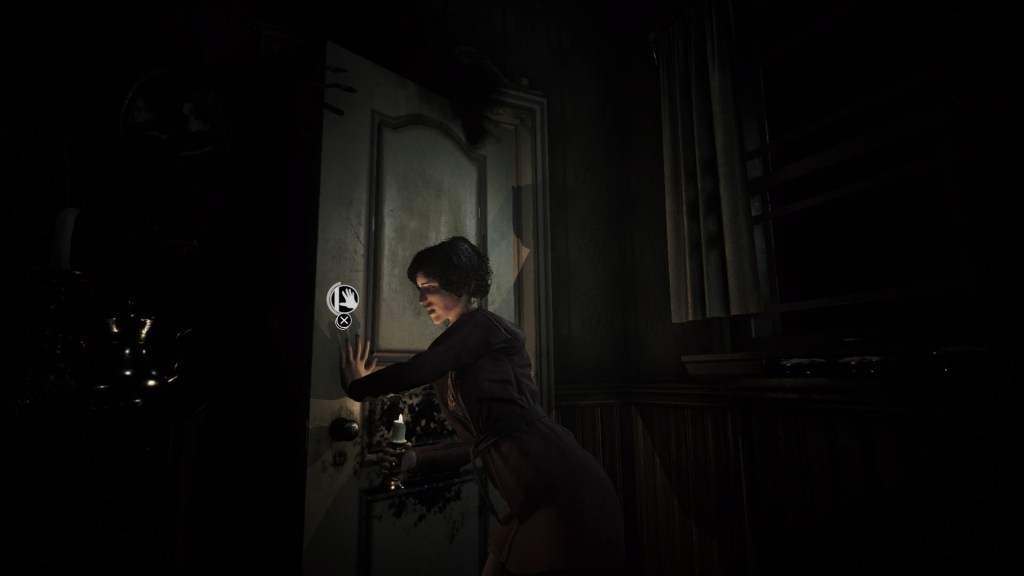
    If you’ve played any survival horror game in the last two decades, then you’ll know exactly how Song of Horror plays. You’ll investigate each location for clues and items to use to solve the puzzles around you while reading the notes left behind to further the story and explain why each location is devoid of human life. Because Song of Horror focuses on a cursed music box, sound plays a vital role in the game. If you choose to run, the noise you make can attract the entity, known as The Presence, to your location. This adds a wrinkle to how fast you can get through each location to the game’s overall mechanics. Paying attention to the noises around you are vital to your survival. One of the mechanics of listening at a door to what’s behind it before you open a room, will save you from many instant death moments.

    And these moments are frequent, depending on the difficulty you choose. Song of Horror is littered with instant death moments and trap locations. If you hear crying behind a door, then it’s not a good idea to enter the room, as is pulling the tarp off a strangely covered mirror in a storage room or sticking your hand into a bathtub full of grotty water. Song of Horror is designed with permadeath in mind, meaning you can lose the character you’re playing with permanently if you’re not careful. Lose all the characters or the main one for the game and you’ll have to restart the episode. When a new character enters the fray, you can pick up the previous characters items where they perished.

    With four difficulty settings to choose from, each named after a horror writer such as M. R. James and Edgar Allen Poe, determine the games severity. Higher difficulties have more shock encounters and permadeath is a feature of all, with one caveat. The easiest difficulty lets you load up a checkpoint save when a character dies to just before that fatal moment if you’re not in the mood to lose anyone. With Trophies for completing each episode without losing a character and for completing each episode with every character available for that scenario, gives completionists a reason to replay.

    The game has no combat as you can’t fight The Presence. The most you can do is hide from it or interact in mini-games that have you trying to slam a door closed in time while it’s trying to break through or to control your breathing while hiding from one of its manifestations. Knowing your surroundings is important so that you can get to a cupboard or beneath a table in time. Hiding spots do get scarcer as the game progresses.

    Song of Horror places you in familiar haunted locales; an abandoned manor, a mental hospital, an empty apartment block, etc. The scares are also of the traditional haunted house variety, though there’s definitely an Asian horror vibe to many of the manifestations and blink and you miss it moments.

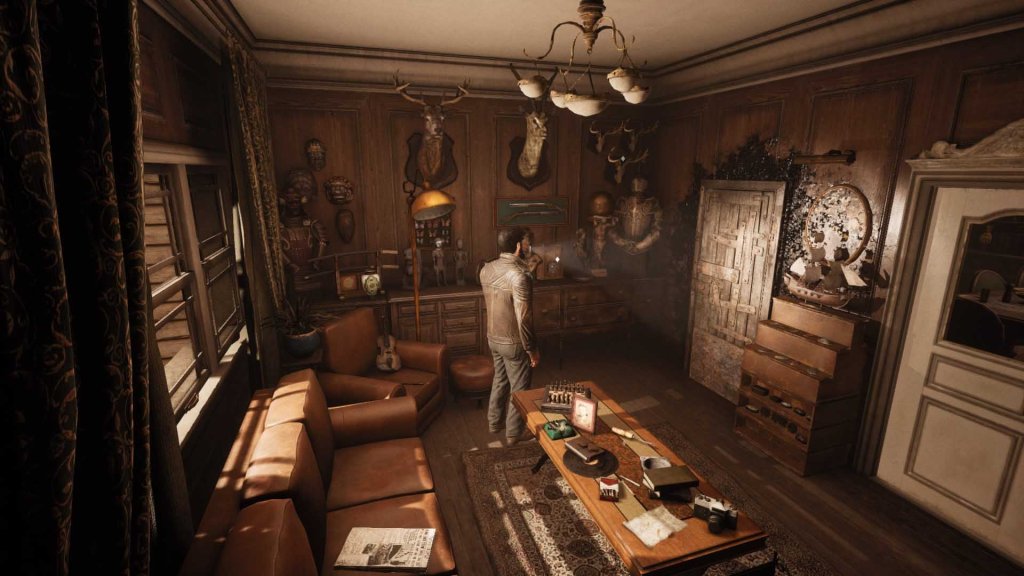
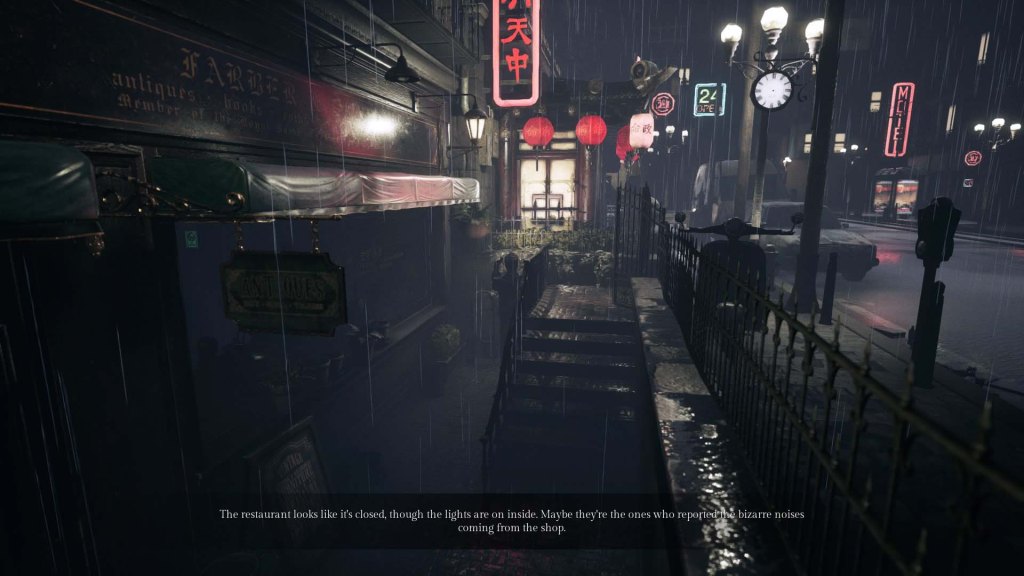
    Though the game uses static camera angles for its environment, the environment itself is fully 3d modelled and is one of the games strongest assets. The set dressing is absolutely superb with Husher Mansion and an antique shop looking absolutely gorgeous in the amount of detail and clutter present. Character models look good, but don’t quite measure up to the environment around them.

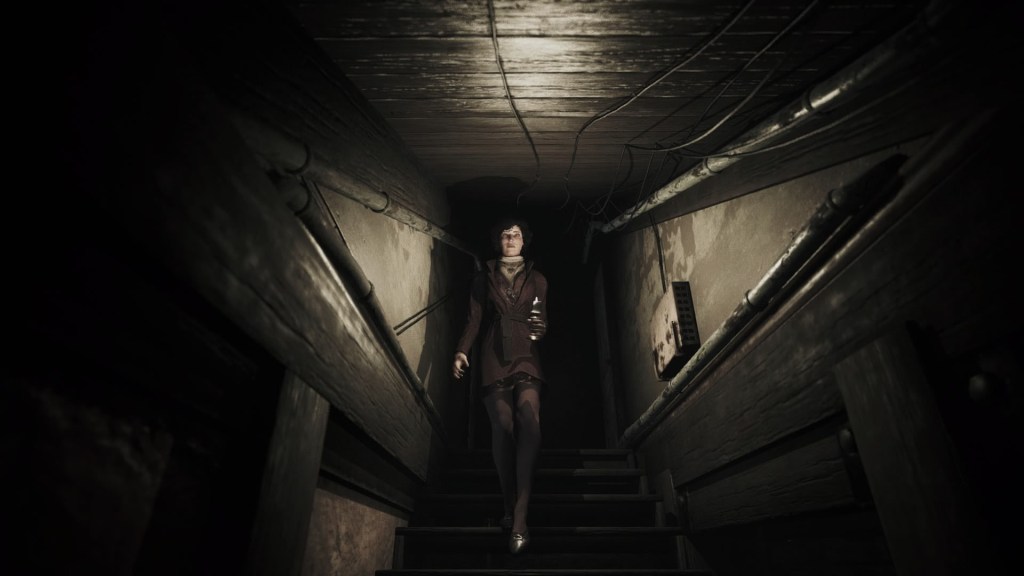
    Sadly, for a horror title, Song of Horror isn’t actually scary. Dealing with The Presences attacks becomes rote unfortunately. However, where the game does succeed wonderfully, along with its sumptuous environment details, is in atmosphere. With the use of sound as a warning trigger, the developers have managed to craft a sense of tension and expectancy that permeates each area as you’re always waiting for the shoe to drop, as it were. The palpable sense of dread and suspense is wonderfully realised, something even movies often struggle to get right.

    Song of Horror does have some issues though. First is the character’s movement and speed. Close to “Tank Controls” are the order of the day, making characters a bit of a chore to get used to. Controlling them is tricky with a turn radius that can get you stuck on objects in tight locations or go the wrong way at times, especially when a camera change occurs. Then there’s the character speed which can be frustrating. When you’re being chased by a nigh unstoppable force that can disembowel you with ease, you should be taking off like the Road Runner and not like a geriatric on a Sunday walk down by the lake. This is a peeve I have even with modern horror titles that feel like a slow walk through a museum when you should hot-footing it for your life.

    Finally there’s the game’s bugs. While not game breaking at all, there were plenty of instances of enemies spawning in the floor, characters walking through doors and in one instance Daniel’s torch not syncing with the character as you walk.

    With an atmosphere seeped in tension and dread that can have you holding your breath, Song of Horror more than makes up for its lacklustre scares with gorgeous set dressing and an intriguing, Lovecraftian story.

    Pros:

    • Gorgeous set dressing and environment design
    • Intriguing story

    Cons:

    • Bugs
    • Tank controls
    • Slow movement speed

    Score: 9/10

    A review code for Song of Horror was provided to Gameblur by the publisher.

  • Review: Wonder Boy: Asha in Monster World (Nintendo Switch)

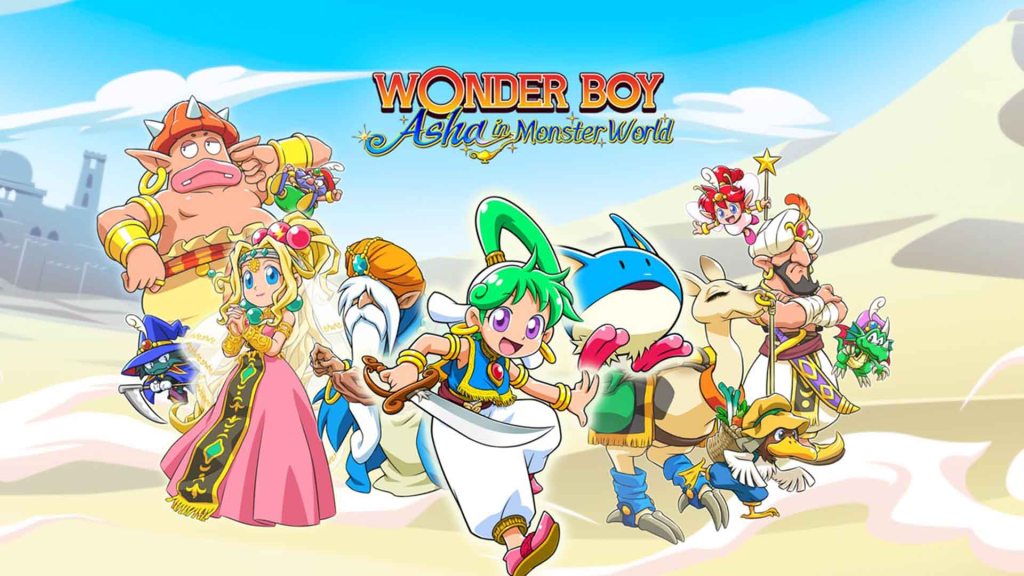
    Review: Wonder Boy: Asha in Monster World (Nintendo Switch)

    You know the story. A once peaceful land suddenly assailed by dark forces. Ancient prophecies of a great evils return. Adults doing the one thing they’re clearly good at: sending a kid to slay an adult’s problem.

    Enter Asha, a young warrior looking to earn her badge amongst her people as a great warrior, ready to stand tall and defend her homeland. Before you know it, a simple trial to prove your worth as a fighter turns into a fight to save the world before you can even say; “Isn’t that your job?”. Asha handles it all like a champ though, with a smile and aplomb and tonnes of personality.

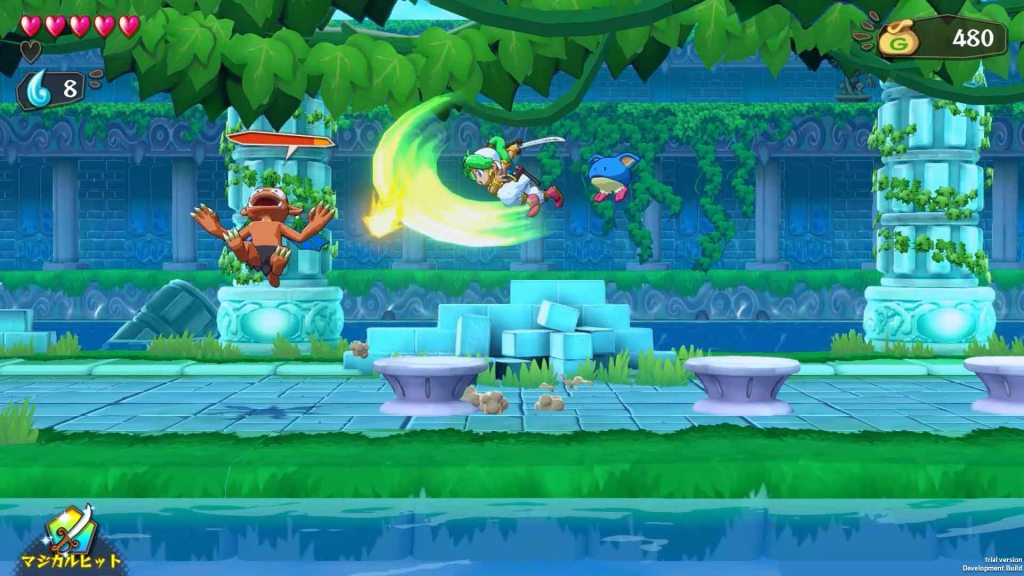
    Welcome to Wonder Boy: Asha in Monster World, a remake of the 1994 Mega Drive, Sega published and Westone developed Monster World 4. Developed by Artdink, this new version of the game updates Asha for modern console owners while preserving its gameplay design and story.

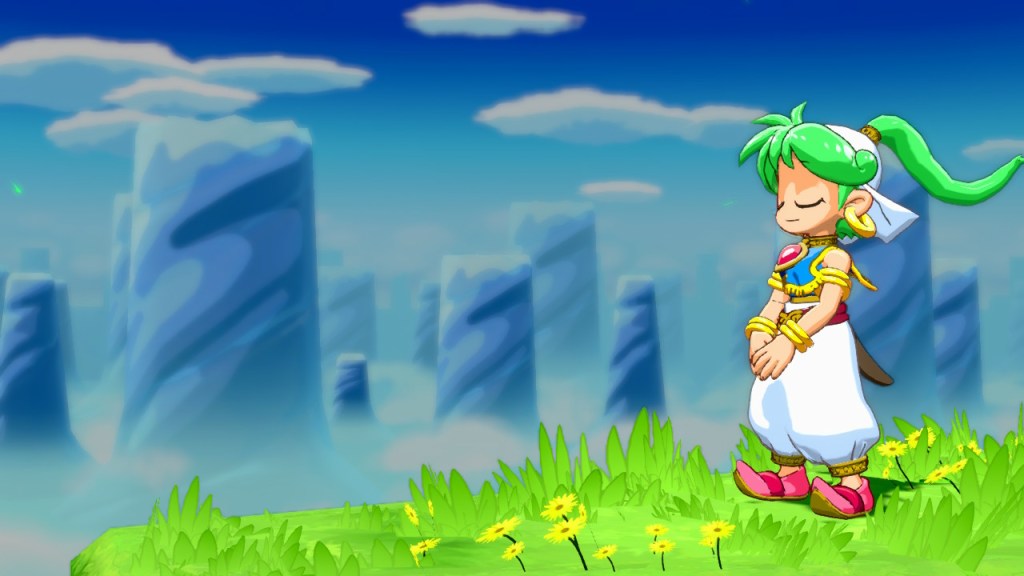
    Now sporting full 3D graphics and a cel-shaded aesthetic, Asha in Monster World completely redesigns the game’s visual elements into a gorgeous new skin full of personality. Asha in Monster World is a bright, primary coloured explosion of a game, with a cheery exterior that fully matches our protagonist’s personality. Asha doesn’t say much, but her personality shines through in her every action. Whether she’s sliding across ice, opening a chest or seeing something amazing for the first time, her personality exudes charm and fun.

    While that same level of design doesn’t extend to all of the games characters, Artdink have done a great job of making every NPC that needs to stand out, do so.

    Now having never played the original Monster World 4 game, I can’t tell you just how much of a liberty Artdink have taken with redesigning the environment for 3D. Judging by screenshots of the original game, most of the levels look exactly as they did in the original 2D version but with that cartoony 3D makeover. While they look good, if somewhat basic, they don’t exude the same level of personality as our plucky protagonist and are rather bare when compared to the level of detail and bric-a-brac that litter modern games.

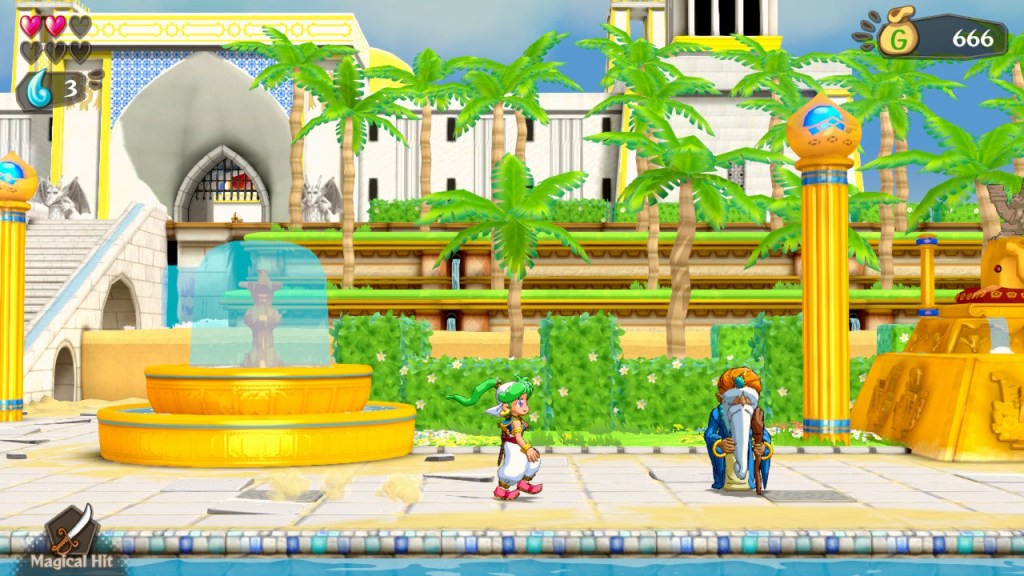
    As a RPG platformer, Asha more than delivers on the platforming front while having just enough RPG elements to break up all the dungeon crawling that you’re going to be doing. Once you’ve made your way to the city of Rapadagna, you’ll be able to walk around the multi-layered environment, talking to people, completing easy sidequests and purchasing new swords, shields and bracelets for Asha. Swords and shields are pretty explanatory while the bracelets increase the amount of hearts our protagonist has.

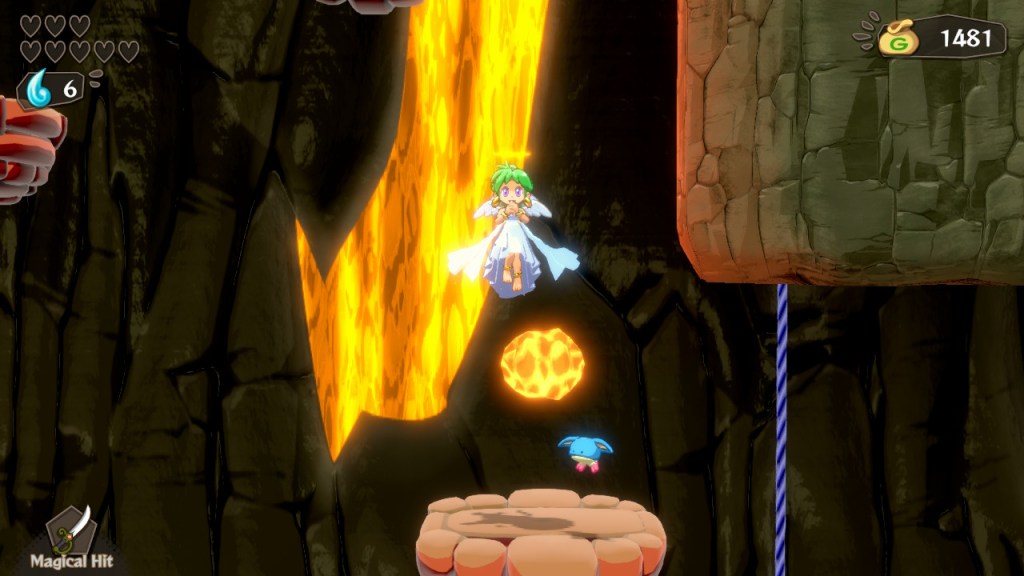
    Across her adventure, Asha will be collecting coins and money dropped from enemies to buy new upgrades, while collecting the Life Drops scattered across the environment will award a permanent extra heart for every ten drops. Asha’s pet, the Pepelogoo, is an indispensable tool in the game. Pepe can be used to collect items just out of Asha’s reach, block certain environmental hazards, act as a platform and help Asha to float short distances and act as a double jump when she is holding onto him. The double jump system is, initially, an awkward mechanic of having to press a button to summon Pepe before you can use him as such. It quickly becomes second nature though. If killed in action, Pepe can also use one of Asha’s elixirs to revive her exactly where she pegged it.

    Both the city and dungeons employ a depth level approach to level design with various elements of the city and dungeons placed on different layers for you to walk into and out of. This is employed to good effect in the dungeons to create a maze-like environment that lightly hints at Metroidvania elements. Dungeons are self-contained though so there’s no reason to go back and forth between locations if you’ve thoroughly explored it the first time round.

    Wonder Boy: Asha in Monster World does make some concession to modern design though. Firstly you can now save anywhere via the system menu. The Sage that acted as a save point in the original game is still there but his job is now yours for whenever you feel the need. Secondly, in the original game you could miss items if you killed the level boss before completely exploring the area. This was due to the fact that defeating a boss would lock for the level for the rest of the game. Now you can jump back in, with a handy little display next to the entry point of the four main dungeons showing you how many Life Drops you’ve missed in the area. One concession that I do wish the developers had made was the inclusion of a map for each of the dungeons. Only the Ice Pyramid section comes with a map to help you navigate its corridors.

    Since Asha on Monster Land is a slavish remake of the original game, the actual gameplay may either make it or break it for you. While the platforming can get fairly involved especially with Pepe making up a good portion of manouverability, the combat is rather rote. Asha has four attacks. She can attack in front of her, above her and below her during a jump. She has a magical sword attack that deals extra damage when activated, though you do this by holding down a button and then just slashing away with one of her three attacks.

    By not changing the game at all in this manner, Artdink have made certain that the game stays absolutely true to its roots, but it also creates a game that is extremely light on challenge. Yes it has that 90’s flavour that games of the time had, but by today’s 2D platforming standards it’s nearly devoid of challenge, at least for me. Certain platforming sections cost me some hearts but ultimately the game, including the bosses who are based on pattern recognition, were a cakewalk. And I’d honestly be lying if I said this bothered me. Gamer’s who order the physical edition of the game will be blessed with the original Monster World 4 so that they can check out the differences for themselves.

    Wonder Boy: Asha in Monster World may not provide you with a challenging experience but what it will give you is a bright, cheery adventure filled with personality and charm. This is the sort of game that I feel we need more of; whimsical, entertaining and all about having fun.

    Pros:

    • Platforming can be a little challenging
    • Easy and whimsical in nature
    • Asha has loads of personality
    • Visually pretty

    Cons:

    • Only physical copies come with the original Monster World IV
    • Some may find the game too easy

    Score: 8/10

    Wonder Boy: Asha in Monster World was reviewed using a code provided to gameblur by the publisher.

  • Review: Capcom Arcade Stadium (PS4)

    Review: Capcom Arcade Stadium (PS4)

    Capcom has a long, storied career in the gaming industry, pushing out some of gaming’s greatest titles that are still known today. But, as with many publishers, they have just as many titles that have been forgotten outside of the retro gaming community, and sometimes even there too. Retro compilations, such as Capcom Arcade Stadium, help to fill in those gaps while providing you with a way to play some of your favourite titles without hassle.

    Whether you have fond memories of playing some of these games in the arcades, or perhaps at home, if you were lucky enough to have a console as a kid, there’s no denying both the artistry and business acumen that went into making these games. Yes, they were meant to entertain and enjoy, but they were also meant to separate a child from his parent’s money. And they were very, very successful at it too.

    Now, with Capcom Arcade Stadium you can relive those fond moments again from the comfort of your home and without the need to spend, spend and spend some more on tokens just to finish one game. Instead, you’ll just have to spend on buying the games themselves as Arcade Stadium itself is a free download, the ROMs themselves, not so much.

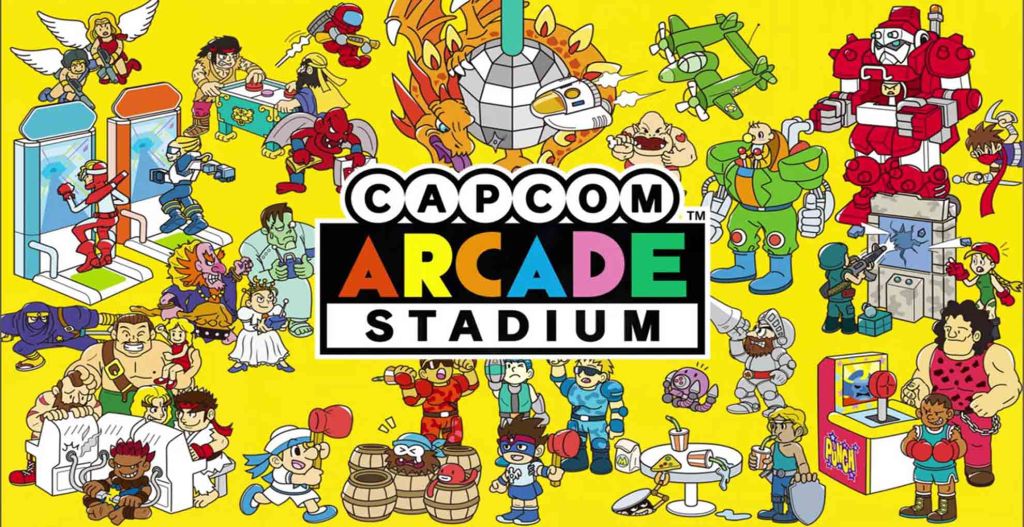
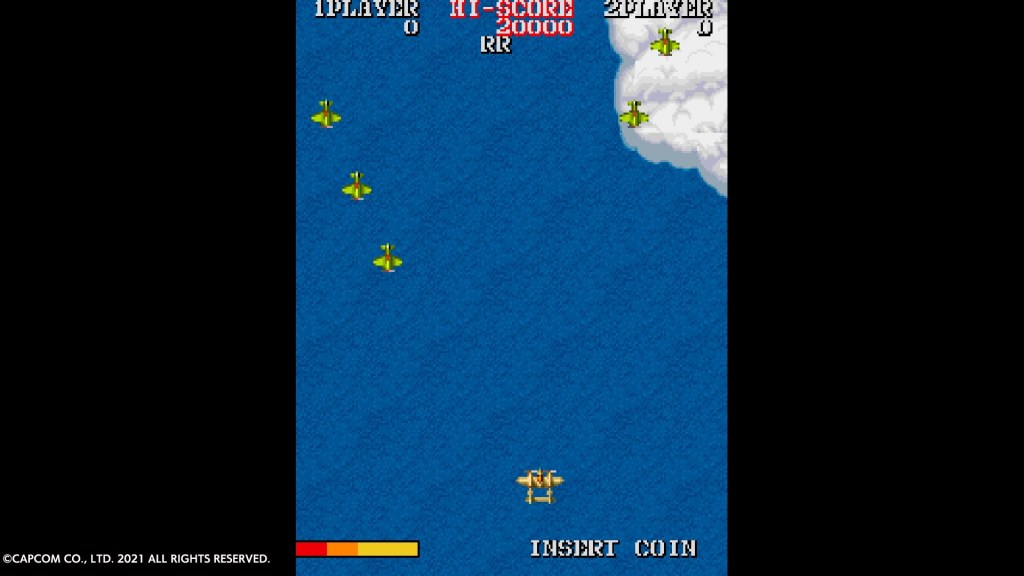
    Running on Capcom’s RE Engine, Arcade Stadium has thirty-two of Capcom’s Arcade classics for you to enjoy. The gamut of titles runs roughly from 1984 to 2001 and Capcom have packaged them into three packs with ten games to a pack. Capcom’s classic Ghosts ‘n Goblins is a standalone paid-for download, though it was originally free on release for a limited time.

    The titles you’re looking at right now are: Ghosts ‘n Goblins, Section Z, Tatakai no Banka, Legendary Wings, Bionic Commando, 1943, Forgotten Worlds, Ghouls ‘n Ghosts, Strider, Dynasty Wars, Final Fight, 1941 – Counter Attack, Senjo no Okami II, Mega Twins, Carrier Air Wing, Street Fighter II, Captain Commando, Varth, Warriors of Fate, Street Fighter II – Hyper Fighting, Street Fighter Turbo, Powered Gear, Cyber Bots, 19XX, Battle Circuit, Giga Wing, 1944, Progear, Vulgus, Pirate Ship Higemaru, 1942 and Commando.

    There’s definitely a larger selection of beat-‘em ups and shmups in the line-up, though the releases more than likely will give you an insight into what was popular back in the arcades during each of those generations.

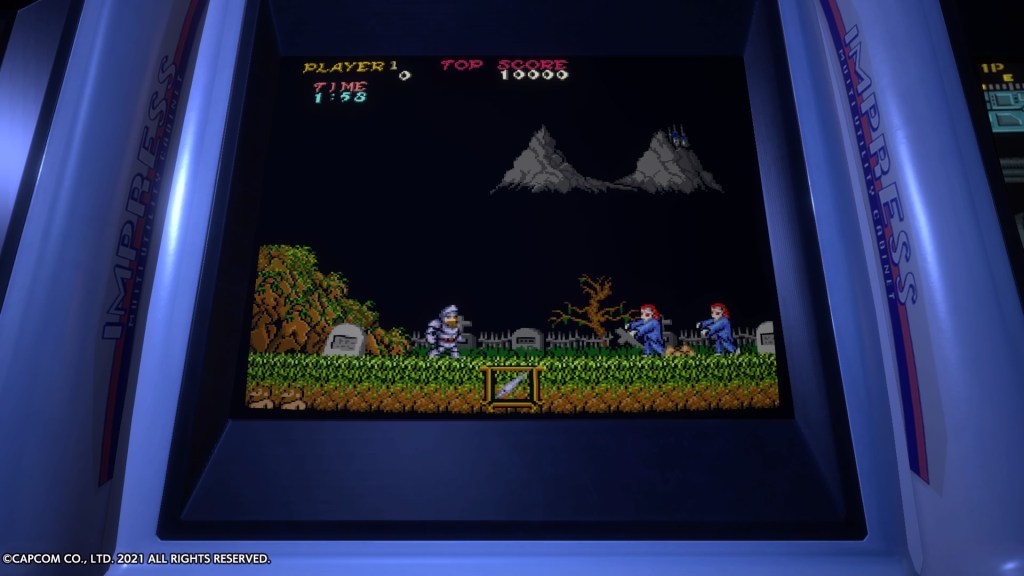
    What’s important to note though is just how well these games run, and how playable many of them still are. Whether you’re looking for some quick action to pass the time or to hone your fighting skills to perfection, there’s something here for you. Ghosts ‘n Goblins will still test your platforming patience while Street Fighter II (which I now seem to suck at) will remind you just how fantastic 2D sprite animation is, along with how much harder 2D fighters are. Strider is still a hard, action-platformer while the 1940’s series is still addictive twitch shooting action. And now you can finish them thanks to infinite credits too.

    As with any compilation of games, your mileage will vary on what’s in the collection. So with all the retro compilations that have come out, what is it that makes Capcom Arcade Stadium stand out from the rest?

    The answer to that comes down to two things. One, that Arcade Stadium is a dedicated platform to host Capcom’s arcade titles with substantial possibility for future growth, and two, the wealth of options built into the platform for you to tailor the gaming experience to suit you.

    With the RE Engine powering it and games treated as DLC, Capcom can bring even more of their titles to the platform in the future if it’s worth their while. So here’s hoping for some more of their classic titles, such as Knights of The Round, and more “recent” fair such as Powerstone, Cannon Spike, and my favourite Spawn game, Spawn: In The Demons Hand.

    Arcade Stadiums presentation is top-notch and Capcom have gone out of their way to ensure that you can have a modern, respect-your-time playing experience, or to make it as hardcore as you could want. Beyond changing the game’s difficulty, amount of lives you begin with, etc. you can also save your game at any time and reload whenever you choose to. Game speed can also be sped up or slowed down to suit you to the point where it feels like a Zack Snyder slow-mo shot. If you happen to mess up a section there’s also a handy rewind feature to take you back to just before your bungle and put it right. Of course, you can also play the games as they were meant to be played at their default setting and hope your controller can withstand the manhandling sure to follow. A nice feature is that most of the games, bar those that either didn’t get English translations or releases, have both their original Japanese roms and English versions included, switchable on the main menu screen.

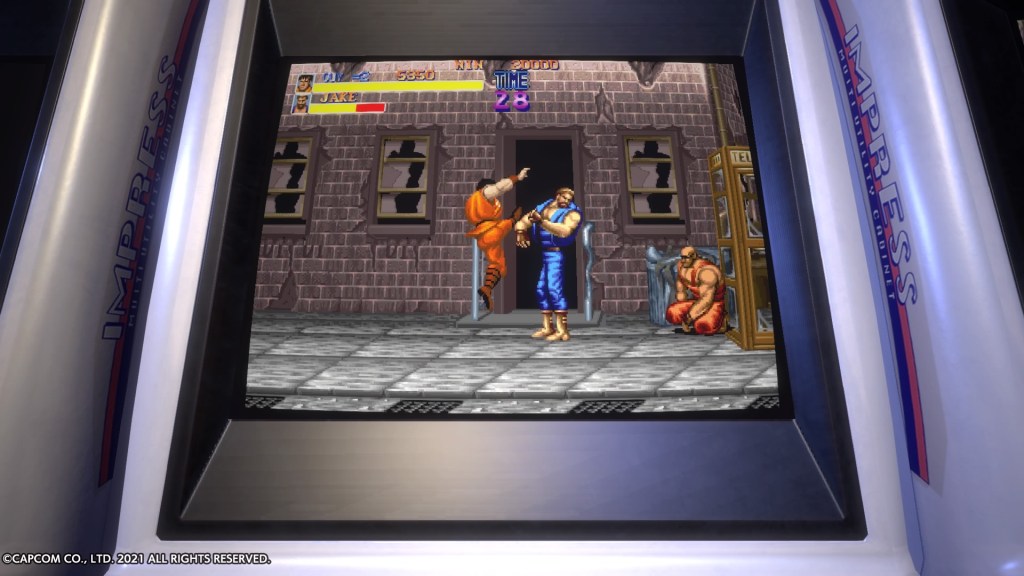
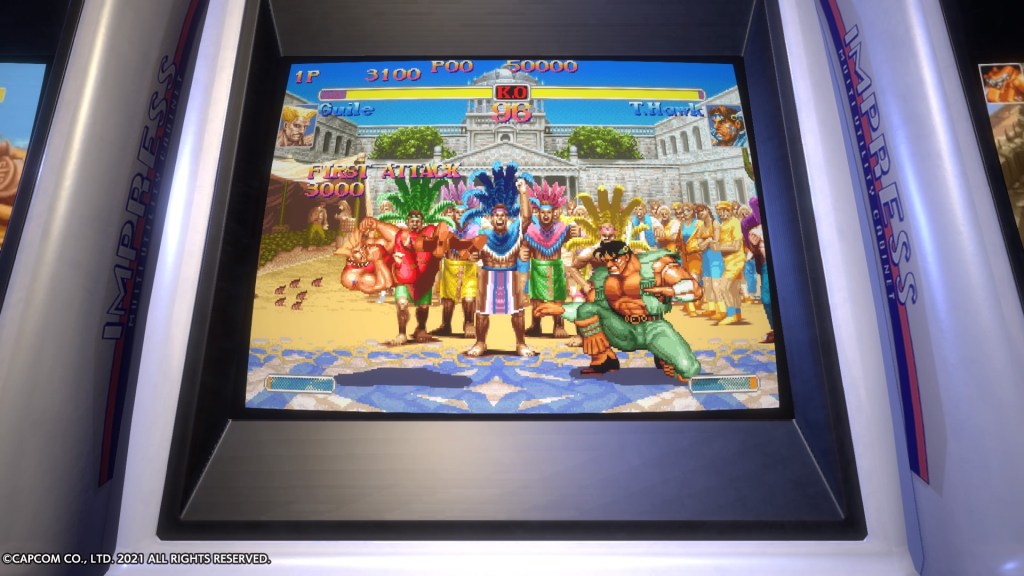
    Before you load up a ROM, which is instantaneous, you can change a whole bunch of options along with viewing a digital manual for the game. Viewing options run the gamut from different backgrounds and wallpapers to a whole bunch of filters you can apply. My favourite backgrounds are the 3D tilted arcade cabinets which emulate the viewing experience you would have had in an actual arcade. It does make the game screen smaller but it’s absolutely classy. When you combine this with the various visual filters such as pixel smoothing, a CRT filter for that authentic look along with different screen types, such as oval, to further emulate screen shapes back in the day, you have yourself just about the perfect visual customisation service.

    Speaking of that menu screen, it really is gorgeous. Showcasing a digital line of arcade cabinets, each one home to a game as you scroll through the list. On the menu, games are broken up into various filters, such as action, fighting, etc. The only option missing is a list by alphabet tab which hopefully Capcom can include at a later date.

    While Capcom Arcade Stadium doesn’t include all the games you may want, when thinking of the gaming giant’s roster, it is a fantastic platform that can be further built upon. With a great presentation system, perfect emulation of the games on display, Capcom Arcade Stadium is the best retro platforming system I’ve seen and used from any of the collections released thus far.

    Pros:

    • Fantastic presentation
    • Wealth of options
    • CRT filters are the way
    • Ghosts ‘n Goblins and Street Fighter II, need I say more?

    Cons:

    • Can only purchase games in packs and not singularly at the moment

    Score: 8/10

  • Review: Glyph (Switch)

    Review: Glyph (Switch)

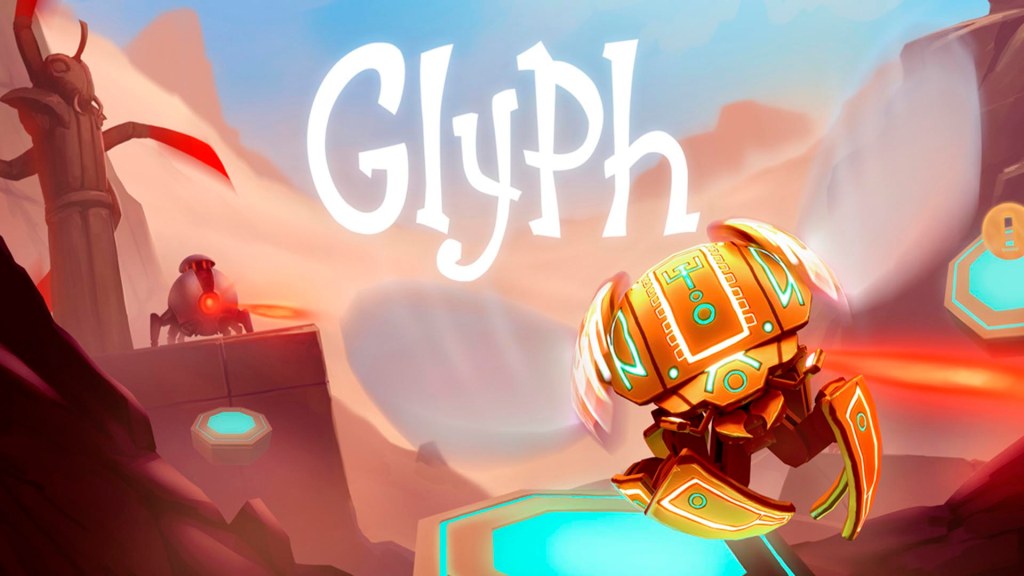
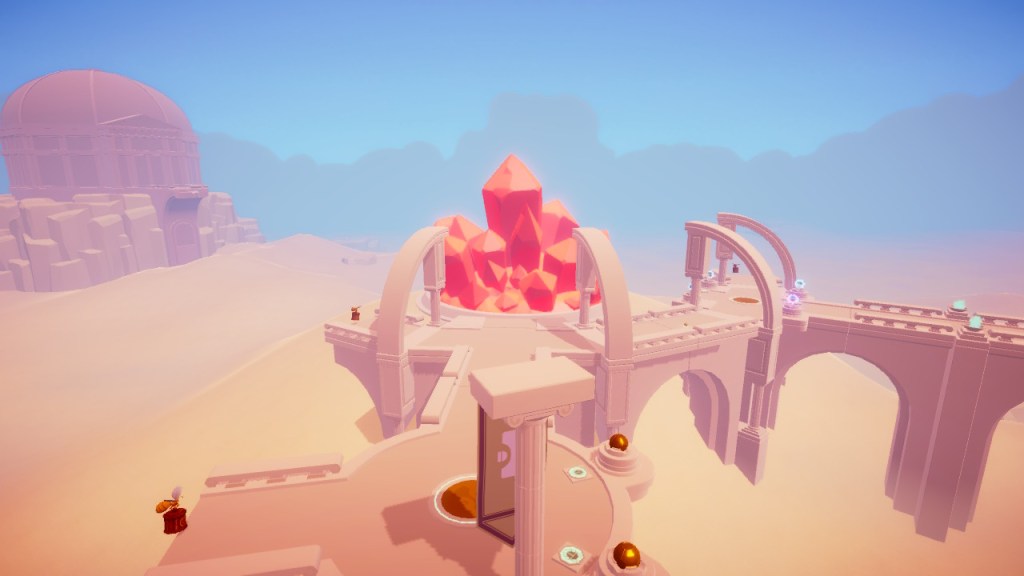
    Amidst the desert ruins of an ancient civilization, you take on the role of Glyph, a mechanical scarab tasked with exploring the sand-drowned ruins of a once-mighty civilization. Buried beneath shifting sands and rolling dunes, this once mighty empire has taken their secrets with them and it’s up to you to find out what those were. Be warned though, for the further in you go, the harder it becomes to extract what those secrets may have been.

    Will you take on the challenge of navigating the lost remnants of this world or will the truth be forever buried beneath the sands of time?

    That is the background to Bolverk Games’ light physics-based platform puzzler, Glyph.

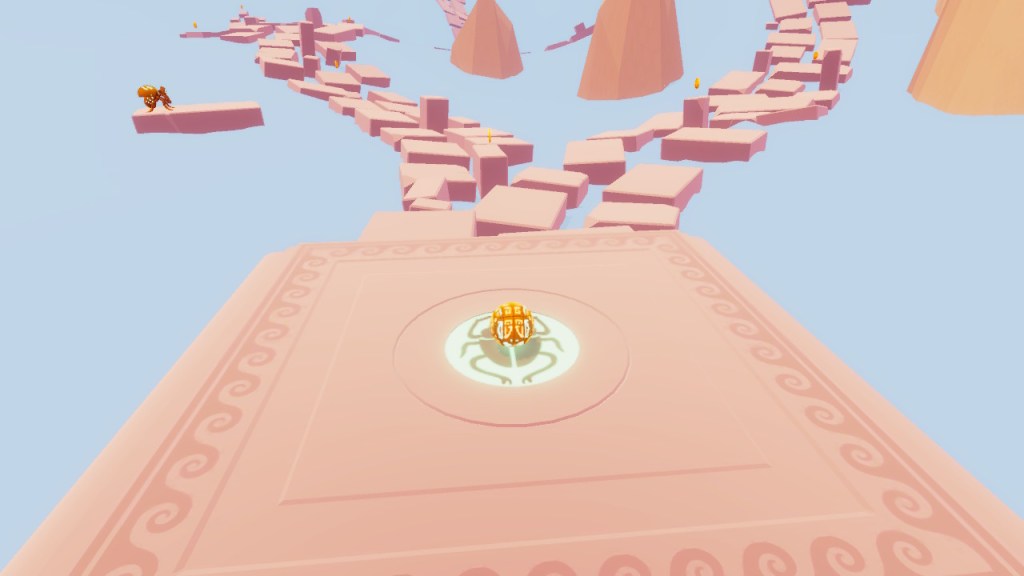
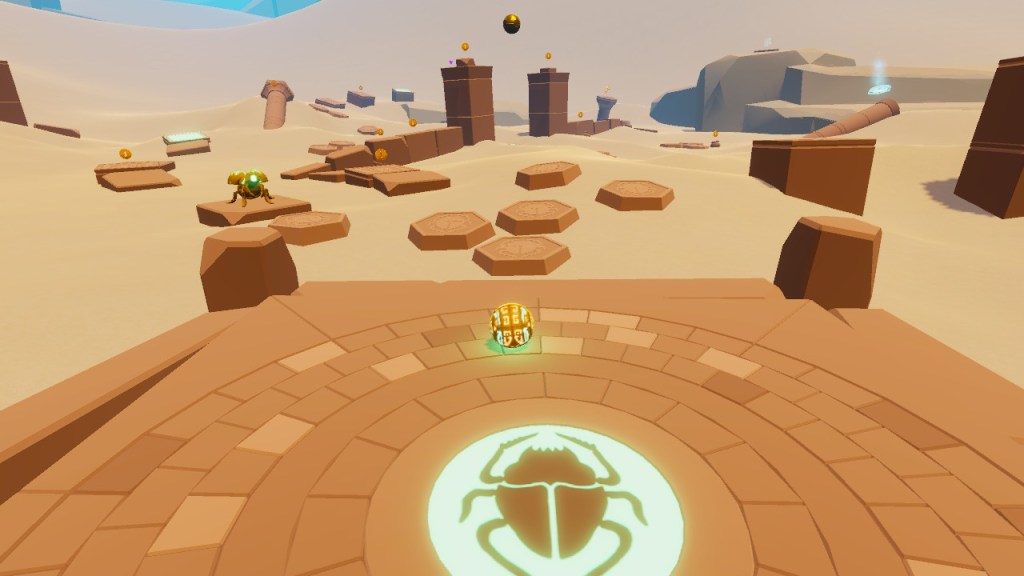
    As the construct Glyph, you’ll be spending nearly all of your time in ball mode, rolling across the landscape while prey to the whims of physics that such a form entails. But fear not, as you’re not entirely helpless. Glyph has a few abilities that the game’s tutorials will take you through in an extensive fashion. What you learn here will be the basis for how you navigate the game’s navigation puzzle levels.

    Glyph can jump, or more correctly bounce, when in contact with surfaces while specific tiles will allow it to double jump. Glyph can also use a ground slam ability to launch itself higher into the air. The final ability unfurls Glyph into avatar mode for a short flight duration to cover the larger distances between platforms and ledges. Combining all these moves together, while paying attention to the way physics affects the way Glyph moves, is the key to success.

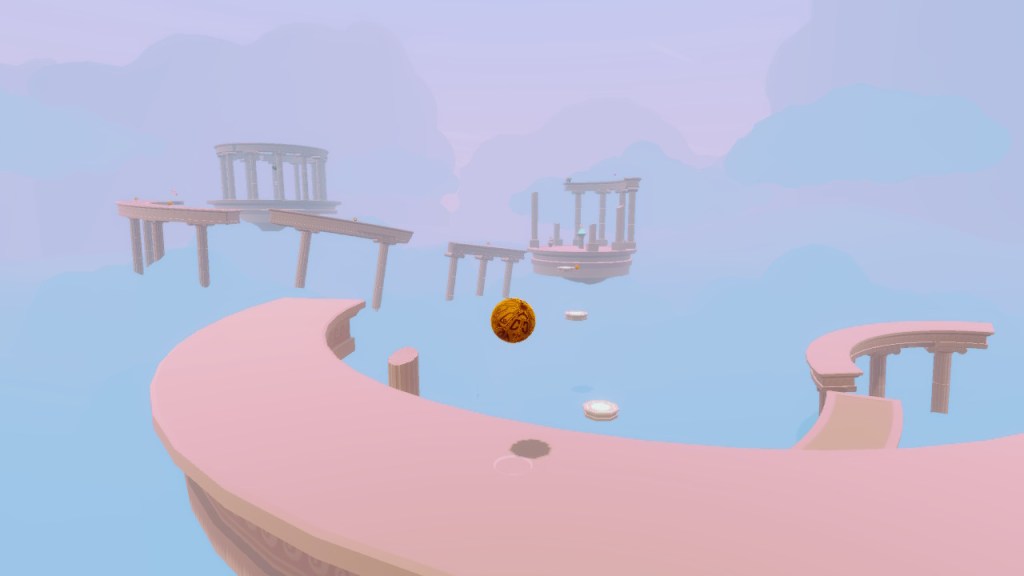
    Bolverk Games have designed levels that, while small, will both entertain and challenge you in equal measure. Sporting a vaguely Egyptian motif, the ruins that you will need to traverse are usually the final remnants of toppled pillars, shattered buildings, and tilted ledges and tiles. Navigating your way across the levels can be an arduous and tricky affair that usually requires all of Glyph’s move set to complete.

    As a ball, Glyph rolls around as physics would dictate to a degree, meaning that you’ll constantly be nudging him back and forth across the environment lest momentum lets you roll off a ledge to the deadly sands – or clouds as some levels are set in them – below. But Glyph isn’t slavishly locked to the laws of physics. A jump can carry you quite far on its own and Glyph has just enough floatiness and control in the air to make even the minutest of course corrections.

    Scattered across each level are coins to collect, gems to find, keys to pickup to open the level exit, artifacts to procure, and different avatar forms to unlock. The avatar forms are for cosmetics only but the other items are needed to progress. Once you’ve exited the tutorial into the game’s hub, coins will unlock new levels while the gems will open up new pathways to new levels in the hub. The artifacts will open up the game’s incredibly challenging Time Trial levels.

    If you die during a level – it only takes touching the corrupted sands once to send Glyph back to the beginning of the stage – keys and artifacts are reset but thankfully the coins you’ve picked up stay with you. And you will die a lot because Glyph is an incredibly challenging game that walks that tight line between been fun enough to pick up for some relaxing platforming, but hard enough to ensure a tense playing experience that, when you finally complete a level, you’re rewarded with a sense of satisfaction.

    Very early on the challenge picks up significantly, even in the levels that have a lower skull rating. Levels are rated from one to five skulls for difficulty. Often I’d find that I’d been holding my breath and my shoulders and wrists were tense when I’d completed a level, having to put my Switch down for a well-deserved break from what was an ultimately rewarding experience.

    Your completion times are recorded and you can go back to replay the levels for better times if you prefer. Like a parkour game, finding that perfect line takes time but is worth the effort.

    The Time Trial levels are where Glyph throws its hardest challenges at you. They’re small but require serious mastery of the game’s mechanics to reach even its gold, silver, and bronze levels. The gold time can be as low as ten seconds. Each tier per Trial will net you a gem making the effort worth it.

    Visually Glyph is a beautifully stylised game that ran perfectly on the Switch Lite and is drenched in a wonderful fable-like aesthetic and atmosphere. Controls for Glyph are pitch-perfect as well, making your failures your own.

    Packing in a ton of levels, Glyph is the sort of puzzle platforming experience that doesn’t come around often. With stunning visuals, solid controls, and gameplay that appeals to those looking for a laid-back exploration experience as well as a nerve-wracking one, Glyph soars above the competition and should be in your collection.

    Pros:

    • Visually stunning
    • Wonderfully challenging
    • Great level design

    Cons:

    • Recollecting artifacts and keys can get frustrating with repeated deaths

    Score: 8/10

  • Review: Ghosts ‘n Goblins Resurrection (PS4)

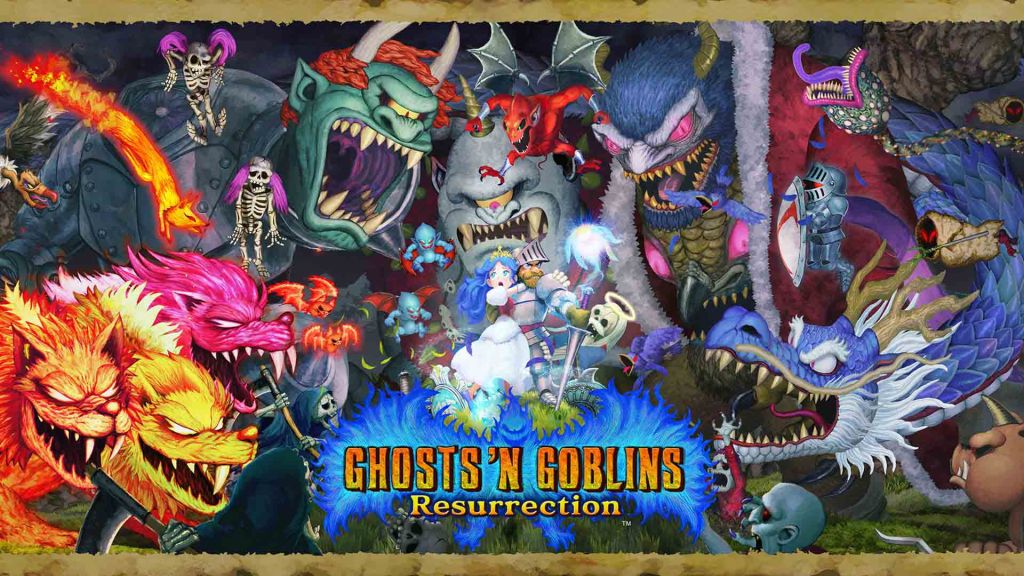
    Review: Ghosts ‘n Goblins Resurrection (PS4)

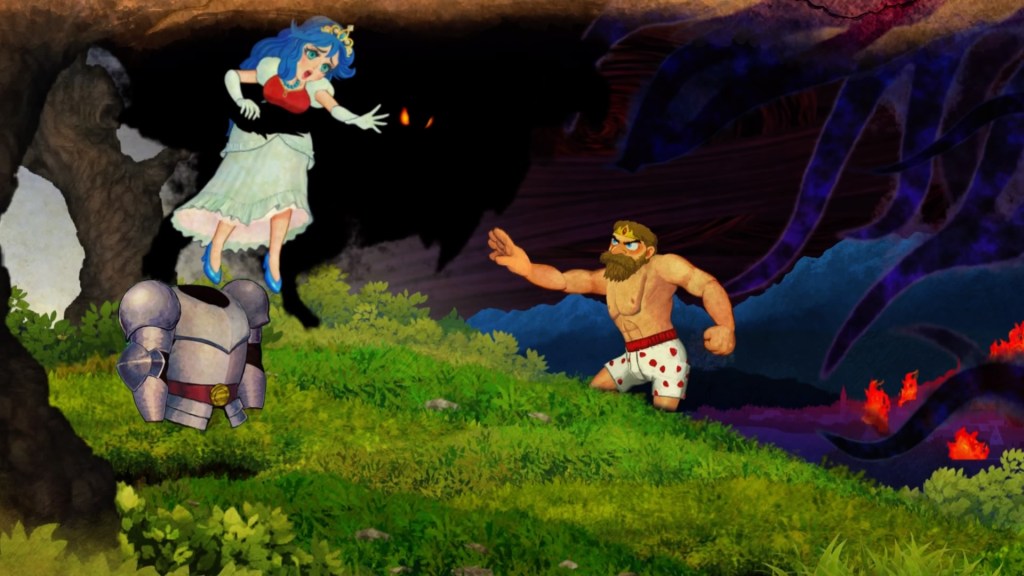
    After a hard day of knighting, you just want to get out of that stiff armour and lounge around in your boxers, hopefully while in the company of your dearest princess. But wouldn’t you know it, evil doesn’t care about your day off, or that princesses have better things to do than get abducted every second week. So off you go, grabbing that armour while, in the distance, your kingdom burns beneath a devilish assault.

    So with armour clenched tight, lance in hand and a permanent scowl on his face, our hero Arthur prepares to face another manic Monday. . .

    Well okay, it’s not really Monday. I’m pretty sure what day it is doesn’t matter when your kingdom is burning. But what it is, is the day we welcome the Ghosts ‘n Goblins series back with Ghosts ‘n Goblins Resurrection. That’s right, the original rock hard, make you cry Dark Souls of its day has a new game and it’s here to show you what hard really is all about.

    Ghosts ‘n Goblins Resurrection originally launched earlier this year, February to be exact, on Nintendo Switch and now Capcom has finally brought it to PS4 with PS5 backwards compatibility, Xbox One and PC, letting the rest of the gaming community experience one of gaming’s toughest hard love franchises.

    As both a reboot and a remake of the original Ghosts ‘n Goblins, Resurrection yet again places you in the armour of put upon knight Arthur as his princess is kidnapped while a demonic invasion turns the kingdom into an overrun, twisted hellscape. You’re going to have to side-scroll and platform your way through one tough level after another in an attempt to beat the ever-loving snot out of the dastardly evil behind this plot while, hopefully, not breaking your controller in the process.

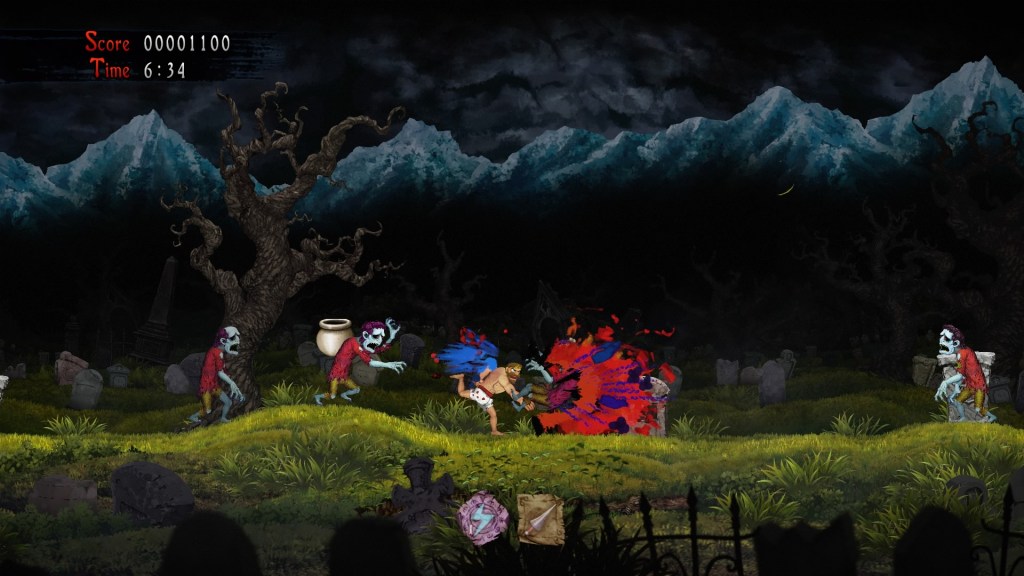
    Once you get past the stunning visual style that Capcom has employed for this reboot which makes the game look like a fable drawn from a storybook, you’ll find that Capcom has employed the old adage of “if it ain’t broke, don’t fix it”. Arthur moves exactly as he did in the older games, just with better animation. He possesses the same level of speed, making timing a critical choice and can only jump over and onto objects if you jump while moving. Jumping while standing still will merely propel Arthur straight up, meaning you have to unlearn many of the moves that modern platformers have brought to the table since then. Arthur can also attack in three directions: in front of him, above him by aiming up and below him if you attack while jumping and pressing down on the D-pad or directional buttons.

    The key to success in a level, beyond mastering the way Arthur controls and having twitch reflexes, is in memorising the level design and enemy attack patterns. Levels usually have moving parts to them, which adds a nice sense of dynamics to the environment. What weapon you wield is just as important as all of the above. Arthur’s arsenal has expanded since the first game though his trusty default lance is usually the best all-rounder. Picking the right tool for the job, as the saying goes, is tantamount to success. The hammer that unleashes a small arc of energy across distances requires you to get too close to enemies while the dual-shot crossbow requires a lot of jumping to hit an enemy because of the arrows diagonal shots. The holy water is still useless. Weapons can drop from chests or jar carrying enemies.

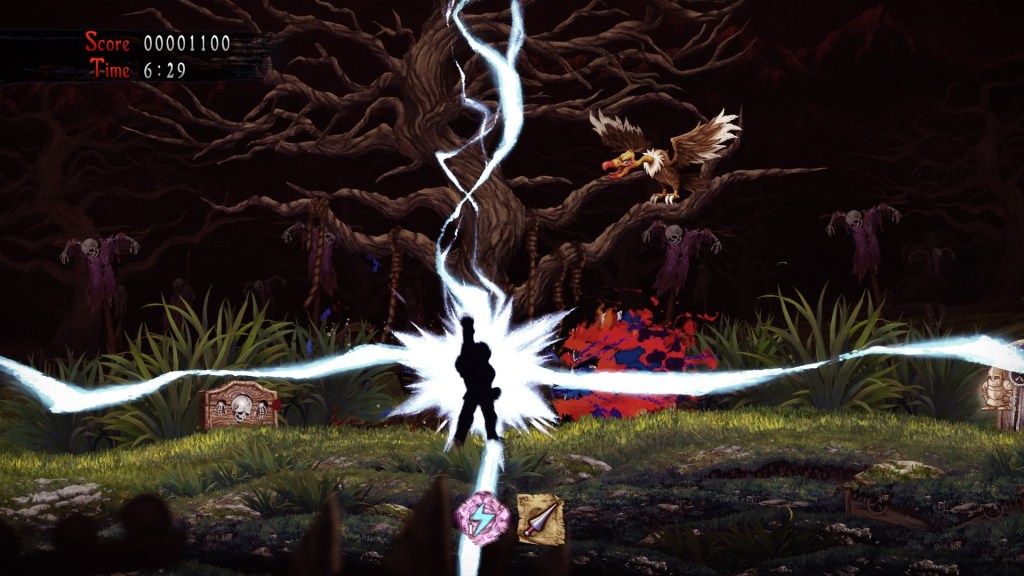
    Two big additions to this game are Umbra bees and a local two-player co-op mode. Collecting the bees scattered across the levels will unlock magic abilities for Arthur. Magic does need to be charged up for use so you with a brief cool down so you can’t just spam it, making its use more tactical than a Hail Mary when you suddenly find yourself surrounded. The two player co-op lets a second player use a ghostly ancestor of Arthur’s to help him through the levels. Controlling one of three spirits with their own abilities, player two can help Arthur through a level by carrying him around, for instance.

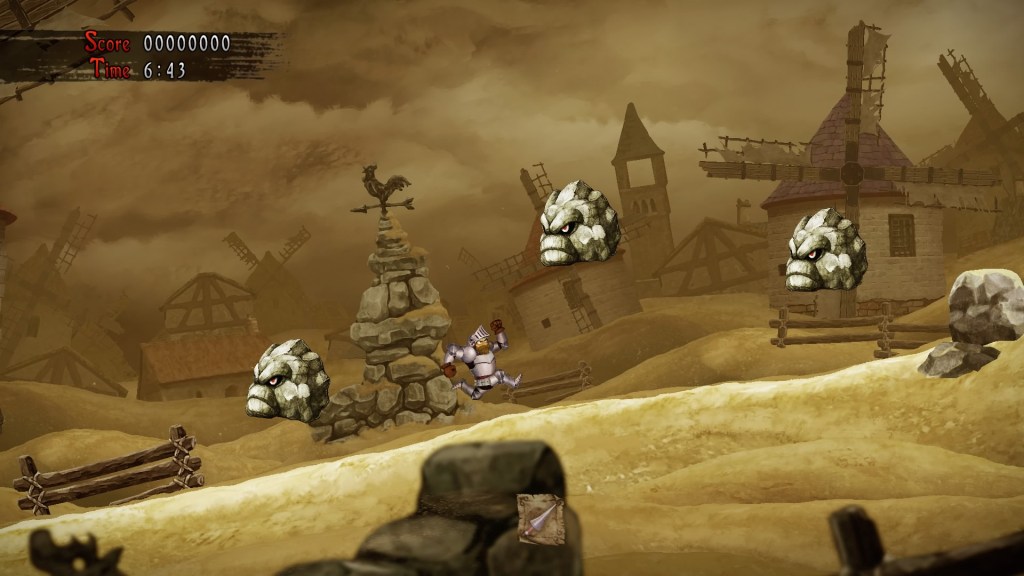
    The games visuals are gorgeous, employing a multi-layered approach to screen elements that make the characters seem like a combination of paper art and puppets with elements placed on top of one another. The animation is also wonderful and each enemy has their own distinct visual style and movement. The visuals, which look straight out of a storybook, can’t hide the games difficulty though.

    Because Resurrection, as befitting a GnG title, is hard. But not unbeatably so. Capcom has chosen to incorporate four difficulty settings, aiming at embracing modern gaming conventions while still attracting the hard-core crowd.

    Page lets you respawn at the exact spot you died at with no level time limit and a max of four hits you can take before crumbling to a skeleton. Squire gives you the same four hit limit, level checkpoint and mid-level rebirth checkpoints but throws back in the time limit. Knight takes you down to three hits, checkpoints, a time limit and an increase in enemy speed. Legend takes you back to the original GNG settings by dropping you down to a two hit maximum with no rebirth checkpoints and more enemies.

    Ghosts ‘n Goblins Resurrection is the perfect platform to showcase Arthur’s return to his own series. It’s both difficult enough to appeal to stalwart series veterans while making enough concessions that casual gamers too will be able to finish it. It’s also a wonderful showcase for the versatility of the RE Engine with its gorgeous visuals and animation. Whether you’re a GNG neophyte or accomplished devil slayer, this game should not be missed.

    Pros:

    • Not as difficult as the original Ghosts ‘n Goblins
    • Gorgeous storybook aesthetic
    • Full of character
    • Different difficulty levels

    Cons:

    • Magic takes a bit too long to activate

    Score: 9/10

    Ghosts ‘n Goblins Resurrection was reviewed using a code provided to gameblur by the publisher.