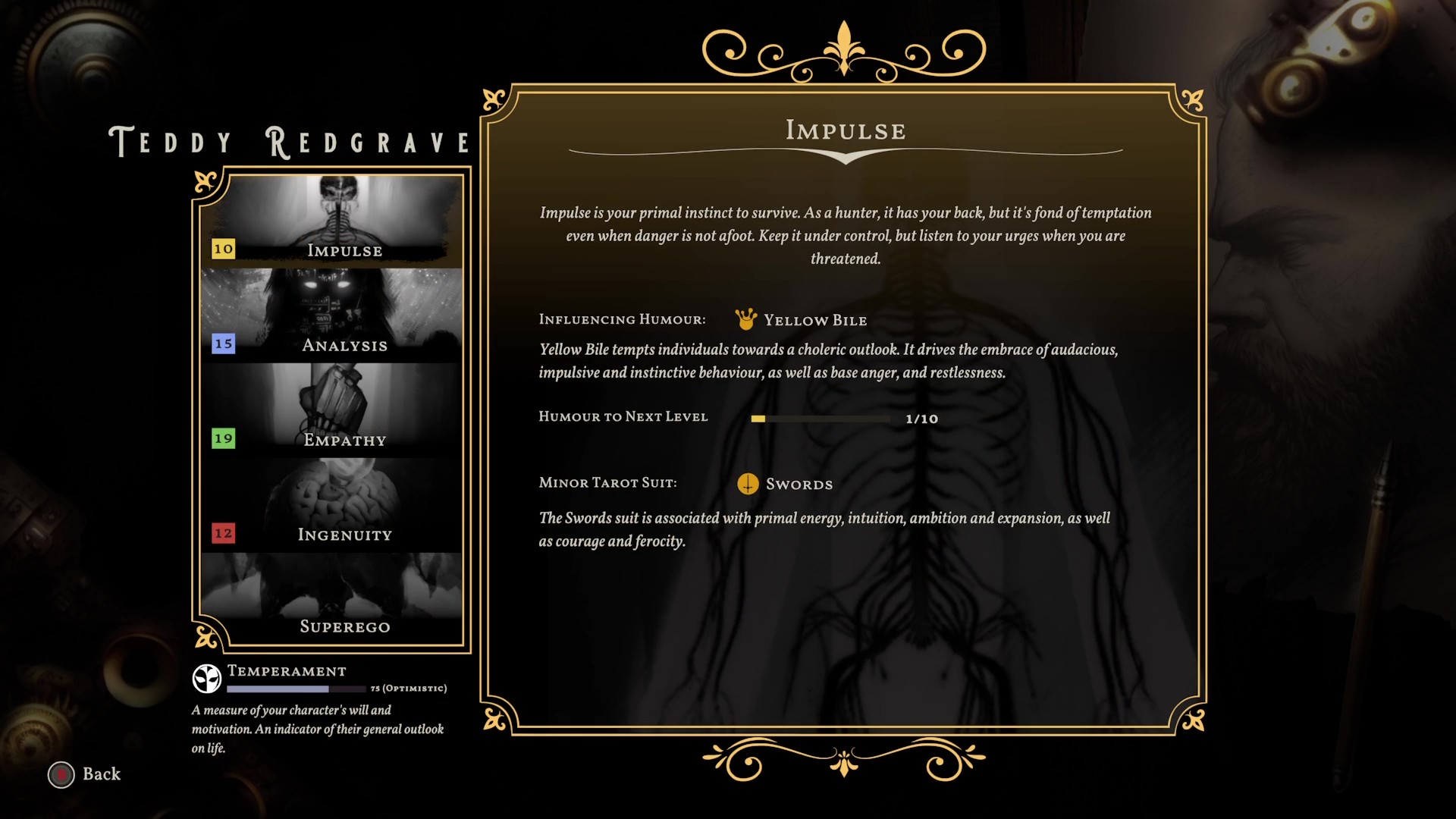
The first thing that comes to mind when thinking about Sovereign Syndicate is how excellent writing can carry mechanically and visually underwhelming games – so long as you have an audience willing to read. At first glance, Sovereign Syndicate looks to chase the Disco Elysium formula, turning your protagonists’ internal dialogue and resultant personalities into the equivalent of traditional RPG classes. However, the longer you play, the more you’ll realise their starting attributes and evolving personality add flavour to the journey rather than function as hard skills-checks.
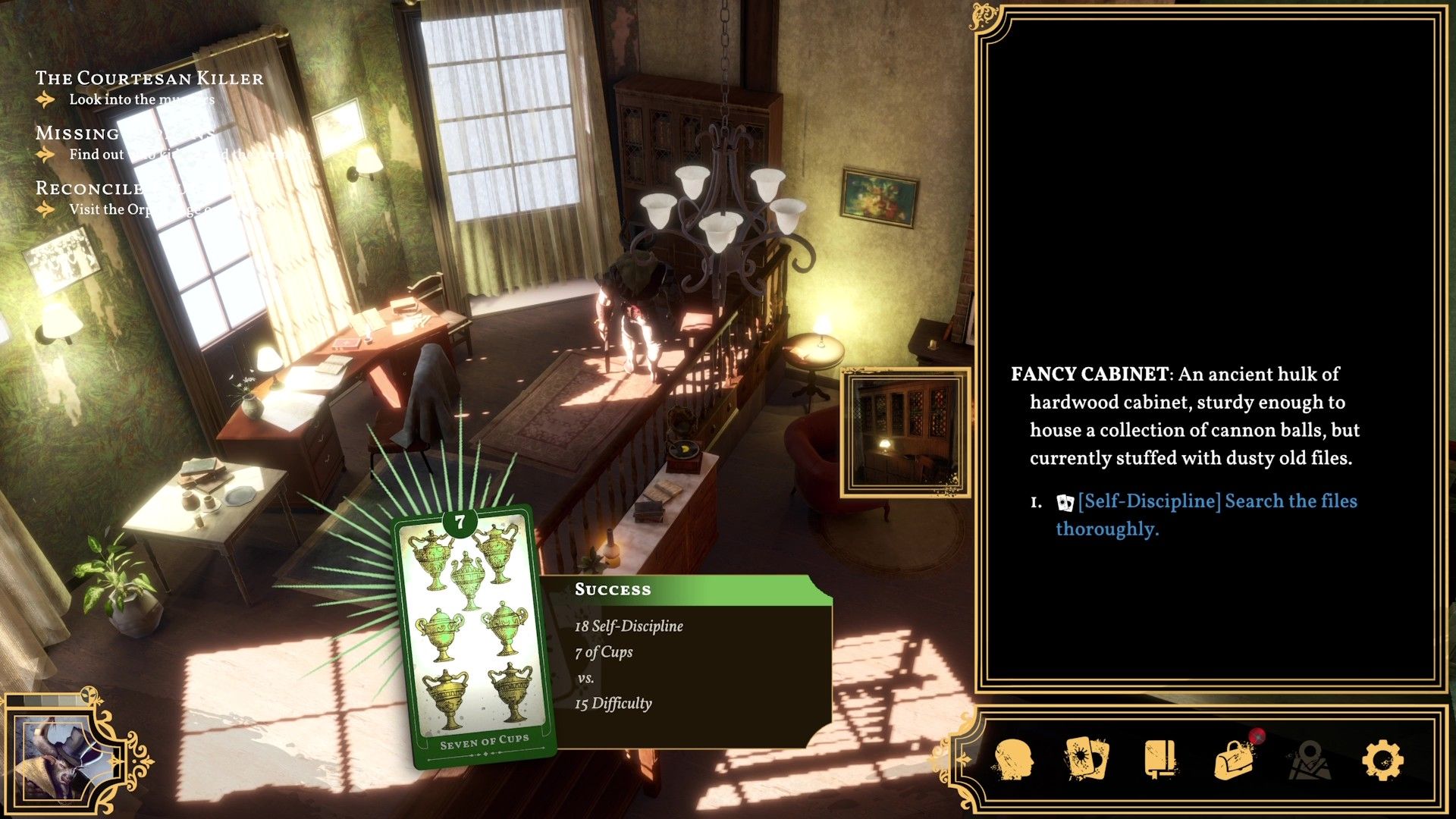
Sovereign Syndicate is still a role-playing game in the sense that you shape the decisions the protagonists make, unlock new response types as a result of their experiences, and influence their outlook on the world. The more effort you put into tackling the secondary content, the more dialogue options you give yourself down the line. However, the initial character class and stylish Tarot card system are just another form of dice roll modifiers, and you can always save-scum your way through any skill-check if you really wanted to.
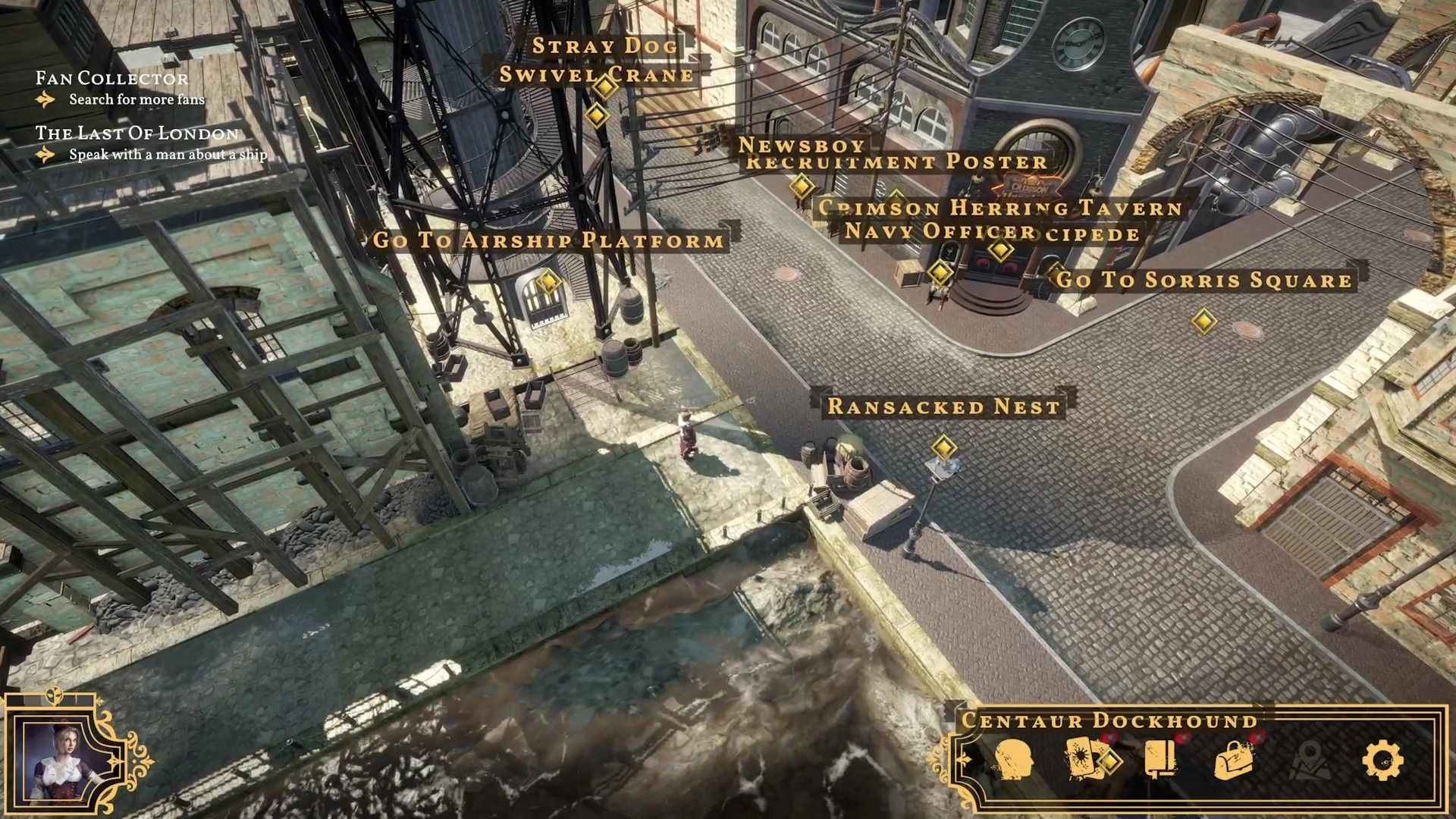
That flexible structure and a focus on lengthy dialogue sequences can make Sovereign Syndicate feel closer to a visual novel with light RPG elements, but that’s no bad thing for those that enjoy reading and using their imagination fill out details that the inconsistent visuals and artwork cannot provide. Set in a Victorian-era London, where steampunk technology and low-fantasy magic coexist, Sovereign Syndicate takes you on a lengthy journey that switches back and forth between three characters, and there’s plenty of minor details and interactions to embellish.
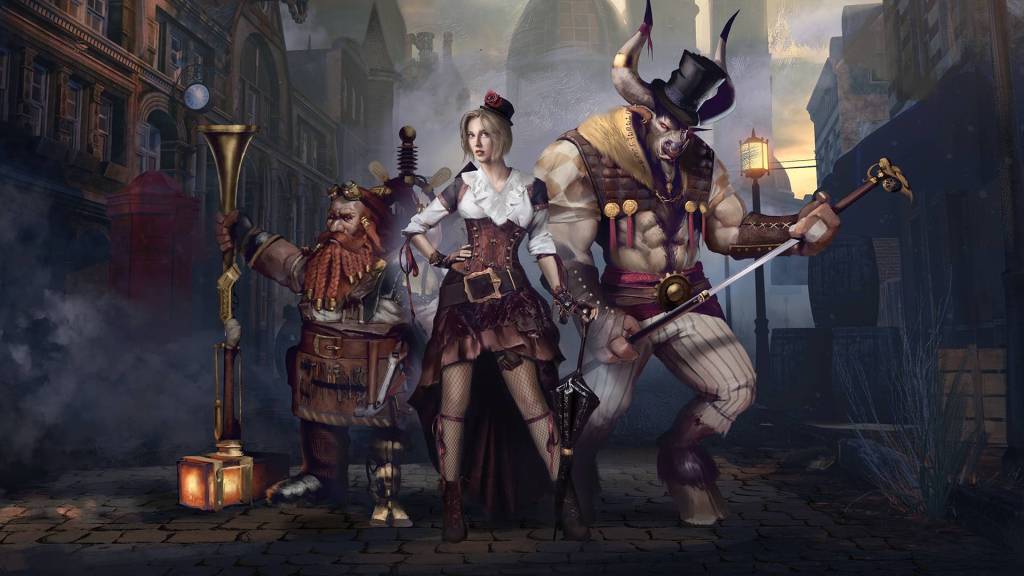
Atticus Daley is a minotaur trying to drink away his troubled orphan past, before a mysterious stranger with gun and a new nagging voice in his head set him on a quest to discover the fate of his mother. Clara Reed is a human courtesan tired of entertaining London’s elite and looking for a way to raise enough money to smuggle herself across the Atlantic. Teddy Redgrave is a dwarf and war veteran, who now spends time tweaking his automaton “Otto” and taking contracts to hunt down mythical beasts and common vermin plaguing London. It is an eclectic cast with different views on the world and characters around them, and each takes the lead on investigating secondary plot lines that run throughout the adventure.
That structure ties into the verbose writing that, while not always consistent in delivery, is wonderfully intricate and expressive. Dialogue with key NPCs, internal monologues, and observations of the world around them are unique for each character. This allows the developers to flesh out every character and dole out heaps of worldbuilding; it provides the player much better insight into the motivations of each protagonist; and simply makes exploring the world incredibly satisfying – albeit only if you’re willing to read.
In contrast, the gameplay mechanics feel perfunctory and drawn out you traverse several areas of London repeatedly, talking to everyone you can in each chapter to ensure you don’t miss important interactions or clues that update quest entries. Tarot card draws for dialogue challenges and environmental interactions are just dice rolls. You have an inventory but there’s little reason to ever open it as key items are flagged in conversations or during interactions when needed. It can grow increasingly tiresome and left me wondering if Sovereign Syndicate would have had better pacing if it gone for map- and menu-driven exploration similar to visual novels or point-and-click adventure games.
That said, Sovereign Syndicate still feels unique and there is little like it on consoles aside from the aforementioned Disco Elysium. It feels like a fantasy-steampunk adventure novel recreated in video game form, and it’ll be a treat for those who enjoy visual novels or those who pore over lore documents in games. You could accuse the writers of overcomplicating or embellishing elements, but I loved the detailed internal monologues, frequent exposition, rich flavour text, and the minor changes to my options as each character evolved. If a visual novel/RPG hybrid with great writing is your idea of a good time, don’t pass up on Sovereign Syndicate (and I hope there’s a Nintendo Switch port at some point).
My first thought when putting fingers to keyboard was just how much better Escape from Ever After could have been if it had spent time with a merciless editor. Coming from a two-person indie team, it has a strong start, solid writing, thoughtful gameplay, and is far from a bad game. The problem is the longer I played, the staler the gameplay loop felt, and the more I noticed the impact of limited assets.
For all vocal fans of the Paper Mario games, there have been surprisingly few attempts to copy that formula – think paper-craft sprites in 3D environments, serving a streamlined RPG that focuses on platforming and puzzles during exploration, and mini-games during the turn-based combat. 2019’s Bug Fables: The Everlasting Sapling is the most successful example that came to mind but Escape from Ever After now offers another indie alternative if you’re looking for more of same or don’t have Nintendo hardware.
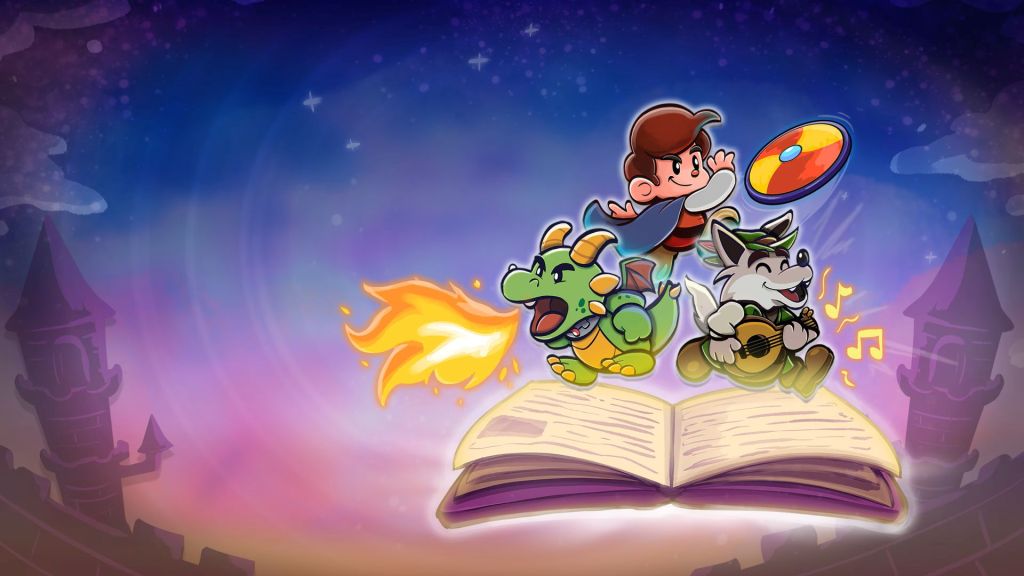
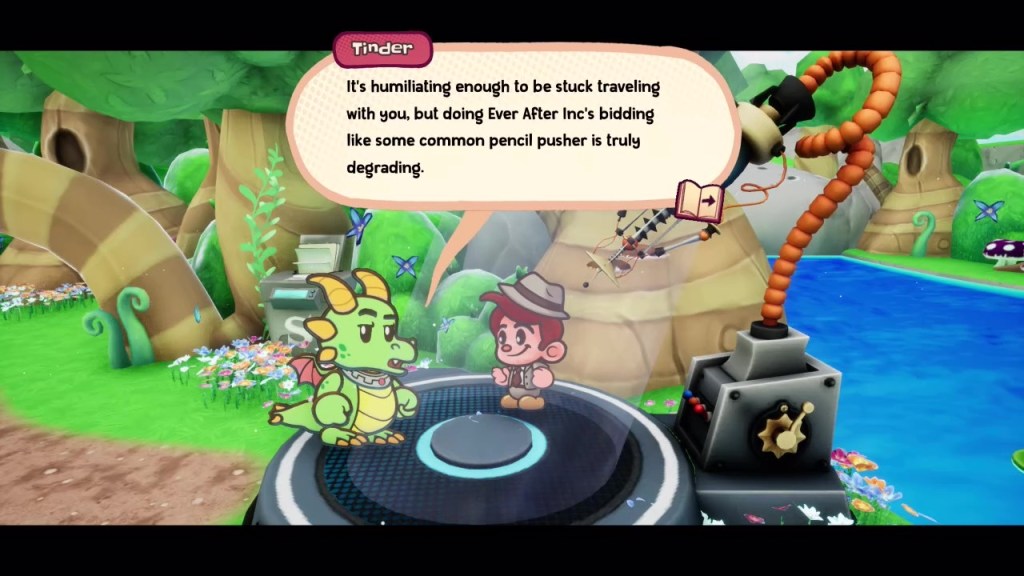
Escape from Ever After benefits from a great promise befitting the aesthetics. Fairytale protagonist Flynn and his arch nemesis, the dragon Tinder, are captured by Ever After Inc – a “real-world” corporation that has figured out how to extend their operations into storybooks, reduce iconic characters to white-collar workers, and exploit their fantasy worlds for profit. Deciding that they could do more damage from the inside, Flynn and Tinder begrudgingly team up and accept an employment contract from the unhinged middle-manager Mr Moon.
The setup provides an excuse to move between the office hub in Tinder’s castle – full of office worker archetypes doling out side-quests – and a half-dozen worlds based (very loosely) on classic fairytales and other literature. There are subverted classics like The Three Little Pigs and Little Red Riding Hood, but also unexpected choices like an amusing, age-appropriate take on Lovecraft’s The Shadow Over Innsmouth. Each world has its own problems, usually exacerbated by Ever After Inc.’s rampant capitalism, and each introduces a companion that’ll join Flynn and Tinder on their adventure. Like the Paper Mario games, it is closer in style to a JRPG, so the few dialogue choices you get don’t have any real impact on how the story plays out.
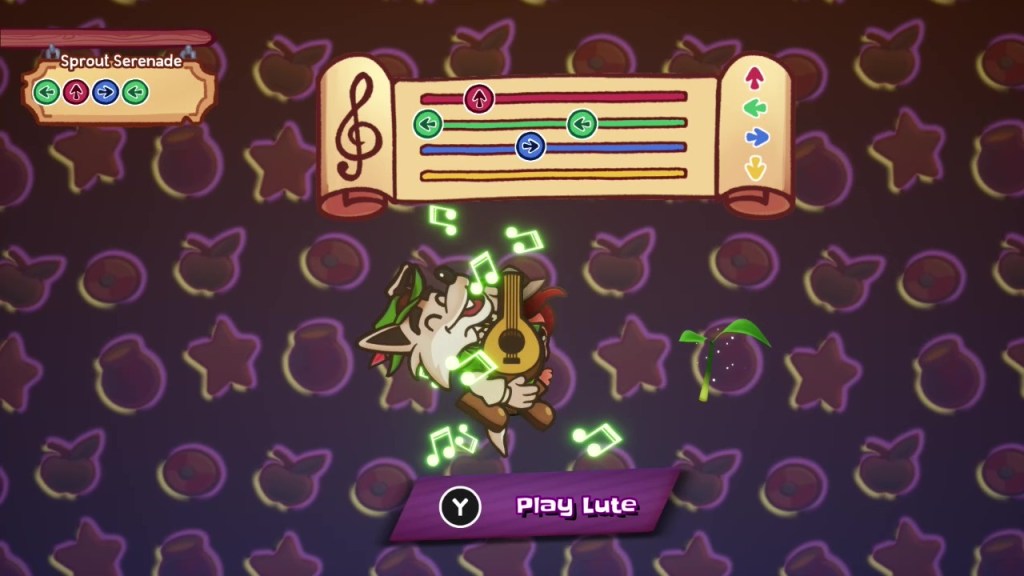
The writing still managed to impress and tug on the heartstrings at times, despite no voice work and the player controlling the dialogue flow, but gameplay dominates the experience. It revolves around exploration, some light platforming and time-based challenges, and also some light puzzling that use your companion’s abilities: think hitting distant objects with Flynn’s buckler, setting things on fire with Tinder, or manipulating plant growth and wind using Wolfgang’s melodies. It makes exploration far more interesting than simply running between set-piece battles and, naturally, you can return to worlds with new companions to use their abilities to unlock new gear, trinkets, or discover ink bottles that upgrade attacks.
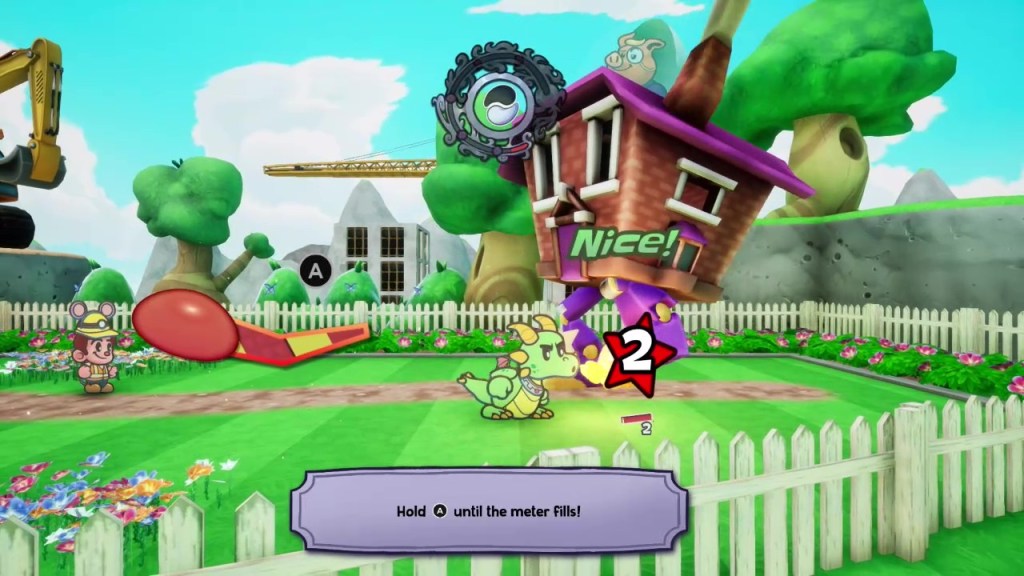
The combat is fun as it’s a low-numbers game, in which most enemies have health points in the single digits, and new gear or skills feel significant rather than incremental. Gaining XP and levelling boosts the party’s max HP, MP, or trinket slots – items that offer interesting buffs and potential trade-offs. More important is which party member abilities you use to deal with enemies that are flying, shielded, armoured, or buffing one another. You need to time button presses for blocks and attacks; complete mini-games to maximise the impact of special abilities; and simply spamming the basic attack will get you nowhere.
Returning to my opening statement, the biggest problem Escape from Ever After faces is the 20-ish hours it takes to roll the credits. Aside from multi-phase boss encounters, there are too few enemy variants; the charming visuals slowly give way to that “made-in-Unity” look; and even the brilliant soundtrack becomes grating once you’ve heard it enough times. As someone who would always take a shorter game with a satisfying conclusion that leaves me on a high, rather than a longer one that simply leaves me relieved to see the credits roll, I can’t help but wonder why so many developers don’t follow the less is more principle?
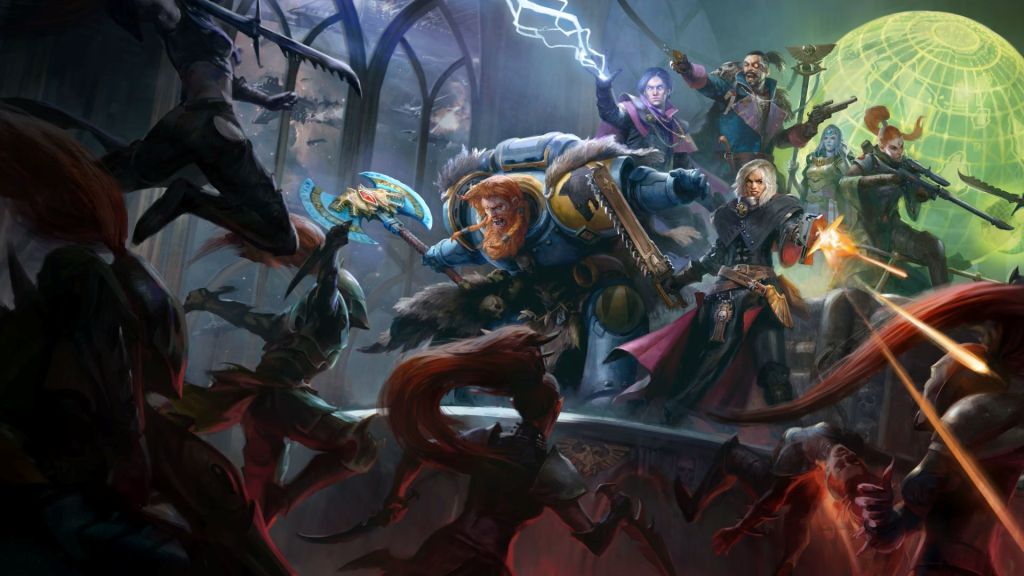
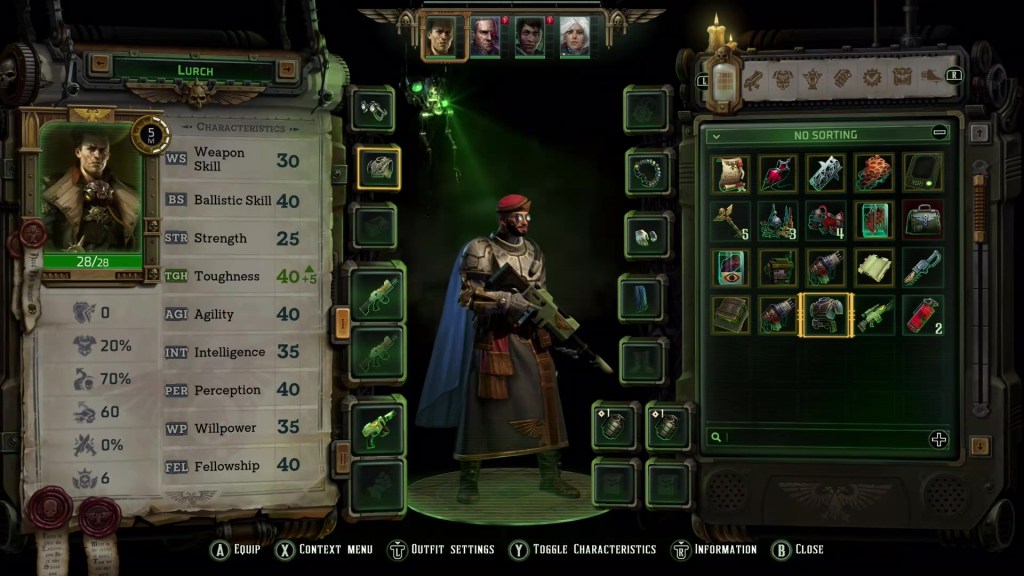
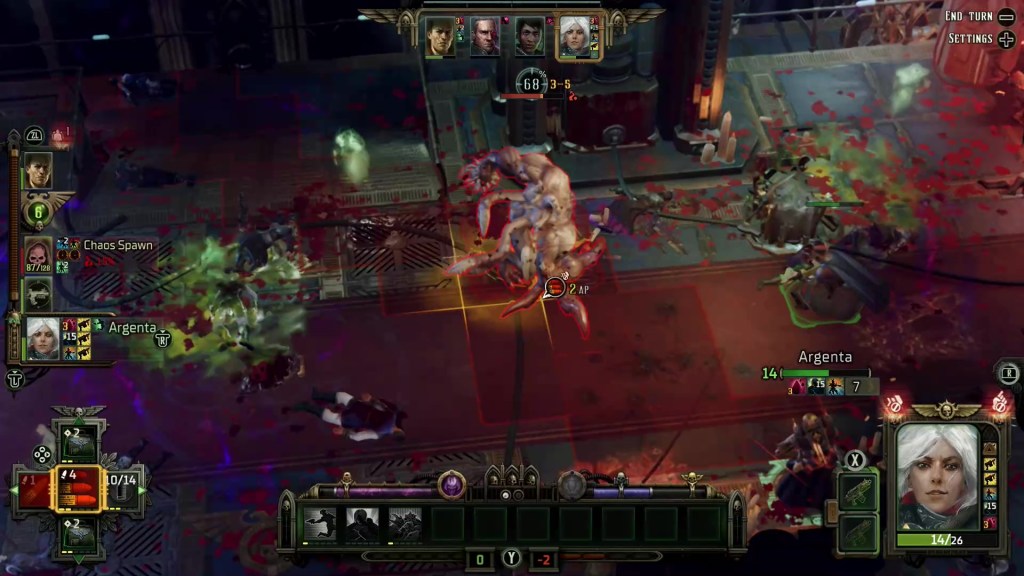
As a fan of classic CRPGs who grew up playing Baldur’s Gate, Icewind Dale, and Neverwinter Nights, I can’t help but love Owlcat’s isometric CRPGs. Just how much I love them, however, depends on the amount of free time I have. Their prior CRPGs based in the Pathfinder universe – Kingmaker and Wrath of the Righteous – have their flaws, but their epic scope and ambition made them easy to forgive once I was hooked. Warhammer 40,000: Rogue Trader continues that time-devouring trend, albeit this time within a distinctly gothic, grimdark, sci-fi universe.
For that reason, the prospect of a Nintendo Switch 2 version, which I could pick up and put down whenever I had the time, was incredibly tempting – despite having sunk 60 hours exploring the Koronus Expanse in the Xbox Series port already. Like all good CRPGs, there is scope for replayability by rolling a different character class, experiencing the impact of tackling missions in a different order, adventuring with a different group of companions, making different major decisions at the end of each act, and role-playing a more ruthless or evil character (not that I ever do).
Having now sunk another two-dozen hours into Warhammer 40,000: Rogue Trader on the Nintendo Switch 2, the results are predictably hit-and-miss given the size of this game and some hardware limitations. Portability always requires sacrifice – especially when dealing with a small screen in a menu- and text-heavy game. On the upside, the outcome is mostly positive if affordable and optimised portable play is your goal. If, however, you intend to make use of the Switch 2’s hybrid nature and occasionally play it on a 4K TV, the results are less impressive.
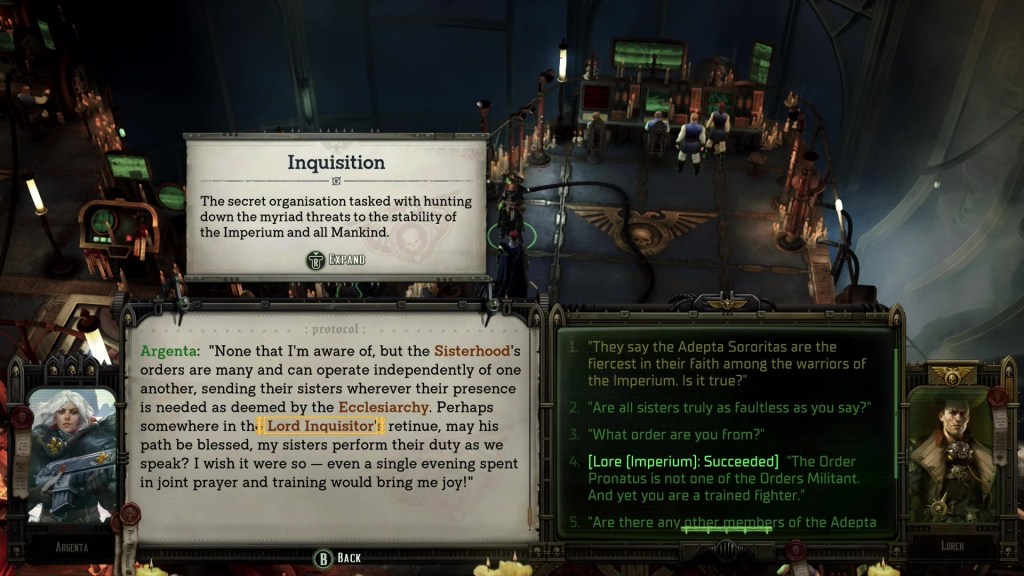
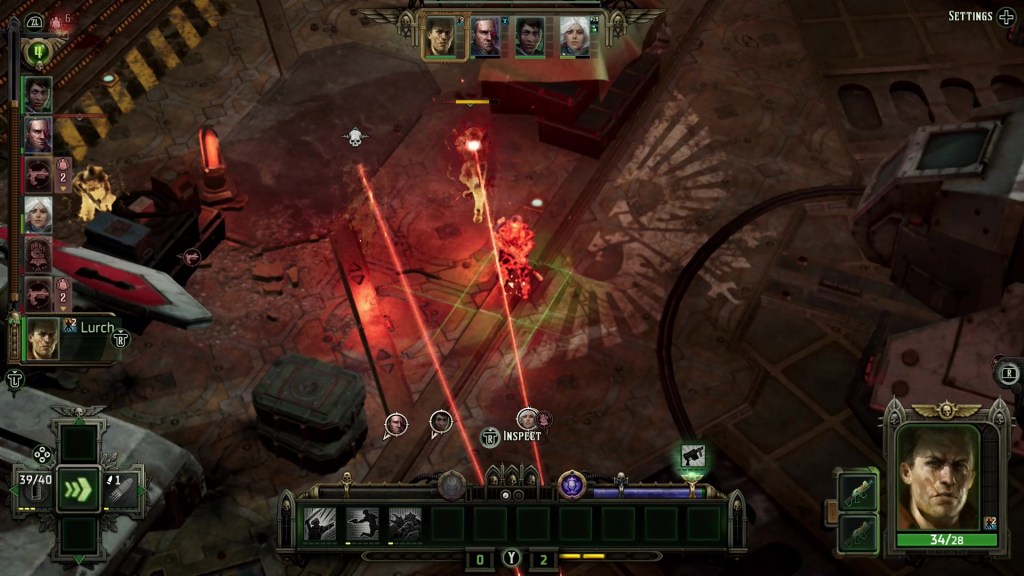
Starting with the good, Warhammer 40,000: Rogue Trader on the Nintendo Switch 2 is feature-complete with no gameplay compromises (and it’s cheap). It is every bit as massive and engaging as the PC version or the other current-gen console ports (and the DLC expansions are arriving soon). The platform has no shortage of lengthy Nintendo first-party adventures and third-party JRPGs, but this is a rare western-styled CRPG for fans of the genre (the other options being literal classics, like Beamdog’s and Aspyr’s remastered D&D IP: Baldur’s Gate, Icewind Dale, and Neverwinter Nights). Isometric exploration, tactical turn-based based battles, dialogue choices with abundant skills checks, more exposition than anyone needs, and major choices that alter the later acts – it’s all accounted for.
It took a post-launch patch or two, but Warhammer 40,000: Rogue Trader on the Nintendo Switch 2 runs as well, if not better than the PC version on the Steam Deck and original ROG Ally (my only other points of handheld comparison). On the handheld screen, enabling TAA produces a slightly softer but less noisy image, while the framerate sticks to the 30fps target outside of a few rapidly panning cutscenes with alpha effects. Coupled with a UI and controller scheme developed and refined for the current-gen consoles, it feels more than responsive enough for general exploration and the turn-based combat. Even the load times are respectable, albeit a little longer than on the other consoles.
The are, however, three issues of note – one subjective and two with gameplay implications. When docking the Nintendo Switch 2 and connecting to a 4K TV, you are getting a better experience than the Steam Deck or ROG Ally is capable of. However, the image is notably blurrier than when playing on even the budget Xbox Series S (especially when dynamic resolution scaling kicks in), and it appears to lack some post-processing effects that leave environments looking too bright and lacking depth. Of course, visual quality is subjective and the ability to easily suspend, resume, or continue your game away from the TV is a major perk.
More problematic are the awkwardly overlapping menus, tooltip boxes, and tiny text when playing in handheld mode. Navigating exposition-heavy dialogue menus, cycling between environmental text descriptions, and comparing items in the inventory is a core part of any CRPG and incredibly frustrating on a small display. One potential solution is using a Joy-Con 2 as a mouse, but the implementation is an all or nothing approach. The gamepad UI is replaced by icons around the screen and almost every aspect of the game is controlled by the mouse, slowing down the pace by making actions like simple camera control frustrating.
Ultimately, you’ll need to consider how plan to play Warhammer 40,000: Rogue Trader on the Nintendo Switch 2. If you play mostly in portable mode, it is an impressive version that looks and performs better than all but the most high-powered handheld PCs. The text size and limited screen space is an issue, but the rest of the port is solid and it looks good on a small screen. If, on the other hand, you alternate between portable and docked play (or if your Nintendo Switch 2 lives under the TV most of the time), Warhammer 40,000: Rogue Trader looks rough in comparison to other current-gen console ports, and the mouse controls need more refining. All that said, if the Nintendo Switch 2 is your only console, CRPG fans should jump on the opportunity regardless.
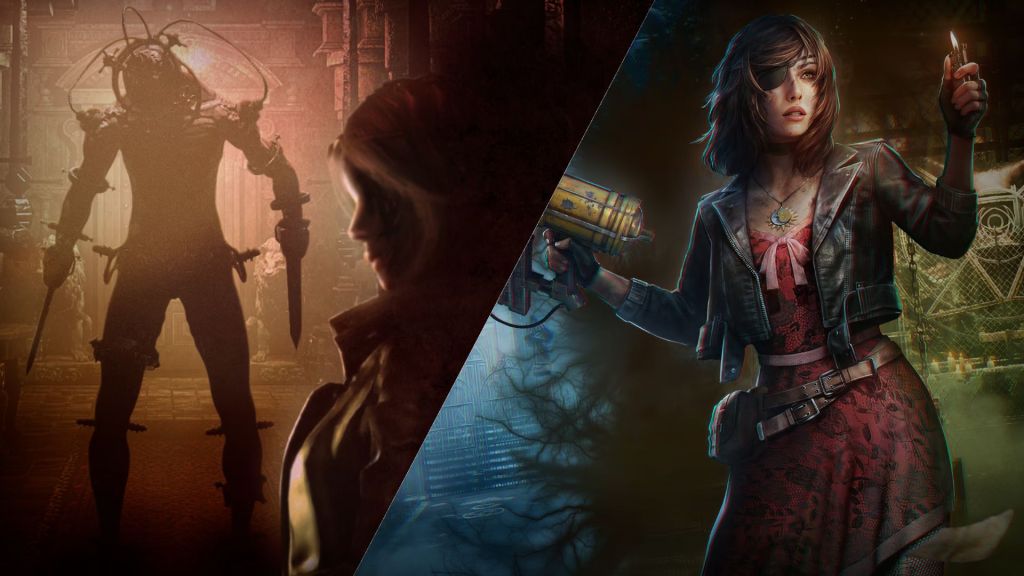
I regret sitting on the Tormented Souls games until a few months after the sequel arrived in 2025. As a long-time fan of classic survival-horror – going back to fixed camera angles and tank controls – both games are slightly uneven but impressive indie alternatives from Chilean developer Dual Effect.
They have all the trappings of the classic Resident Evil and Silent Hill games: think fixed camera angles, inventory management, save rooms with soothing music, a mix of logical and absurd puzzles, and combat that is more about conserving supplies and using the right tools, rather than skilful movement and aiming (though that certainly helps).
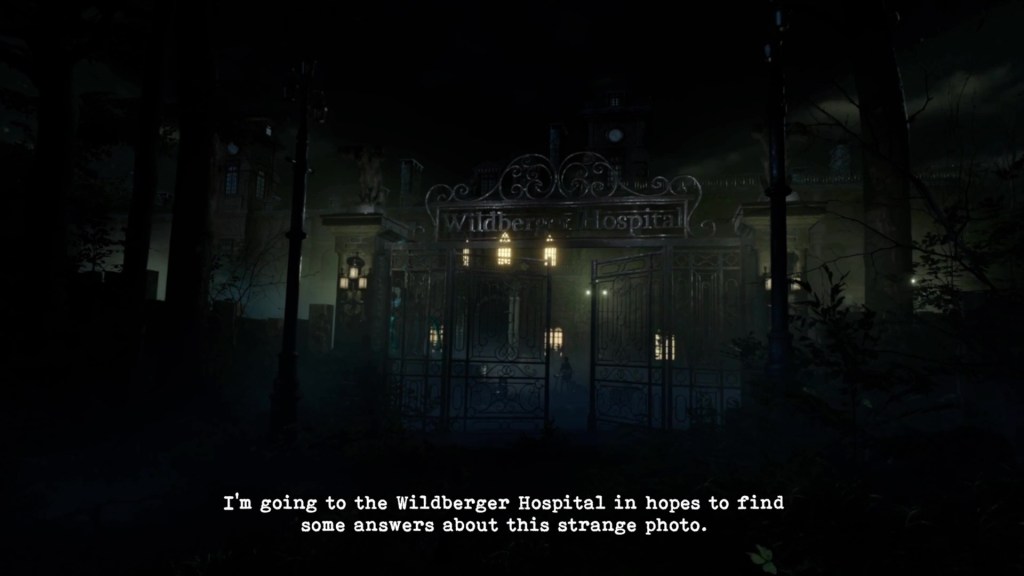
The setup for Tormented Souls is simple but effective, with limited exposition and lingering questions that benefit the narrative flow. Protagonist Caroline Walker receives a photograph of two girls – the sight of which causes her extreme pain. Following the address on the back of the photo, she travels to the remote Wildberger Hospital, sneaks inside, and ends up clubbed from behind.
She wakes up naked in a bathtub, missing an eye, and with no clue as to what’s going on or why twisted monsters now stalk the halls. Like the best horror games, this leaves the player and protagonist on the same journey of discovery, without being burdened by too much prior knowledge that could ruin the sense of mystery or take the edge off the horror.
That said, the storytelling is somewhat limited outside of a few key cutscenes towards the end of the game.
She meets a priest seemingly oblivious to the monsters; encounters the little girl seen in the photograph; and discovers plenty of notes and audio recordings that recount the tragic story of the Wildberger family and the horrors that took place. Taking a few optional steps to save Anna is canonical, but it’s not too hard to get the “true” ending if you’re paying attention.
Without wanting to spoil too much too soon, the sequel picks up right after the first game, as the Caroline and Anna seek solitude and healing at an old monastery. The same forces that consumed the Wildberger hospital reemerge in this new setting with an equally dark past. Many of those who offered salvation have become twisted by their own desires, shame, and guilt, which leaves Caroline on a quest to save Anna again in another monster-ridden setting.
Once again, there’s a secondary cast that may or may not be trustworthy, and your actions towards the end of the game – primarily based on your willingness to backtrack – are important to save a key character and unlock the true ending.
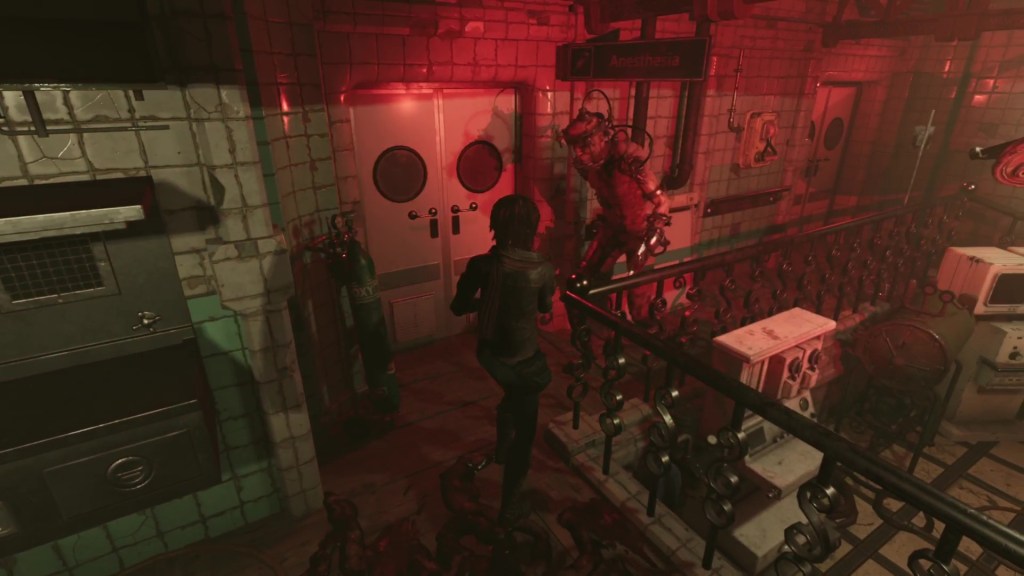
All that said, the Tormented Souls games are more body-horror than psychological-horror. The setting, brisk pacing, and narrative beats kept me engaged and pushing forward through both games, but they ultimately serve as an excuse to drag Caroline through increasingly decrepit, bizarre, and blood-stained environments packed with an inordinate number of key items and puzzles.
The original Spencer mansion in 1996’s Resident Evil felt illogical, with misplaced keys and puzzles that forced you to backtrack from one side of the mansion grounds to the other. In contrast, the Wildberger Hospital and Villa Hess veer more towards Silent Hill levels of weirdness – including unexplained time-travel and Tormented Souls’ own take on a twisted “otherworld”.
Of course, it all boils down to locked doors and key hunts, but what counts a key item can be wildly variable and is often just one step on the path towards another key.
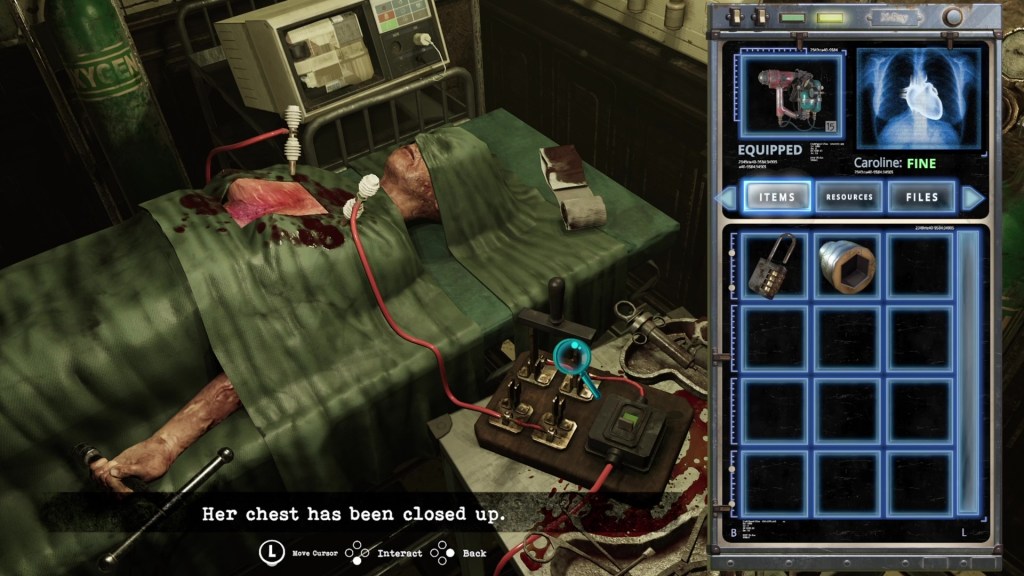
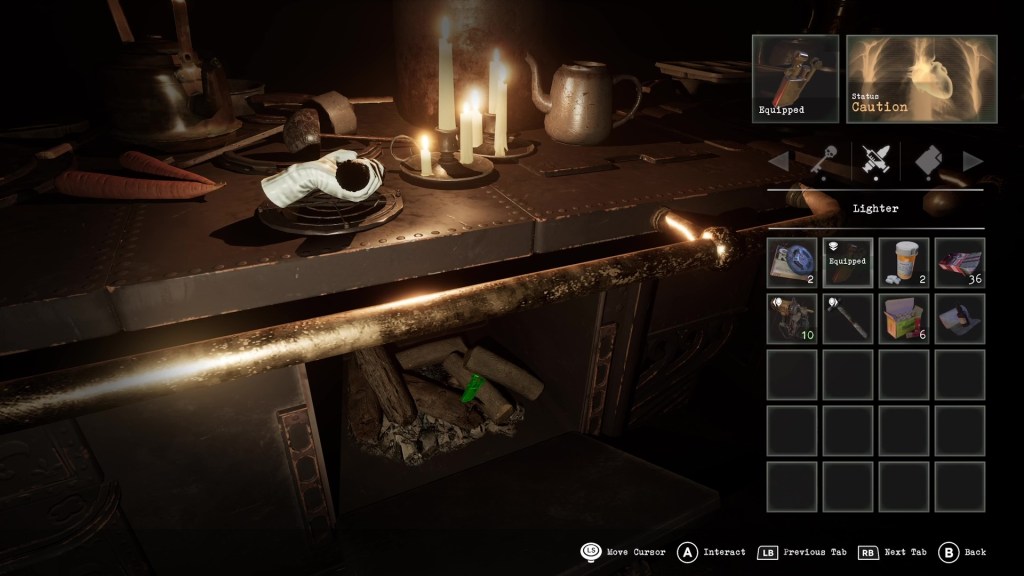
There are clues to codes found in both documents and environmental details; darkness is lethal but there are times you need to disable light sources to solve puzzles; inspecting and combining items within the inventory screen is mandatory; and most puzzles involve working out the right sequence of actions (with enough variables that brute-forcing the solution is difficult).
If you enjoy sifting through notes, jotting down notes from environmental text, and solving twisted puzzles, Tormented Souls 1 and 2 should be on your radar. The only problem, perhaps, is that the puzzles and other designs can feel derivative; an amalgamation of the best parts of other survival-horror classics. The sequel is a far more confident game and more cohesive in design, whereas the original Tormented Souls feels disconnected at times despite still offering entertaining puzzles.
On the topic of derivative mechanics, the combat in both games is never more than fine. Unless I missed something, the DIY weapons Caroline uses don’t seem to make any sense in the context of her character, but the modified nail-gun and a pipe-based shotgun look and sound suitably powerful as you blast enemies to the floor and finish them off with a melee weapon to conserve ammunition.
The combat always feels secondary to the puzzles and even the rare boss fights rely more on pattern recognition and using items to end the fight, not simply unloading your most powerful ammunition into them.
This skewed focus is most notable in the first game, in which clearing out areas to run around freely and focus on puzzling is easier. Tormented Souls 2 tries to keep you on your toes by repopulating areas with monsters more frequently, but if you ever get stuck on a puzzle, it’s still not uncommon to find yourself looping through empty corridors and rooms looking for a key or clue you missed.
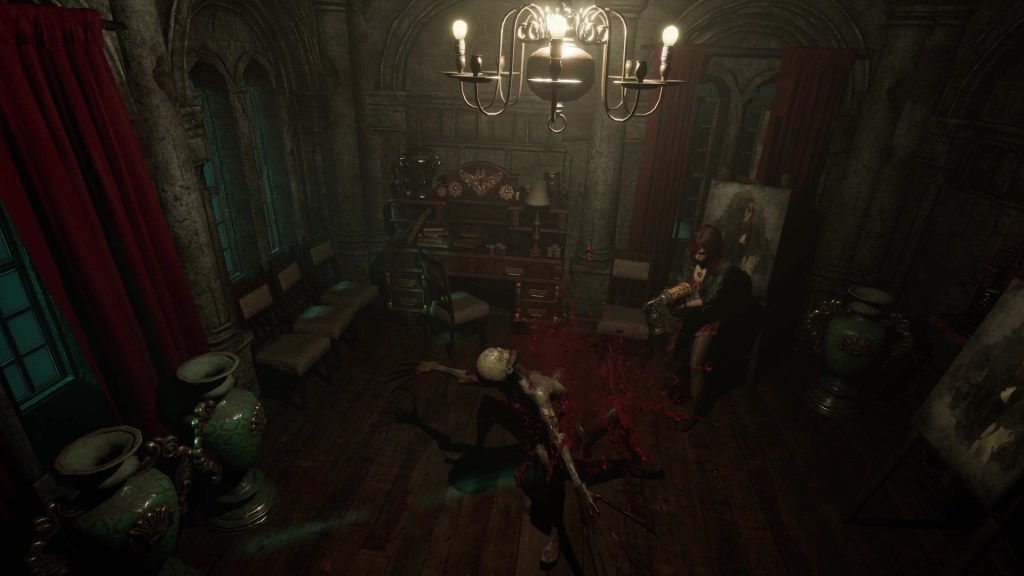
Some might find that design unsatisfying but, returning to the title of this piece, the Tormented Souls games are for those who like a spot of survival-horror in their puzzle games. If you look past the dubious titillation from the opening scene of the first game, Dual Effect has consistently created environments that are mix of beautifully detailed and terrifying, thick with an atmosphere of dread, elevated by creepy ambience and music, and packed with challenging puzzles to solve.
If solving weird, twisted, and sometimes illogical puzzles are why you love classics survival-horror games, don’t pass over the Tormented Souls games because of their indie status and budget-pricing.
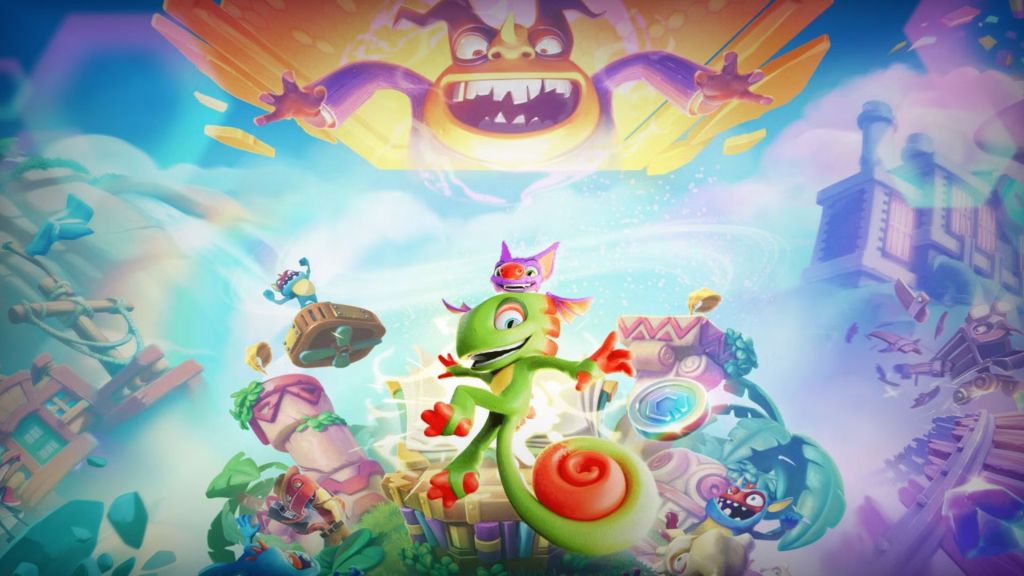
It has been a while since I’ve seen a remaster with a title quite as awful as Yooka-Re-Playlee, but it feels appropriate for a game that was developed as a shameless nostalgia-driven mash-up of classic 3D platformers. This remastered edition offers a spruced up and definitive version of the 2017 original; a genre I’ve found myself returning to more often in a post-Astro Bot world.
The biggest problem with Yooka-Laylee however, in both its original and remastered form, is that making fun of classic designs without ever subverting them can only take you so far. That is not to say Yooka-Re-Playlee is a bad game – it simply struggles to stand out in a crowded genre. An even bigger problem when so many of classics that inspired it are still accessible through remasters, backwards-compatibility, or emulation.
With a handful of quality-of-life additions and an admittedly impressive visual overhaul, Yooka-Re-Playlee offers up a competent but predictable 3D platformer. It intersperses brief storytelling scenes – which are still unvoiced – with extensive collectible hunts within small but dense game worlds.
In classic fashion, once you collect enough MacGuffins (PAGIES!), you unlock another game world to explore from within an evolving hub (and you might receive a snippet of storytelling for your efforts). You repeat the process through five worlds before tackling an end boss to roll the credits. It is a formula that goes back to Super Mario 64 and can offer methodical fun if the pacing is good.
At first, Yooka-Re-Playlee nails the pacing by ensuring the hub and each world you explore feel visually distinct and are packed with diverse platforming challenges and dozens of mini-games. The variety is essential as despite the remaster granting you the full move-set from the start, the combat is mostly one-note and rarely asks more of you than spamming a spin-attack and jumping to avoid damage.
You have classic 3D platforming that can shift into 2D-gauntlets or isometric sections that will test your depth perception and timing. Bosses are all about pattern recognition and skilful movement as you bide your time until they’re vulnerable to damage. With an updated camera and controls, the basics feel slick, responsive, and satisfying if you’re after a traditional experience.
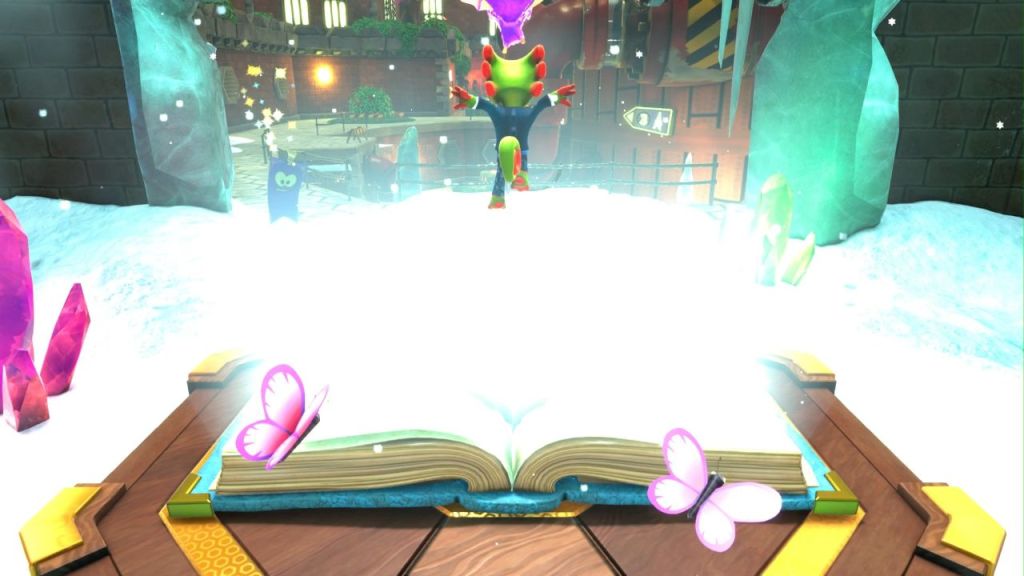
The problem is that progression boils down to collecting “pagies” (PAGIES!) that are scattered from a magical book during the introduction. Rather than just a handful of essential pagies (PAGIES!) to find in each world, the developers have included hundreds of them. Far more than you need to reach the final boss and sometimes split into fragments or alternate forms for good measure.
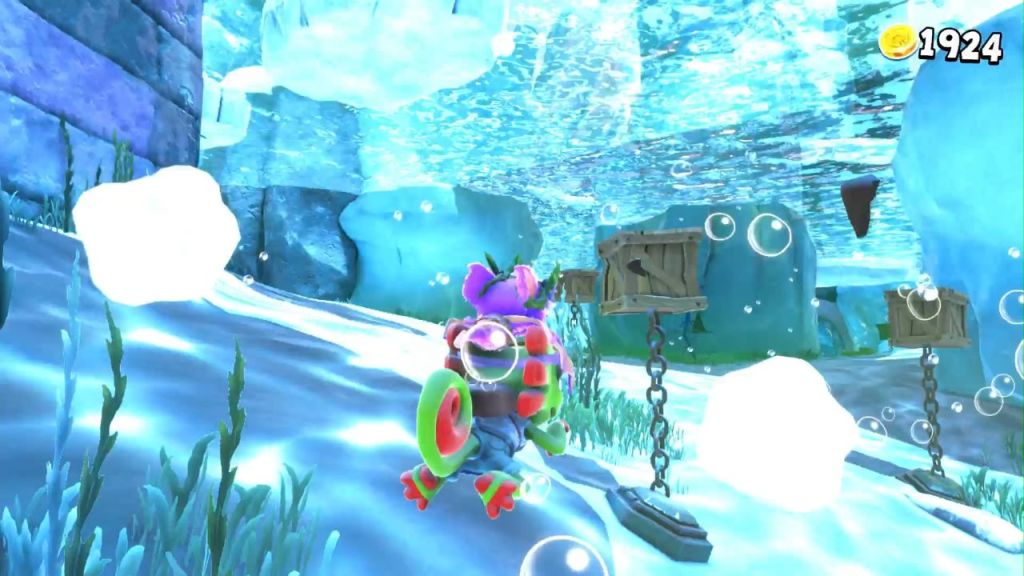
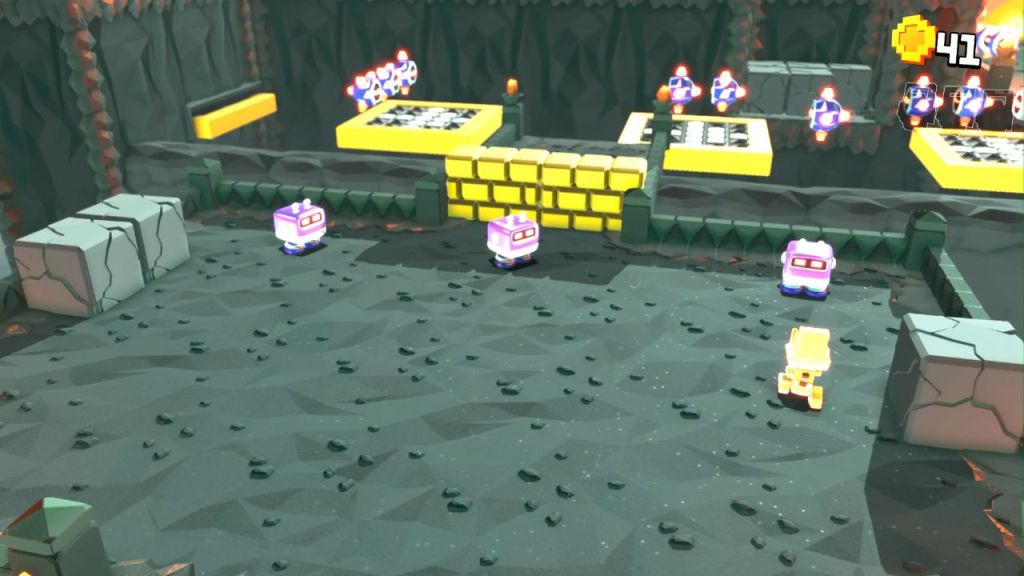
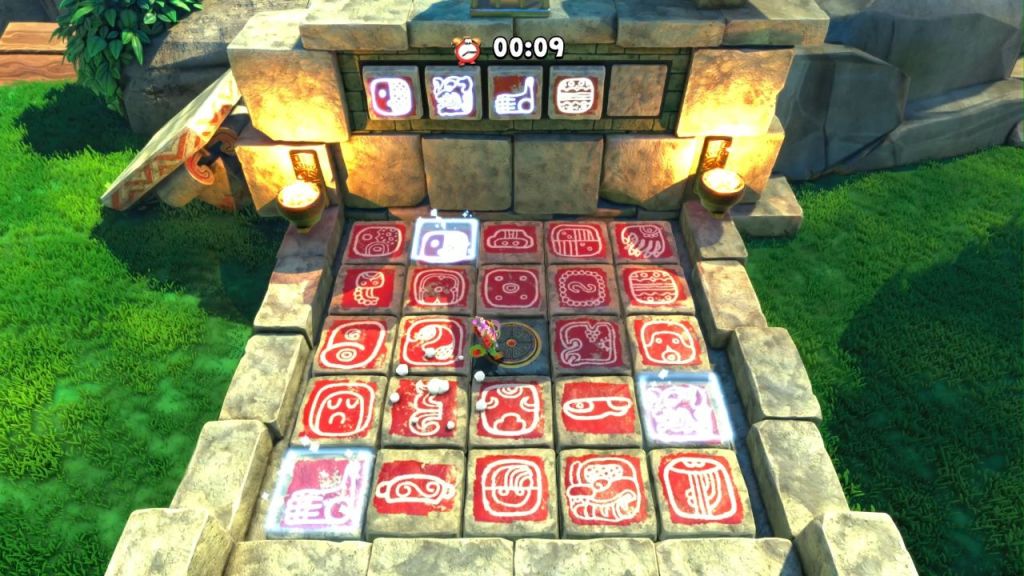
Starting with the good, they clearly realised variety would be essential between the platforming challenges, so there are dozens of mini-game variants. There are time-trials and races – on foot, underwater, or in the air; puzzles based on elements, patterns, and symbol-recognition; minecart rides; arena battles; target practice; a transformation gimmick in each world with associated mini-games; and even an entire series of arcade games you can tackle within the game.
That is not even an exhaustive list though it is worth noting many of these challenges have been tweaked for the remaster to ensure they control better.
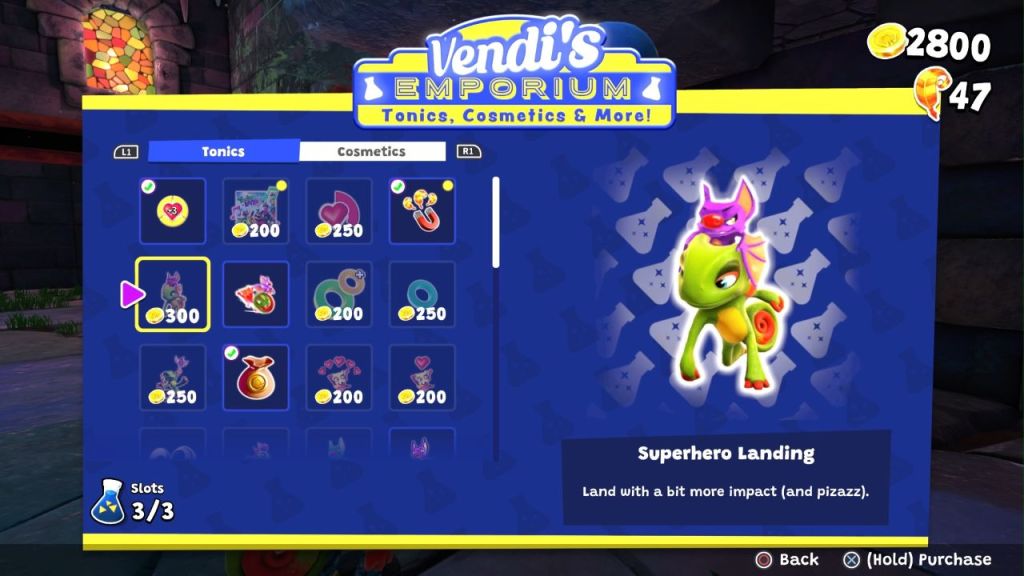
In addition to the endless stream of pagies they provide – as often as every 30 seconds if you’re on a roll – you have two currencies: one for passive upgrades and another for cosmetics and tonics. The tonics are the most worthwhile addition, as you can equip them to make the game easier, harder, or just weirder. It all sounds great but there are problems.
I’ll start with the plot, which is threadbare, and the characters that are an acquired taste. Yooka the chameleon and Laylee the bat form a great duo where gameplay is concerned, but their clashing personalities feel forced in dialogue. The video game-centric jokes and “quirky” NPCs (with some official cameos) are neither funny nor particularly smart, outside of a handful of interactions that made me chuckle. The lack of voice work is a big issue as button-mashing throughs lines of text mean there is no control over the delivery or timing of lines.
The bigger problem is that each new world you unlock shares the same assortment of mini-games. That diversity is great during the opening hour or two, but even with changes to streamline the experience, you’ll be going through the same motions for another 6-7 hours. Despite plenty of quips about video game tropes and greedy corporations, Yooka-Re-Playlee never plays off those observations in a meaningful way.
It’s a game that wears its N64-era inspirations on its sleeves – with shared mechanics and in-game references to Super Mario 64, Donkey Kong, and, of course, the buddy-duo Banjo-Kazooie – coupled with plenty of modern cameos or references. If you’re a fan of those classics, or even if you’ve played any other recent 3D platformers (indie or AAA), little will surprise you.
All that said, the new tonic upgrades and low level of challenge could make Yooka-Re-Playlee a decent introduction to the 3D platformer genre for new or younger players. The improved visuals, camera, and controls are significant updates, while features like the unlocked move-set, detailed map, and fast-travel points make the endless hunt for Pagies (PAGIES!) more bearable. However, it’s harder to recommend Yooka-Re-Playlee to all but the most die-hard 3D platformer fans when better options are available.
Like the Beamdog “enhanced” ports before it, Aspyr’s Neverwinter Nights 2: Enhanced Edition feels aimed at one of two audiences. The first are nostalgic gamers looking to relive their cherished memories, albeit at the potential cost of ruining them. The second group are likely younger gamers curious about the evolution of CRPGs, from the Infinity Engine classics – with their great writing, gorgeous 2D backdrops, and sprite work – into fully 3D worlds with more voice work, detailed character models, and flashy combat animations that felt increasingly at odds with dice-roll outcomes.
Tellingly, Neverwinter Nights 2 was the only CRPG in the current enhanced roster that I never finished at launch (and that’s including Aspyr’s Switch-exclusive “remasters” of Star Wars: Knights of the Old Republic 1 & 2), and it took me a while to gather my thoughts. Regardless of my opinion, I want to start by praising the preservation value of these enhanced ports – especially on modern consoles, where backward-compatible libraries are becoming as important a feature as on PC. JRPGs emerged on the early consoles and have been extensively ported, remastered, or remade, whereas western-developed CRPGs only gained widespread popularity on consoles during the Xbox 360 and PlayStation 3 generation, after the release of real-time, action-oriented titles like The Elder Scrolls IV: Oblivion and Mass Effect.
An obvious issue was that CRPGs were designed exclusively for PC at first, with many featuring real-time-with-pause combat built around mouse and keyboard inputs. Neverwinter Nights 2: Enhanced Edition offers updated controls and a tweaked UI, a claustrophobic over-the-shoulder camera toggle, and solid performance on all consoles (including the Nintendo Switch 1), but these changes can only achieve so much. It remains awkward to play with a gamepad, and that adds a layer of frustration atop a game with no shortage of frustrating elements. That said, the native gamepad support offers greater accessibility and handheld potential for PC players.
As for the game itself, Neverwinter Nights 2: Enhanced Edition is a slow-burn RPG – even when compared to its sluggish 2002 predecessor that offered an official campaign and expansions that could feel like custom modules built on a budget with limited assets, rather than an epic, hand-crafted campaigns (though, to be fair, the Infinity Engine games also padded out their worlds with repeating outdoor tile-sets and copy-paste interiors, but I found the unique locations and set-pieces more memorable than in the later 3D games).
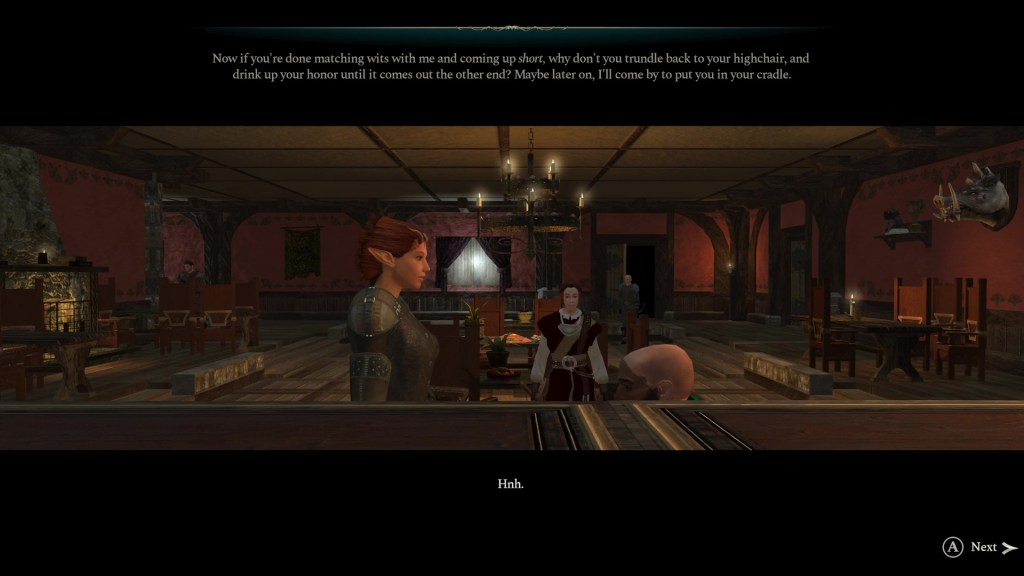
For the 2006 sequel, Obsidian used the Electron Toolset – an evolution of the Aurora Toolset – to create a more diverse RPG, but still one clearly built from an asset library. It reintroduced a world map; ditched the formulaic hub-with-four-adjacent-regions design; restored full party management mechanics; and massively improved companion interactions with the player, NPCs, and each other. Unfortunately, at least where the main quests are concerned, the role-playing complexity and player freedom feels limited compared to the Infinity Engine titles. I appreciated the frequent cuts to what the villains are up to in the background, but the overarching quest is linear, significant choices feel artificially binary, and it retreads many familiar themes between a handful of memorable twists.
Throughout the lengthy prologue and your formative hours in and around the titular city of Neverwinter, you’ll tick off a checklist of CRPG tropes. You’re the adopted child of a former-adventurer father who won’t talk about a past battle and the fate of your mother; the opening village fare has you and your tutorial companions participate in tests of melee, ranged, and magical skill before tragedy inevitably strikes; the opening hours before reaching the city of Neverwinter are a microcosm of mid- to late-game scenarios; and every conflict you can resolve without violence – through a mix of logical replies or attribute-checks – represents a potential ally against an overarching threat later.
There are a dozen companions – some you can romance – that cover an eclectic mix of archetypes. They have their own questlines and character growth that the player can influence – all of which pays off during the final battle. Examples include an angsty rogue looking for guidance; a brawling dwarf with a curious moral code and desire to become a monk; an aloof Elven druid who finds herself dependent on others in civilised lands she’d rather avoid; an overconfident, trash-talking sorceress that trouble follows; and an unhinged Gnomish bard with a fondness for lengthy conversations. Unlike the first Neverwinter Nights, they all play a more active role outside of their personal quests. They can calm or antagonise NPCs and will often debate with the player or among themselves when you’re trying to resolve a quest.
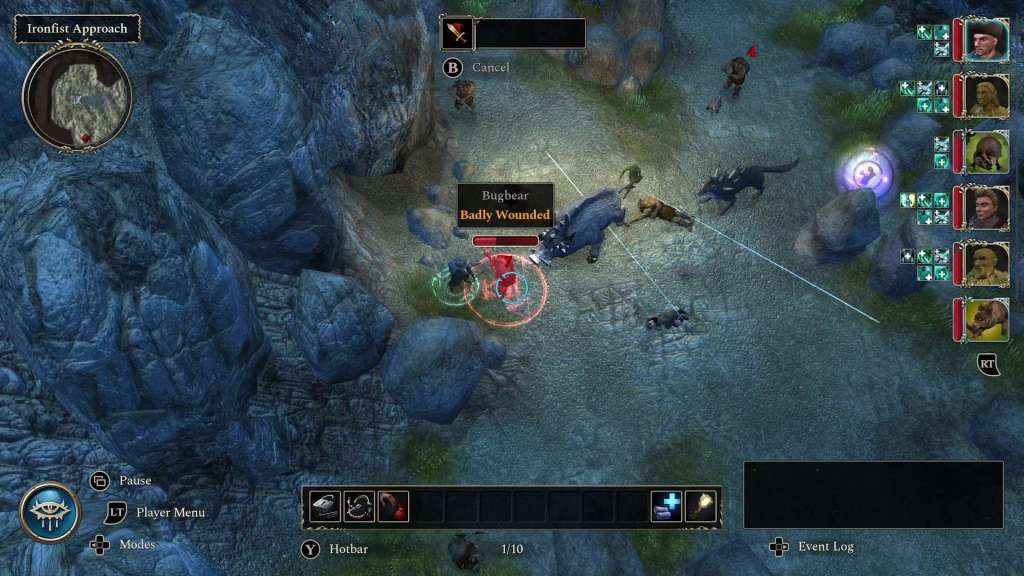
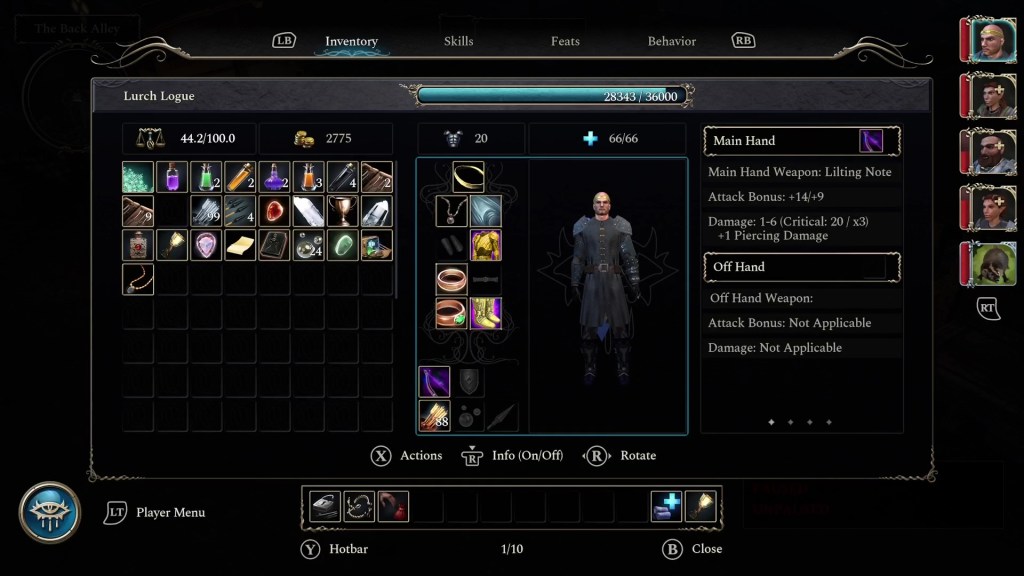
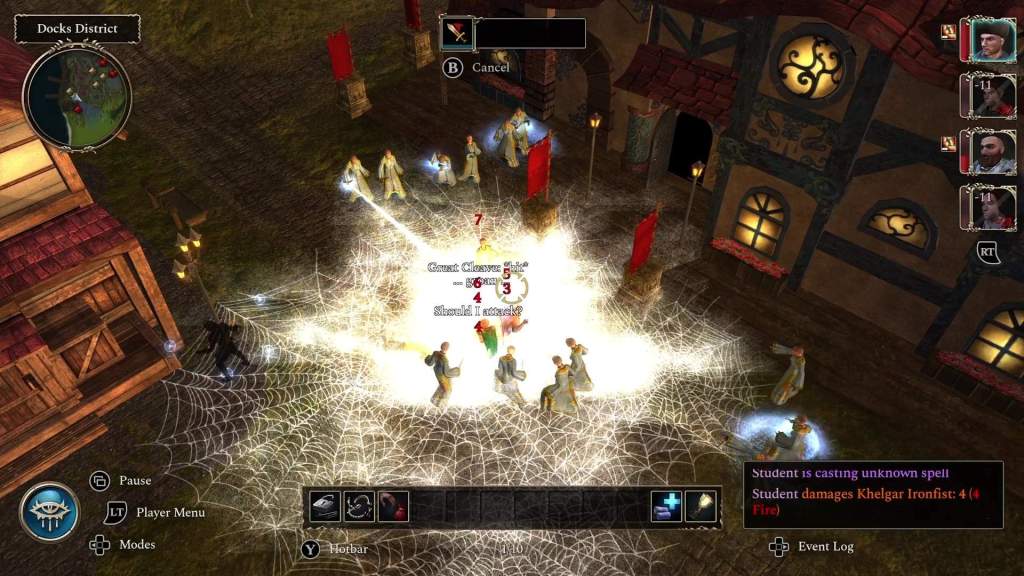
That constant party interaction and frequent dialogue choices are highlights as the gameplay is, at least well into the second act, poorly paced and unbalanced. The frequency of levelling drops off quickly and too much time is spent simply running back and forth between quest givers. You’ll need to stop to loot, purchase, compare, and equip gear to stay ahead of the escalating and uneven difficulty curve, and it’s essential for players using a gamepad to frequently update the hot-bar, set up AI behaviours, and memorise the best buff and de-buff spells for auto-casting. Without a “story mode” difficulty, sudden spikes – such as early battles against mobs of backstabbing rogues – can kill pacing when most quests involve combat.
If modern turn-based or action-RPGs are about incremental progress – the thrill of watching numbers go up – Neverwinter Nights 2: Enhanced Edition is a reminder that most early CRPGs were about exceeding thresholds. Your attributes and gear modify dice rolls that influence total damage output and defence, sure, but only if you exceed thresholds. If you’re not fielding a mixed party, constantly using skills and magic, and resting between every battle to recharge them, you’ll spend an inordinate amount of time watching your party do little as they fail to exceed an enemy’s armour class, spell or damage resistance, and saving throws. There’s no denying the D&D 3.5 ruleset provided a lot of flexibility for character builds and party synergies, but those here for the story, character, and interactions will find it ends up dominating the experience.
Going back to this type of RPG in 2025 is jarring, even as someone who played them throughout the late ‘90s and early 2000s. Despite the semi-linear progression – with new areas and quests opening up as the plot demands – the difficulty curve feels erratic. You can go from steamrolling a mage before they get a spell off, to watching your entire party wiped by a single bandit in plate armour, which forces you to be incredibly cautious and save-scum by default. It’s far from ideal, but if you are just after a taste of the Neverwinter Nights 2 experience, jumping into the standalone Storm of Zehir and Mysteries of Westgate expansions might be the better choice.
Despite ending on a negative note – which feels weird having readily sunk another 30 hours into it before writing this up – I am glad it exists, if only to preserve another RPG from a time when player choice, frequent attribute checks, and variable quest outcomes were the focus; not production values and hours of self-indulgent cutscenes that run on so long they trigger my console’s power-saving screen-dimming feature. Neverwinter Nights 2: Enhanced Edition reminded me that the original marked the end of an era for CRPGs, soon to be replaced by more hands-on, gamepad-friendly, action-RPGs that would go on to permeate every other genre.
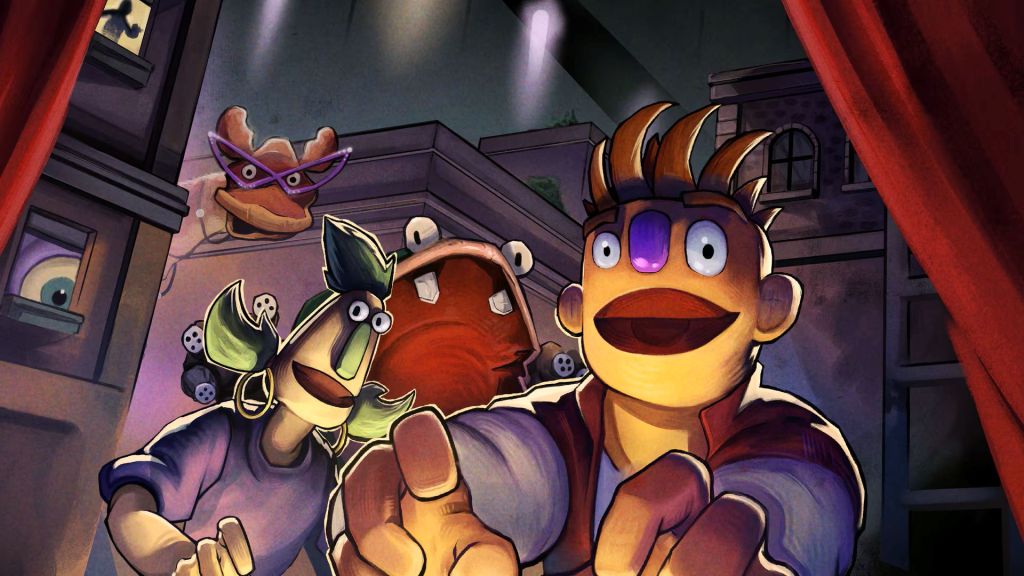
It has taken two years for My Friendly Neighborhood to arrive on consoles, but it still deserves a top spot on the short list of survival-horror games that go beyond simple body-horror monstrosities and laboratory experiments gone wrong. There is no shortage of tension and a few jump scares to be had, but it also demonstrates a surprising amount of charm and heart that you find in rare cosy-horror titles like Crow Country or Sorry We’re Closed.
Terror and heart in equal measure
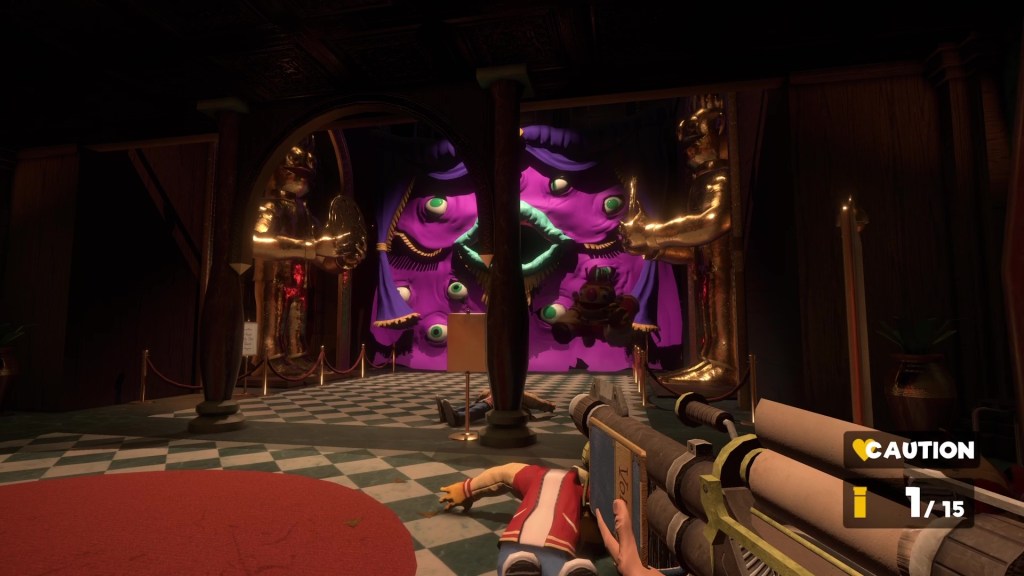
The cartoonish aesthetics, the focus on a failed children’s puppet show, and the post-war-not-quite-USA setting make for a weird and unsettling experience that plays on established horror tropes while weaving in real-world societal problems. The result is a game that you could breeze through and appreciate the mechanics, while paying little attention to the plot and cast. However, if you read all the lore documents, listen to the puppets’ rambling, and spend some time solving puzzles and backtracking to help the puppets that originally stalk you, it makes the narrative so much more rewarding.
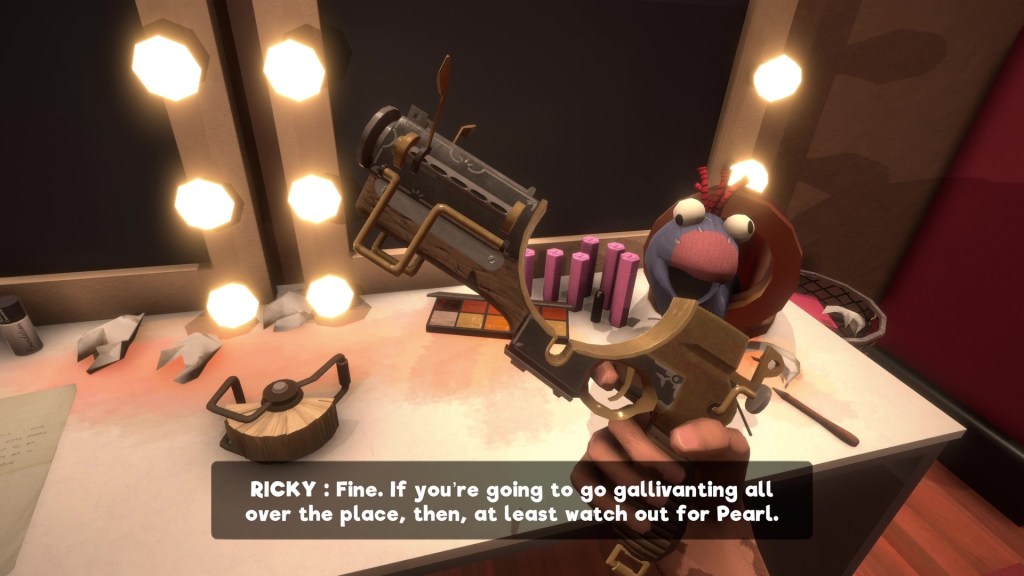
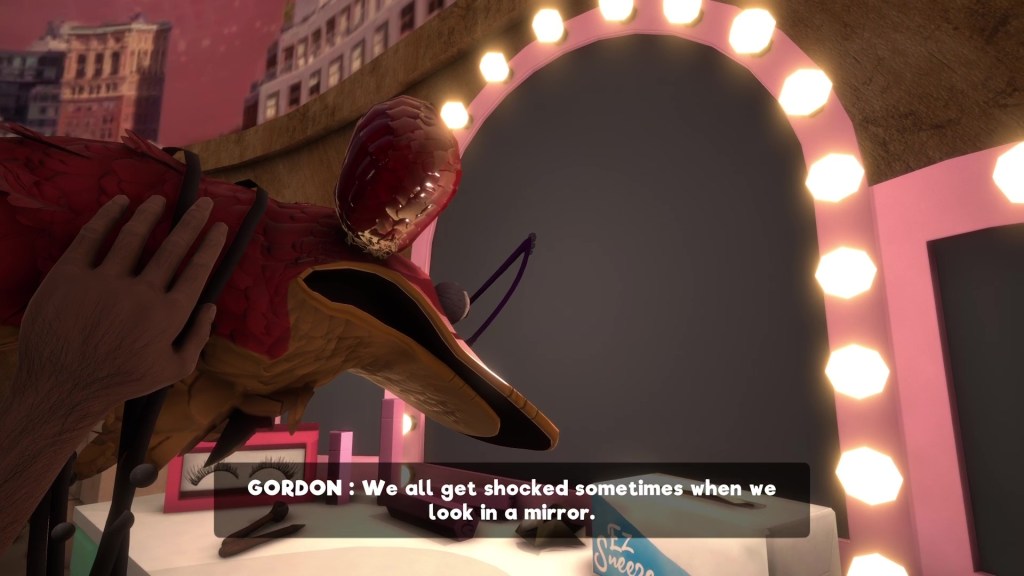
A big part of the charm is how the protagonist Gordon is portrayed – equal parts brooding, determined, and unexpectedly compassionate – and the quality of the voice work and animations for the puppets you’ll encounter. Aside from Ricky, a sock puppet that aids and taunts Gordon in equal measure, you’ll encounter named puppets that serve as common enemy types, while each location is home to a boss-style puppet that stalks you through certain areas. All the puppets are unhinged and violent, reflecting the slow decline of their show, the character flaws of their former puppeteers, and the decline of society as a whole.
Gordon’s attempt to shut down the broadcasting antenna goes awry, and he ends up on a journey that takes him through each part of the production studio and back again. Initial terror and confusion give way to dogged determination as he uncovers past events, discovers more about the puppets and the events that led to their growing insanity, and even gets the opportunity to bring peace to its inhabitants while revealing more of his past to the player. It has been a long time since I’ve played a survival-horror game where the narrative and cast have been as much of a draw as the gameplay mechanics – especially one with something to say about how entertainment both influences and is influenced by reality.
Old-school survival-horror gameplay refined
Talking of gameplay mechanics, My Friendly Neighborhood is one of those derivative games that show reverence to the source material, but also understand what elements stand the test of time and what anachronistic elements need tweaking or discarding. It keeps the classic haunted mansion design that you explore room by room, searching for keys, puzzle items, and clues to bypass contrived locks or obstacles. In your path are hordes of deranged puppets that can only be subdued permanently with limited duct tape, so you need to manage your routing and resources carefully.
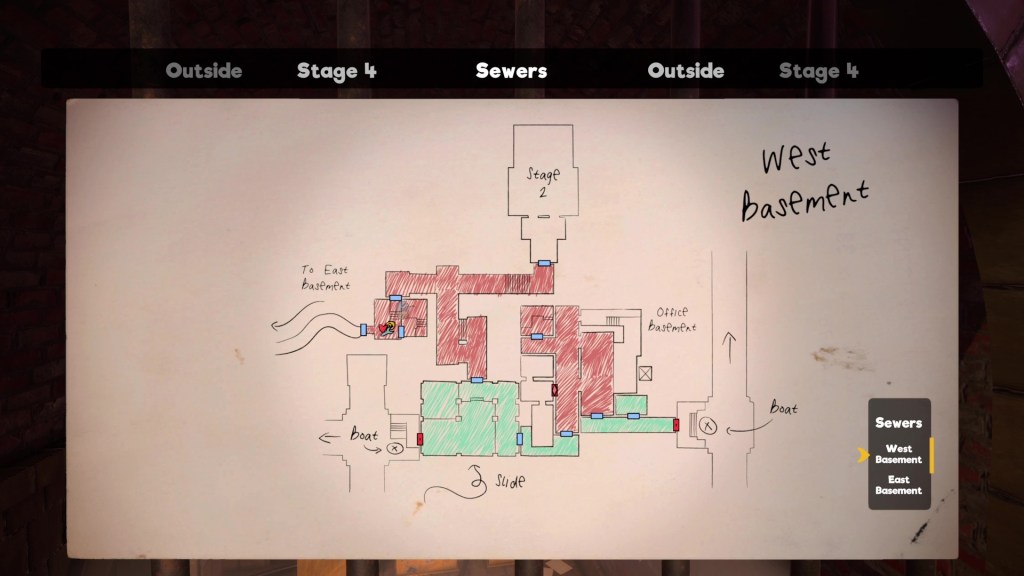
Despite the first-person perspective, it’s no action game like we’ve come to expect from the modern Resident Evils. Movement, combat, and progression feel far closer in design and pacing to classic survival horror games – right down to the ability to exit rooms to lose pursuers and reset their position. On lower difficulties you have enough resources to be reckless, but My Friendly Neighborhood clearly wants you to manage your inventory and storage box, only attack or subdue enemies you can’t avoid, check the map to plan a path or identify locked rooms with remaining items, and manually save between bouts of progress using limited tokens. It is classic and methodical in the best possible way.
The combat feels good thanks to great audiovisual feedback from an alphabet-powered rolodex-spewing pistol, rolled up notes used as shells and blasted from a shotgun, and room-clearing grenades with letter shrapnel. That said, the focus is on picking the right tool for the situation and conserving supplies when you can – especially on higher difficulties. As you get a feel for the map layout and identify rooms you’ll return to later, combat becomes more about optimisation than skill, and there’s also incentive to help the boss-type puppets so you can explore with less risk later.
To do that though, you will tackle increasingly elaborate, nonsensical, but entertaining puzzles. These range from simple key hunts to multi-step memory, logic, and sequence-based puzzles, but a modern map highlights specific key doors and rooms with items, so you’ll never end up aimlessly wandering the compact but dense studio grounds. There is a particularly tough puzzle to unlock a secret area and ultimate weapon – which had me taking notes and screenshots – but finding the items needed to save all the puppets and unlock the “best” ending will come naturally to those who systematically explore.
Cosy-horror could be the way to keep growing the survival-horror audience
If you’ve enjoyed the resurgence of survival-horror in both the “AAA” and indie space, My Friendly Neighborhood is easy to recommend – particularly for fans of the emerging cosy-horror trend. It’s only 5-6 hours long and that might put off once-and-done players, but like the classic games that inspired it, you can cruise through it a second time to unlock a different ending and ranking; hunt for secret tapes that enable useful or goofy abilities; mess around with the Speedrun and “Neighborhorde” modes; or just crank up the difficulty and shift the experience closer to true horror.
My Friendly Neighborhood was played on Xbox Series S|X using a code provided to gameblur by the publisher. It is also available on PC, Xbox One, and PS4/5.
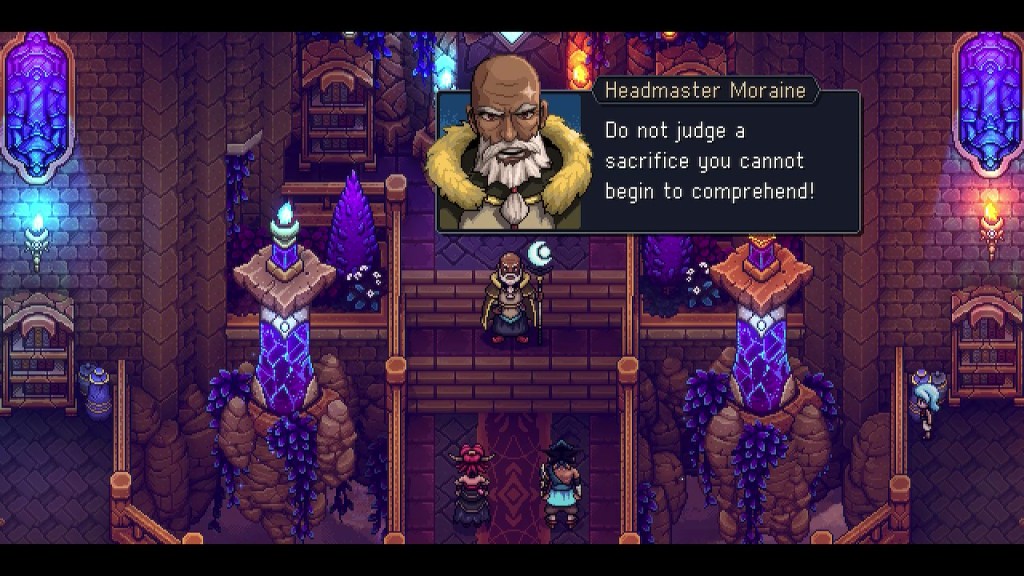
With Baldur’s Gate on PC and Final Fantasy VII on the PS1 as my formative RPG experiences, I’ve never had a strong affinity for 8- or 16-bit-era JRPGs. With that said, having sunk only a handful of hours into each the earlier Final Fantasy games, Secret of Mana, and Chrono Trigger, the retro-inspired Sea of Stars from Sabotage Studio still felt authentic to me in all the “right” ways. It recreates the look, sound, and storytelling techniques of that classic era, but modernises the gameplay to ditch the more tedious elements of the genre.
With the inspirations for many character archetypes and narrative themes so obvious, one criticism I could level at Sea of Stars is that it rarely surprised me outside of a handful of plot twists. To its credit, that never bothered me as much as I thought it would. It felt comfortingly familiar, with a gameplay loop and predictable rhythm that moved quickly enough to keep me engaged. Brisk, concise dialogue and streamlined, puzzle-centric dungeons ensure the game has a constant sense of forward momentum (at least up to the point you decide to tackle the end-game tasks to trigger the “true ending”).
It’s made clear early on that all is not well within the Order of Solstice Warriors.
Familiar JRPG tropes include an altruistic and stoic pair of protagonists with predetermined destinies, their stalwart and enthusiastic friend who demonstrates magical powers alone can’t save the world, and an assortment of allies that range from jovial pirates to ancient alchemists and their creations. There’s lingering evil that still plagues the world; a powerful mentor destined to be revealed as flawed; a shocking betrayal to raise questions about the prophecy; a resurgent evil that descends from the moon; and even the concept of multiverses for good measure. And that’s all revealed within the first third of the game, maybe 10ish hours’ worth, which felt gloriously brisk in contrast to the bloat that infects modern JRPGs.
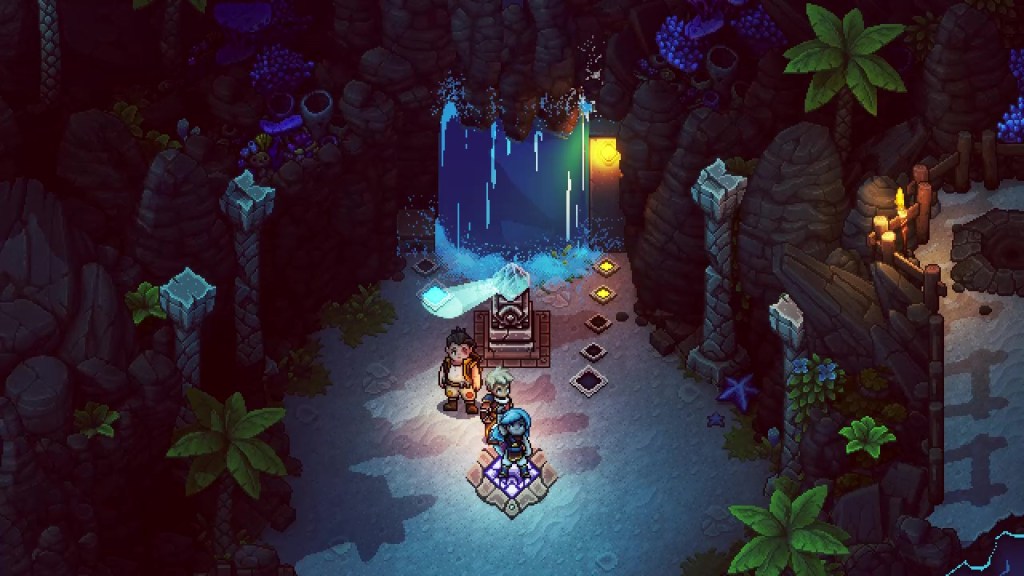
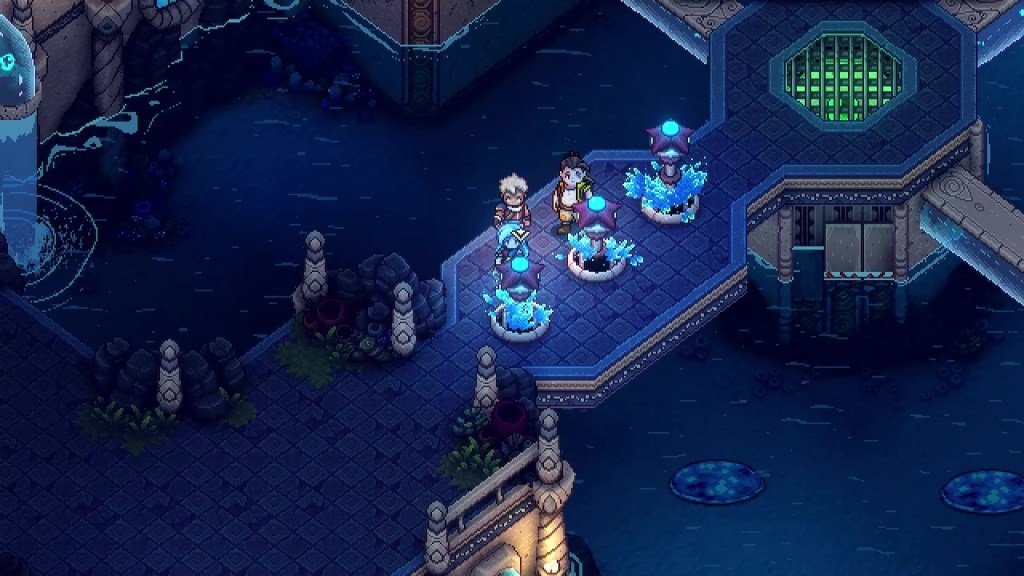
The world design and basic gameplay loop also lean heavily into some classic designs. You have diverse but illogically compact worlds to explore – by foot, ship, or through the air – presented as a stylised overworld map connecting settlements and dungeons. Story dungeon progression is controlled by access to traversal or puzzle abilities – think manipulating time-of-day, a grappling hook, or water-breathing – with hidden chests tucked away in previous locations becoming accessible too. Every dungeon has two or three doors that, in turn, require two or three keys or switches to open. Each dungeon also has a handful of combat encounters and a boss to defeat at the end.
The power the sun and moon is both essential for solving puzzles and maximising combat damage.
You could apply those descriptions to any number of 8- or 16-bit era JRPGs, but Sea of Stars uses modern flourishes and increased combat depth to create a game that feels more action-oriented and respectful of your time. Exploring puzzle-dungeons is a JRPG tradition, but Sea of Stars features more vertical locations with fantastic jumping and climbing animations, while abilities like the wind burst and grapple are manually activated, making the simple act of pushing around blocks or leaping gaps feels more hands-on. You’re still railroaded down restrictive paths towards puzzle objects or battles, but exploration and traversal look and feel more exciting.
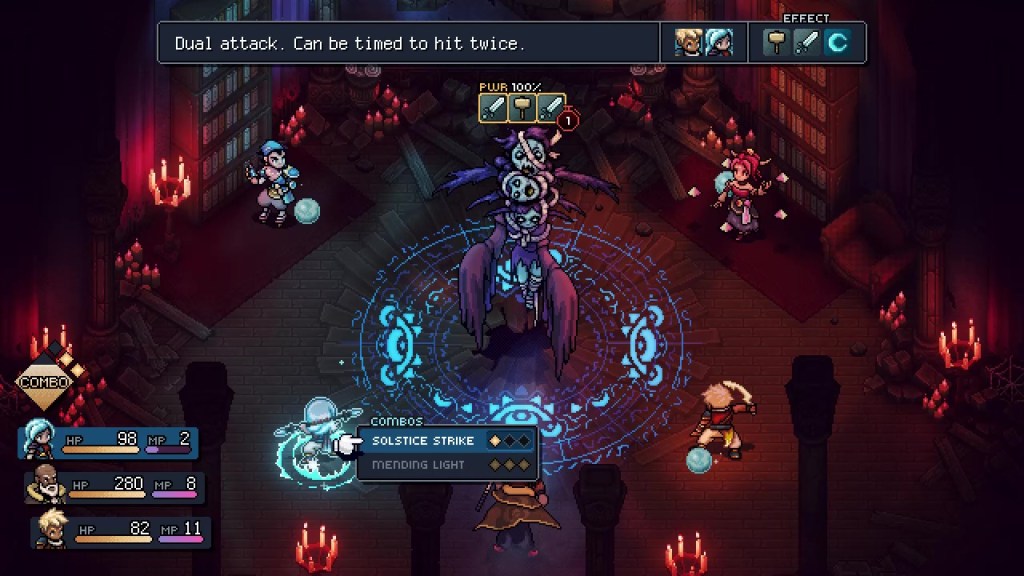
Similarly, the turn-based combat has plenty of complexity but also rewards timing-based actions to increase damage output or block a chunk of incoming damage. Visible turn markers and a menu-driven system for basic attacks, skills, and items are accounted for, but Sea of Stars favours fewer, more involved battles over grinding basic mobs to stay ahead of an escalating difficulty curve. As an example, basic attacks become progressively less useful for dealing damage, but they restore mana and release “live mana” that your party can absorb to charge attacks with elemental damage or enhance offensive and defensive skills – both essential for damaging tougher foes with physical and magical resistances or recovering the parties’ health and mana quickly.
Expect the number three to come up a lot in dungeons: locked doors, keys, switch mechanisms, etc.
Another interesting addition is the “spell lock” mechanic – an initially hidden grid of symbols representing damage types that appear above a foe preparing a spell. Using character skills or combos that involve two party members, breaking these spell locks within the turn limit becomes essential to disrupting powerful attacks that often damage the entire party. It might sound complicated and intimidating, but Sea of Stars is still accessible. Powerful secret gear you miss in one area can often be bought from storekeepers later, while the levelling system gives you a bit of control by picking one attribute to boost more than others at each level-up. Lastly, you can find, buy, and enable relics that function as assists – think bonus health, boosted experience gain, or the ability to instantly see spell lock combination – but also offer options to increase the combat difficulty.
The last point to touch on is the incredible presentation that plays on nostalgia as effectively as Square Enix’s HD-2D remakes. At first glance, you might pass off static screenshots as Chrono Trigger, but Sea of Stars looks stunning in motion (especially on a Nintendo Switch OLED screen). The isometric style and parallax backgrounds provide depth; looping animations for water, plants, and animals give the impression of life; weather and other atmospheric effects look great; and the time-of-day mechanic coupled with dynamic lighting and simulated reflections set the mood. Character sprites, animations, and spell effects during battles and in-game cutscenes are less impressive, but the animated cutscenes used for key story beats look great while still feeling authentic to the era its emulating. The music also deserves praise, with short but catchy tracks for each location and cutscene that further enhance the mood.
Like all great turn-based RPG, battles feel tense but play out at your own pace, giving you time to consider every decision and ruminate on every mistake.
To wrap up, Sea of Stars is a smart nostalgia-driven JRPG for an audience that no longer has the time they once had for the genre. Complex modern systems and assists are obscured by a veneer of nostalgia-inducing presentation, providing an experience that feels like a late 16-bit era JRPG – just without the grind those games often require. It’s not always perfect and that predictable rhythm – find settlement, get quest, clear dungeon, repeat – can grow tiring towards the end, but it still offers better pacing and variety than most of its inspirations. On one hand, Sea of Stars is exactly what I want from nostalgia-driven throwbacks; on the other, it was a wearying reminder that I’ve been playing video games for far too long.
Sea of Stars was played on Nintendo Switch using a code provided to gameblur by the publisher. It is also available on PC, Xbox One/Series S|X, PS4/5, and Nintendo Switch 2.
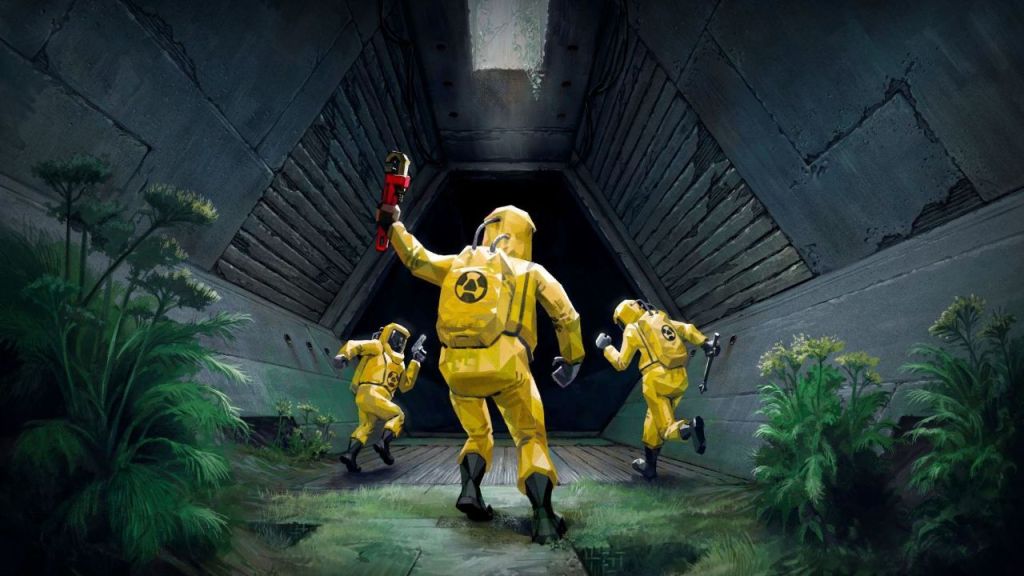
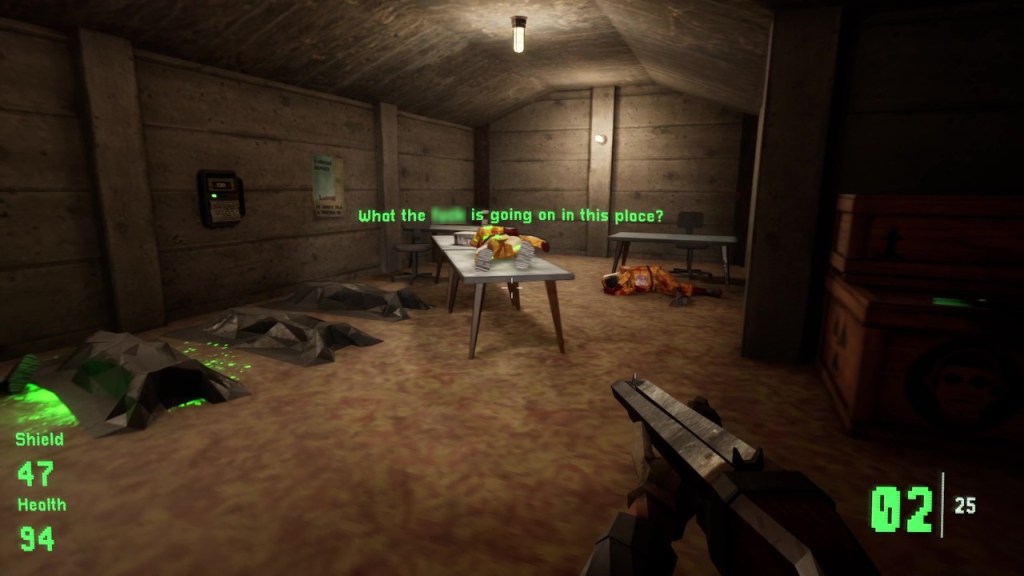
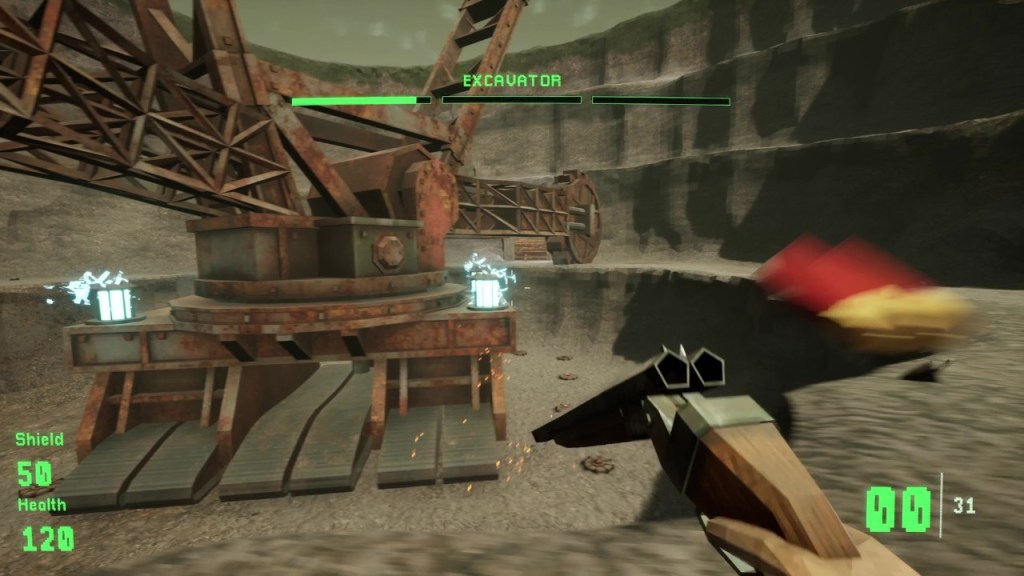
Looking at Kvark’s retro-styled visuals, industrial complex setting, and science-gone-wrong premise, it is easy enough to make Half-Life comparisons – but those features could apply to hundreds of games released since 1998. The Half-Life characteristic that Kvark emulates best is that satisfying, cyclic rhythm between exploration, environmental puzzles, and brief, brutal firefights. Kvark released on PC near the end of last year, but I wanted to replay the console port as there are few games that capture the essence of Half-Life on console, and Valve seems disinterested in preserving access to their Xbox 360- and PS3-era ports like The Orange Box collection and the Left 4 Dead games.
Having turned off subtitles for the propaganda videos that play between chapters, this was more or less my thoughts on the narrative throughout.
Unlike Half-Life‘s unexpectedly strong narrative thread, Kvark sticks to the classic retro-FPS approach of providing some light context and leaving the rest up to the player. It takes place in an alternate-history Czech Republic, under Soviet-style rule during the Cold War period. The titular “Kvark” corporation has moved on from nuclear power, to nuclear weapons, and finally a dubious injectable substance – “anethium” – to create super-workers and super-soldiers. It’s a videogame setup we’ve seen a hundred times before, so it should come as no surprise your prisoner protagonist wakes up in a cell to discover both human clean-up teams and grotesque mutants are out to kill them.
There are entertaining propaganda videos that reveal what the corporation has been up to and hint at the threats you’ll face in the upcoming chapter, but the bulk of the storytelling is handled by scattered notes or hidden drawings that reveal the ineptitude of the government and staff, or provide the odd code or hint to access secret areas. Survival is your primary goal, and as the Kvark complex was relocated far underground to avoid the gaze of Western imperialist spies, that means an 8–10-hour gauntlet through prisons, sewers, manufacturing facilities, mines, laboratories, and quarantine zones. The overall tone is one of dark, cynical humour, but it can feel suitably oppressive and tense, with open skies only appearing in the final third of the game.
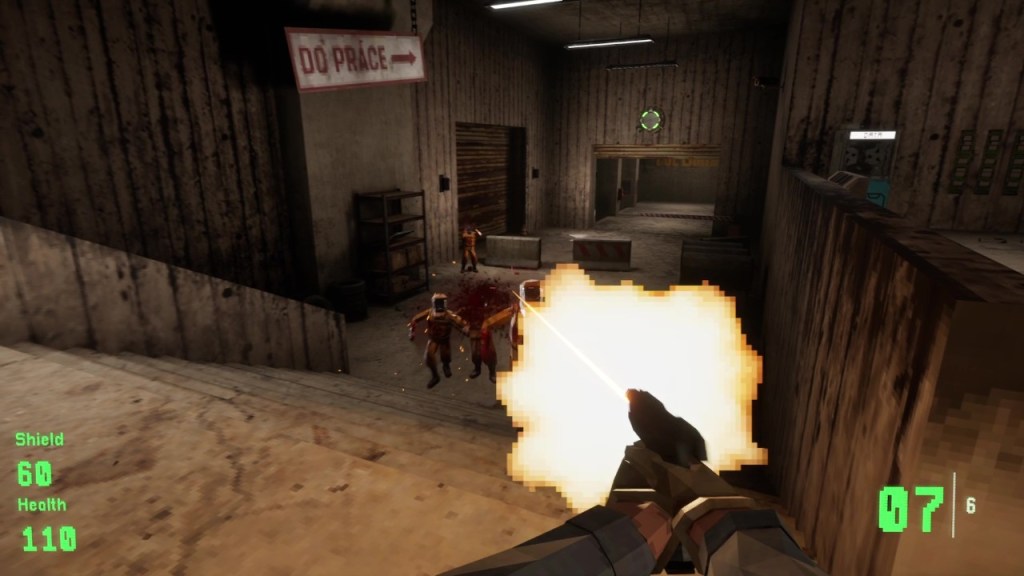
Kvark is excessively gory, with improbably huge blood splatters and abundant severed limbs, but it’s more comical than gruesome.
Gameplaywise, Kvark focusses on what all good first-person shooters should: responsive movement; weapons that look, sound, and feel good to use; and hand-crafted combat encounters against a variety of enemy types that force you to use your full arsenal. There’s nothing inherently novel about the shooting or the traditional weapon categories – ranging from a mostly ceremonial wrench through a pistol, shotguns, rifles, a crossbow, an energy weapon, a grenade, and a minigun – but they all have a situational use and limited ammunition reserves that prevent you from just sticking to an allrounder. Even the perfunctory skill tree, which encourages you to hunt for anethium injectables, offers mostly incremental buffs and one risk-reward perk that reduces total health and healing efficiency in exchange for health gain through kills.
With solid but familiar foundations, it’s that aforementioned rhythm of exploration and environmental puzzling, interspersed with bouts of violent combat, that channel Half-Life vibes. Aside from a few short-lived platforming sections in the second chapter, both the level design and variety feel good given its length, with many looping back, over, or under themselves to give an impressive sense of scale. Within the ruined corridors, rooms, and vents of the facility you’ll scrounge for weapons, ammunition, and secrets; you’ll flip switches, connect cables, ride carts, and activate machinery to open the way forward; and you’ll deal with clean-up squads and hordes of mutants by staying mobile, kiting melee enemies, prioritising those with ranged attacks, and making use of explosives (or explosive hazards) – all before shifting back to exploring for more resources in preparation for the next combat encounter.
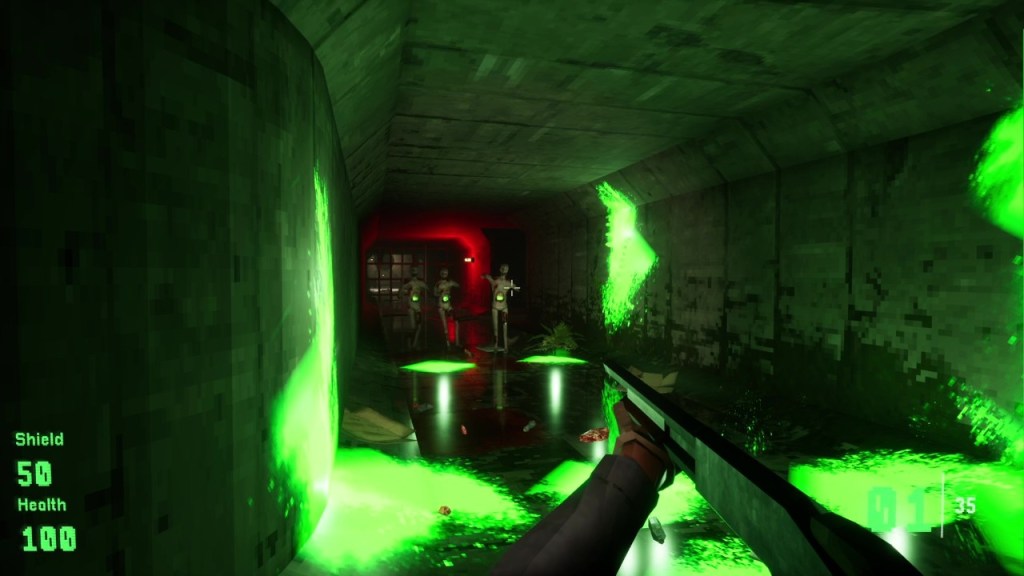
Anethium-mutated creatures are uniformly irritating and a pain to fight in tight spaces.
Kvark feels more forgiving than it did during early access period, but the checkpoints and resource stashes still feel balanced around surviving a handful of significant encounters each level – encouraging a more methodical and tactical approach to firefights on all but the easiest difficulty. As the game progresses, you’ll encounter larger mobs in bigger and more hazardous arenas that’ll test your shooting skills or your ability to scavenge resources mid-battle. Mutated rats, spiders, and zombies rush you or spew glowing goo and webbing that make fighting in tight spaces a pain. Clean-up squads force you to use cover as they evolve from baton- and pistol-wielding goons supported by flying drones, into armoured squads with shotguns, flamethrowers, miniguns, and robot support. With the action confined to an arena, it was only the three boss encounters that felt more annoying than challenging, with the focus on dealing with mobs while avoiding AoE attacks and hitting weak-points.
When it comes to the presentation, Kvark will likely be divisive. I enjoy the clean, retro-styled visuals imitating early fully-3D environments and the ability to interact with so many objects, but there is a lot of asset reuse to build out the more sprawling levels. Every other element feels near-perfect, from the blocky character models, crude weapon animations, and chunky gore effects, to the ambient audio, roar of gunfire, and a mostly subdued electronic soundtrack that ramps up during combat. It also ran smoothly on an Xbox Series X – performance that’ll likely hold true for current-gen consoles – with a helpful touch of auto-aim and some decent rumble feedback for gunfire and footsteps. The only notable issues I found (as of this review going up) were several crashes during the second level of the first chapter, and the placement of some checkpoints at the entrance of restock rooms instead of at the exit, so you have to collect everything again after reloading.
The boss fights are a mix of traditional and weird, but I never found them as exciting as most common combat scenarios.
Taken as a whole, Kvark doesn’t offer much novelty when it comes to the premise, mechanics, or visual style, but it has something so many modern games lack – rhythm and pacing. You could go back and call Half-Life dated based on the visuals, limited set-pieces, and no progression mechanics, but I’d challenge anyone to play it and claim it’s not fun. Kvark is not as timeless, sure, but it finds a similar groove by ensuring you’re constantly cycling between exploration, light puzzling, and brutal firefights, all before hitting the next checkpoint and starting the cycle anew. As such, Kvark is easy to recommend – especially at an indie price-point – to fans of the genre that play on console and want a taste of that classic Half-Life formula.
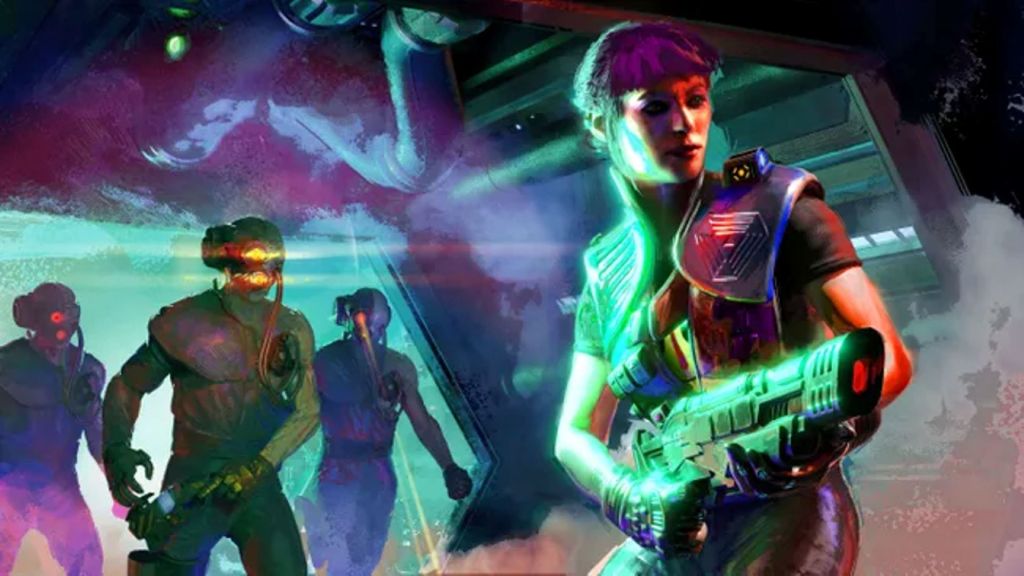
As a fan of the immersive sim genre, it’s hard to decide which was the greater tragedy: having to wait 18 years between System Shock 2 and its closest spiritual successor, Prey (2017); or watching Prey (2017)’s developer, Arkane Texas, forced to churn out Redfall in 2023 before being unceremoniously shuttered by Xbox. At least that year Nightdive Studios’ remake of the first System Shock finally arrived on PC, after a turbulent 8-year development cycle that included IP licensing concerns, extended periods of silence, three complete restarts, and a shift from Unity to Unreal Engine 4. To their credit, the result was mostly worth the wait.
Replaying it by way of 2024’s excellent console ports (for both current- and last-gen hardware), the System Shock remake is faithful to a fault in some regards, but still infinitely more playable without the original’s clunky FPS/point-and-click hybrid controls. System Shock (2023) is far more involved than a traditional FPS, but it controls like one and works well enough when using a controller – aside from sluggish inventory management and an awkward lean toggle.
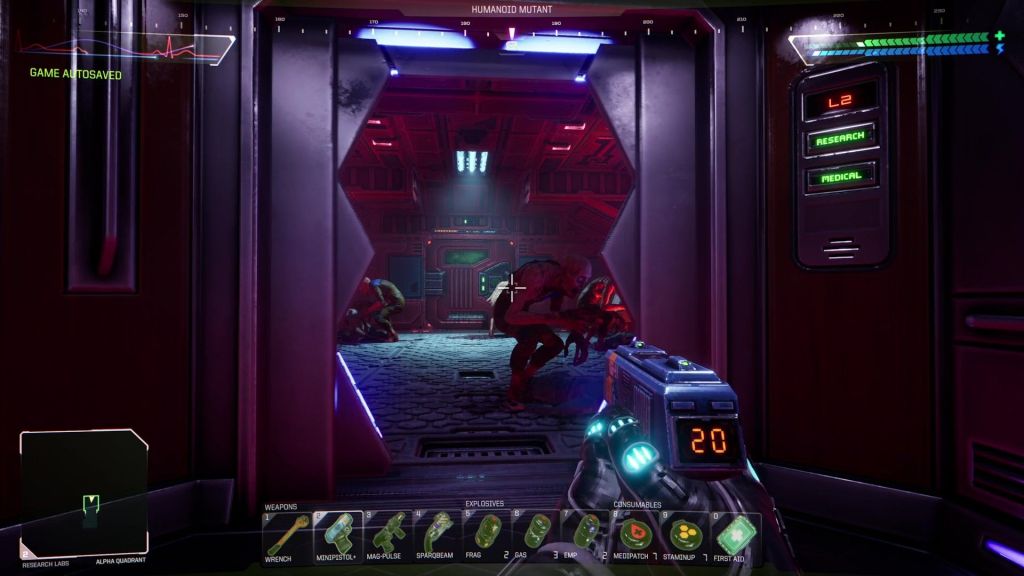
The updated UE4 visuals and new synth-heavy renditions of the original soundtrack generate late-‘80s/early-‘90s sci-fi vibes – think harsh lines, retro-futuristic tech, an abundance of specular reflections, and overblown neon lighting – and those fresh visuals are enhanced by a pixel filter that adds a veneer of retro-inspired chunkiness to close-range textures, character models, and 3D objects.
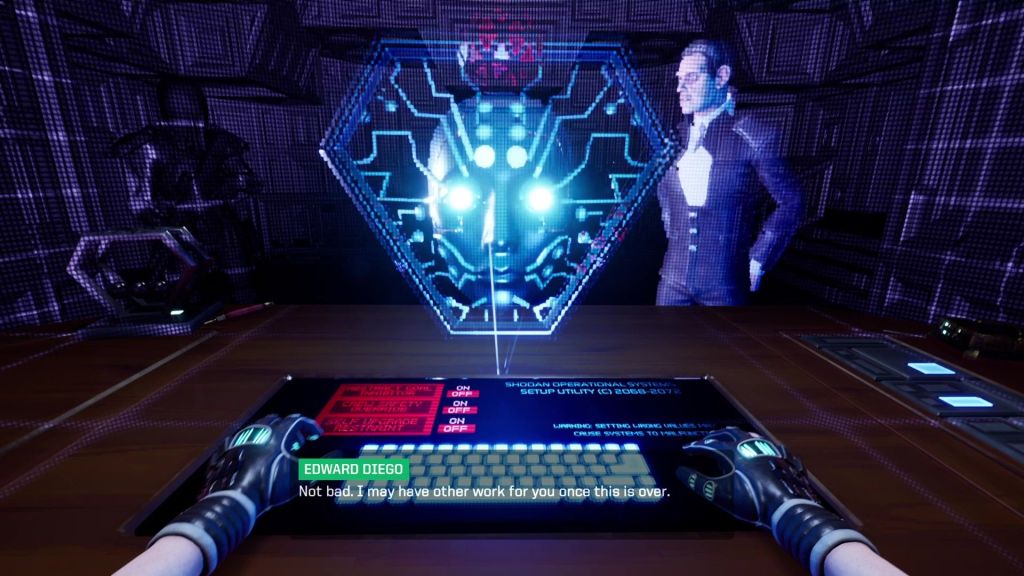
What could possibly go wrong if I remove the ethical constraints on an AI designed by an unethical corporation?
While the audiovisual overhaul and updated control scheme are obvious changes up front, System Shock (2023) deserves more praise for how it manages to recreate much of the original’s level design, mission flow, and iconic encounters, despite expanding and enhancing every element.
Moving through the multi-level and often maze-like Citadel Station still feels tense and sometimes terrifying, especially given how little handholding there is and the high level of challenge. In stark contrast to the “follow-the-icon” mentality of most modern games, you need to pay attention to your map and signposting to navigate. You also need to parse radio transmissions and audio-logs for clues on how to progress, slowly piecing together the desperate plans of the former crew.
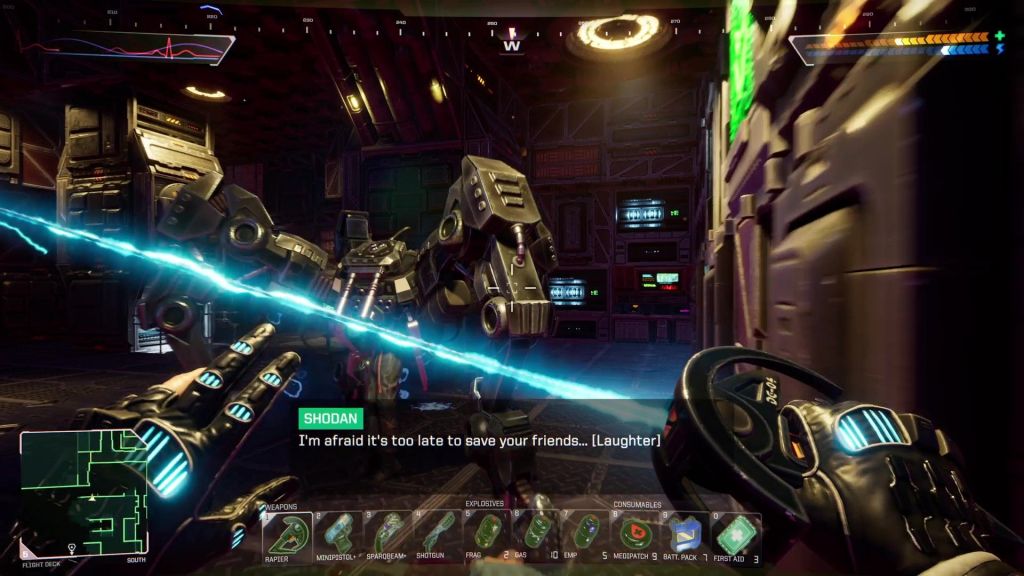
It helps that System Shock has a cliched but compelling “AI gone rogue” plot. After being arrested for attempting to steal designs for a Tri-Optimum neuro-mod, your hacker protagonist finds themselves transported to Citadel Station and confronted by Vice President Edward Diego with a simple offer: become part of their dubious experiments or utilise their skills to remove the ethical constraints on the station AI, SHODAN, and receive the modification they were after as a reward. Emerging from a medical pod six months later, it turns out unshackling an AI with a god complex was a poor choice and she now wants you crushed like an insect.
The environments may look wildly different, but returning fans will spot the same basic level layout and familiar encounters.
It’s a great setup, but aside from a handful of calls from survivors or Earthside Tri-Optimum staff, the bulk of storytelling is conveyed through optional audio-logs that near-perfectly correlate with environmental details. The more attention you give to the narrative elements, the more you get out of them.
A first playthrough also nails the sensation of awakening amid a disaster, alone and out of your depth. However, the updated mechanics and returning difficulty levels allow you to tailor the experience to be more forgiving of rushed exploration, poor planning, or scrappy combat.
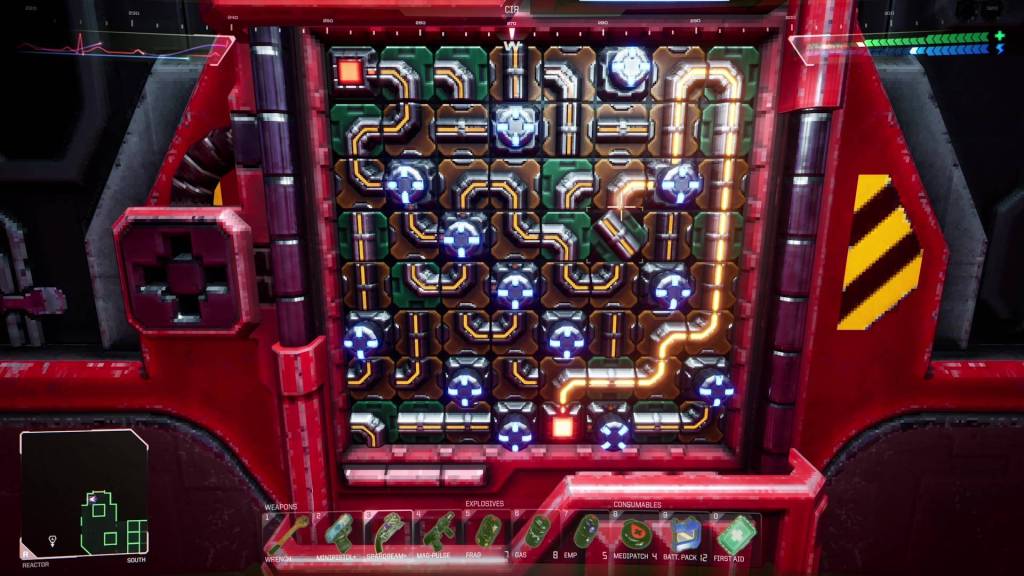
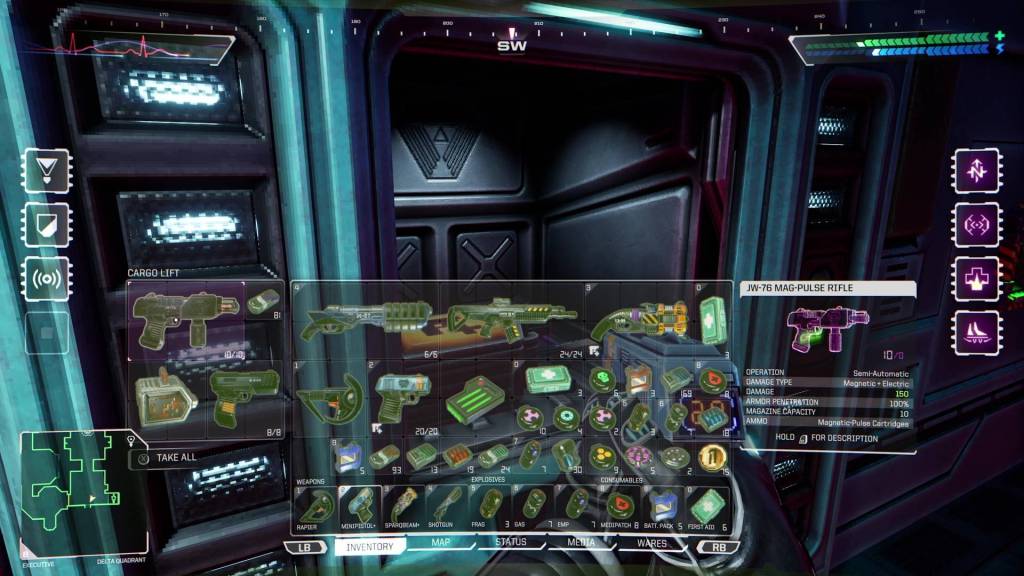
The overhauled UI and menus better track progression, grid-based inventory management and quick slots for combat are a godsend, and you can customise the difficulty of individual systems. You get simple map markers on the easiest mission difficulty or a 10-hour time limit on hard. Combat is always challenging, but you can tweak incoming damage, mob sizes, and the respawn rate. Cyberspace battles – which play out like classic 6DOF shooters – can be colourful diversions or bullet-hell chaos. Puzzles – a mix of balancing voltages, rerouting power, and finding codes – can be brief distractions or leave you wishing you had a logic probe to simply override them.
I set the puzzle difficulty hard and never used a single logic probe – but I know these are not for everyone.
There are fans of the original that would suggest maxing every difficulty aside from enforcing the time-limit for a first playthrough, but I’d argue even on the easiest settings, System Shock (2023) never loses that inherently challenging immersive sim core. Running straight into a horde of cyborgs is likely to see you shredded regardless of the difficulty, while too many scrappy fights early on will leave you short on supplies and forced to adapt.
The ability to revive at Restoration Bays is available regardless of the difficulty, so adding a few basic map markers, or simplifying cyberspace combat for those who hate that style of gameplay, is a worthwhile addition if it encourages a modern audience to stick it with it long enough to understand and appreciate the genre’s distinctive player-driven flow.
All of which brings me to what I love most about System Shock (2023) and the genre as a whole. A good immersive sim punishes a player for a thoughtless approach and sloppy execution, but rewards preparation, planning, and the smart or unconventional use of the tools provided. It’s a genre that facilitates save-scumming, but not to encourage a trial-and-error approach; rather, it allows the player to iterate on a plan and master its execution. An ambush or boss fight shouldn’t require constant quick saving behind every piece of cover to manipulate the odds of being hit; you should want to reload a boss fight because you’ve thought of a way to optimise your approach and finish them off more efficiently.
The more you explore, the more tools you’ll have at your disposable, but inventory management becomes essential.
System Shock (2023) features a handful of mandatory boss fights and ambushes, but most can be subverted by finding alternate paths; engaging in some minor sequence-breaking using the upgraded jump boots; or simply burning through stockpiled ammunition and consumables to trivialise battles. An early boss encounter against a cyborg Diego can play out as a panicked firefight that has you scrambling to dodge plasma rounds and flee as he teleports in close with a laser rapier. Alternatively, you could apply a Reflex Reaction Aid to slow time, a Berserk Combat Booster to buff melee damage, charge in and finish him off with a flurry of your own laser rapier before he can even trigger his teleport.
The same flexibility applies to conspicuously empty rooms that scream: “ambush”. You could also bolster yourself with dermal patches in preparation for a slow-mo scrap, or you could fling disc-like proximity mines at every wall panel, engage your shield mod, and rush to the middle of the room to watch your foes disintegrate in a flurry of explosions around you.
Of course, with a limited inventory and storage options, the tools at your disposal are dependent on your willingness to explore, backtrack, and prepare. There’s almost always enough to get by – even within boss arenas if you survive long enough to find them – but cautious and systematic explorers are rewarded with early access to powerful weapons, mod and weapon upgrades, and no shortage of character-enhancing dermal patches and meds.
If you’re struggling with any of the mandatory boss fights, a laser rapier coupled with a Reflex Reaction Aid and Berserk Combat Booster will see you through every encounter aside from the last battle in cyberspace.
Wrapping up, I’d reiterate my argument that a good immersive sim should ensure players can always progress using the tools or mechanics provided, conventionally or otherwise; it should reward them for exploration, preparation, and planning; and punish them for thoughtlessness or scrappy execution. I’ve played far too many modern games that, while often technically impressive and mechanically polished, are so reliant on familiar and effortless gameplay – the idea that player friction should be minimised – that my brain switches off and I run on autopilot until the next set-piece or elaborate cutscenes regains my attention.
A good immersive sim may lack that scripted spectacle and controlled pacing, but I prefer games where the minute-to-minute gameplay – that essential “game” part of videogame – is consistently engaging and rewarding. If you feel the same, the immersive sim genre is well worth your attention and the System Shock (2023) remake is one of many excellent options available on console and PC.



 gameblur-v2.0