
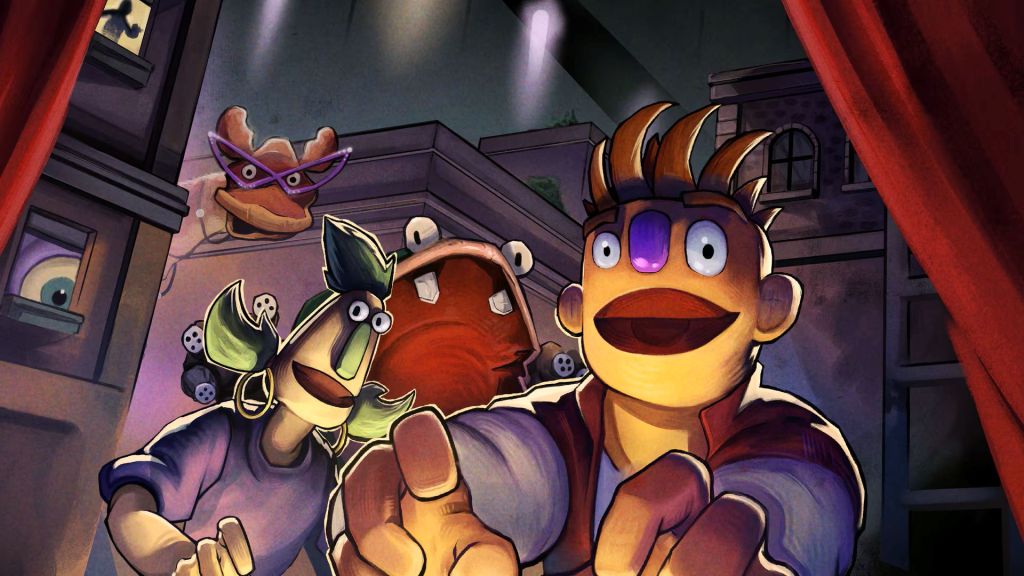
It has taken two years for My Friendly Neighborhood to arrive on consoles, but it still deserves a top spot on the short list of survival-horror games that go beyond simple body-horror monstrosities and laboratory experiments gone wrong. There is no shortage of tension and a few jump scares to be had, but it also demonstrates a surprising amount of charm and heart that you find in rare cosy-horror titles like Crow Country or Sorry We’re Closed.
Terror and heart in equal measure
The cartoonish aesthetics, the focus on a failed children’s puppet show, and the post-war-not-quite-USA setting make for a weird and unsettling experience that plays on established horror tropes while weaving in real-world societal problems. The result is a game that you could breeze through and appreciate the mechanics, while paying little attention to the plot and cast. However, if you read all the lore documents, listen to the puppets’ rambling, and spend some time solving puzzles and backtracking to help the puppets that originally stalk you, it makes the narrative so much more rewarding.
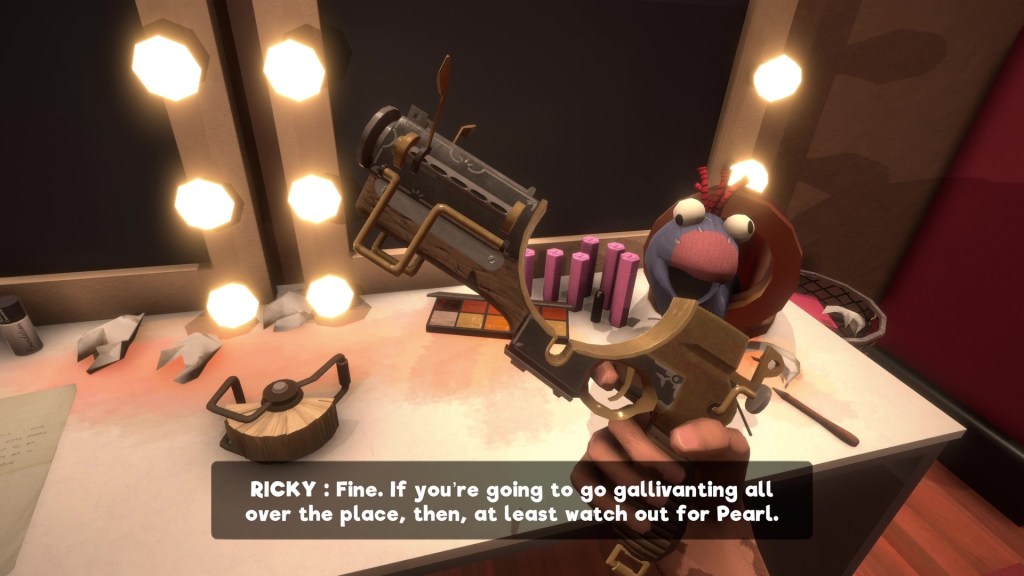
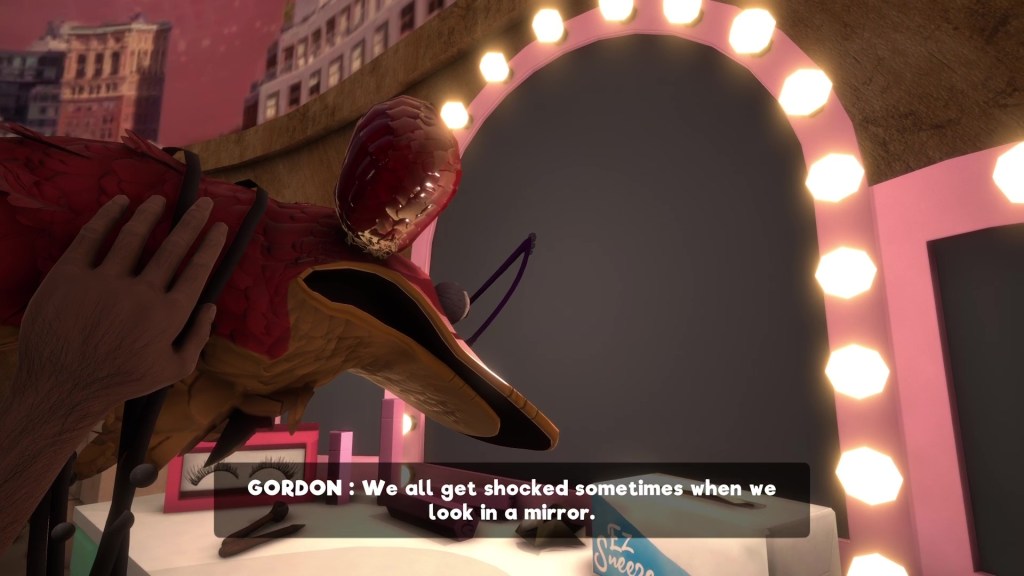
A big part of the charm is how the protagonist Gordon is portrayed – equal parts brooding, determined, and unexpectedly compassionate – and the quality of the voice work and animations for the puppets you’ll encounter. Aside from Ricky, a sock puppet that aids and taunts Gordon in equal measure, you’ll encounter named puppets that serve as common enemy types, while each location is home to a boss-style puppet that stalks you through certain areas. All the puppets are unhinged and violent, reflecting the slow decline of their show, the character flaws of their former puppeteers, and the decline of society as a whole.
Gordon’s attempt to shut down the broadcasting antenna goes awry, and he ends up on a journey that takes him through each part of the production studio and back again. Initial terror and confusion give way to dogged determination as he uncovers past events, discovers more about the puppets and the events that led to their growing insanity, and even gets the opportunity to bring peace to its inhabitants while revealing more of his past to the player. It has been a long time since I’ve played a survival-horror game where the narrative and cast have been as much of a draw as the gameplay mechanics – especially one with something to say about how entertainment both influences and is influenced by reality.
Old-school survival-horror gameplay refined
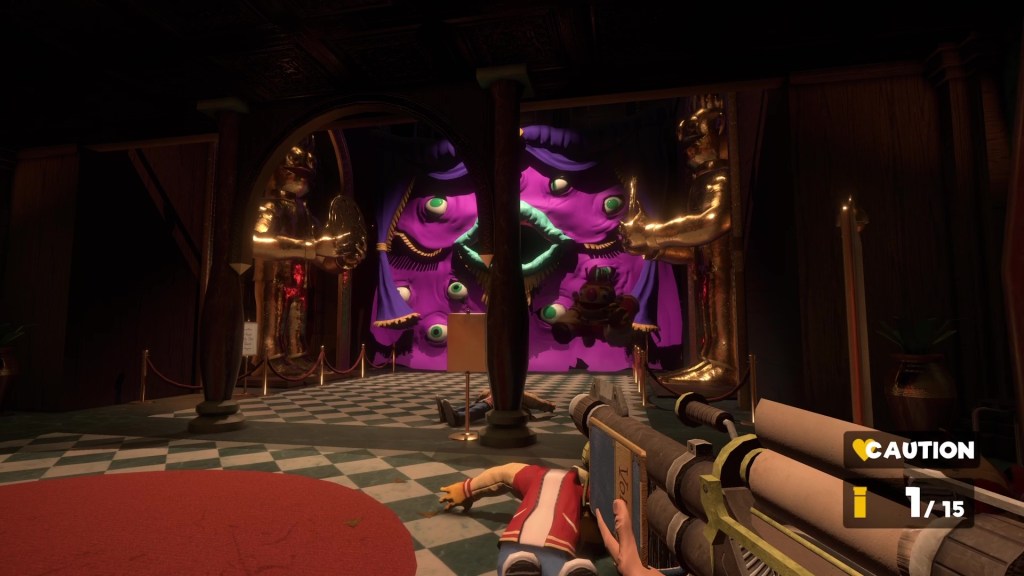
Talking of gameplay mechanics, My Friendly Neighborhood is one of those derivative games that show reverence to the source material, but also understand what elements stand the test of time and what anachronistic elements need tweaking or discarding. It keeps the classic haunted mansion design that you explore room by room, searching for keys, puzzle items, and clues to bypass contrived locks or obstacles. In your path are hordes of deranged puppets that can only be subdued permanently with limited duct tape, so you need to manage your routing and resources carefully.
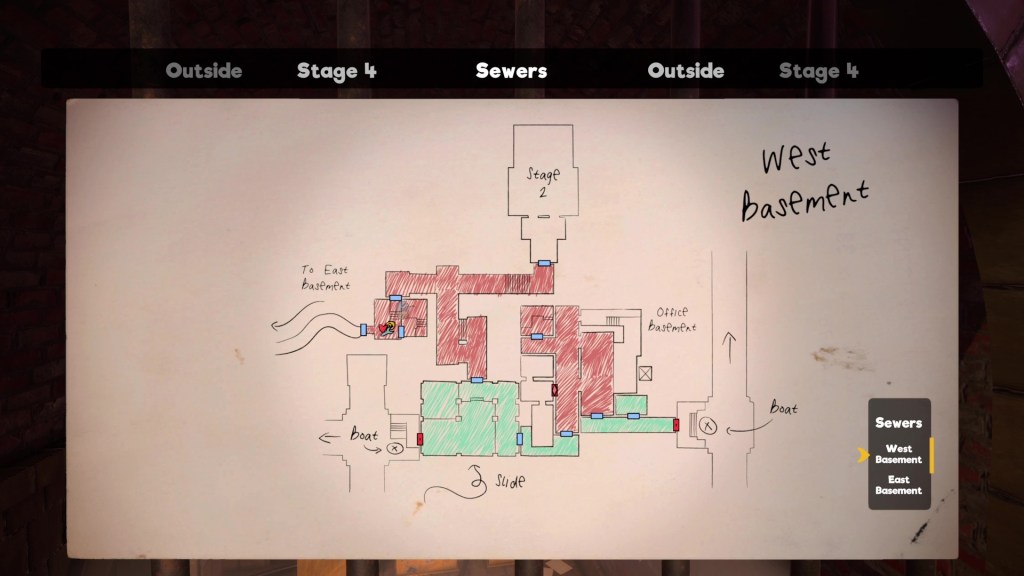
Despite the first-person perspective, it’s no action game like we’ve come to expect from the modern Resident Evils. Movement, combat, and progression feel far closer in design and pacing to classic survival horror games – right down to the ability to exit rooms to lose pursuers and reset their position. On lower difficulties you have enough resources to be reckless, but My Friendly Neighborhood clearly wants you to manage your inventory and storage box, only attack or subdue enemies you can’t avoid, check the map to plan a path or identify locked rooms with remaining items, and manually save between bouts of progress using limited tokens. It is classic and methodical in the best possible way.
The combat feels good thanks to great audiovisual feedback from an alphabet-powered rolodex-spewing pistol, rolled up notes used as shells and blasted from a shotgun, and room-clearing grenades with letter shrapnel. That said, the focus is on picking the right tool for the situation and conserving supplies when you can – especially on higher difficulties. As you get a feel for the map layout and identify rooms you’ll return to later, combat becomes more about optimisation than skill, and there’s also incentive to help the boss-type puppets so you can explore with less risk later.
To do that though, you will tackle increasingly elaborate, nonsensical, but entertaining puzzles. These range from simple key hunts to multi-step memory, logic, and sequence-based puzzles, but a modern map highlights specific key doors and rooms with items, so you’ll never end up aimlessly wandering the compact but dense studio grounds. There is a particularly tough puzzle to unlock a secret area and ultimate weapon – which had me taking notes and screenshots – but finding the items needed to save all the puppets and unlock the “best” ending will come naturally to those who systematically explore.
Cosy-horror could be the way to keep growing the survival-horror audience
If you’ve enjoyed the resurgence of survival-horror in both the “AAA” and indie space, My Friendly Neighborhood is easy to recommend – particularly for fans of the emerging cosy-horror trend. It’s only 5-6 hours long and that might put off once-and-done players, but like the classic games that inspired it, you can cruise through it a second time to unlock a different ending and ranking; hunt for secret tapes that enable useful or goofy abilities; mess around with the Speedrun and “Neighborhorde” modes; or just crank up the difficulty and shift the experience closer to true horror.
My Friendly Neighborhood was played on Xbox Series S|X using a code provided to gameblur by the publisher. It is also available on PC, Xbox One, and PS4/5.
 gameblur-v2.0